Ghana Agribusiness PlaybookCashew
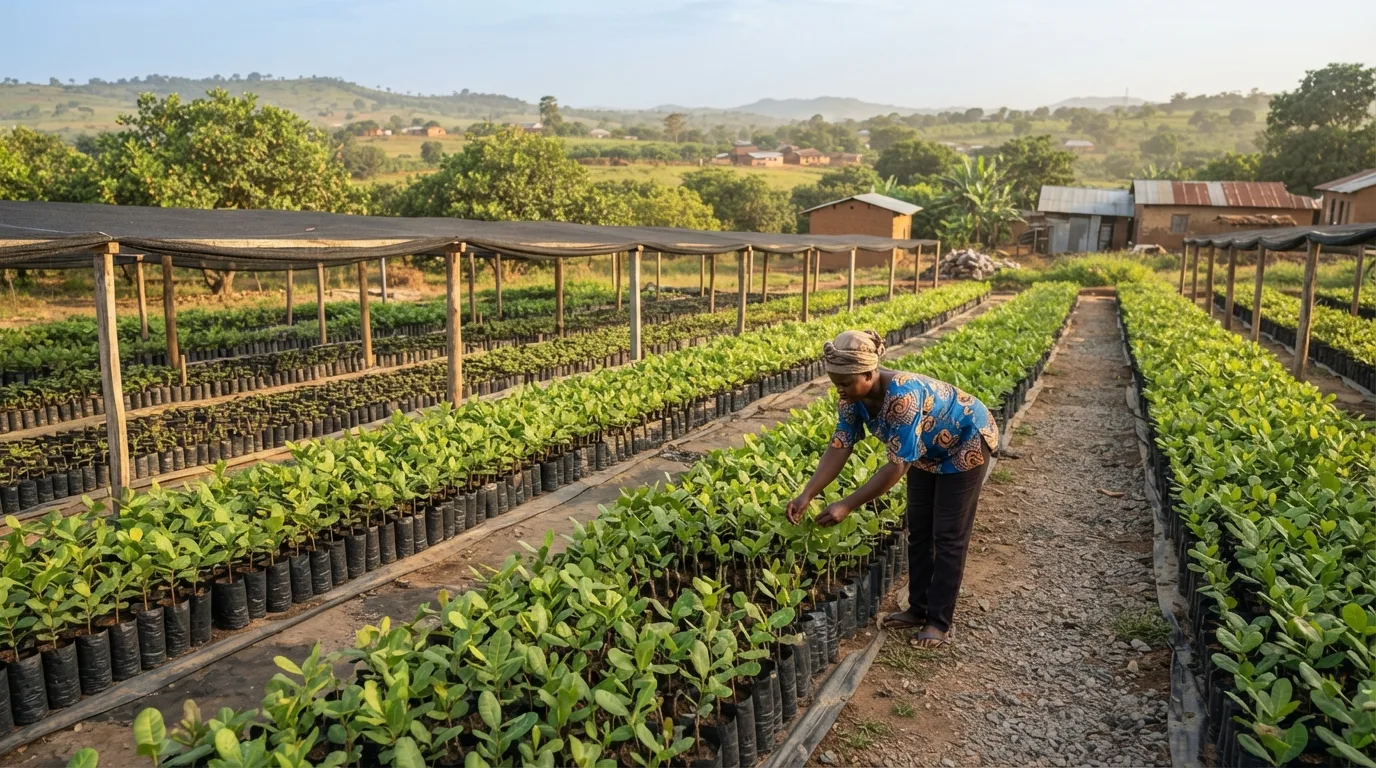
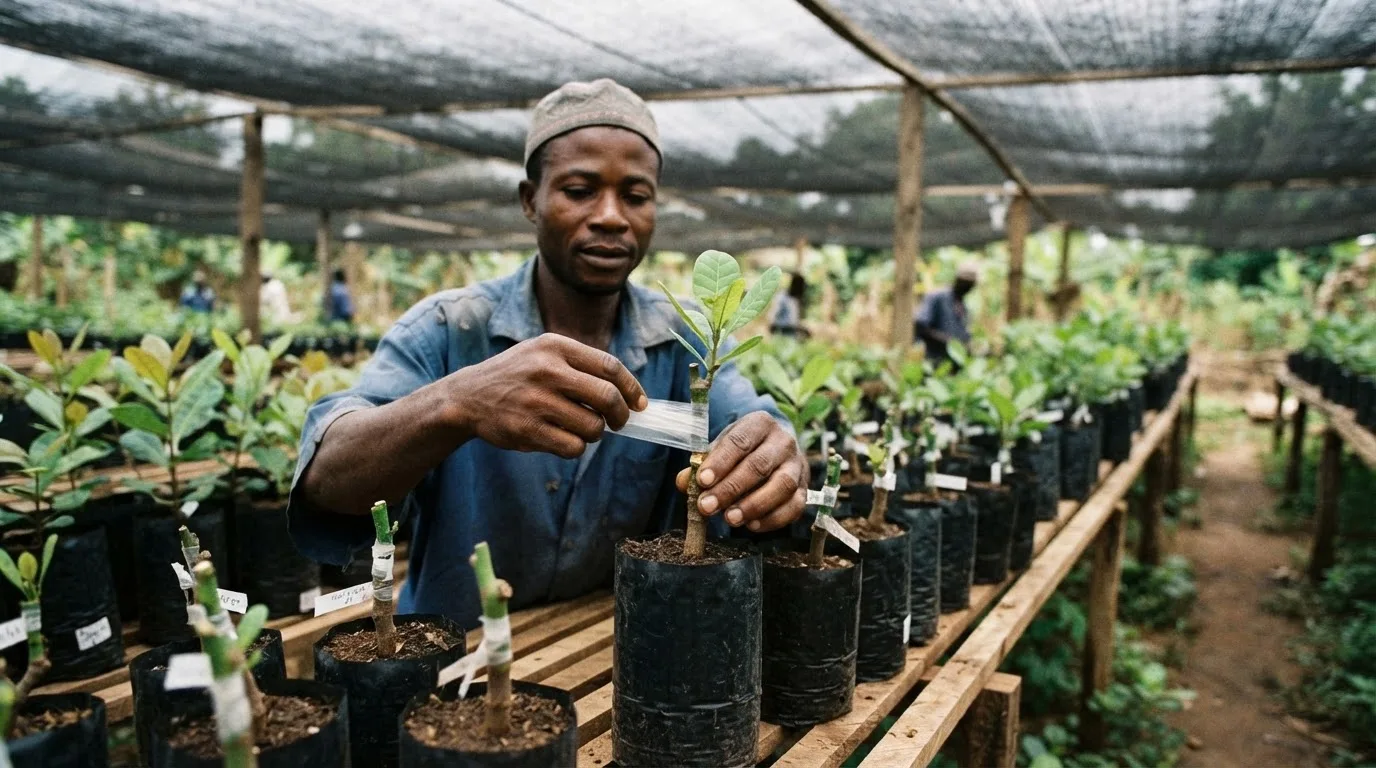
A grafted-seedling cashew nursery in the Bono transition zone, rows of young certified stock under shade netting
Cashew · Pillar 01

Varieties and Planting Material

Ghana's cashew problem starts in the planting hole. Better planting material is the cheapest, highest-return upgrade in the whole chain, and from 3 July 2026 supplying it is a protected, policy-backed market.
Varieties and planting material · Pillar 01

Ghana's cashew problem starts in the planting hole. Most of the trees standing today are old, unimproved seedlings that give small, variable nuts and a low kernel outturn, so they earn a low price.

The business story of this pillar is simple: better planting material is the cheapest, highest-return upgrade in the whole chain, and supplying it is now a protected, policy-backed market. The variety a farmer plants sets a ceiling on the price that farmer can ever earn, and the certified nursery behind that tree is the first place a new entrant should look.

A close view of improved cashew nuts and kernels of different clones laid out on a wooden bench at a Ghanaian research station, plump pale kernels beside their grey curved shells, warm daylight, documentary photography, natural light, warm earthy tones, no text, no watermark
Priced in the planting hole
The tree sets the ceiling: the variety a farmer plants caps the price for twenty to thirty years.
~255,000 t
raw cashew nuts in 2025, a provisional recovery
~234,000 ha
under cashew across the country
~200,000
cashew farmers, in 13 of Ghana's 16 regions

🌰 A large crop that swings with the weather 🌰

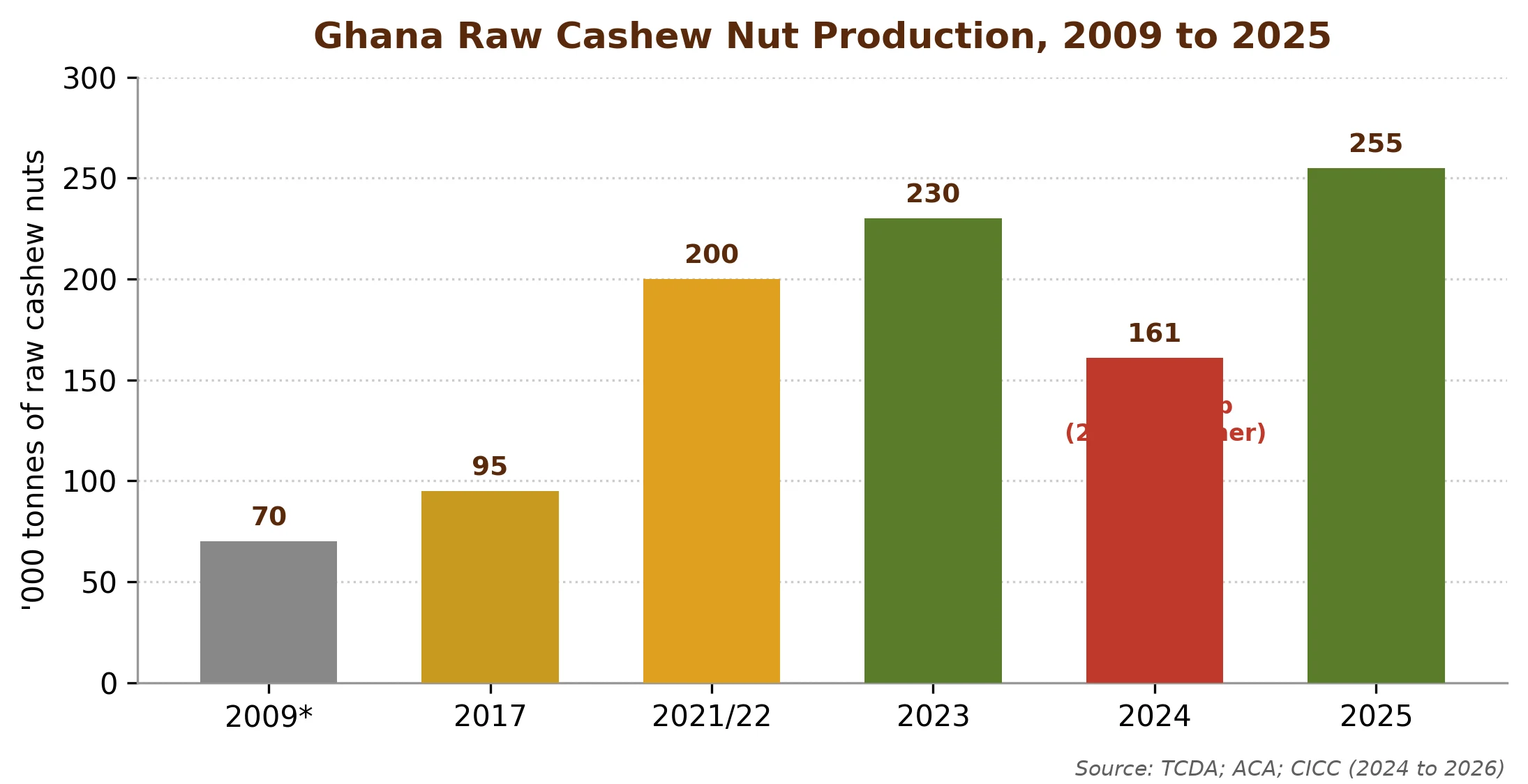
Start with the numbers that frame the crop. Ghana produced about 255,000 tonnes of raw nuts in 2025, a provisional recovery (Tree Crops Development Authority, 2026), after about 161,000 tonnes in 2024, a fall of about 30 percent, and about 230,000 tonnes in 2023 (Tree Crops Development Authority; Food Business Africa, 2023 to 2024). The crop grows on about 234,171 hectares (Conseil International Consultatif du Cajou, 2021/22) in the hands of about 200,000 cashew farmers (Conseil International Consultatif du Cajou; TCDA, 2023).

It is a widely held crop. Cashew is grown across 13 of Ghana's 16 regions, led by the Bono, Bono East and Ahafo transition zone, the belt long known as Ghana's breadbasket (Conseil International Consultatif du Cajou / TCDA, 2023). But the headline recovery hides a crop that swings sharply with the weather from one season to the next, and that volatility is the first thing a buyer or a nursery has to plan around.

Ghana raw cashew nut production has grown over fifteen years but swings sharply with the weather
Figure 1.1 Ghana's raw cashew nut production has grown over fifteen years but swings sharply with the weather
What this means

Production is rising in trend but volatile year to year: adverse weather at flowering cut the 2024 crop by about 30 percent (Tree Crops Development Authority, 2024). Volume cannot be taken for granted, and the businesses that win are those that lock in supply through better trees, irrigation at establishment and farmer contracts rather than hoping for a good year.

~161,000 t
the 2024 crop, a fall of about 30 percent after weather at flowering
~230,000 t
the 2023 crop: volume cannot be taken for granted year to year
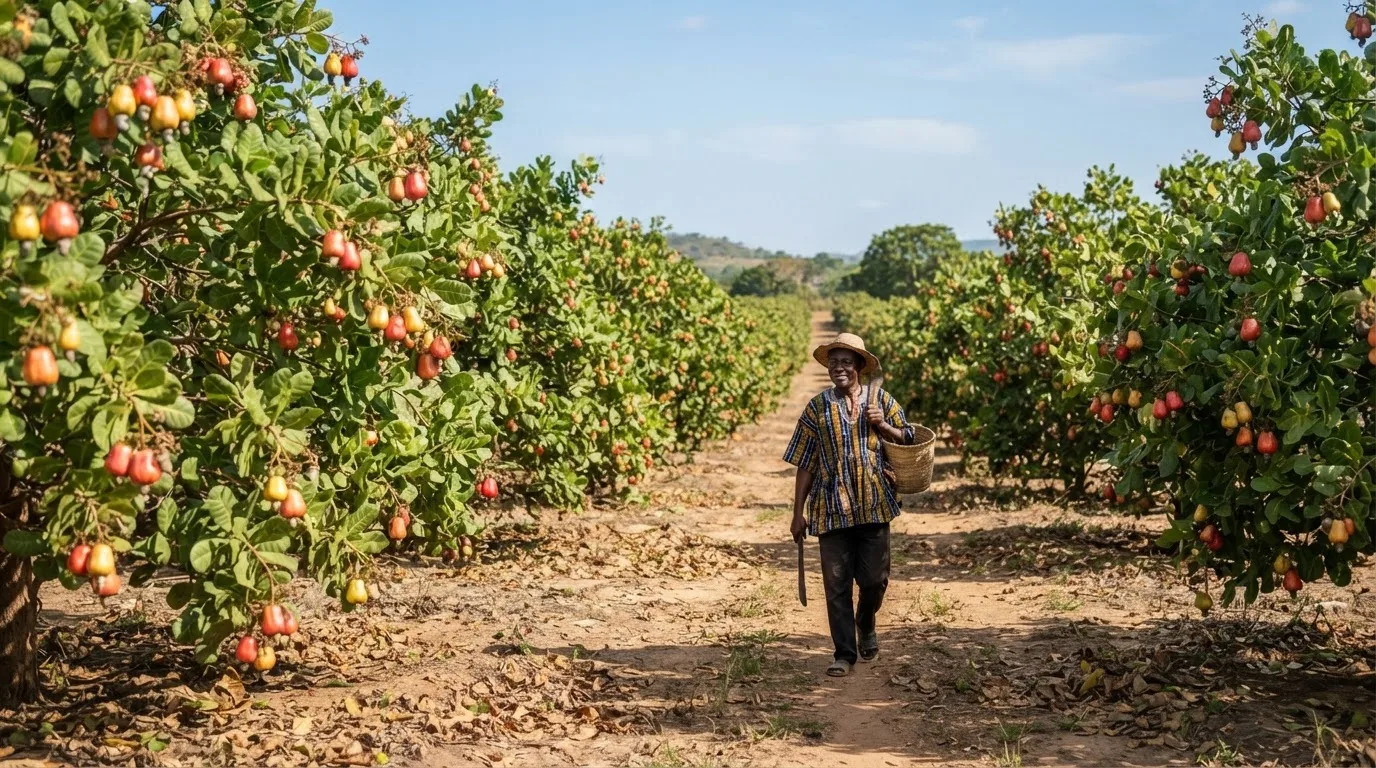
A mature cashew orchard in the Bono transition zone of Ghana, rows of broad low-canopied trees heavy with red and yellow cashew apples and grey nuts, dry-season light through the leaves, a farmer walking a path between the trunks, documentary photography, natural light, warm earthy tones, no text, no watermark
The breadbasket belt
Ghana's heartland: Cashew grows across 13 of Ghana's 16 regions, concentrated in the Bono, Bono East and Ahafo transition zone, the country's breadbasket.

What this means. The lesson of a volatile crop is that supply is a thing you build, not a thing you find. A better tree flowers earlier and holds its crop through a poorer year, so the same planting decision that lifts a farmer's price also steadies a buyer's volume. That is why the planting hole, not the drying yard, is where the sector's reliability is actually decided.

🌰 Why the variety decision is really a price decision 🌰

Cashew is sold on two quality numbers, and both are set by the tree. The first is the kernel outturn ratio, the weight of good kernel in an 80 kilogram bag of nuts; the second is the nut count, how many nuts make up a kilogram. Ghana's 2025/26 price formula rewards a kernel outturn ratio of about 46, a nut count of about 190 a kilogram (170 to 210 for export) and moisture of no more than 10 percent (Tree Crops Development Authority, 2025).

Old unimproved trees miss those targets. They give small, variable nuts and typically fall short, at a realised kernel outturn ratio of about 42 (Business and Financial Times, 2025 to 2026), which drags down the price a farmer or an aggregator can command. Improved clones exist that hit or beat the target, so the choice made once, in the planting hole, is priced on every bag for the next twenty to thirty years.

~46
kernel outturn ratio the 2025/26 price formula rewards
~42
realised outturn on old unimproved trees, which drags the price
~190
nuts per kilogram target, with moisture no more than 10 percent
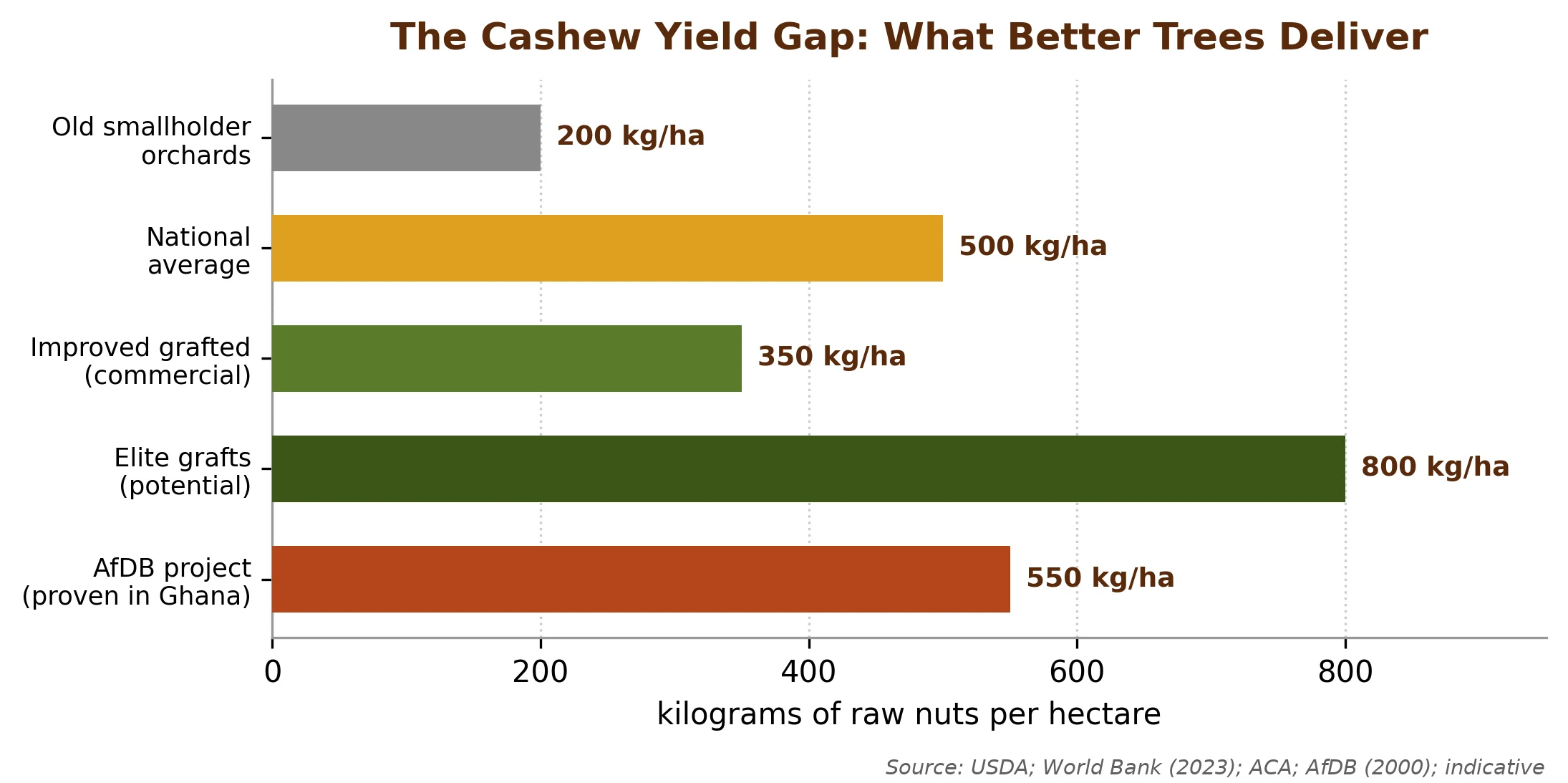
Better trees, not more land: grafted and elite material multiplies cashew output per hectare
Figure 1.2 Better trees, not more land: grafted and elite material multiplies cashew output per hectare
What this shows

Better trees, not more land, are the cashew yield story. The step from an old seedling to grafted and then elite material multiplies output per hectare, which is why the cheapest way to grow the crop is to replant it well rather than to clear more bush.

The yield gap is wide. The yield gap behind that price is wide. Old smallholder orchards average about 200 kilograms a hectare (USDA; African Cashew Alliance, 2012 to 2025), while improved grafted material reaches about 350 to 650 kilograms a hectare (African Cashew Alliance, 2024), and elite grafts can reach up to about 800 kilograms a hectare (Ghana estimates / AfDB target, 2000 to 2025).

~200 kg/ha
old smallholder orchards, the low base the whole sector starts from
~550 kg/ha
the AfDB project benchmark: a proven near-tripling with better material
up to ~800 kg/ha
elite grafts, the ceiling improved material can reach

The most credible Ghana benchmark is the African Development Bank Cashew Development Project, which lifted yields from 200 to about 550 kilograms a hectare with better material and practice (Ministry of Food and Agriculture; African Development Bank, 2000 to 2008). That is a proven near-tripling of output from the same land, the same labour and the same rain, changed only by the tree in the ground.

What this means. Read the two numbers together and the variety decision stops being agronomy and becomes finance. A high-outturn clone lifts both the yield per hectare and the price per bag, so it pays twice, while a cheap unimproved seedling caps both for the life of the tree. The single highest-return decision in cashew is the one taken before the tree is even planted.

🌰 What Ghana has to plant: the clone inventory 🌰

Within the improved stock, Ghana has a genuine choice of material, and the choice is not one of better against worse but of trait against trait. The Cocoa Research Institute of Ghana has spent two decades selecting and breeding cashew, and three groups of planting material matter for a business decision.

The first are the selection clones, the CRIG W-series (for example W278, W266 and W227), chosen for vigour, nut yield and nut weight (Dadzie et al., 2014). The second are the parental clones, local common-type parents such as SG266, SG276 and SG287 crossed with exotic parents, notably BE203 from Benin, a tolerant, high cropping-efficiency line, and A2 from Brazil, a dwarf type carrying jumbo nuts above 10 grams (Adu-Gyamfi et al., 2020). The third are the F1 hybrids, improved crosses such as SG287 x BE203, the best combiner in trials at about 939 kilograms a hectare, and drought-escape crosses with Tanzanian parents (SG266 x TAN992) for the drier savanna (Adu-Gyamfi et al., 2020; African Cashew Alliance, 2024).

37.7%
W278, the highest kernel outturn of the CRIG clones
8.6 g
W227, the largest nut, planted for a large-nut premium
~939 kg/ha
SG287 x BE203, the best all-round hybrid in trials
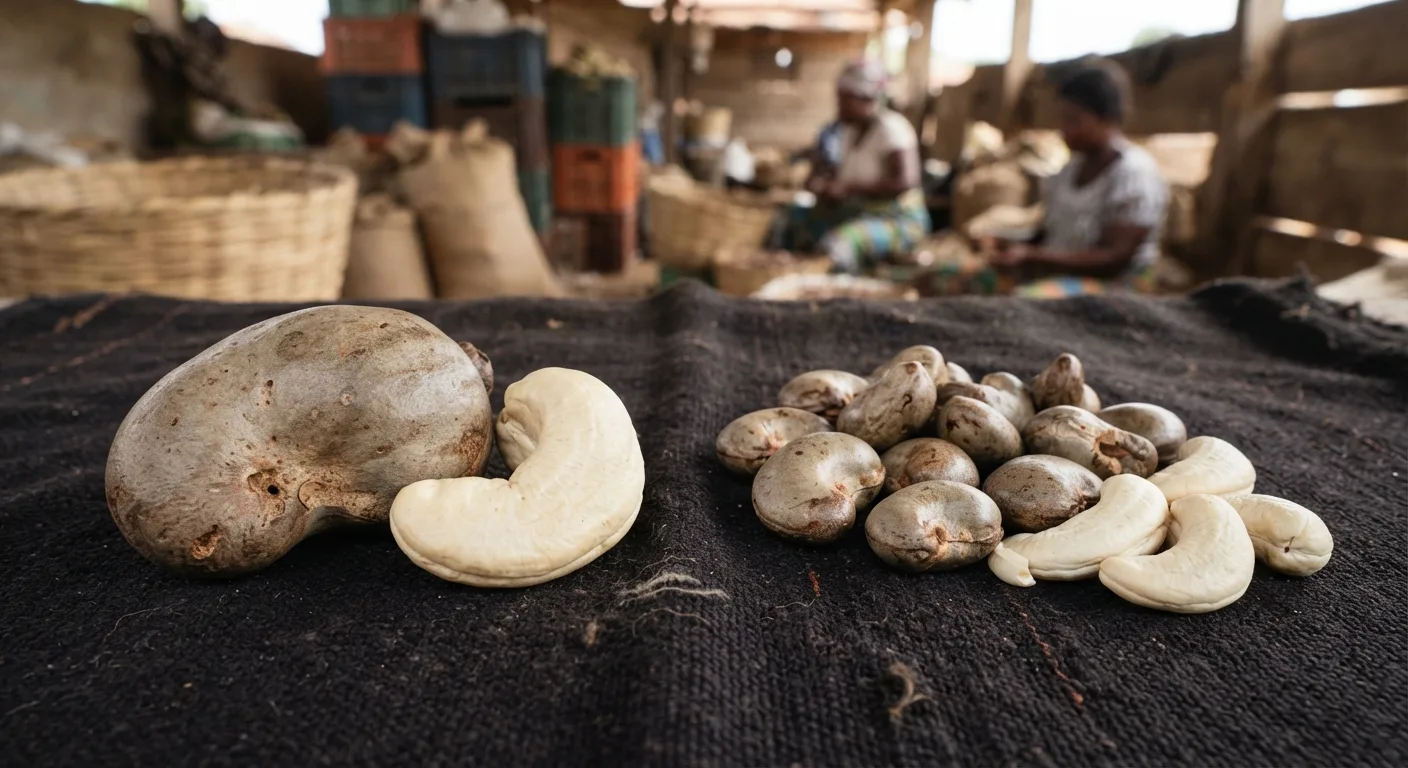
Cashew nuts and kernels of very different sizes laid side by side on a dark cloth, a large jumbo A2-type nut and its plump kernel beside a cluster of smaller high-outturn nuts, close macro detail, studio-style daylight, documentary photography, natural light, warm earthy tones, no text, no watermark
Weight against outturn

A big jumbo nut and a high kernel outturn are different traits pulling in different directions: the grower chooses one for the buyer already lined up.

Table 1.1: Selected Ghana cashew clones and crosses, with the trait each one is planted for
Clone / crossKernel outturnNut weightYield (trial)Best-fit use
W278 (CRIG)37.7% (highest)medium~1,443 kg/haExport-grade kernel
W266 (CRIG)22.0% (low)medium~1,351 kg/haDual-trait, high yield
W227 (CRIG)medium8.6 g (largest)lowLarge-nut premium
A2 (Brazil, dwarf)medium>10 g (jumbo)compactHigh-density, jumbo nut
BE203 (Benin)medium~7 ghigh efficiencyHardy parent, savanna
SG287 x BE203goodmedium~939 kg/haBest all-round hybrid

Sources: Dadzie et al. (2014); Adu-Gyamfi et al. (2020); African Cashew Alliance (2024). Research-station trial figures; farm yields are lower.

What this means. The trade-off to understand is that nut weight and nut yield pull against each other: the genes for a big jumbo nut tend to lower total yield (Adu-Gyamfi et al., 2020). A grower therefore chooses a variety for a market, not in the abstract. A processor chasing large white wholes wants A2-type jumbo material, while a farmer paid on outturn wants a high-kernel-outturn clone such as W278. There is no single best tree, only the best tree for the buyer you have already lined up.

🌰 Seed against grafted, and the rules that just changed 🌰

The other half of the planting decision is not which tree but how the tree is made. Unselected seedlings are cheap but unpredictable: they do not keep the mother tree's qualities, and they flower late. Grafted seedlings, made by joining a shoot from an elite tree onto a young rootstock, keep the parent's traits and can flower in the very first year.

The yield difference is large. Good planting material can lift a single tree from three or four kilograms of nuts to as much as fifteen (African Cashew initiative, 2011). Grafting is a skilled but low-cost technique, and Ghana's own research has already worked out the best method, so the barrier is not the science but the supply of trained hands and elite scions (the agronomy is covered in Pillar 4).

A woman tending young grafted cashew seedlings in black poly bags under a shade net in a Ghanaian nursery, rows of small green trees, a watering can in hand, dappled light through the netting, documentary photography, natural light, warm earthy tones, no text, no watermark
Women-led nurseries
Fifteen kilograms, not four: a grafted tree keeps the parent's traits and flowers in the first year.

The rules just changed: certified planting material is now the law. Ghana has now moved planting-material quality from advice to law. Under the Tree Crops Regulations (L.I. 2471), only TCDA-certified planting material may be sold from 3 July 2026 (Tree Crops Development Authority, 2026). A conveyance certificate system now also controls the movement of cashew, cutting out illegal trading. The state is both regulator and buyer. The Planting for Export and Rural Development programme is distributing about 5 million improved seedlings, while the national plan needs more than 19 million grafted seedlings to reach a target of 300,000 tonnes by 2027 (Tree Crops Development Authority, 2026). For a business the shift is decisive: planting material is no longer a commodity anyone can sell, it is a licensed activity with a quality standard, a certificate trail and a large public buyer, exactly the kind of market where an early, compliant entrant can build a durable position.

>19 million
grafted seedlings the national plan needs to hit 300,000 tonnes by 2027
~5 million
improved seedlings distributed so far: the supply gap is the market
🌰 Opportunity 🌰
01

Certified grafted-seedling nurseries. The clearest low-capital entry in the whole sector needs a shade structure and elite scions, not land. From 3 July 2026 only TCDA-certified material may be sold, yet the national programme needs more than 19 million grafted seedlings against about 5 million distributed so far (Tree Crops Development Authority, 2026): a protected, undersupplied, policy-driven market, in which women-led nurseries already have a track record (African Cashew initiative, 2011).

02

Scion multiplication and clonal gardens. A nursery is only as good as the elite material behind it. Securing scions from CRIG clonal gardens, and multiplying them into new scion banks, supplies the input every certified nursery now depends on and that the whole sector is short of.

03

Advisory and matched-variety supply. Because a variety is chosen for a market and a zone, an advisory-plus-certified-scion package, pairing the right clone to the buyer and the agro-ecology, turns a bag of seedlings into a service farmers will pay a premium for.

🌰 The risks that sit inside the planting decision 🌰

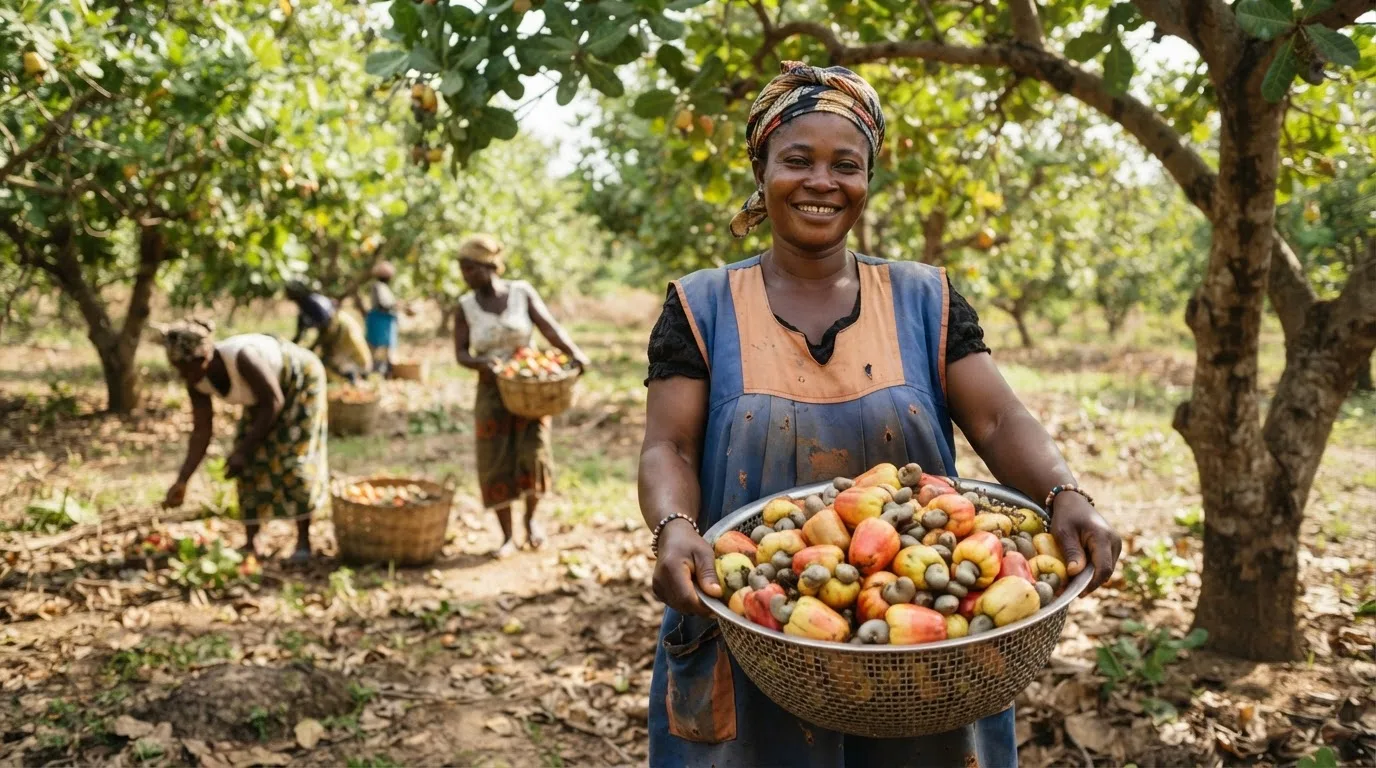
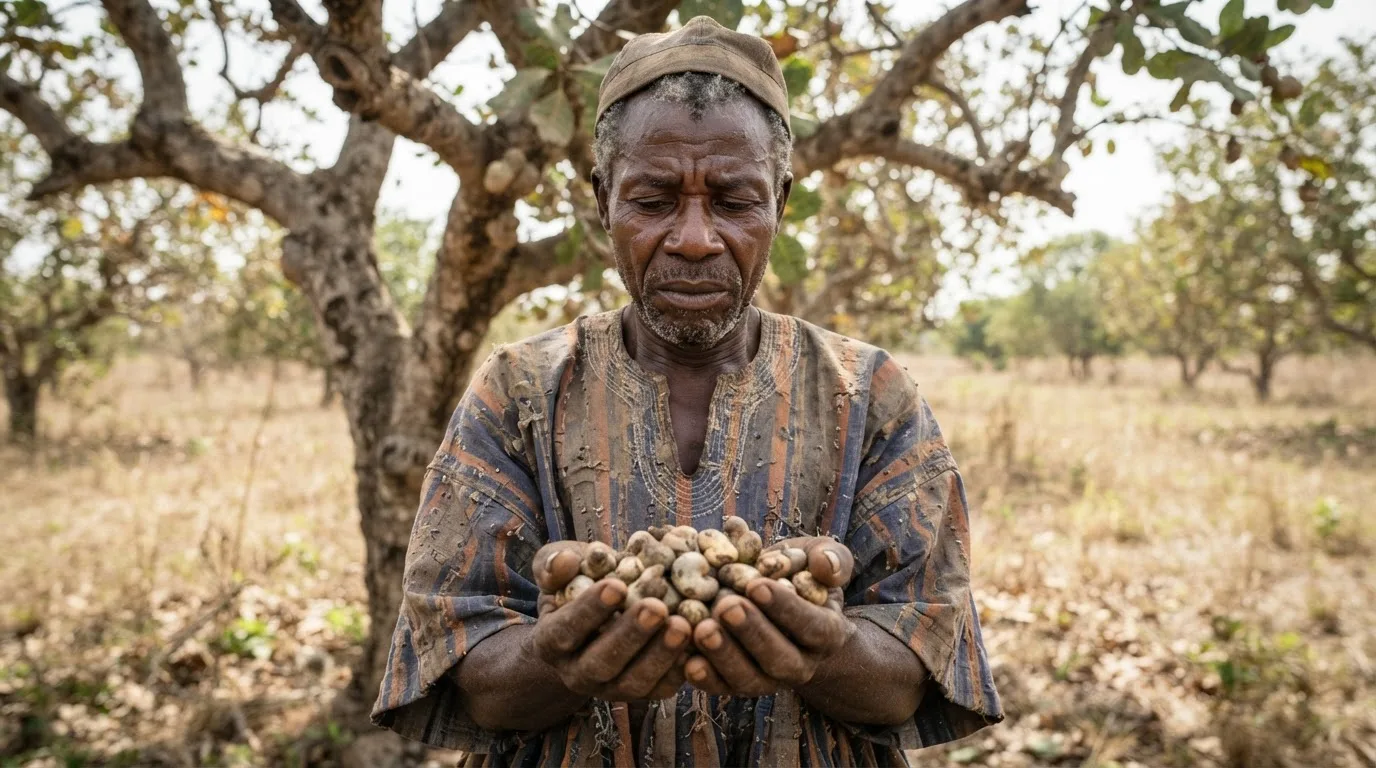
A farmer holding a handful of small, variable cashew nuts from old unimproved seedling trees

Saved, unimproved or unknown planting material

HIGH
What it is

Planting seed of unknown parentage gives small, variable nuts and a low kernel outturn, which caps the price for the tree's whole 20 to 30 year life. The cheapest seedling is the most expensive mistake in cashew, because it is paid for on every bag for decades.

Evidence

Old smallholder orchards average about 200 kilograms a hectare against 550 or more with improved material (Ministry of Food and Agriculture; African Development Bank, 2000 to 2008).

Who it hits

Farmers who buy the cheapest seedlings, and the aggregators who then handle their low-outturn nuts.

How to manage it, and the opening

Buy only TCDA-certified grafted material, compulsory from 3 July 2026; the mirror-image opening is a certified nursery and scion-multiplication business that supplies it.

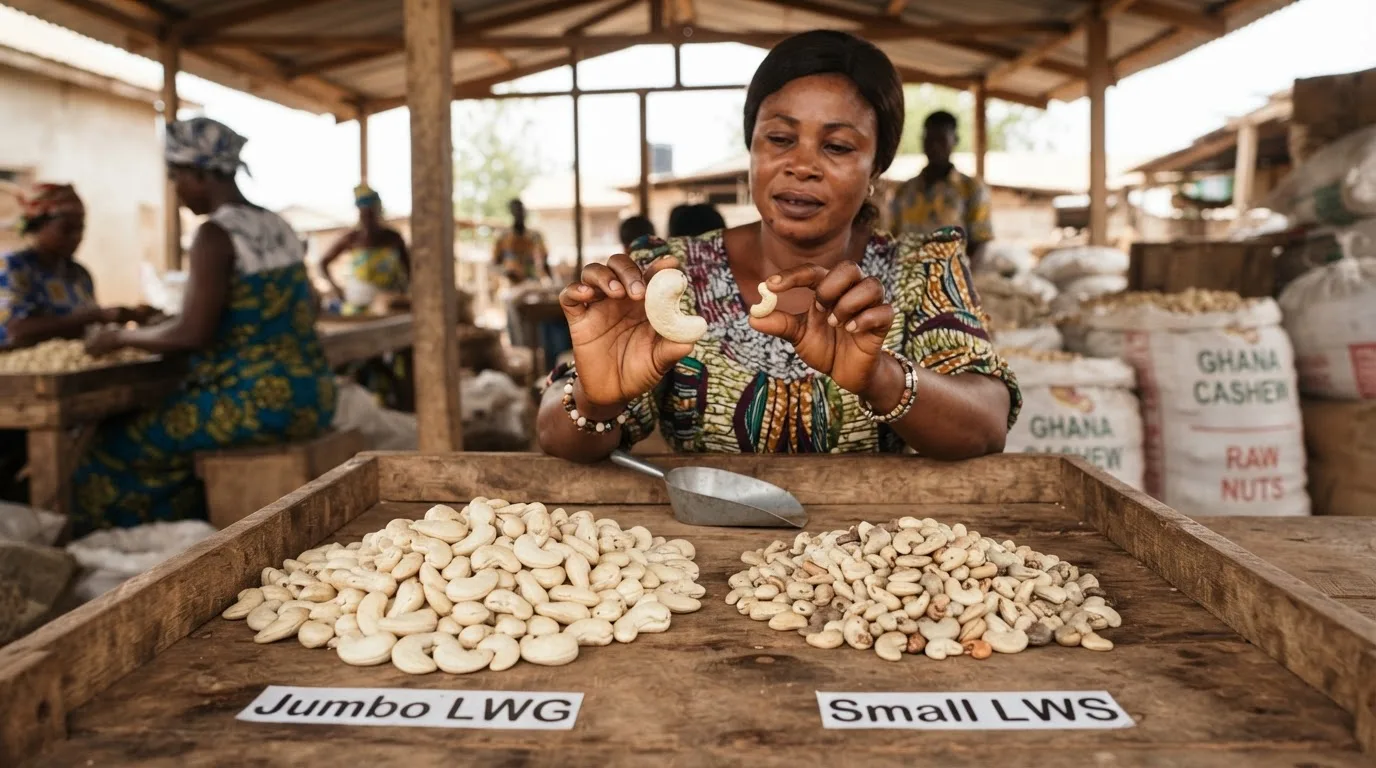
Cashew nuts of very different sizes side by side, a jumbo clone against a high-outturn clone

Planting the wrong variety for the market

MEDIUM-HIGH
What it is

A jumbo-nut clone and a high-outturn clone earn from different buyers; planting the wrong one for your market leaves money on the table for the life of the orchard.

Evidence

Nut weight and yield trade off genetically, and kernel outturn ranges from about 22 to 38 percent across CRIG clones (Dadzie et al., 2014; Adu-Gyamfi et al., 2020).

Who it hits

Growers who plant without a buyer or an agro-ecology in mind.

How to manage it, and the opening

Match the variety to the market and the zone before you plant; the opening is to sell an advisory-plus-certified-scion package that makes that match for the farmer.

🌰 Key takeaways 🌰
01

Ghana grows a large, widely spread cashew crop, about 255,000 tonnes across 234,000 hectares and 200,000 farmers, but it swings sharply with the weather and most of the trees are old, unimproved seedlings.

02

Cashew is sold on two numbers set by the tree, the kernel outturn ratio and the nut count, so the variety a farmer plants sets a ceiling on the price that farmer can ever earn.

03

The yield gap is a near-tripling: old seedling orchards average about 200 kilograms a hectare against about 550 or more with improved grafted material, on the same land.

04

There is no single best variety, only the best variety for a buyer and a zone, because nut weight and nut yield trade off against each other genetically.

05

Certified grafted material is now compulsory from 3 July 2026 and badly undersupplied, over 19 million seedlings needed against about 5 million distributed, which makes the certified nursery, scion-multiplication and clonal-garden businesses the first place a new entrant should look.

Where this connects. The variety and propagation choice here sets the yield and quality that the agronomy of Pillar 4 either realises or wastes, and the outturn and nut-count grades decided in the planting hole are the same numbers the market reads at the buying station later in the playbook. The certified-nursery, scion-multiplication and clonal-garden openings reappear wherever the sector's investment map asks where a new entrant should start, and the year-to-year volatility of the crop is exactly what the post-harvest and processing chapters exist to smooth.

Written for each reader

🌰 Practitioner intelligence 🌰

Hover any card to pause and lift it.

For students

If you are thinking of entering, your door is not a plantation but a certified grafted-seedling nursery, which needs a shade structure and elite scions, not land. Learn to graft, and to read a clone by its kernel outturn and nut weight, then supply the material the 3 July 2026 law now forces farmers to buy certified. The trap first-timers fall into is assuming they must own an orchard; the nursery is the asset-light entry, and it hands you a grafting skill and a farmer network you can build on.

For entrepreneurs

First move: lock a scion source from a CRIG clonal garden and a confirmed order, from a farmer group or a plantation buyer, before you build a single seedbed. Register as a TCDA-certified nursery so you can sell legally after July 2026, and price at around GH¢1.50 to 2.00 a seedling. The trap that kills first-timers is raising thousands of seedlings with no buyer and watching them outgrow the bags: secure the order first, then propagate to it.

For investors

Diligence asks: is the nursery TCDA-certified and its scion source a verified elite clonal garden, what is the graft-success rate and the confirmed forward order book, and does the buyer pay on delivery or on survival. The thesis is a protected, undersupplied input market created by law, over 19 million grafted seedlings needed against about 5 million supplied, not a commodity play. Tie disbursement to confirmed seedling orders and certification, not to seedbed capacity, and underwrite the graft-survival risk.

For faculty

Assignment: have students build a variety-selection matrix from Table 1.1, scoring the CRIG clones and crosses on kernel outturn, nut weight and yield for two named buyers, a jumbo-nut kernel processor and an outturn-paid aggregator, then recommend one clone for each with a written justification. Deliverable: a scored matrix plus a one-page recommendation. It teaches that a variety is chosen for a market, not in the abstract.

For ecosystem actors

The lever is to fund and enforce the certified planting-material system: capitalise a private-nursery fund, run certified clonal gardens and scion banks, and police the July 2026 rule at the point of sale. Measure success by the share of new plantings using certified grafted material and by the number of certified nurseries operating. The failure to avoid is subsidising free seedlings of unverified quality, which floods the market with the very low-outturn trees the policy is meant to end.
Download full PDF
UpcomingThis document isn't available yet.