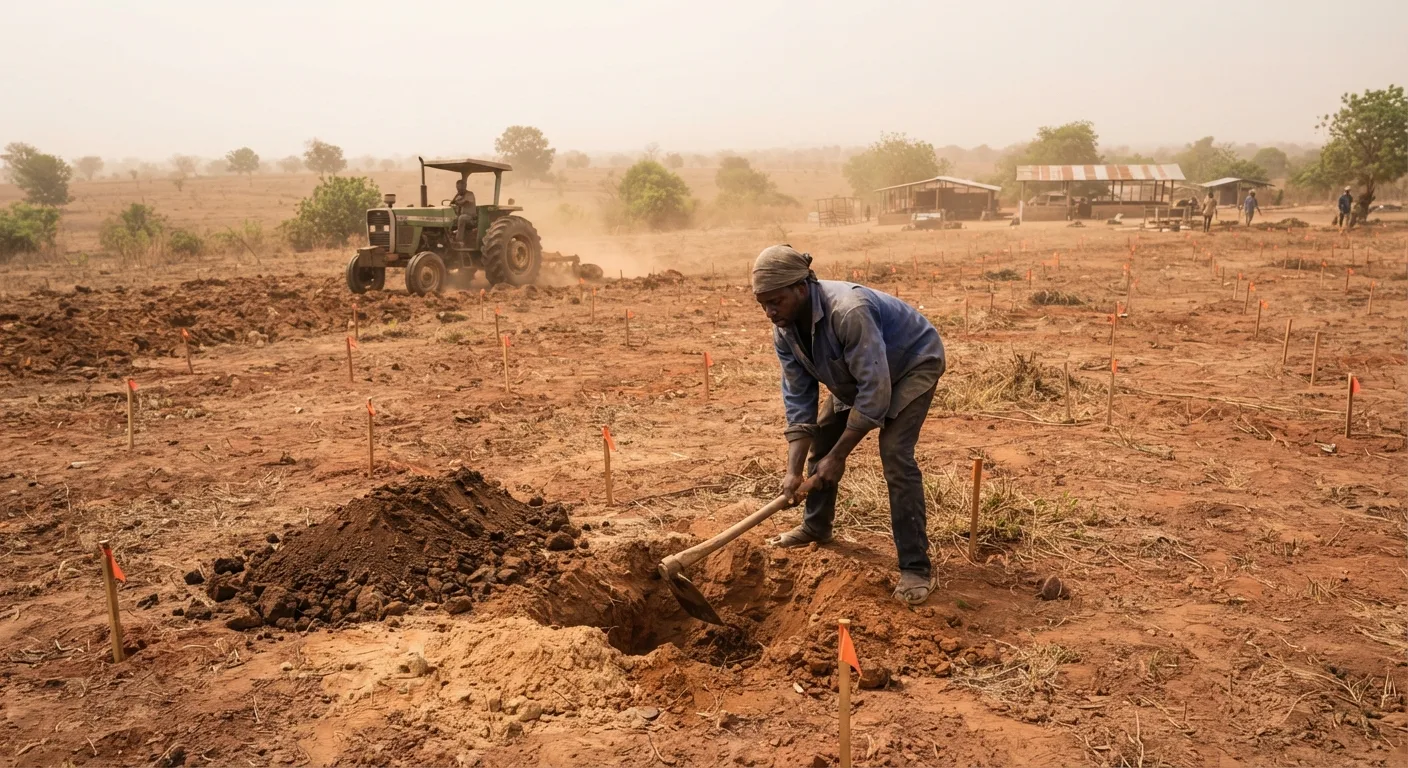
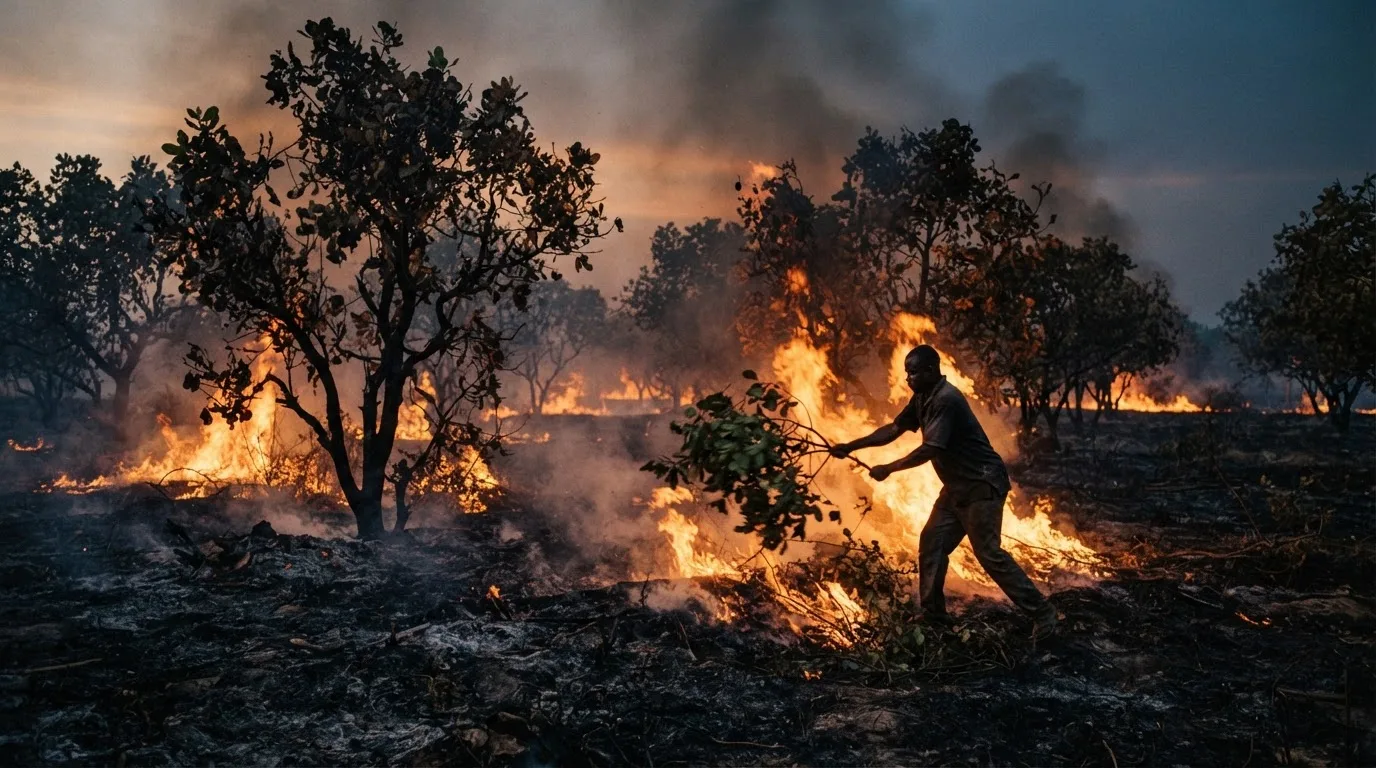
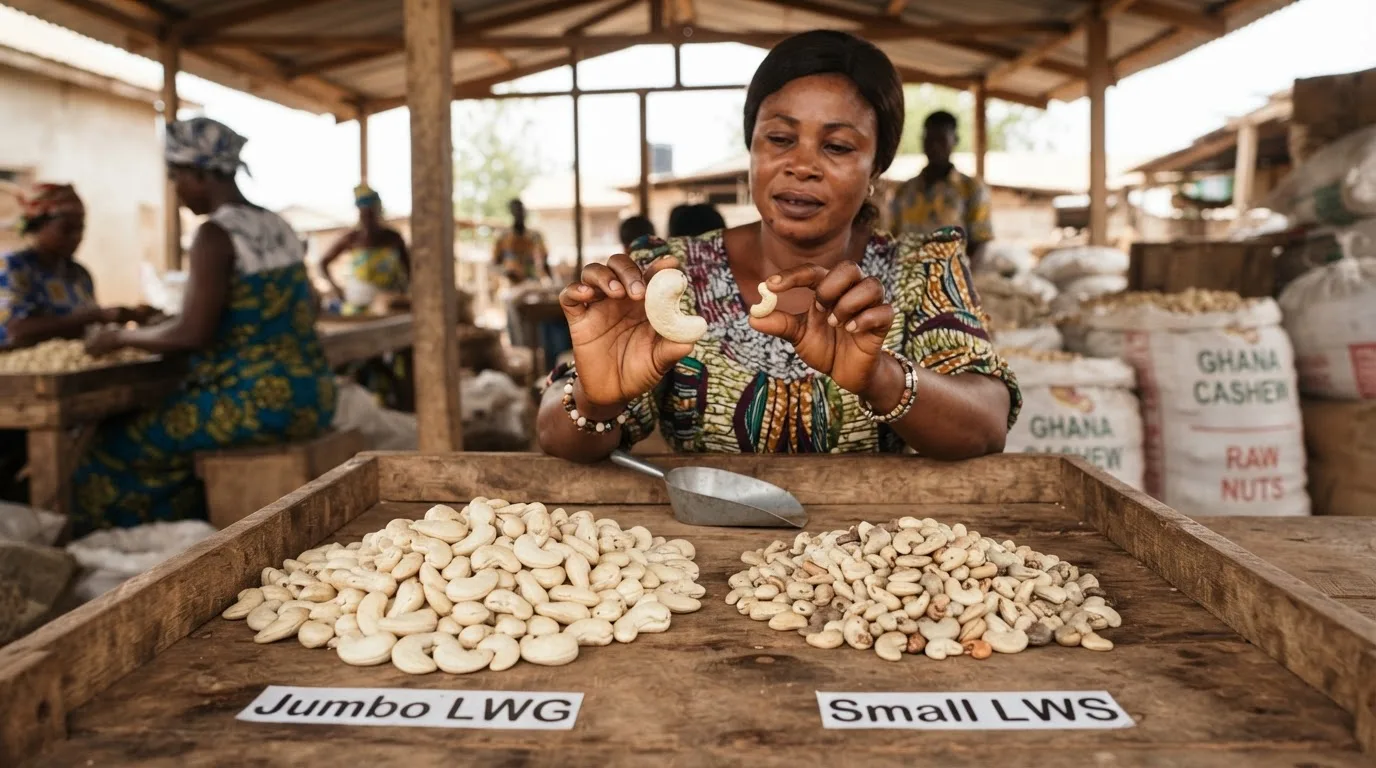
If you are thinking of entering, the door is a service: a grafting-and-top-working crew that rehabilitates old orchards, or a mechanised land-preparation service for the dry-season clearing. Learn top-working, because a rehabilitated tree bears improved nuts within one to two years and farmers will pay for that fast return. The trap is believing you must buy land to be in cashew; the skills of establishment and rehabilitation are the asset-light entry and they build a client base of orchard owners.
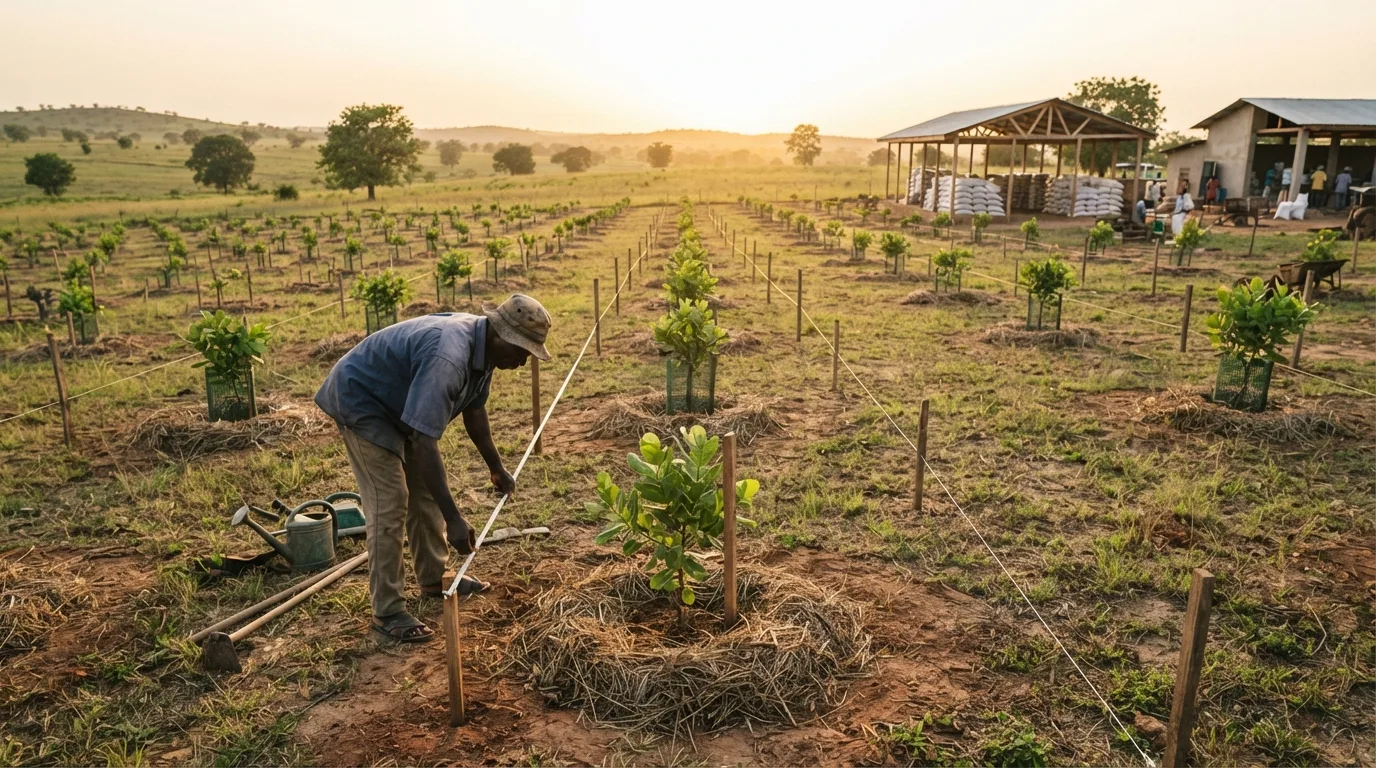
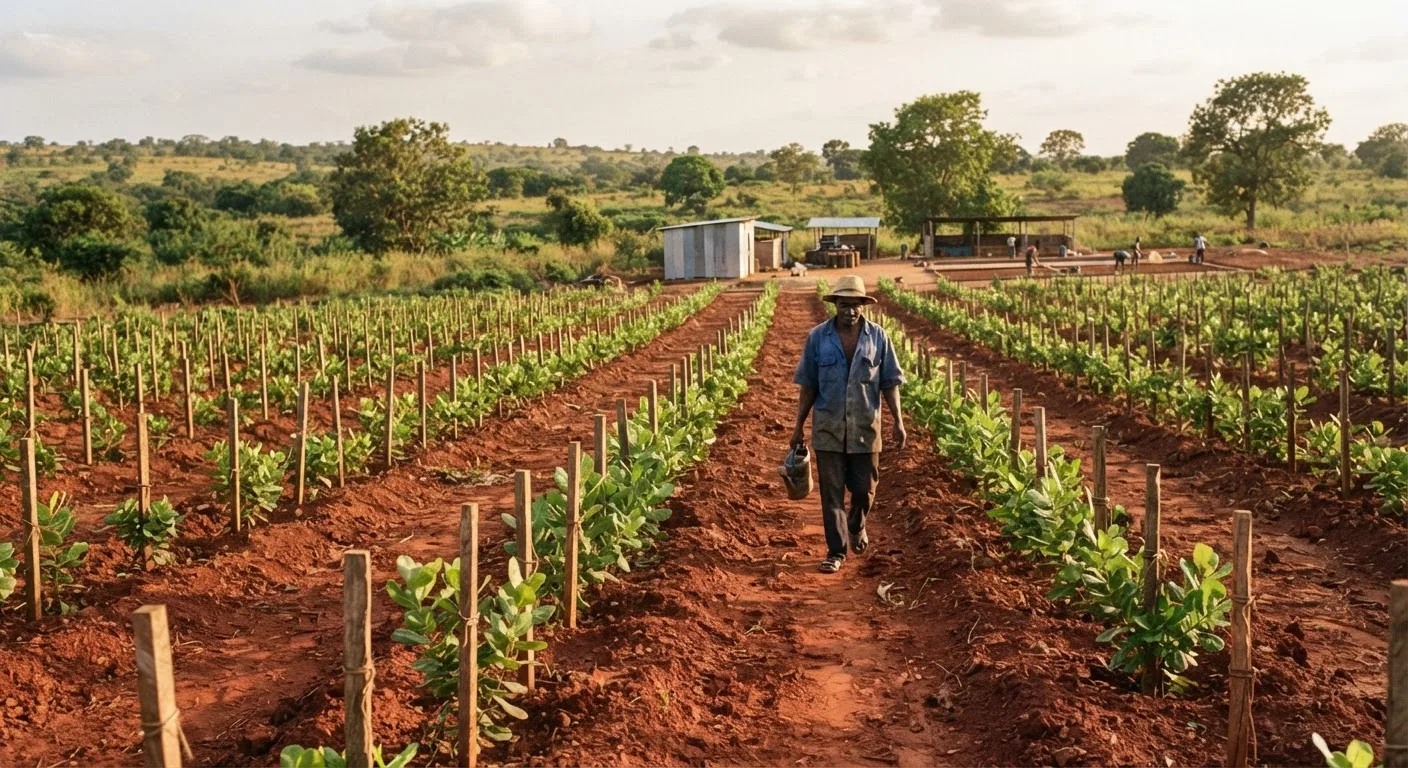
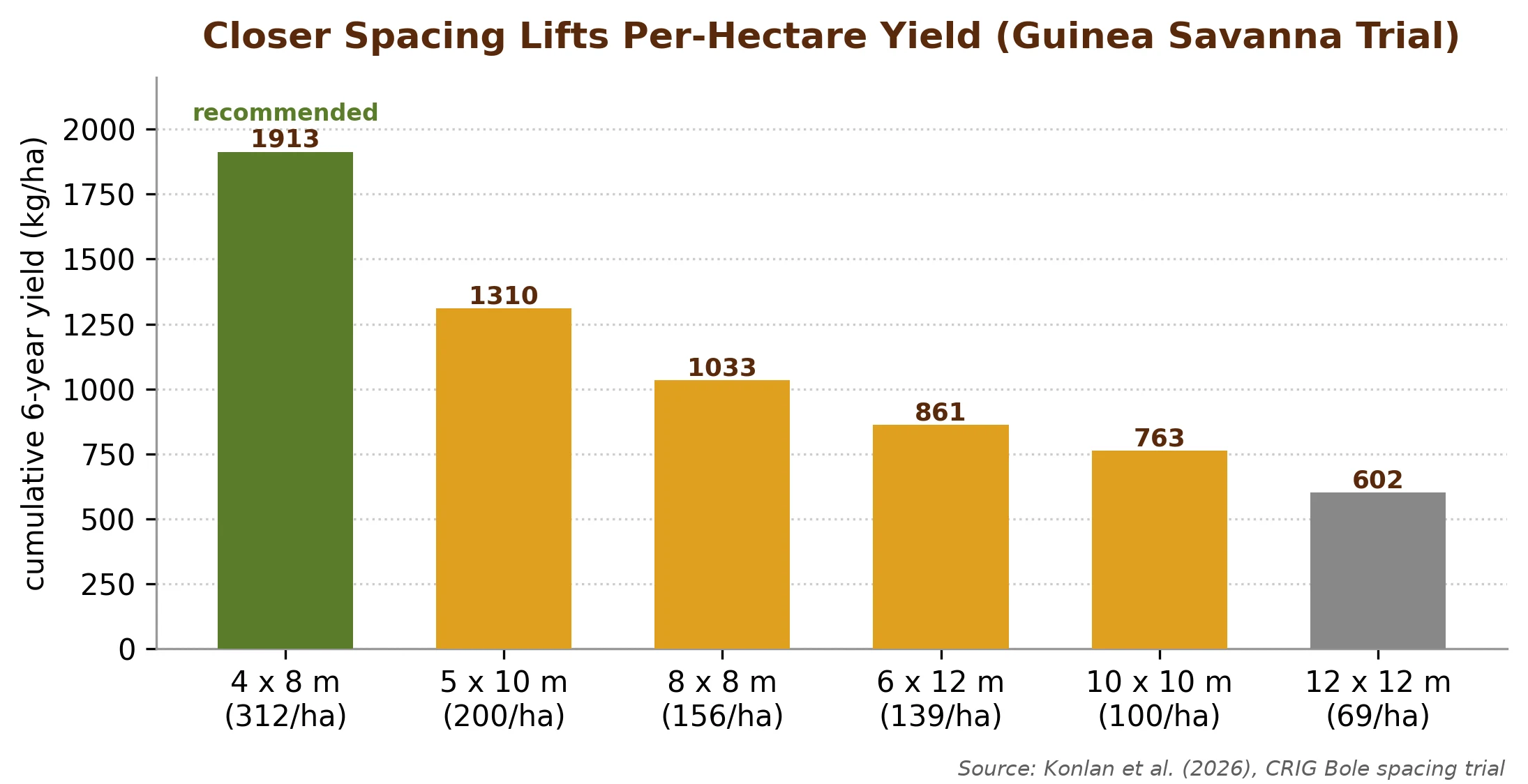
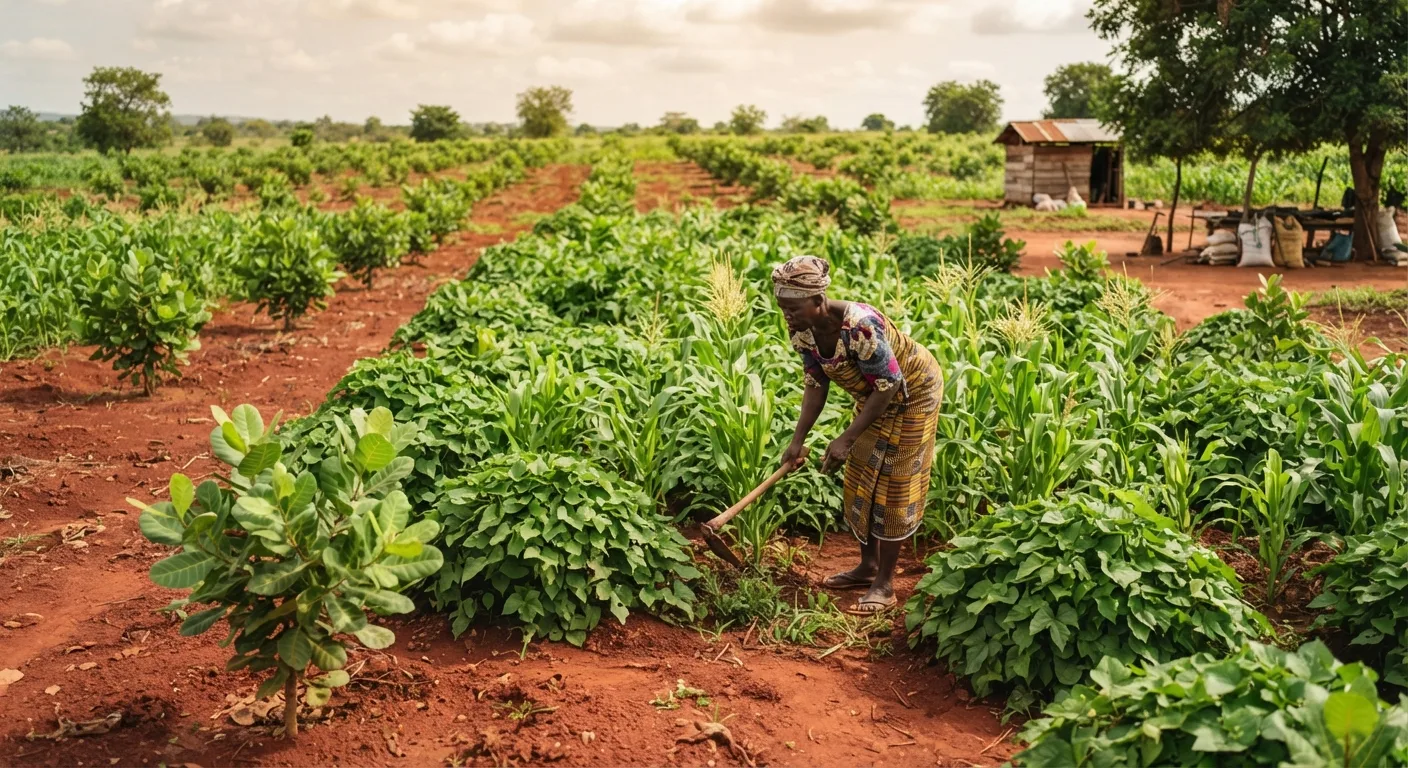
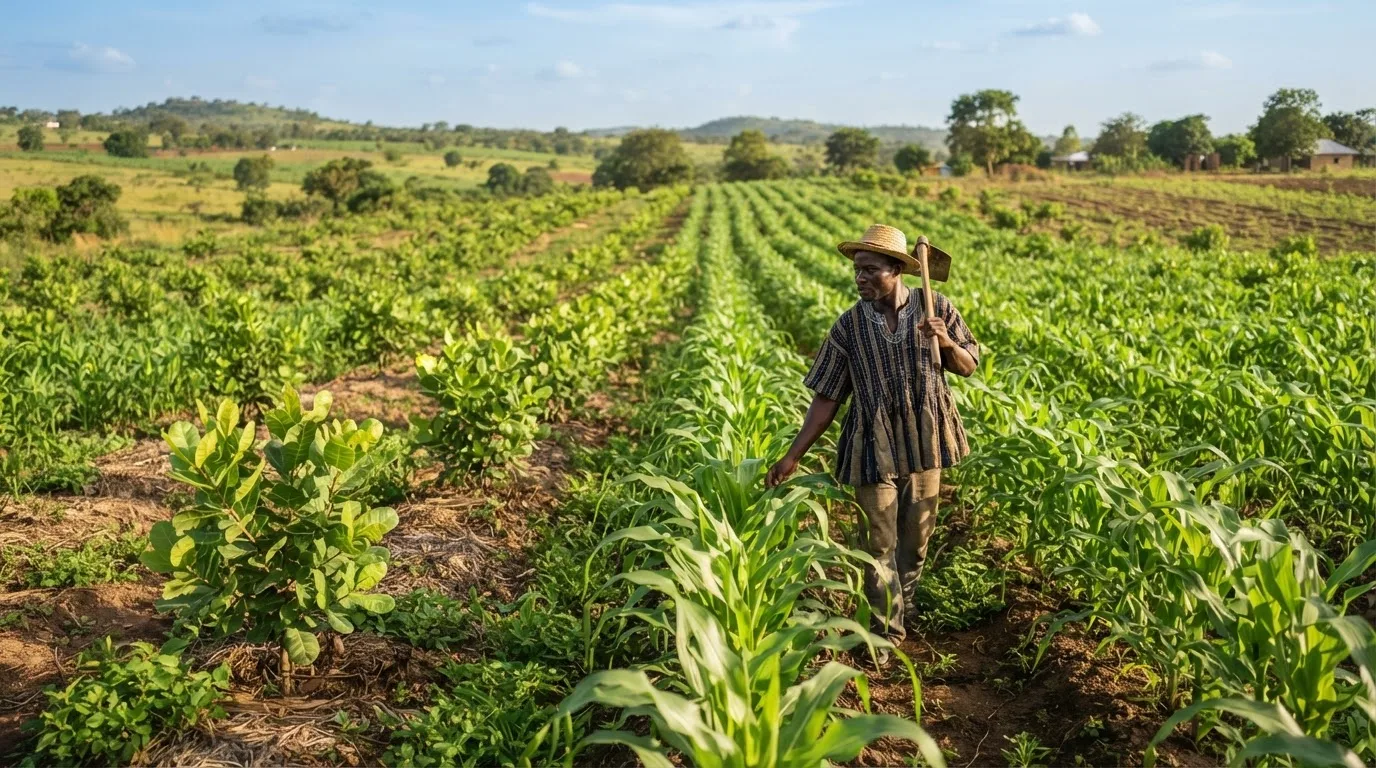
First move: offer a turnkey high-density, 4 by 8 metre, establishment package to a plantation investor, sold with a three-year maize-or-yam intercrop cash-flow plan so the client survives the gestation years. Secure the certified clones, the intercrop inputs and the client's land-readiness before you mobilise labour. The trap is planting on the old 10 by 10 metre default and then never thinning; in the Guinea Savanna, commit to the 4 by 8 metre layout tested at Bole, which gave about 2.5 times the early yield per hectare of 10 by 10 metres.
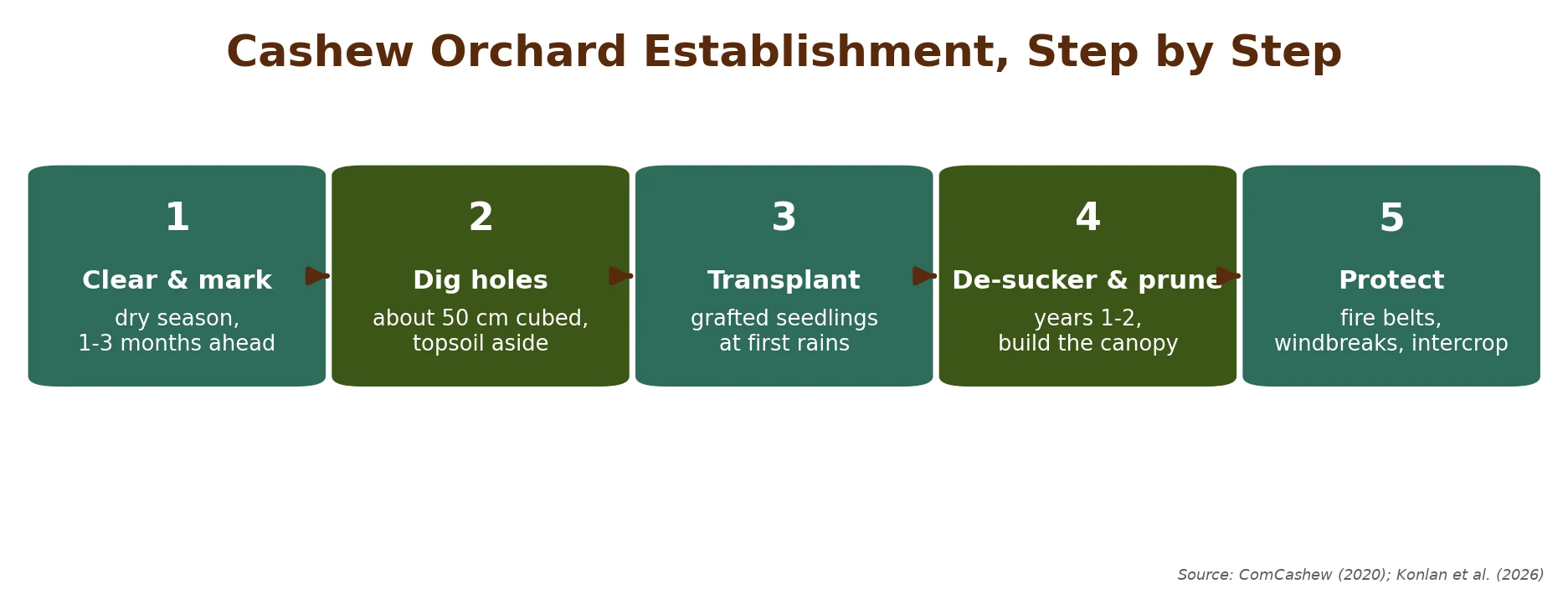
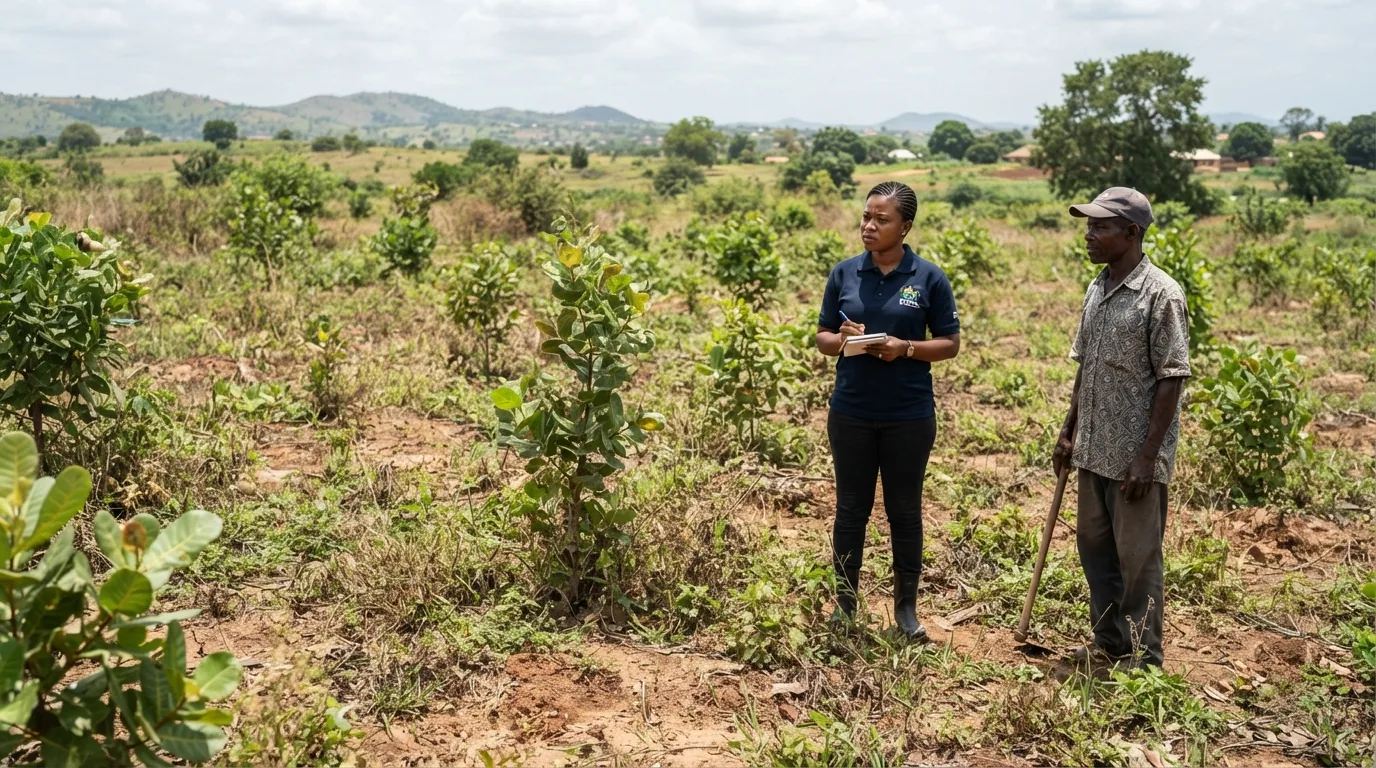
Diligence asks: at what spacing and with what planting material is the orchard established; is there a costed plan for the immature years and an intercrop income bridge; and who manages de-suckering and formative pruning in years one and two. The thesis is that the return is set at planting: density and material decide it before the first nut. Tie disbursement to establishment milestones, survival and canopy formation, and underwrite the gestation-period cash flow.
Assignment: have students model two orchards from the Bole spacing data, 4 by 8 metres against 10 by 10 metres, over six yield years, and calculate the cumulative yield and the value of the difference at GH¢12 a kilogram. The deliverable is a comparison table and a recommendation with the intercrop bridge costed in. It teaches how an agronomic decision, density, is also a financial one.
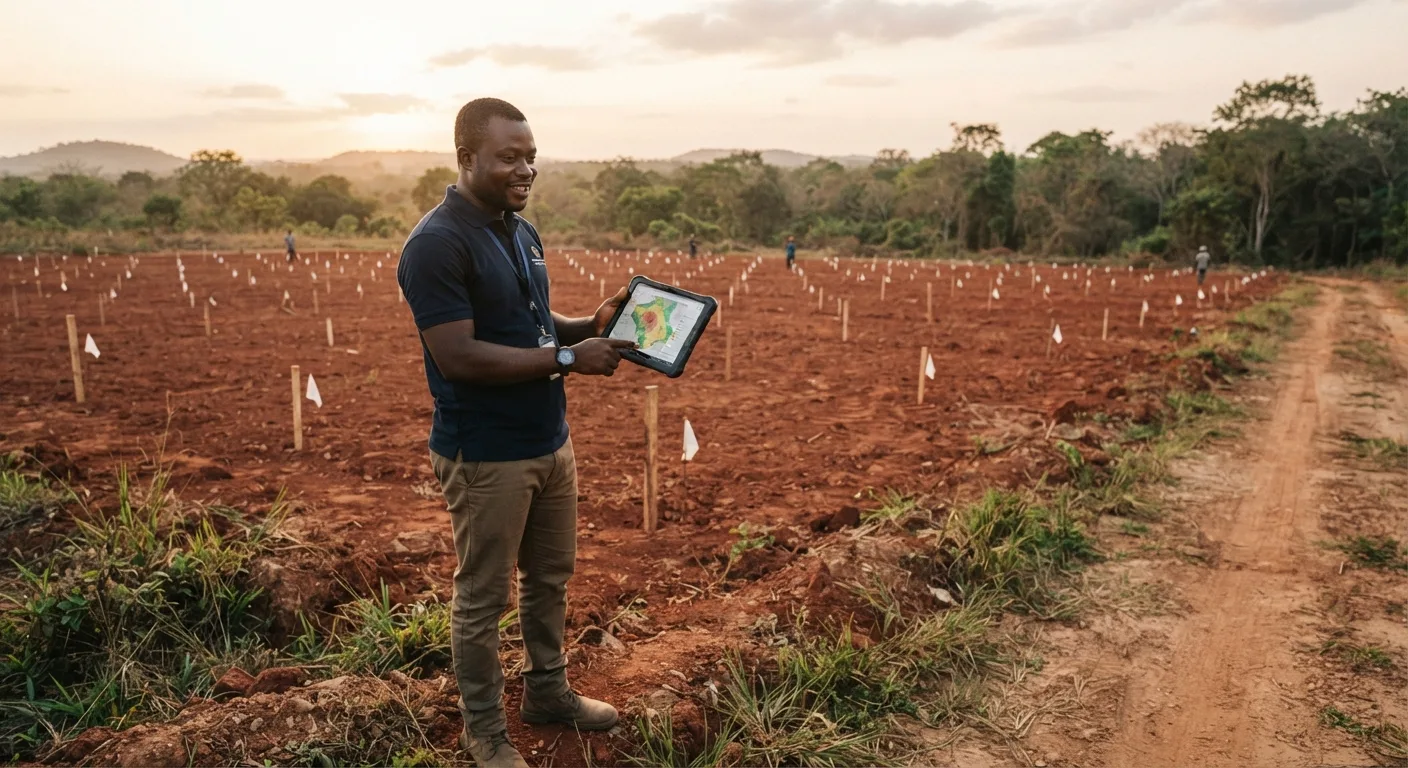
The lever is to move the Bole-tested 4 by 8 metre spacing and top-working into practice: retrain extension officers, subsidise mechanised land preparation, and fund intercrop-input packages that bridge the immature years. Measure success by the share of new plantings at recommended density and by the area of old orchard rehabilitated. The failure to avoid is distributing seedlings without the agronomy, so trees go into the ground at the wrong spacing and underperform for thirty years.
If you are thinking of entering, the door is a service: a grafting-and-top-working crew that rehabilitates old orchards, or a mechanised land-preparation service for the dry-season clearing. Learn top-working, because a rehabilitated tree bears improved nuts within one to two years and farmers will pay for that fast return. The trap is believing you must buy land to be in cashew; the skills of establishment and rehabilitation are the asset-light entry and they build a client base of orchard owners.
First move: offer a turnkey high-density, 4 by 8 metre, establishment package to a plantation investor, sold with a three-year maize-or-yam intercrop cash-flow plan so the client survives the gestation years. Secure the certified clones, the intercrop inputs and the client's land-readiness before you mobilise labour. The trap is planting on the old 10 by 10 metre default and then never thinning; in the Guinea Savanna, commit to the 4 by 8 metre layout tested at Bole, which gave about 2.5 times the early yield per hectare of 10 by 10 metres.
Diligence asks: at what spacing and with what planting material is the orchard established; is there a costed plan for the immature years and an intercrop income bridge; and who manages de-suckering and formative pruning in years one and two. The thesis is that the return is set at planting: density and material decide it before the first nut. Tie disbursement to establishment milestones, survival and canopy formation, and underwrite the gestation-period cash flow.
Assignment: have students model two orchards from the Bole spacing data, 4 by 8 metres against 10 by 10 metres, over six yield years, and calculate the cumulative yield and the value of the difference at GH¢12 a kilogram. The deliverable is a comparison table and a recommendation with the intercrop bridge costed in. It teaches how an agronomic decision, density, is also a financial one.
The lever is to move the Bole-tested 4 by 8 metre spacing and top-working into practice: retrain extension officers, subsidise mechanised land preparation, and fund intercrop-input packages that bridge the immature years. Measure success by the share of new plantings at recommended density and by the area of old orchard rehabilitated. The failure to avoid is distributing seedlings without the agronomy, so trees go into the ground at the wrong spacing and underperform for thirty years.