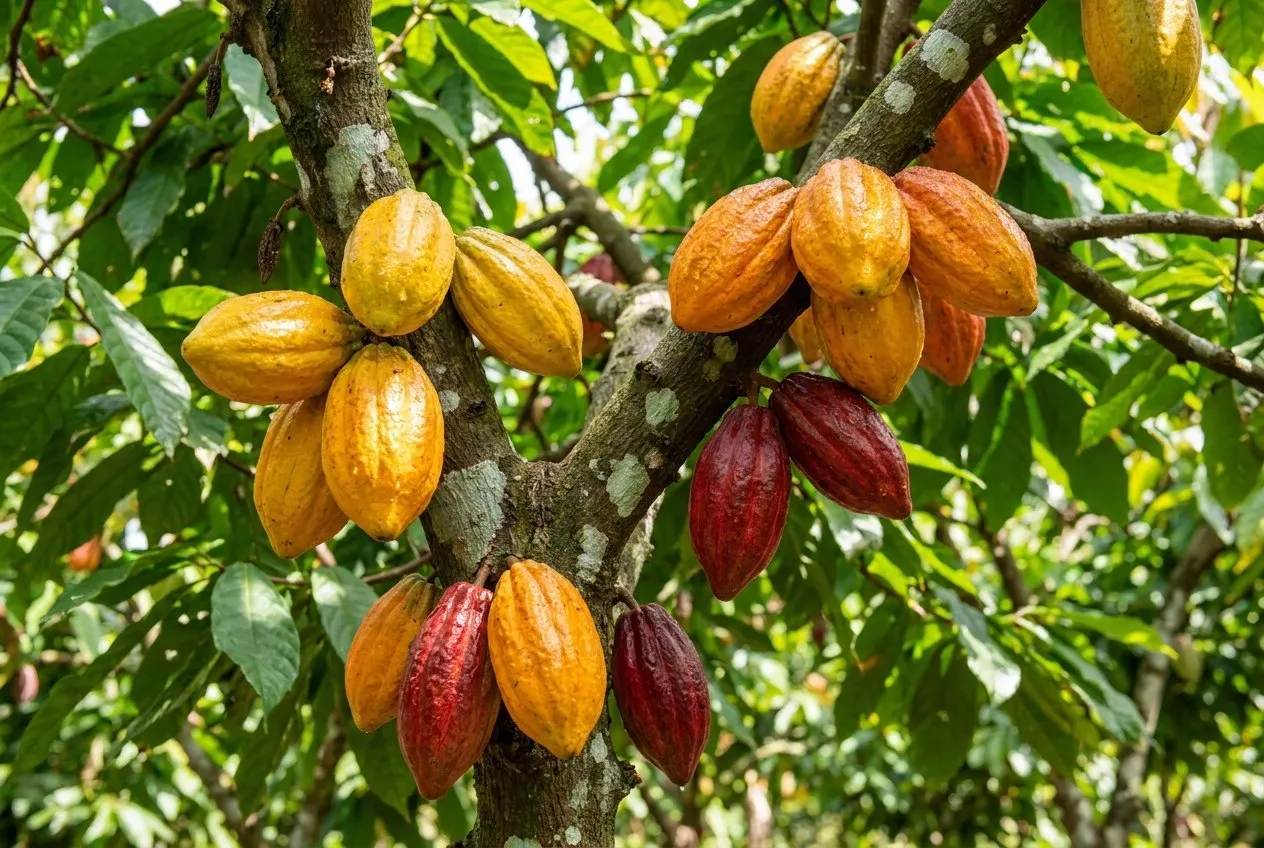
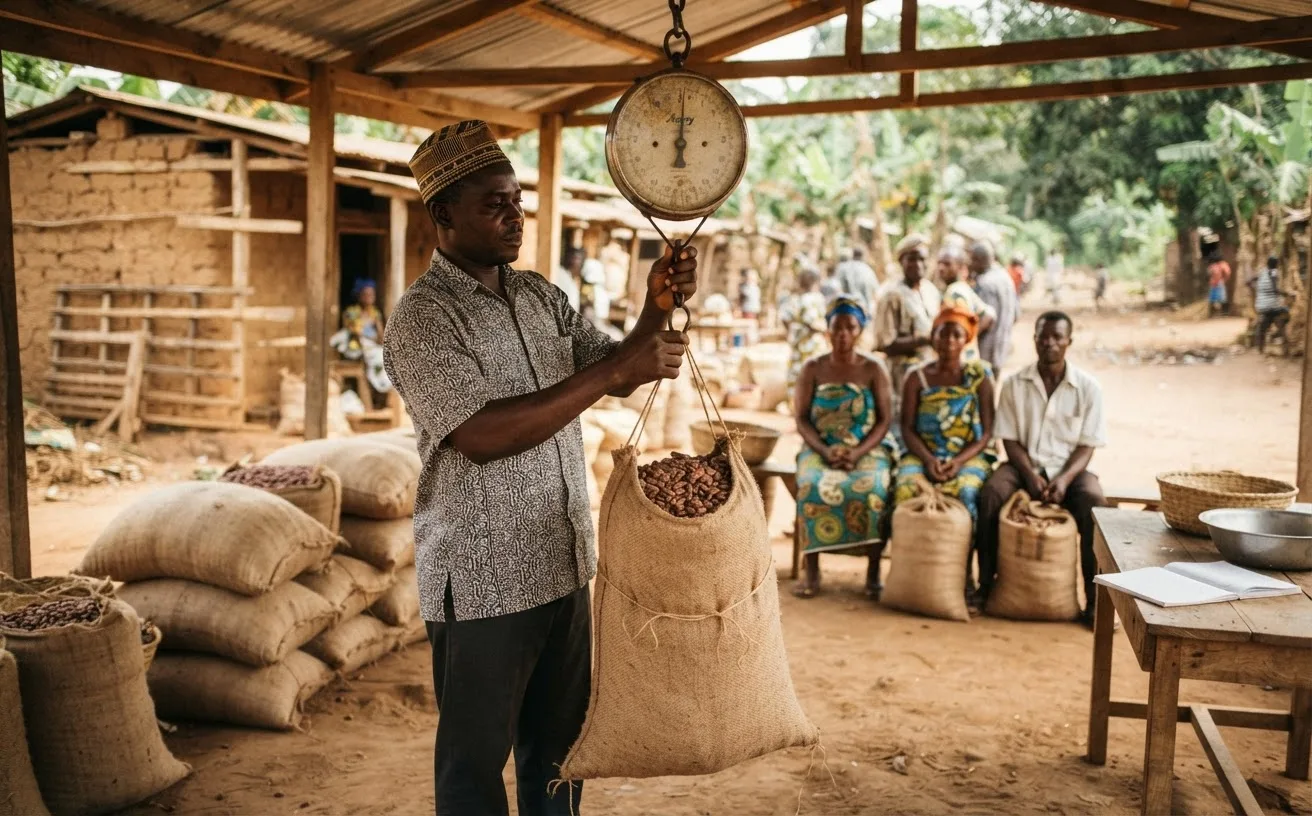
The market.Ghana is the world’s second-largest cocoa producer and one of its smallest capturers of the value the crop carries. The price a farmer receives is administered, set as a share of an export value the state fixes, so it tracks neither the daily world market nor the dollar. The bean leaves the country mostly raw or semi-processed, and the manufacturing and retail that make the money happen abroad. Inside Ghana the chain is a state-run marketing system with a thin private edge, and the one place value could be added at home, the grinding plants, runs at half capacity for want of beans. The opening every pillar returns to from a different angle is the same: keep more of the crop, and more of its value, on Ghanaian soil.
Is this a business for you?
The briefThe opportunity, what it takes to start, and the market signal, in plain terms.
The opportunity
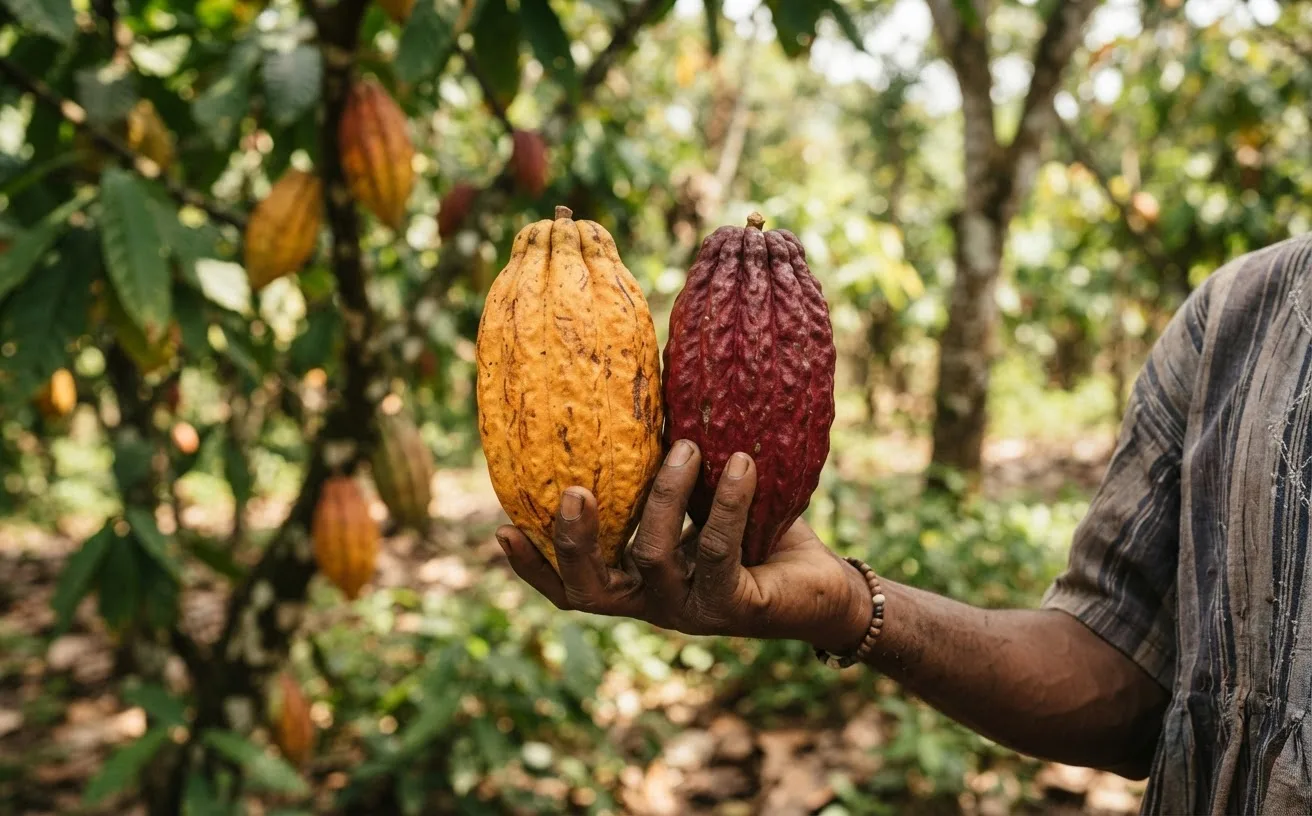
Ghana grows some of the best cocoa on earth yet exports almost all of it as raw beans. The opening for a new entrant is not another farm but value addition: fermentation, drying to export grade, and moving toward butter, powder and chocolate.
What it takes
GHS 0
A realistic starting point. First revenue in about 3 to 4 years to full yield.
Market signal
2nd-largest producer globally
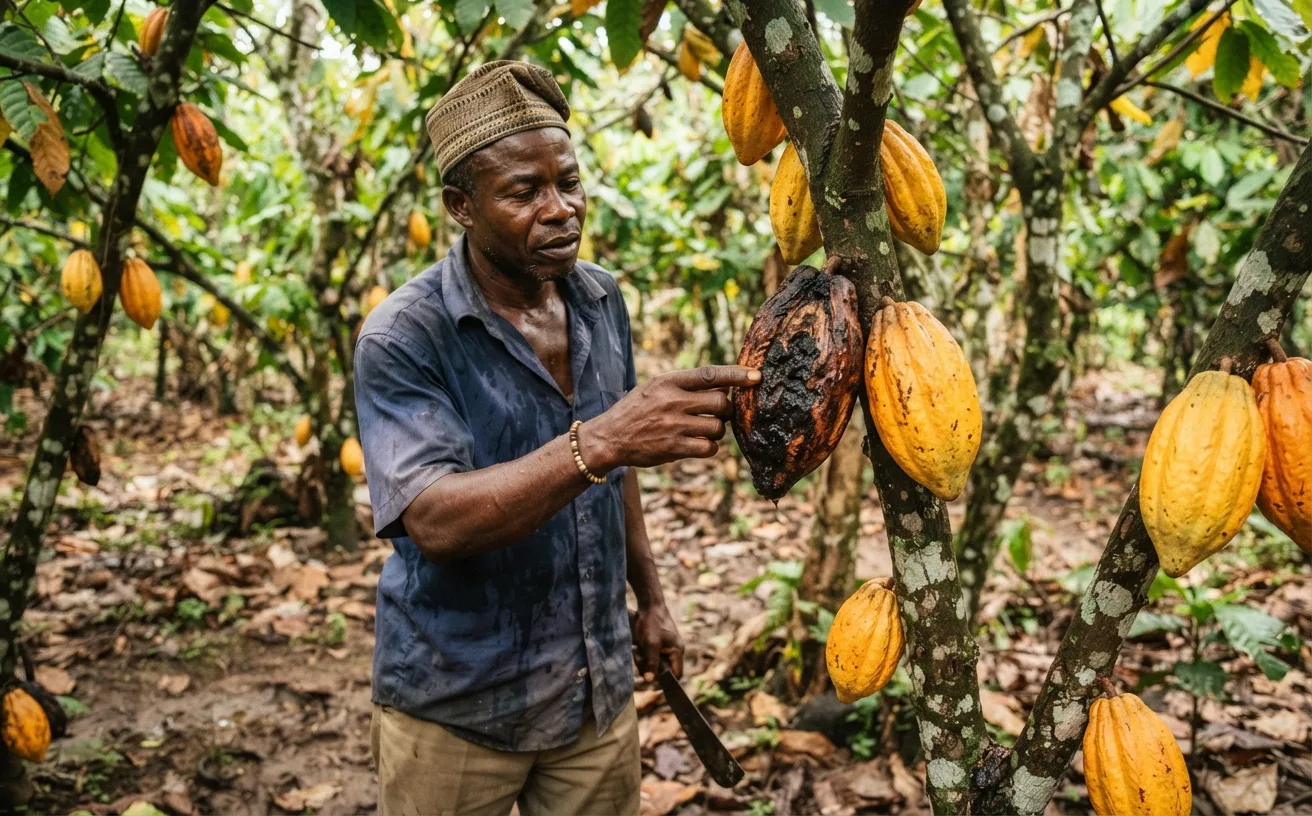
Disease, price and policy risks are set out section by section below.
🔑 The thesis
Ghana is the world’s second-largest cocoa producer and one of its smallest capturers of the value the crop carries. The bean leaves the country mostly raw, the grinding plants that could add value at home run at half capacity for want of beans, and the price a farmer receives tracks a state-fixed share of export value rather than the world market. This playbook shows where the missing value actually sits, and what it would take to keep more of it on Ghanaian soil.
Cocoa at a glance
The numbersThe numbers a student, entrepreneur or investor should carry into the pillars, each unpacked with its source inside. All cedi figures in this playbook use the series-locked exchange rate of about GH¢11.20 to one US dollar.1
0.000 M t
The 2020/21 production peak, not matched since
COCOBOD
0 t
The 2023/24 crop, the worst season in fifteen years
USDA
~0%
Of a finished bar's value retained in Ghana
RVO/Ecorys
0 t
Installed grinding capacity, run at about half
USDA
0 to 90%
Farmer share of gross FOB: a 70 per cent floor, 90 per cent realised in Feb 2026
COCOBOD
0+
Smallholder farmers grow the crop
COCOBOD
~0 to 6%
Of a chocolate bar's value reaches the farm gate
Cocoa Barometer
0 Dec 2026
EUDR applies to large operators; 30 June 2027 for small ones
EU
Footnotes
- Bank of Ghana, Daily Interbank Foreign Exchange Rates (Accra: Bank of Ghana, 2026).↑

Every stage is a business of its own. Find the one that is yours.
The biggest returns rarely sit in production. Read the playbook section by section to see where the real value is.
The playbook, section by section
8 sectionsSix content pillars plus market intelligence and a strategic outlook. Open any section.
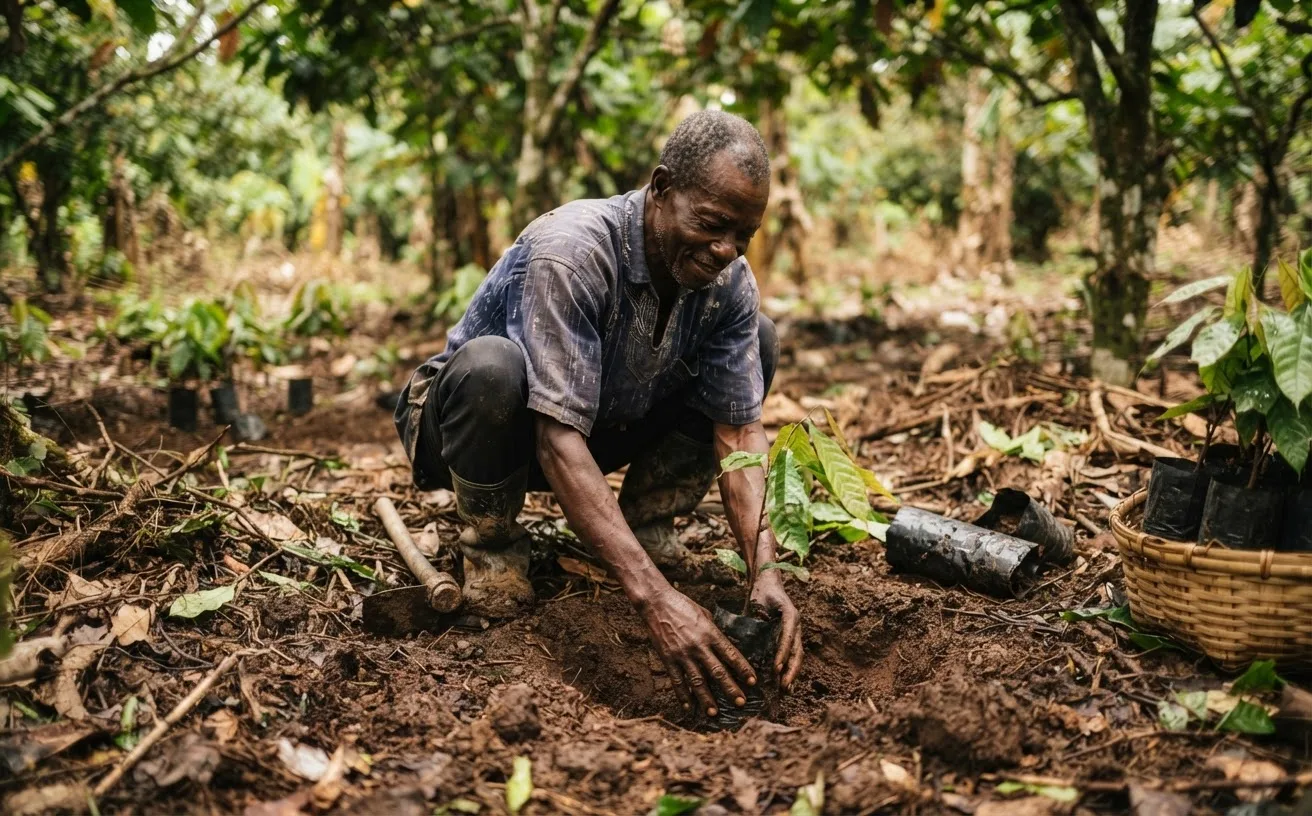
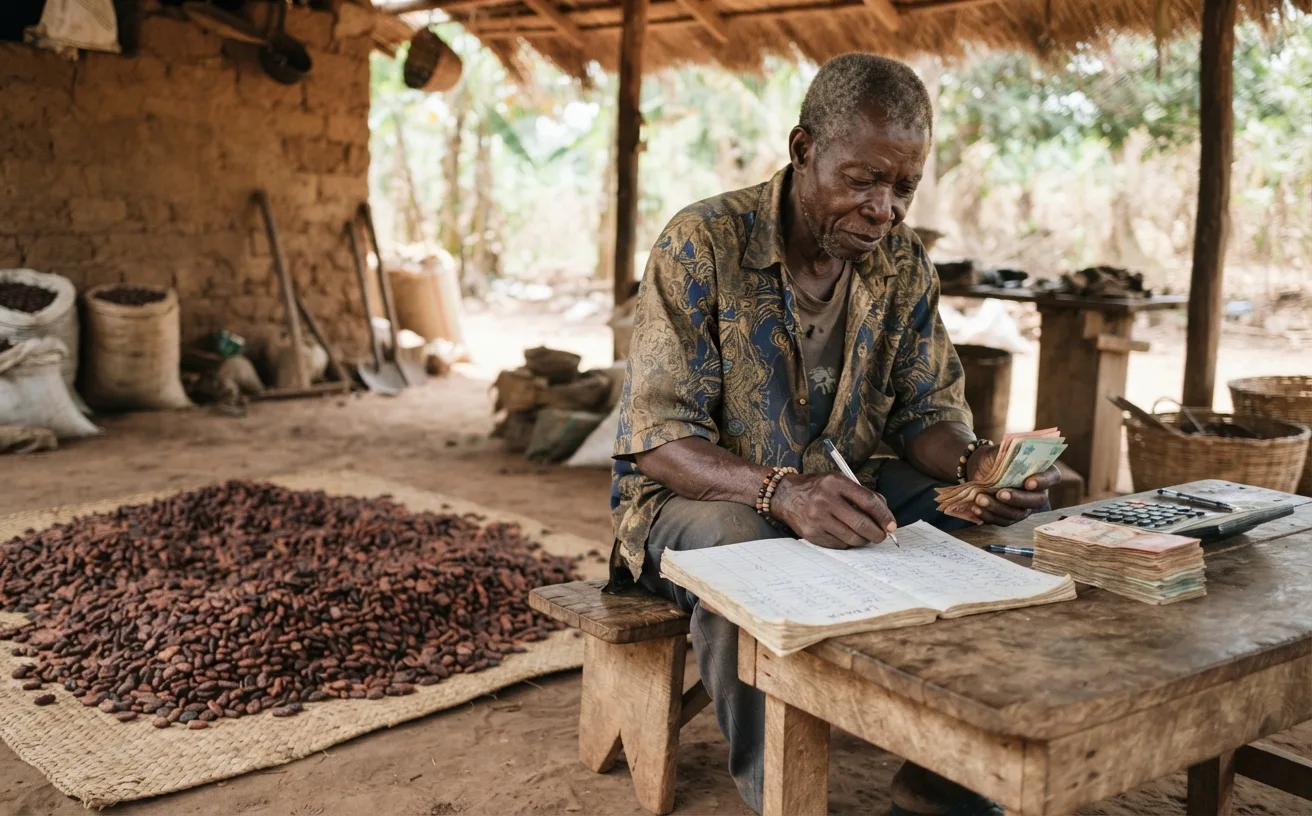
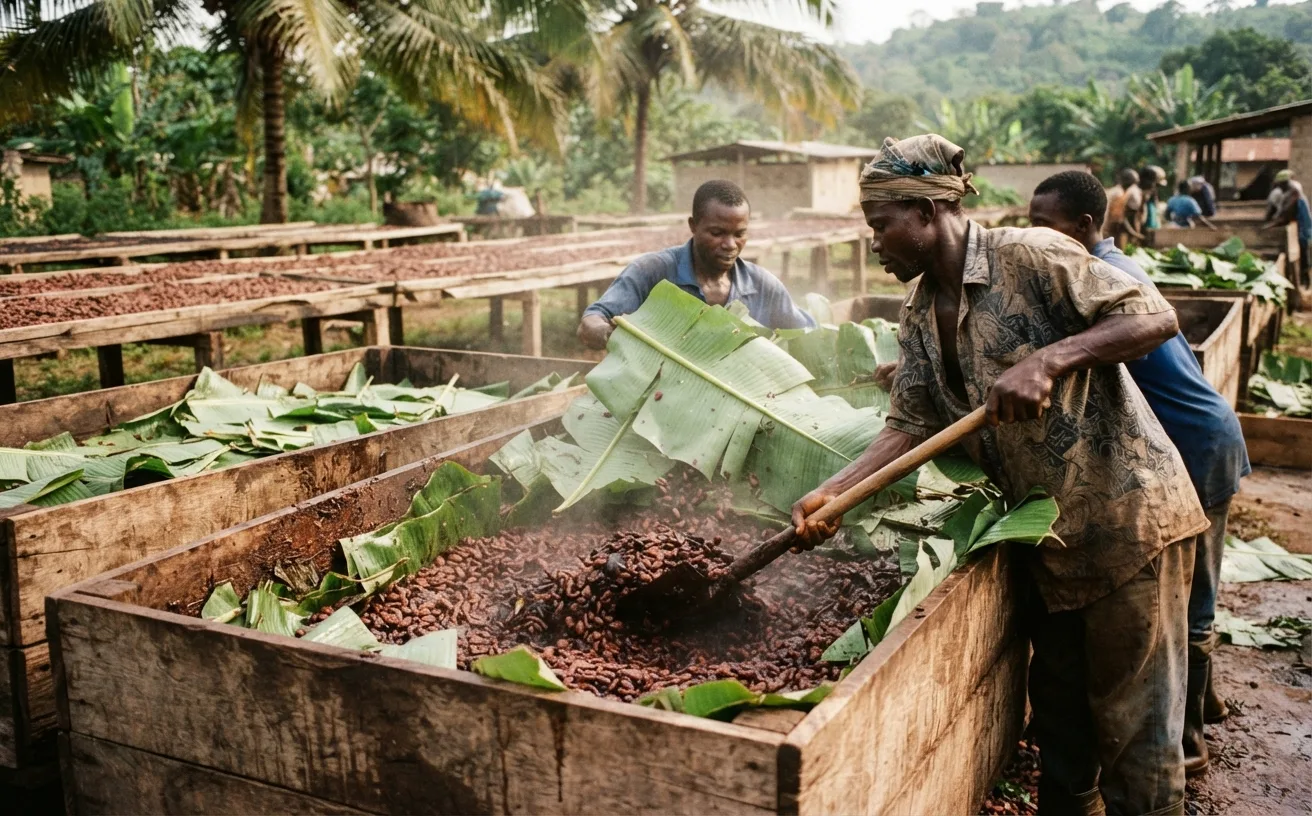
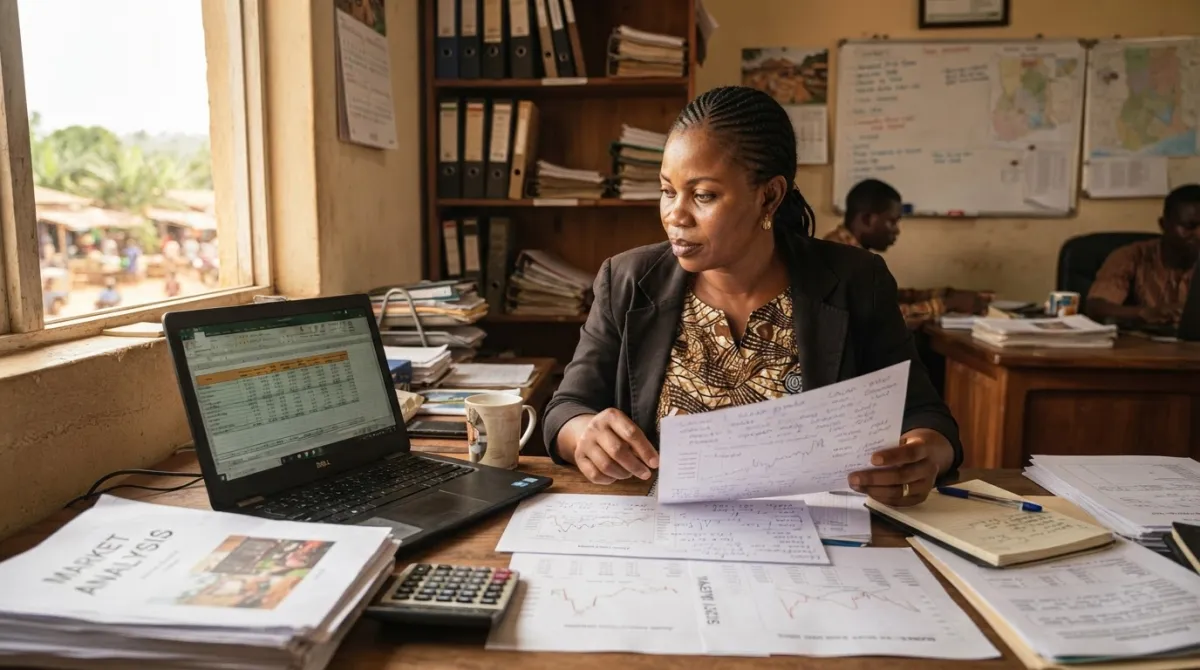
Take a playbook with you.
DownloadsEvery entry ships as a full playbook, a value chain analysis, an investor snapshot and a set of risk cards. Figures are as reported between June and September 2026 and may have changed since.
Full Playbook
All eight content pillars, data tables, diagrams and market summaries.
PDFDownload Cocoa playbook↓Value Chain Analysis
A mapped breakdown of the value chain, from farmgate to export, and who captures what along the way.
PDFDownload Cocoa value chain analysis↓Market Opportunity Snapshot
A market opportunity brief covering demand, pricing and entry points.
PDFDownload Cocoa snapshot↓Disease & Risk Cards
Quick-reference disease and risk profiles for the whole entry.
PDFDownload Cocoa disease & risk cards↓Read across the whole series.
Series guidesFour companion guides that sit above the eleven playbooks. Start with the overview, then use the other three to find your place in the chain and take your first step. Figures are as reported between June and September 2026 and may have changed since.
Series Overview
The capstone of the series. All eleven commodities read side by side on market size, value leakage, returns, risk and ease of entry.
PDFDownload series overview↓The Entry Playbook
How to actually start an agribusiness in Ghana: registration, licences, land, money and your first 180 days.
PDFDownload entry playbook↓The Career Compass
A student's guide to where you fit across the eight stages of the chain, with the jobs, ventures, skills and starting budgets at each.
PDFDownload career compass↓The Opportunity Atlas
Every business opening across the eleven commodities, regrouped by chain stage so you can see where the money actually sits.
PDFDownload opportunity atlas↓