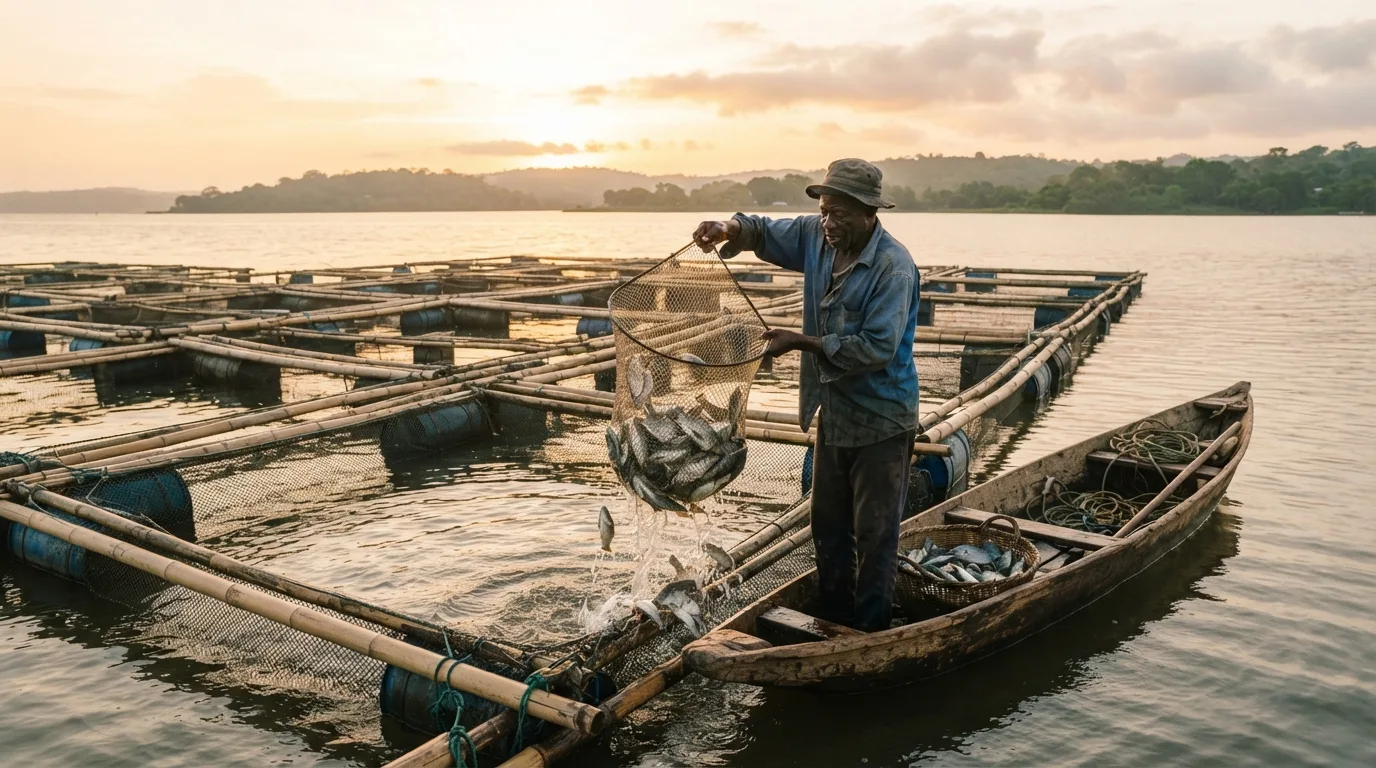
Is this a business for you?
The briefThe opportunity, what it takes to start, and the market signal, in plain terms.
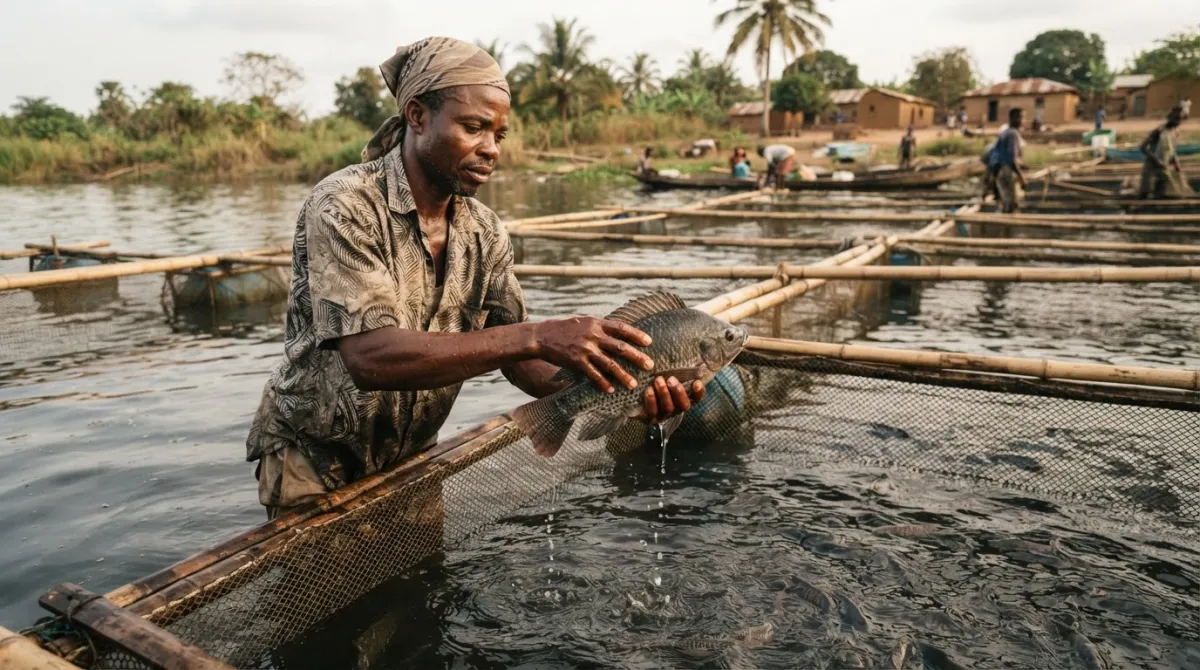
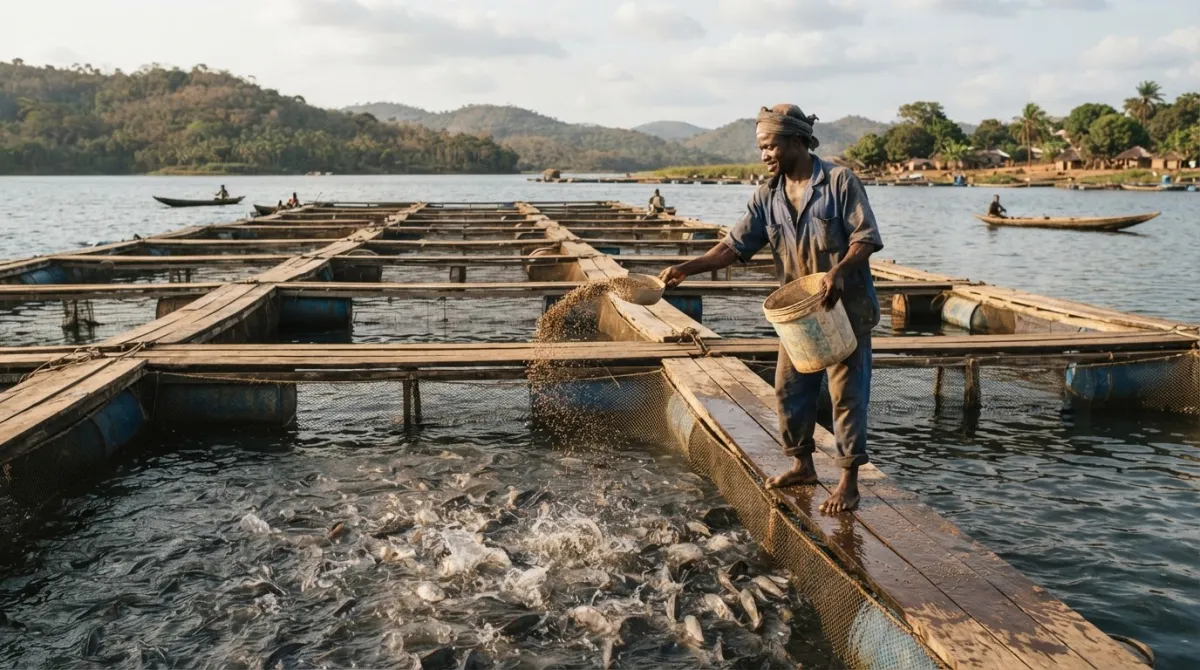
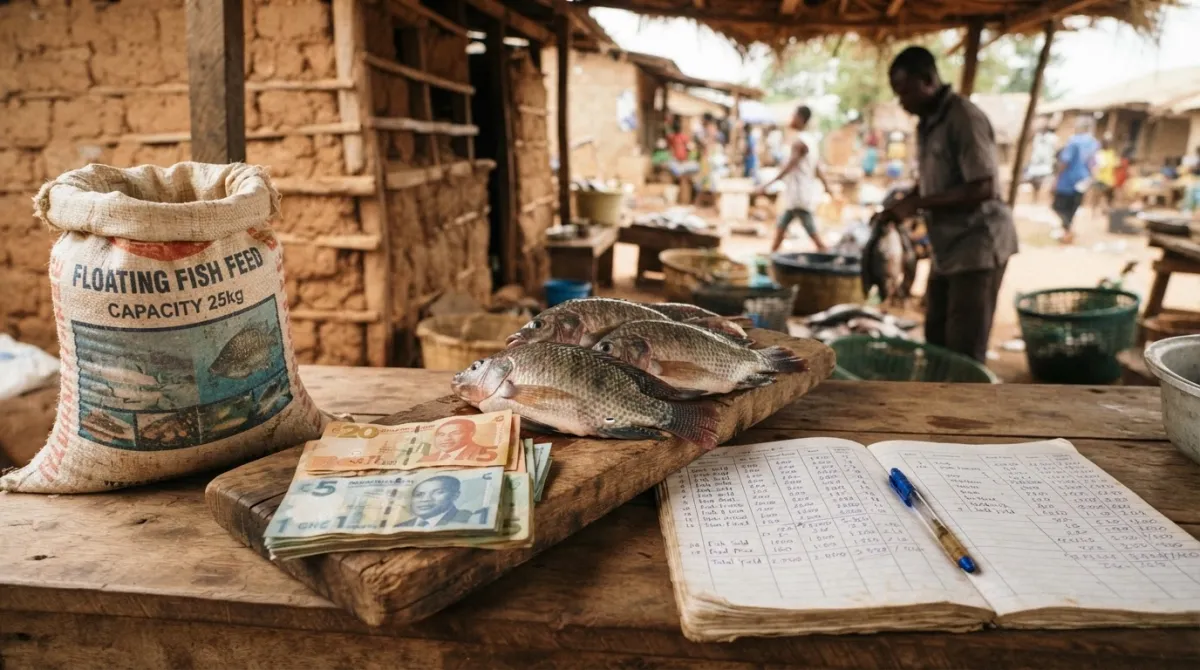
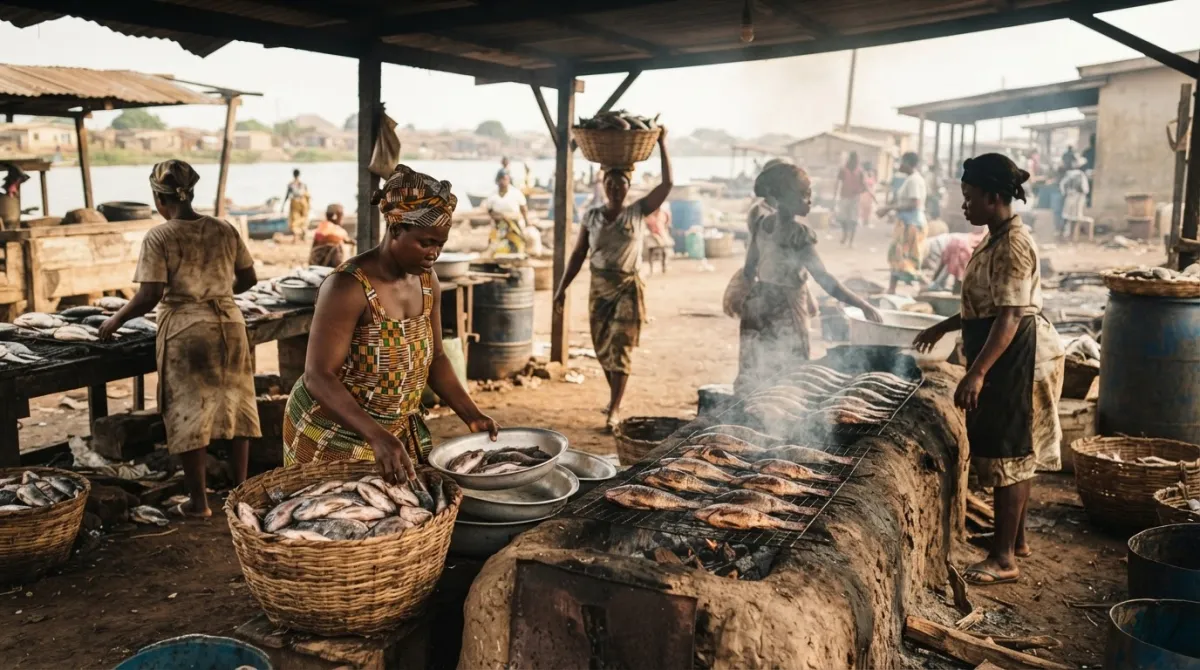
Fish provides nearly 60 percent of the animal protein Ghanaians eat, and local production meets only about half of the estimated requirement. Seed, feed and disease control decide who profits from farming tilapia and catfish, and public and private money announced in 2024 to 2026 is aimed at seed, feed, processing and cold chain.
A realistic starting point. First revenue in about 5 to 6 months.
Disease, price and policy risks are set out section by section below.
Ghana eats far more fish than it lands, and frozen imports fill part of the gap. Fingerlings, feed and disease all work against the local farmer, and cheap imported frozen fish, mostly mackerel and other small pelagics, sets the price ceiling for everyday fish.
Tilapia and catfish at a glance
The numbersThese are the main numbers to know. Each is explained, with its source, in the pillars. The Bank of Ghana rate was about GH¢11.15 to the US dollar in mid-June 2026.
Figures are as reported between July and September 2026 and may have changed since.
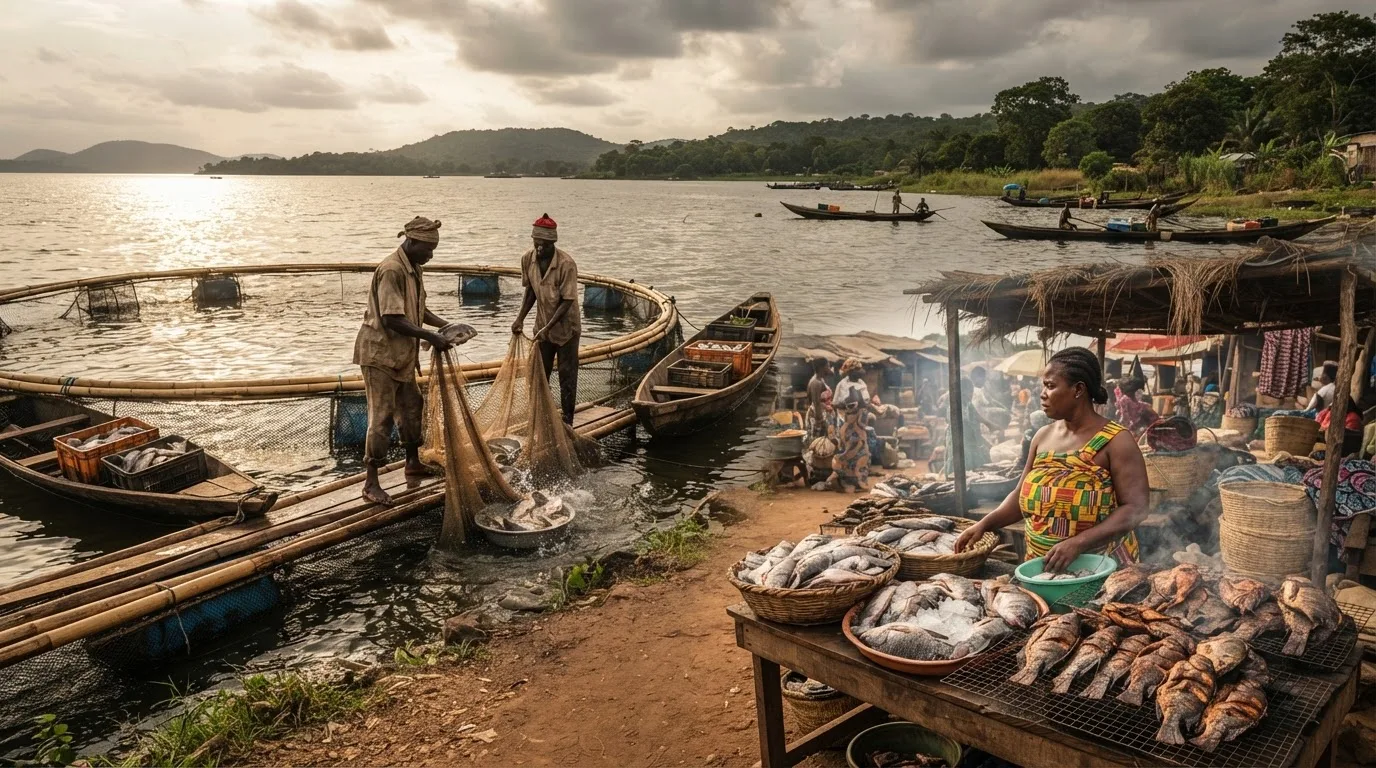
Every stage is a business of its own. Find the one that is yours.
The biggest returns rarely sit in production. Read the playbook section by section to see where the real value is.
The playbook, section by section
8 sectionsSix content pillars plus market intelligence and a strategic outlook. Open any section.
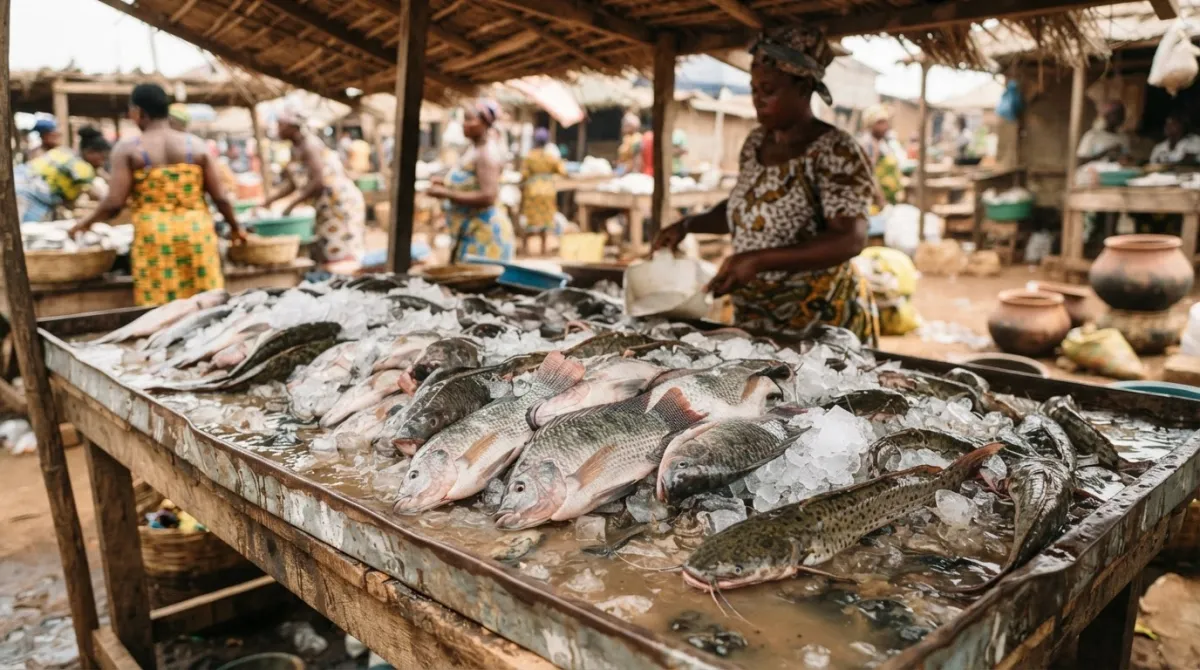
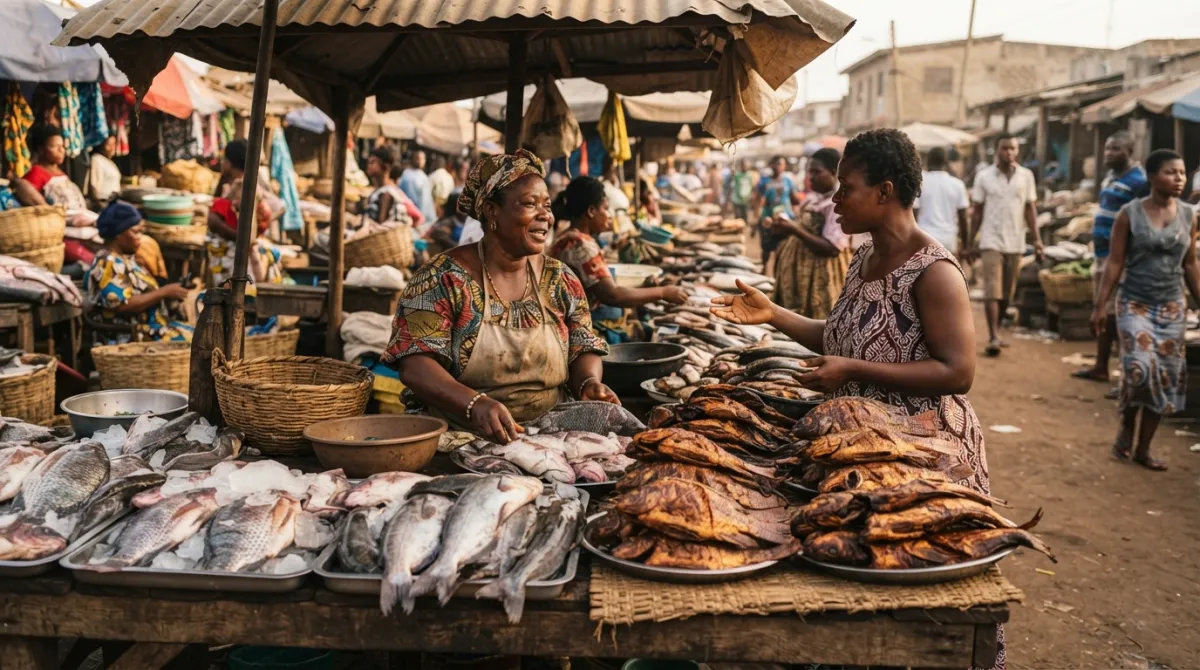
Take a playbook with you.
DownloadsEvery entry ships as a full playbook, a value chain analysis, an investor snapshot and a set of risk cards.
Full Playbook
All eight content pillars, data tables, diagrams and market summaries.
PDFDownload Tilapia & Catfish playbook↓Value Chain Analysis
A mapped breakdown of the value chain, from farmgate to export, and who captures what along the way.
PDFDownload Tilapia & Catfish value chain analysis↓Market Opportunity Snapshot
A market opportunity brief covering demand, pricing and entry points.
PDFDownload Tilapia & Catfish snapshot↓Disease & Risk Cards
Quick-reference disease and risk profiles for the whole entry.
PDFDownload Tilapia & Catfish disease & risk cards↓Read across the whole series.
Series guidesFour companion guides that sit above the eleven playbooks. Start with the overview, then use the other three to find your place in the chain and take your first step. Figures are as reported between June and September 2026 and may have changed since.
Series Overview
The capstone of the series. All eleven commodities read side by side on market size, value leakage, returns, risk and ease of entry.
PDFDownload series overview↓The Entry Playbook
How to actually start an agribusiness in Ghana: registration, licences, land, money and your first 180 days.
PDFDownload entry playbook↓The Career Compass
A student's guide to where you fit across the eight stages of the chain, with the jobs, ventures, skills and starting budgets at each.
PDFDownload career compass↓The Opportunity Atlas
Every business opening across the eleven commodities, regrouped by chain stage so you can see where the money actually sits.
PDFDownload opportunity atlas↓