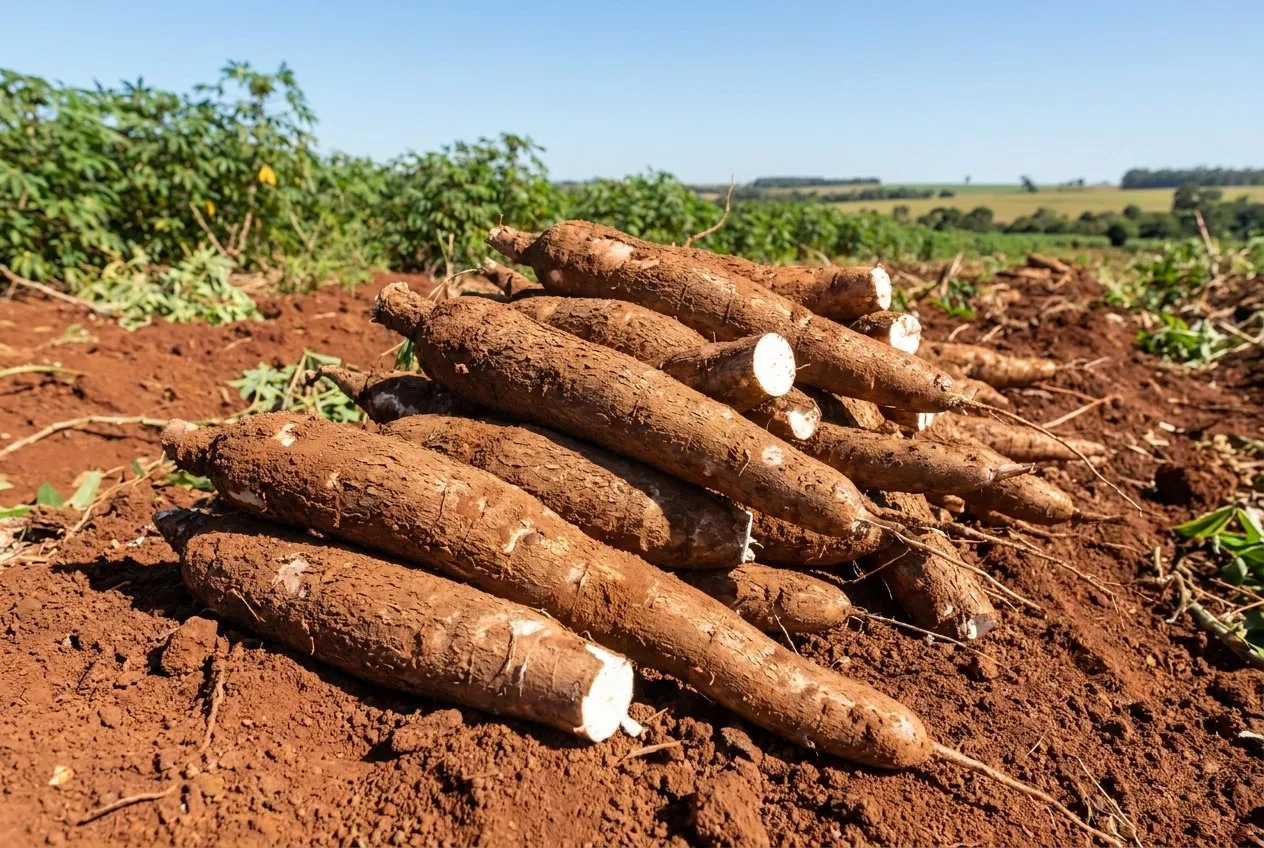
The market. Cassava is nearly half of everything Ghana grows by volume, off a small share of the land, and about seven in ten farmers grow it. Demand is huge but overwhelmingly domestic and food-based, eaten fresh or as gari, so only a thin slice reaches industrial processing. The crop starts to spoil within one to three days of harvest, which shapes the entire chain and pins most of it at the farm gate. The value climbs steeply as roots move to processing and export, yet the aggregation, storage and reliable processing that would carry them there barely exists. The opening every pillar returns to from a different angle is the same: finish the crop at home, and keep the value that finishing creates.
Is this a business for you?
The briefThe opportunity, what it takes to start, and the market signal, in plain terms.
The opportunity
Cassava is the most forgiving crop to grow and the most underused to process. The money is moving downstream into high-quality flour, starch and industrial derivatives, backed by cooperative and offtake models that guarantee a buyer.
What it takes
GHS 0
A realistic starting point. First revenue in about 10 to 12 months.
Market signal
#1 root crop by volume
Disease, price and policy risks are set out section by section below.
🔑 The thesis
Ghana already grows the cassava; the opportunity is to finish it, aggregate it, process it, brand it and sell it, at home first, before anywhere else. The country produces more cassava than almost anyone, loses about an eighth of it outright after harvest, and still imports far more cassava-related products, mostly ethanol, than it exports. This playbook shows where the missing value sits, and what it would take to keep it on Ghanaian soil.
Cassava at a glance
The numbersThe numbers a student, entrepreneur or investor should carry into the pillars, each unpacked with its source inside. All cedi figures in this playbook use the series-locked working rate of about GH¢11.20 to one US dollar.
~0.0m t
Annual production in 2024, Ghana's largest food crop by weight
MoFA/SRID
0.00 vs 45
On-farm yield against on-station potential, tonnes a hectare
MoFA/SRID
~0%
Of Ghana's farmers grow some cassava
MoTI 2019
under 0%
Of the crop reaches industry (2023 MoFA estimate)
MoFA
0.0% / 29%
Lost outright after harvest / lost or sold at a discount (2011 chain)
Naziri et al. (2014)
US$0m vs US$0.9m
Imports (mostly ethanol) against cassava-product exports, 2020
ITC Trade Map
GH¢0
State minimum gari price per 34 kg bag (2025)
MoFA
GH¢0.00
Series-locked working exchange rate per US dollar used throughout
Bank of Ghana
Figures are as reported between June and August 2026 and may have changed since.

Every stage is a business of its own. Find the one that is yours.
The biggest returns rarely sit in production. Read the playbook section by section to see where the real value is.
The playbook, section by section
8 sectionsSix content pillars plus market intelligence and a strategic outlook. Open any section.
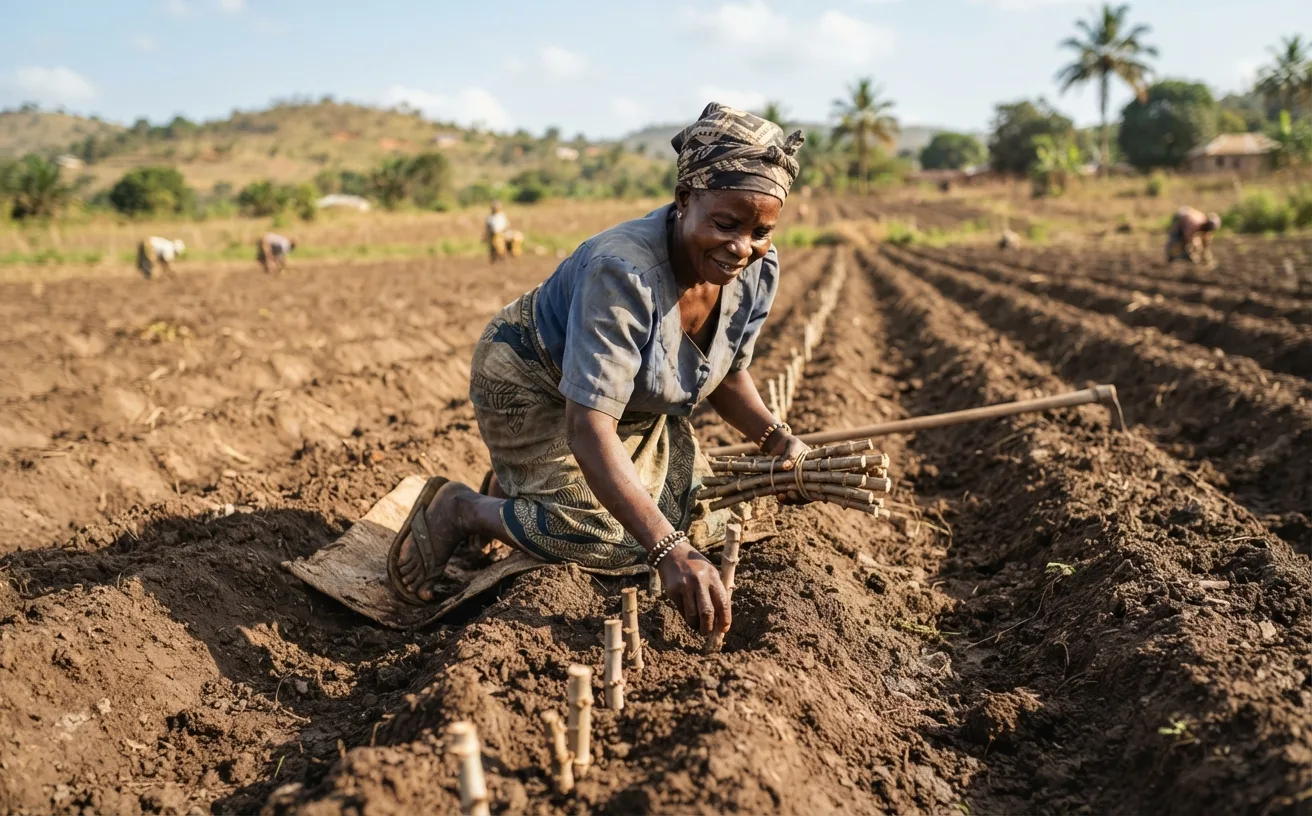
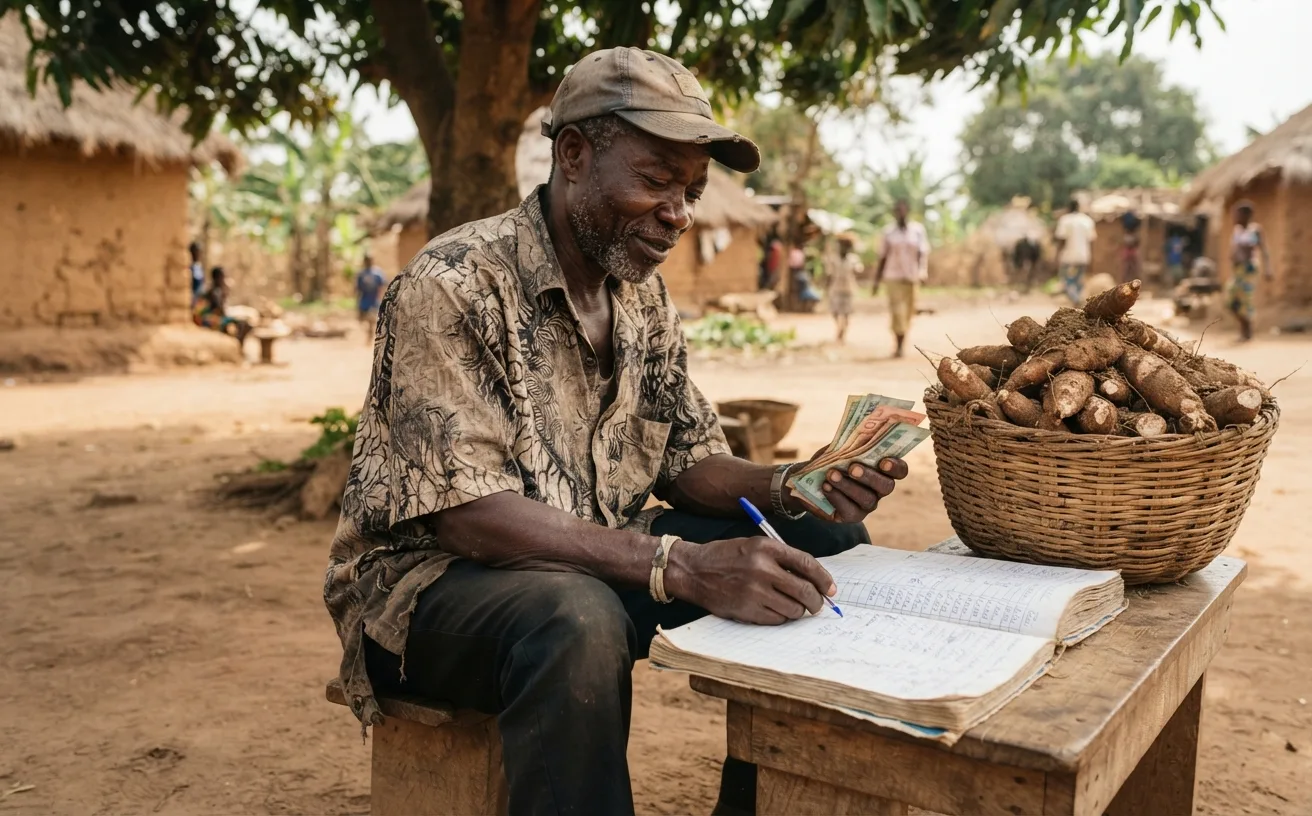
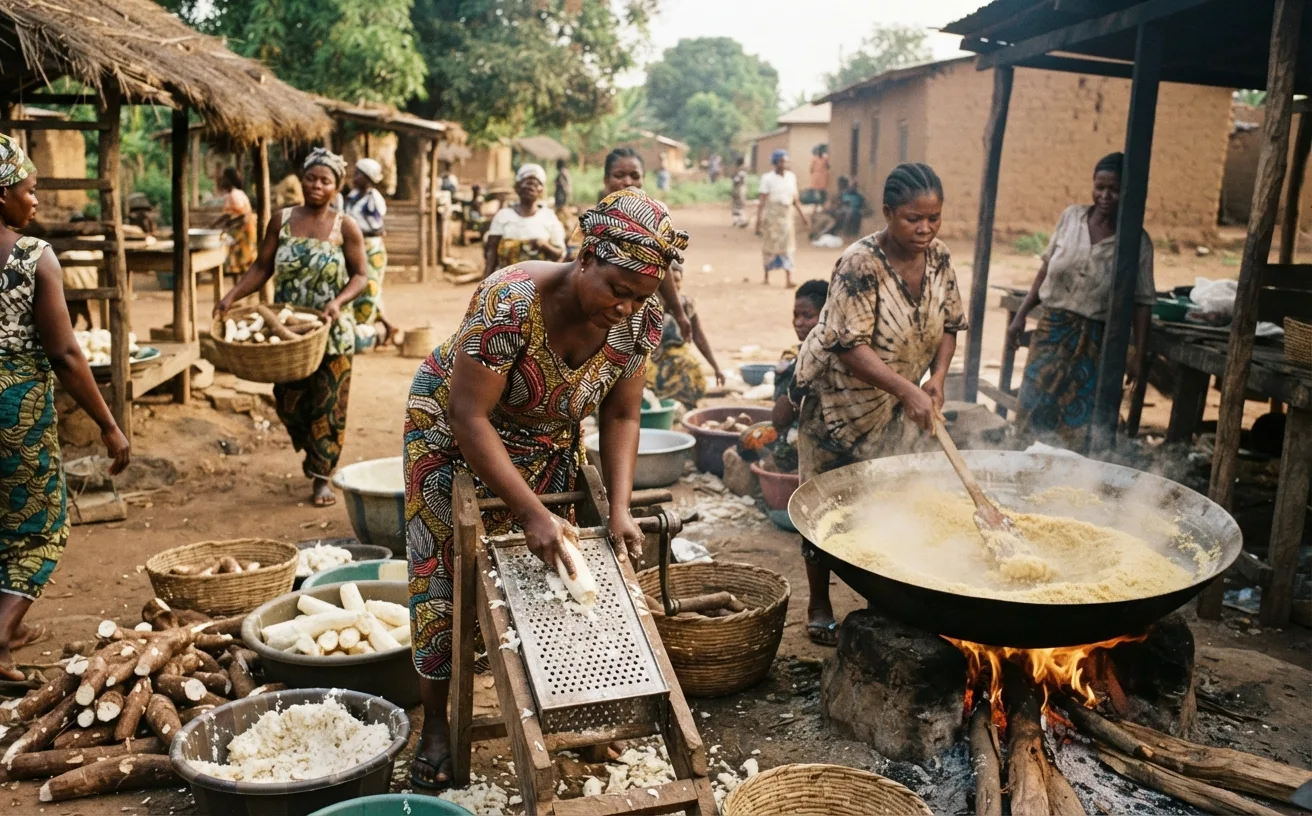
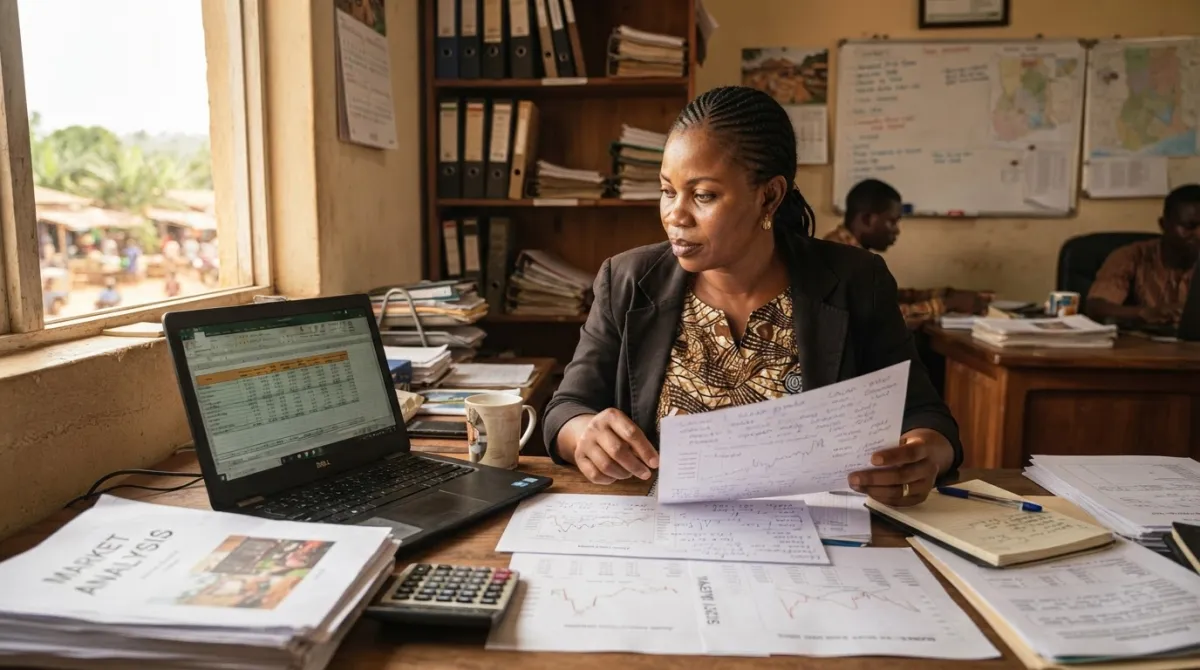
Take a playbook with you.
DownloadsEvery entry ships as a full playbook, a value chain analysis, an investor snapshot and a set of risk cards. Figures are as reported between June and September 2026 and may have changed since.
Full Playbook
All eight content pillars, data tables, diagrams and market summaries.
PDFDownload Cassava playbook↓Value Chain Analysis
A mapped breakdown of the value chain, from farmgate to export, and who captures what along the way.
PDFDownload Cassava value chain analysis↓Market Opportunity Snapshot
A market opportunity brief covering demand, pricing and entry points.
PDFDownload Cassava snapshot↓Disease & Risk Cards
Quick-reference disease and risk profiles for the whole entry.
PDFDownload Cassava disease & risk cards↓Read across the whole series.
Series guidesFour companion guides that sit above the eleven playbooks. Start with the overview, then use the other three to find your place in the chain and take your first step. Figures are as reported between June and September 2026 and may have changed since.
Series Overview
The capstone of the series. All eleven commodities read side by side on market size, value leakage, returns, risk and ease of entry.
PDFDownload series overview↓The Entry Playbook
How to actually start an agribusiness in Ghana: registration, licences, land, money and your first 180 days.
PDFDownload entry playbook↓The Career Compass
A student's guide to where you fit across the eight stages of the chain, with the jobs, ventures, skills and starting budgets at each.
PDFDownload career compass↓The Opportunity Atlas
Every business opening across the eleven commodities, regrouped by chain stage so you can see where the money actually sits.
PDFDownload opportunity atlas↓