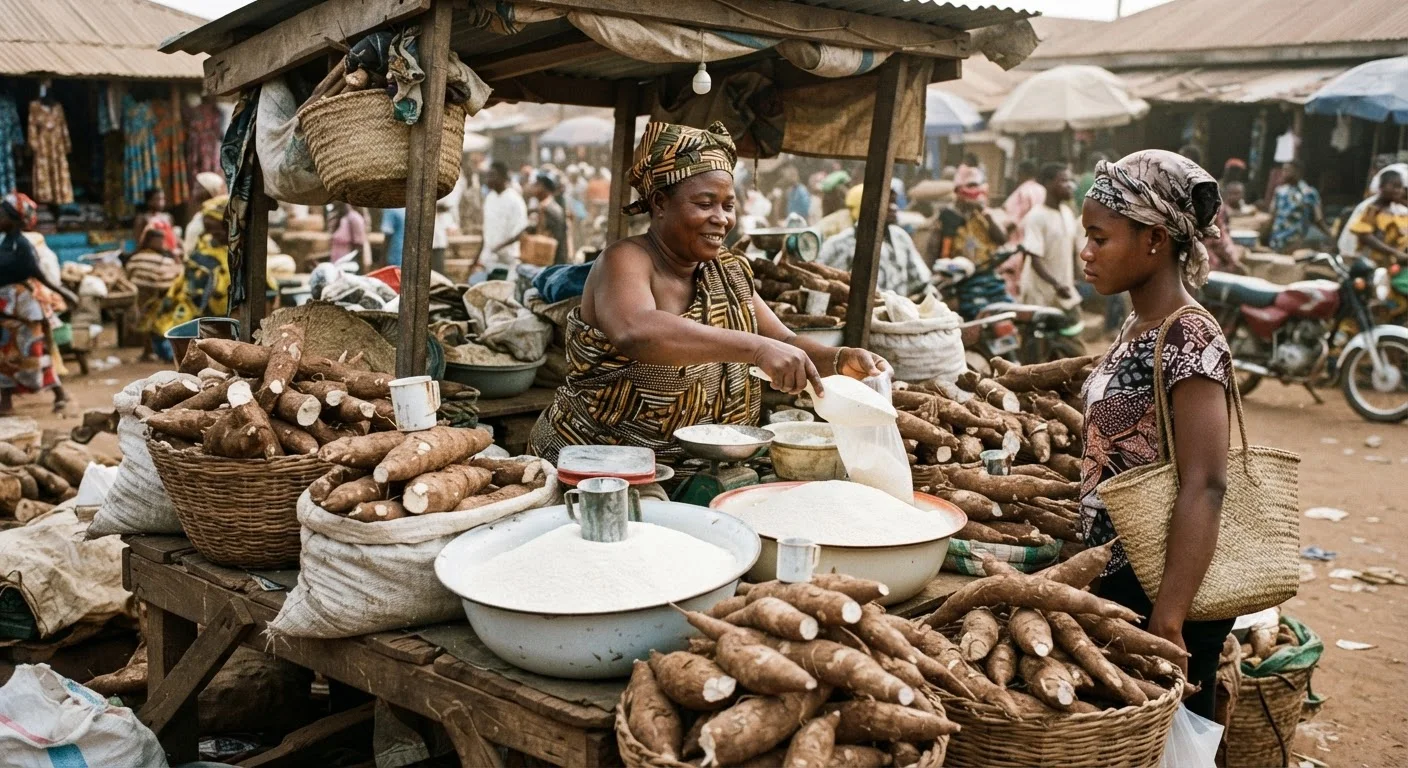
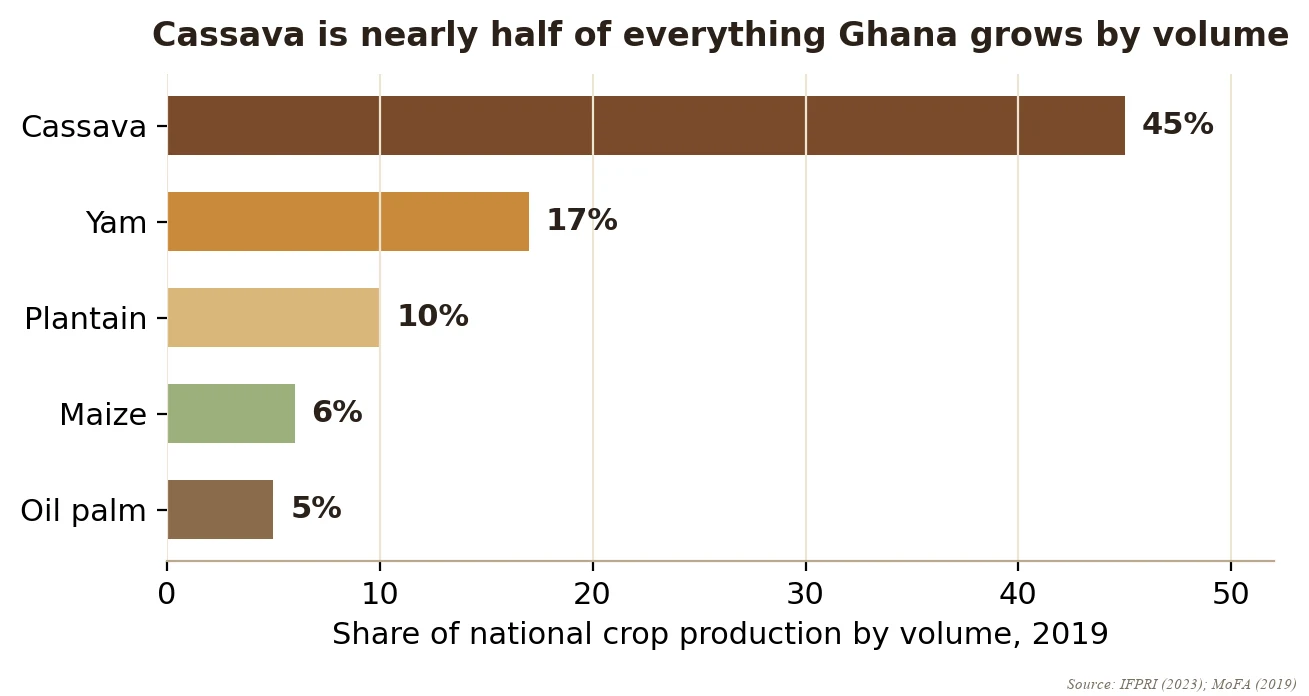
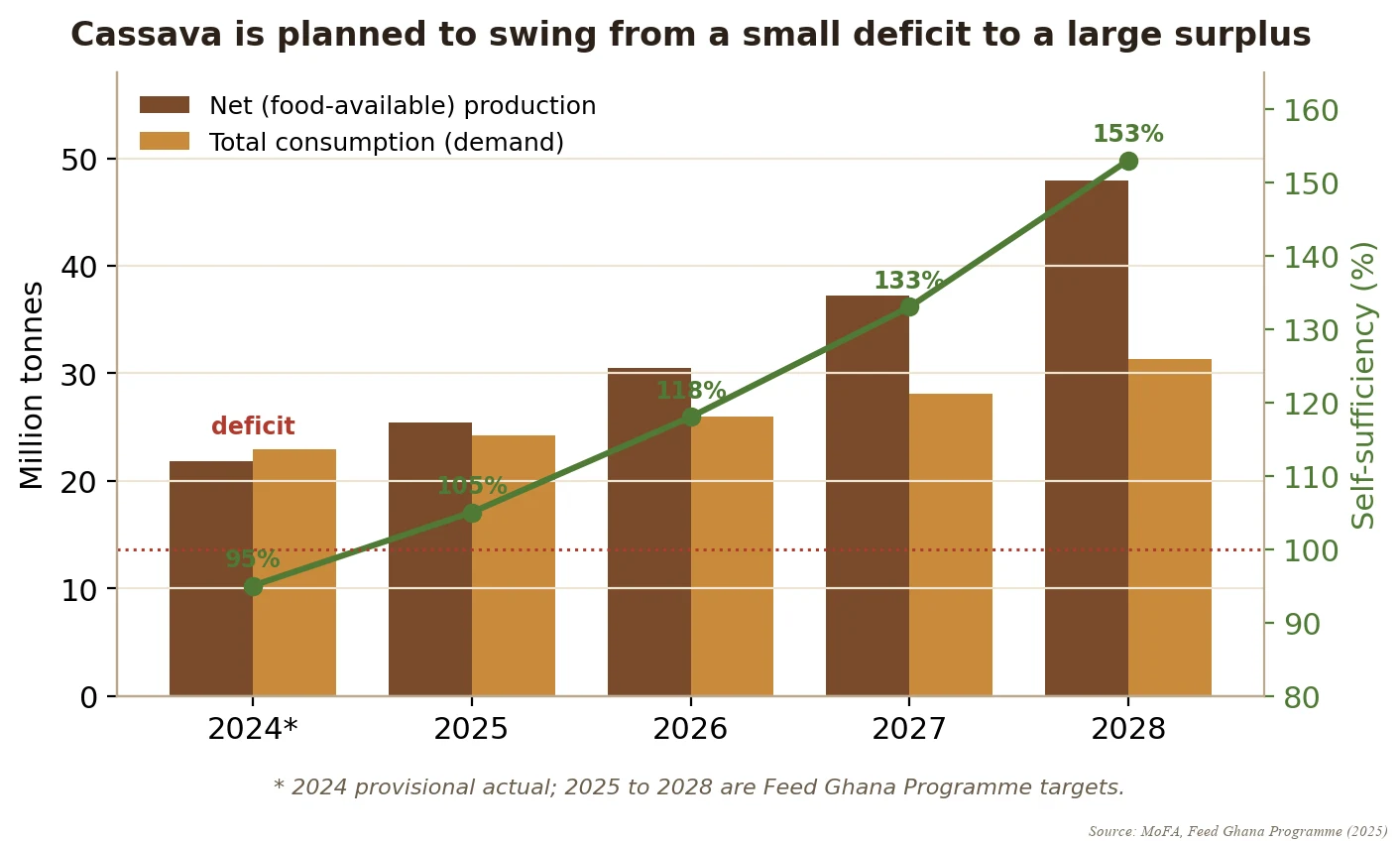
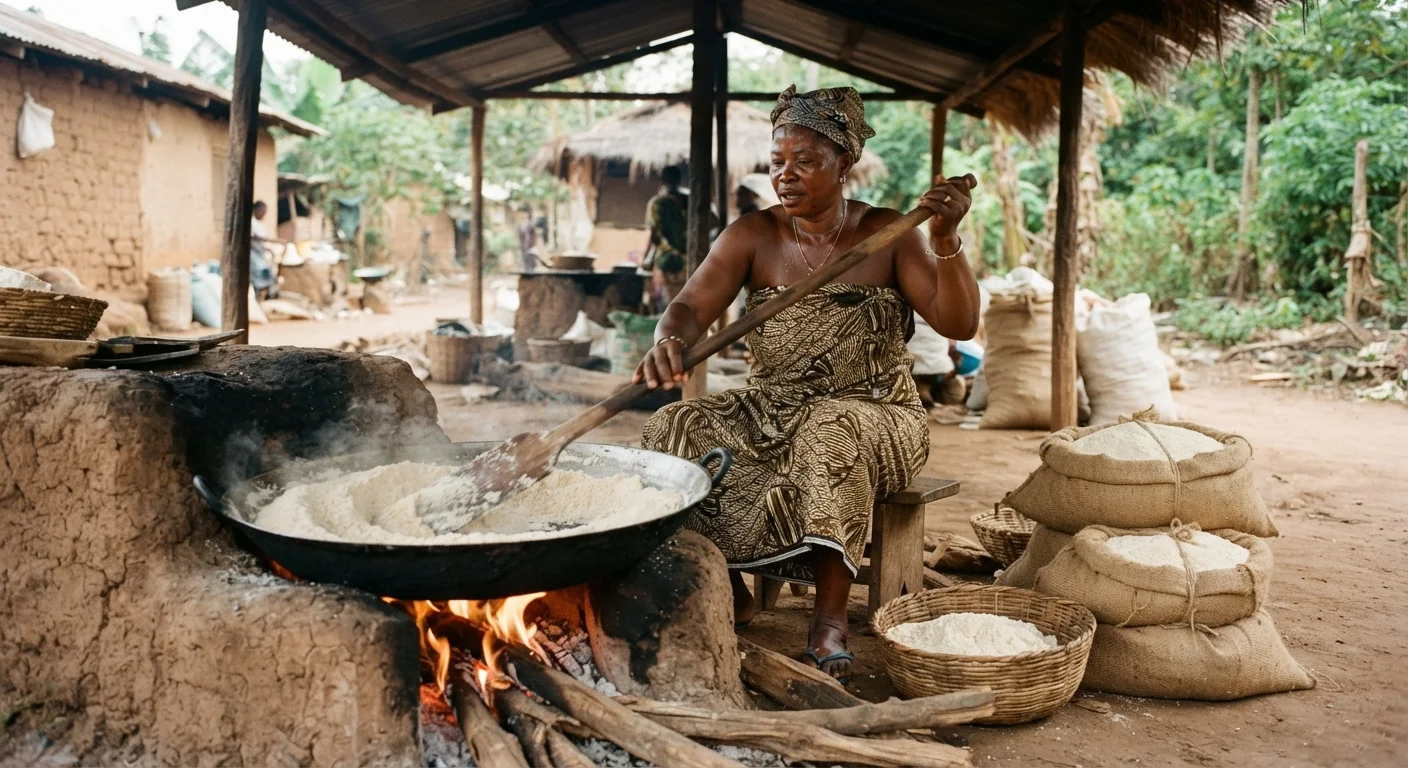
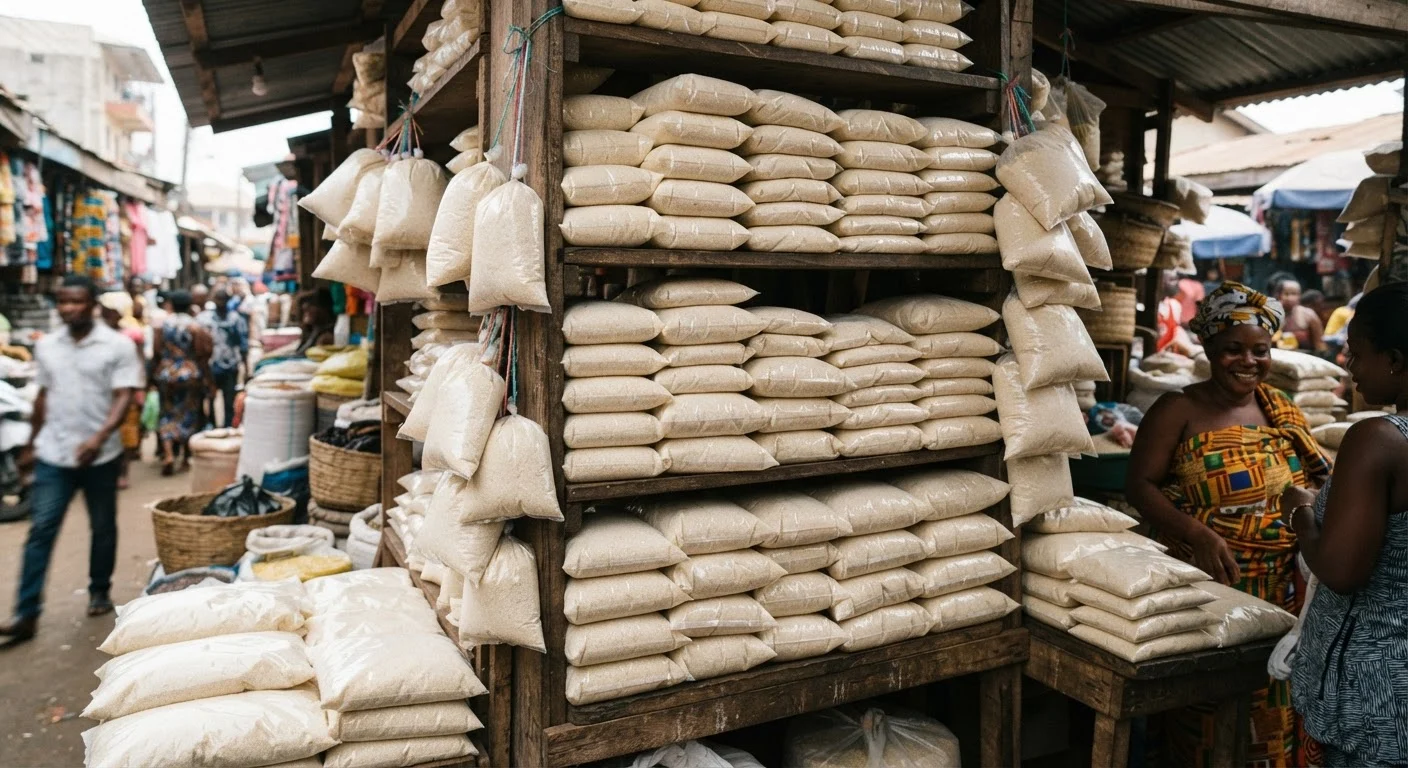
If you are thinking of entering, do not start by growing more cassava; the country is planning to have too much. Start where demand is underserved: buy from farmers and process into a graded, branded gari for the urban market. The first-timer mistake in cassava demand is chasing the fresh-root trade, which is crowded and low-margin.
Secure a specific buyer first, an urban gari brand slot, a starch offtaker, or a school-feeding caterer, before you commit to volume. Name the buyer, confirm the spec and price, then work back to supply. Do not build capacity against a surplus and hope a buyer appears.
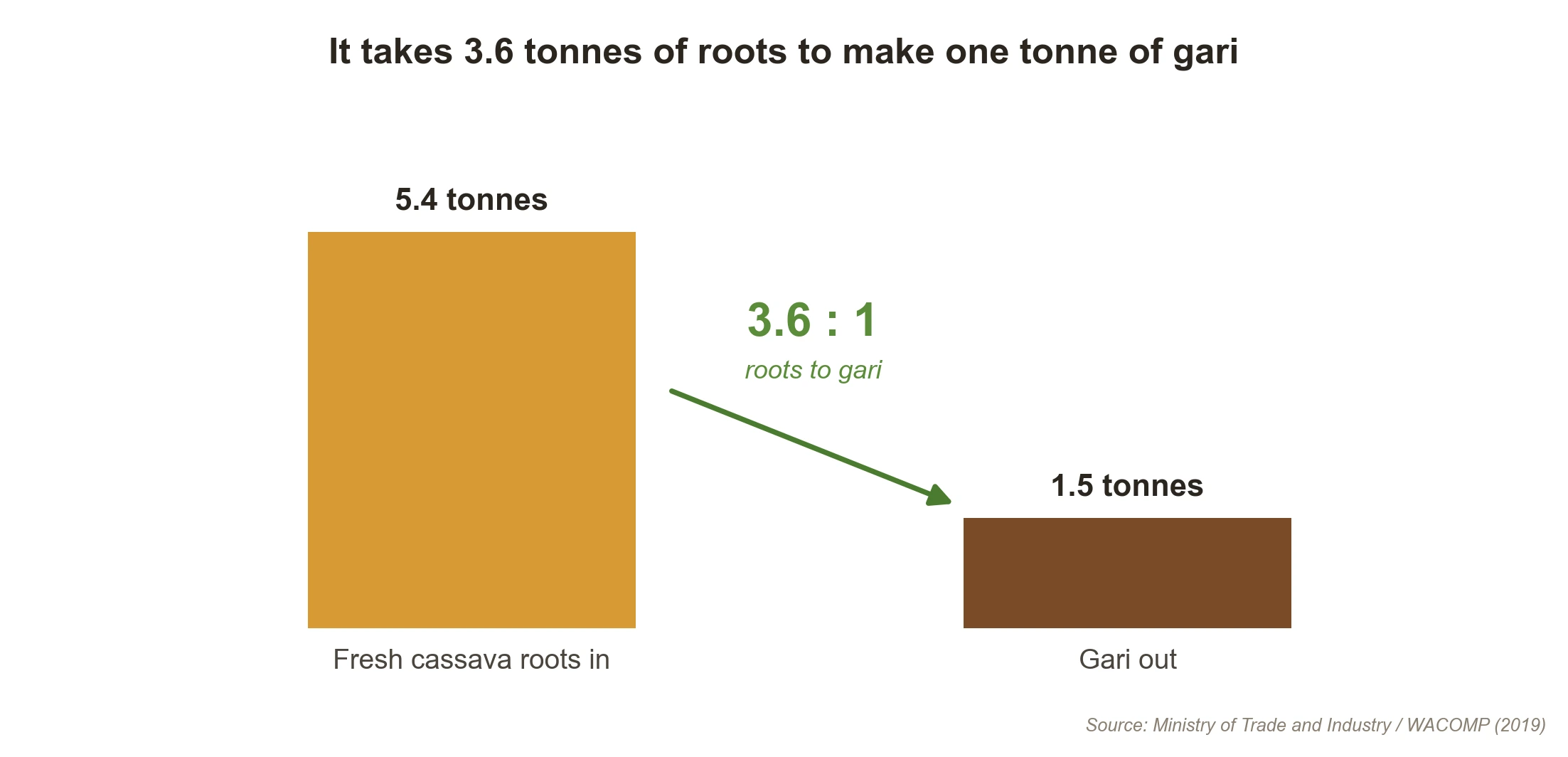
The thesis: value in cassava demand is in processing and branding rather than raw volume, and the planned surplus makes raw material cheap. Diligence asks are the offtake contracts (who, price, tenor), the product spec and consistency, and the route to the buyer. Structure the cheque against secured offtake, released against delivered, graded product.
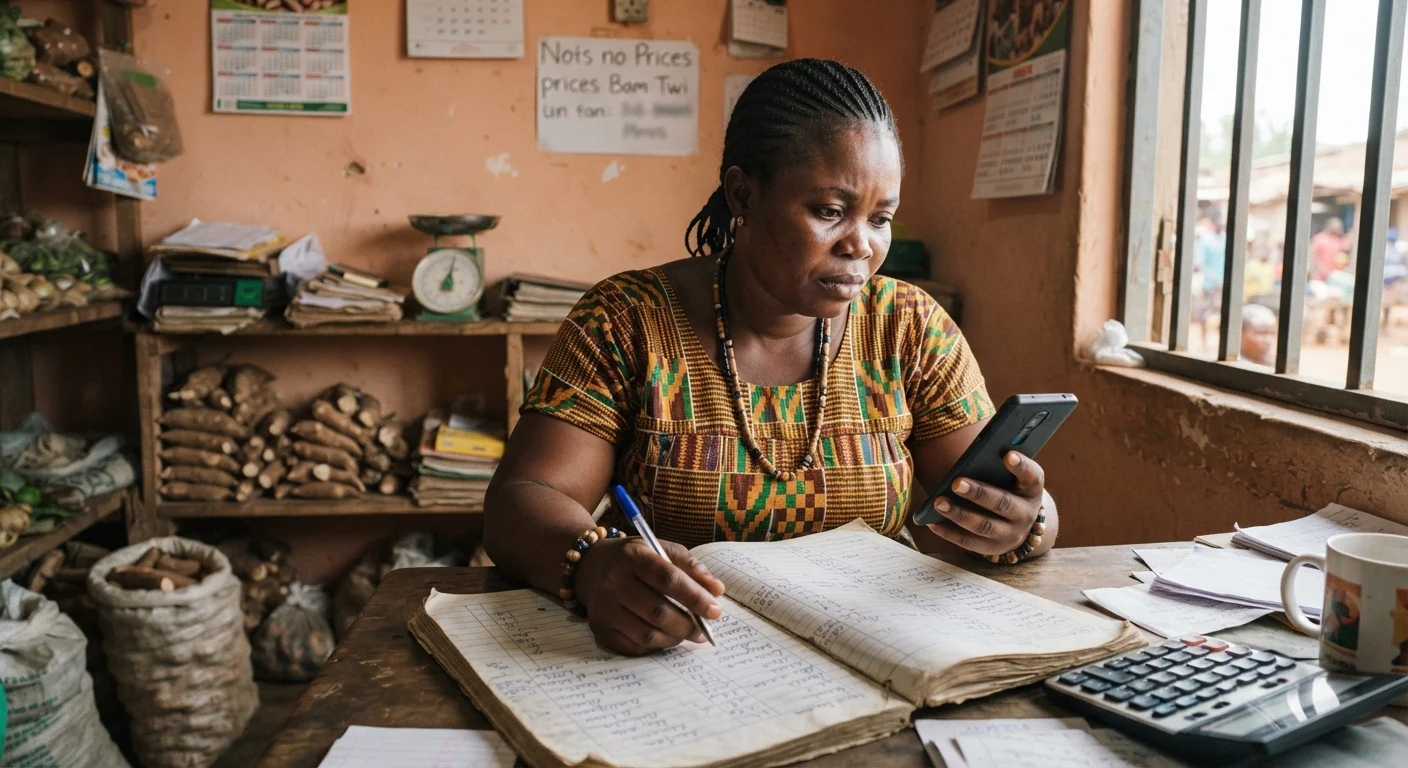
The lever is price transparency and grading. Fund a public cassava and gari price series and a simple grading standard, run through MoFA-SRID or an exchange. The measurable outcome is farmers and processors trading on a visible price. The public-money failure to avoid is subsidising more production without building the market to absorb it, which turns a policy target into a price collapse.
If you are thinking of entering, do not start by growing more cassava; the country is planning to have too much. Start where demand is underserved: buy from farmers and process into a graded, branded gari for the urban market. The first-timer mistake in cassava demand is chasing the fresh-root trade, which is crowded and low-margin.
Secure a specific buyer first, an urban gari brand slot, a starch offtaker, or a school-feeding caterer, before you commit to volume. Name the buyer, confirm the spec and price, then work back to supply. Do not build capacity against a surplus and hope a buyer appears.
The thesis: value in cassava demand is in processing and branding rather than raw volume, and the planned surplus makes raw material cheap. Diligence asks are the offtake contracts (who, price, tenor), the product spec and consistency, and the route to the buyer. Structure the cheque against secured offtake, released against delivered, graded product.
The lever is price transparency and grading. Fund a public cassava and gari price series and a simple grading standard, run through MoFA-SRID or an exchange. The measurable outcome is farmers and processors trading on a visible price. The public-money failure to avoid is subsidising more production without building the market to absorb it, which turns a policy target into a price collapse.