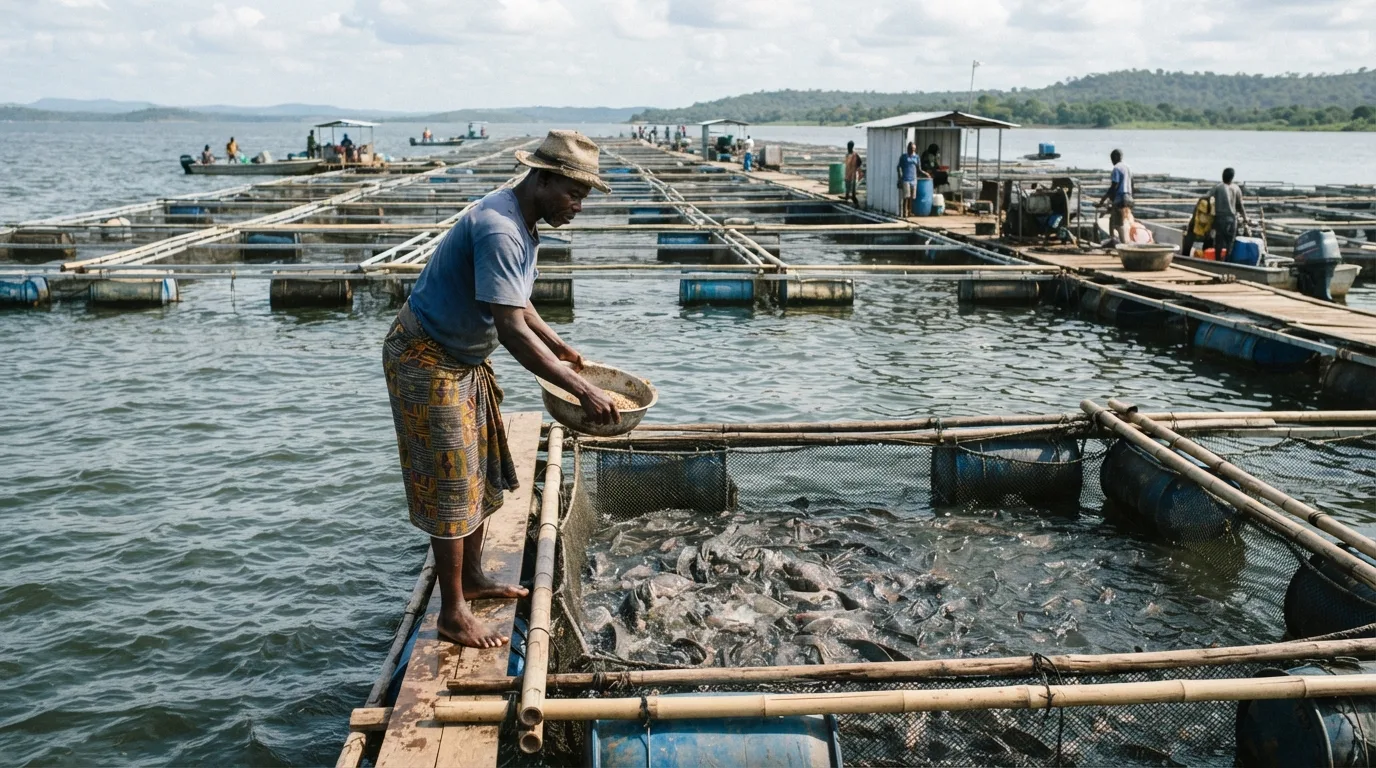
| Feed dealing and harvest-repaid input credit | Feed is about 71 percent of the 2026 cage cost; De Heus prices rise with distance from Tema (4 mm grower GH¢198 a bag in Tema, GH¢216 in the north) and fell about 15 percent in Kumasi between June 2025 and September 2026 | Feed for one cage cycle is about 149 bags, about GH¢31,600; credit for ten cages needs about GH¢316,000 a cycle | Traders with storage near Volta landing sites or northern reservoirs; investors funding input credit | A failed cycle turns credit into bad debt; a weaker cedi would push feed prices back up |
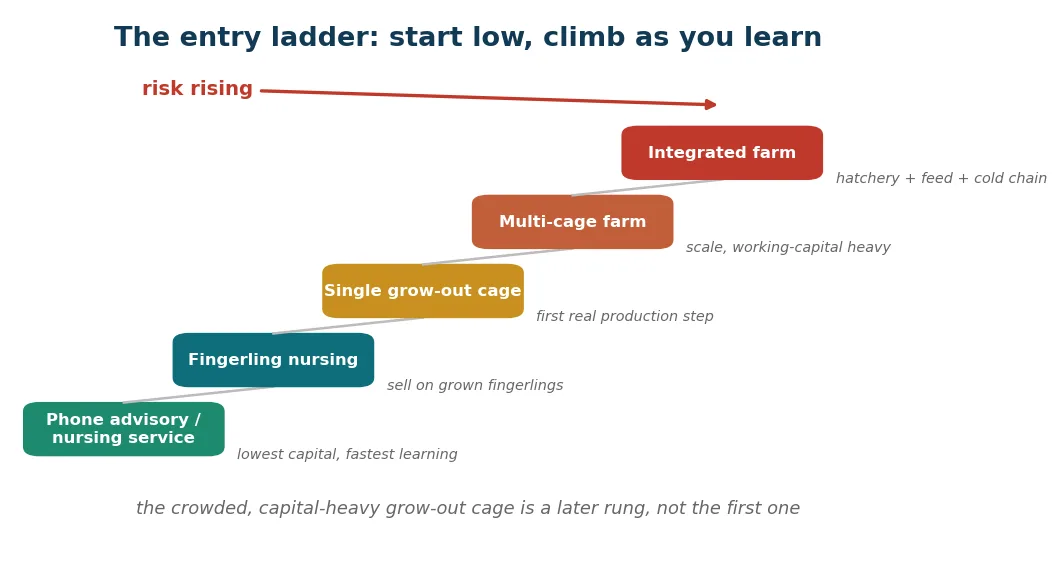
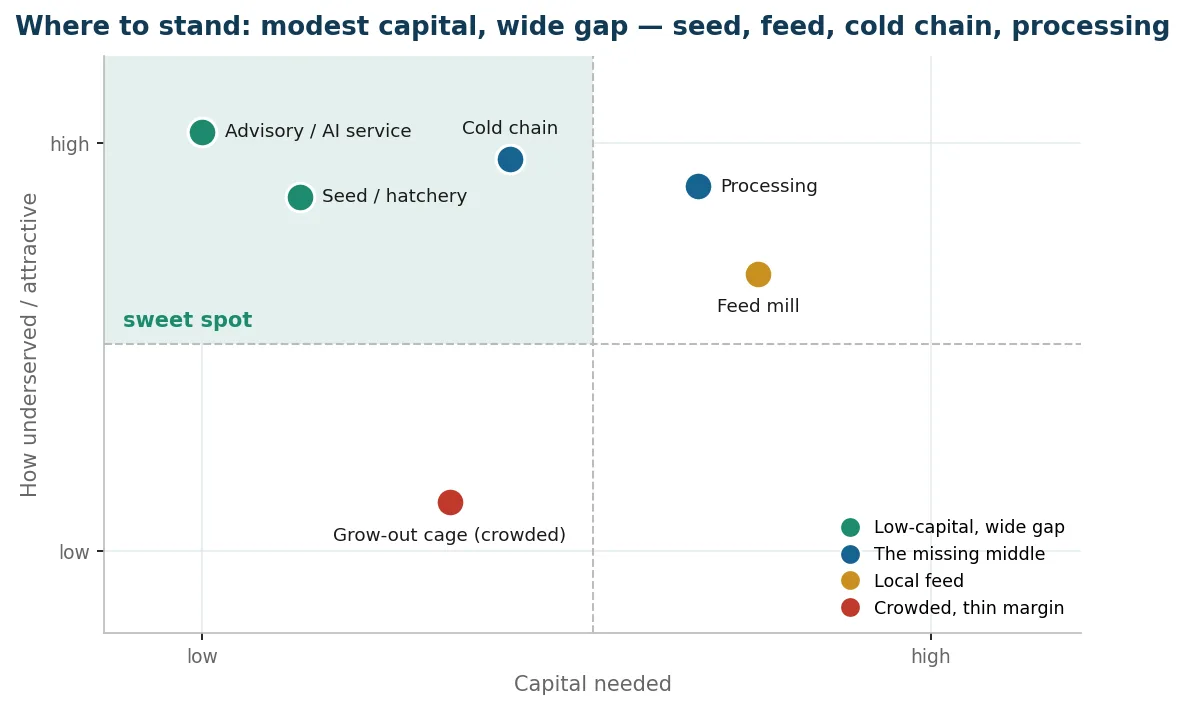
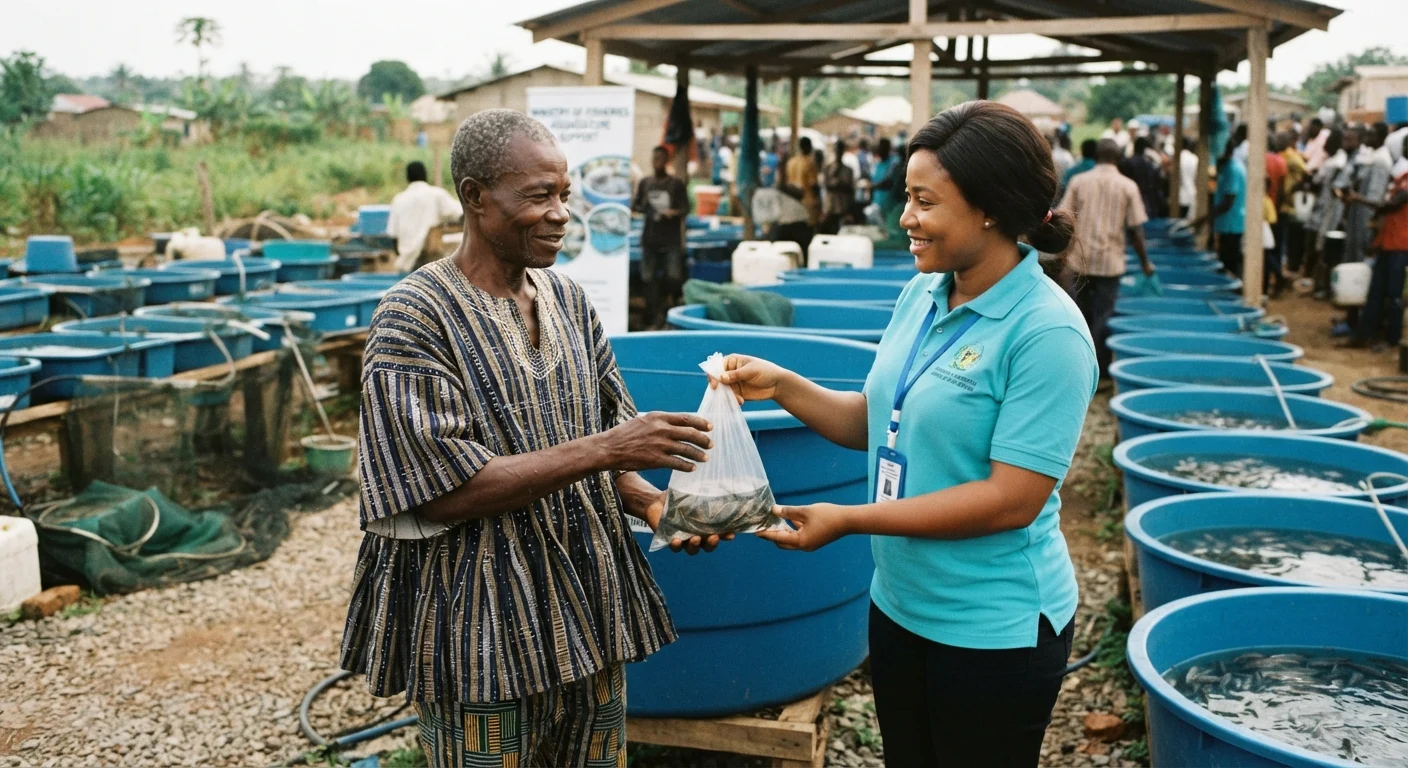
| Fingerling nurseries and certified seed | Hatcheries produced 382 million fingerlings in 2024 against a 544 million target, and about 173 million in part of 2025 against 400 million | A nursery that grows 1 to 2 g fry to 10 to 20 g can start in tarpaulin tanks costing about GH¢1,400 to 3,950 each | Aquaculture graduates; farms that want their own seed | Poor broodstock and parasites; seed rules under Act 1146 are still in draft |
| Catfish grow-out for town markets | Whole catfish held at about GH¢40 a kilogram at the farm gate through 2026; it sells whole or live, with no gutting or ice | A 1,000-fish batch in tarpaulin tanks: feed and seed about GH¢18,000, sales about GH¢35,400 at 80 percent survival and 1.1 kg | Students and young entrepreneurs in peri-urban areas with reliable water | Feed conversion: at 2.2 instead of 1.4 the margin falls to about GH¢8,200; flat prices if supply grows |
| Local and alternative feed milling | The 2026 budget plans to train 300 farmers to make feed from local ingredients; Olam's US$200 million pledge includes an aquafeed plant | Not priced: no 2025 or 2026 small-mill costing was found | Maize and soya processors; investors in an extruded-feed line | Commercial feed got cheaper in 2026, so a new mill must match it on feed conversion as well as price |
| Fish-health and biosecurity services | Survival decides the cage result (break-even at 48 percent); regional fish-health laboratories at Kumasi, Ho and Koforidua were equipped by late 2025 | A service business: microscope, water test kits and transport | Veterinary and aquaculture graduates | Farmers may not pay before an outbreak; free public services compete |
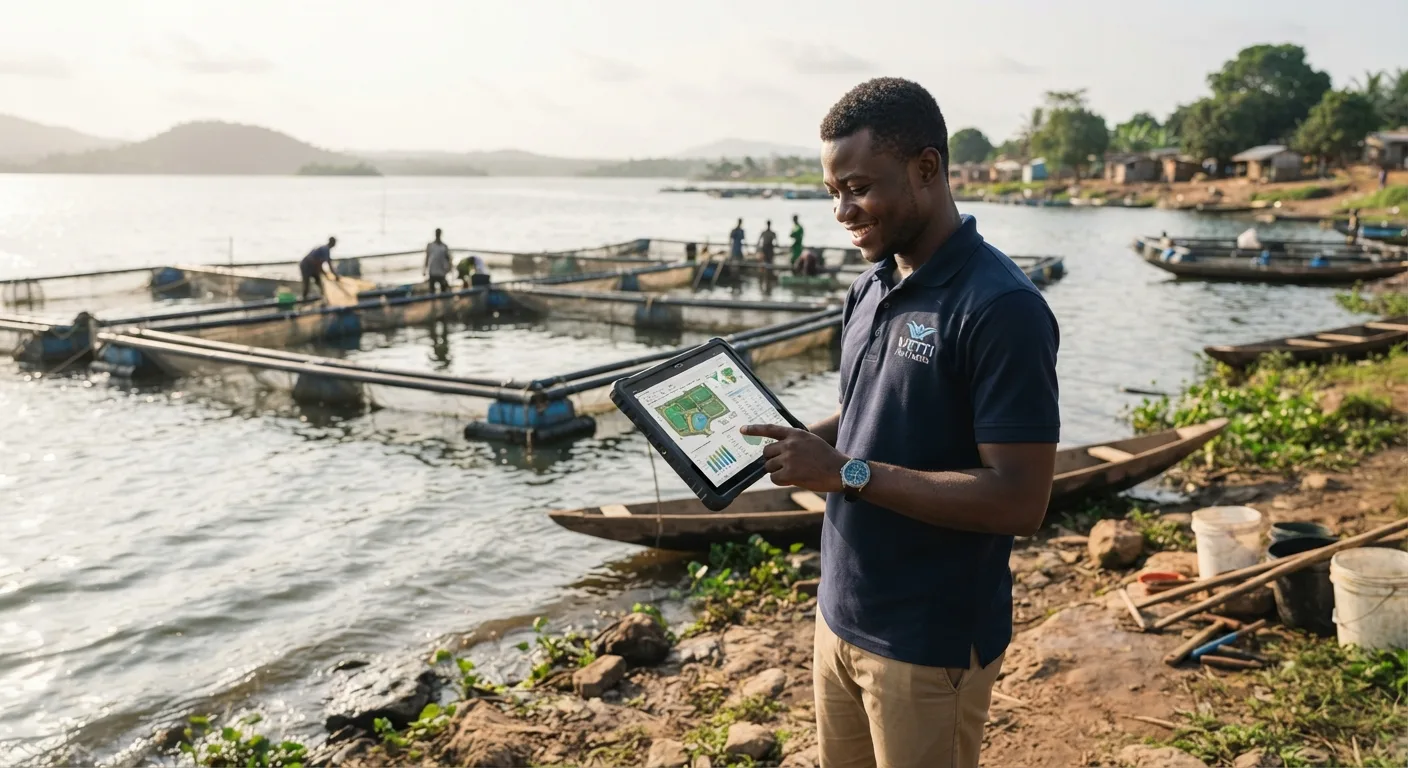
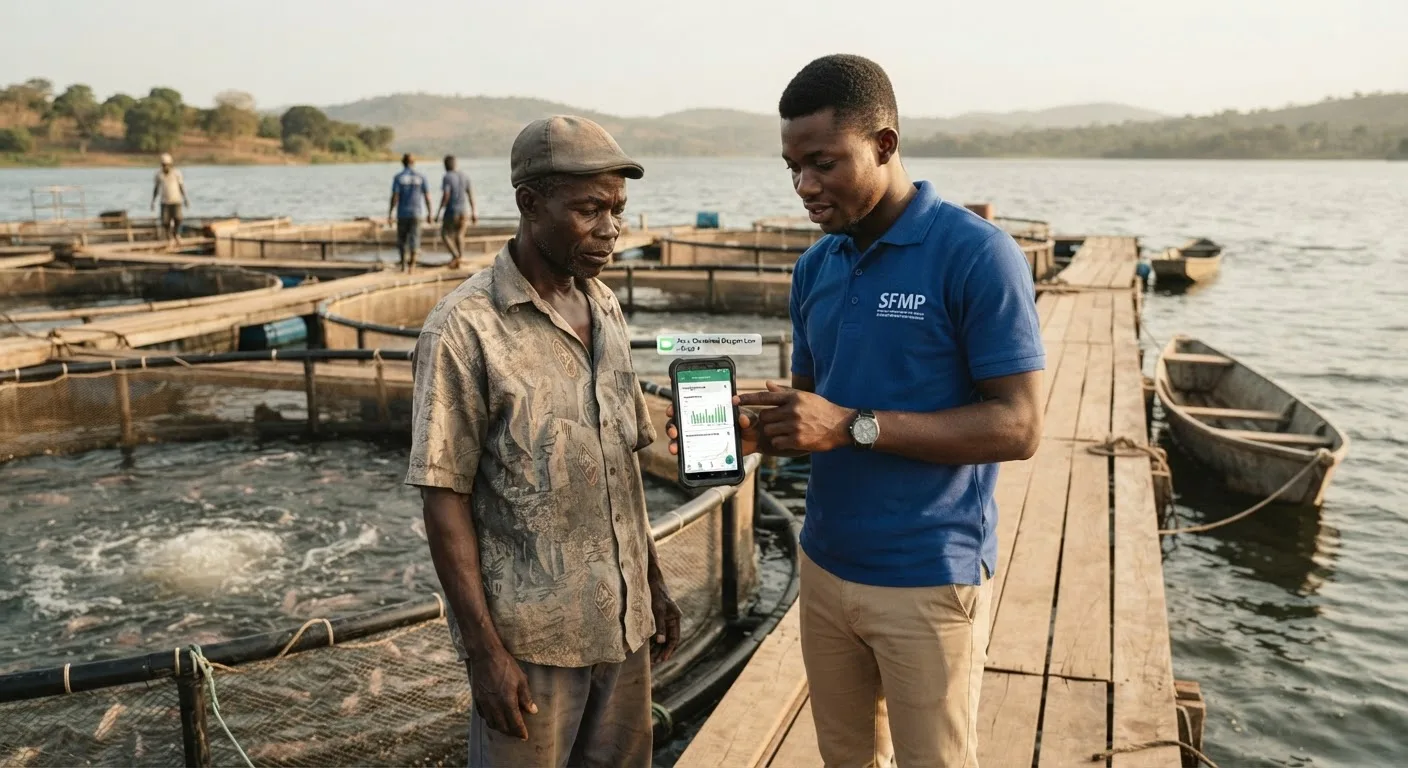
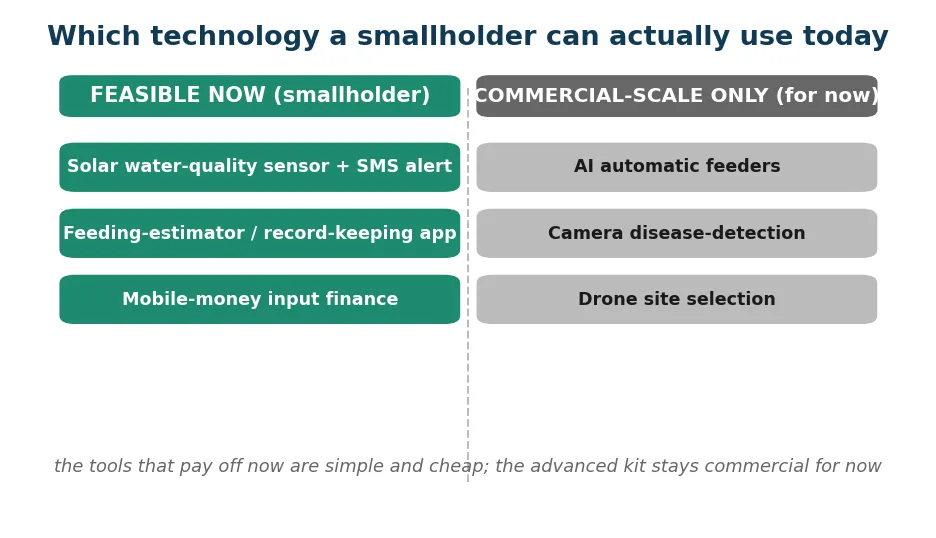
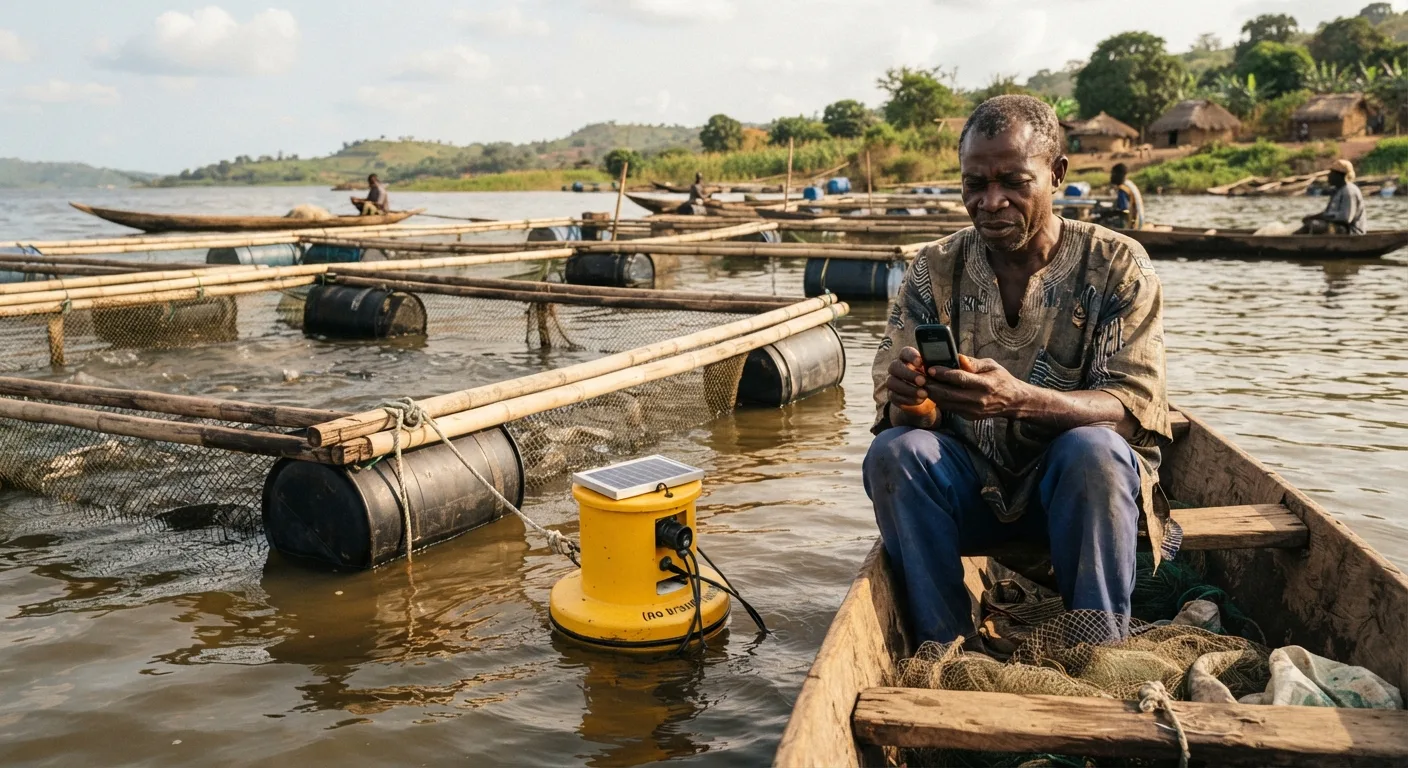
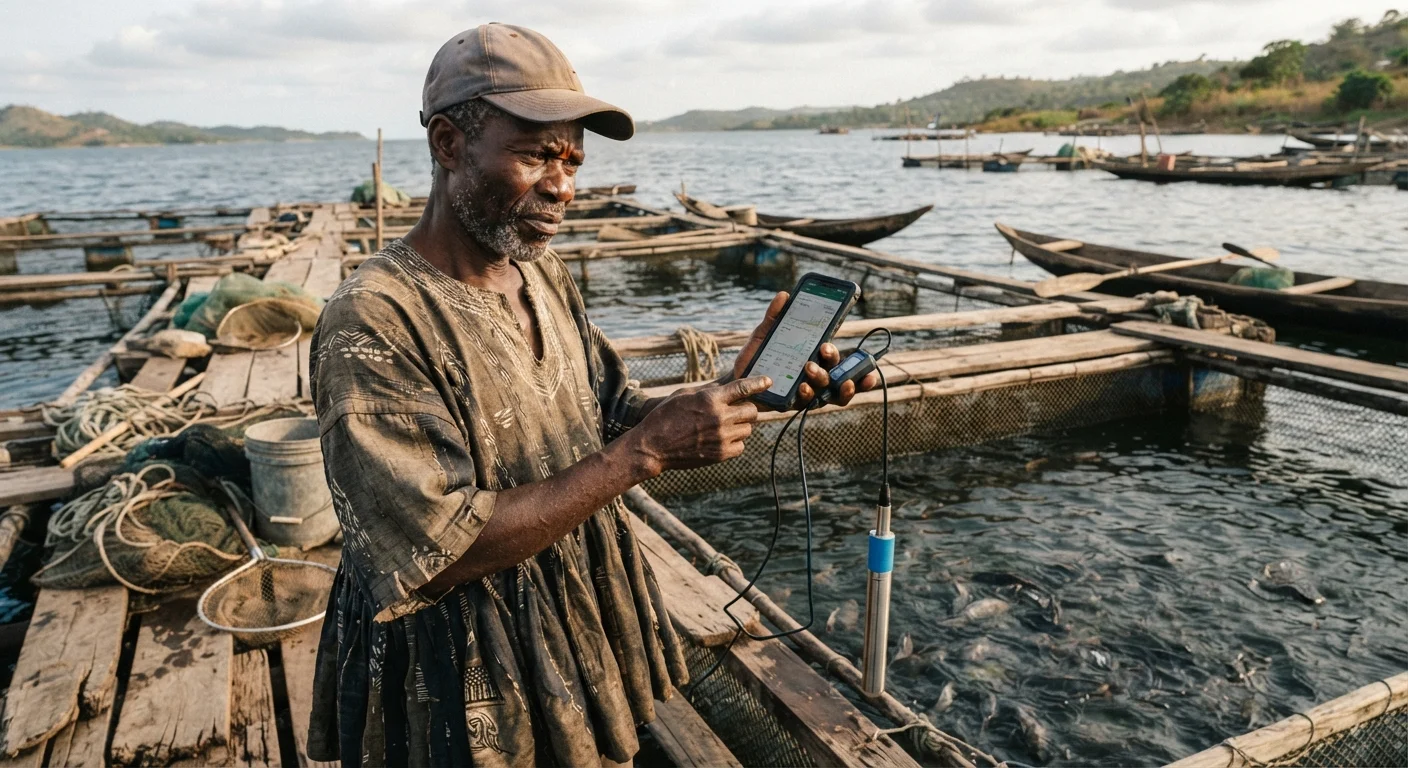
| Water-quality sensors and farm records | A feed conversion of 2.0 instead of 1.7 costs about GH¢6,800 a cycle; AquaMet reports serving more than 145 farmers | Reseller or service-agent model | Engineering and ICT students near the cage clusters | Patchy connectivity, sensor fouling and reluctance to pay a subscription |
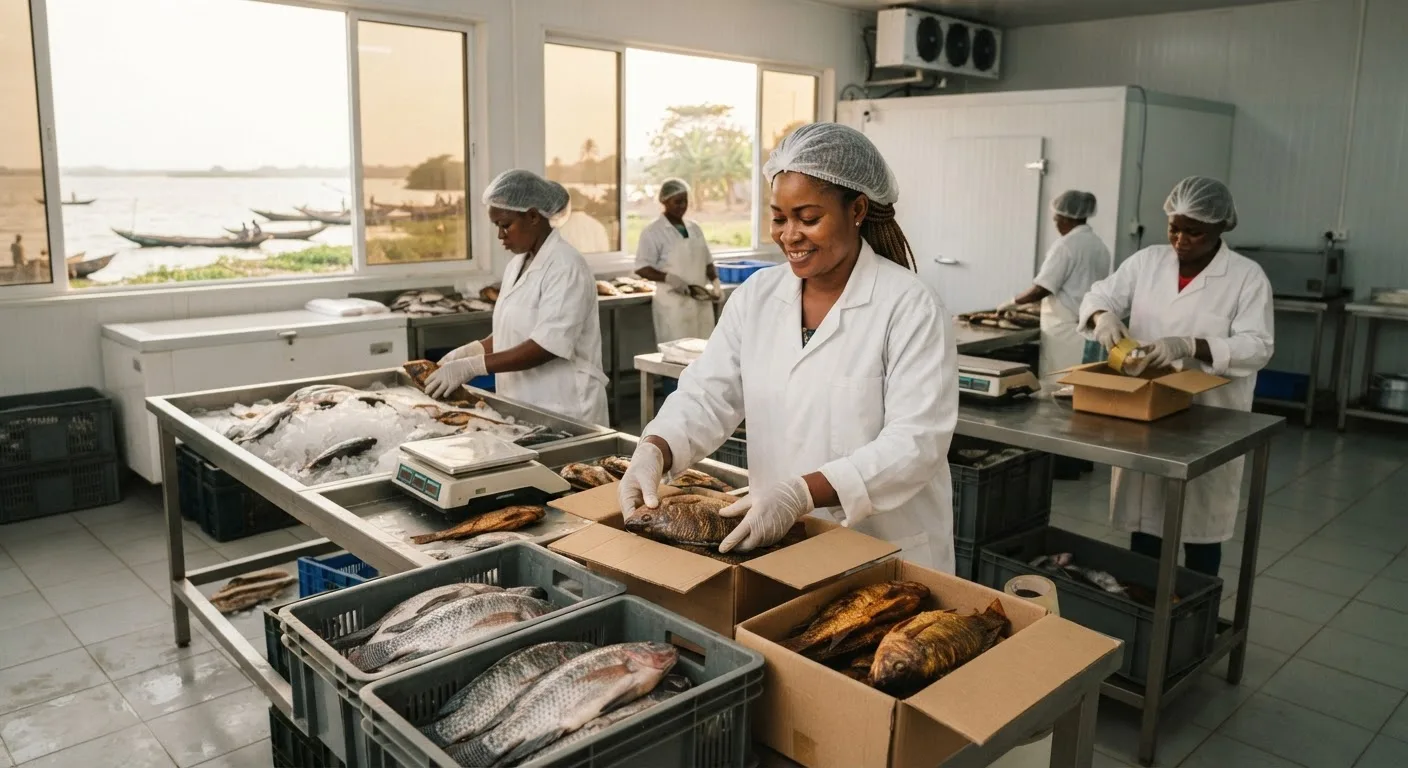
| Aggregation and cold chain for fresh tilapia | The Chamber publishes a weekly farm-gate pool price (GH¢48.74 to 52.39 a kilogram gutted in September 2026); the 2026 Budget funds fish markets with cold storage at Dambai and Shama | Working capital to buy one cage harvest, about 1,458 kg gutted, is about GH¢73,700 | Fish traders, logistics start-ups, investors in a gutting and chilling shed at a landing site | A squeeze between farm gate and retail; ice and power costs; fish unsold on the day |
| Smoked and dried catfish | Recorded exports of dried, salted or smoked fish were only about US$408,000 in 2024; raw catfish at GH¢40.25 means at least GH¢65 of fish per kilogram of smoked product | Improved kiln and packaging, not priced | Women fish processors; exporters with diaspora buyers | Export food-safety certification and the high cost of raw fish |
| Training and compliance services | Draft regulations under Act 1146 on licensing and fish health were in stakeholder review from July 2026; the 2026 budget plans to train 200 extension officers and 100 hatchery operators | Consultancy, little capital | Faculty, graduates and extension alumni | Late release of public budgets |