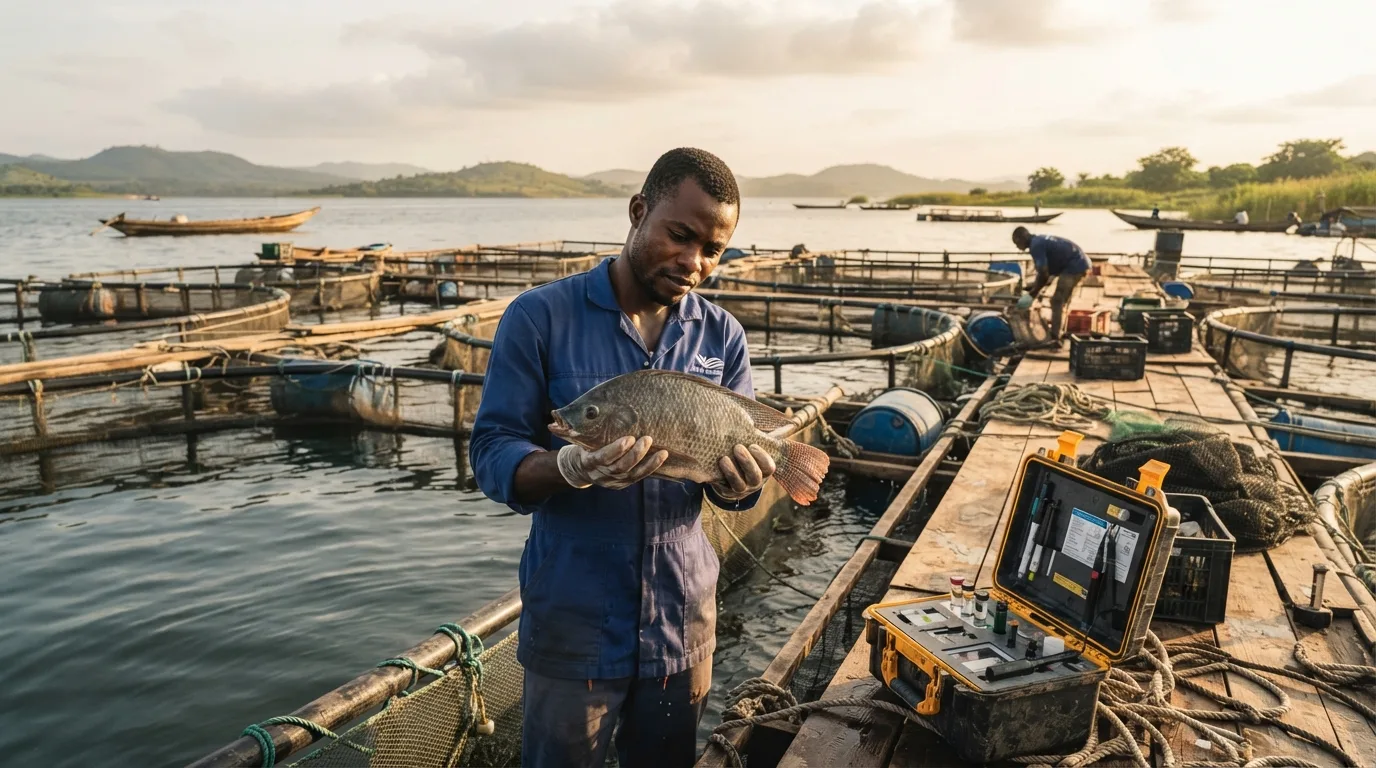
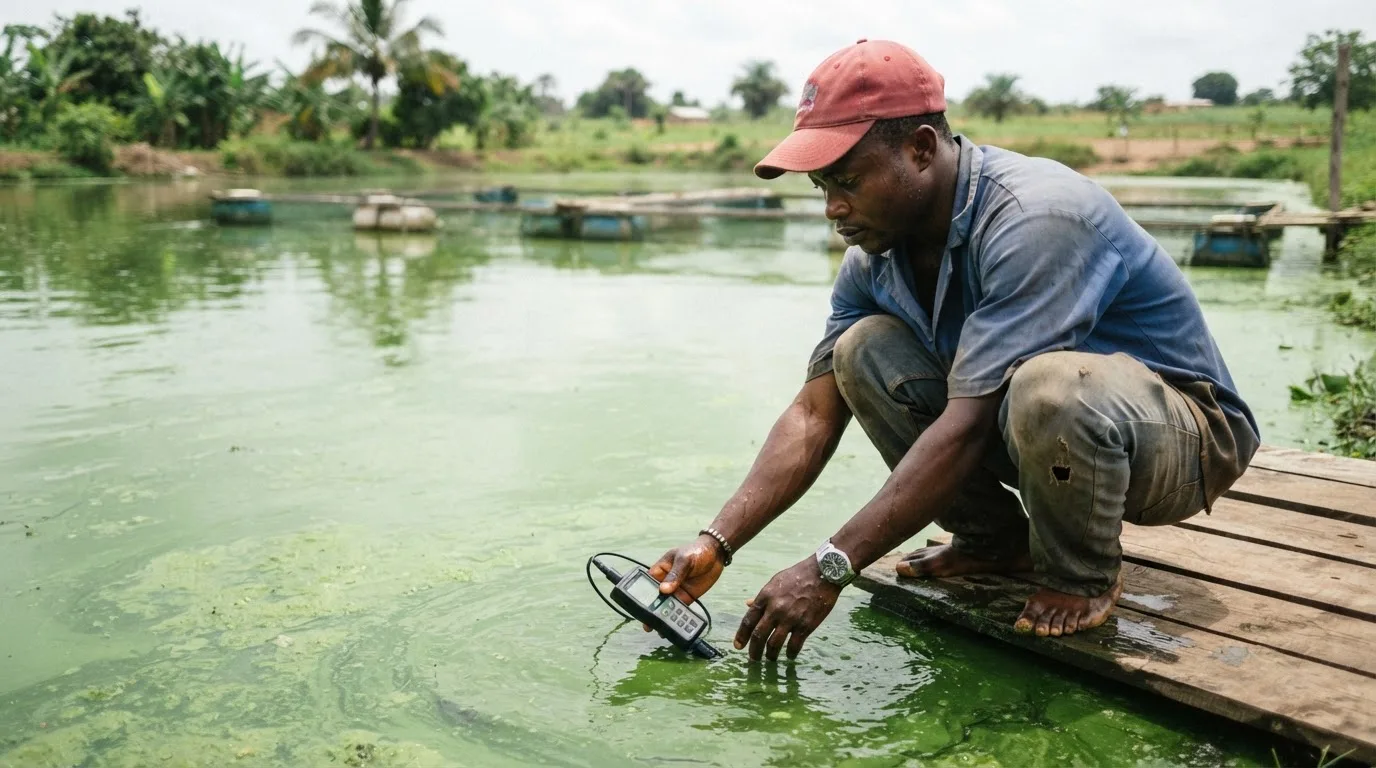
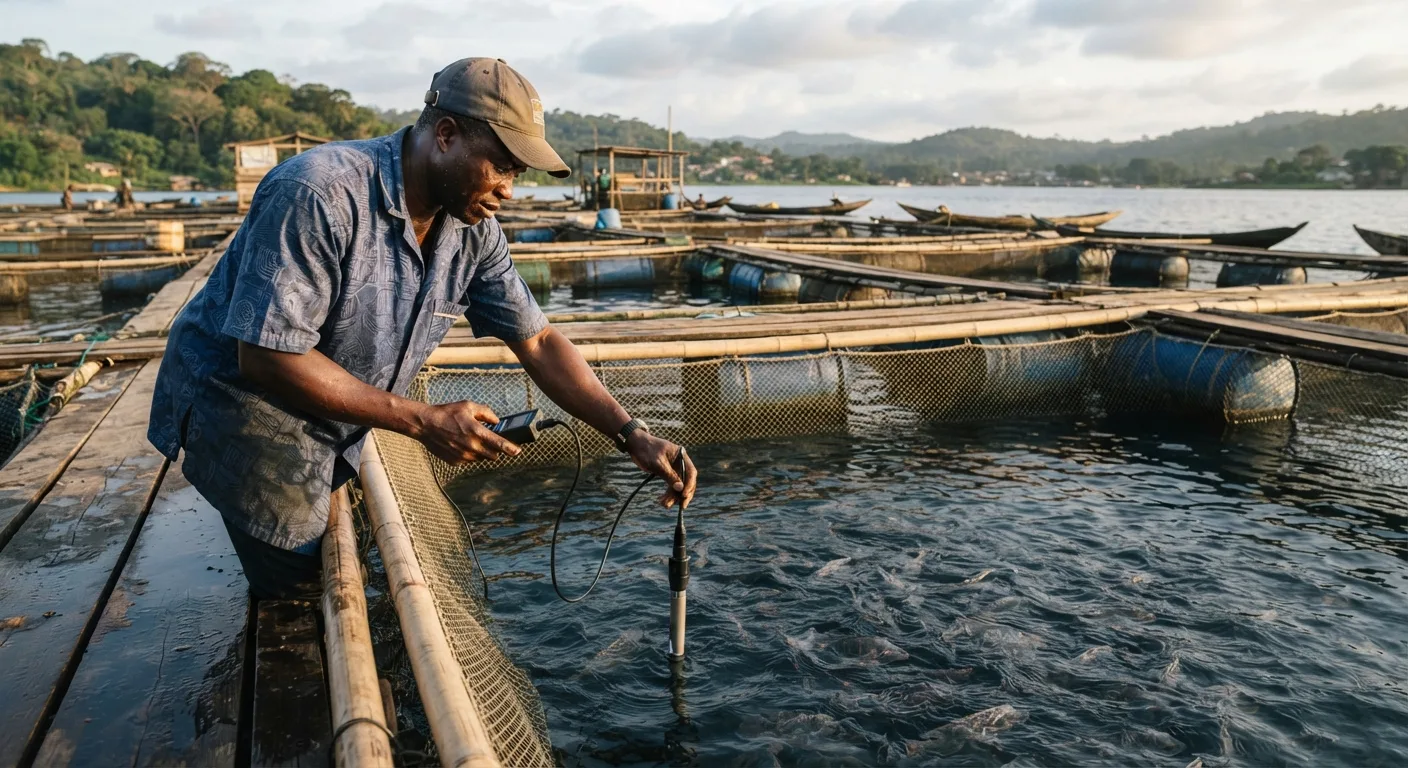
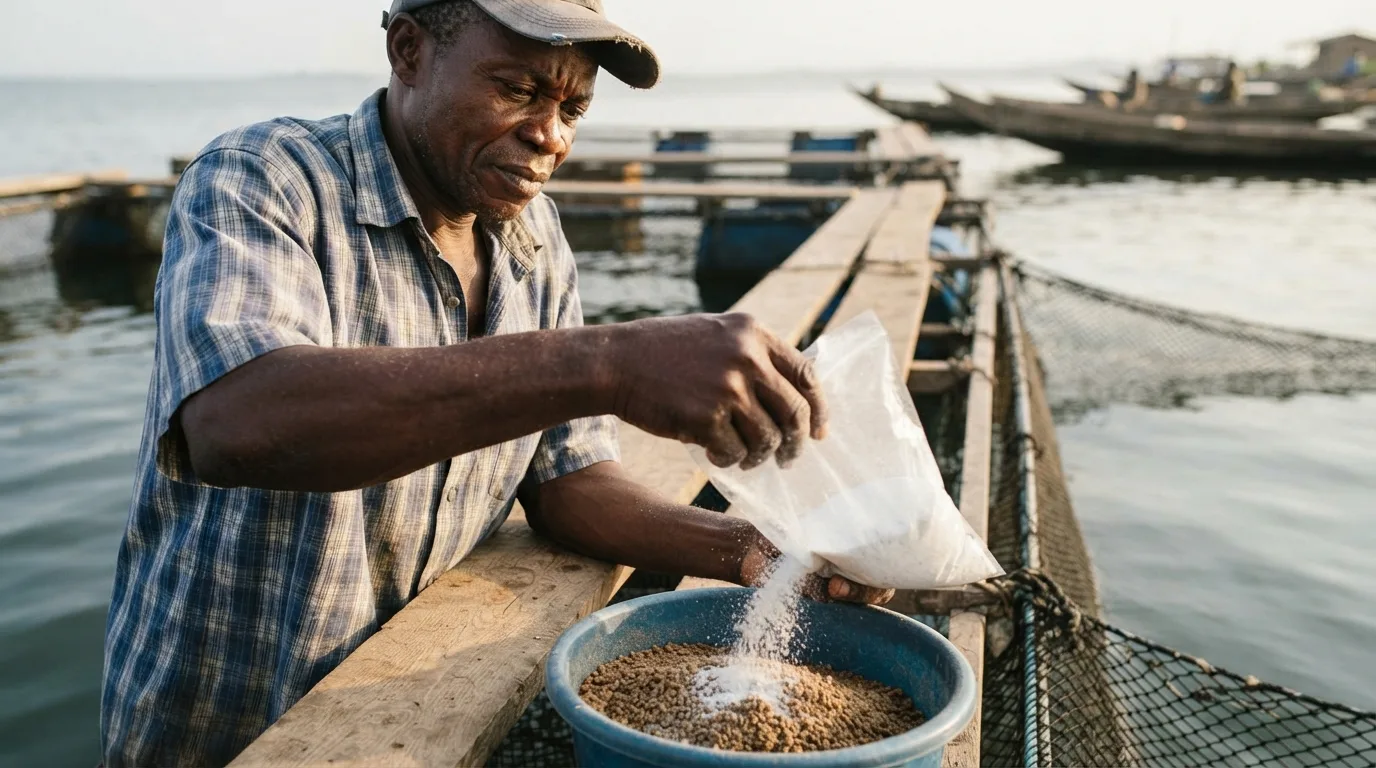
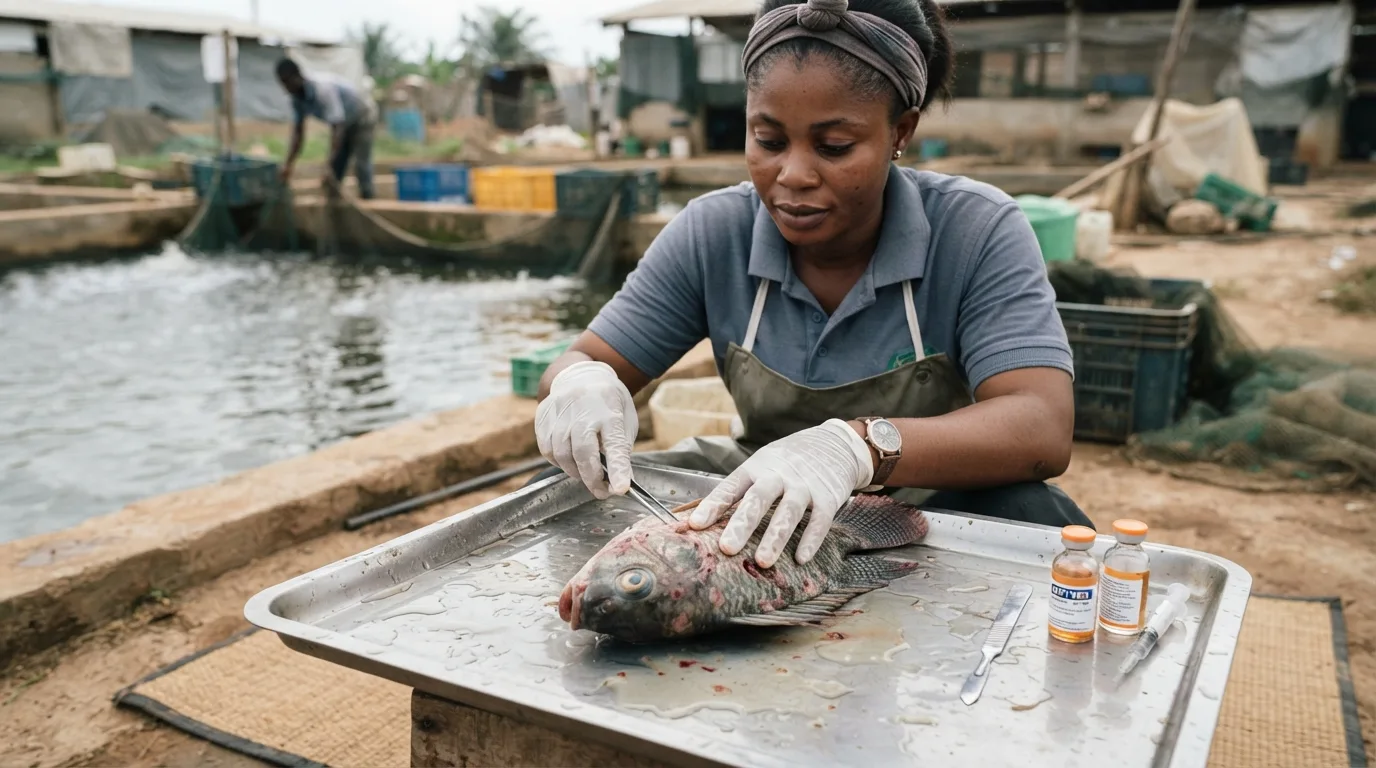
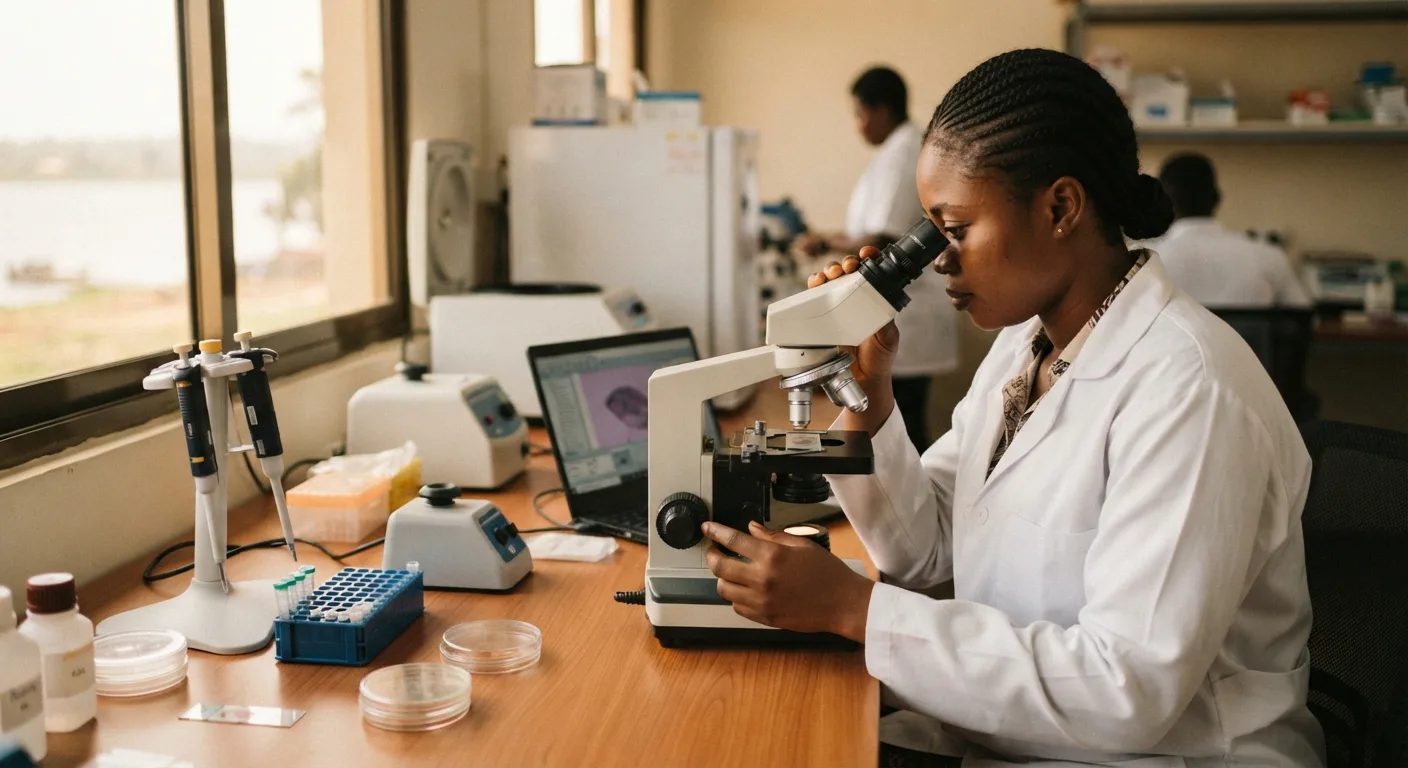
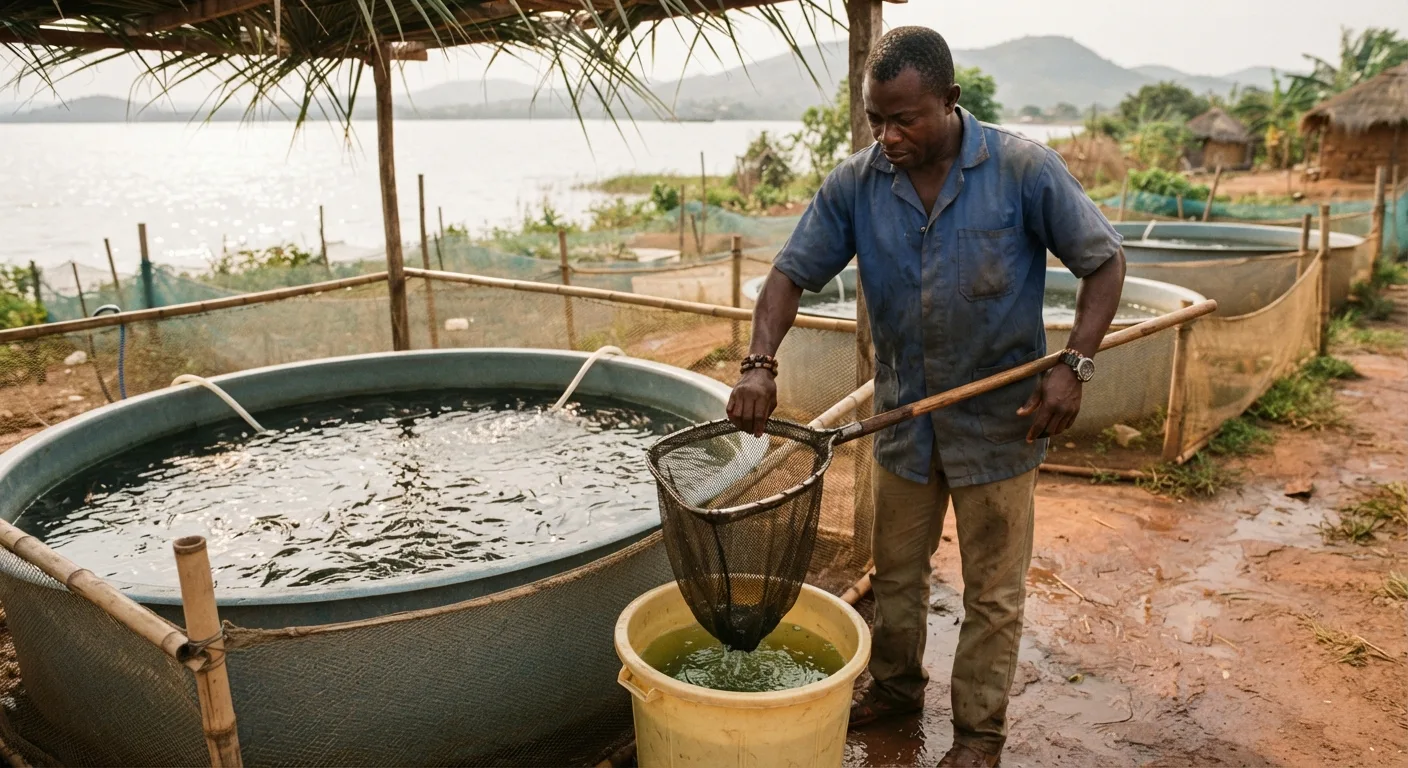
Do not think of disease as a topic to memorise; think of it as the variable that decides every business plan you will ever write in this sector. The most useful thing you can learn is not the biology of the virus but the practice that contains it: how to screen a batch of seed, how to read dissolved oxygen, how to keep new stock isolated. A student who can walk onto a farm and run a simple biosecurity and water-quality check is selling the scarcest skill on the lake, and it needs almost no capital to start.
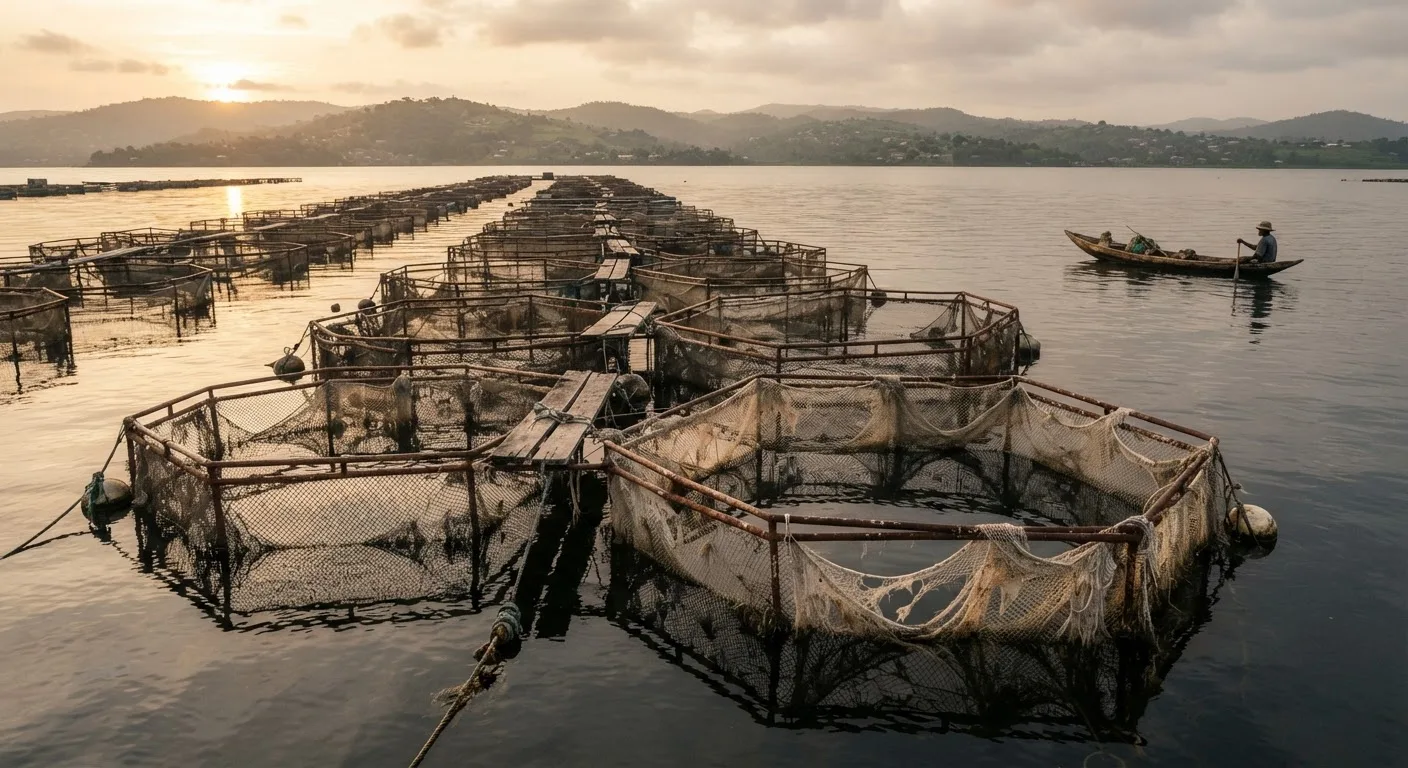
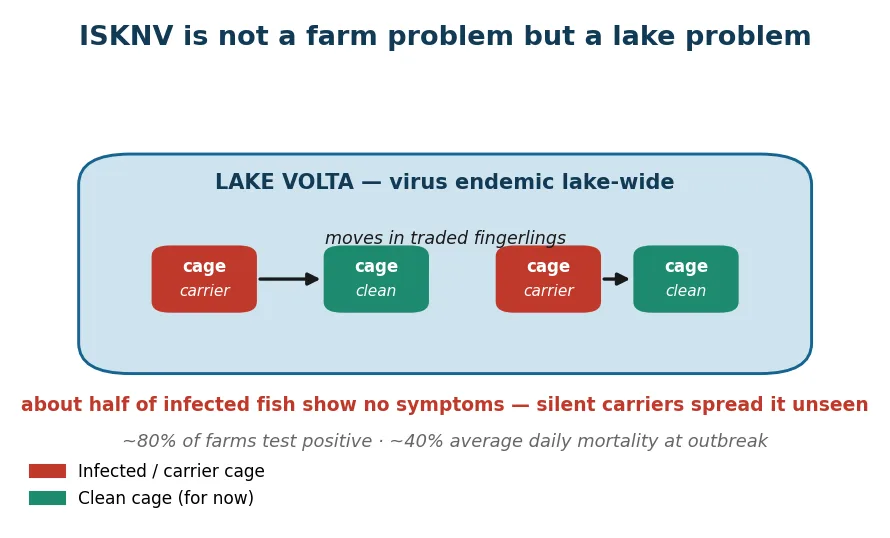
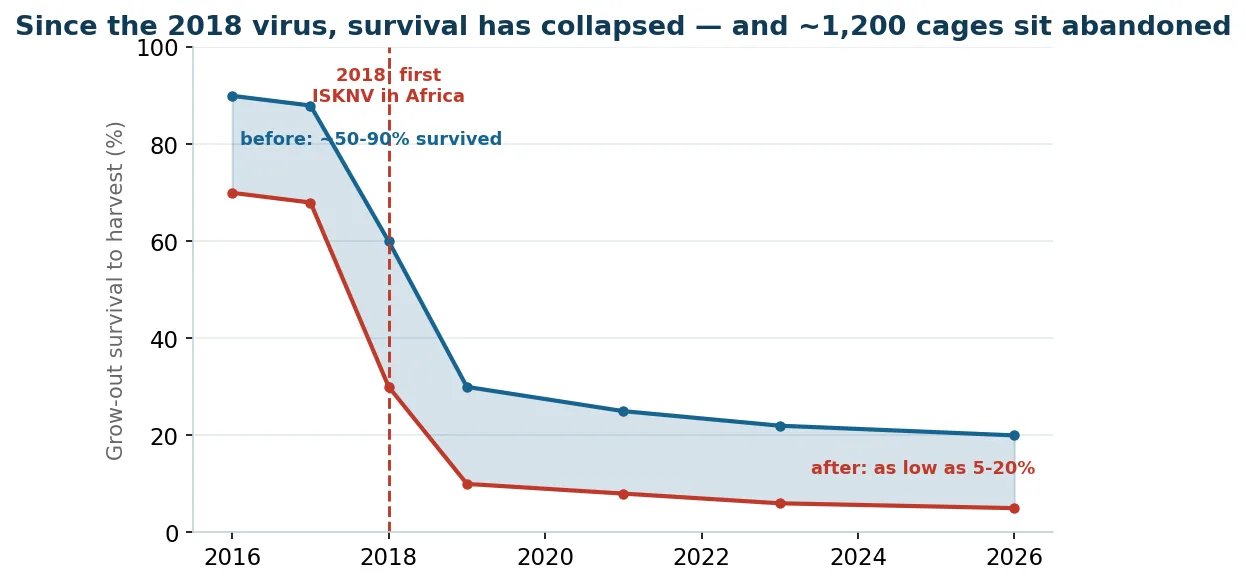
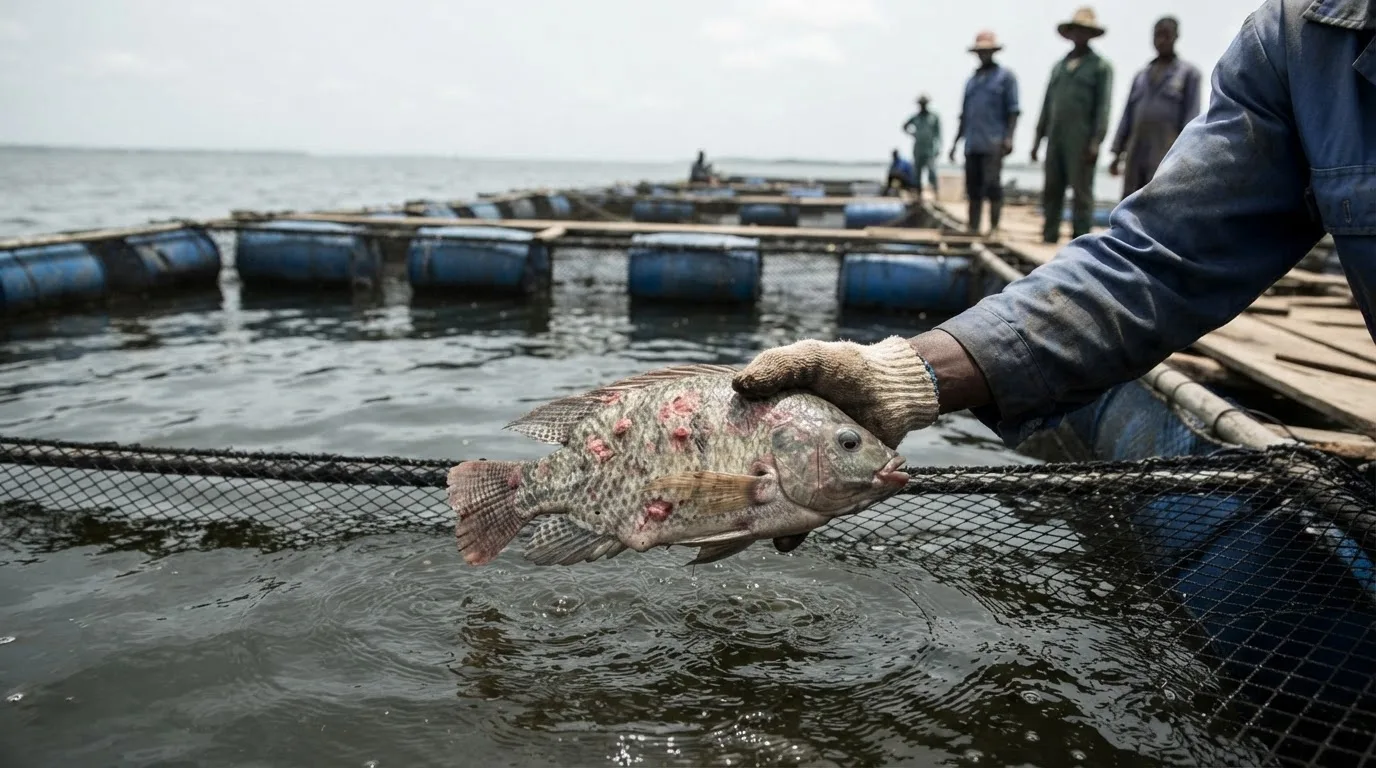
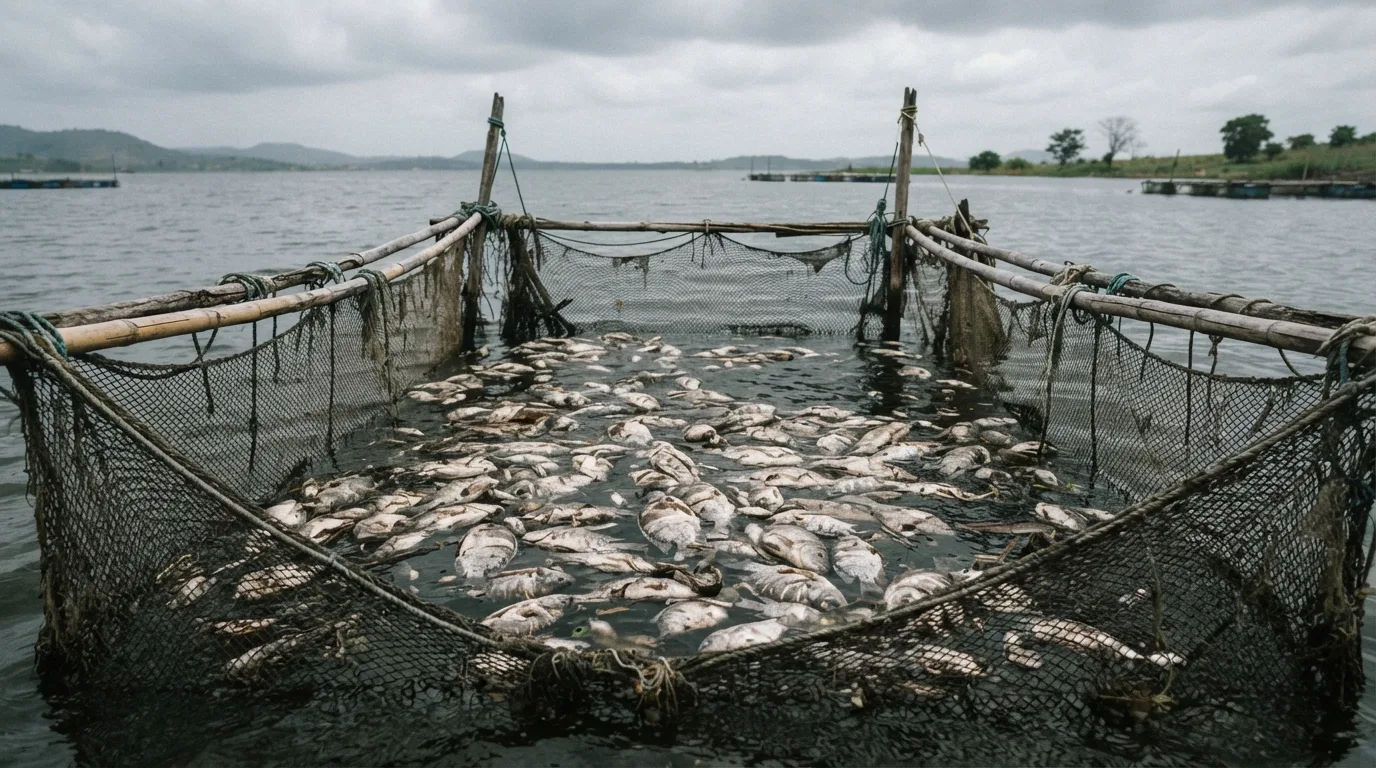
You cannot understand tilapia in Ghana without the year 2018. 2018 brought the first detection of the ISKNV virus in Africa, with 60 to 90 percent mortality, and it was endemic across Lake Volta by July 2019 (Ramirez-Paredes et al., 2021). It arrived on a sector that had grown from almost nothing to more than 50,000 tonnes in a decade, and it did not spread slowly.
Within months, the 2018 to 2019 ISKNV outbreak cut national output to about 30,000 tonnes, an economic loss of about 46 percent (Ayiku et al., 2024). A single virus erased roughly half the output of Ghana's fastest-growing food industry in under a year. That is the event every cost model, every loan and every entry plan now sits downstream of, whether the person writing it knows it or not.


