Ghana Agribusiness PlaybookTilapia & Catfish
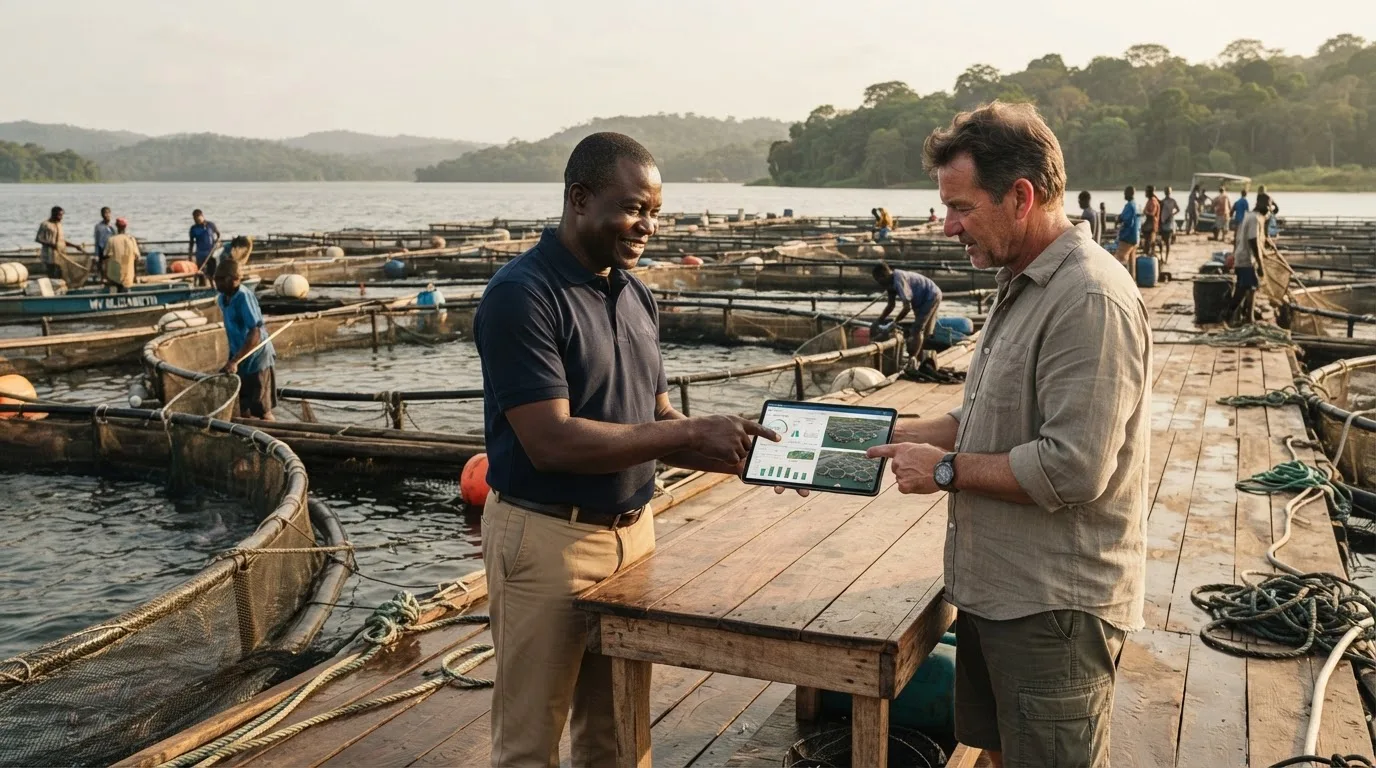
An investor reviewing an aquaculture farm and processing plan beside Lake Volta
Tilapia & Catfish · Series intelligence

Business and Market Intelligence

The size of the opportunity, the policy targets, the permitting path and the investment wave now arriving.
Business and Market Intelligence · Pillar 07

For once, policy and capital are pushing the same way. The national plan wants farmed-fish output to roughly double by 2028; a new Act rewrites the rulebook around licensing, insurance and biosecurity; and a wave of 2024 to 2026 money is crowding into seed, feed, processing and cold chain. The regulatory load is real, but it is also a moat. This pillar is a map of the doors, the rules and the money, so an entrant can plug into the flow instead of fighting it.

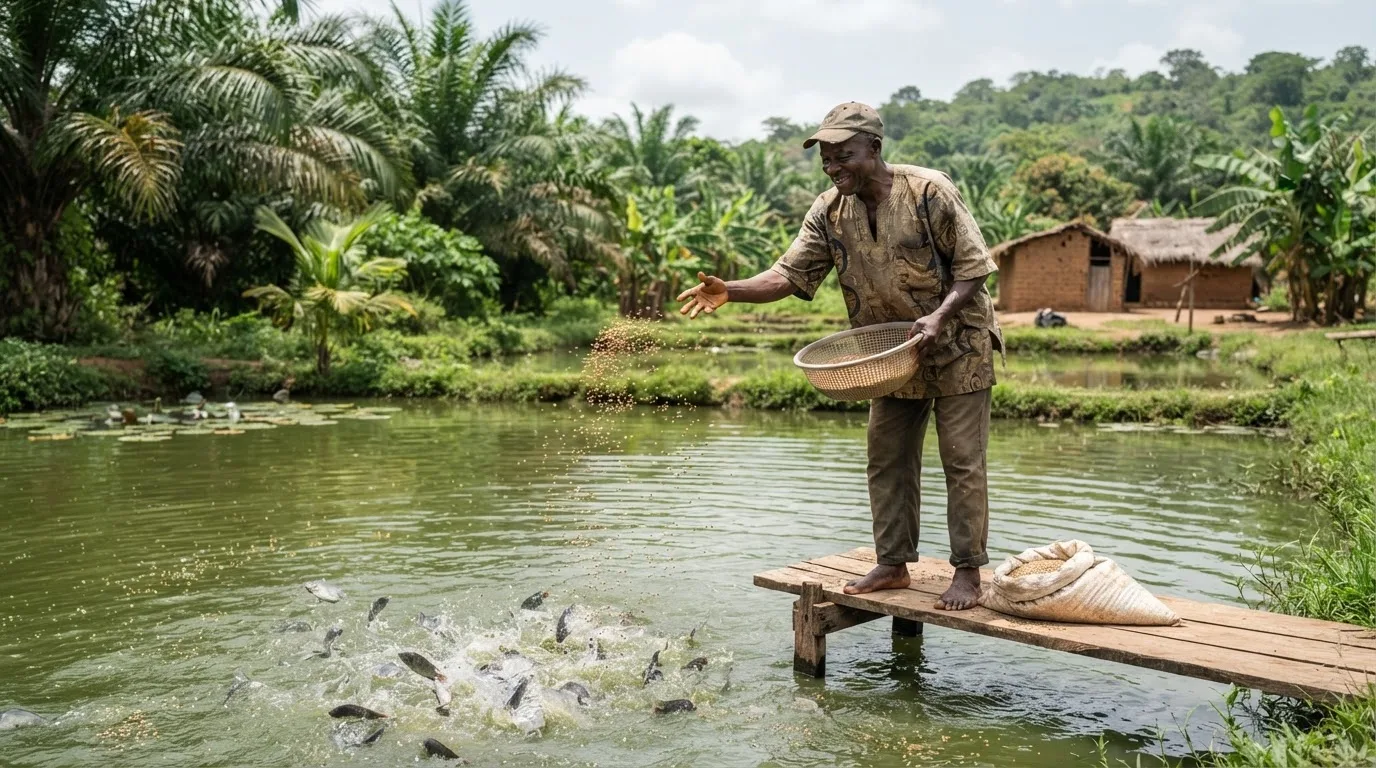
A commercial tilapia cage farm on the Volta Lake in Ghana, floating cages in rows on calm water, a worker in a small boat feeding fish, green shoreline behind
The state and the market are both pointing money here
A map of the doors, the rules and the money: The plan asks output to roughly double by 2028 and openly seeks two thirds of the money from private capital.
238,655 t
target output by 2028, up from about 116,000 tonnes in 2023 under the National Aquaculture Development Plan
GH¢1.03bn
the plan's cost, roughly a third public and two thirds private
~50%
of the fish Ghana eats is self-sufficient, so import substitution is the policy's whole aim

🐟 The national plan is a target with a funding gap, and the gap is the invitation 🐟

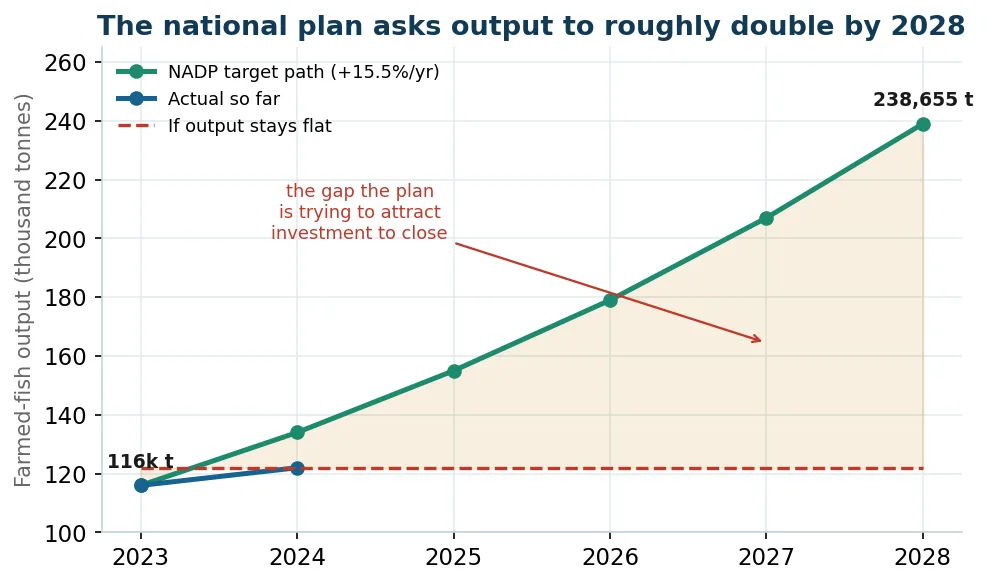
Start with the ambition, because it sets the direction of everything else. The National Aquaculture Development Plan aims to lift output from about 116,000 tonnes in 2023 to about 238,655 tonnes by 2028, at a cost of about GH¢1.03 billion, roughly a third public and two thirds private (Ghana National Aquaculture Development Plan, 2024). Read that split slowly. The state is committing only about a third of the money and is openly asking the private sector to find the other two thirds. That is not a footnote; it is the whole strategy.

The plan cannot hit its numbers without private farms, hatcheries, feed mills and processors arriving, which means the funding gap is a standing invitation with a government policy behind it.

The National Aquaculture Development Plan output target: about 116,000 tonnes in 2023 rising to about 238,655 tonnes by 2028
Figure 21 The National Aquaculture Development Plan output target: about 116,000 tonnes in 2023 rising to about 238,655 tonnes by 2028. The national plan asks output to roughly double by 2028. The gap between the target line and the flat reality is the investment the plan is trying to attract. Sources: Ghana National Aquaculture Development Plan 2024 to 2028; MoFAD Programme-Based Budget (2025).
🎯 OPPORTUNITY
01

The plan needs roughly GH¢680 million of private money over five years that it does not yet have. An entrant who reads the plan is not begging for permission; they are supplying the exact thing the state has written down that it needs. Seed, feed, processing and cold chain are named as priority result areas, so a credible venture in any of them is pushing on an open door.

~GH¢680m
of private money the plan needs over five years that it does not yet have
~2/3
of the plan's cost the state is openly asking private capital to carry

🐟 The new law: what a commercial farm must now hold 🐟

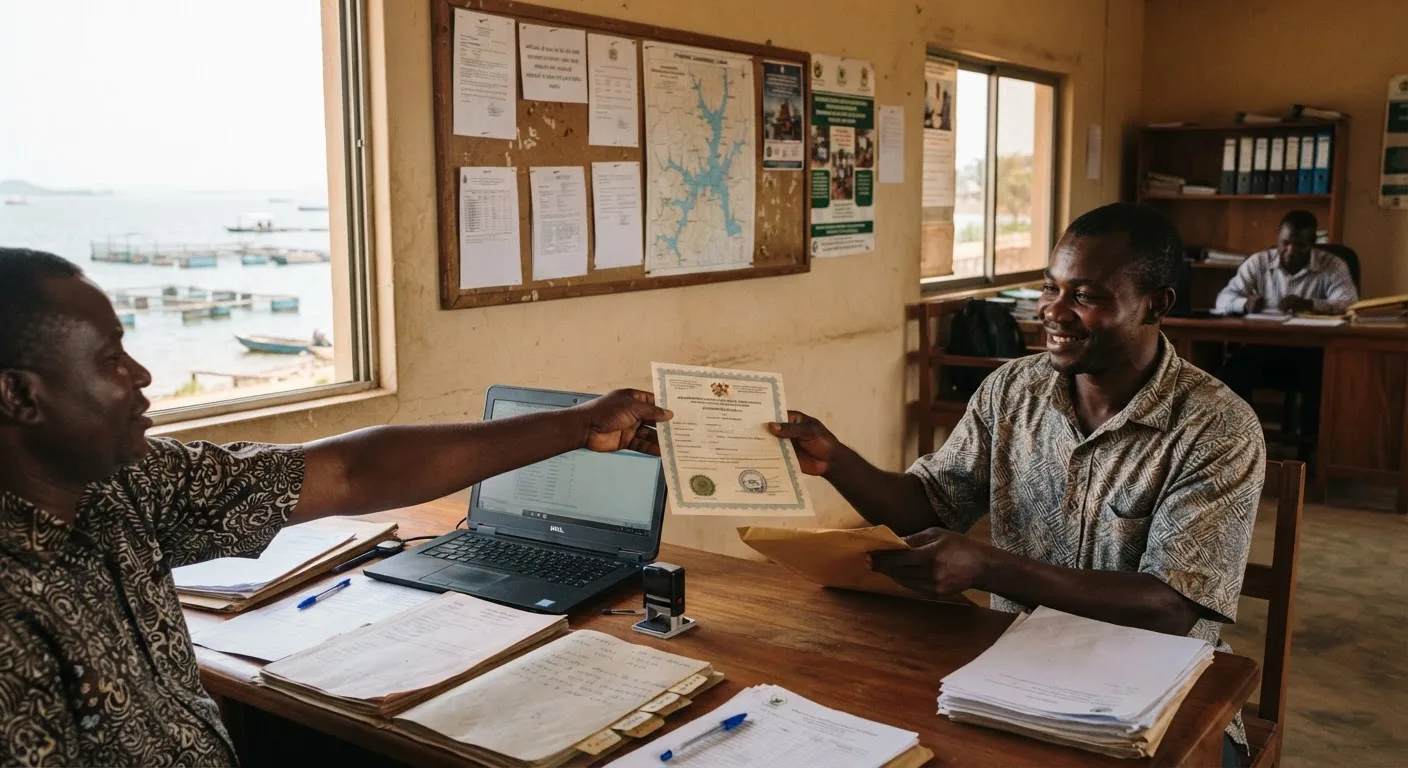
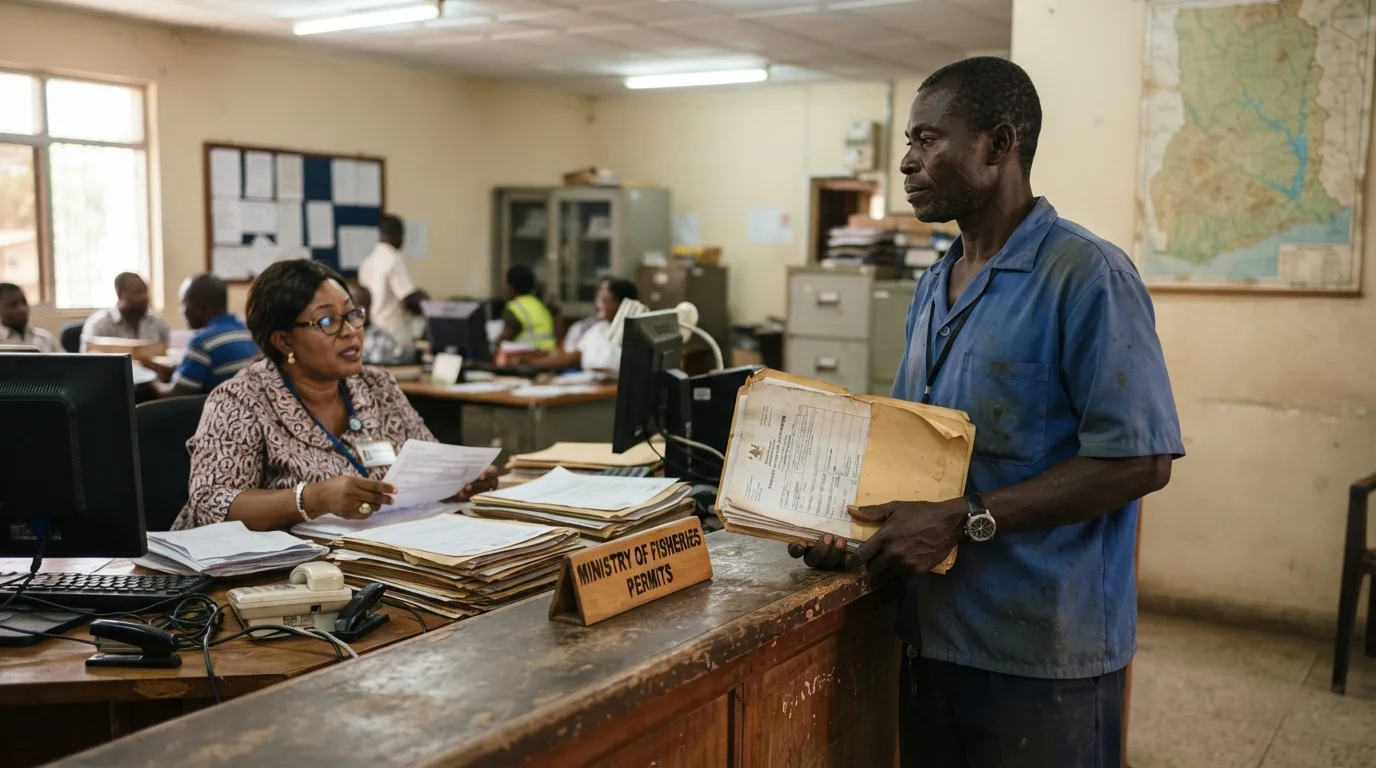
A Ghanaian fish farmer at a Fisheries Commission office desk receiving a stamped commercial aquaculture licence, files and a laptop on the counter, official noticeboard behind
Registration, insurance, permits, biosecurity
The permit load is real, but once held it is a moat: it is the barrier casual competitors will not clear.

The rulebook changed in 2025, and every serious entrant must read the change. The Fisheries and Aquaculture Act 2025, assented on 14 August 2025, requires commercial farms to register and licence with the Fisheries Commission and to hold insurance, an environmental permit, a water permit and a biosecurity plan (Act 1146, 2025).

Before this Act, licensing was a slow scramble across more than five agencies that could take one to two years (Rurangwa et al., 2015); the new Act consolidates the law and makes the requirements explicit. That is more paperwork, but explicit paperwork is easier to plan around than a vague one. The Act also sets real teeth: operating an unlicensed commercial establishment carries a fine of several thousand penalty units or up to two to three years in prison (Act 1146, 2025), and it creates a Fisheries and Aquaculture Development Fund (s.33) that is meant to channel money back into the sector.

📡 MARKET SIGNAL: THE REGULATORY LOAD IS ALSO A MOAT

Do not read the permit list only as a cost. Read it as a moat. Every requirement that is hard for you is just as hard for the next entrant, and it locks out the informal, unscreened operators who spread disease and undercut price. The farm that holds a full, clean set of permits is not merely compliant; it is bankable, insurable and defensible in a way an unlicensed cage never will be. Compliance is a competitive position.

Table 10: What a commercial tilapia or catfish farm must now hold under the Fisheries and Aquaculture Act 2025, read for the entrant
RequirementWho issues itWhy it mattersCost, or moat
Fisheries Commission registration and licenceFisheries CommissionThe legal right to farm commercially at all; unlicensed operation is an offenceA gate that filters out informal competitors who cannot or will not comply
Valid insurance (s.83)A licensed insurerCovers the mass-mortality and disaster losses that sink uninsured farmsA running cost, but also the thing that unlocks formal bank and guarantee finance
EPA environmental permit (LI 2504)Environmental Protection AgencyConfirms the site will not foul the water it sits inA one-off hurdle that keeps casual entrants out of good sites
WRC water-use permit (Act 522)Water Resources CommissionThe legal right to occupy and use that patch of lake or riverSecures your site against later challengers once you hold it
Biosecurity plan (s.84)Farm prepares; Fisheries Commission assessesProves you will not import or spread the disease that has crashed the lakeThe clearest moat: it rewards the operator who takes disease seriously

Source: Fisheries and Aquaculture Act 2025 (Act 1146), ss.33, 83 to 86; WRC Technical Guidelines for Sustainable Cage Aquaculture.

🐟 How to get licensed, in practice 🐟

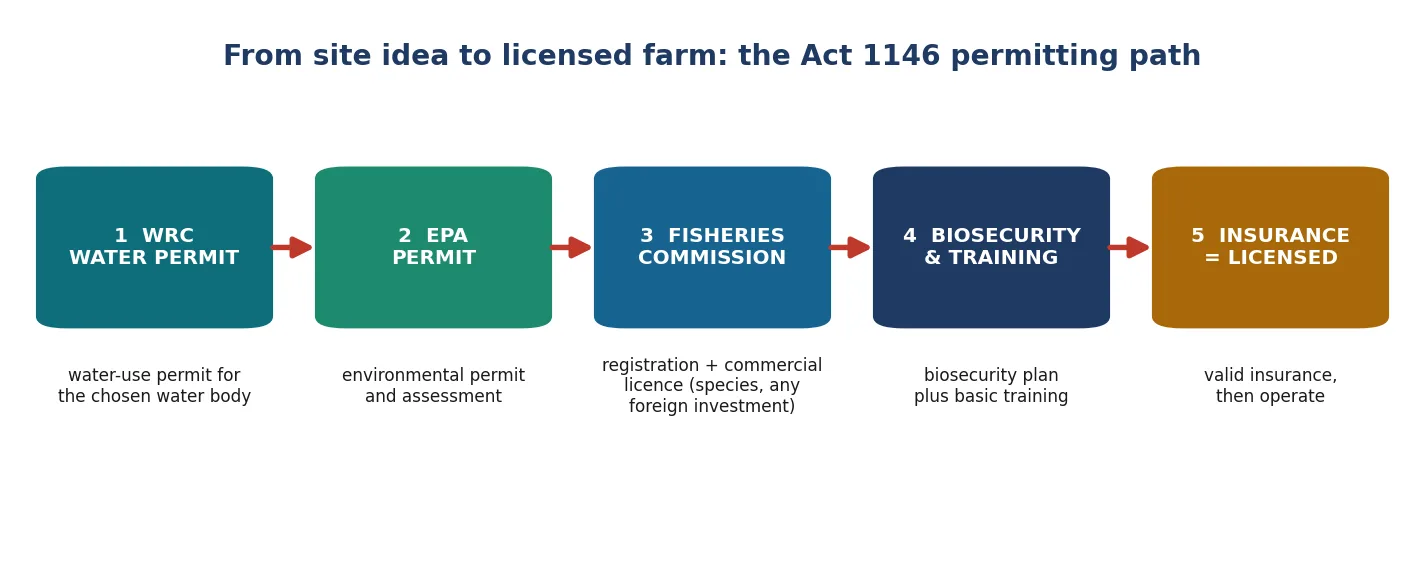
Because the permit set is now the price of entry, it is worth being concrete about the order of the doors. The sequence below is the practical route from a site idea to a licensed, insurable farm. None of it is exotic, but skipping a step, or starting cages before the water permit is secured, is how a venture loses a year or a site.

The new implementing regulations expected in 2026 will pin down the exact fees and forms (Ghana News Agency, 2025), so confirm the current checklist with the Fisheries Commission before you begin.

From site idea to licensed farm: the Act 1146 permitting path
Figure 22 From site idea to licensed farm: the Act 1146 permitting path. The permit load is real, but once held it is a moat: it is the barrier casual competitors will not clear. Source: Fisheries and Aquaculture Act, 2025 (Act 1146).
🔍 WHAT THIS MEANS

The single most common mistake is treating the permits as something to sort out after the cages are built. Do it the other way round. Secure the water permit and the environmental permit first, because they decide whether the site is even legal, and only then commit capital to cages and seed. The entrepreneur who front-loads compliance spends money slower but almost never loses a whole season to a permit refusal.

🐟 The public purse is thin, and that tells you who must lead 🐟

Now follow the money the state actually spends, because it is smaller than the ambition suggests. The Ministry's 2025 budget is about GH¢264 million, of which the aquaculture development programme is about GH¢22.6 million, close to 8.5 percent (MoFAD Programme-Based Budget, 2025). Hold that next to the plan's billion-cedi price tag and the message is blunt: the government does not have the money to build this sector itself, and it is not pretending to.

Public funds will seed hatcheries, extension and health labs, but the tonnage, the processing and the cold chain must come from private capital. For an entrant that is clarifying, not discouraging: it means the state is a partner and a regulator, not a competitor, and the commercial space is left open on purpose.

🔍 WHAT THIS MEANS

A thin public budget is a signal about strategy, not a lack of one. It says the state will set the rules, screen the seed and police the disease, but it expects private operators to carry the capital and take the returns. Plan your venture on private finance and your own cash flow, and treat any public support, a subsidised fingerling batch or an extension visit, as a bonus rather than the foundation.

GH¢264m
the Ministry's 2025 budget, against the plan's billion-cedi price tag
GH¢22.6m
for the aquaculture development programme, close to 8.5 percent of the budget

🐟 The institutions map: the doors an entrant must knock on 🐟

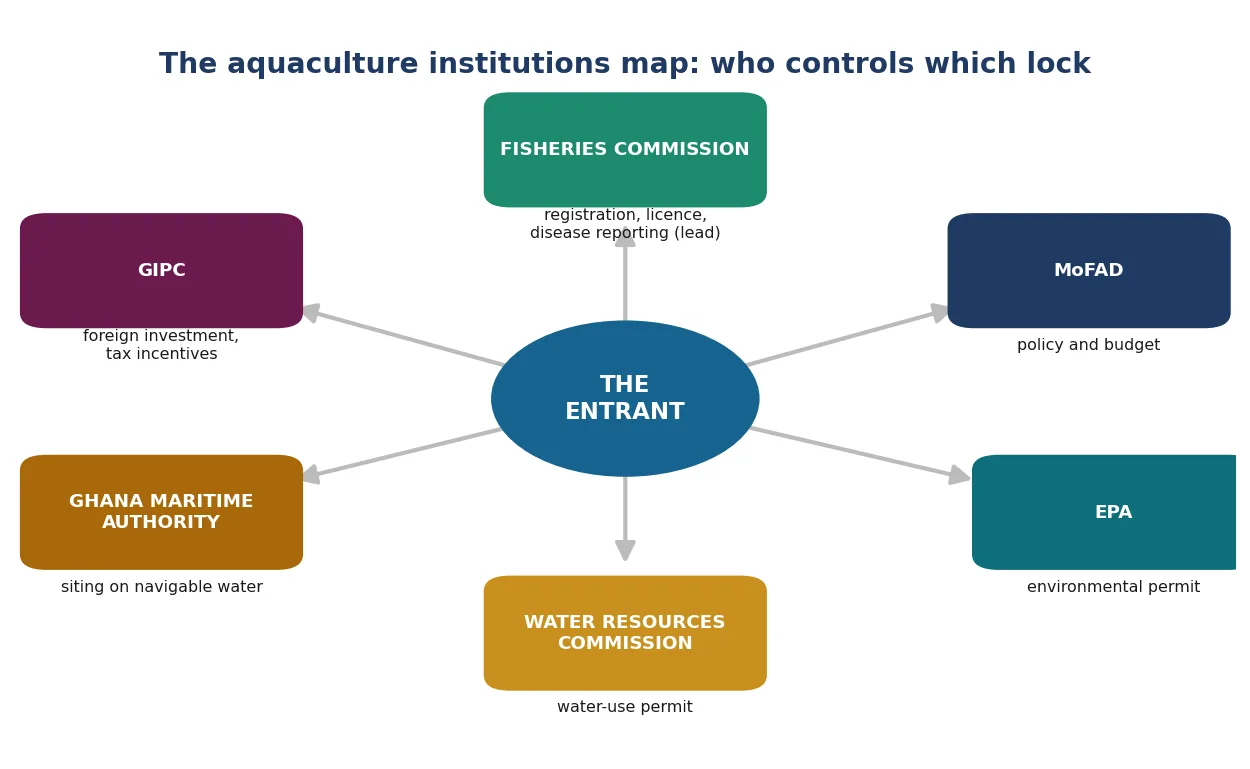
The aquaculture institutions map: who controls which lock
Figure 23 The aquaculture institutions map: who controls which lock. Knowing which door opens which lock saves an entrant months. Confirm the current checklist with the Fisheries Commission before you begin. Sources: Author synthesis; Act 1146 (2025).

Policy is delivered by institutions, so it helps to know who does what before you need them. The Fisheries Commission is the lead agency and your first and most important door: it registers, licences and inspects, and it runs the disease-reporting system. MoFAD, the parent ministry, sets policy and holds the budget.

The Water Resources Commission issues the water-use permit and the EPA the environmental one, so both sit early in your licensing path. The Ghana Investment Promotion Centre matters if you bring foreign capital, which the licence application must disclose. And the National Aquaculture Centre at Amrahia, commissioned in June 2023 (MoFAD, 2024), is where training and demonstration sit. Knowing which door opens which lock saves an entrant months.

✅ ACTION POINTS
01

Book an early, in-person meeting with the Fisheries Commission before you spend on anything, and ask them, in writing, for the current permit checklist and fee schedule under the 2026 regulations.

02

Line up the water permit (WRC) and the environmental permit (EPA) in parallel, because they gate the site and each takes time.

03

If foreign money is involved, register the investment with GIPC early, since the licence application must declare it anyway.

The aquaculture institutions map: the doors an entrant must knock on, and the lock each one controls
InstitutionThe lock it controlsWhen you need it
Fisheries CommissionRegistration, licence, inspection and disease reporting; the lead agencyFirst and most important door, throughout
MoFAD (parent ministry)Sets policy and holds the budgetSets the rules you operate under
Water Resources Commission (WRC)The water-use permit for your patch of lake or riverEarly, gates the site
Environmental Protection Agency (EPA)The environmental permit (LI 2504)Early, gates the site
Ghana Investment Promotion Centre (GIPC)Registration of foreign capital, which the licence must discloseEarly, if foreign money is involved
National Aquaculture Centre, AmrahiaTraining and demonstration; commissioned June 2023For skills and technical support

Sources: Author synthesis; Act 1146 (2025); MoFAD (2024).

🐟 Self-sufficiency and the import-substitution logic behind the whole policy 🐟

There is one number that explains why every policy above points the same way. Ghana is about 50 percent self-sufficient in fish, and aquaculture employs about 30,000 people (Ghana National Aquaculture Development Plan, 2024). Ghana imports roughly half the fish it eats, and the tilapia import ban plus the steep frozen-fish levy (covered in Pillar 2) exist to hold that imported half back and hand the space to local farmers.

That is the import-substitution logic in one line: the state is deliberately widening the gap between what Ghanaians want to eat and what imports are allowed to supply, and it wants domestic aquaculture to fill it. An entrant is not guessing at a market; the policy is building one.

~50%
of the fish Ghana eats is imported, the half the policy wants local farmers to take
~30,000
people employed by aquaculture, a sector the state is trying to grow
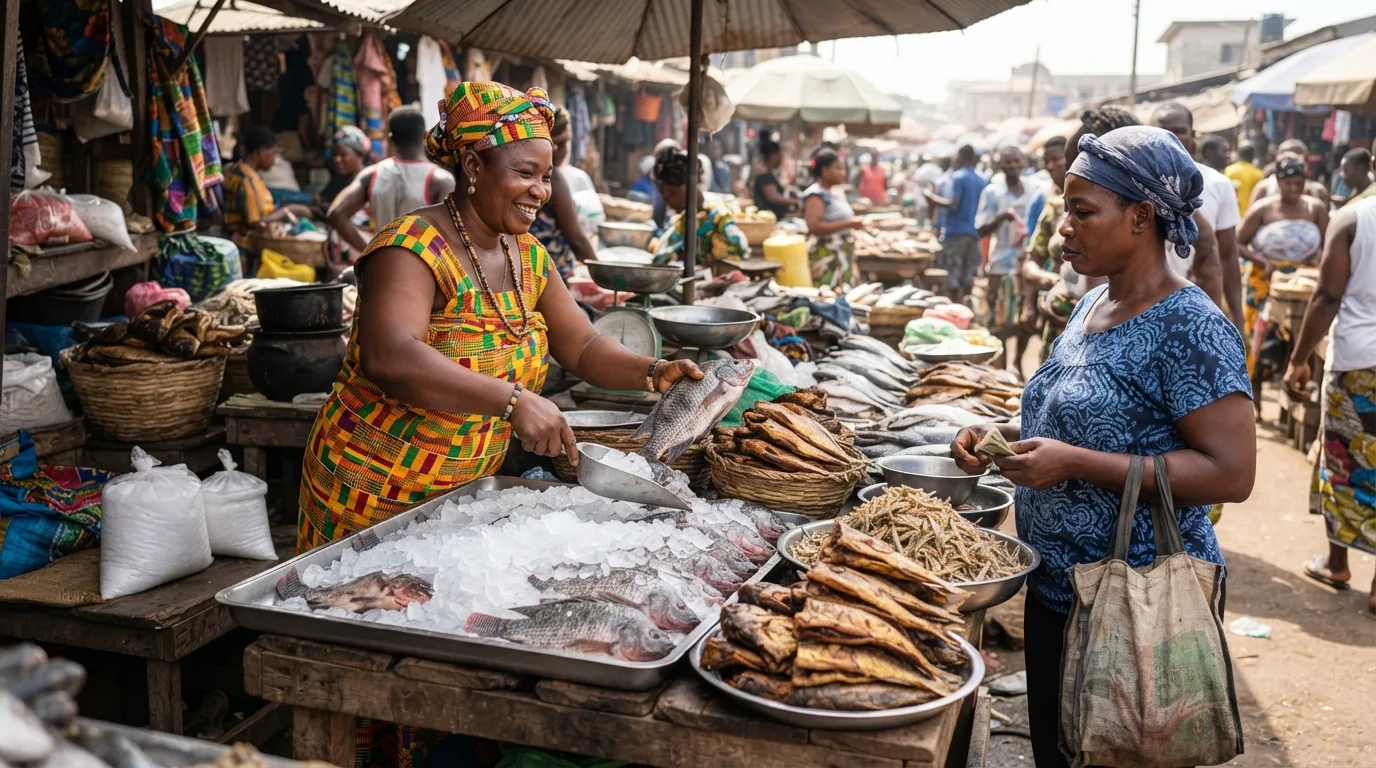
A busy Ghanaian fish market with women traders selling fresh whole tilapia on ice, buyers crowding the stalls, colourful baskets, natural daylight
A protected, government-backed demand
The import ban and the frozen-fish levy hold the imported half back and hand the space to local farmers.
📡 MARKET SIGNAL: PROTECTED, POLICY-BUILT DEMAND

The self-sufficiency gap and the import controls are two halves of the same policy, and together they are a protected, government-backed demand signal. Every tonne of local fish an entrant can raise, process or distribute is a tonne the state is actively trying to substitute for an import. That is about the most favourable demand backdrop a new sector can have.

🐟 The 2024 to 2026 investment wave: the clearest market signal of all 🐟

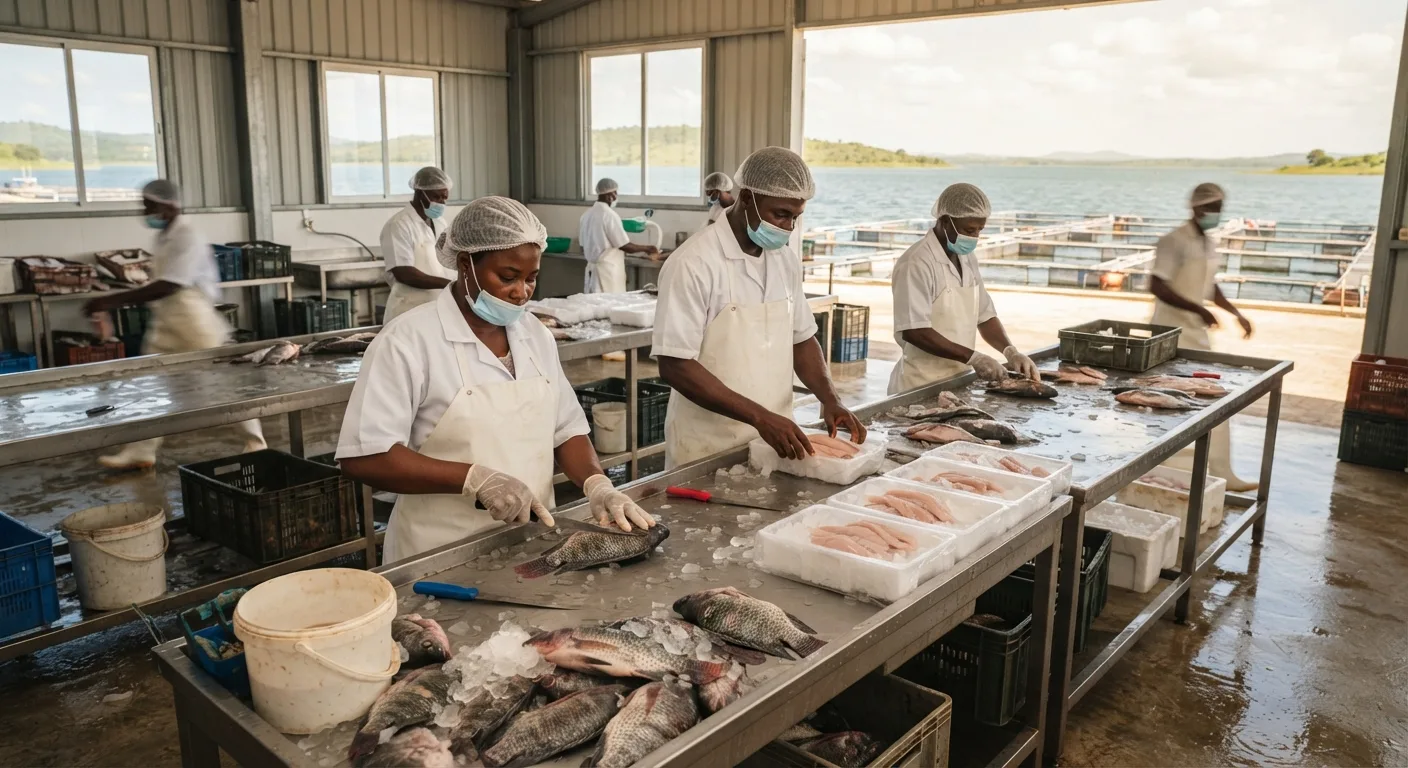
A modern Ghanaian tilapia processing line with workers in white coats and hairnets filleting and packing fresh fish into chilled trays, stainless-steel tables, bright hygienic hall
The clearest market signal of all
Big capital is validating seed, feed, processing and cold chain. A smaller entrant plugs in around it, not against it.

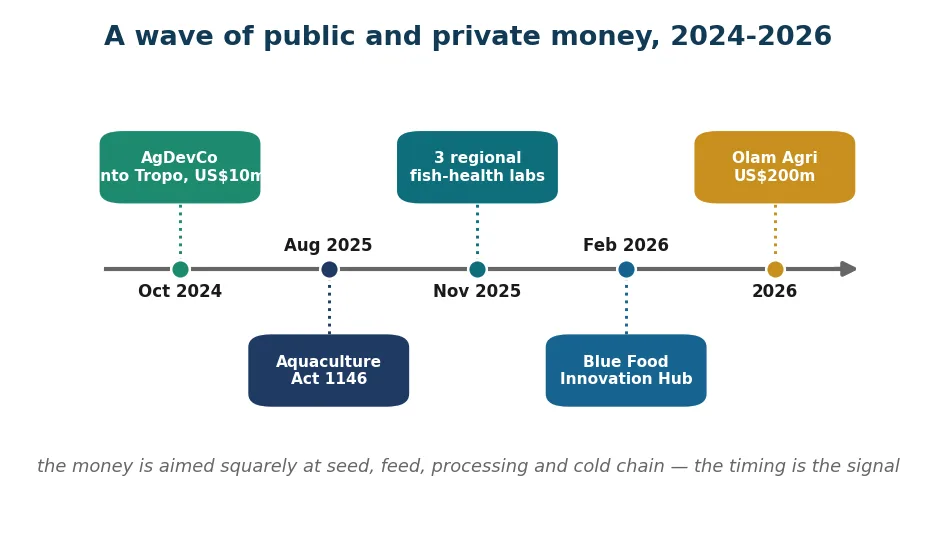
If the policy is the promise, the money arriving is the proof. A 2024 to 2026 investment wave includes AgDevCo's US$10 million into Tropo, Olam Agri's US$200 million including an aquafeed plant, and the WEF-backed Blue Food Innovation Hub launched in February 2026 (author synthesis of live sources, 2026).

Line those up. Tropo Farms, the largest producer in West Africa, employs about 917 people and supplies through about 3,000 mostly women traders, and is scaling toward 30,000 tonnes on a US$10 million AgDevCo loan (AgDevCo, 2024), so the largest producer in the region is putting a development-finance loan into processing and scale. Olam Agri's roughly US$200 million programme includes a local aquafeed plant, aimed straight at the feed cost that is the sector's biggest lever (Aquafeed.com, 2026). And the Blue Food Innovation Hub, launched in February 2026 by the Chamber of Aquaculture and the World Economic Forum, is a dedicated accelerator and finance channel for aquaculture SMEs (SeafoodSource, 2026).

🎯 OPPORTUNITY
01

Read the investment wave as a map, not just news. Big capital is validating four nodes: seed, feed, processing and cold chain. A smaller entrant does not compete with Tropo or Olam; they plug in around them, as an out-grower, a certified-seed supplier, a cold-chain aggregator or a service the big players still buy in.

02

The Blue Food Innovation Hub is the single most useful new door for a small venture: it is the current, named channel for accelerator support and finance clinics aimed precisely at tilapia and catfish SMEs.

🔍 WHAT THIS MEANS

Seed, feed, processing and cold chain are exactly the nodes the smart money is entering, which is a strong hint about where the returns are.

The 2024 to 2026 aquaculture investment wave: AgDevCo into Tropo, Olam Agri's aquafeed plant, and the Blue Food Innovation Hub
Figure 24 The 2024 to 2026 aquaculture investment wave: AgDevCo into Tropo, Olam Agri's aquafeed plant, and the Blue Food Innovation Hub. A wave of public and private money is arriving between 2024 and 2028, aimed squarely at seed, feed, processing and cold chain. The timing is the signal. Sources: AgDevCo (2024); Aquafeed.com (2026); SeafoodSource (2026); author synthesis of live sources.
The 2024 to 2026 investment wave, read as a map of the nodes big capital is validating
Investor or initiativeThe moneyWhat it targets
AgDevCo into Tropo FarmsUS$10 million loanProcessing and scale toward 30,000 tonnes; about 917 staff and about 3,000 mostly women traders
Olam AgriAbout US$200 million programmeA local aquafeed plant, aimed at the feed cost that is the sector's biggest lever
Blue Food Innovation Hub (WEF and Chamber of Aquaculture)Accelerator and finance channel, launched February 2026A dedicated door for tilapia and catfish SMEs

Sources: AgDevCo (2024); Aquafeed.com (2026); SeafoodSource (2026); author synthesis of live sources.

🐟 The risks that sit inside the policy and finance map 🐟

Policy and permit delay

MEDIUM
What it is

The new Act is in force but its implementing regulations, the fees and forms that make licensing routine, are only expected in 2026. Until they land, timelines and costs for registration, permits and insurance are uncertain, and a venture can stall waiting for a form that does not yet have a fee attached.

Evidence

Historically, licensing across more than five agencies took one to two years (Rurangwa et al., 2015); the 2026 implementing regulations are still forthcoming (Ghana News Agency, 2025).

Who it hits

New entrants without a standing Fisheries Commission relationship, and anyone whose cash is committed to cages before permits are secured.

How to manage it, and the opening

Start the permit process before you build, meet the Fisheries Commission early, and budget a realistic wait into the cash-flow plan. The opening inside the delay is a compliance and licensing advisory service, because every entrant faces the same uncertainty and will pay for a clear path through it.

Currency shock on imported inputs

HIGH
What it is

The sector's biggest costs, feed ingredients, fingerling genetics and equipment, are priced in or linked to foreign currency. A sharp cedi depreciation raises the cost of a cycle overnight while the fish still sells in cedi, squeezing a margin that is already thin because feed is most of the cost.

Evidence

Feed is about 60 to 80 percent of production cost and imported feed runs roughly 30 percent dearer than local (Magna et al., 2023; De Heus and Koudijs, 2024); the cedi traded near GH¢11.2 to the dollar in mid-2026 (Bank of Ghana, 2026).

Who it hits

Every farm that buys imported feed or genetics, but hardest on thinly capitalised entrants with no buffer.

How to manage it, and the opening

Favour local feed where quality allows, lock input prices ahead where possible, and hold a working-capital buffer sized to a bad month. The structural hedge is exactly what Olam's local aquafeed plant and the feed-milling opening in Pillar 6 are about: cutting the imported share of the cost base.

Dependence on programmes and subsidies

MEDIUM
What it is

It is tempting to build a plan around a government fingerling hand-out, an AFJ tank, or a donor project. But public money is thin and programme-based, budgets get cut, and support that arrives one year may not the next. A venture whose economics only work with the subsidy is not a business; it is a grant dependency.

Evidence

The aquaculture development programme is only about GH¢22.6 million, close to 8.5 percent of the Ministry's budget, and 2024 actual spending across MoFAD ran well below the approved figure (MoFAD PBB, 2025).

Who it hits

Small farmers and cooperatives that build their model around promised inputs rather than their own cash flow.

How to manage it, and the opening

Treat any public or donor support as a bonus that shortens payback, never as the foundation of the model. Build the venture to stand on private finance and its own sales, then let a subsidy accelerate it if it comes.

🔑 KEY TAKEAWAYS
01

The national plan wants output to roughly double by 2028 and asks the private sector for about two thirds of the money. The funding gap is a government-backed invitation.

02

The Fisheries and Aquaculture Act 2025 now requires a commercial farm to hold Fisheries Commission registration and a licence, insurance, an EPA permit, a WRC water permit and a biosecurity plan. That load is a cost, but it is also a moat.

03

Public money is thin, about GH¢22.6 million for aquaculture, so the state will regulate and screen while private capital must carry the tonnage. Plan on private finance, not subsidy.

04

Import controls and roughly 50 percent self-sufficiency are a deliberate, protected demand signal: the policy is building the local market an entrant wants to serve.

05

The 2024 to 2026 investment wave, AgDevCo into Tropo, Olam's aquafeed plant and the Blue Food Innovation Hub, is the clearest market signal, and it points at seed, feed, processing and cold chain.

Who you are, and where you fit

🐟 Practitioner intelligence 🐟

The right door depends on who is asking. The synthesis below is the single most useful thing this playbook can say to each kind of reader reading the policy, the permits and the money at once.

For students

Treat policy as a live map, not a dry topic. Download the National Aquaculture Development Plan and the 2025 Act, and learn the permit set by heart, because it is the language every serious operator and lender now speaks. The fastest way in with little capital is not a cage but a service around compliance: helping farmers assemble permits, biosecurity plans and insurance paperwork is real, paid work that teaches you the whole system. Follow the Blue Food Innovation Hub, because it is the current door for accelerator support aimed at exactly this sector.

For entrepreneurs

First move: secure the water and environmental permits before you spend on cages, then the Fisheries Commission licence and insurance, so compliance leads the build rather than chasing it. The trap that kills first-timers is committing capital to a site that later fails a permit, or building a model that only works on a subsidy that may not come. For finance, look past your own savings to the de-risking rails: GIRSAL's agricultural credit guarantee to lower the bank's risk, development-partner and DFI money of the kind AgDevCo put into Tropo, and the Blue Food Hub's finance clinics. Insurance is not a nuisance here; it is the thing that makes you bankable.

For investors

Diligence starts with the permit file: a farm without a full, current set under Act 1146 is a legal and disease liability wearing a farming costume, so underwrite compliance before tonnage. The thesis the policy is actively crowding money into is import substitution behind a protected market, with the state supplying about a third of the plan's cost and openly seeking the rest. Back the nodes the smart money is already entering, seed, feed, processing and cold chain, and prefer ventures insulated from currency shock by a local input base. Release capital against secured permits and insurance, not against cages built.

For ecosystem actors

The lever is turning the regulatory load into a usable on-ramp. Publish the 2026 implementing regulations quickly with a clear checklist and fee schedule, so the moat protects compliant farms without trapping them in uncertainty. Point the Fisheries and Aquaculture Development Fund, GIRSAL guarantees and the Blue Food Hub's finance clinics at the compliant, insurable, screened operators, because that is how public rules crowd private money in rather than out. Measure success as the share of output coming from licensed, insured, biosecure farms, not as permits issued.

Where this connects. The import controls and self-sufficiency logic here are the demand side told in full in Pillar 2, and the insurance and currency risks land directly on the cost model in Pillar 5. The investment wave points at the same value-chain openings mapped in Pillar 6, seed, feed, processing and cold chain, and the whole policy-and-finance map feeds the entry strategy an entrant assembles in Pillar 8.

Download full PDF
UpcomingThis document isn't available yet.