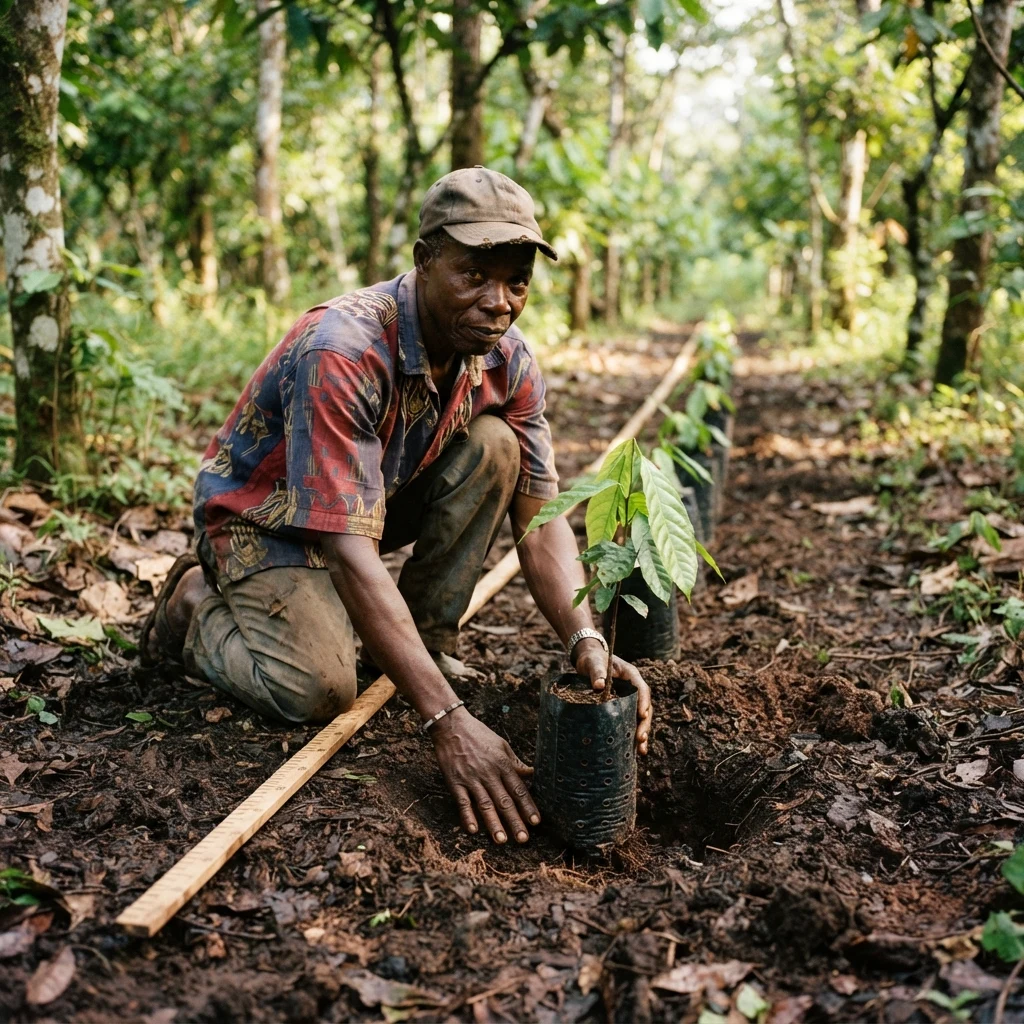
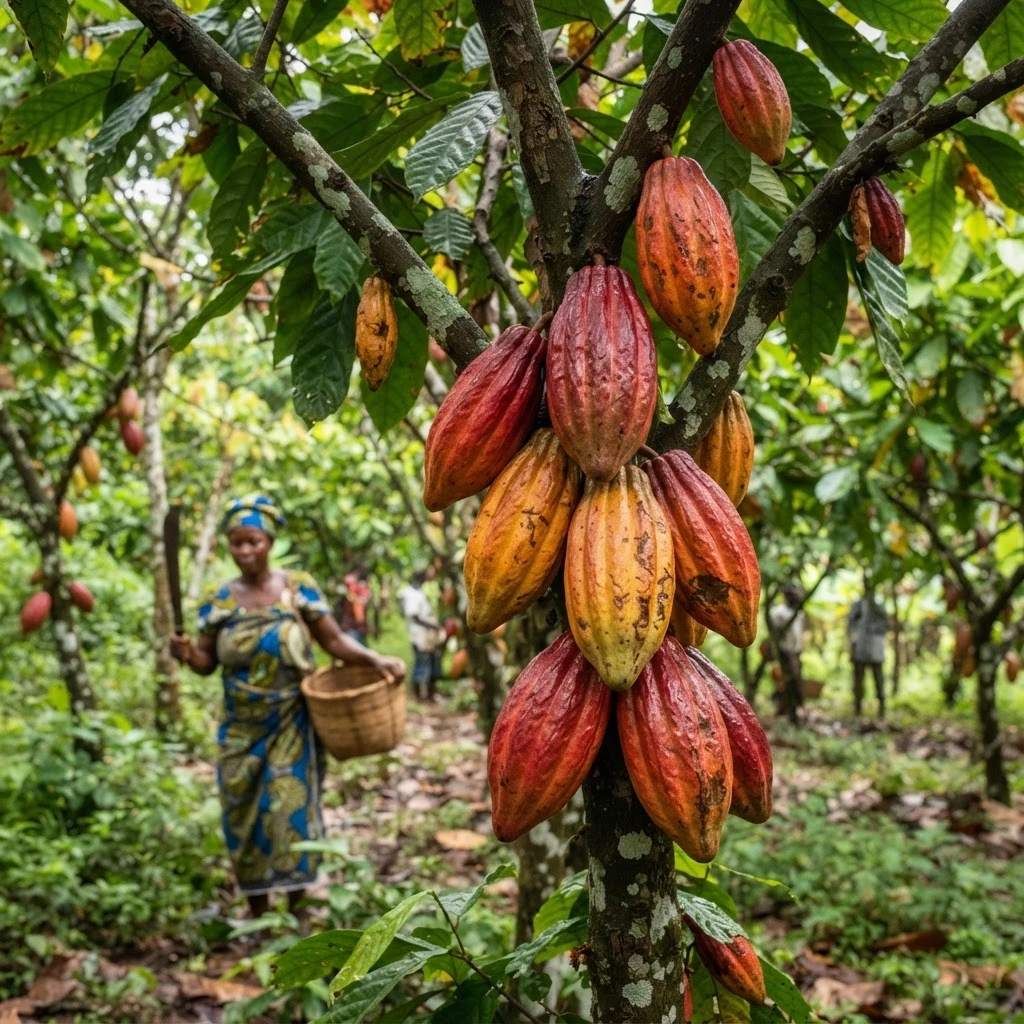
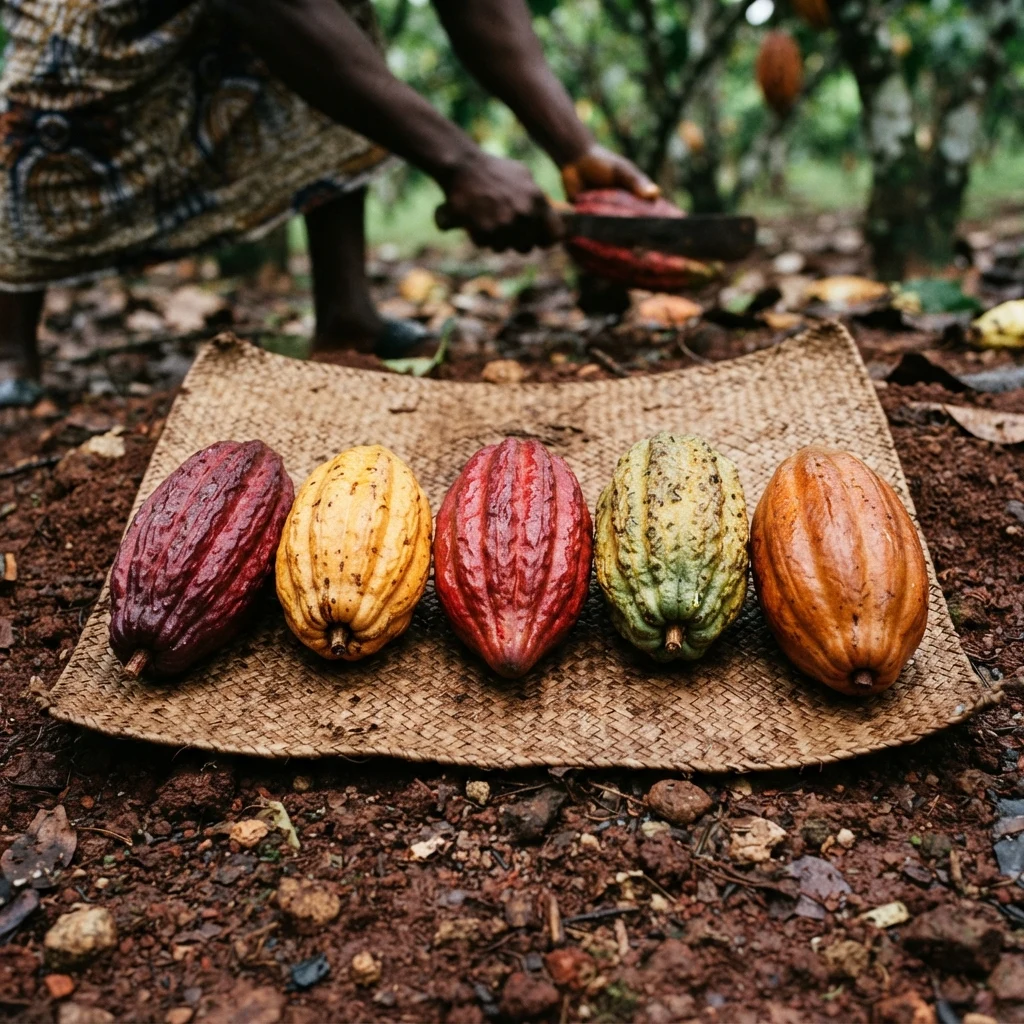
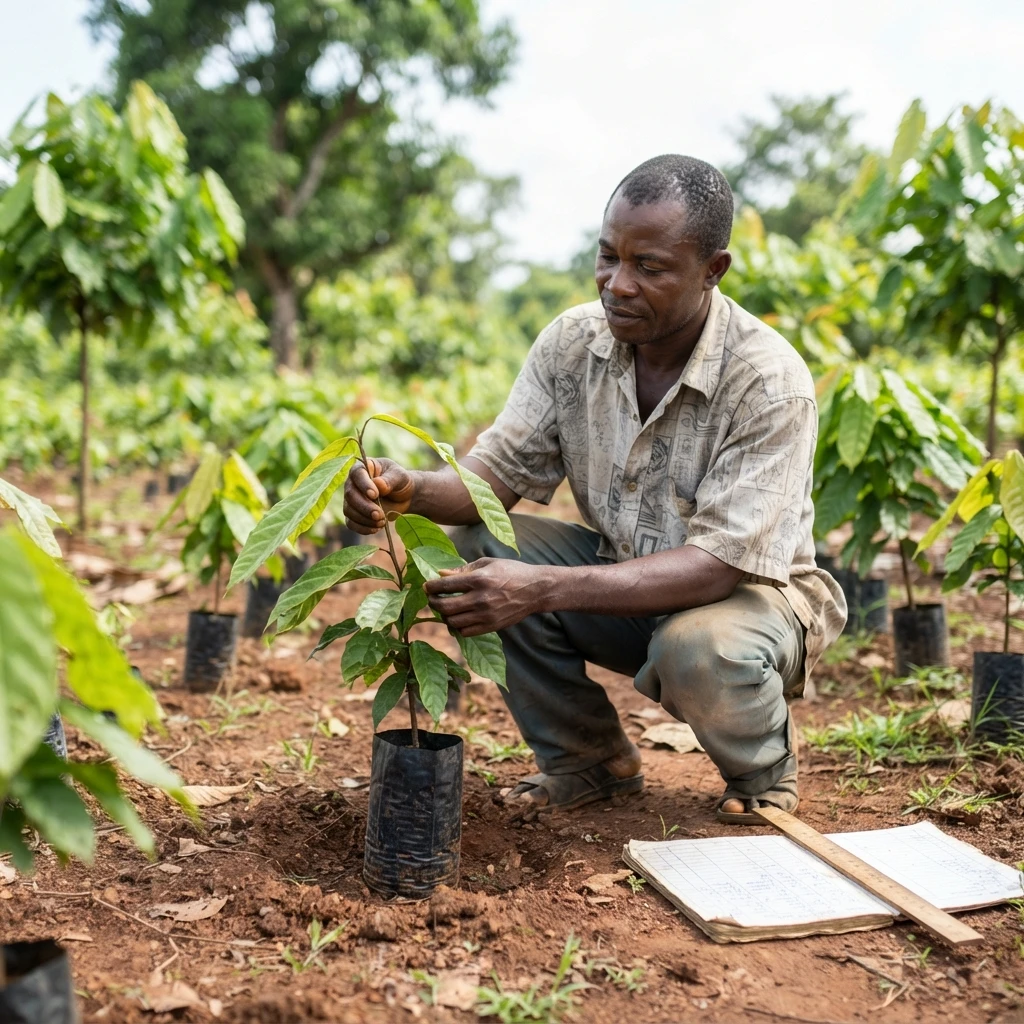
If you are thinking of entering cocoa, do not start by acquiring a farm. Start by learning to tell planting material apart in the field, because almost nobody can and every replanting decision depends on it. Spend a season with a seed-garden issue note in one hand and a farm in front of you, recording what was planted, when, and what it now yields. First-timers assume the seedling is the investment; it is free, and the money is in everything that follows it. You come out with a scarce skill and a dataset nobody else holds.
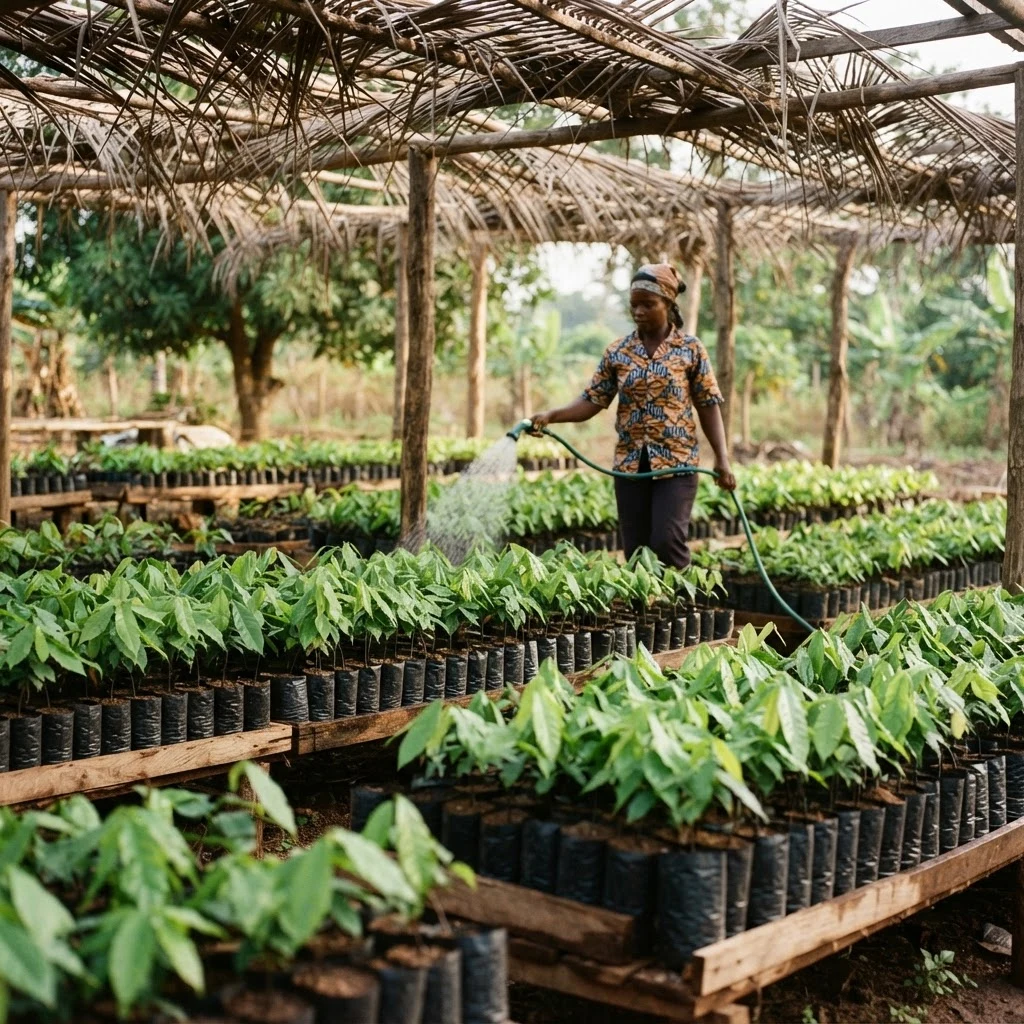
Secure the offtake and the agronomy contract before buying a single seedling. The planting material is free from the Seed Production Division, so there is no business in supplying it; the business is the package that makes it perform, sold per hectare per season. Build the service around what the adoption data says is missing and what Pillar 4 finds actually moves yield: fungicide timing and a written record. The trap is quoting a yield uplift off a brochure; quote off the measured band, and only where you control the inputs.
The thesis is that Ghana's yield problem is not genetic, so any deal priced on a varietal uplift is mispriced. Three diligence asks: what is the documented provenance of the existing block and can the seller produce issue notes; what is the tree age profile against the 25 to 30 year economic life; and is the input package contracted or merely assumed. Release against a planting record and a first-harvest audit, not against hectares planted. The dominant risk is that unnamed material leaves the asset's age unverifiable at exit: take that discount at entry.
The lever is a provenance record on every batch the Seed Production Division issues, carrying the seed garden, the cross where known, and the issue date. It costs little; the distribution channel exists. The measurable outcome is the share of the national estate whose planting year can be evidenced, now close to nil and needed by every rehabilitation programme to target. The failure to avoid is funding another seedling-raising target: volume is not the constraint, matching and memory are.
If you are thinking of entering cocoa, do not start by acquiring a farm. Start by learning to tell planting material apart in the field, because almost nobody can and every replanting decision depends on it. Spend a season with a seed-garden issue note in one hand and a farm in front of you, recording what was planted, when, and what it now yields. First-timers assume the seedling is the investment; it is free, and the money is in everything that follows it. You come out with a scarce skill and a dataset nobody else holds.
Secure the offtake and the agronomy contract before buying a single seedling. The planting material is free from the Seed Production Division, so there is no business in supplying it; the business is the package that makes it perform, sold per hectare per season. Build the service around what the adoption data says is missing and what Pillar 4 finds actually moves yield: fungicide timing and a written record. The trap is quoting a yield uplift off a brochure; quote off the measured band, and only where you control the inputs.
The thesis is that Ghana's yield problem is not genetic, so any deal priced on a varietal uplift is mispriced. Three diligence asks: what is the documented provenance of the existing block and can the seller produce issue notes; what is the tree age profile against the 25 to 30 year economic life; and is the input package contracted or merely assumed. Release against a planting record and a first-harvest audit, not against hectares planted. The dominant risk is that unnamed material leaves the asset's age unverifiable at exit: take that discount at entry.
The lever is a provenance record on every batch the Seed Production Division issues, carrying the seed garden, the cross where known, and the issue date. It costs little; the distribution channel exists. The measurable outcome is the share of the national estate whose planting year can be evidenced, now close to nil and needed by every rehabilitation programme to target. The failure to avoid is funding another seedling-raising target: volume is not the constraint, matching and memory are.