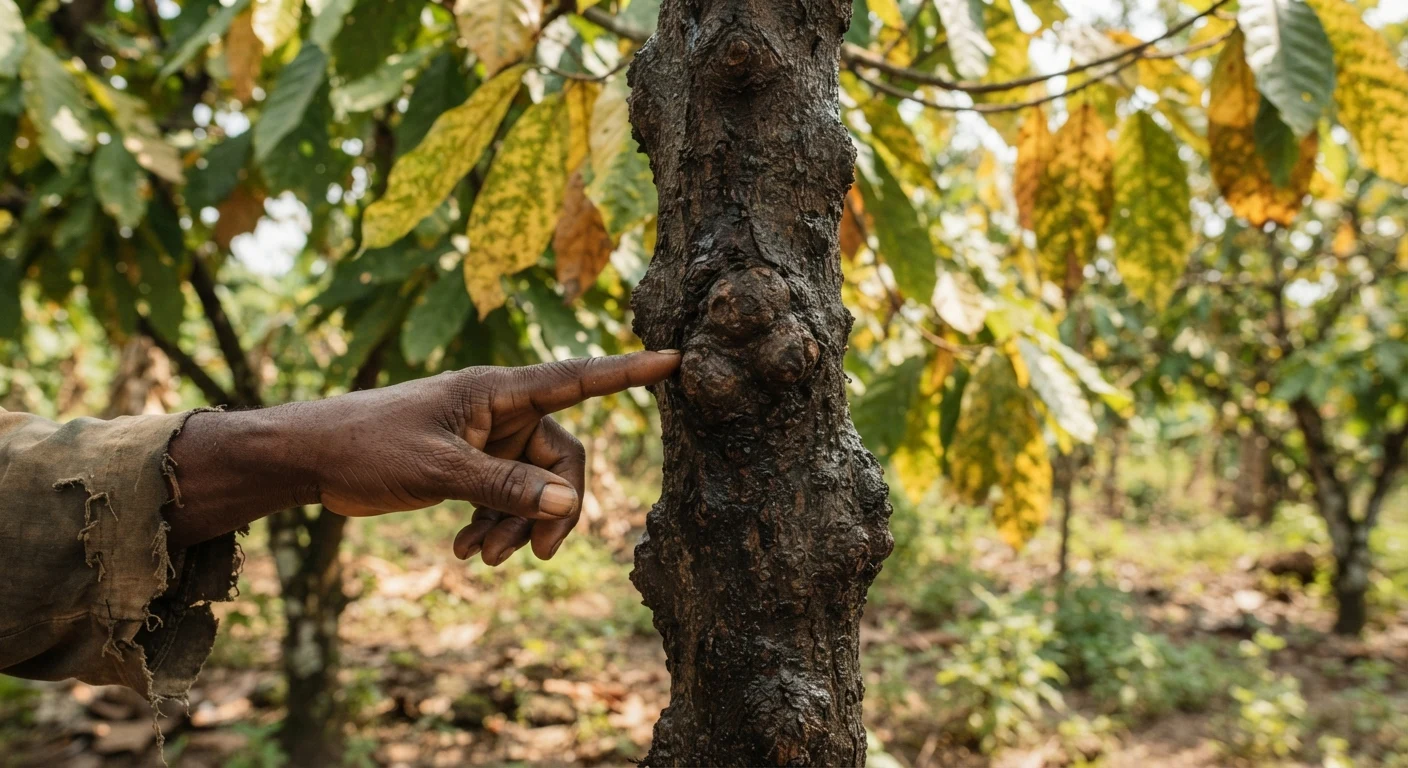
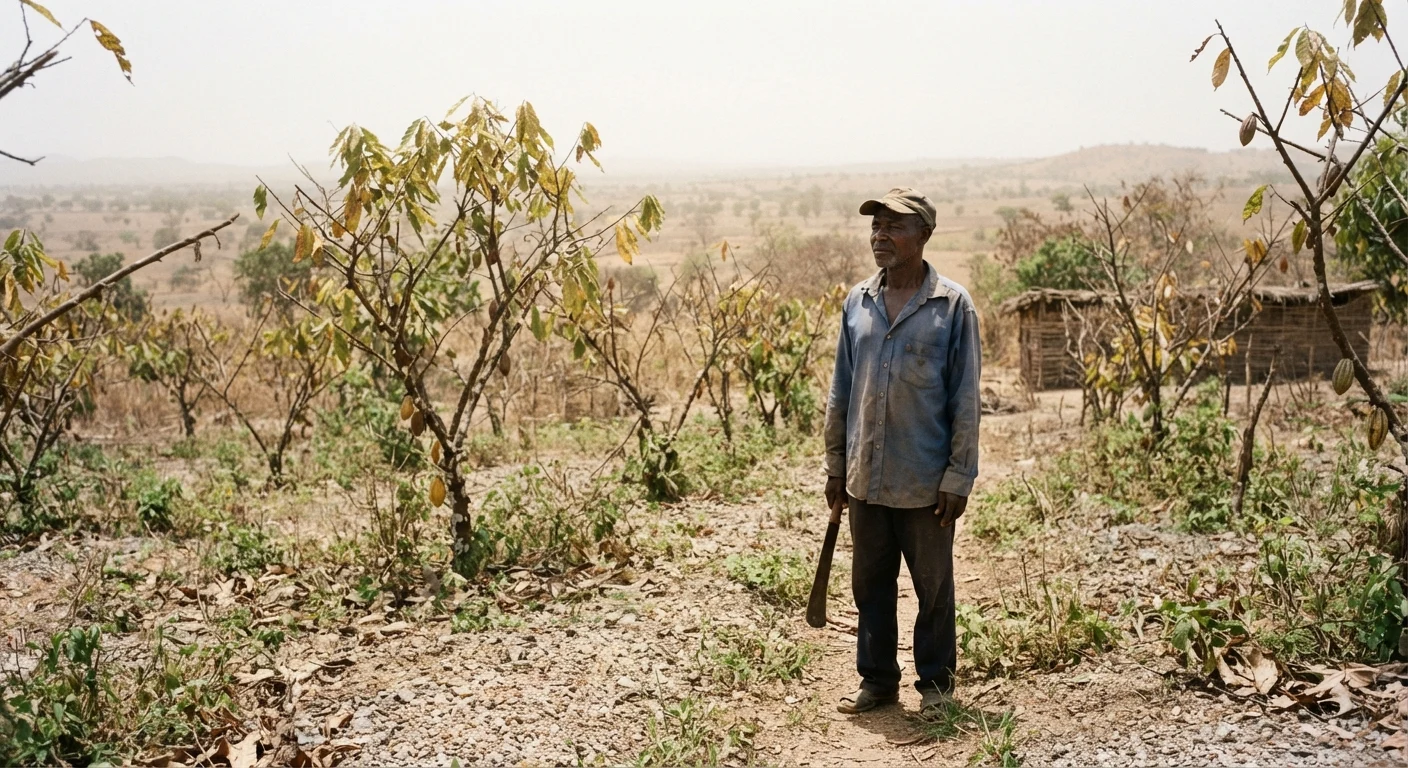
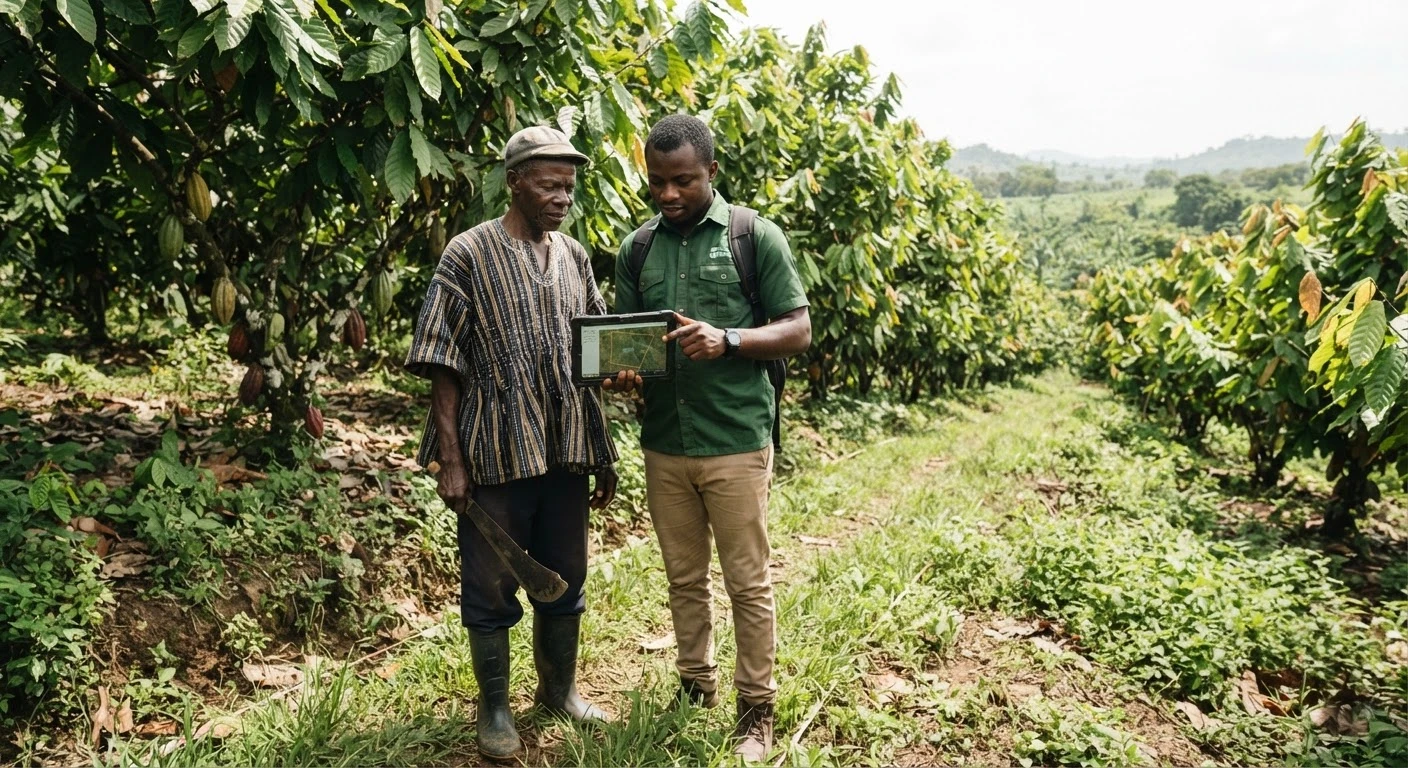
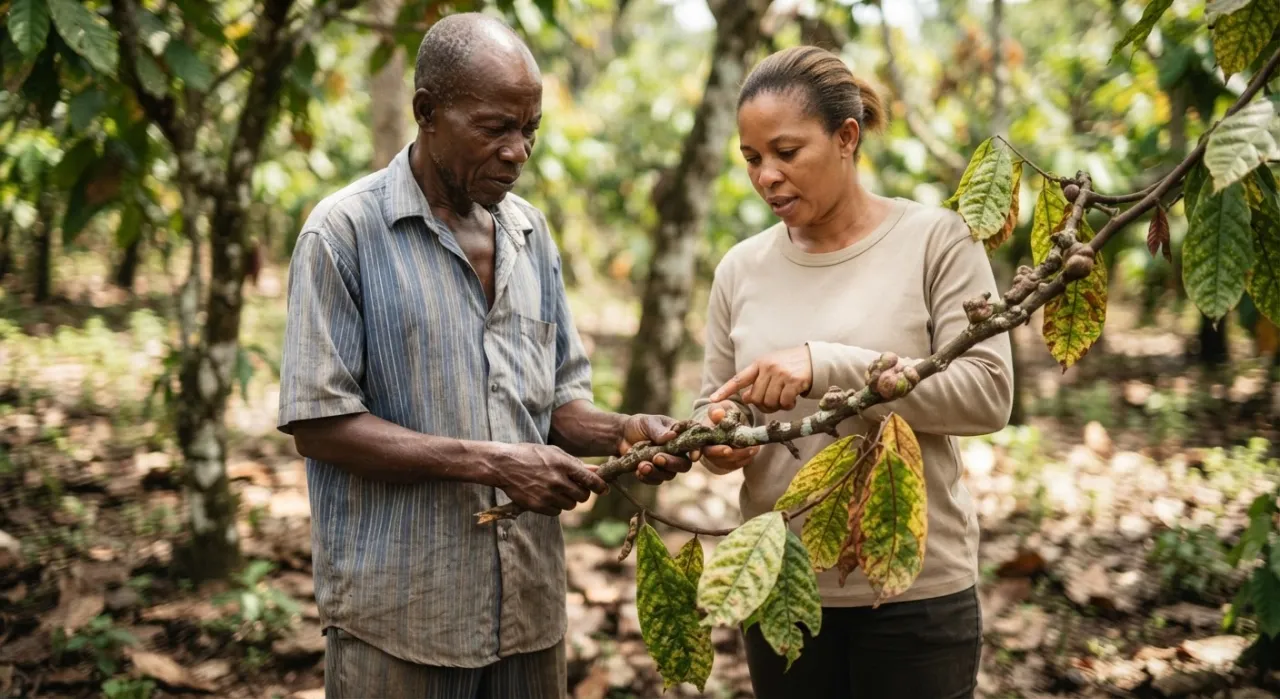
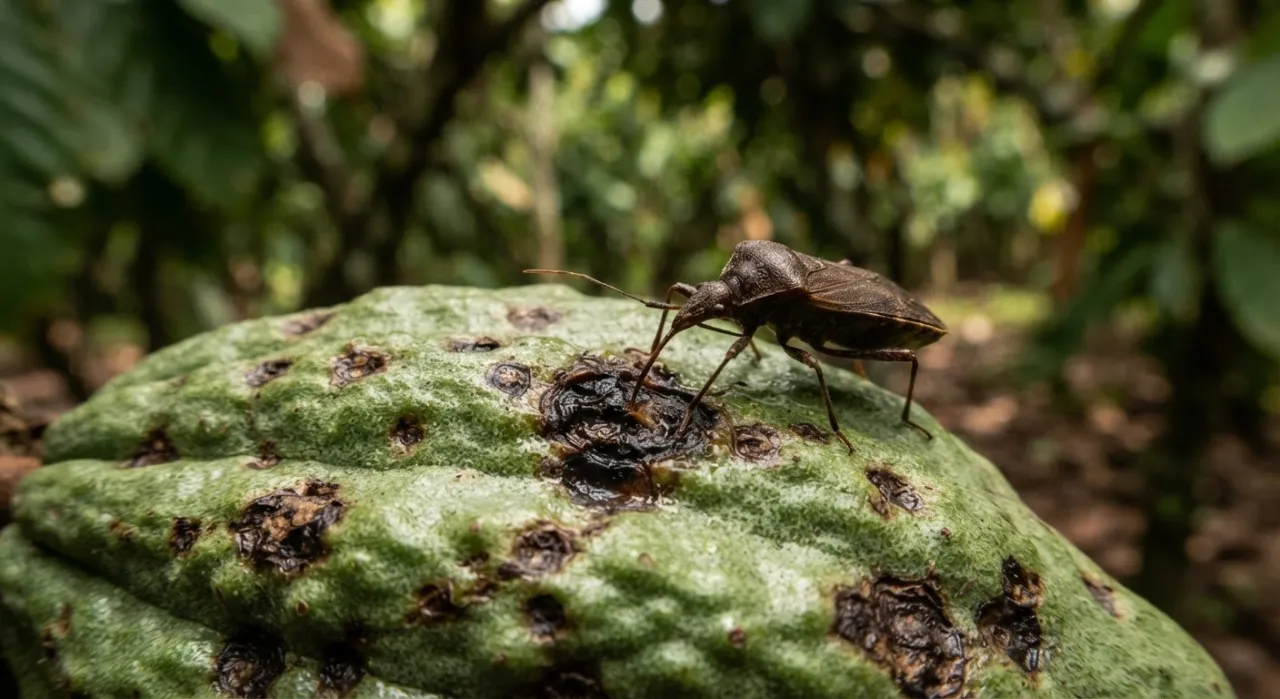
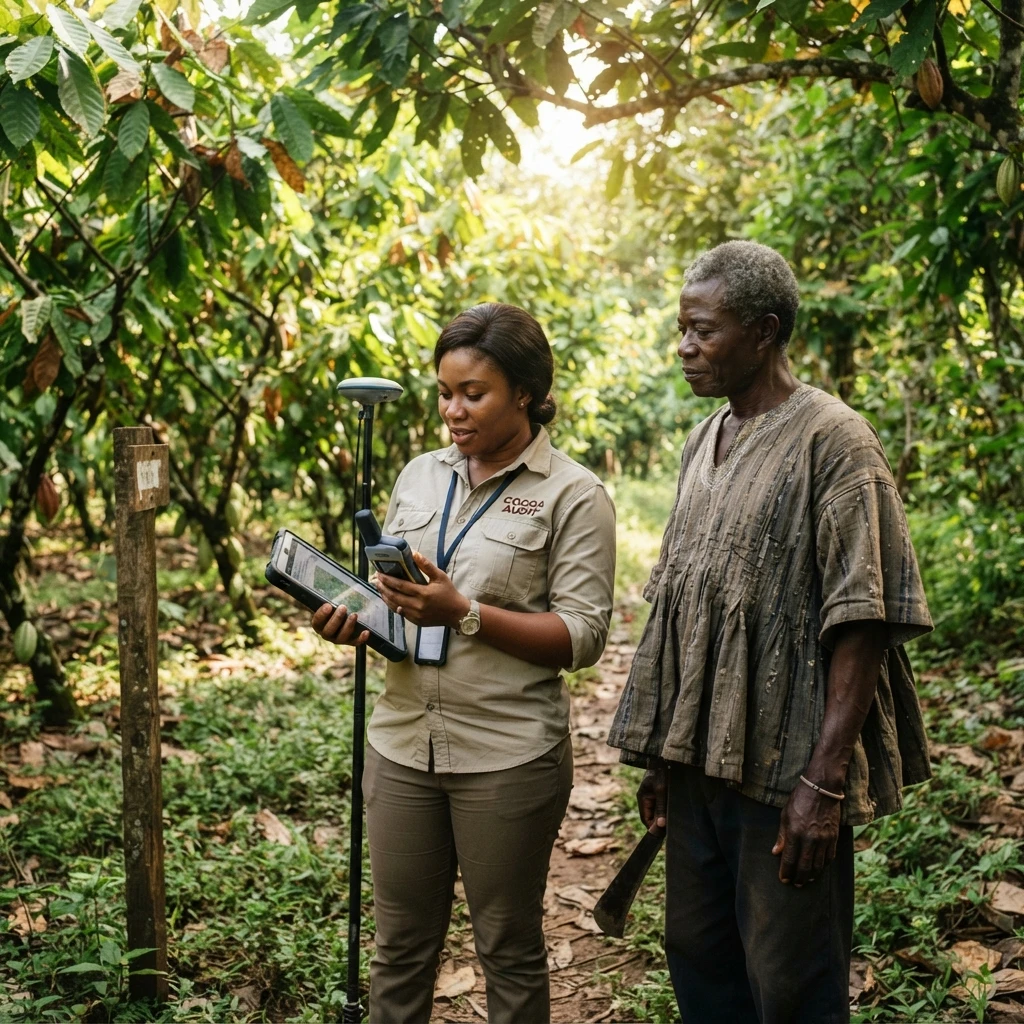
If you are entering cocoa, do not start by buying a block. Learn to read swollen shoot symptoms and record them by GPS point, farm by farm. Nobody holds that dataset and every replanting and acquisition decision needs it. The first-timer mistake is trusting a walk-over: symptoms lag infection by up to two years. You come out with a scarce skill and a disease map somebody will pay for.
Secure the traceability data before the tonnage. Decide first whether you are selling into the European Union: that one choice sets your geolocation, polygon and 2020 cut-off obligations, and whether you buy from COCOBOD at its service fee. The trap is selling shade or agroforestry as advice. It loses the farmer money on the modelled returns, so sell it as a paid intervention with the payment, timber right or carbon share in the contract.
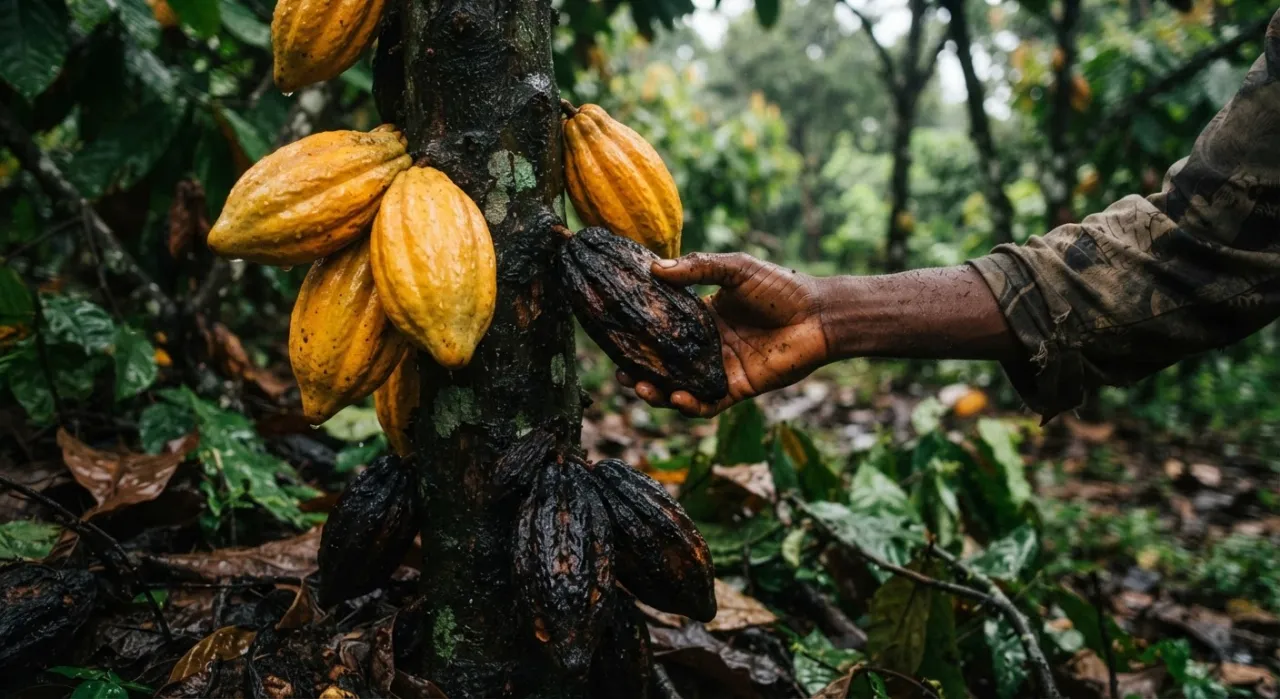
The exposure is asset condition and market access, so a model built off certification alone is mispriced. Three diligence asks: graft-indexed CSSVD status block by block; who validated each certification or carbon claim and at whose cost; and whether the offtake survives a failed deforestation check. Release against verified disease status and a submitted due diligence statement. Take unverifiable claims as a discount at entry.
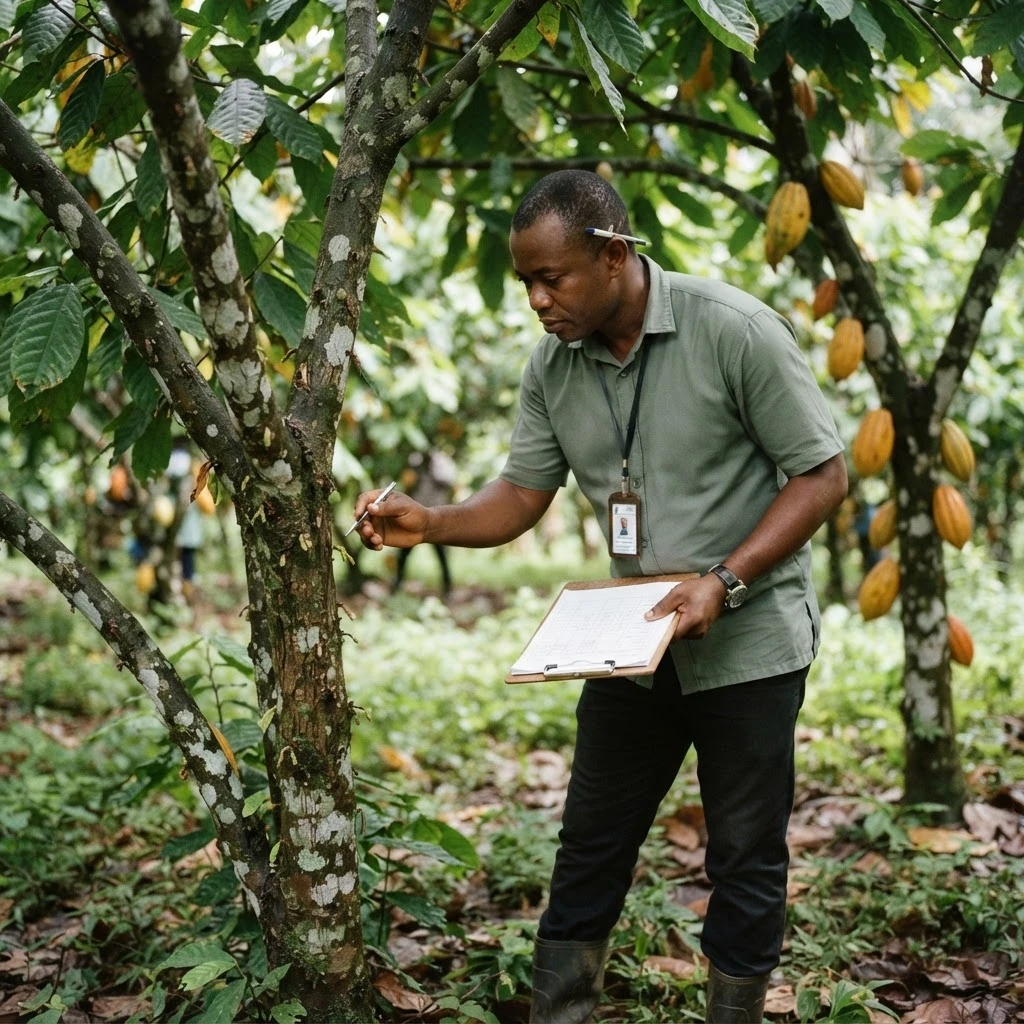
The lever is publication: the traceability service fee, and the method and data behind the deforestation risk module. Both exist, neither is public, and no Ghanaian actor can cost compliance without them. Measure the share of licensed buying companies able to produce a complete Article 9 data pack unaided. The failure to avoid is funding another farm-mapping target: the farms are mapped, and what is missing is a published method and a published price.
If you are entering cocoa, do not start by buying a block. Learn to read swollen shoot symptoms and record them by GPS point, farm by farm. Nobody holds that dataset and every replanting and acquisition decision needs it. The first-timer mistake is trusting a walk-over: symptoms lag infection by up to two years. You come out with a scarce skill and a disease map somebody will pay for.
Secure the traceability data before the tonnage. Decide first whether you are selling into the European Union: that one choice sets your geolocation, polygon and 2020 cut-off obligations, and whether you buy from COCOBOD at its service fee. The trap is selling shade or agroforestry as advice. It loses the farmer money on the modelled returns, so sell it as a paid intervention with the payment, timber right or carbon share in the contract.
The exposure is asset condition and market access, so a model built off certification alone is mispriced. Three diligence asks: graft-indexed CSSVD status block by block; who validated each certification or carbon claim and at whose cost; and whether the offtake survives a failed deforestation check. Release against verified disease status and a submitted due diligence statement. Take unverifiable claims as a discount at entry.
The lever is publication: the traceability service fee, and the method and data behind the deforestation risk module. Both exist, neither is public, and no Ghanaian actor can cost compliance without them. Measure the share of licensed buying companies able to produce a complete Article 9 data pack unaided. The failure to avoid is funding another farm-mapping target: the farms are mapped, and what is missing is a published method and a published price.