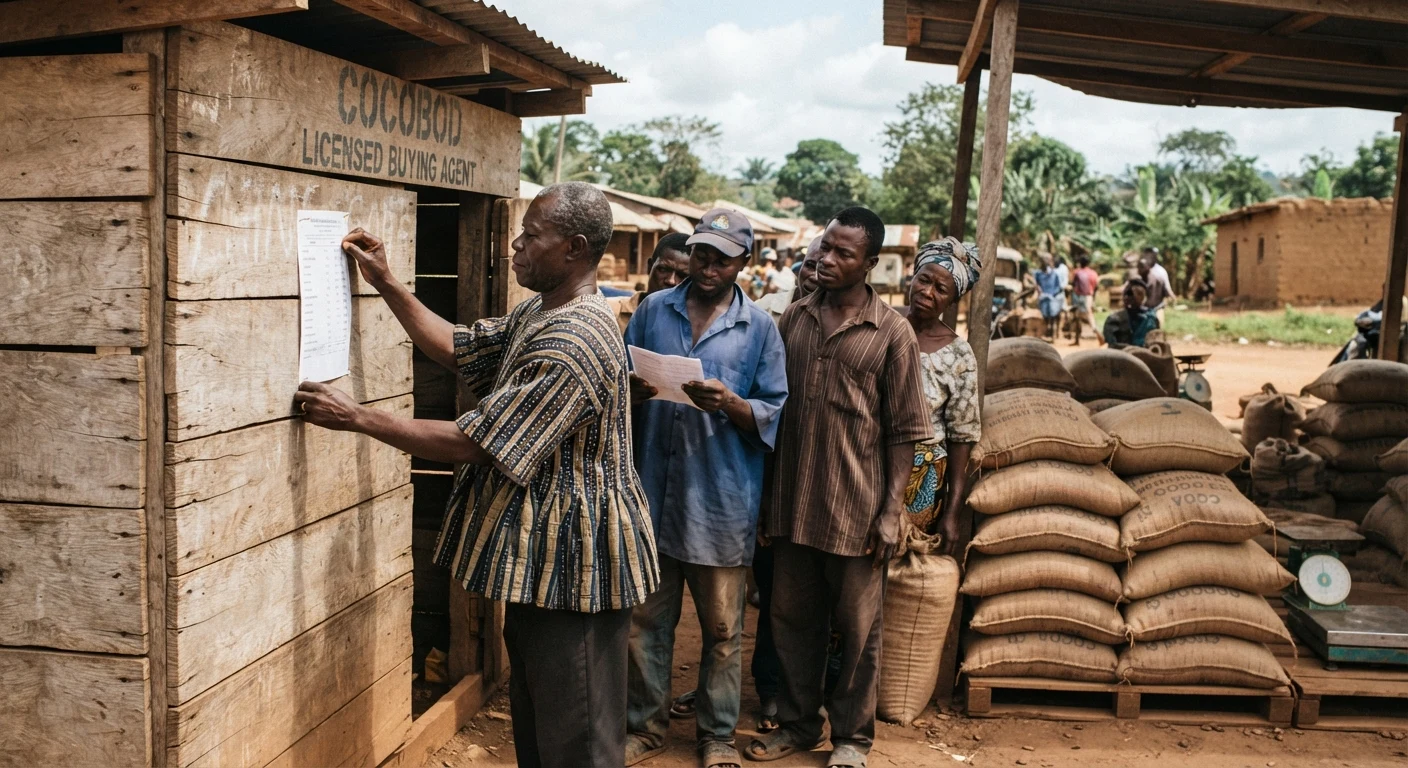
If you are entering cocoa with little capital, do not start by buying beans. Track every COCOBOD price announcement, the date it takes effect and the cedi rate on that day. Almost nobody keeps that record, and every trading, financing and aggregation decision in this crop depends on it. The first mistake beginners make is quoting a cocoa deal in dollars. You come out with a dataset nobody else holds.
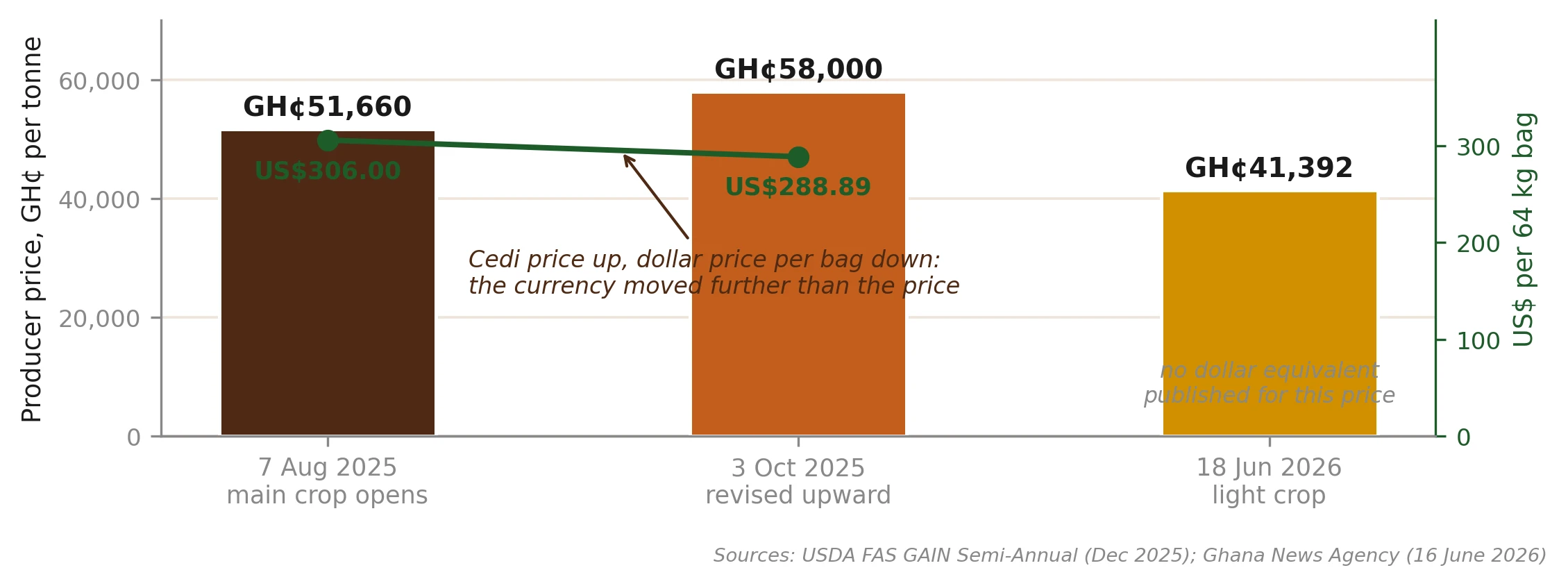
Secure the buyer and the currency before the volume. Decide first which side of the 12.5 per cent mid-crop discount and the 20 per cent grinder discount you are trading on, because those two administered numbers are where the margin sits, not the world price. The trap is committing to a dollar-priced input or loan against cedi cocoa revenue: the October 2025 revision raised the cedi price and cut the dollar price per bag in the same circular.
The return here is a spread against an administered price, not exposure to a commodity rally, so any model built off the futures curve is mispriced. Three diligence asks: the counterparty's realised cedi-to-dollar conversion over the last four circulars; whether the bean allocation is contracted or assumed; and whether the offtake contract survives an EU compliance failure. Release against delivered tonnage, not installed capacity. The dominant risk is currency: size it into entry.
The lever is publishing consistently. The August 2025 main-crop release carried a dollar price, an FOB percentage and the exchange rate used; the June 2026 light-crop circular carried none of them and gave no rationale at all. Requiring every circular to carry the reference FOB, the exchange rate and the producer share, as the main-crop release already did, costs nothing and is already computed internally. Measure the share of announcements a farmer or lender can reconcile. The failure to avoid is funding a transparency portal on top of an opaque announcement.
If you are entering cocoa with little capital, do not start by buying beans. Track every COCOBOD price announcement, the date it takes effect and the cedi rate on that day. Almost nobody keeps that record, and every trading, financing and aggregation decision in this crop depends on it. The first mistake beginners make is quoting a cocoa deal in dollars. You come out with a dataset nobody else holds.
Secure the buyer and the currency before the volume. Decide first which side of the 12.5 per cent mid-crop discount and the 20 per cent grinder discount you are trading on, because those two administered numbers are where the margin sits, not the world price. The trap is committing to a dollar-priced input or loan against cedi cocoa revenue: the October 2025 revision raised the cedi price and cut the dollar price per bag in the same circular.
The return here is a spread against an administered price, not exposure to a commodity rally, so any model built off the futures curve is mispriced. Three diligence asks: the counterparty's realised cedi-to-dollar conversion over the last four circulars; whether the bean allocation is contracted or assumed; and whether the offtake contract survives an EU compliance failure. Release against delivered tonnage, not installed capacity. The dominant risk is currency: size it into entry.
The lever is publishing consistently. The August 2025 main-crop release carried a dollar price, an FOB percentage and the exchange rate used; the June 2026 light-crop circular carried none of them and gave no rationale at all. Requiring every circular to carry the reference FOB, the exchange rate and the producer share, as the main-crop release already did, costs nothing and is already computed internally. Measure the share of announcements a farmer or lender can reconcile. The failure to avoid is funding a transparency portal on top of an opaque announcement.