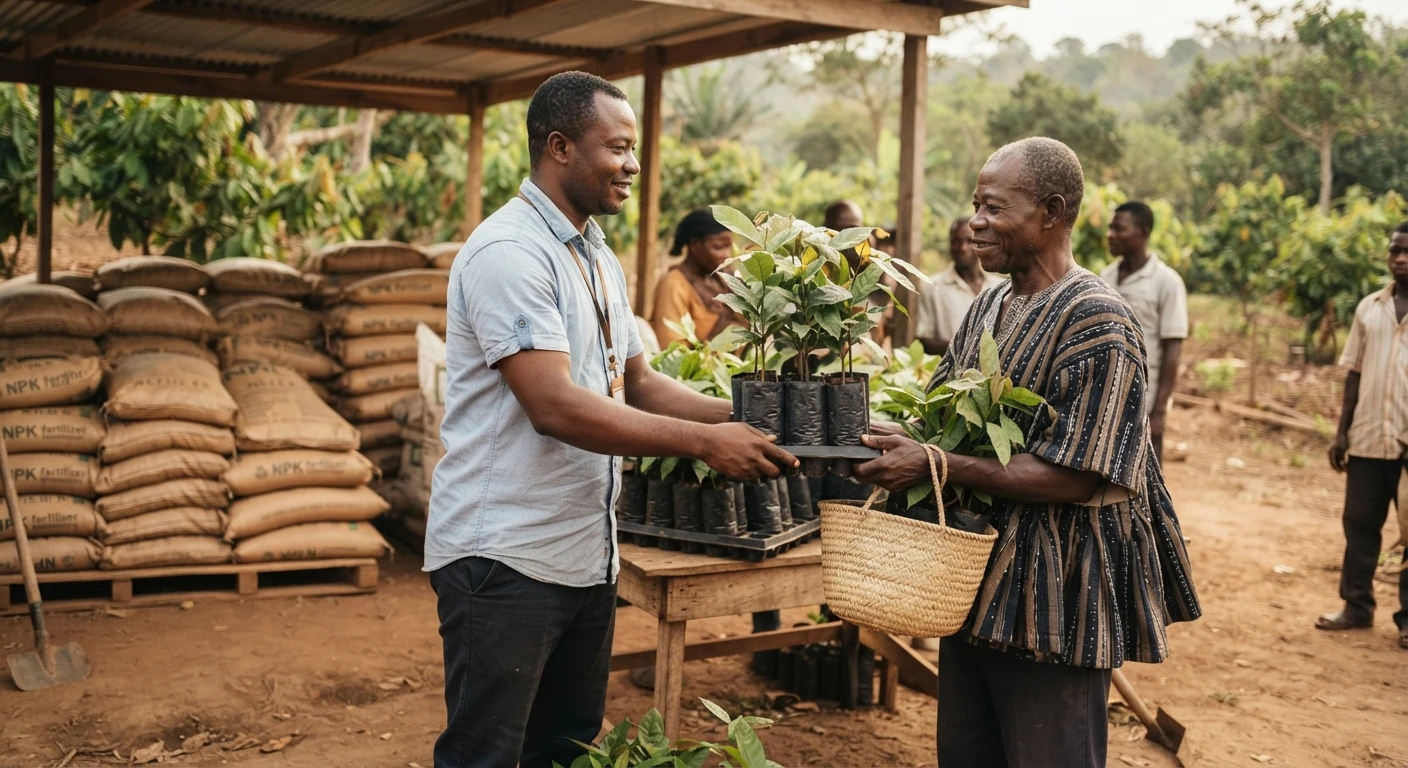
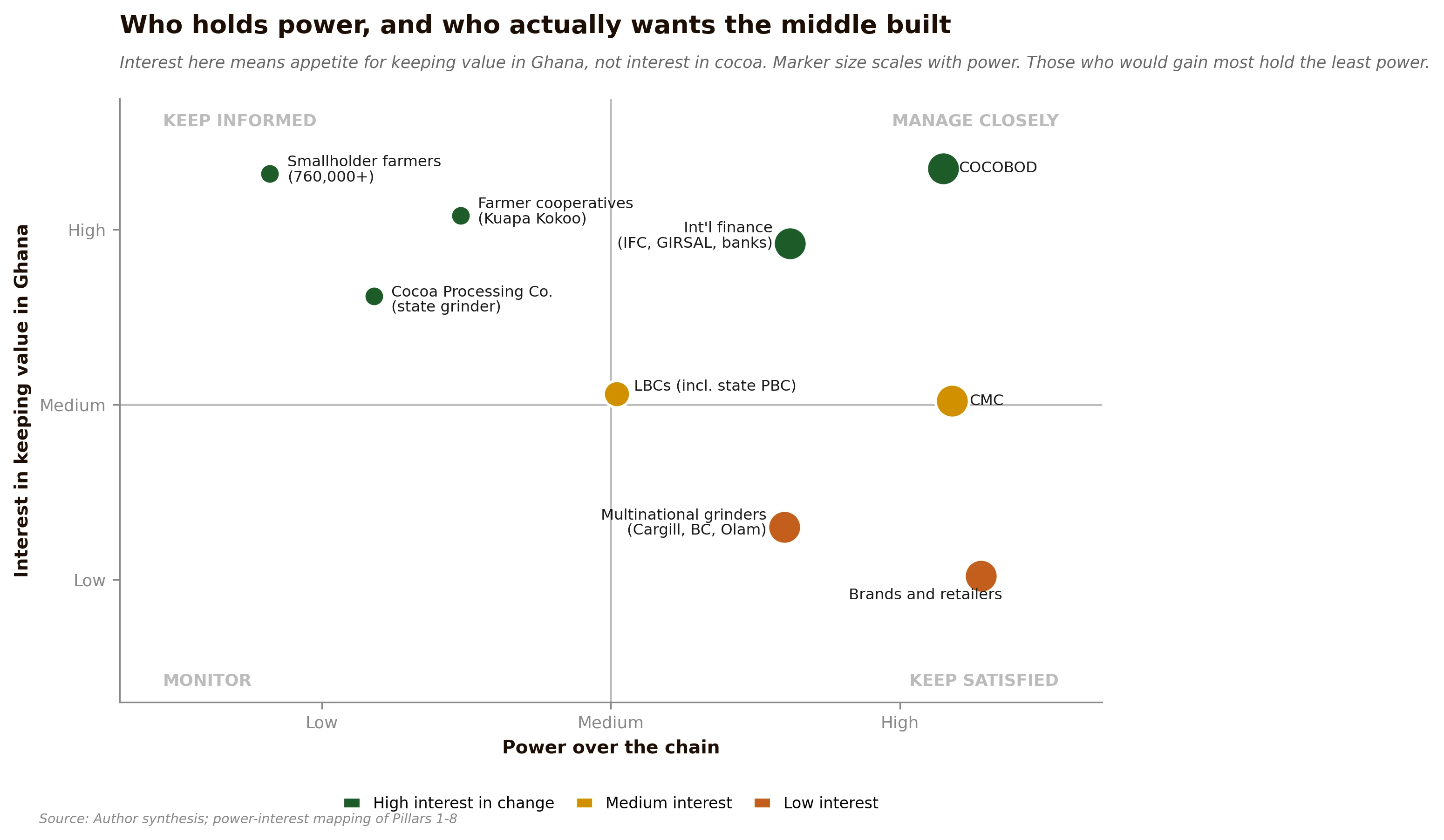
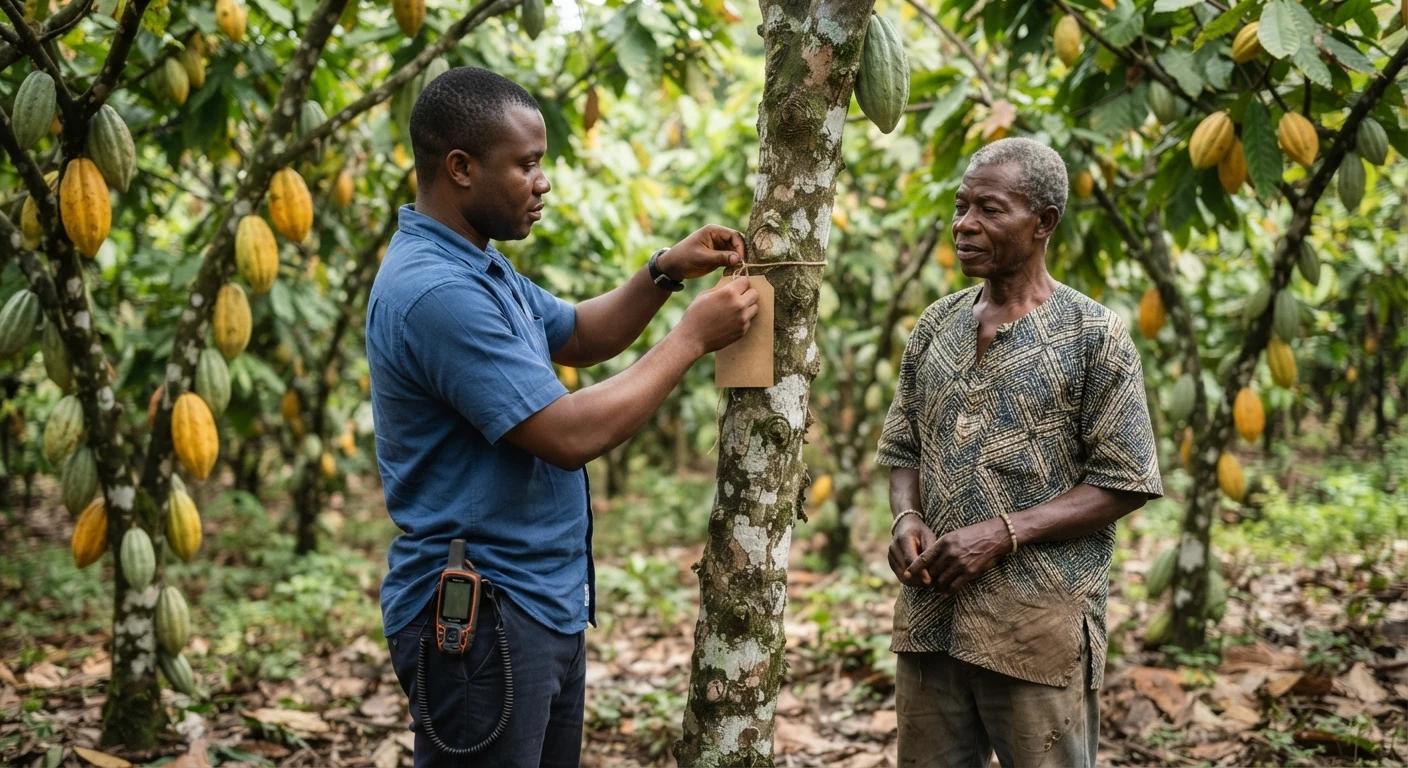
| 1. Input supply and nursery | COCOBOD's subsidised Hi-Tech scheme, a thin scatter of agrovet dealers, and CRIG-sourced hybrid seedlings | Inputs are subsidised and priced by the state; the farmer rarely pays the true cost | Subsidised inputs are diverted and resold, and no dealer builds a commercial supply because the state gives inputs away | Sell the input bundled with a record: certified material and a documented application history a buyer will pay for |
| 2. Farm production | More than 760,000 smallholder farmers on farms of a few hectares | Administered producer price, set once a season by the PPRC, targeting at least 70 per cent of the net FOB | The farmer is a price-taker by law; the price is fixed before the season opens | Lift the yield; the volume on the same land is yours, the price is fixed |
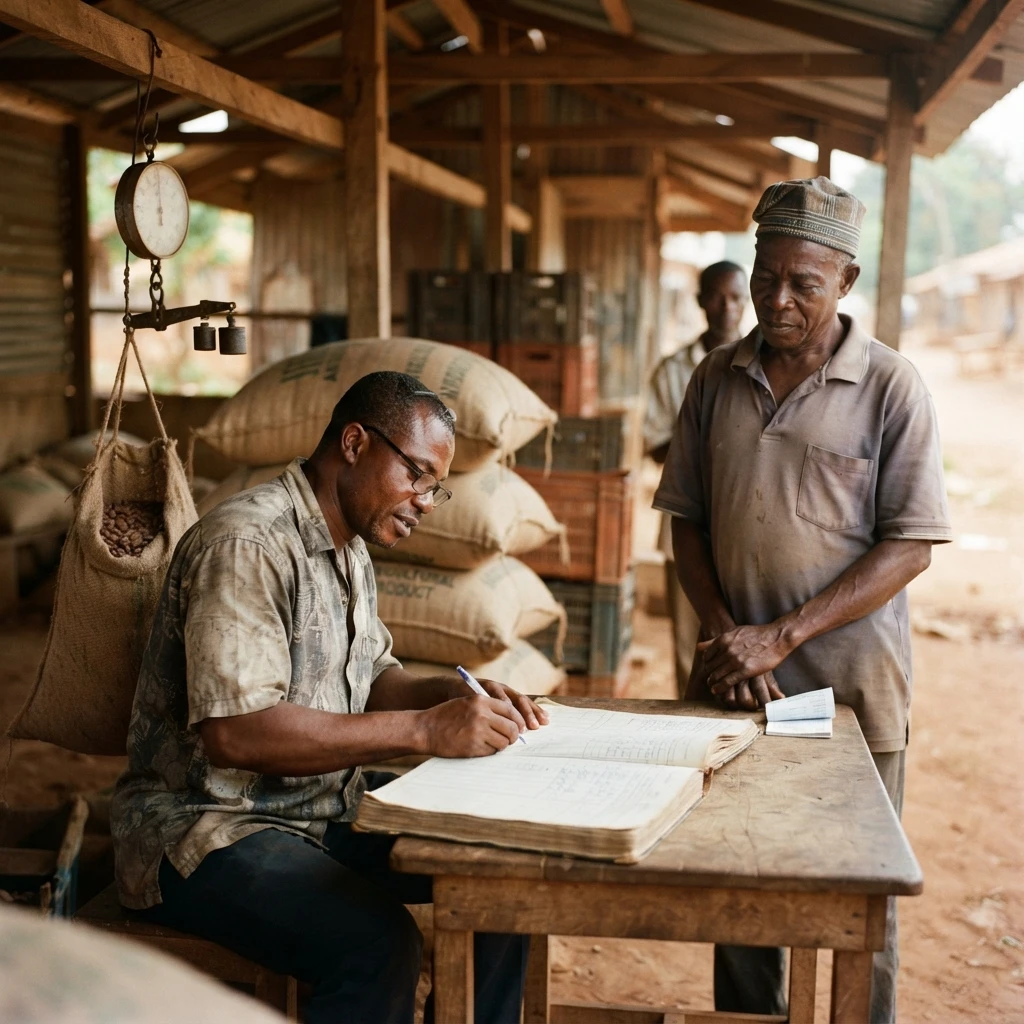
| 3. LBC purchasing and clerks | About 30 licensed buying companies buying only through commissioned purchasing clerks; state PBC the largest | A fixed buyer's margin per tonne set by the PPRC; LBCs compete on volume alone | LBCs cannot differentiate on price, so viability turns on seed finance and volume; the small ones fail when finance is late | Aggregate volume and carry your own finance; the buying layer rewards reliability |
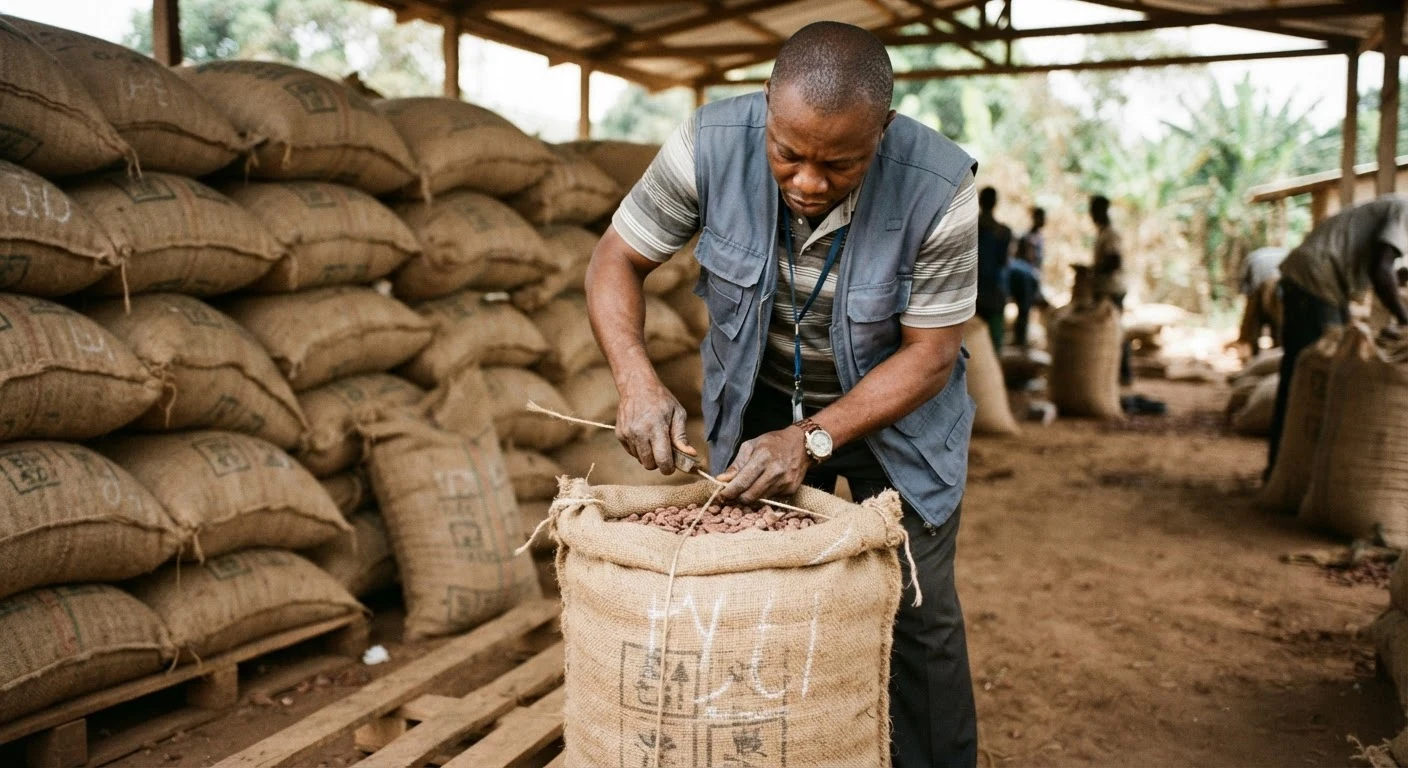
| 4. Grading and sealing (QCC) | Quality Control Company, a COCOBOD subsidiary, grading into Grade I, Grade II and substandard | No margin; a quality gate that protects the origin premium | The premium the grading protects is captured downstream, beyond the grader and the farmer | Build traceability on top of the grading record that already exists; the certificate is the asset |
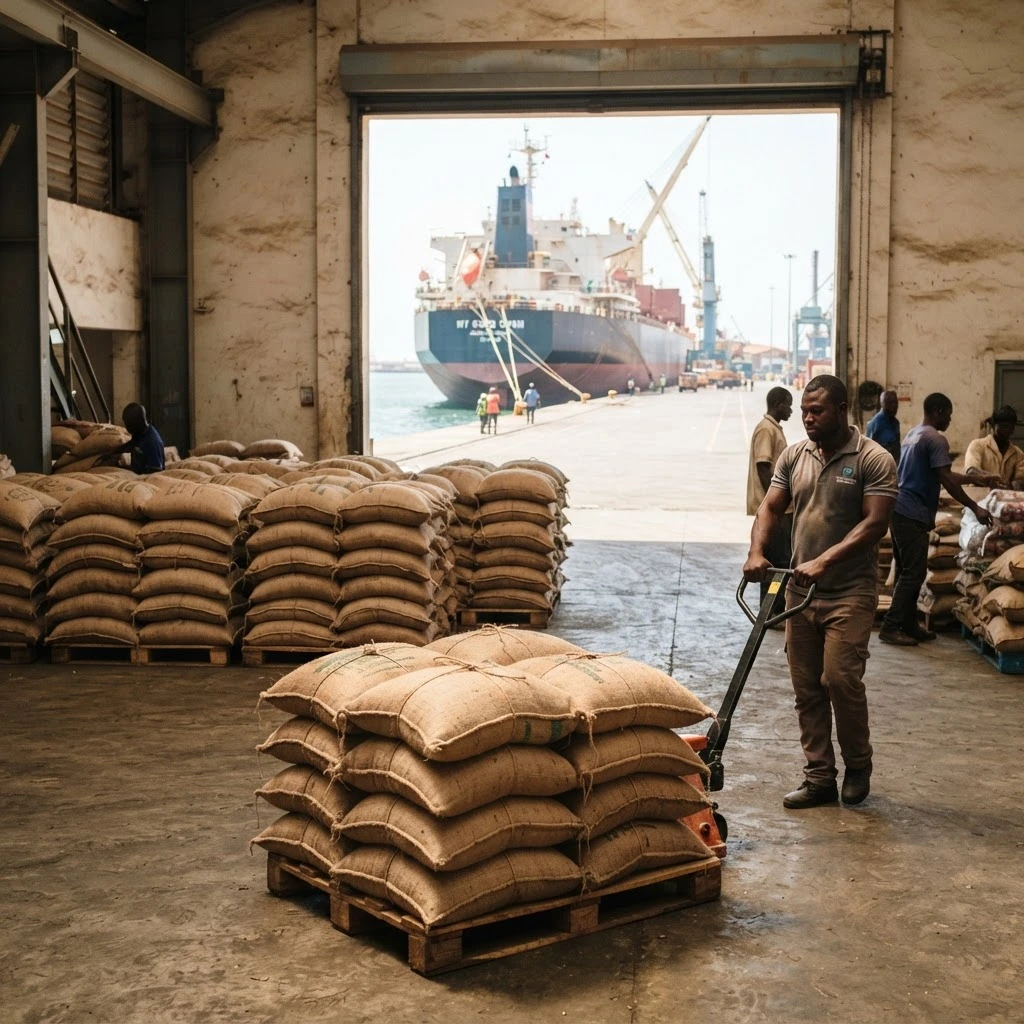
| 5. Take-over (CMC) | Cocoa Marketing Company, a wholly-owned COCOBOD subsidiary, taking title at Tema, Takoradi and Kaase | Net FOB price; CMC is the single seller of Ghana's cocoa | Title, and with it all price exposure and export margin, passes to a state monopoly | None for a private entrant here; it is a state gate, worked around rather than entered |
| 6. Haulage and warehousing | COCOBOD-approved private hauliers on PPRC-regulated rates | Regulated haulage rate per district | A regulated cost set by COCOBOD | Efficiency and record-keeping; the rate is set, and reliability is where an operator competes |
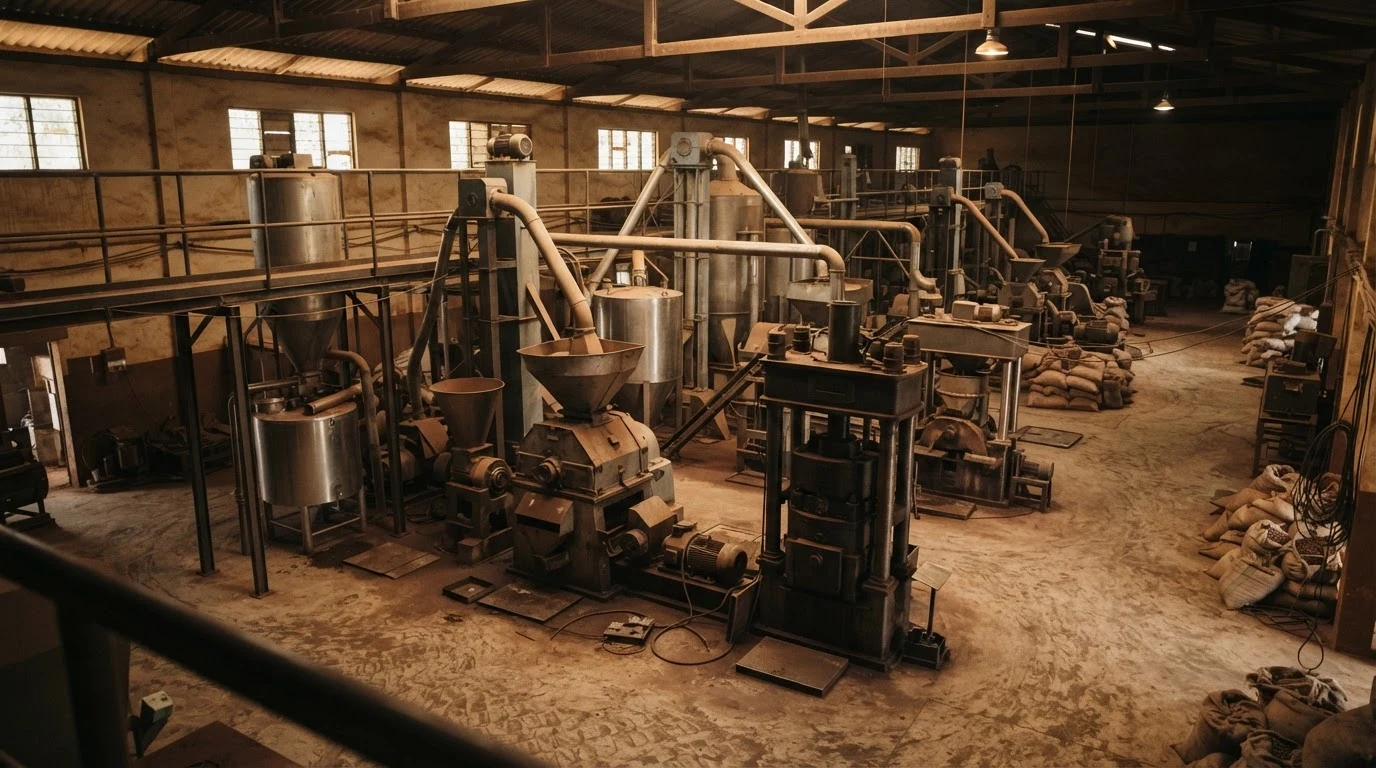
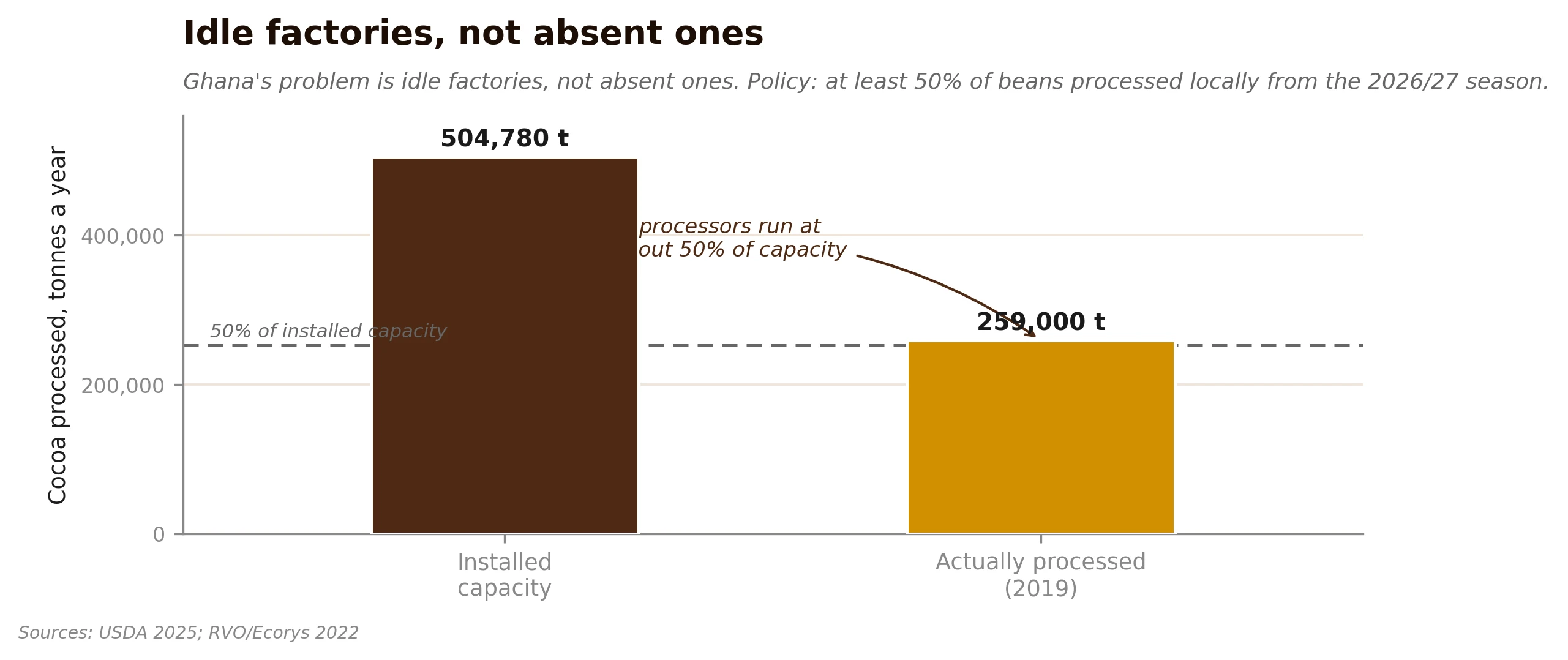
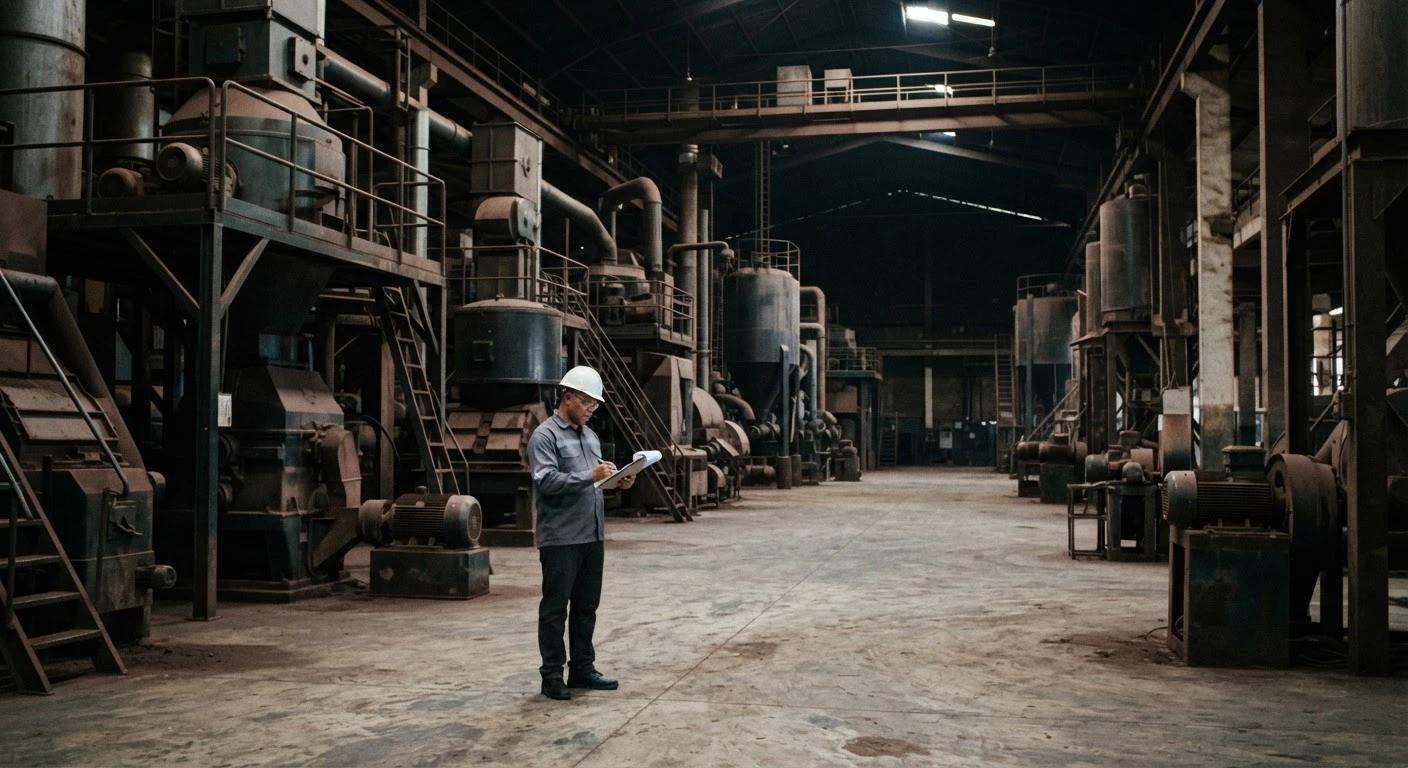
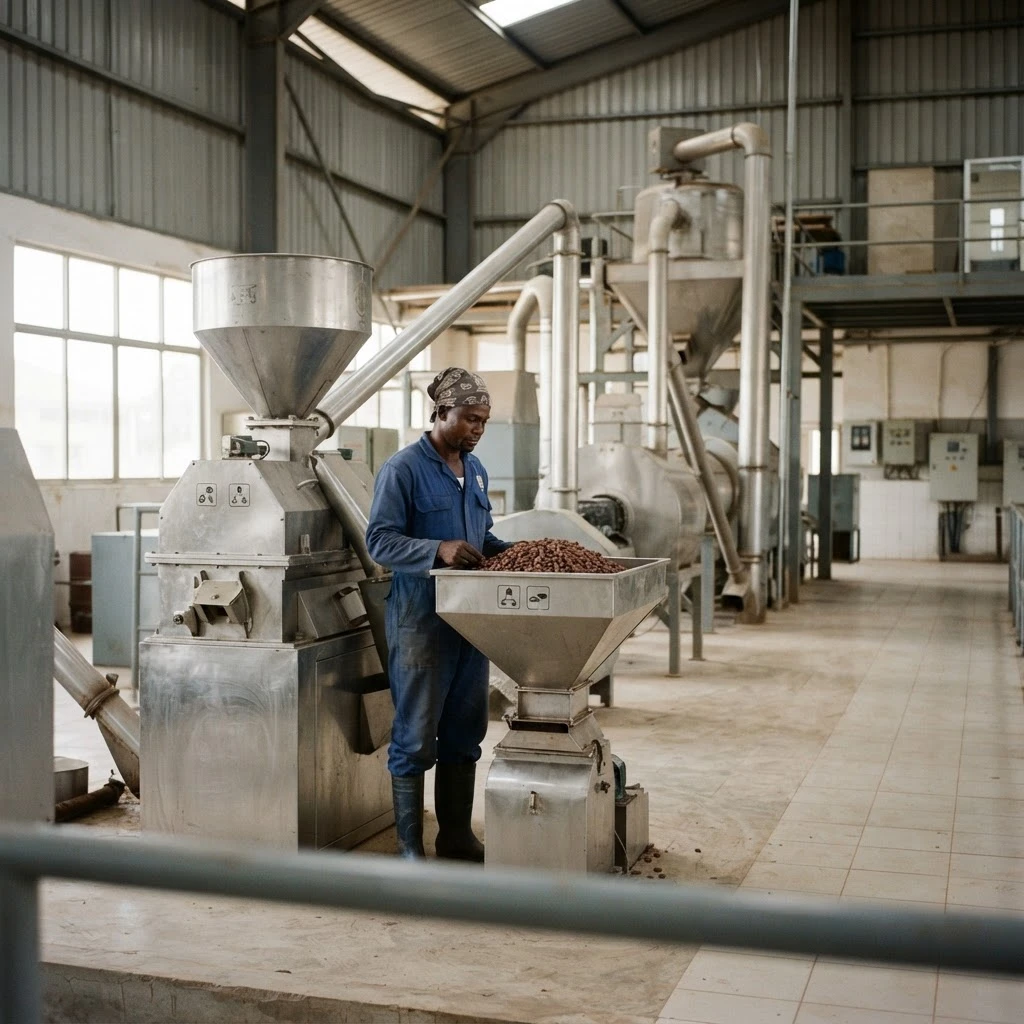
| 7. Grinding and primary processing | Three multinationals (Cargill, Barry Callebaut, Olam) and indigenous grinders (Niche, CPC, Cocoa Touton) | Processing margin on liquor, butter, powder, cake | Installed capacity sits about half idle; the state grinder runs at a loss for want of beans | The capacity already exists; the constraint is bean supply and working capital |
| 8. Export | CMC to external buyers; grinders export semi-finished products | Net FOB for beans, a higher unit value for processed products | About 70 per cent of the crop leaves raw, so the value added by grinding leaves with someone else | Move a tonne from the raw column to the processed column; the mandate now requires it |
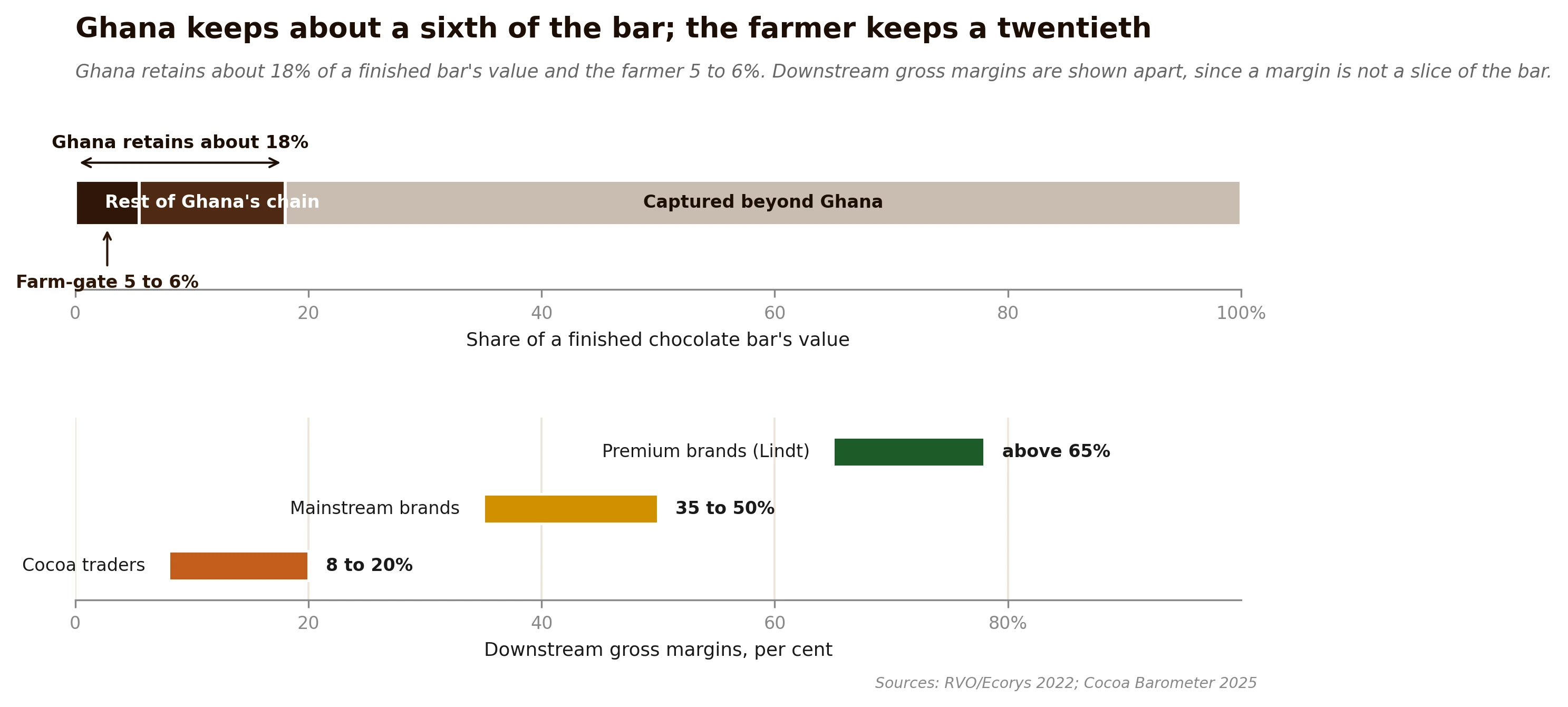
| 9. Downstream manufacture and retail | Brands and retailers, all outside Ghana | Retail price and brand gross margin | Brands take the largest margin in the chain, protected by intellectual property | Not a link Ghana can enter at scale; the realistic prize is primary processing, link 7 |