Ghana Agribusiness PlaybookCashew
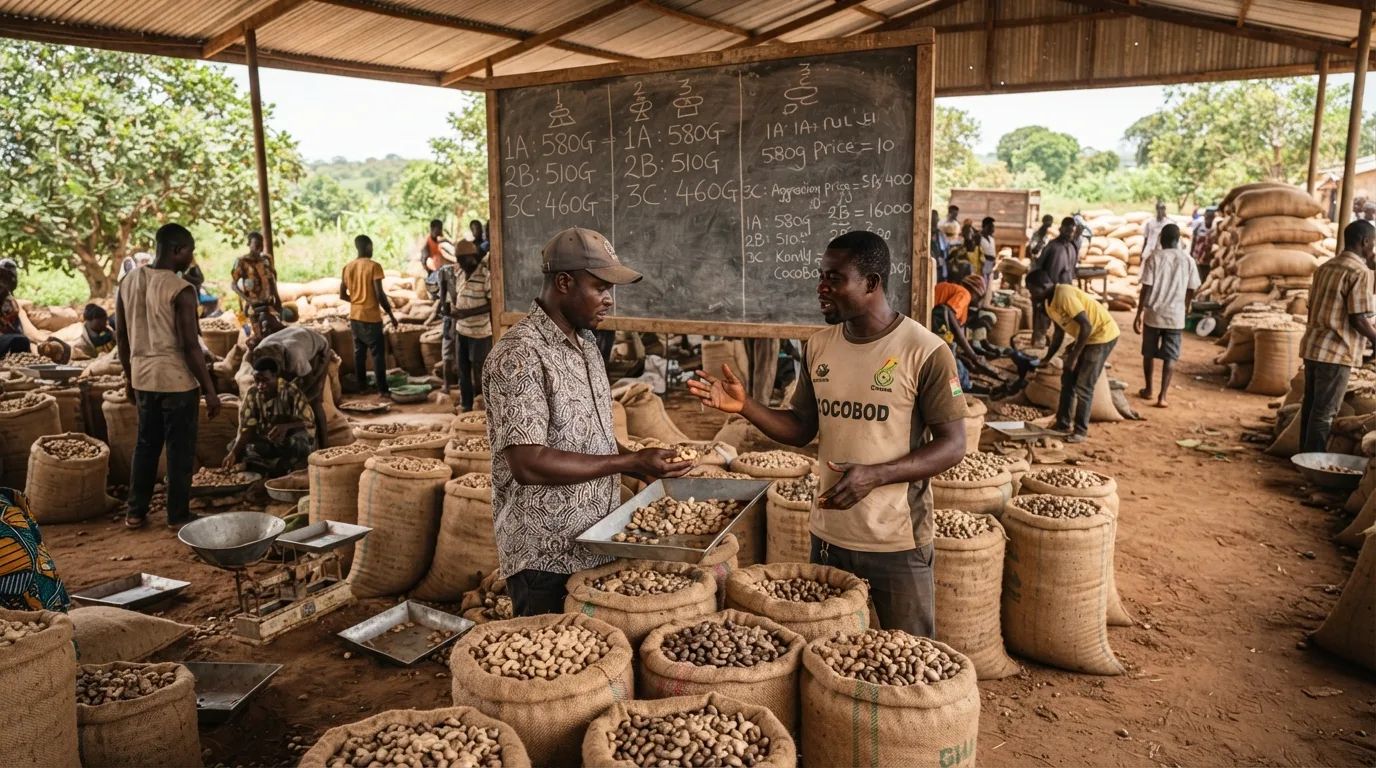
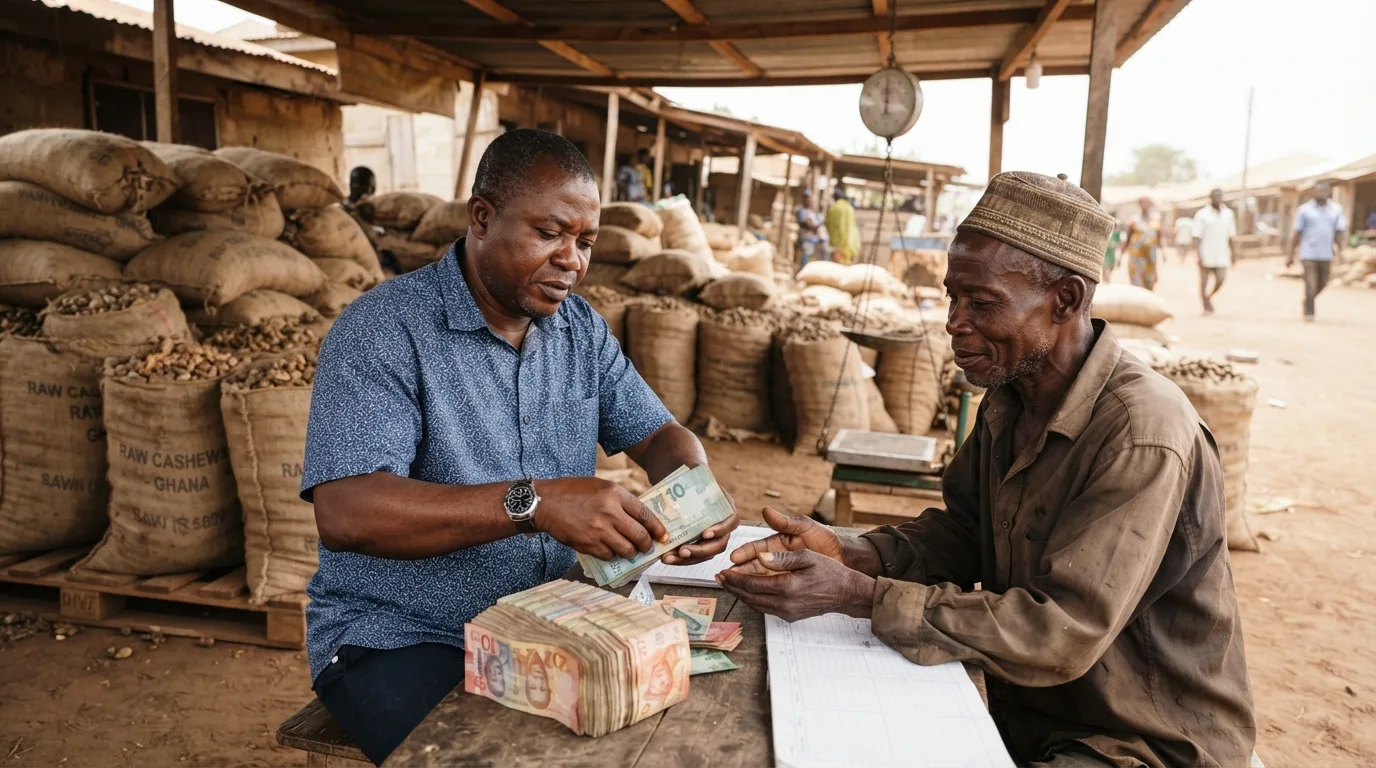
A busy Ghanaian cashew market floor, buyers testing nut quality and negotiating over open sacks
Cashew · Series intelligence

Market Intelligence

The cashew market read the way a practitioner would: where demand sits, who competes, and which parts of the chain are still open. Every step Ghana does not yet do at scale is an open business gap.
Market Intelligence · Pillar 07

The most useful way to see Ghanaian cashew is as a list of things the country does not yet do at scale: shelling, grading, roasting, branding, shell-oil extraction, apple processing, certification, structured aggregation and warehouse finance. Every one of those is an open market gap.

This pillar reads the cashew market the way a practitioner would, asking where the demand sits, who competes, and which parts of the chain are still open. Drawing on the demand and price picture in Pillar 2 and the value map in Pillar 6, it sorts those gaps by the capital they need, the downside to expect and the recommended way in, and it speaks directly to students, entrepreneurs and investors deciding where to build.

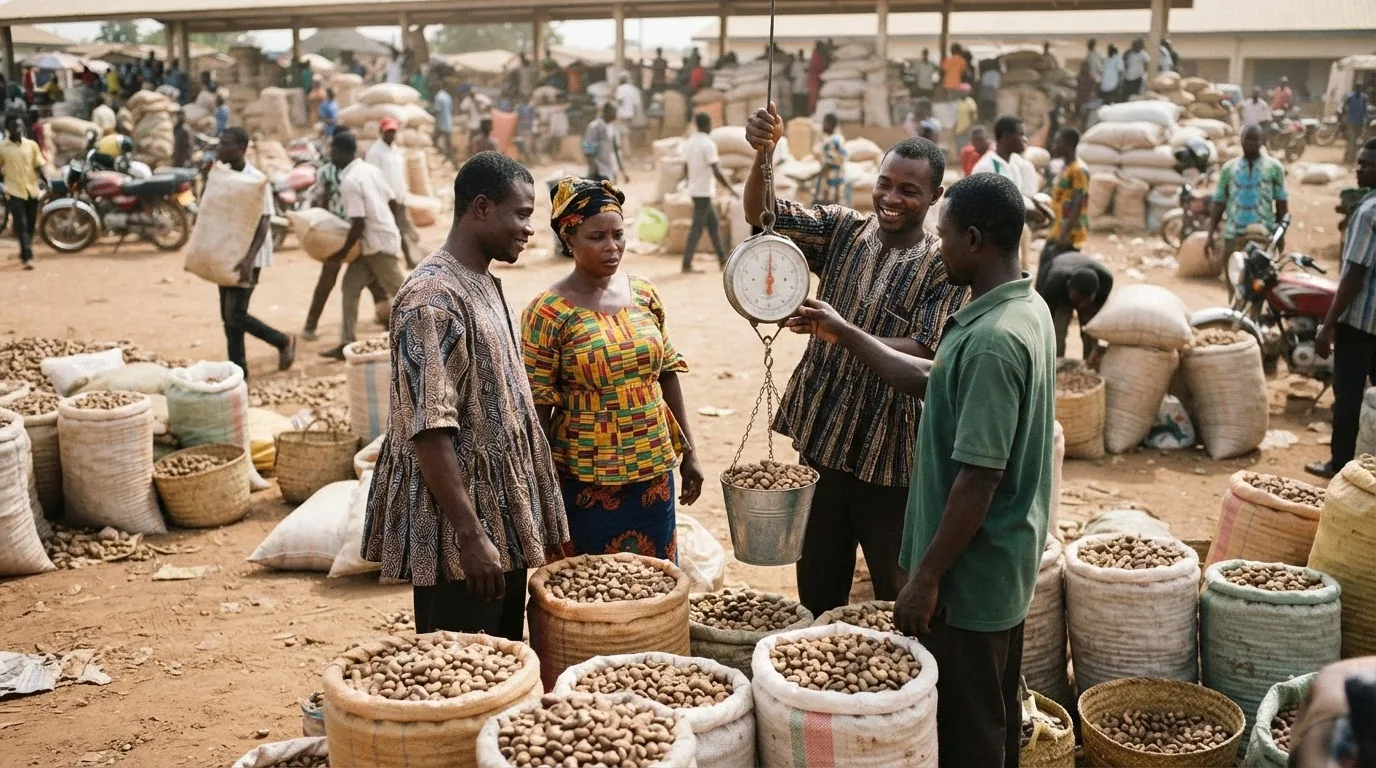
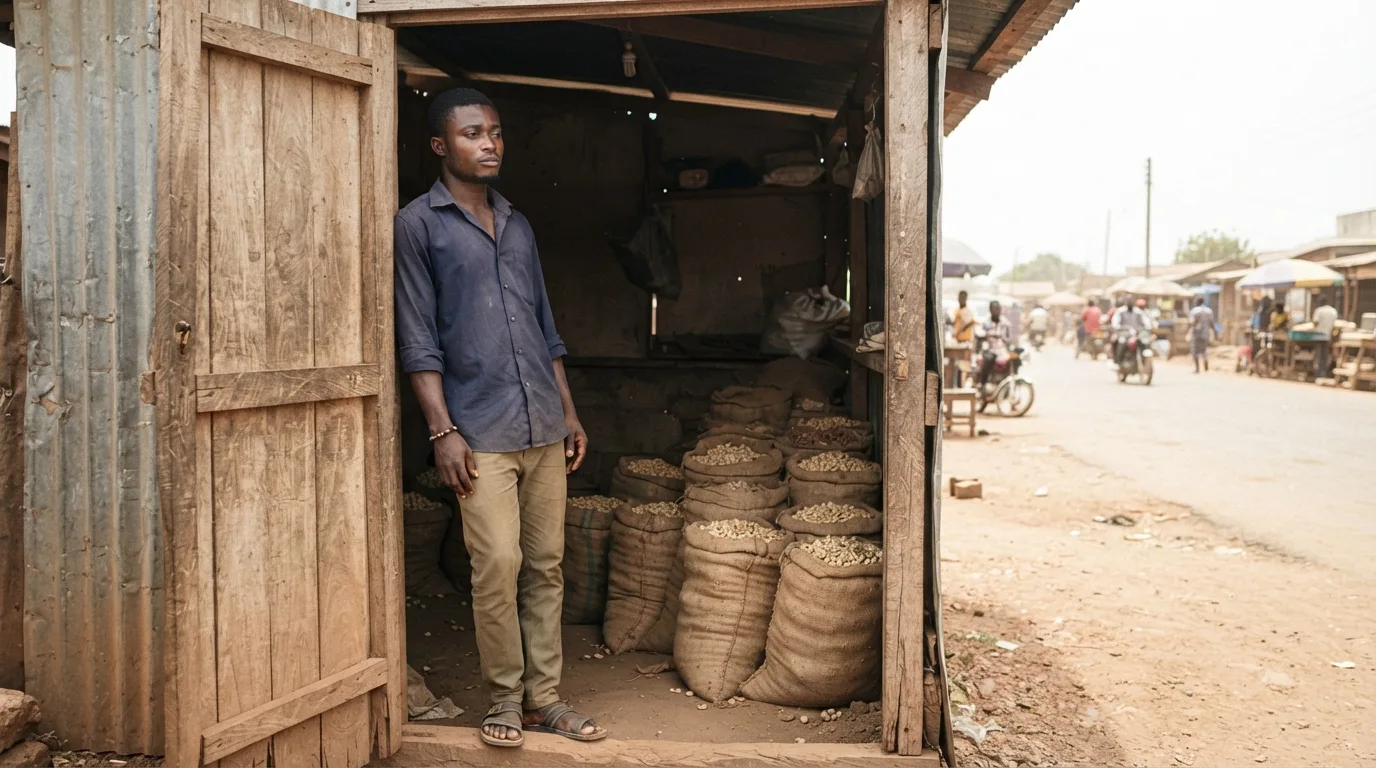
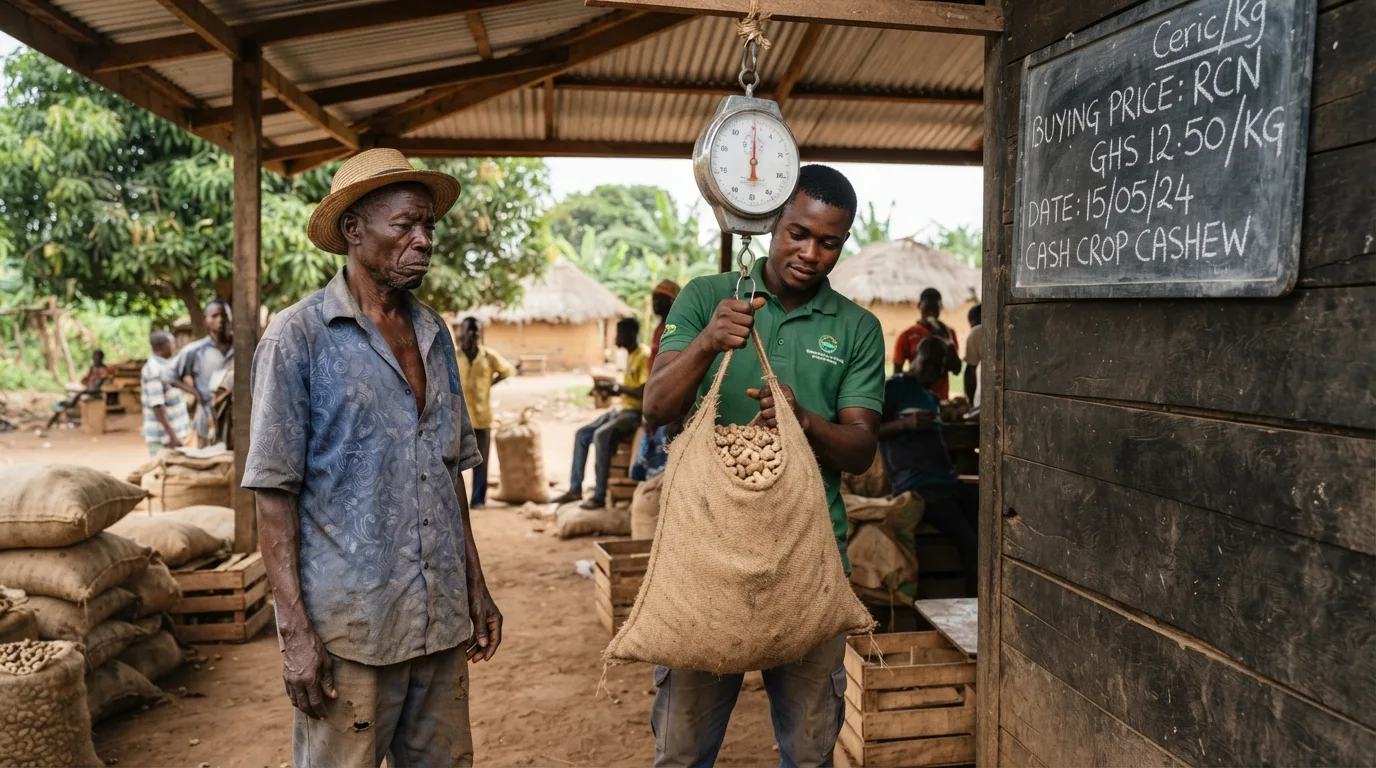
A busy cashew aggregation yard at Techiman in the Bono East region, traders and graders working over open bags of raw cashew nuts under corrugated sheds, weighing scales and stacked jute sacks, the mid-chain trading and grading layer where most graduates and small firms can enter, documentary photograph, warm earthy tones, natural light, no text, no watermark
The middle of the chain is where most can enter
Techiman aggregation yard: Everything Ghana does not currently do with its cashew is a business waiting for the right entrant.
3rd
largest raw cashew nut exporter in the world, but a negligible exporter of finished product
6-10%
of Ghana's cashew is processed at home; the rest leaves the country as raw nuts
>90%
of the cashew apple is wasted, a vitamin-C-rich feedstock left in the field

🌰 The openings sort by the capital they need 🌰

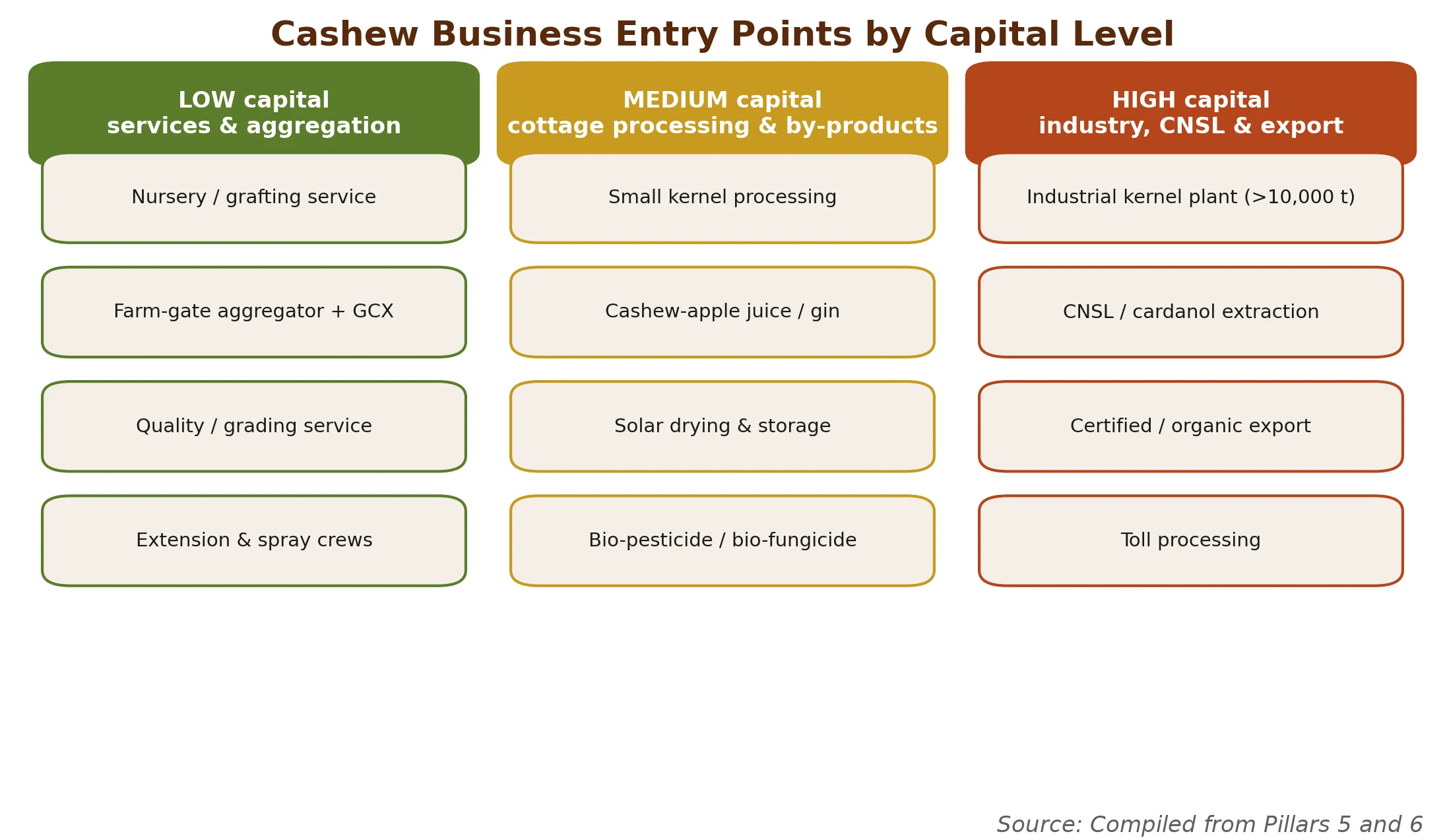
Cashew business entry points sorted by capital level, from low-capital services to high-capital industry
Figure 7.1 Cashew business entry points sorted by capital level, from low-capital services to high-capital industry
What this shows

The openings sort cleanly by how much capital they need. The first question for an entrant is not which crop but which tier they can fund, so the chart reads as a menu priced by capital.

Ghana is the third-largest raw cashew exporter in the world but a negligible exporter of finished product, and that gap is the whole opportunity. It has a quality reputation to build on: it ranks first in the sub-region for kernel outturn and nut size, and about 85 percent of its supply is already chemical-free, which is ideal for the organic market (African Cashew Alliance, 2022; World Bank, 2023).

Prices are volatile, so any business here must be planned around price swings and working-capital needs. Within that setting the openings sort cleanly by how much capital they need, which turns a crowded list of ideas into a simple first question: not which crop, but which tier an entrant can actually fund.

85%
of Ghana's supply is already chemical-free, which is ideal for the organic market
6-33x
the farm-gate to retail price multiple that the undone middle of the chain leaves on the table
📡 MARKET SIGNAL: THE WEDGE IS QUALITY, NOT VOLUME

Ghana's wedge into the premium market is quality, not volume. It already leads the sub-region on kernel outturn and nut size, and most of its supply is chemical-free, so the businesses that grade, certify and trace that quality capture a premium the raw-nut trade throws away. Build on the reputation the country already holds rather than trying to out-cheap Asia on price.

🌰 Low and medium capital: where most graduates start 🌰

The low-capital doors are the skills-led, quick-to-start businesses, and they are where most graduates and first-time entrepreneurs should look. A certified grafted-seedling nursery serves a legally protected, undersupplied market (Pillar 1). A farm-gate aggregator linked to a cooperative and the commodity exchange can access warehouse-receipt finance and offer farmers a transparent, graded price. A quality and grading service, with moisture meters and kernel-outturn cut-tests, plugs a gap in which only about 39 percent of farmers have any quality training (Anaman et al., 2026). A weaver-ant integrated-pest-management advisory sells a near-free yield multiplier (Pillar 3).

The downside across these is seasonality and thin early cash, so the recommended play is to anchor each one to an offtake or a programme, whether the TCDA and World Bank seedling schemes, a processor contract, or a cooperative, so demand is secured from day one.

A step up in capital opens small-scale processing. A semi-mechanised kernel line, a complete machine handling 500 to 800 kilograms an hour, costs on the order of US$50,000 and can capture the processing premium, though small plants carry a higher unit cost than large ones and compete for feedstock. Siting near the Bono and Ahafo supply and using satellite village stations for female labour, the Mim Cashew model, is what makes it work (World Bank, 2023; ComCashew, 2019).

Cashew-apple processing into juice, squash, jam and gin attacks a feedstock that is more than 90 percent wasted and rich in vitamin C; the barriers are perishability, solved with cold storage, and skills, not raw material (Akyereko et al., 2022). The recommended play is women's processing groups plus cold-chain and vocational training.

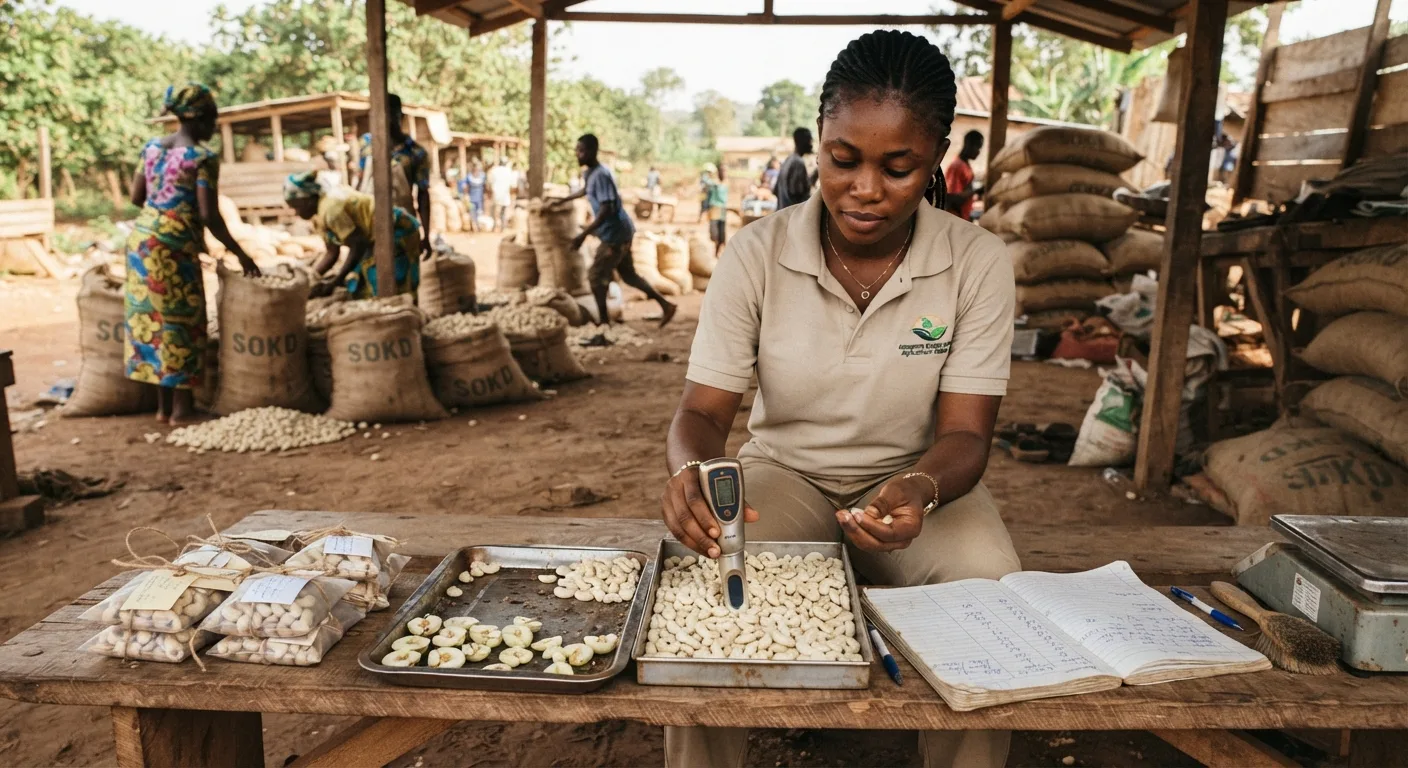
A young Ghanaian agronomy graduate running a kernel-quality grading service at a village aggregation station, using a moisture meter and a cut-test tray of white cashew kernels on a wooden bench, a stack of graded sample bags and a notebook of outturn readings beside her, other traders bagging raw nuts in the background, documentary photograph, warm earthy tones, natural light, no text, no watermark
Skills matter more than capital in the middle
Only about 39 percent of farmers have quality training: a grading service plugs the gap.
39%
of farmers have any quality training, the gap a moisture-and-outturn grading service plugs
US$50k
buys a semi-mechanised kernel line handling 500 to 800 kilograms an hour
5,400
farmers reached by one digital sourcing platform at better prices
🎯 OPPORTUNITY
01

Low capital: services and aggregation. A grafted-seedling nursery, a farm-gate aggregator on warehouse-receipt finance, a moisture-and-outturn grading service, or a weaver-ant advisory. These are skills-led and quick to start, the right first door for graduates and first-time entrepreneurs (Pillars 1, 3).

02

Medium capital: cottage processing and by-products. A US$50,000 semi-mechanised kernel line near the Bono and Ahafo supply, or a women's group turning the wasted cashew apple into juice, squash and jam with cold storage and training (World Bank, 2023; Akyereko et al., 2022).

03

High capital: industry, shell oil, export and certification. Industrial kernel processing above 10,000 tonnes, aggregated cashew-nut-shell-liquid extraction, toll processing for skilled entrants who cannot fund raw material, and a certification service that turns chemical-free supply into premium product (ComCashew, 2019; USDA / Shelter for Life International, 2018).

🌰 High capital: industry, shell oil and certification 🌰

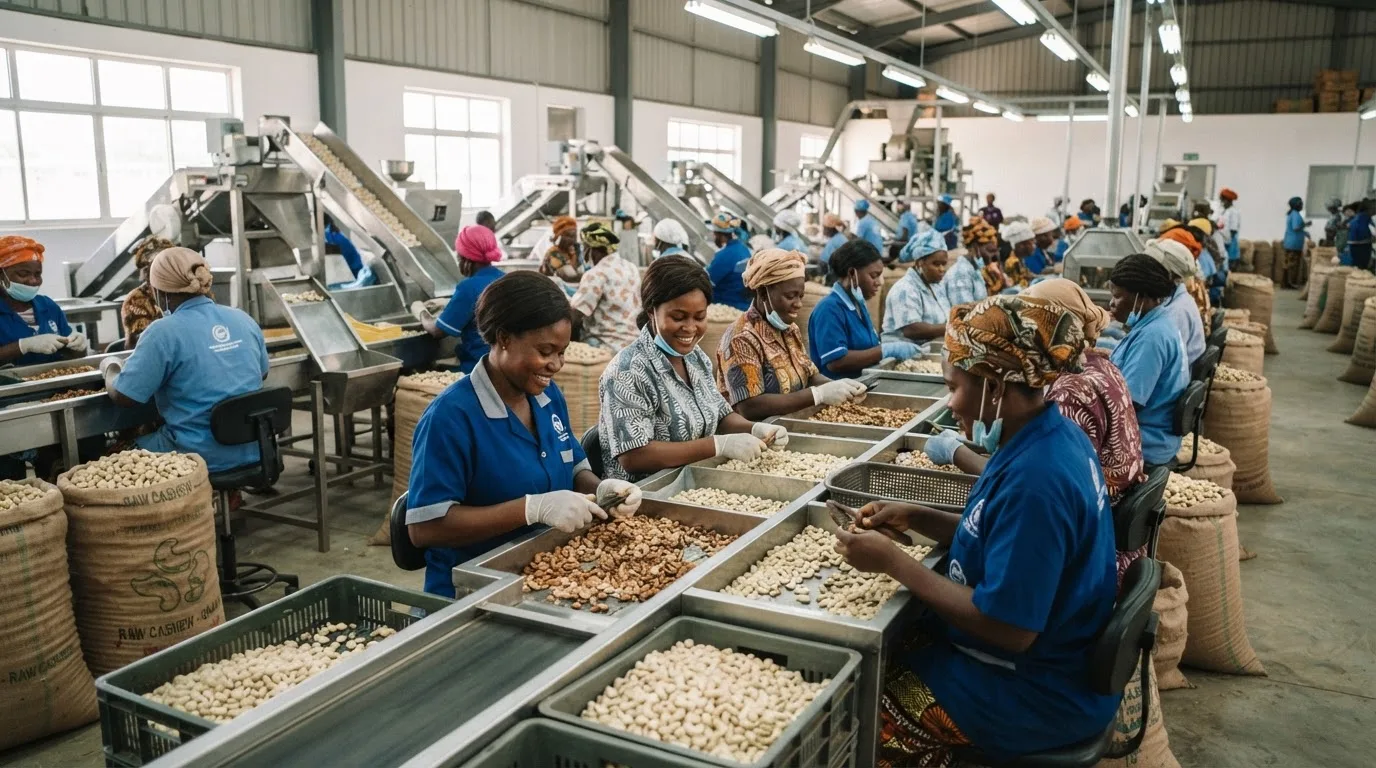
Inside a Ghanaian cashew processing factory, workers in aprons and hairnets tending steam-roasting and shelling machines along a stainless-steel line, trays of pale cashew kernels moving toward grading tables, the industrial tier where Ghana approaches competitiveness, documentary photograph, warm earthy tones, natural light through high windows, no text, no watermark
The prize is largest and the demands are highest
Above 10,000 tonnes: where Ghana approaches competitiveness on cost.

At scale the prize is largest and the demands are highest. Industrial kernel processing, above 10,000 tonnes, is where Ghana approaches competitiveness, but it needs cheap finance, reliable energy and year-round feedstock, best assembled with the 24-Hour Economy incentives, a Free Zone ten-year tax holiday and regional sourcing under the African Continental Free Trade Area (ComCashew, 2019).

Cashew nut shell liquid and cardanol extraction add a chemical-industry revenue line but only pay at volume, so an aggregated shell-to-oil plant serving several processors is the model. For undercapitalised entrants with processing skill, toll processing, shelling a client's nuts for a fee while the client funds the raw material, is a lower-risk way in, because buying the nuts costs more than the plant itself (USDA / Shelter for Life International, 2018). A certification service for organic, Fairtrade, food-safety and traceability is a business in its own right, turning Ghana's large chemical-free supply into premium-eligible product.

10,000 t
the scale at which industrial kernel processing approaches competitiveness with Asia
10 years
Free Zone income-tax holiday available to a qualifying cashew processor
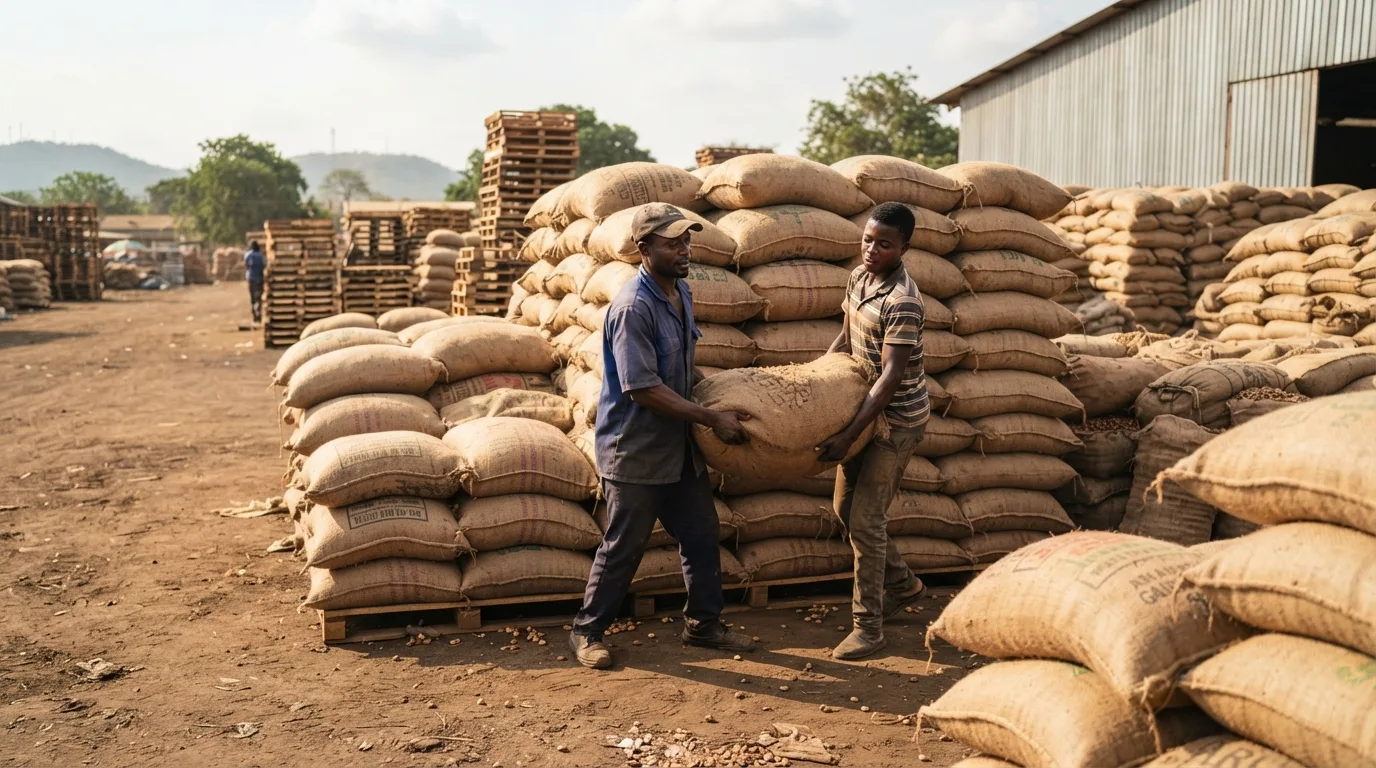
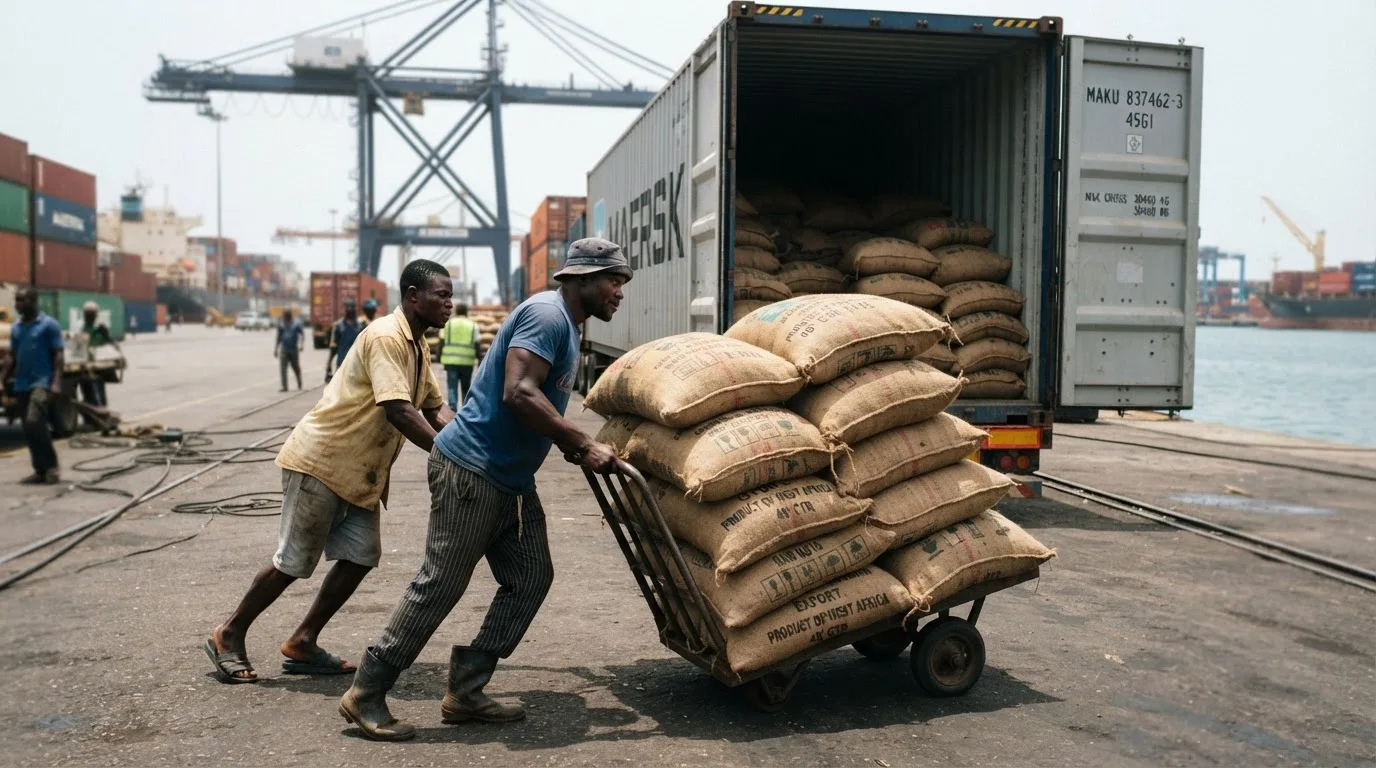
Filled jute sacks of raw cashew nuts stacked on pallets at a Ghanaian aggregation warehouse, ready for export, the unprocessed form in which most of the crop leaves the country, documentary photograph, warm earthy tones, natural light, no text, no watermark
Most of the crop leaves the country raw
Unused capacity is the opening: only 6 to 10 percent is processed at home.
The opening

Ghana processes only about 6 to 10 percent of its cashew at home and exports the rest raw, so the unused processing capacity is itself the industrial opening for an entrant who can assemble finance, energy and feedstock.

🔍 WHAT THIS MEANS

High capital does not mean high certainty. The industrial tier only rewards operators who solve feedstock and energy first, which is why the shell-oil and toll-processing routes exist: they let a skilled entrant earn from the plant without carrying the full cost of the raw material. Read the top of the chain as a set of staged entries, not a single ten-thousand-tonne leap, and let certification ride on the chemical-free supply the country already has.

🌰 The entry-point map: downside and recommended play 🌰

The table below is the quick-reference decision aid for every door in this pillar: what each role needs, the main downside to plan for, and the recommended way in. Read it as a menu priced by capital, then match a door to the capital an entrant can actually raise.

The medium-capital processing and apple-product doors lean heavily on female labour, from the satellite village stations of the Mim Cashew model to the women's groups that turn the cashew apple into juice and jam, so these openings double as women's-livelihood businesses (World Bank, 2023; Akyereko et al., 2022).

11 doors
mapped in the entry-point table by capital, main downside and recommended play
1st
in the sub-region for kernel outturn and nut size, the quality a grading service sells
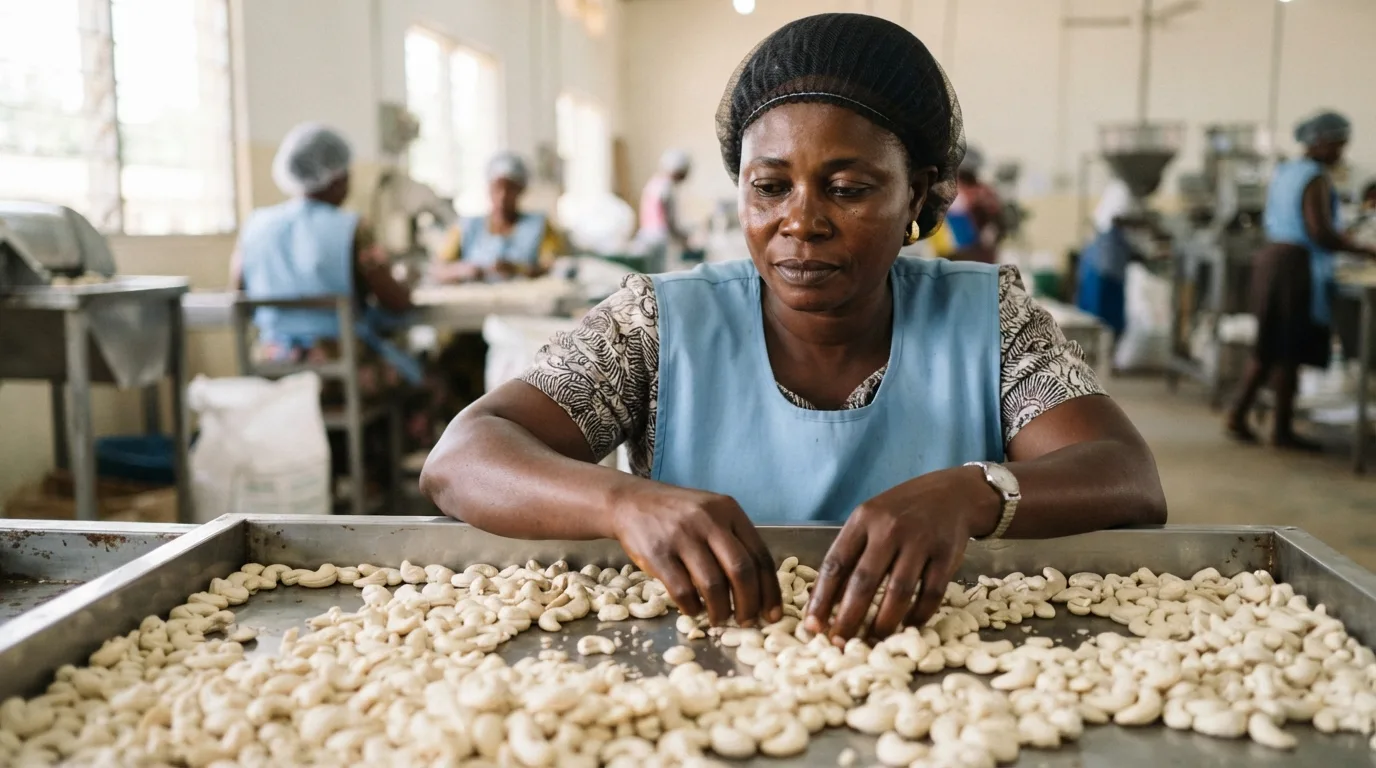
A close documentary shot of graded white cashew kernels in a wooden sorting tray, the pale curved nuts sorted into whole and split grades, a cut-test kernel and a grading card beside them, the premium product that finished processing captures, warm earthy tones, soft natural light, no text, no watermark
Every door ends in an anchor
The recommended play is the point: match capital to a door, then close the anchor.
Table 7.1: The cashew business entry-point map: role, capital, main downside and recommended play
RoleCapitalMain downsideRecommended play
Nursery / grafting serviceLowSeasonal demand and slow first cashOff-take-backed nursery under the TCDA and World Bank seedling schemes
Farm-gate aggregatorLow to mediumPrice risk, well-funded competitors, floor enforcementCooperative plus commodity exchange plus warehouse finance
Quality / grading serviceLowNeeds equipment and credibilityBundle with buyers that reward graded lots
Weaver-ant / bio-input serviceLowFarmer adoption and trainingSell the yield gain and tie it to organic certification
Cottage kernel processingMediumHigher unit cost and feedstock competitionSite near supply, run a 45-day buying window, use satellite stations
Cashew-apple productsMediumPerishability, skills and thin marginsWomen's groups plus cold chain plus vocational training
Industrial kernel processingHighCost gap against Asia, finance and energyScale above 10,000 t with 24-Hour incentives and AfCFTA sourcing
CNSL / cardanol extractionHighPays only at volumeAggregated shell-to-oil plant serving several processors
Toll processingMediumFee-only income, client-dependentFor skilled entrants who cannot fund the raw material
Exporter / traderHigh to mediumTCDA permit and levy, price riskShorten the channel, add traceability for premium buyers
Certification serviceMediumAudit cost and systematisationCertify smallholder groups for organic and Fairtrade

Sources: African Cashew Alliance (2022); World Bank (2023); ComCashew (2019); USDA / Shelter for Life International (2018); Anaman et al. (2026); Akyereko et al. (2022).

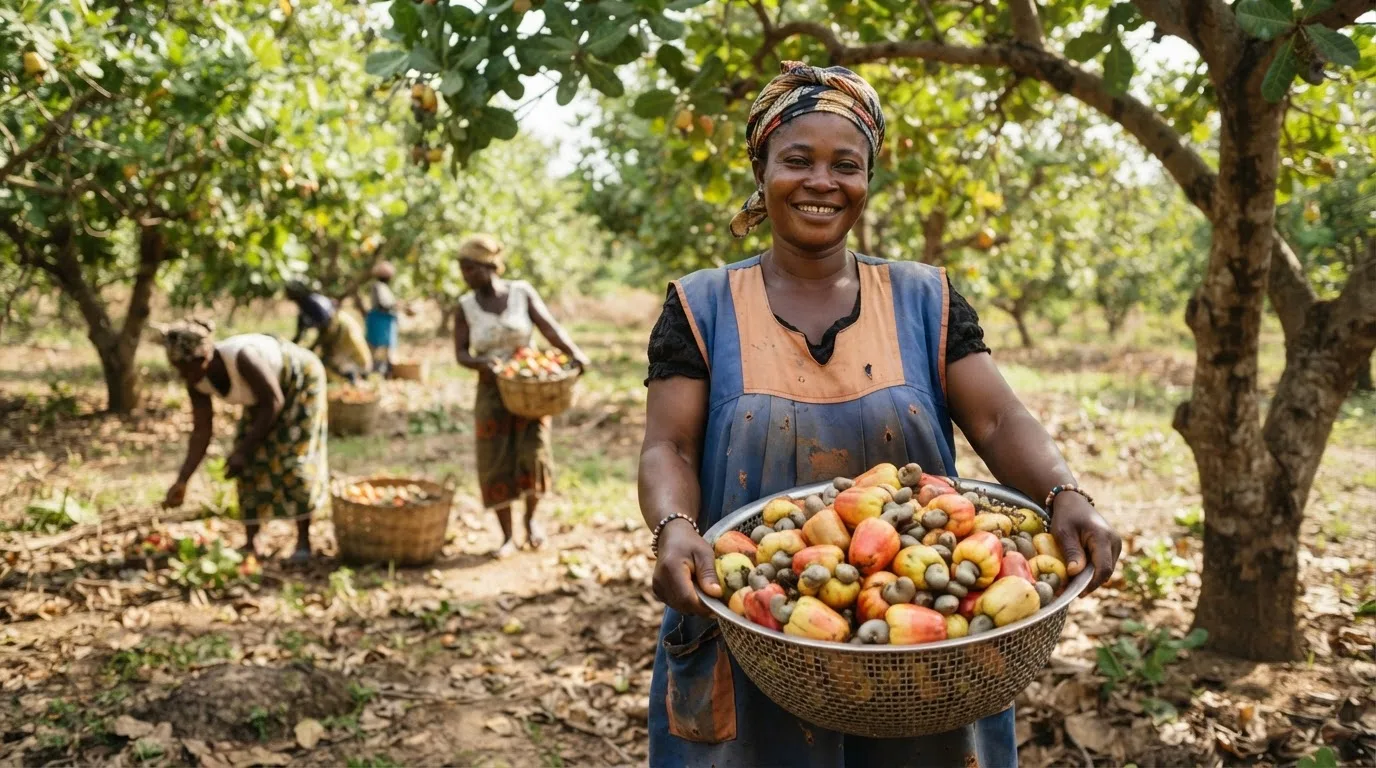
A Ghanaian woman gathering freshly fallen cashew nuts and apples by hand in a smallholder orchard, the female labour concentrated in the medium-capital cottage-processing and apple-product doors of the entry-point map, documentary photograph, warm earthy tones, natural light, no text, no watermark
Female labour concentrates in the medium-capital doors
Cottage processing and apple products: where a business and a female workforce build together.
The pattern

Cottage kernel processing and cashew-apple products concentrate women's labour, so the medium-capital tier is where an entrant can build a business and a female workforce at the same time.

🔍 WHAT THIS MEANS

The single most important line in the table is not a role, it is the recommended play, because every one of them ends in an anchor: an offtake, a cooperative, a certification or an incentive. A cashew venture that starts without one is exposed to price swings and feedstock competition; one that starts with one is de-risked from day one. Pick the door the capital fits, then do not spend until the anchor is signed.

🌰 AI and digital openings: what is feasible now 🌰

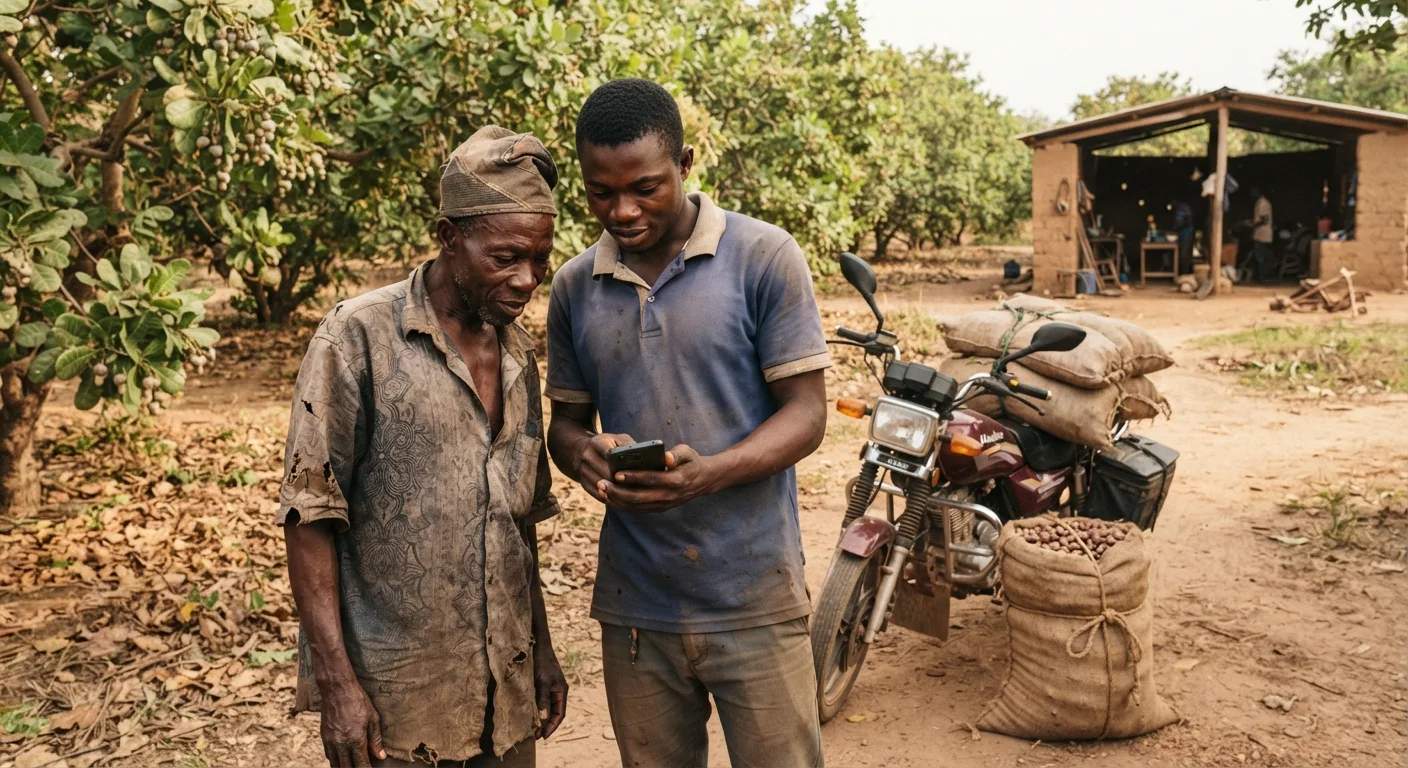
A Ghanaian farmer-service agent showing a smallholder cashew farmer a smartphone with an SMS price alert and a mobile-money payment screen at the edge of a cashew orchard, both leaning over the phone, a motorbike and a bag of raw nuts nearby, the boring feasible-now digital tools that actually pay, documentary photograph, warm earthy tones, natural light, no text, no watermark
The money is in the boring, feasible-now tools
Proven in Ghana: digital sourcing already reaches farmers at better prices.

Technology is not a separate pillar in cashew; it is a lever inside each one, and the openings are flagged where they arise (Pillars 3 to 6). The honest reading is that the money is in the boring, feasible-now tools, SMS advisory, mobile money, record apps, e-receipts and traceability, not in the drones and AI graders that grab headlines but pay only at scale. The table gathers the digital openings, where each fits in the chain, and how ready it is for a Ghanaian entrant today.

Table 7.2: AI and digital openings in cashew, where each fits, and how ready it is for a Ghanaian entrant today
Digital openingWhere it fitsHow ready it is now
SMS and voice pest, disease and price alertsScouting and prices (Pillars 2, 3)Feasible now, smallholder (Esoko, Farmerline)
Smartphone-photo disease diagnosisDisease scouting (Pillar 3)Emerging, a service-agent tool (PlantVillage Nuru model)
Satellite suitability and orchard mappingSiting and establishment (Pillar 4)Feasible now, service or investor
Mechanisation on demandLand preparation (Pillar 4)Feasible now (TROTRO Tractor)
Farm and plant record and cost appsThe missing cost data (Pillar 5)Feasible now, all users
Mobile money and digital credit scoringPayments and finance (Pillar 5)Feasible now (MTN MoMo, AgroCenta)
Digital aggregation and e-warehouse receiptsAggregation (Pillar 6)Feasible now (AgroCenta, GCX)
Traceability for the organic and EU premiumQuality and export (Pillars 2, 6)Feasible now, exporter
Drone spraying and mappingProtection and agronomy (Pillars 3, 4)Commercial-scale only for now
Camera-read grading and outturn (AI)Quality (Pillars 2, 6)Emerging, commercial-scale

Sources: World Bank (2023); ComCashew (2019).

📡 MARKET SIGNAL: THE REALISTIC DIGITAL PLAY

Start with a tool that already works in Ghana and attach it to a service the farmer or processor will pay for: a scout-and-alert advisory, a record-and-finance service, or a traceable aggregation platform. Digital sourcing is proven here, with one platform reaching about 5,400 farmers at better prices (World Bank, 2023). Leave the drones and camera-read graders to the industrial players until scale justifies them.

🌰 Policy tailwinds and the doors to knock on 🌰

Behind the openings sits a set of policy tailwinds and institutions worth knowing, because most of the low-capital doors are backed by a scheme and most of the high-capital ones by an incentive. Certified nurseries and aggregation ride the TCDA and World Bank seedling schemes; industrial processing rides the 24-Hour Economy incentives, a Free Zone ten-year tax holiday and regional sourcing under the African Continental Free Trade Area (ComCashew, 2019; World Bank, 2023).

The Tree Crops Development Authority is the door an exporter or trader must pass through, since a TCDA permit and levy govern the raw-nut trade, and the same body's seedling and quality programmes are what an aggregator or nursery attaches to. Match each venture to the scheme that fits its tier, and the state has quietly done more for the low-capital and high-capital ends of the chain than for the contested middle.

The policy support clusters at the two ends of the chain, the low-capital services and the high-capital industry, so an entrant should anchor each venture to the scheme built for its tier rather than expect blanket support.

24-Hour
Economy incentives an industrial processor can assemble for cheaper finance and energy
AfCFTA
regional sourcing that lets a Ghanaian plant secure year-round feedstock
📡 MARKET SIGNAL: THE SCHEMES REWARD OPERATORS WHO SHOW UP ORGANISED

The schemes reward operators who show up organised. A nursery or aggregator tied to a cooperative and the TCDA seedling programme, or a processor structured for a Free Zone holiday, gets far more from the state than a solo operator chasing a general subsidy. Build the institutional link before you need it, because the permit, the levy and the holiday all move faster for a business the authority already knows.

🌰 The risks that sit inside the market picture 🌰

A new cashew entrant standing alone beside unsold bags of raw nuts with no buyer in sight

Entering without an offtake or an anchor

MEDIUM-HIGH
What it is

A cashew venture that starts without a buyer, a cooperative, a certification or an incentive behind it is exposed to price swings and feedstock competition, and it burns its thin early cash chasing demand it should have secured before it built.

Evidence

Prices are volatile and the aggregation and processing layers are contested, which is the recurring caution across the demand, economics and value-chain pillars (see Pillars 2, 5 and 6).

Who it hits

First-time entrants who build before securing demand, and any door on the entry-point map read without its recommended play.

How to manage it, and the opening

Anchor every venture to an offtake, a cooperative, a certification or an incentive from day one, which is the recommended play throughout this pillar. Treat the anchor as the first thing to close, not the last.

A cashew trader studying a price sheet as a volatile market swing moves the farm-gate value under him

Price volatility and thin working capital

HIGH
What it is

Cashew prices swing hard within and across seasons, so an aggregator or cottage processor who buys on one price and sells months later is a price-taker exposed to a squeeze, and the working-capital needed to carry stock through a buying window can sink a thinly funded venture.

Evidence

Prices are volatile and the farm-gate to retail multiple runs from about 6 to 33 times, so any business here must be planned around price swings and working-capital needs (African Cashew Alliance, 2022; World Bank, 2023).

Who it hits

Farm-gate aggregators, cottage processors and traders who carry stock and buy inputs on one price footing and sell later on another.

How to manage it, and the opening

Run a short buying window of about 45 days, use warehouse-receipt finance through the commodity exchange to smooth cash, and price against graded lots so a swing does not quietly turn a margin negative overnight.

A large well-resourced buying operation loading trucks of raw cashew while a small aggregator watches from the roadside

Being out-competed by well-funded aggregators

MEDIUM
What it is

The aggregation and processing layers are contested and floor prices are weakly enforced, so a new farm-gate aggregator with no cooperative, no finance line and no differentiated offer is easily undercut by better-capitalised competitors who can pay farmers faster and hold more stock.

Evidence

The farm-gate aggregator door carries price risk, well-funded competitors and weak floor enforcement as its main downside on the entry-point map (World Bank, 2023).

Who it hits

First-time aggregators entering the contested middle of the chain without a cooperative, an offtake or a finance line behind them.

How to manage it, and the opening

Do not compete on price alone in the crowded middle. Anchor to a cooperative, the commodity exchange and warehouse finance, and add grading and traceability so the offer is a transparent, premium-eligible lot rather than another undifferentiated pile of nuts.

🔑 KEY TAKEAWAYS
01

Everything Ghana does not currently do with its cashew is a business: shelling, grading, roasting, branding, shell-oil, apple processing, certification, structured aggregation and warehouse finance are all open gaps.

02

Ghana is the third-largest raw-nut exporter in the world but processes only about 6 to 10 percent at home, and over 90 percent of the cashew apple is wasted, so the value sits in what stays undone.

03

The openings sort by capital: low-capital services and aggregation suit graduates, medium-capital cottage processing and apple products suit small firms, and high-capital industry, shell-oil and certified export suit investors.

04

The realistic digital play is the boring, feasible-now tools, SMS advisory, mobile money, record apps, e-receipts and traceability, not the drones and AI graders that only pay at scale.

05

In every case name the downside first, then anchor the business to an offtake, a cooperative, a certification or an incentive so it is de-risked from the start.

Where this connects. The demand and price picture that frames every door here is worked through in Pillar 2, the agronomy and weaver-ant advisory in Pillar 3, orchard establishment in Pillar 4, and the enterprise economics behind each capital tier in Pillar 5. This pillar sits on top of the value map in Pillar 6, reading it as a menu of businesses sorted by the capital an entrant can raise.

Written for each reader

🌰 Practitioner intelligence 🌰

Hover any card to pause and lift it.

For students

Use the capital-tiered map in this pillar to pick one low-capital door, a nursery, a grading service or an aggregation role, and go deep rather than wide. Learn that door's one skill to a professional standard, whether kernel grading and outturn testing, warehouse-receipt operation, or organic-certification management, and attach yourself to a cooperative or processor that needs it. The trap: trying to start at the top of the chain with a processing plant you cannot fund. Start asset-light, prove yourself, and climb from service provider to aggregator or small processor.

For entrepreneurs

First move: match your venture to your actual capital using the entry-point table, and name the downside before you commit, not after. Secure the anchor that de-risks your chosen door, an offtake for aggregation, a client for a service, a certification for export, before you spend. The trap: copying someone else's model at the wrong capital level, because a US$50,000 cottage processor and a 10,000-tonne industrial plant are different businesses with different survival rules.

For investors

Diligence asks: does the venture sit at a capital tier the founder can actually finance; is it anchored to an offtake, a cooperative, a certification or an incentive; and has the founder named and priced the specific downside for that door. The thesis: the best cashew bets pair a defensible node with an anchor, at a fundable scale. Screen against the entry-point map first, then insist the numbers are field-priced rather than borrowed from a brochure.

For faculty

Assignment: give students the entry-point map and one real or invented cashew venture, and ask them to place it at the right capital tier, name its downside and recommended anchor, and deliver a go-or-no-go call with conditions. The deliverable is a one-page investment screen. It teaches opportunity assessment under real constraints rather than abstract enthusiasm about a fashionable crop.

For ecosystem actors

The lever: lower the barrier at the doors where graduates and small firms actually enter, funding business-development services, agtech and certification support, and de-risking first-time working capital. Measure success by the number of new mid-chain enterprises, nurseries, graders, aggregators and cottage processors, that start and survive two years. The failure to avoid: channelling all support to a few large processors while the entry-level ecosystem that feeds them stays starved.

Download full PDF
UpcomingThis document isn't available yet.