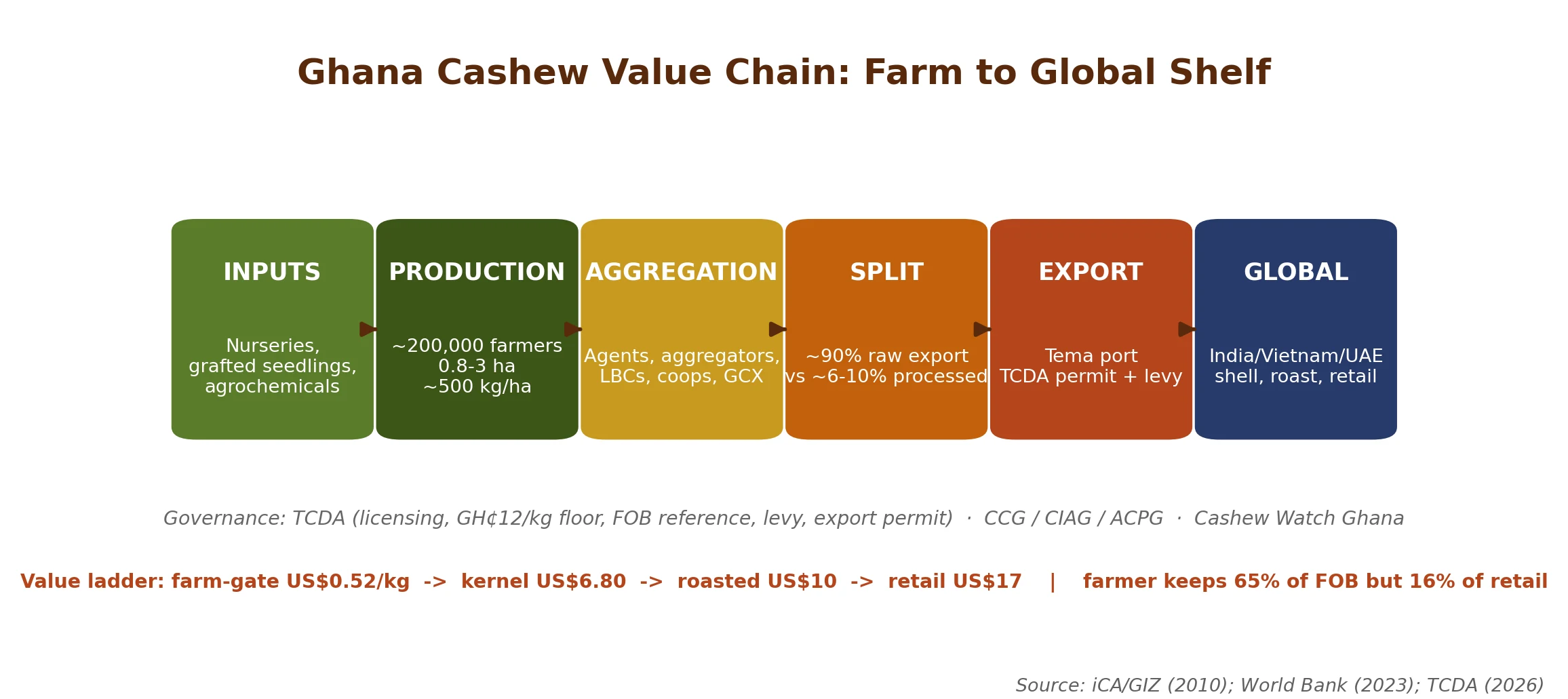
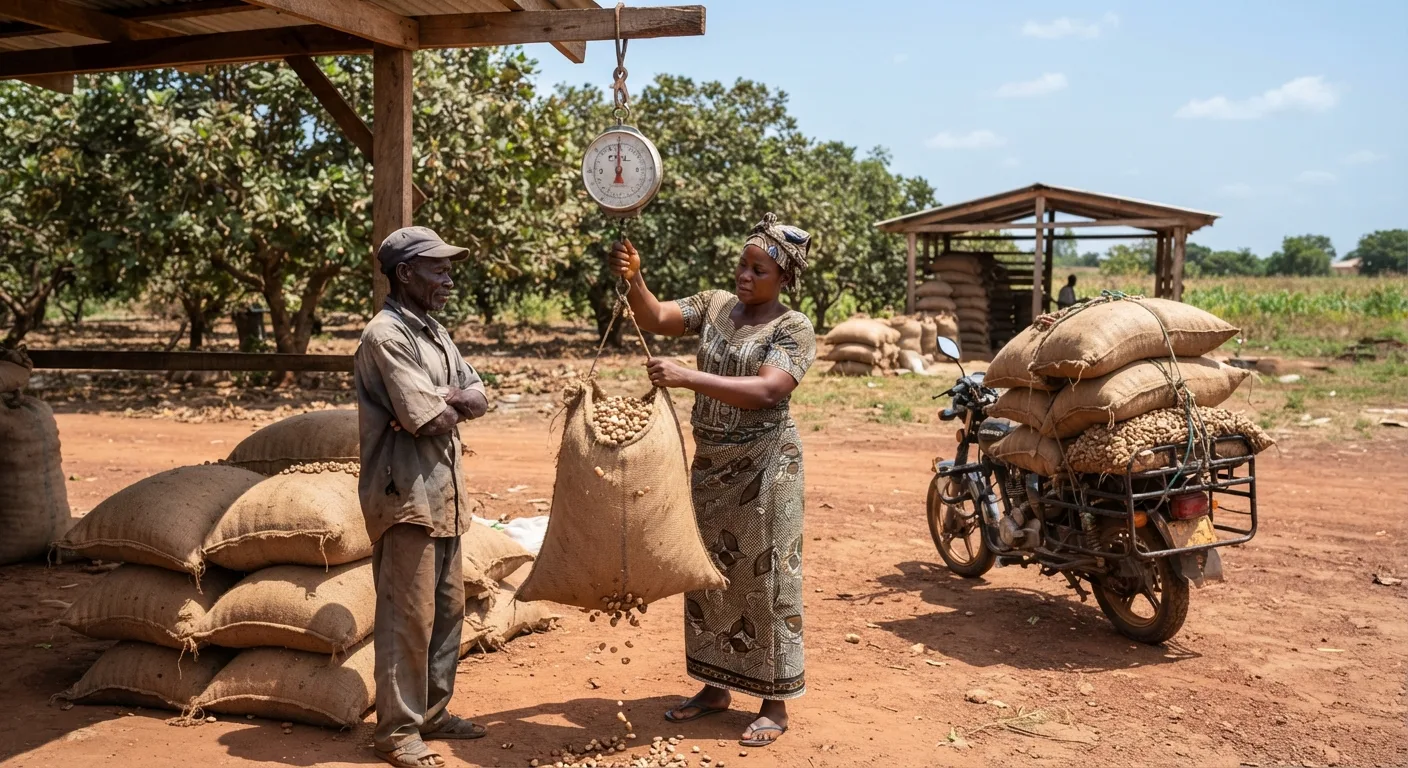
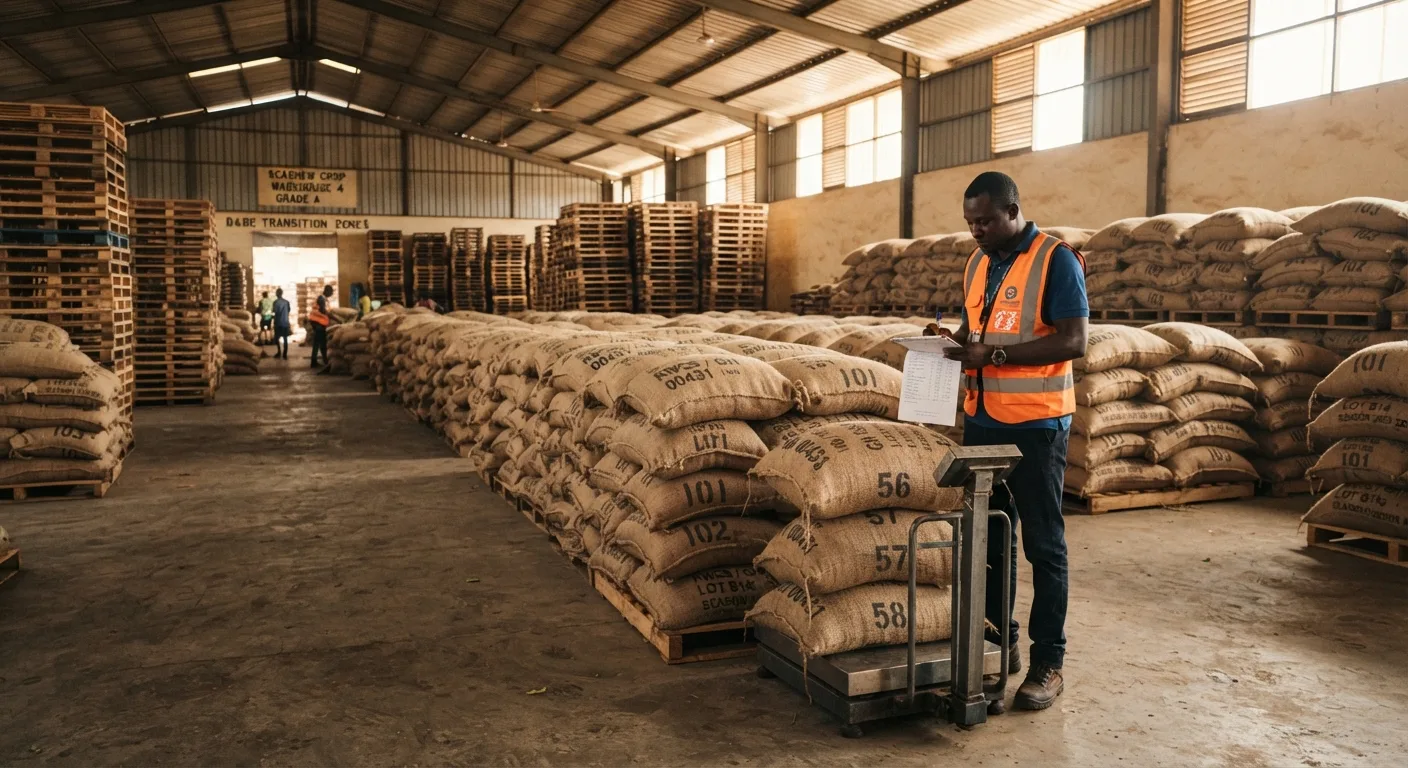
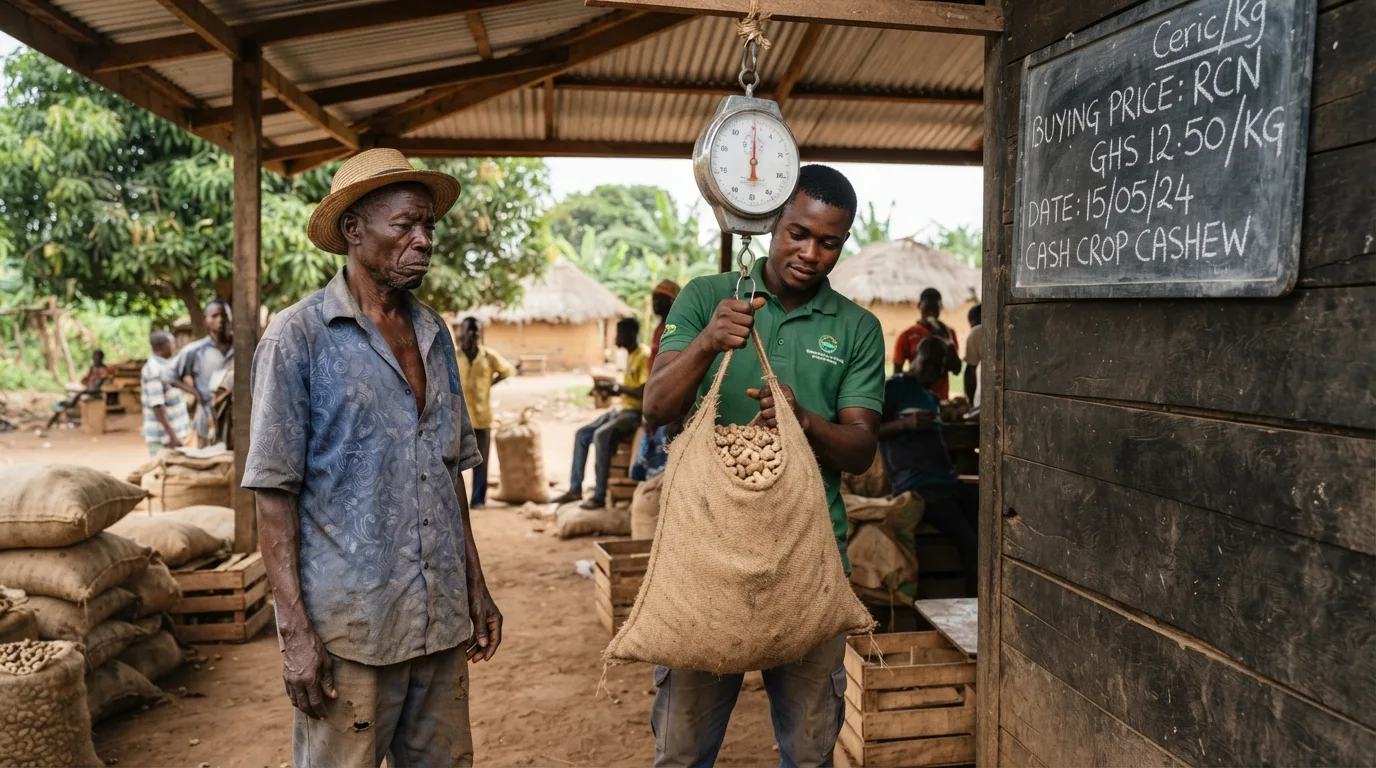
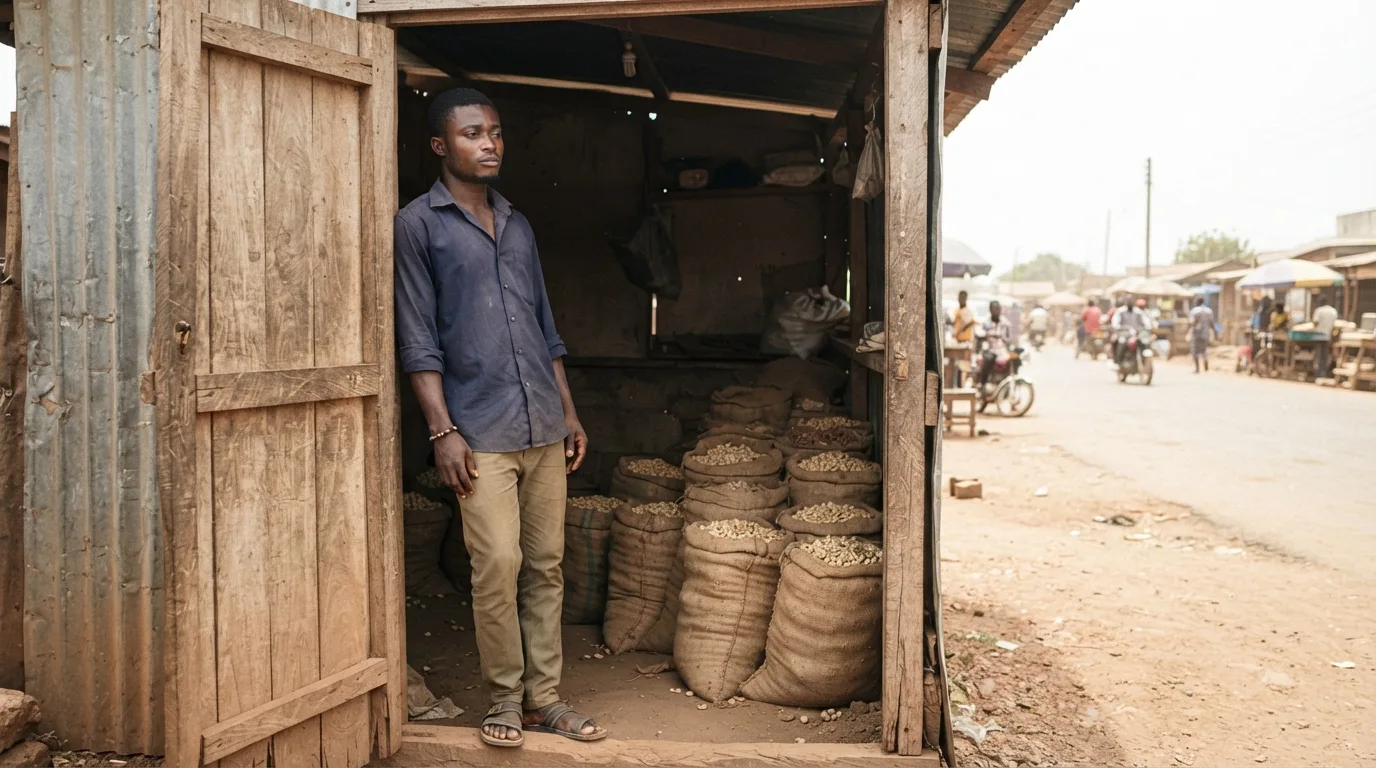
If you are thinking of entering, the value leaks in the middle of the chain, and that is where a graduate fits with skills rather than capital: a grading and quality-assurance service, or a cooperative-linked aggregation and warehouse-receipt operation. Learn to grade nuts and to run a warehouse receipt so farmers can borrow against stored stock. The trap is entering as one more small aggregator competing on price; enter instead as the person who brings grading, transparency and finance the current buyers do not.
First move: aggregate through a cooperative and the commodity exchange rather than buying farm-to-farm, so you can offer a graded, transparent, outturn-based price and access warehouse-receipt finance. Secure the farmer group, a warehouse and an offtake before you buy a single bag. The trap is paying below the floor to win volume, which breaches TCDA pricing rules and puts off premium buyers; win on reliability and grade instead.
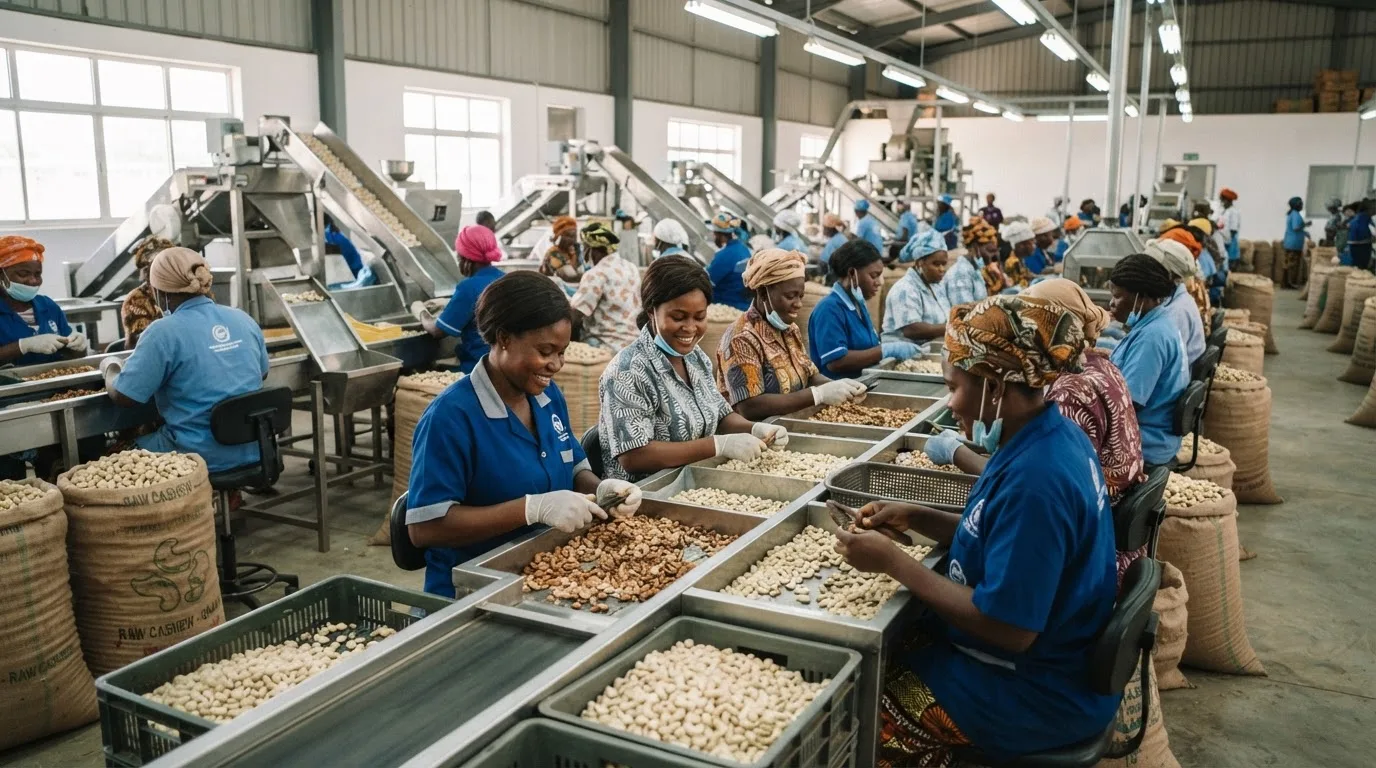
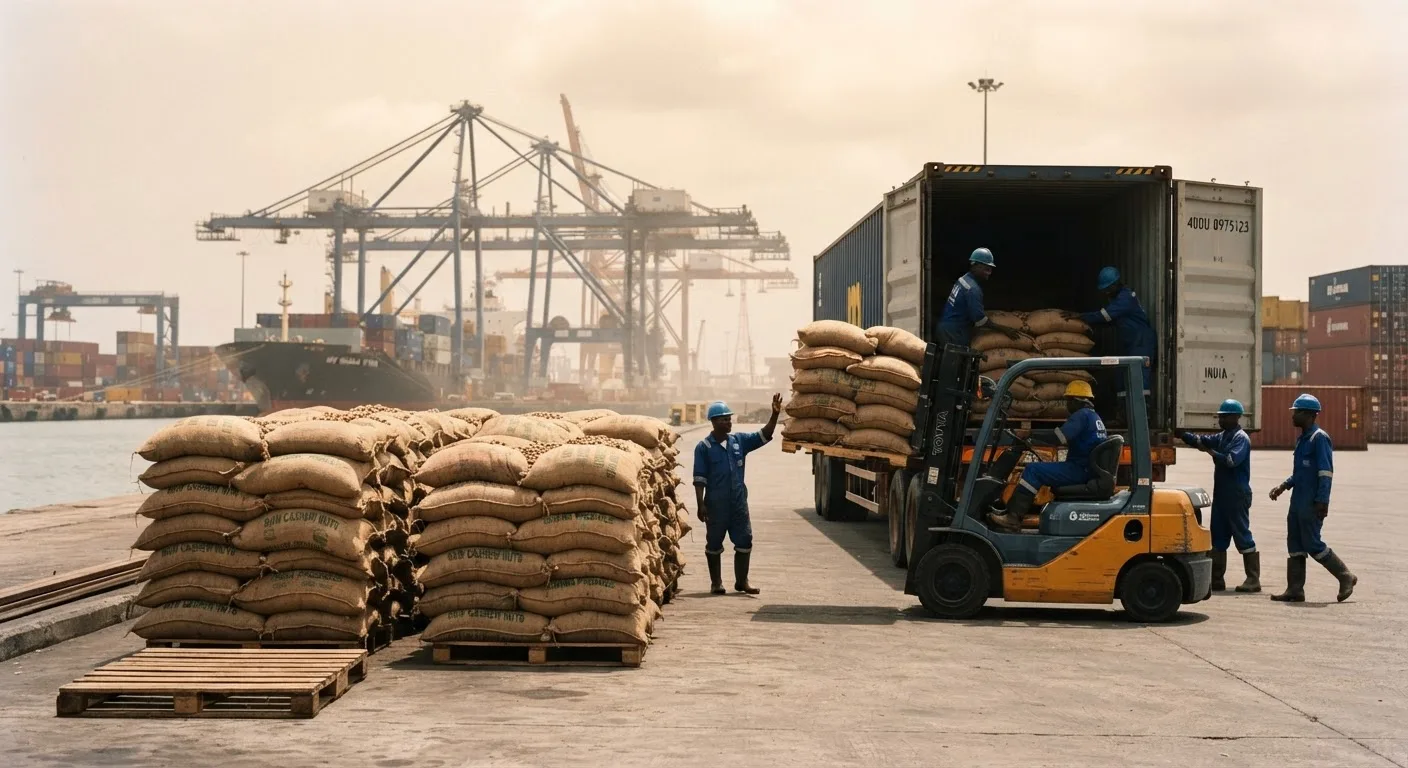
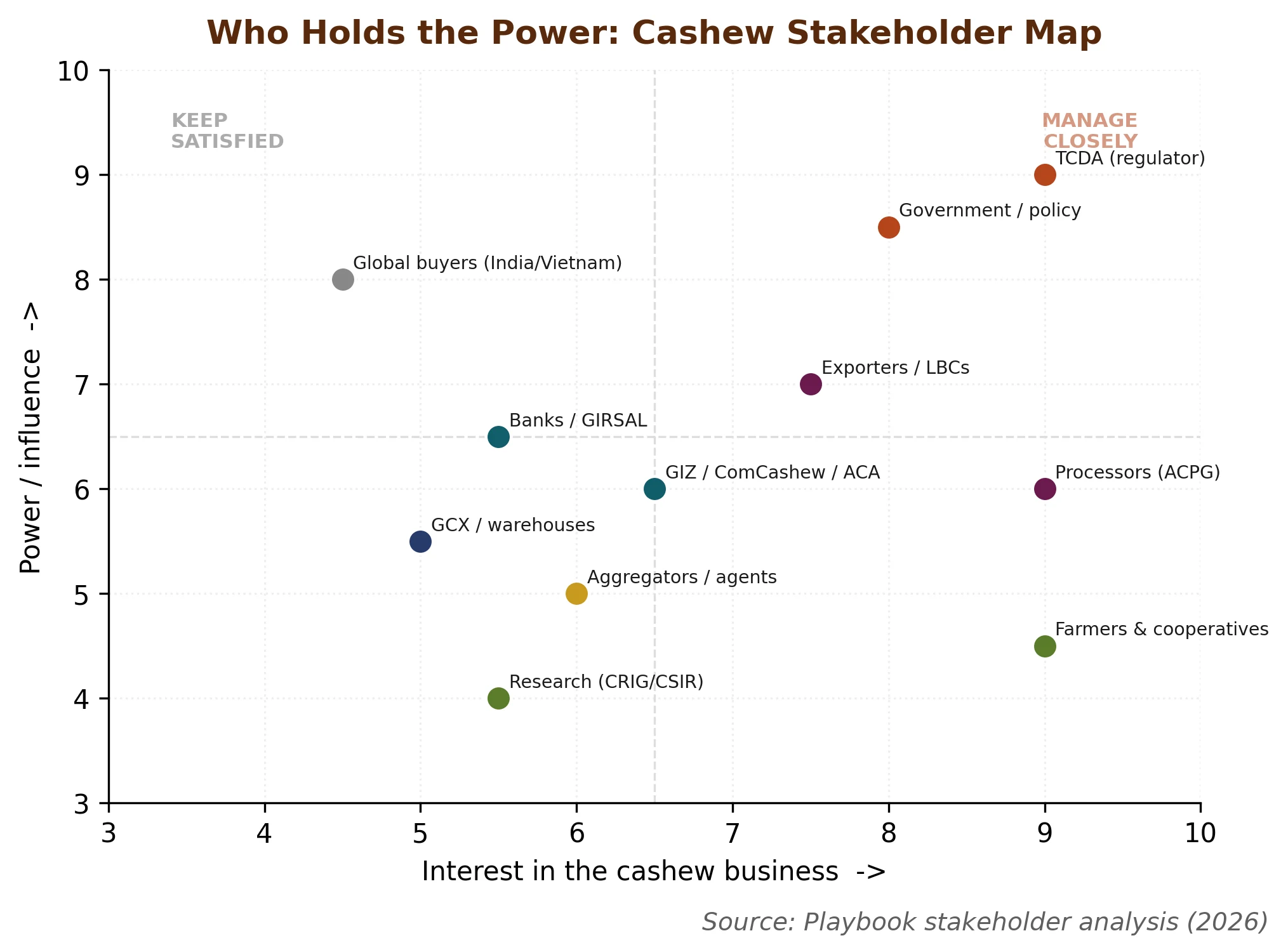
Diligence asks: where in the chain does the venture sit and what stops the margin leaking past it; does it use production contracts, input plus market, or only spot buying; and can it prove the farmer's share and the outturn it delivers. The thesis is that value is captured by whoever processes at home or organises farmers, and lost by everyone who only moves raw nuts. Structure the cheque around a contracted supply base and warehouse-receipt collateral, and underwrite the aggregation-layer price and enforcement risk.
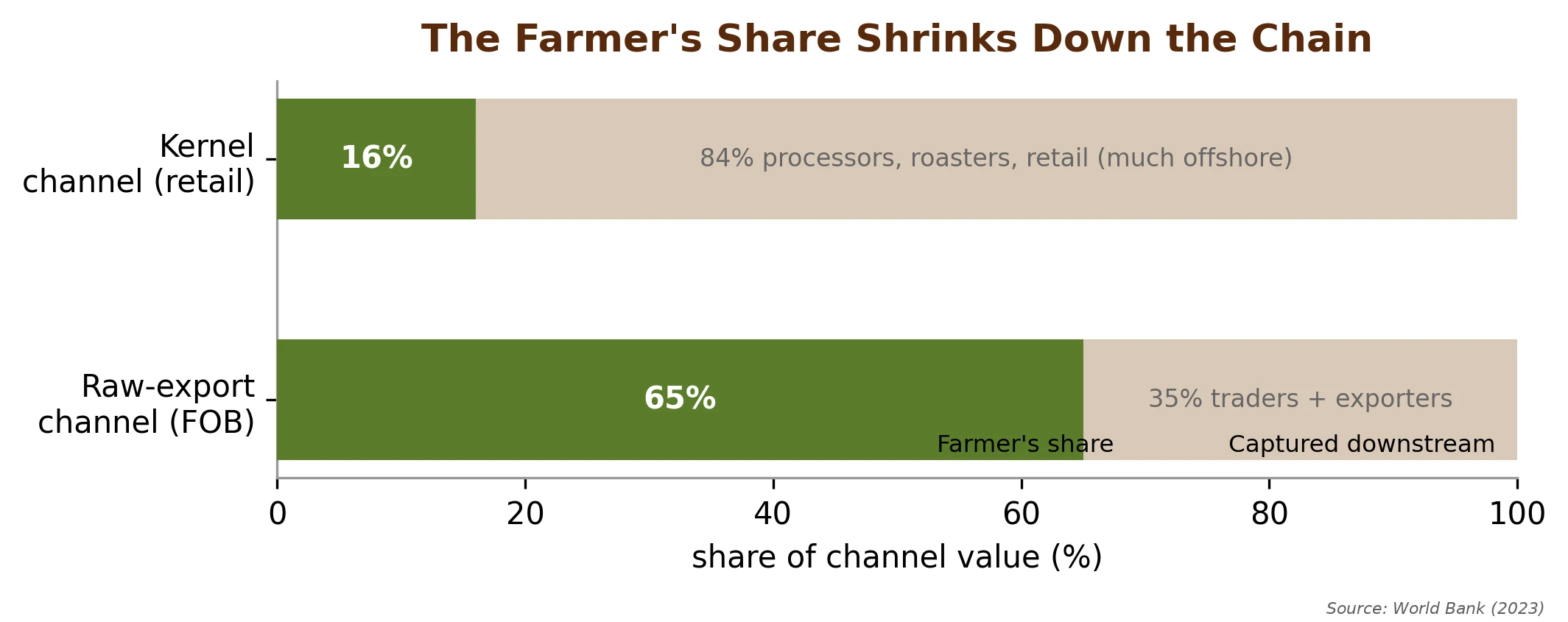
Assignment: have students trace one tonne of raw nuts through the chain using the World Bank value-distribution data, calculating the farmer's share on the raw-export channel against the processed channel, and identify the single biggest leak. Deliverable: a value-distribution diagram and a memo recommending one upgrading lever. It teaches where power and margin sit in an agricultural value chain, and why.
The lever is to strengthen the structured market and farmer organisation: capitalise the commodity exchange and warehouse-receipt system, enforce the farm-gate floor, and back cooperatives and production contracts. Measure success by the farmer's share of the free-on-board price and by the volume traded through graded, receipt-backed channels. The failure to avoid is a rigid, politically set floor decoupled from the auction, which, as in Tanzania, can leave the crop unsold; keep the floor dynamic and the auction transparent.
If you are thinking of entering, the value leaks in the middle of the chain, and that is where a graduate fits with skills rather than capital: a grading and quality-assurance service, or a cooperative-linked aggregation and warehouse-receipt operation. Learn to grade nuts and to run a warehouse receipt so farmers can borrow against stored stock. The trap is entering as one more small aggregator competing on price; enter instead as the person who brings grading, transparency and finance the current buyers do not.
First move: aggregate through a cooperative and the commodity exchange rather than buying farm-to-farm, so you can offer a graded, transparent, outturn-based price and access warehouse-receipt finance. Secure the farmer group, a warehouse and an offtake before you buy a single bag. The trap is paying below the floor to win volume, which breaches TCDA pricing rules and puts off premium buyers; win on reliability and grade instead.
Diligence asks: where in the chain does the venture sit and what stops the margin leaking past it; does it use production contracts, input plus market, or only spot buying; and can it prove the farmer's share and the outturn it delivers. The thesis is that value is captured by whoever processes at home or organises farmers, and lost by everyone who only moves raw nuts. Structure the cheque around a contracted supply base and warehouse-receipt collateral, and underwrite the aggregation-layer price and enforcement risk.
Assignment: have students trace one tonne of raw nuts through the chain using the World Bank value-distribution data, calculating the farmer's share on the raw-export channel against the processed channel, and identify the single biggest leak. Deliverable: a value-distribution diagram and a memo recommending one upgrading lever. It teaches where power and margin sit in an agricultural value chain, and why.
The lever is to strengthen the structured market and farmer organisation: capitalise the commodity exchange and warehouse-receipt system, enforce the farm-gate floor, and back cooperatives and production contracts. Measure success by the farmer's share of the free-on-board price and by the volume traded through graded, receipt-backed channels. The failure to avoid is a rigid, politically set floor decoupled from the auction, which, as in Tanzania, can leave the crop unsold; keep the floor dynamic and the auction transparent.