If you are thinking of entering, treat the policy change as a head start: the move to ban raw exports and process at home is creating demand for exactly the mid-chain skills you can offer. Position now, learning grading, aggregation, certification or apple and shell by-products, so you are ready as capacity is built. The trap is waiting for the rules to settle; by the time they do, the early positions will be taken.
First move: build the processing, aggregation or certification capacity the policy is pulling for now, while the incentives and finance are being rolled out and competition is thin. Secure your anchor and your incentive status (Free Zone, GIPA or 24-Hour Economy) early. The trap is betting the business on a hard export ban arriving on schedule; build a model that pays even under managed, partial reservation, because policy timing slips.
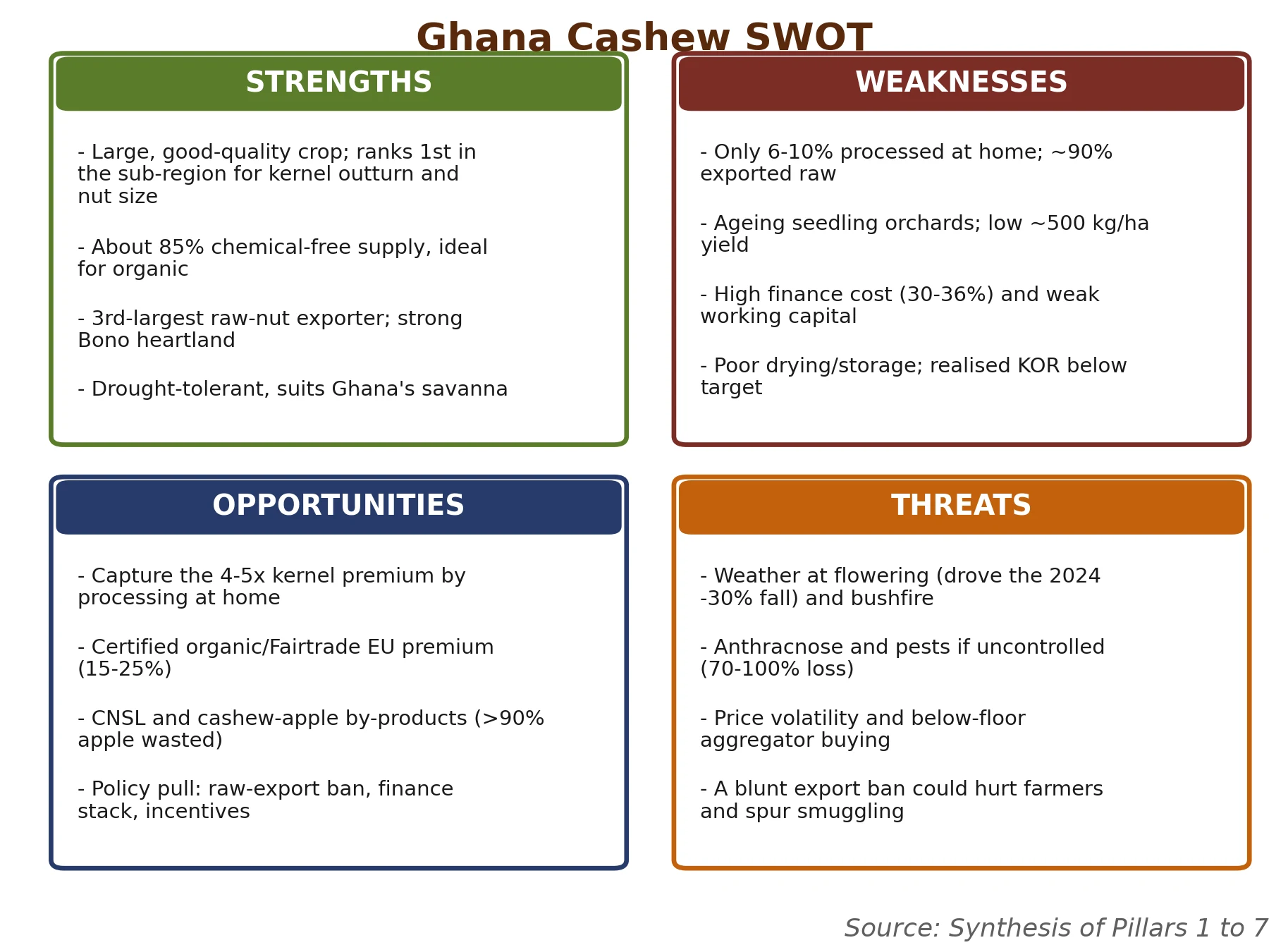
Diligence asks: does the venture's return depend on a policy not yet enacted; is it exposed to a blunt export ban that could cut farmer supply and spur smuggling; and does it capture the incentives (the guarantee and the tax holiday) that change the return on borrowed money. The thesis is that the direction toward value addition is set, so demand for processing capacity rises regardless of the exact instrument. Back well-designed processing with subsidy and finance support, and avoid models that rely on a ban rather than on competitiveness.
Assignment: give students the strategy toolkit in this pillar and one cashew venture, and ask for a go-or-no-go memo that runs a PESTLE and a five-forces scan, scores the venture against the checklist and the five mistakes, and states its conditions. Deliverable: a two-page strategic assessment. It teaches applied strategy and the discipline of testing judgement against evidence.
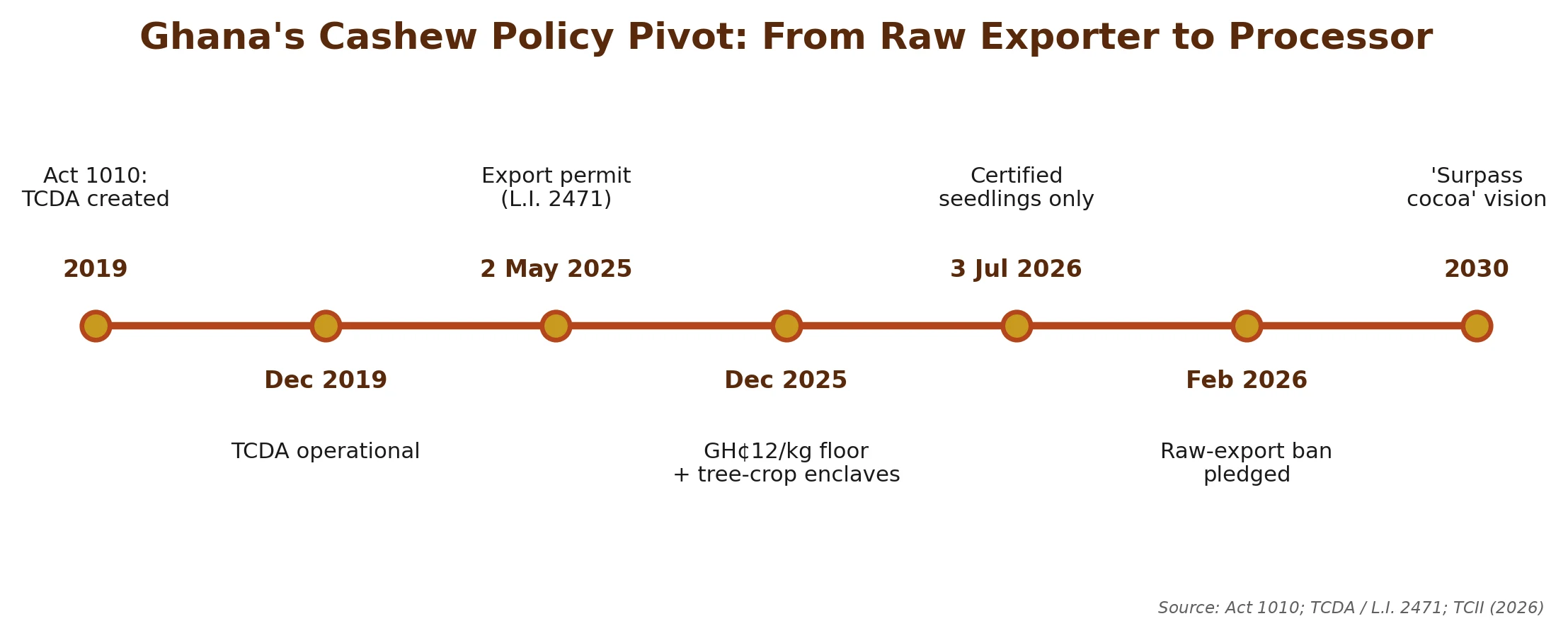
The lever is to sequence the pivot with carrots before sticks: a processor subsidy, guaranteed offtake and finance and energy fixes ahead of any export restriction. Measure success by the share of the crop processed at home moving toward the 50 to 60 percent target and by farmer incomes holding or rising. The failure to avoid is an abrupt raw-export ban without those supports, which the evidence links to farmer losses; Ghana's 2016 ban was dropped within the season after MPs argued it would hurt growers.
If you are thinking of entering, treat the policy change as a head start: the move to ban raw exports and process at home is creating demand for exactly the mid-chain skills you can offer. Position now, learning grading, aggregation, certification or apple and shell by-products, so you are ready as capacity is built. The trap is waiting for the rules to settle; by the time they do, the early positions will be taken.
First move: build the processing, aggregation or certification capacity the policy is pulling for now, while the incentives and finance are being rolled out and competition is thin. Secure your anchor and your incentive status (Free Zone, GIPA or 24-Hour Economy) early. The trap is betting the business on a hard export ban arriving on schedule; build a model that pays even under managed, partial reservation, because policy timing slips.
Diligence asks: does the venture's return depend on a policy not yet enacted; is it exposed to a blunt export ban that could cut farmer supply and spur smuggling; and does it capture the incentives (the guarantee and the tax holiday) that change the return on borrowed money. The thesis is that the direction toward value addition is set, so demand for processing capacity rises regardless of the exact instrument. Back well-designed processing with subsidy and finance support, and avoid models that rely on a ban rather than on competitiveness.
Assignment: give students the strategy toolkit in this pillar and one cashew venture, and ask for a go-or-no-go memo that runs a PESTLE and a five-forces scan, scores the venture against the checklist and the five mistakes, and states its conditions. Deliverable: a two-page strategic assessment. It teaches applied strategy and the discipline of testing judgement against evidence.
The lever is to sequence the pivot with carrots before sticks: a processor subsidy, guaranteed offtake and finance and energy fixes ahead of any export restriction. Measure success by the share of the crop processed at home moving toward the 50 to 60 percent target and by farmer incomes holding or rising. The failure to avoid is an abrupt raw-export ban without those supports, which the evidence links to farmer losses; Ghana's 2016 ban was dropped within the season after MPs argued it would hurt growers.