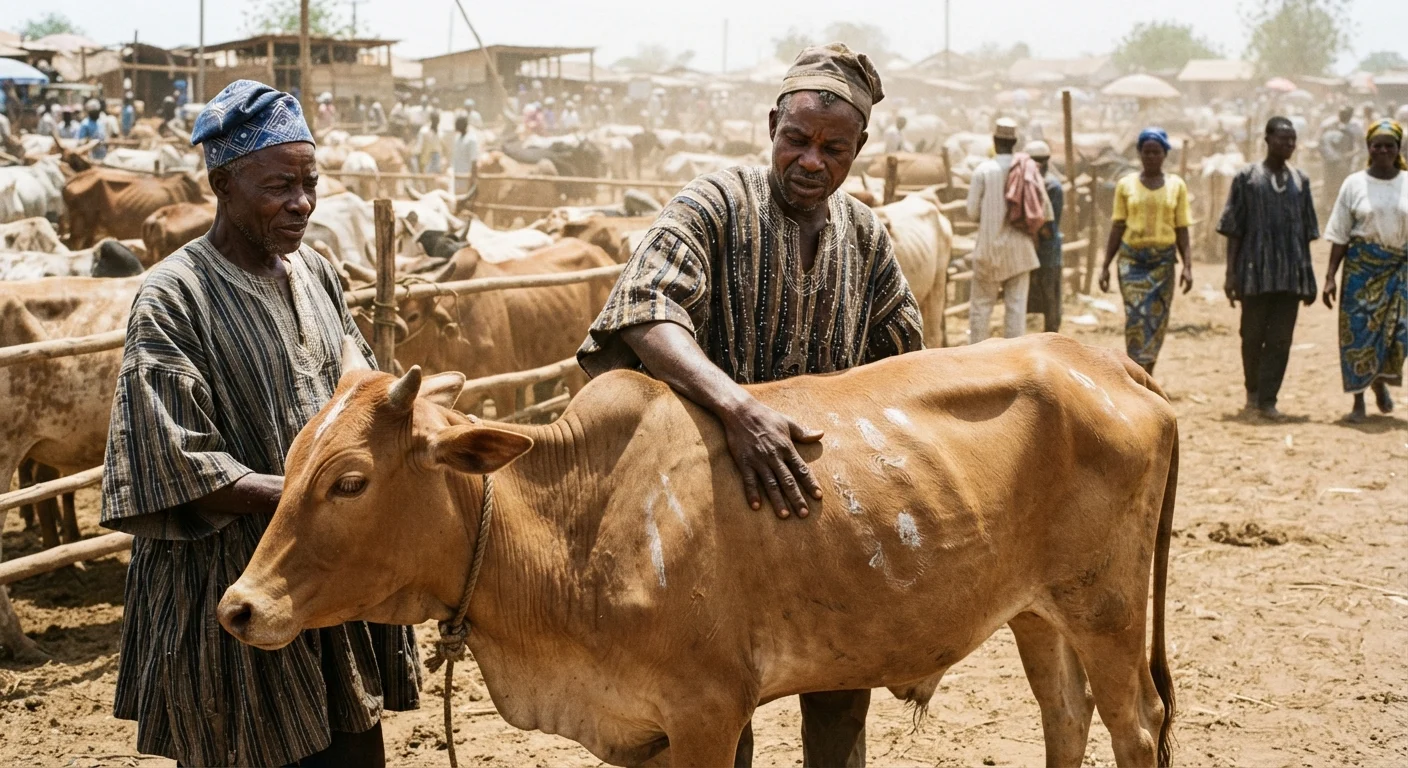
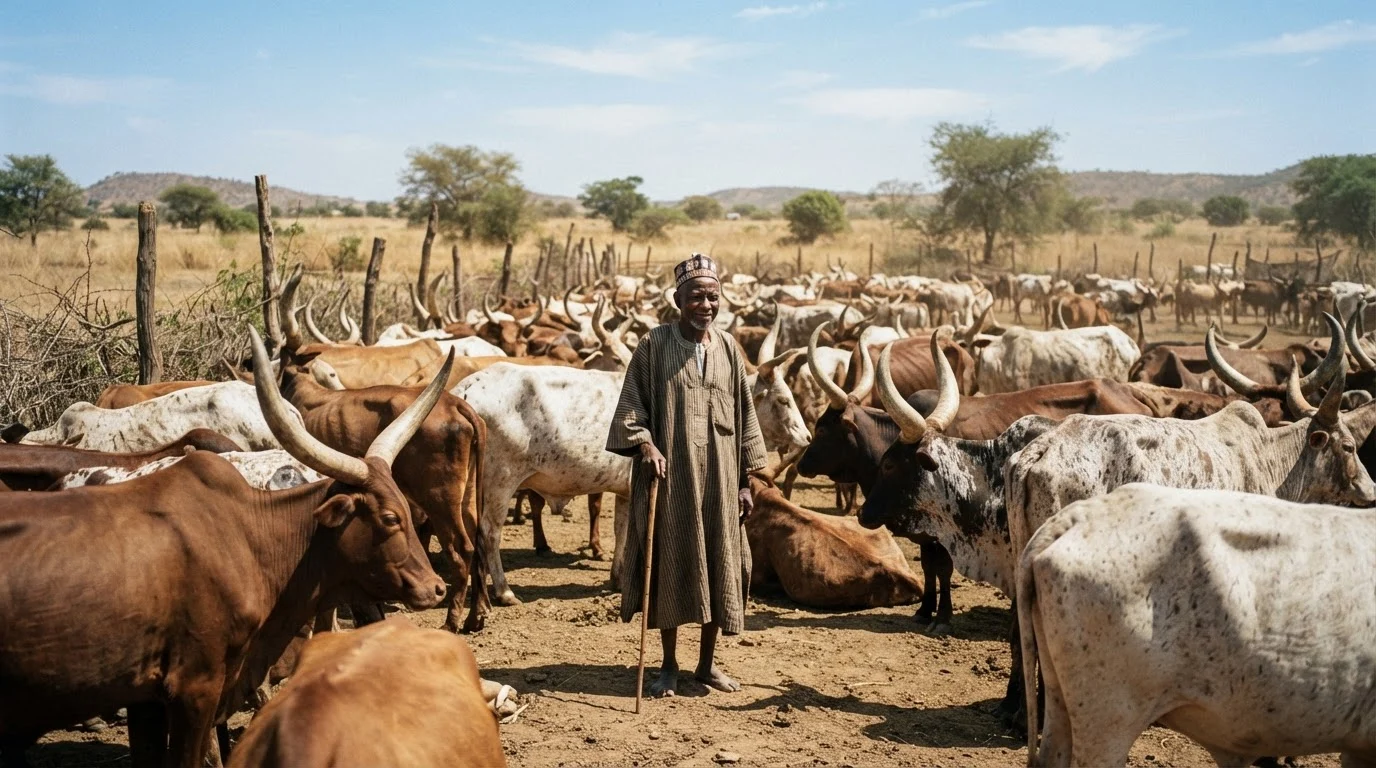
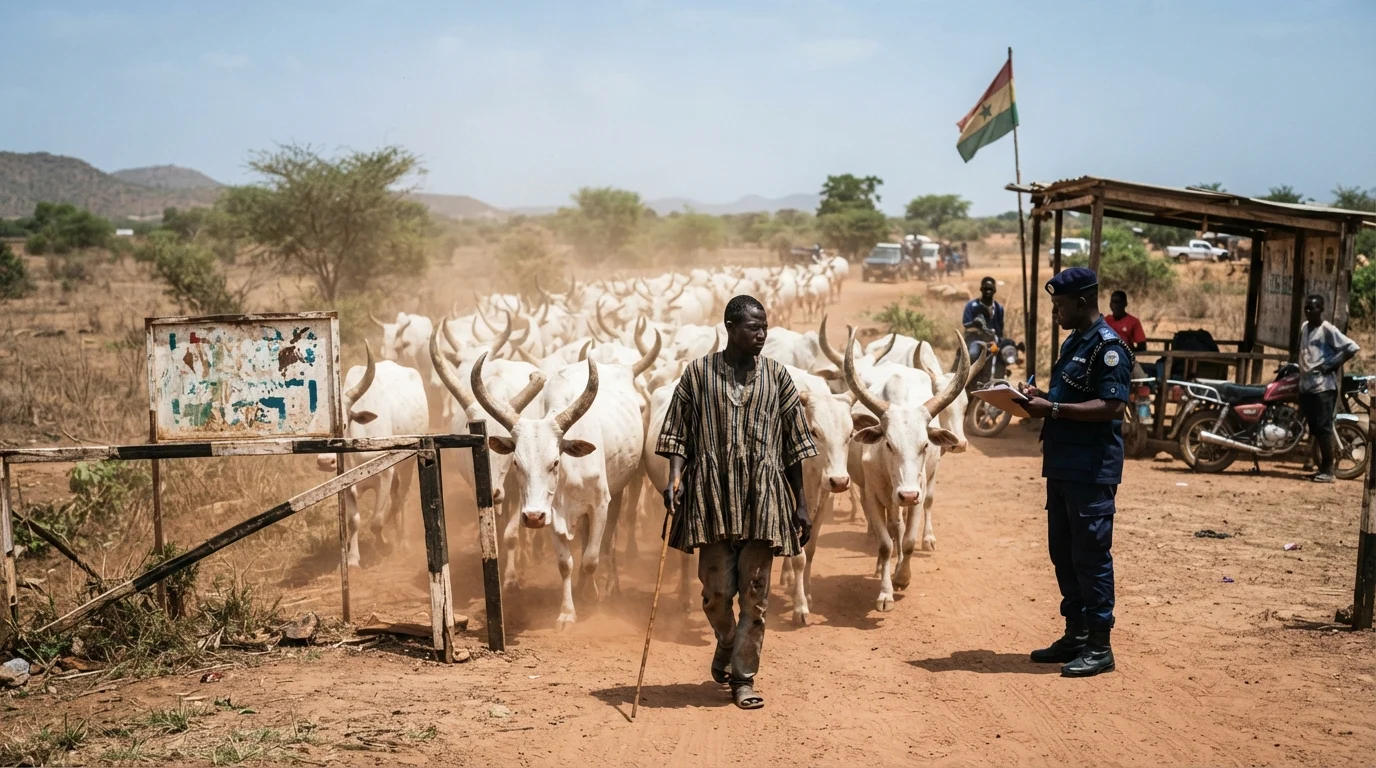
If you want into beef cattle with limited capital, do not start by buying a herd, that is the most expensive, slowest thing you can do. Start with a service around the animal: learn to finish a handful of bought animals well, or to assess and source stock of known origin and health for others. The most useful thing to understand is offtake: why owners hold rather than sell, and what it would take to change that. Learn the breeds by their disease tolerance rather than their size, because in much of Ghana the fly decides which animal lives.
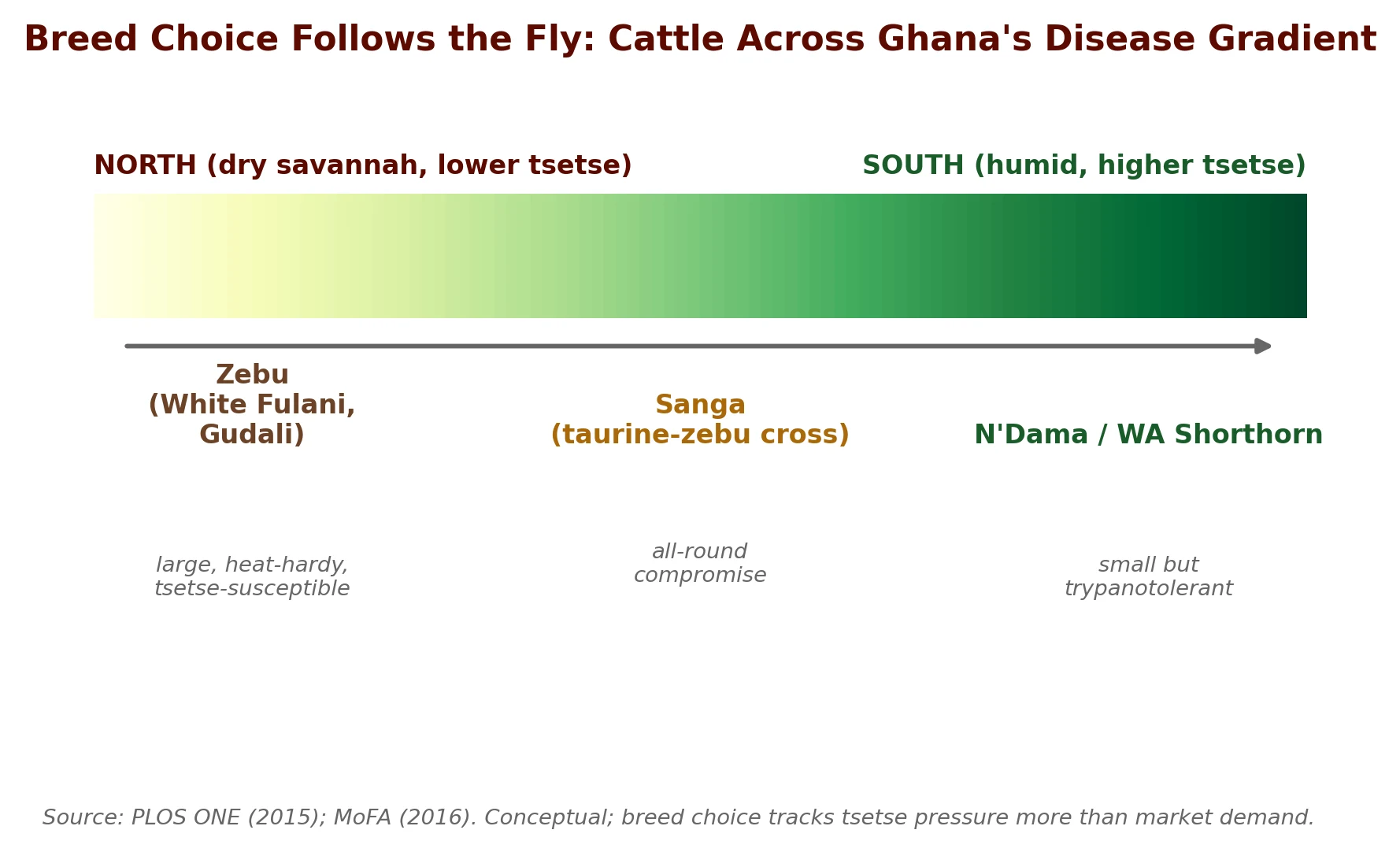
First move: do not plan a business that buys ready-finished cattle, because they barely exist. Plan to create the finished animal, buy lean northern stock and add weight in a defined window, or to supply improved trypanotolerant stock the market cannot get. Match every animal to the tsetse risk on your site before you buy on size. The trap that catches newcomers is paying zebu money for a big animal that then dies of a disease a local breed would have shrugged off. Keep records of where each animal came from; it protects you legally and is the seed of a traceable-sourcing business.
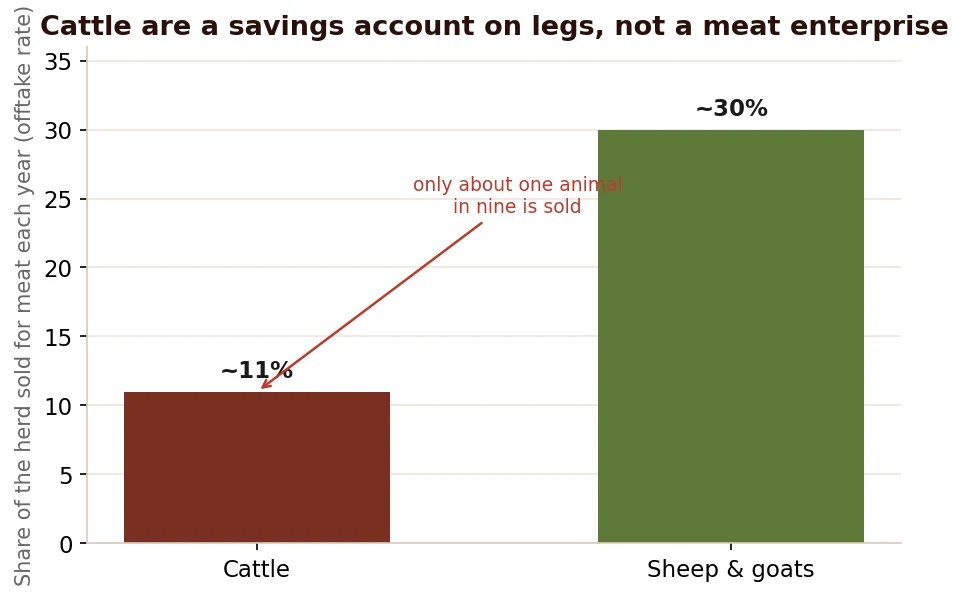
Diligence asks a single question first: where do the finished animals come from. A beef venture that assumes it can buy market-ready cattle on the open market has misread the sector, because offtake is low, assumed at about 11 percent, and the store-of-wealth culture starves the market of finished stock. The thesis worth backing is one that makes its own supply, a finishing or integrated operation, or one that supplies improved stock into the breeding gap. Underwrite the disease exposure of the chosen breed and site before the herd size, and treat any plan that ignores tsetse as unpriced risk.
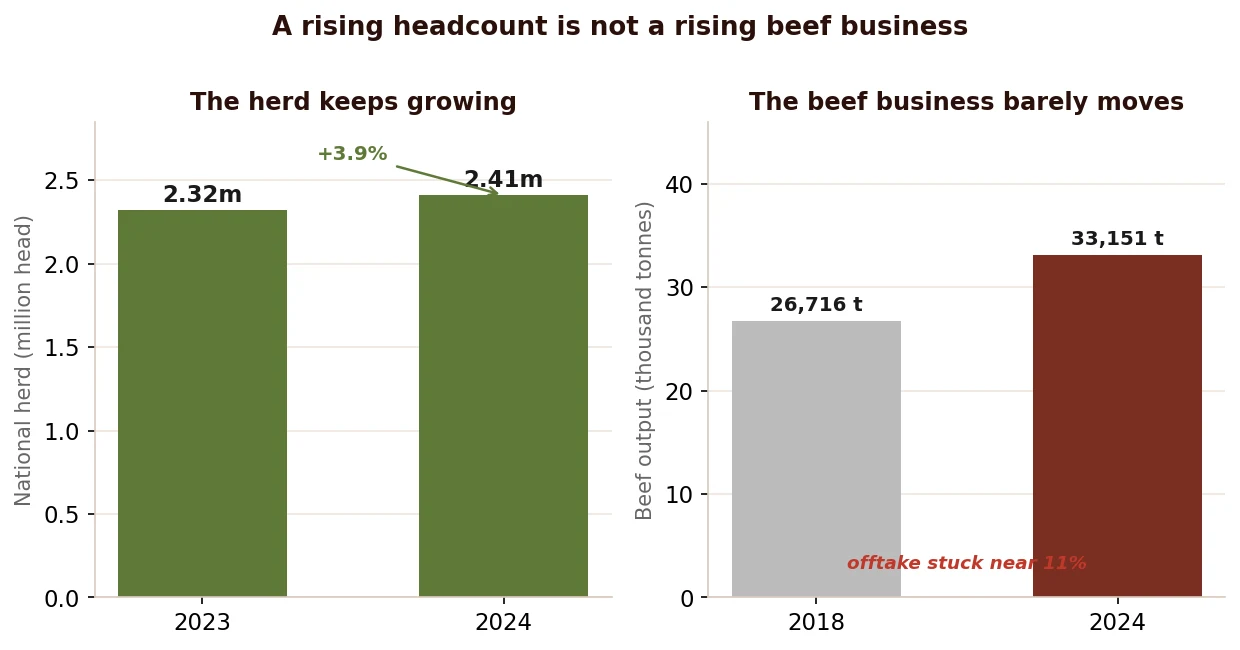
The lever is improved-stock supply and a reason to sell. Every trypanotolerant animal that is also faster-growing raises the payoff to finishing and selling rather than holding. Rebuild breeding capacity, public or private, around the local trypanotolerant breeds rather than importing susceptible exotics, and measure success as the share of the herd that is finished and sold. The failure to avoid is chasing a bigger herd while offtake stays flat, which grows the savings account without growing the beef.
If you want into beef cattle with limited capital, do not start by buying a herd, that is the most expensive, slowest thing you can do. Start with a service around the animal: learn to finish a handful of bought animals well, or to assess and source stock of known origin and health for others. The most useful thing to understand is offtake: why owners hold rather than sell, and what it would take to change that. Learn the breeds by their disease tolerance rather than their size, because in much of Ghana the fly decides which animal lives.
First move: do not plan a business that buys ready-finished cattle, because they barely exist. Plan to create the finished animal, buy lean northern stock and add weight in a defined window, or to supply improved trypanotolerant stock the market cannot get. Match every animal to the tsetse risk on your site before you buy on size. The trap that catches newcomers is paying zebu money for a big animal that then dies of a disease a local breed would have shrugged off. Keep records of where each animal came from; it protects you legally and is the seed of a traceable-sourcing business.
Diligence asks a single question first: where do the finished animals come from. A beef venture that assumes it can buy market-ready cattle on the open market has misread the sector, because offtake is low, assumed at about 11 percent, and the store-of-wealth culture starves the market of finished stock. The thesis worth backing is one that makes its own supply, a finishing or integrated operation, or one that supplies improved stock into the breeding gap. Underwrite the disease exposure of the chosen breed and site before the herd size, and treat any plan that ignores tsetse as unpriced risk.
The lever is improved-stock supply and a reason to sell. Every trypanotolerant animal that is also faster-growing raises the payoff to finishing and selling rather than holding. Rebuild breeding capacity, public or private, around the local trypanotolerant breeds rather than importing susceptible exotics, and measure success as the share of the herd that is finished and sold. The failure to avoid is chasing a bigger herd while offtake stays flat, which grows the savings account without growing the beef.