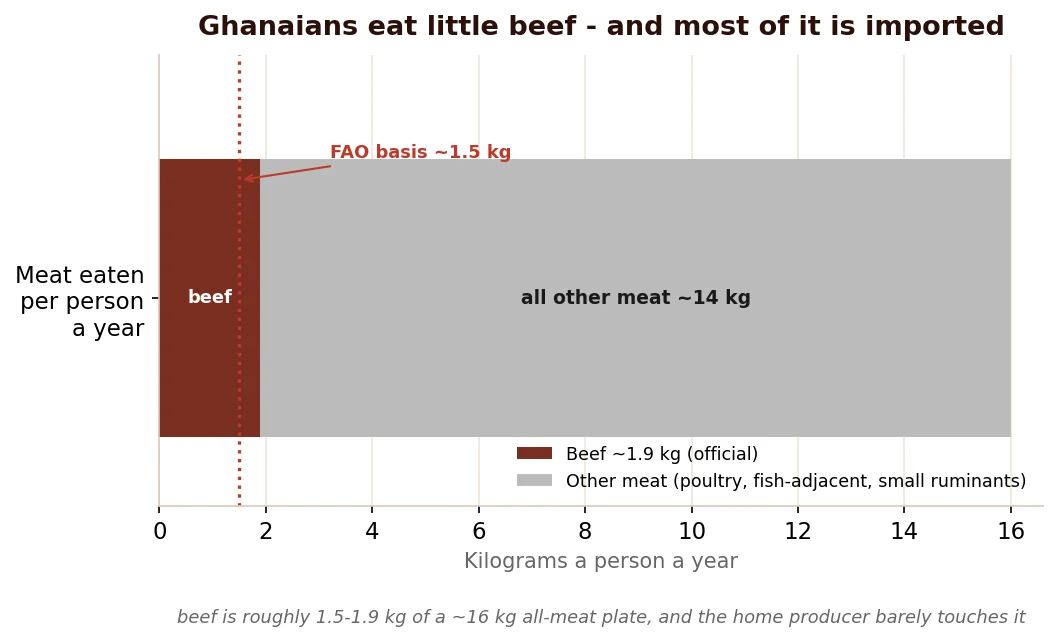
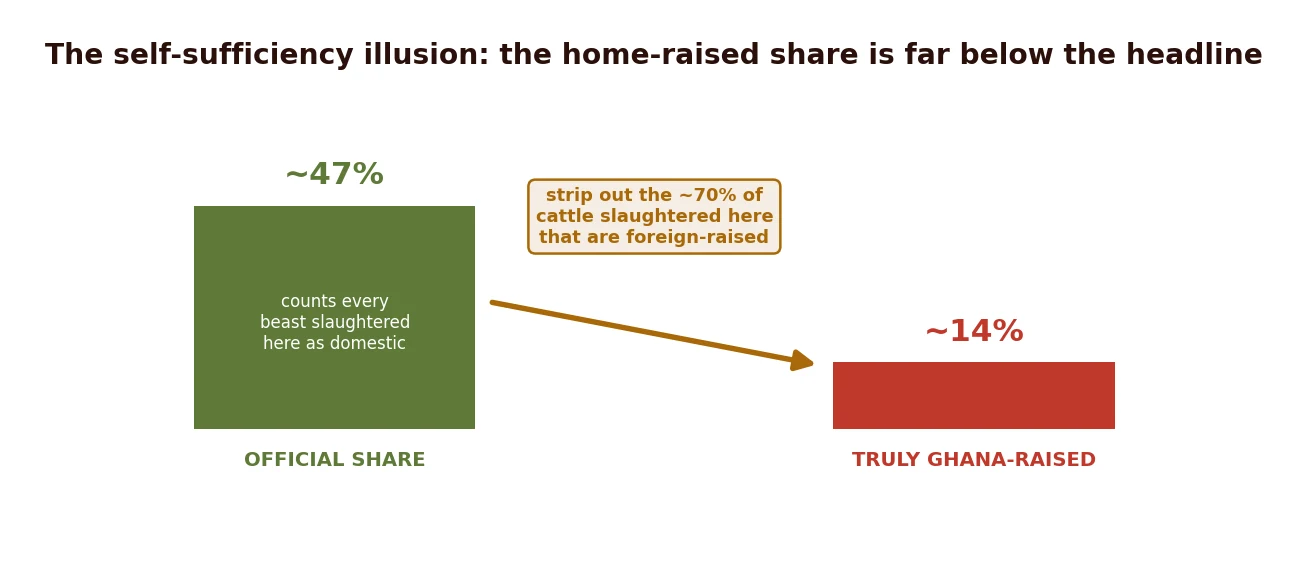
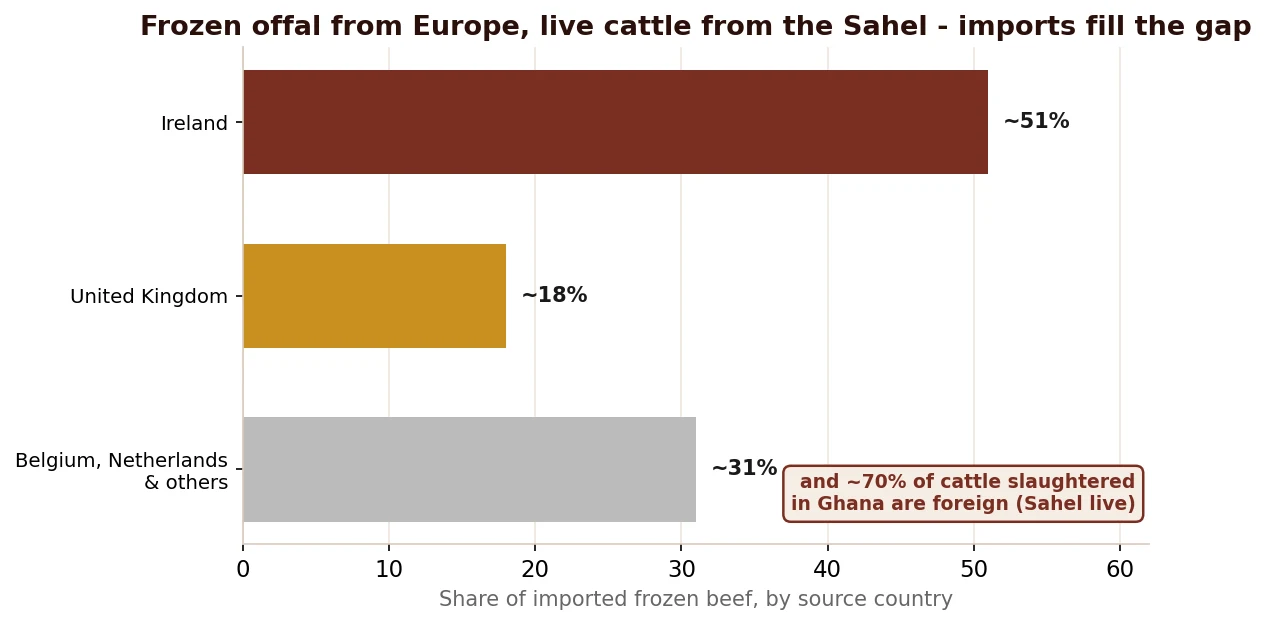
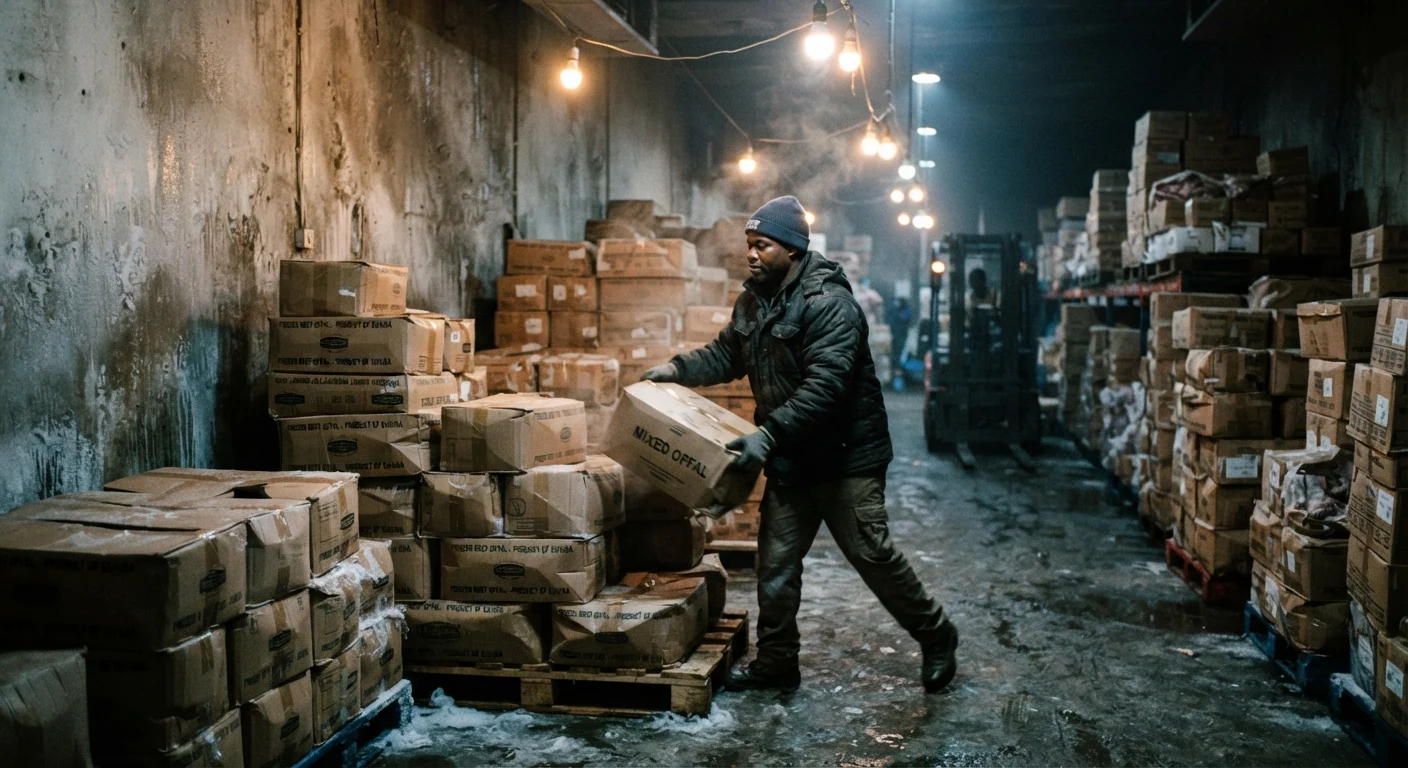
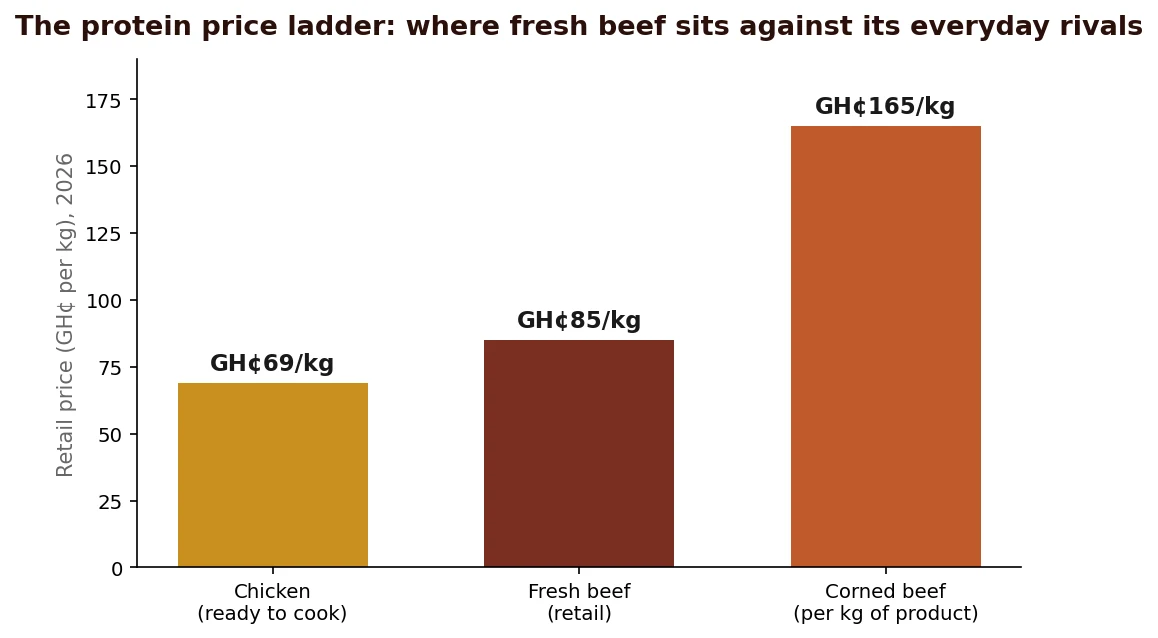
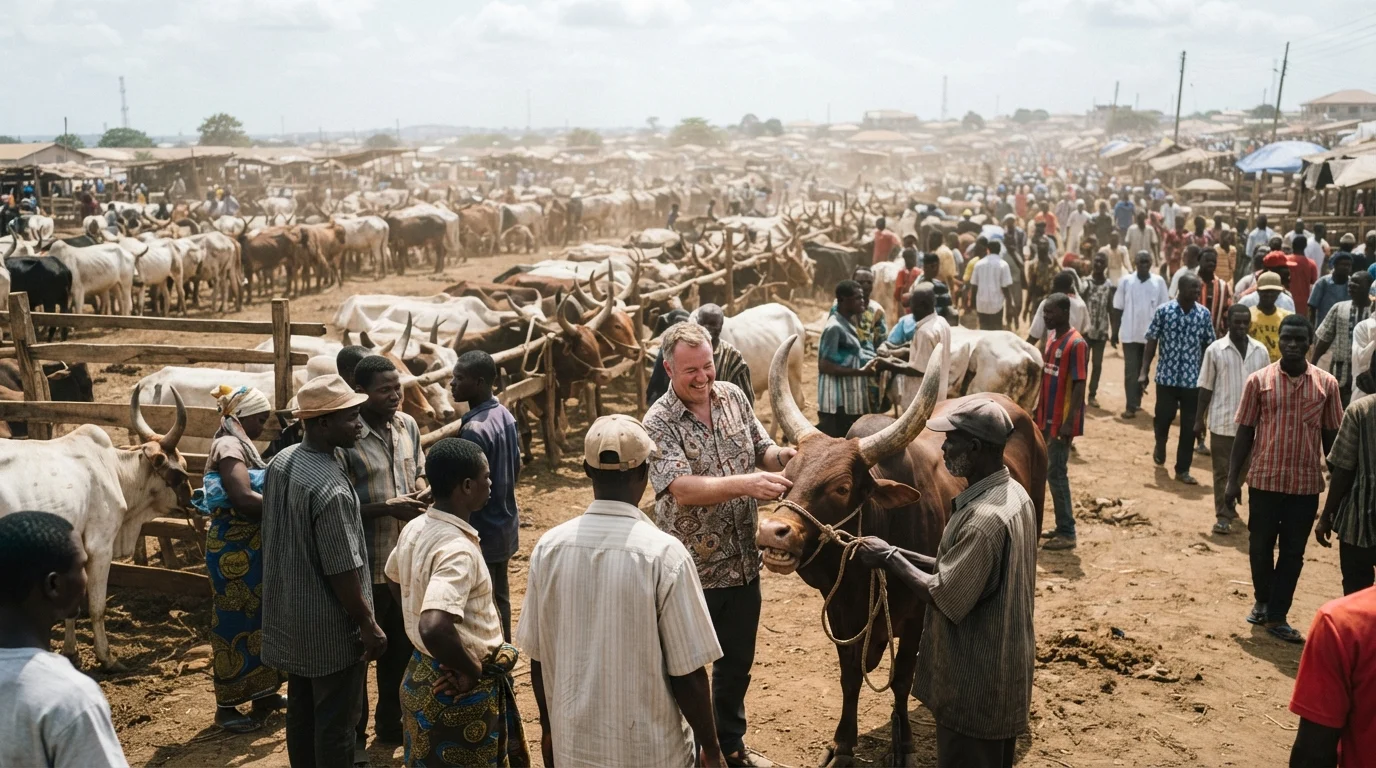
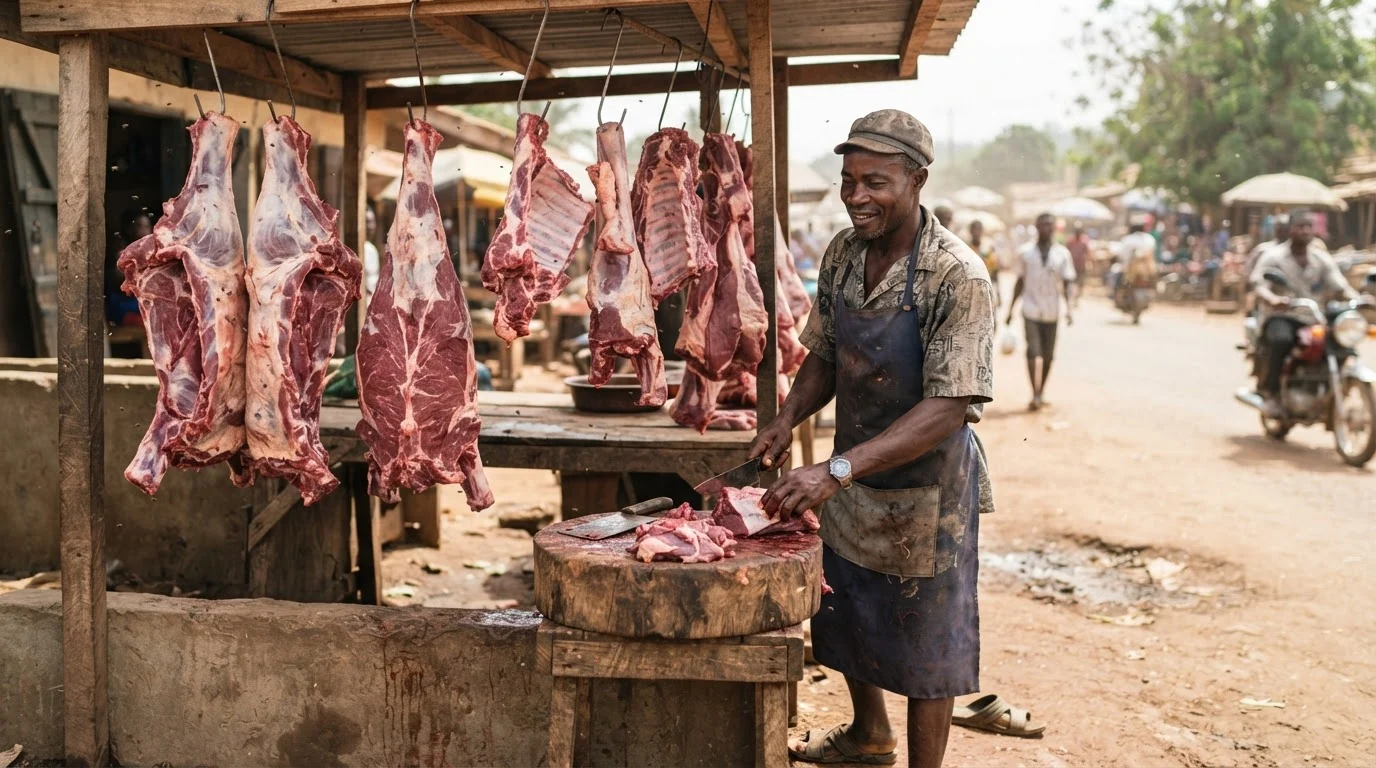
Learn to read the market as separate lanes. The headline that Ghana was about half self-sufficient in beef in 2018 is misleading, because the balance leaves out live cattle imported for slaughter, so the real home-raised share is smaller. Understand why beef is a small plate, about 1.9 kilograms a head, and why it loses on everyday price to chicken and to frozen offal. The most useful thing to grasp is where the import is weak: fresh, festive and premium beef, the lanes a freezer of European offal can never enter.
First move: do not plan to out-price the frozen offal or the chicken, because you will lose. Plan for the lanes imports cannot hold, same-day fresh beef, the festive whole animal, and branded traceable meat for hotels, supermarkets and better households. Time finishing to reach weight just before Eid and Christmas, when demand spikes and buyers want a live, fresh, local beast. The trap to avoid is building on a weak cedi; when the cedi firms, as in 2026, cheap imports return and a price-based business collapses, so anchor on freshness and provenance instead.
Diligence starts by discounting the self-sufficiency headline: the home-raised share of beef is smaller than 47 percent, which makes the import-substitution runway longer, but also means the venture is competing against cheap frozen imports and informal Sahel cattle. Back businesses positioned in the premium and festive lanes with a real cold chain. Underwrite the exchange-rate exposure explicitly, and treat any plan whose margin depends on imports staying expensive as unpriced risk. The defensible thesis sells freshness, provenance and festive timing, which no import can copy.
The lever is the cold chain and honest market information. A chilled abattoir, cold transport and a cold cabinet at retail let fresh local beef beat frozen offal on its one real advantage, and a text-message price service (Pillar 8) lets producers see the festive spike coming. Measure success as the share of the fresh, festive and premium lanes that domestic animals hold, rather than as headline self-sufficiency, which leaves out imported live cattle. The failure to avoid is subsidising more headcount while the import keeps the premium plate, which grows the herd without growing the home producer's market.
Learn to read the market as separate lanes. The headline that Ghana was about half self-sufficient in beef in 2018 is misleading, because the balance leaves out live cattle imported for slaughter, so the real home-raised share is smaller. Understand why beef is a small plate, about 1.9 kilograms a head, and why it loses on everyday price to chicken and to frozen offal. The most useful thing to grasp is where the import is weak: fresh, festive and premium beef, the lanes a freezer of European offal can never enter.
First move: do not plan to out-price the frozen offal or the chicken, because you will lose. Plan for the lanes imports cannot hold, same-day fresh beef, the festive whole animal, and branded traceable meat for hotels, supermarkets and better households. Time finishing to reach weight just before Eid and Christmas, when demand spikes and buyers want a live, fresh, local beast. The trap to avoid is building on a weak cedi; when the cedi firms, as in 2026, cheap imports return and a price-based business collapses, so anchor on freshness and provenance instead.
Diligence starts by discounting the self-sufficiency headline: the home-raised share of beef is smaller than 47 percent, which makes the import-substitution runway longer, but also means the venture is competing against cheap frozen imports and informal Sahel cattle. Back businesses positioned in the premium and festive lanes with a real cold chain. Underwrite the exchange-rate exposure explicitly, and treat any plan whose margin depends on imports staying expensive as unpriced risk. The defensible thesis sells freshness, provenance and festive timing, which no import can copy.
The lever is the cold chain and honest market information. A chilled abattoir, cold transport and a cold cabinet at retail let fresh local beef beat frozen offal on its one real advantage, and a text-message price service (Pillar 8) lets producers see the festive spike coming. Measure success as the share of the fresh, festive and premium lanes that domestic animals hold, rather than as headline self-sufficiency, which leaves out imported live cattle. The failure to avoid is subsidising more headcount while the import keeps the premium plate, which grows the herd without growing the home producer's market.