Ghana Agribusiness PlaybookBeef Cattle
From northern kraal to southern butcher: the chain that moves animals, not meat
Beef Cattle · Pillar 06

The Value Chain

The chain runs the wrong way. Ghana moves live animals rather than meat, so weight is lost on the road and the margin is captured in the south.
The Value Chain · Pillar 06

This pillar ties the whole sector together, which is why it is the longest. Ghana's beef problem is a problem of geography. Ghana rears cattle in the north, then moves the live animal, not the meat, hundreds of kilometres south to be slaughtered and sold. Weight is lost on that road, animals die on it, and the margin is captured at the far end by dealers and butchers, while the farmer who raised the animal sees little of it.

Most of the animals slaughtered are not Ghanaian at all; they walked in from the Sahel. Value leaks out of this chain in four directions at once: north to the Sahel that sells Ghana its live cattle, out to the importers who land cheap frozen offal, down to the southern dealers and butchers who out-earn the producer, and into the hide eaten as wele instead of tanned into leather. Read the pillar as a map of where the money goes, and so of where the openings are.

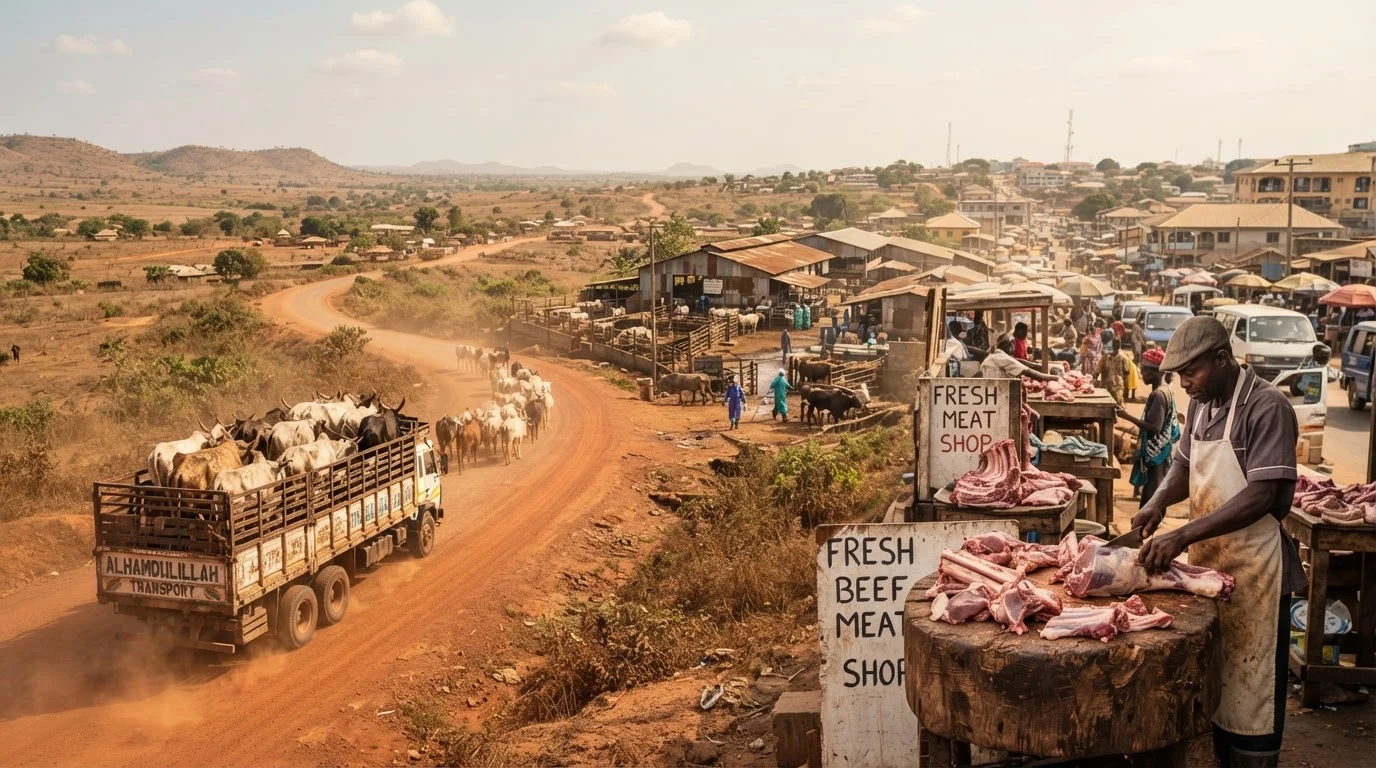
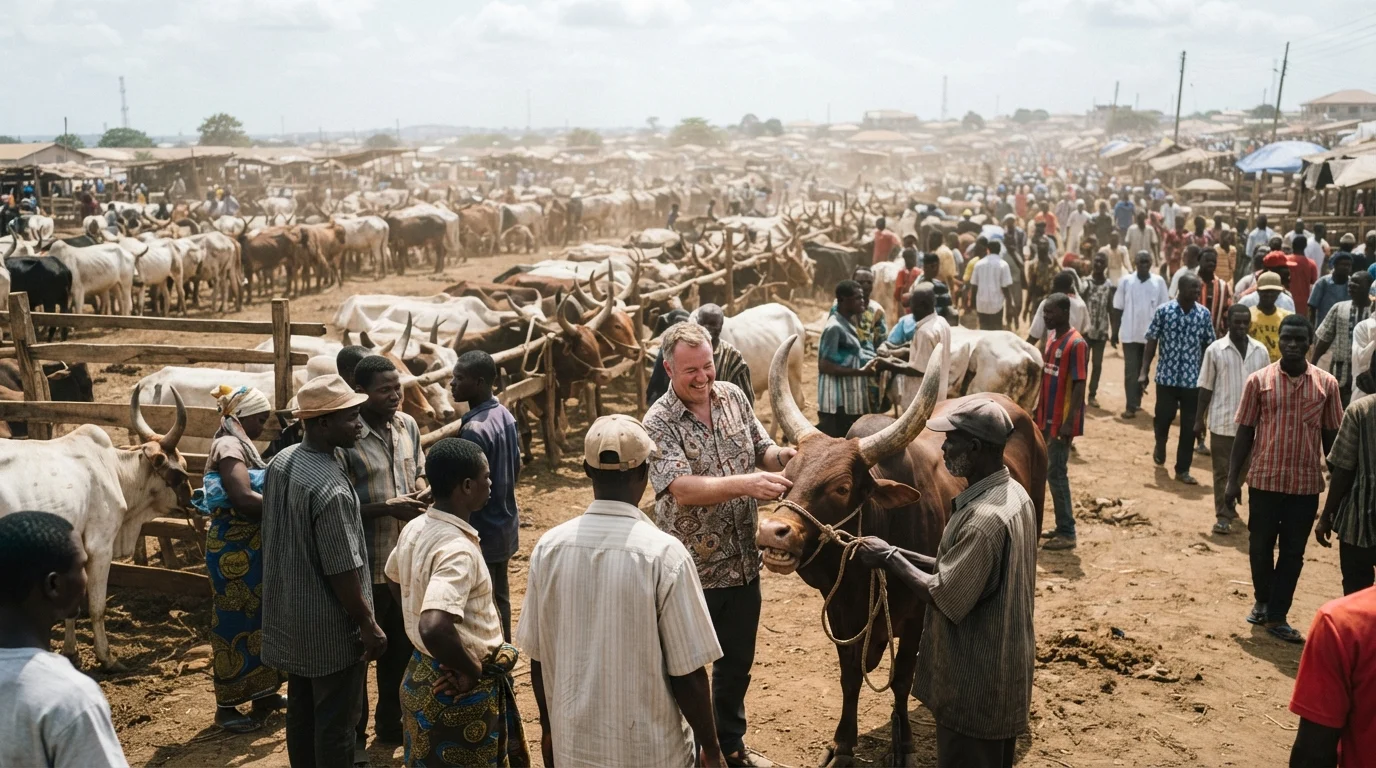
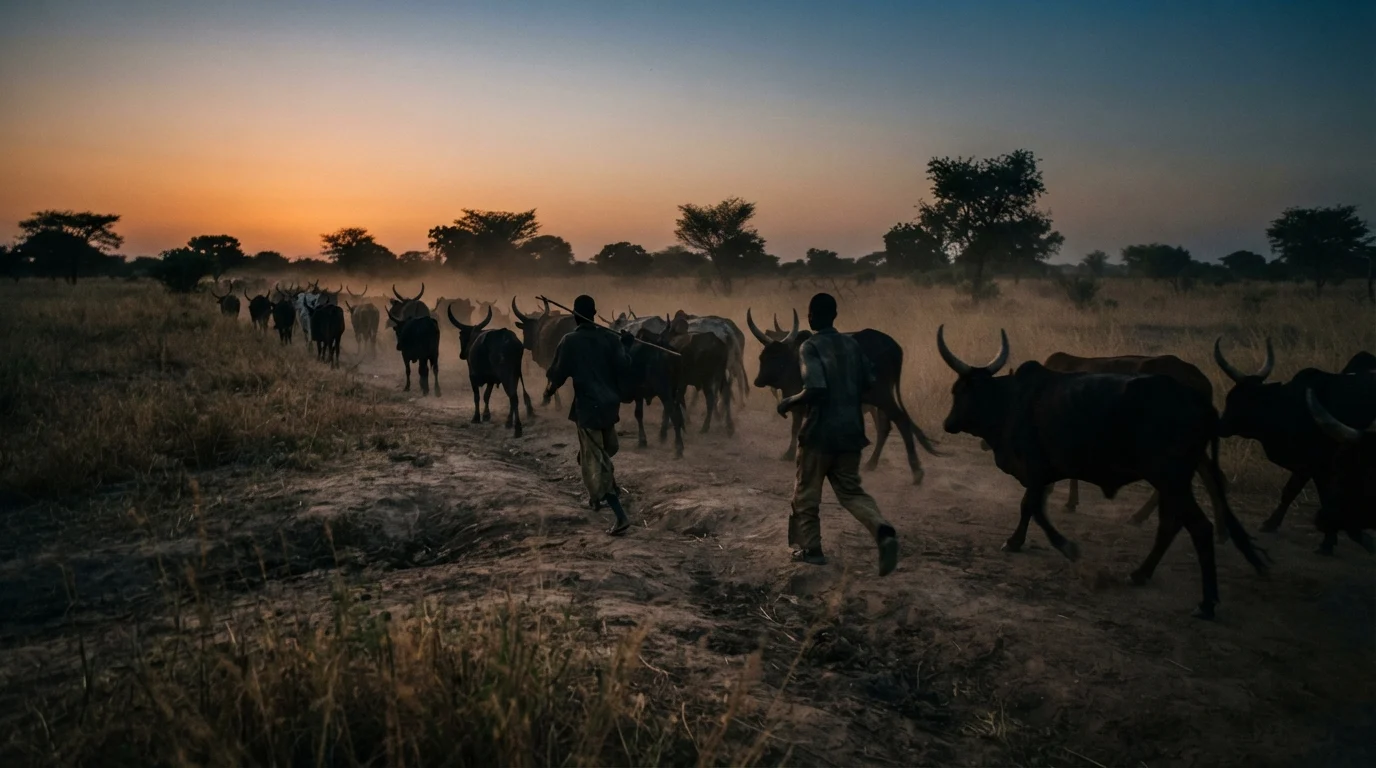
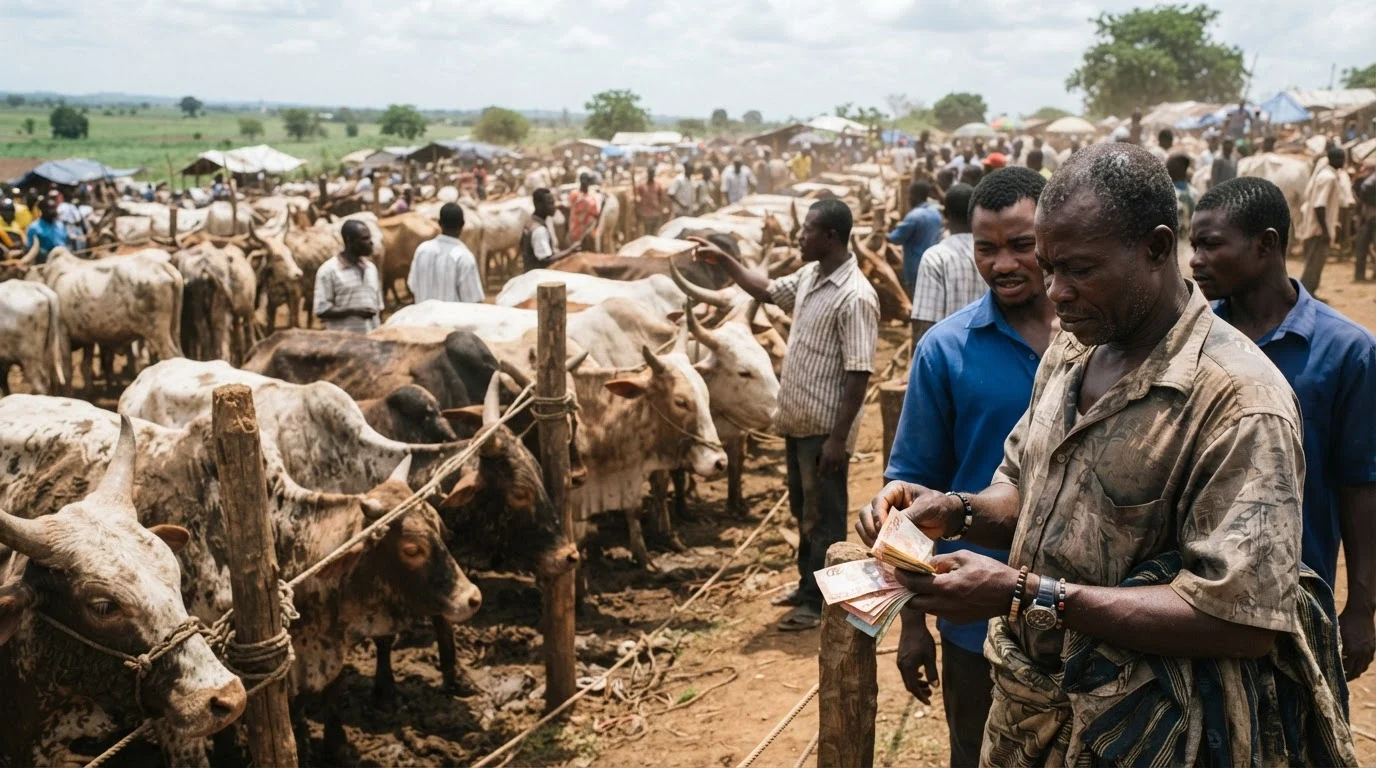
A northern Ghanaian cattle market where the live animal is bought cheap before its long journey south
The chain runs the wrong way
North to south: Ghana moves the live animal, not the meat, and the margin is captured at the far end.
~70%
of the cattle slaughtered in Ghana are foreign, walked in from the Sahel
528 km
the haul south, about 18 hours, with about 15 percent dying on the way
US$718/t
what raw hide fetches, because Ghana has no modern tannery

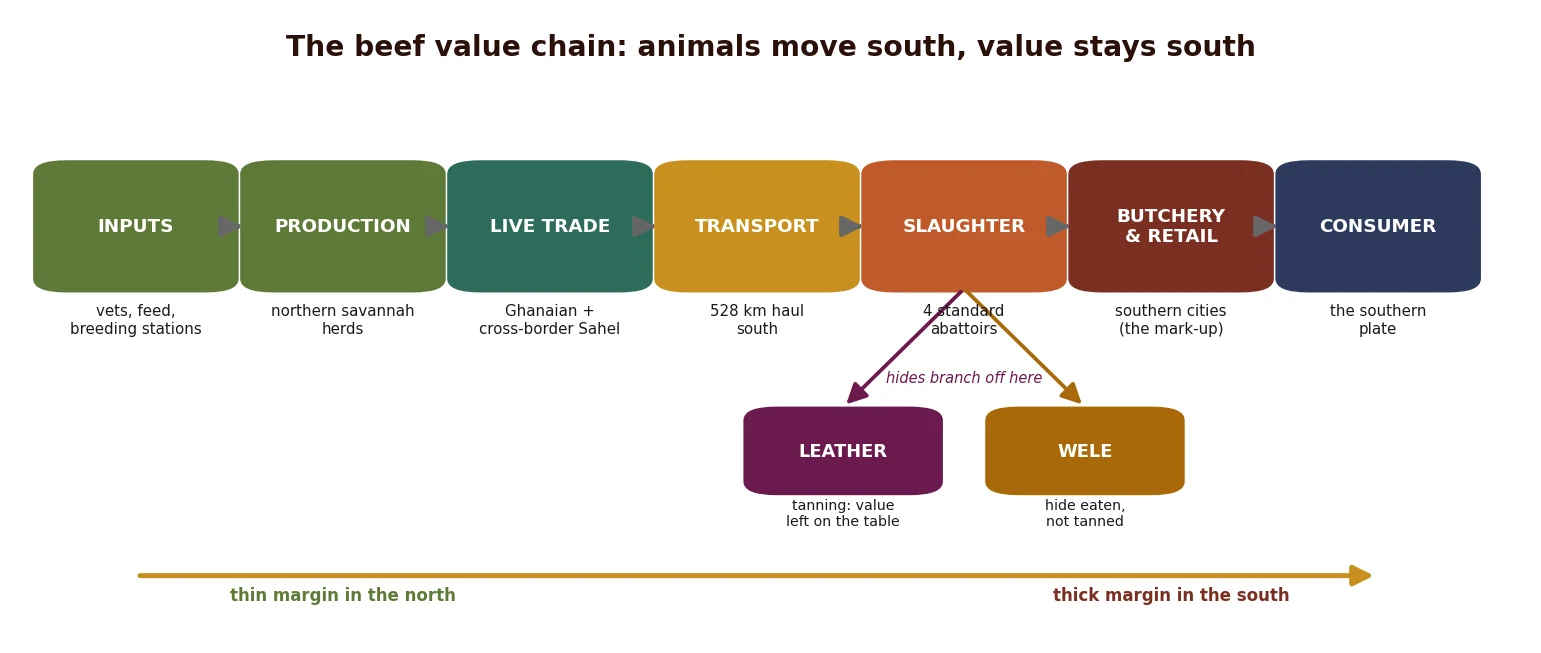
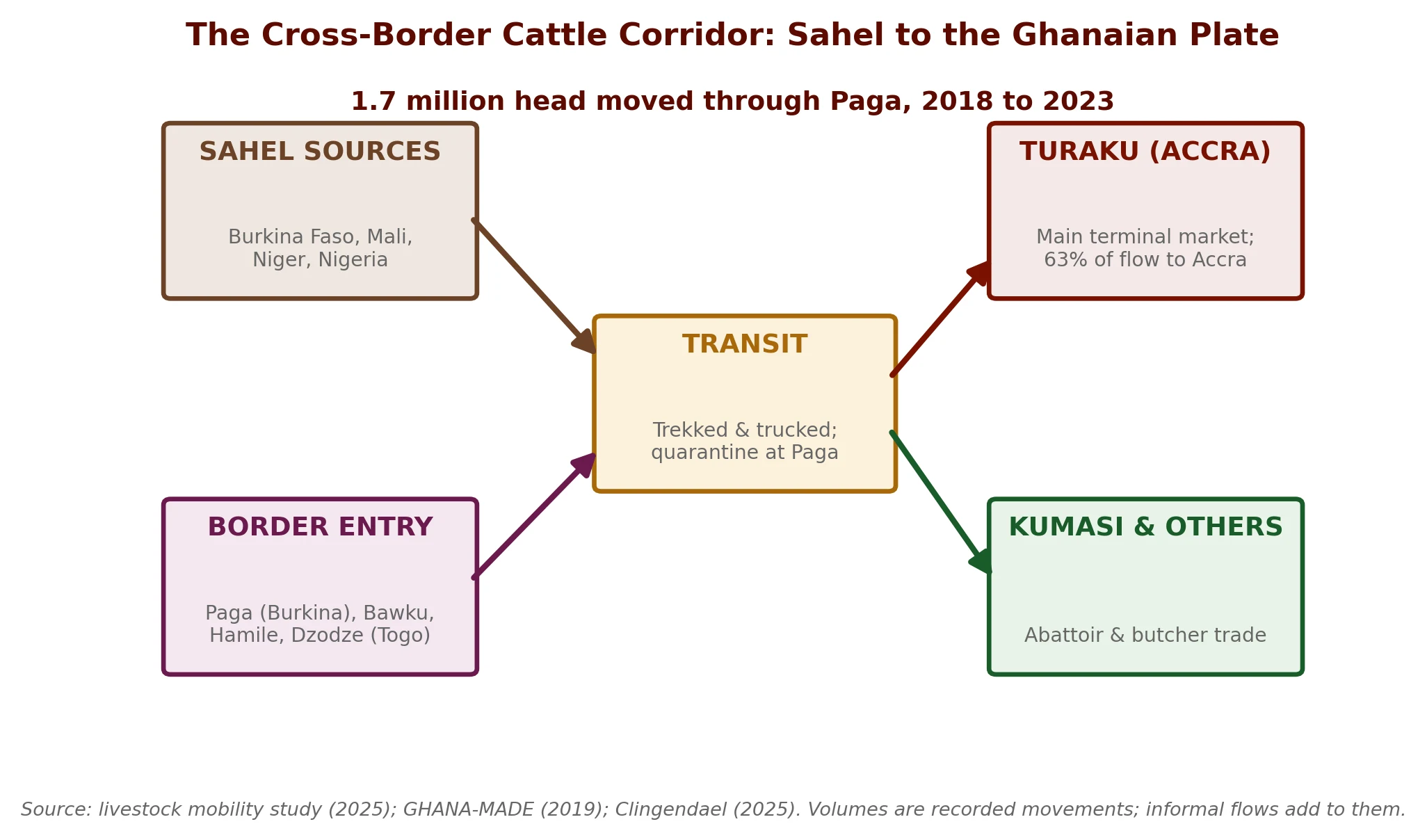
🐄 The whole chain in one view: animals go south, value stays south

The beef value chain from the northern herd to the southern plate, with the hide and offal by-product branches at slaughter
Figure 16 The beef value chain, north to south, with its two by-product branches
What this shows

Animals move south while the margin is captured in the south, and the hide branches off at slaughter into leather value left untapped or into wele, so the north exports a cheap live animal and the south sells the meat, the mark-up and the by-products.

Lay the chain out link by link and the shape of the problem is immediate. It runs: inputs (vets, feed, the underperforming breeding stations) into production in the northern savannah, into a live-animal trade that is fed both by Ghanaian herds and by cross-border sourcing from the Sahel, into a long southbound transport haul, into slaughter at one of only a handful of abattoirs, and finally into butchery and retail in the southern cities where the beef is eaten.

Two by-product chains branch off at slaughter: the hide, which can go to leather or be eaten as wele, and the offal, which competes with cheap imported offal. The one fact that reshapes everything is that market power sits with southern wholesalers and retailers, because the north ships live animals rather than meat, so the value is added and captured in the south (MADE Northern Ghana, 2014). The north exports a live animal worth a few thousand cedis; the south sells the meat, the mark-up and the by-products.

The master table below reads the same chain a second way, as a business. For each link it names who actually operates it, the price or margin that moves through it, where the value leaks or the link breaks, and the opening that sits inside that break. It is the analytical spine of this pillar; every section that follows expands one of its rows.

Table 8: The beef value chain read as a business: who earns, where it breaks, and the opening in each break
Chain linkWho operates itMargin or price signalWhere it breaksThe opening
Inputs and breedingVets, 7 state breeding stations, feed and drug dealersMedicine is about 40 percent of a fattener's cost (Roelen, 2017)No feed supplement on 95 percent of farms; breeding stations underperformImproved stock and animal-health services (Pillars 1, 3)
Production, the herdSmallholders, Fulbe herders, a few fattenersOfftake only about 11 percent; carcass about 125 kgStore-of-wealth holding, weak profit motiveFinishing and feedlots that turn the herd into meat (Pillar 5)
Cross-border sourcingSahel exporters, Burkinabe and Ghanaian dealersIntermediaries resell GH¢7,000 to 10,000 a headAbout 70 percent of slaughter is foreign; launderingVerified, traceable aggregation on the corridor
Domestic tradeSmall and large traders, market committeesBought GH¢3,000 to 5,000 north, sold GH¢6,400 to 17,000 southMarket power sits in the southNorthern aggregation and price transparency
TransportTruck and tricycle ownersLevies to five bodies; permits GH¢10 to 30 a head528 km haul, about 15 percent die, most vehicles unfitMove chilled meat, not live animals
SlaughterFour standard abattoirs, informal slabsDressing near half; hide and offal recoverableOnly four abattoirs; local meat sold uncooledModern slaughter and cold chain in the north
Butchery and retailButchers (a hereditary trade), cold-store retailersButcher nets GH¢2,000 to 5,000 a head; retail about GH¢85/kgImports own the modern cold-chain shelfBranded, clean, traceable local beef
By-product: hidesArtisanal tanners; wele processorsRaw hide exports about US$718 a tonneNo modern tannery; most hide eaten as weleHide recovery and a first modern tannery

Sources: MADE Northern Ghana (2014); Roelen (2017); Oppong-Apane (2016); Mogre et al. (2024); Courtright and de Bruijne (Clingendael, 2025); Appiah-Brempong et al. (2020).

WHAT THIS MEANS. Read the table top to bottom and the sector's whole problem is one sentence: Ghana adds almost no value in the north, where it has the animal, and captures almost all the value in the south, where it has the buyer. Every row breaks at the point where meat, cold chain, tanning or traceability should sit and does not. That is not a list of problems, it is a list of businesses nobody is running. The rest of this pillar is those businesses.

🐄 The actors and who holds the power: a stakeholder map

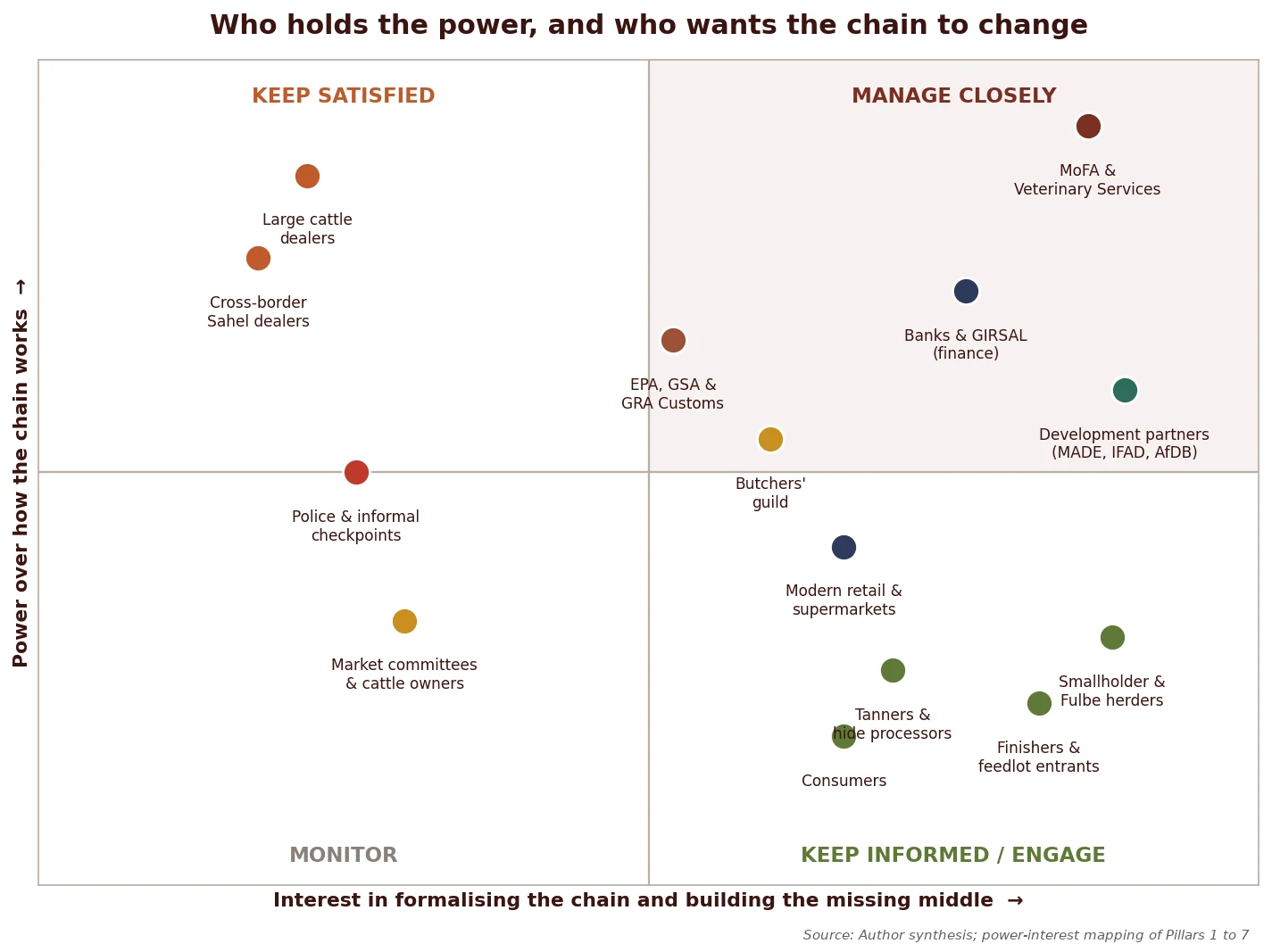
A value chain is also a map of actors and power, and once the chain is laid out that way its central tension is stark. The actors with the most power over how the chain works, the large dealers and the cross-border trade, are the ones who profit from it running exactly as it does now.

The actors who most want it formalised, the herders, the finishers, the tanners and the consumers, hold the least power to change it. That mismatch, power sitting with the beneficiaries of the status quo and interest sitting with the powerless, is why reform of this chain cannot bubble up from the bottom. It has to be led from the top-right of the grid below, by the few actors who are both powerful and want change.

The stakeholder power-interest map of the Ghanaian beef chain, plotting each actor's power against its interest in change
Figure 17 The stakeholder power-interest map: who holds power over the chain, and who wants it to change
What this shows

The power in this chain sits with the actors who profit from it running as it does, the large dealers and the cross-border trade, while those who most want it formalised, the herders, finishers, tanners and consumers, hold the least power. Change therefore has to be led by the high-power, high-interest actors in the top right: the ministry, the banks and the development partners.

Table 9: The stakeholder power-interest map read as a business: who holds power, who wants change, and the entry implication
ActorRole in the chainPowerInterest in changeWhat it means for an entrant
MoFA and Veterinary ServicesRegulator, policy and animal-health certificationHighHighThe lead partner for permits, disease control and any traceability scheme; align early (Ministry of Food and Agriculture, 2024).
Large Ghanaian cattle dealersMove and resell 30 to 60 head a lorryHighLowCapture GH¢4,000 to 12,000 a head and profit from the informal chain, so they resist formalisation (Clingendael, 2025).
Cross-border Sahel dealers and Burkinabe or Togolese intermediariesSource and land most slaughter cattleHighLowSupply about 70 percent of slaughter and prefer opacity; an entrant must source around them or formalise them (MADE, 2014; Rich & Wane, 2021).
Smallholder and Fulbe herders and producersRear and hold the herdLowHighThe supply base, and they want a fairer share; the natural out-grower partners for a finisher (MADE, 2014).
Finishers and feedlot entrantsTurn the store-of-wealth animal into meatLowHighThe entrant's own class; still few and small, so first movers face little competition (MADE, 2014).
Butchers' guild, a hereditary tradeSlaughter, cut and retailMediumLowControl the slab and the last mark-up; a gatekeeper to work with or around on hygiene and grading (MADE, 2014).
Modern retail and supermarketsSell graded, chilled, branded meatMediumHighWant the reliable graded supply they now import; the natural first buyer for branded local beef (MADE, 2014).
Banks and GIRSALFinance and loan guaranteesHighHighHold the capital the missing middle needs and want bankable, traceable deals; a core coalition partner (Bank of Ghana, 2024).
Development partners: MADE, IFAD GASIP, AfDBFund and de-risk value-chain projectsHighHighBring grant and blended finance and want exactly this modernisation; align for co-funding (MADE, 2014).
Tanners and wele or hide processorsProcess hides, or sell the skin as weleLowMediumArtisanal and marginal today; potential suppliers or partners for a first modern tannery (Appiah-Brempong et al., 2020).
ConsumersBuy beef, warm-market or chilledLowHighPay a premium for the assurance imports carry; latent demand for clean, traceable local beef (Ministry of Food and Agriculture, 2024).
Border regulators: EPA, Ghana Standards Authority, GRA Customs, police checkpointsControl the corridor and its leviesMediumLowAdd cost and delay, and some rent-seek; a compliance burden to plan for on any cross-border sourcing (Clingendael, 2025).
Market committees and cattle-owner associationsRun the physical markets and set the customMediumLowGatekeep access to the yards and the pricing; work through them to buy or aggregate (MADE, 2014).

Sources: MADE Northern Ghana (2014); Rich and Wane (2021); Courtright and de Bruijne (Clingendael, 2025); Johnson et al. (2025); Appiah-Brempong et al. (2020); Bank of Ghana (2024); Ministry of Food and Agriculture (2024).

MARKET SIGNAL: THE POWER SITS WITH THE STATUS QUO. The grid tells an entrant exactly whom to align with. The incumbents who hold power, the large dealers and the cross-border trade, have every reason to keep the chain informal, because the opacity is what lets them capture GH¢4,000 to 12,000 a head (Clingendael, 2025) on a supply that is about 70 percent foreign (MADE, 2014; Rich & Wane, 2021). They will not lead reform. The coalition that can sits in the top-right, four actors who are both powerful and want change: MoFA and Veterinary Services, the banks and GIRSAL, the development partners, and the modern retail buyers who want a reliable graded supply they currently import. A newcomer aligns with those four and uses the tools they value, traceability and formal aggregation, to shift power away from the informal incumbents. Formalising the chain is not a compliance chore; it is the single move that changes who holds the power in it.

🐄 The cross-border corridor: Ghana's beef is a Sahel supply

A map of the Sahel corridor showing how most of Ghana's slaughter cattle enter through a few northern crossings such as Paga
Figure 18 The Sahel corridor: how most of Ghana's slaughter cattle enter through a few northern crossings
What this shows

Most of the beef eaten in the south walks or is trucked in from the Sahel through a handful of northern crossings. Ghana's beef supply is a cross-border supply.

Before the chain even reaches production, it reaches across a border. Most of the beef eaten in the south did not start in a Ghanaian herd; it walked in from the Sahel. About 70 percent of the cattle slaughtered in Ghana are foreign, and over 90 percent of the beasts killed in Accra are imported (MADE; Rich & Wane, 2014 to 2021).

The single busiest gate shows the scale: the Paga crossing alone moved about 1.7 million livestock between 2018 and 2023, about 83 percent of it bound for Ghana, most from Burkina Faso (Johnson et al., 2025). Over 90 percent of Ghana's live-animal imports come from Burkina Faso, moved down a well-worn spine from the Paga crossing through the northern markets to the terminal yards at Turaku in Accra, where about 63 percent of arriving livestock are bound for the capital (Johnson et al., 2025; Rich & Wane, 2021). The map below is the corridor that feeds the national plate.

Two numbers make the dependence sharper still. Officially recorded live-cattle imports have collapsed, from about 69,083 head in 2019 to about 17,879 in 2024, and the true cross-border inflow is far larger and informal (Ministry of Food and Agriculture, SRID, 2024). Yet over 90 percent of the animals killed in Accra are imported. The gap between the falling official number and the still-foreign slaughter is the measure of how much of this trade is informal, unrecorded and, as the rustling section will show, sometimes stolen. The official figures describe a small, controllable import. The reality is large and largely invisible.

1.7 million
livestock through the Paga crossing alone between 2018 and 2023, about 83 percent bound for Ghana
69,083 to 17,879
recorded live-cattle imports, 2019 to 2024, while slaughter stayed foreign

MARKET SIGNAL: THE SUPPLY IS FOREIGN, INFORMAL AND ORGANISABLE. The corridor is a dependency and an opening at the same time. A country that imports most of the cattle it eats is exposed to every shock on the other side of the border, insecurity, a closed market, a currency swing, and the collapse in recorded imports shows how fast that flow can move. But the same corridor, 1.7 million animals through one gate in five years, is a ready-made volume for anyone who can aggregate it formally, with quarantine, papers and known origin, and sell the assurance that the animal is what it says it is. The corridor is not going away; the question is who organises it.

🐄 The price and margin ladder: who climbs it, and who does not

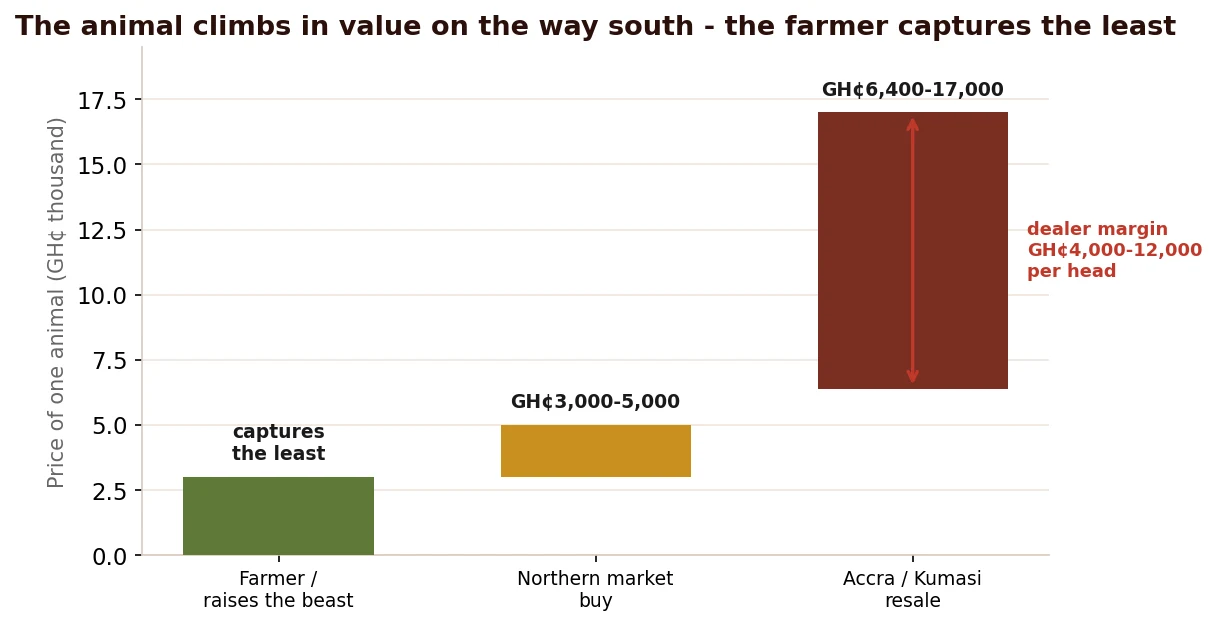
Follow one animal up the price ladder and you can see exactly where the money is made. An animal bought for about GH¢3,000 to 5,000 at a northern market resells for about GH¢6,400 to 17,000 in Accra or Kumasi, and most of that gap is captured after the animal leaves the north (Clingendael, 2025). The climb is steep, but the farmer who raised the animal, or the herder who sold it, stands at the bottom of it.

The people who capture the rise are the ones who move and resell the animal. A cattle dealer captures about GH¢4,000 to 12,000 of profit a head reselling into the southern market, more than the farmer who raised the beast earns (Clingendael, 2025), and Burkinabe and Togolese intermediaries resell at about GH¢7,000 to 10,000 a head, and they take a larger share than the rustlers who supply them (Clingendael, 2025). The butcher at the end nets a further GH¢2,000 to 5,000 a head (Clingendael, 2025).

The margin ladder for one animal, from a few thousand cedis at a northern market to many times more at the southern plate
Figure 19 The margin ladder: an animal climbs from a few thousand cedis in the north to many times more in the south
What this shows

An animal bought cheap in the north sells for several times more in the south, and the farmer who raised it captures the least of that climb.

GH¢3,000 to 5,000
what the farmer or herder gets at the northern gate, on a beast held for years
GH¢4,000 to 12,000
what the large dealer nets a head, more than the farmer who raised it earns
Table 10: The margin ladder from northern gate to southern plate: the producer stands on the lowest rung
Rung on the ladderWho stands herePrice or margin per headWhat it means
Northern or intermediary marketFarmer or herder sellsAnimal valued GH¢3,000 to 5,000Thin, slow return on a beast held for years
Cross-border intermediaryBurkinabe or Togolese dealerResells GH¢7,000 to 10,000Captures more than the supplier upstream
Large Ghanaian dealerMoves 30 to 60 head a lorryNets GH¢4,000 to 12,000 profitOut-earns the producer, and takes the most
Southern butcherSlaughters, cuts and sellsNets GH¢2,000 to 5,000 profitThe last mark-up, on retail beef near GH¢85/kg
Informal facilitationVet and police checkpointsPermit GH¢10 to 30; barrier GH¢5 to 15A corruption wedge that also defeats traceability

Sources: Courtright and de Bruijne (Clingendael, 2025); Mogre et al. (2024); live market data (2026).

WHAT THIS MEANS. The ladder tells the entrant where the return already is, and where it is not. The return sits in moving and transforming the animal, not in owning it. The producer carries the longest risk, years of feed, disease and theft exposure, for the thinnest margin, while the dealer turns capital over in weeks for the fattest. That is why the highest-value entry points in this sector are the trading, finishing and processing steps that climb the ladder, not another herd sitting at its foot. The trap is to fall in love with the animal; the money is in the movement.

🐄 The long haul south: weight and life lost on the road

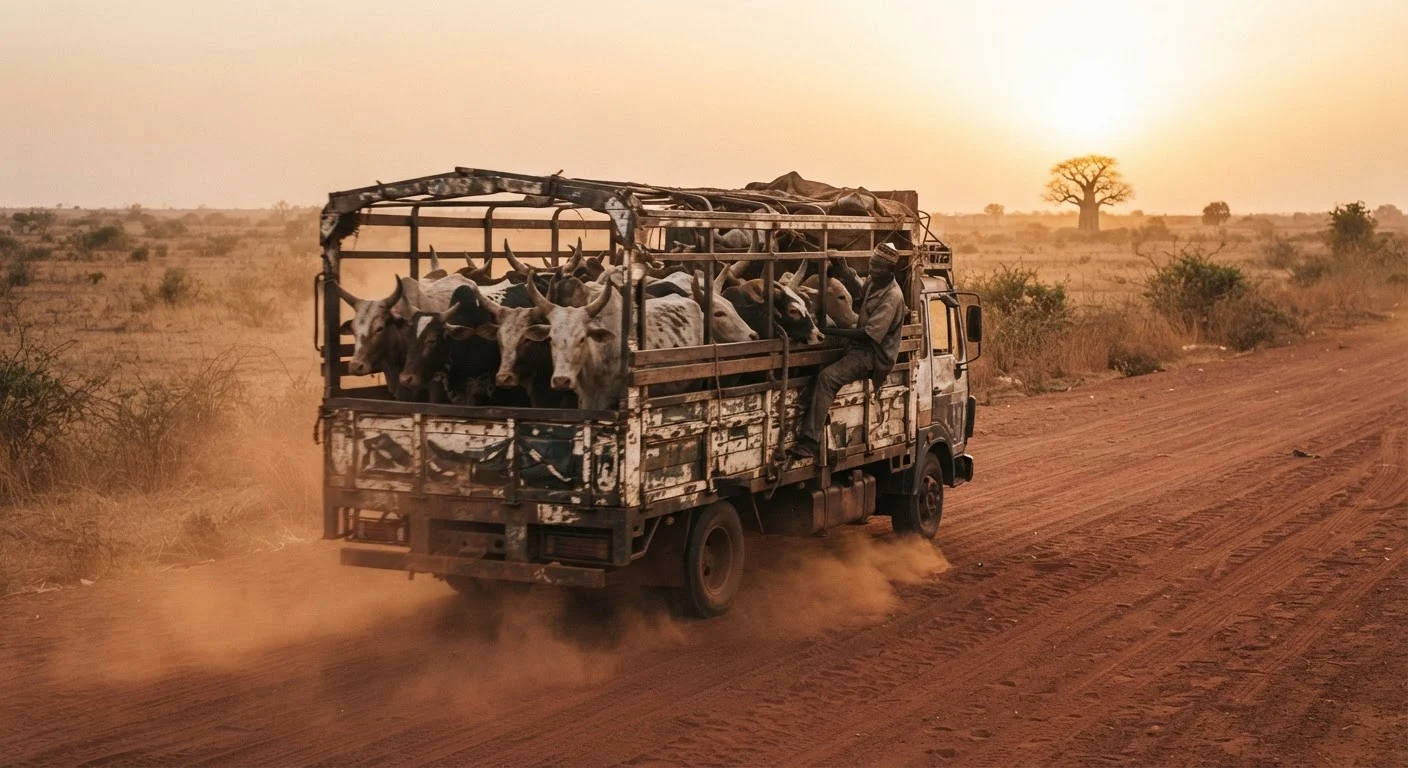
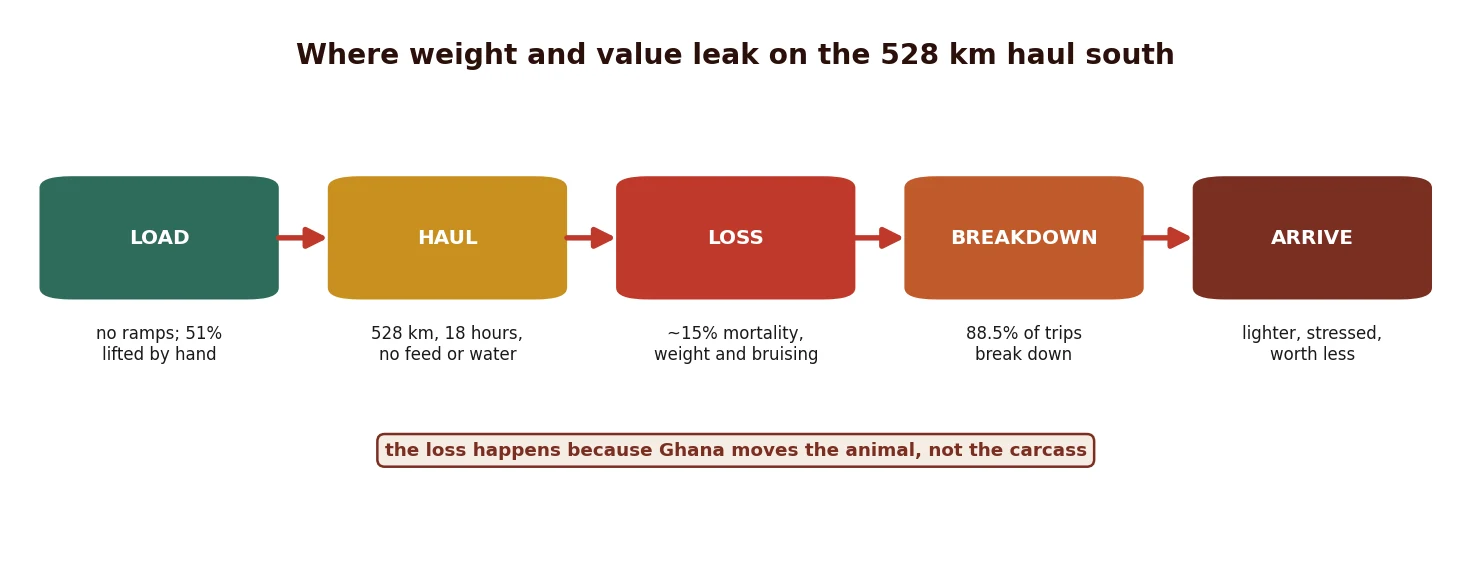
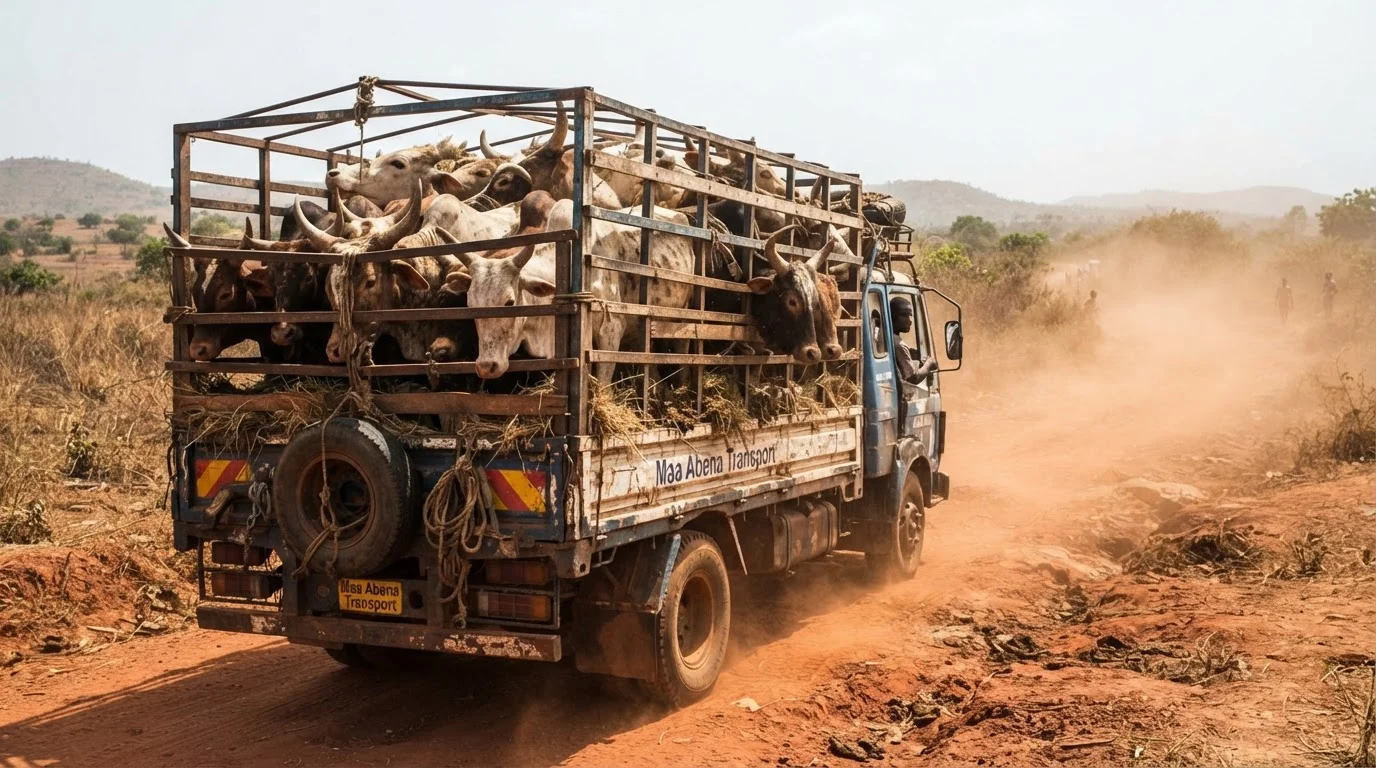
The reason the chain runs the wrong way is written on the road itself. Because the north ships the live animal rather than the meat, every animal makes a punishing journey. Cattle are trucked south on hauls of about 528 kilometres and 18 hours, with about 15 percent dying on the way and only about four in ten vehicles fit for the job (Mogre et al., 2024).

Read that again: on the way to market, roughly one animal in seven dies, and the survivors arrive lighter, bruised and stressed after a day and a night with no feed or water, in a vehicle that in most cases is not built for the job. Nearly nine in ten transporters had a breakdown in their last ten trips, and most left animals confined while repairs were made (Mogre et al., 2024). This is the single largest avoidable loss in the whole chain, and it happens because Ghana moves animals, not carcasses.

A battered open-sided cattle lorry loaded with zebu cattle standing shoulder to shoulder on a red laterite highway in northern Ghana at dusk, dust hanging in the low sun, a drover perched on the rail above the animals, savannah scrub and a distant baobab on the horizon, documentary photograph, warm earthy tones, natural light, no text, no watermark
528 km, about 18 hours
The road is the problem: a day and a night with no feed or water, in a vehicle that in most cases is not built for the job.
Where weight and value leak on the 528 kilometre haul south: mortality, weight loss, bruising and unfit vehicles
Figure 20 Where weight and value leak on the 528 km haul
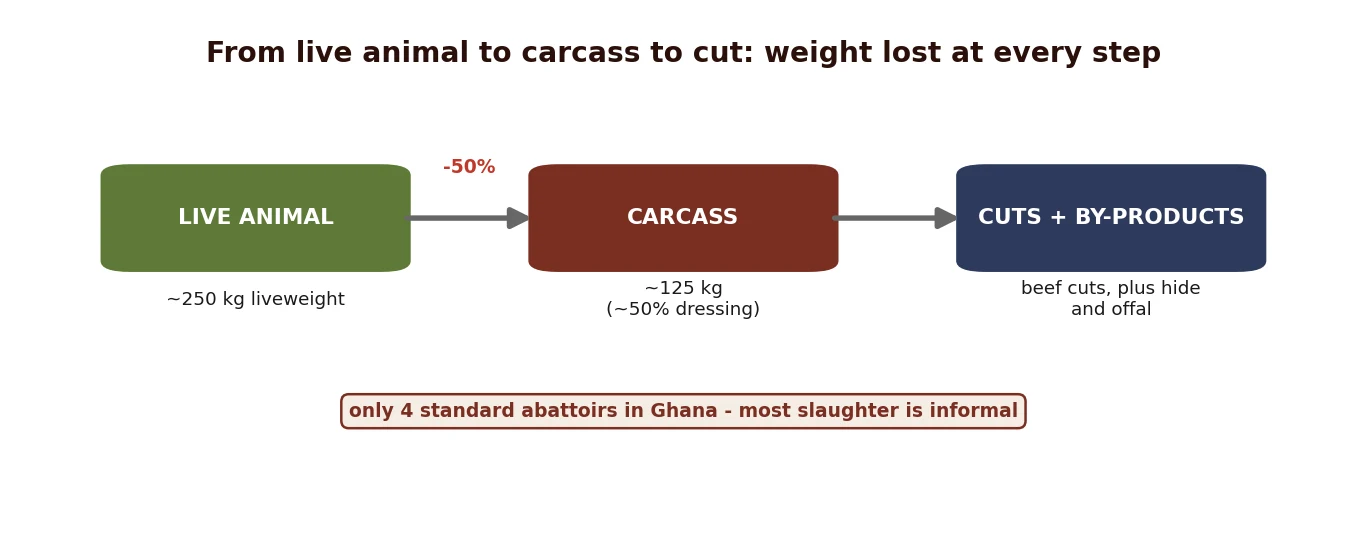
From live animal to carcass to cut: the weight lost at every step of slaughter and butchery
Figure 21 From live animal to carcass to cut: weight lost at every step
What this shows

Trucking a live animal 528 kilometres to lose roughly one in seven to death and the rest to weight and bruising is a system built to shed value, and it happens only because Ghana moves the animal instead of the chilled carcass.

What this shows

From live animal to carcass to cut, each step loses weight and adds handling. Ghana has only four standard abattoirs, so most slaughter is informal.

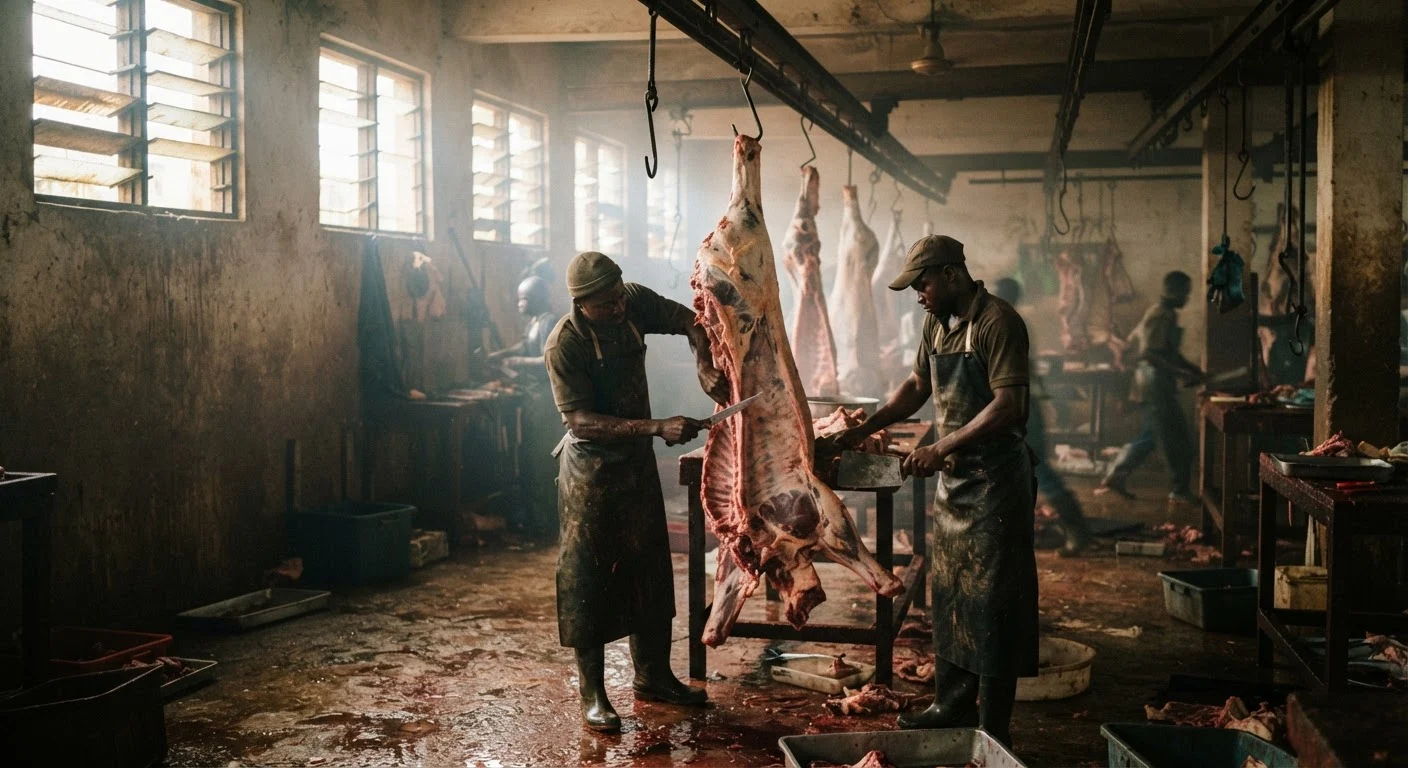
The interior of a Ghanaian abattoir hall at dawn, wet concrete floor, a dressed beef carcass hanging on a rail while workers in aprons and gumboots section it by hand, no chiller in sight, high louvred windows throwing shafts of light through the steam, documentary photograph, muted earthy palette, natural light, no text, no watermark
Only four standard abattoirs
The second bottleneck: local meat leaves the slab warm while the imported frozen beef it competes with sits under refrigeration from ship to shelf.

At the far end of the haul sits a second bottleneck. Ghana has only four standard abattoirs, and imported frozen meat is cold-stored while local fresh meat is sold uncooled, an asymmetry that favours imports (Oppong-Apane, 2016). So most slaughter is informal and uncooled, while the imported frozen beef it competes with sits under refrigeration from ship to shelf.

That cold-chain asymmetry is quiet but decisive: the import arrives chilled, graded and shelf-ready for the modern retailer, and the local carcass arrives warm and must sell fast and cheap. The chain loses value at both ends of the road, on the animal going down and on the meat that cannot be kept once it is slaughtered.

~15%
of animals die in transit, roughly one in seven, on the way to market
88.5%
of transporters had a breakdown in their last ten trips, animals left confined

WHAT THIS MEANS. The haul is the clearest argument in the whole playbook for the missing middle. Trucking a live animal 528 km to lose 15 percent of it, then selling the rest warm because there is no cold chain, is a system designed to shed value. Slaughter the animal near where it is reared, chill the carcass, and move the meat, and you keep the weight, the hide and the offal that the live-haul throws away, and you land a product the modern retailer can actually stock. The road is the problem; northern slaughter plus cold chain is the answer.

🐄 Where the value ends up: market power sits in the south

Who captures the final price of a Ghanaian beef animal: the producer bears the risk while the south takes the margin
Figure 22 Who captures the final price: the producer bears the risk, the south takes the margin
What this shows

The farmer takes the production risk, but the dealer and the butcher in the south take the larger share of the final price.

Put the corridor, the ladder and the haul together and the distribution of value is structural, not accidental. Market power sits with southern wholesalers and retailers, because the north ships live animals rather than meat, so the value is added and captured in the south (MADE Northern Ghana, 2014). The north sells a live animal at a price that is little more than the cost of the animal plus the transport to move it; the mark-up, the processing, the by-products and the retail premium are all added and captured in the south. The producer takes the production risk and the slow capital lock-up, and the downstream trader and butcher take the faster, larger returns. This is why a country with millions of cattle has farmers who stay poor while beef sells dear in Accra.

The modern retail segment tilts the distribution further still. The supermarkets and branded meat counters that serve Accra's growing middle class are fed largely by imports moving under cold chain, not by local fresh meat (MADE Northern Ghana, 2014). So the fastest-growing, highest-margin end of the market, the graded, chilled, branded shelf, is the one part of the chain where local beef is almost absent. The south captures the value, and imports capture its premium slice.

MARKET SIGNAL: BUILD WHERE THE VALUE IS ADDED, NOT WHERE THE ANIMAL IS BORN. The lesson for anyone building in this sector is to build where the value is added, not where the animal is born. The north has the cheapest animal and the poorest margin; the south has the buyer, the price and the premium shelf. A business that closes that gap, by finishing and slaughtering nearer the herd and moving graded meat into the southern modern channel, does not fight the market structure; it captures the very margin the structure now hands to dealers and importers.

🐄 The hide thrown away: the leather chain Ghana does not run

The most complete leak in the chain is the one most people never notice, because it is eaten. Every slaughtered animal yields a hide worth roughly 7 percent of its live weight (Vaskó et al., 2022), and Ghana does almost nothing with it. Ghana has no modern tannery, exports raw hide at about US$718 a tonne, and eats most of its hides as wele instead of tanning them, while sub-Saharan leather-product exports have grown over 400 percent (Appiah-Brempong et al.; UNCTAD, 2018 to 2020).

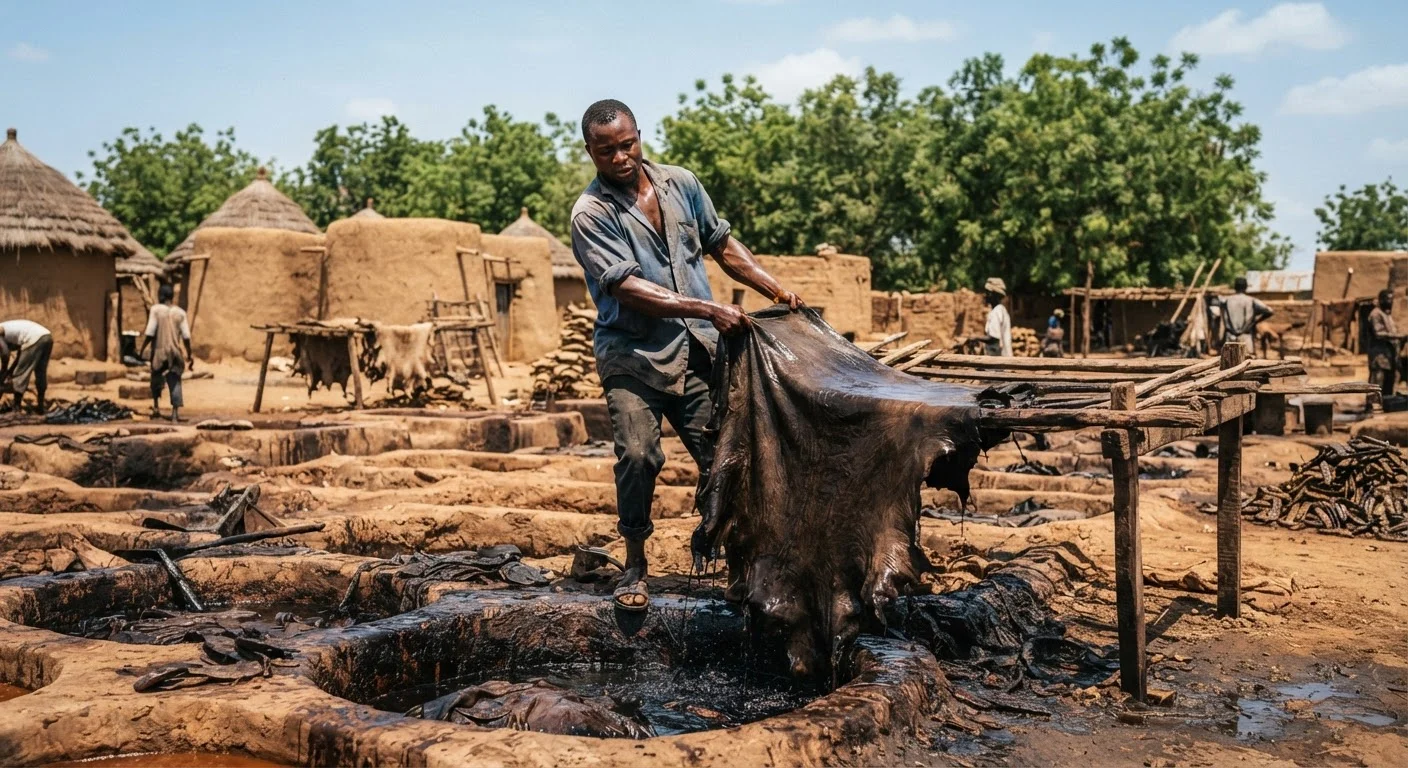
There is no modern tannery in the country; what tanning exists is artisanal vegetable tanning with acacia pods in open pits around Bolgatanga, and it produces low-quality leather that cannot serve a modern buyer (Appiah-Brempong et al., 2020). The recoverable by-products of slaughter, the hair, the fleshings, the trimmings, are simply discarded, though they have uses in feed, adhesives and biogas.

The leather value left on the table: Ghana exports raw hide cheap and eats the rest as wele while importing finished leather back dear
Figure 23 The leather value left on the table: Ghana exports raw hide cheap and eats the rest as wele
What this shows

Ghana sells its hide cheap as raw skin or eats it as wele, and buys finished leather back dear. The value added by tanning is left on the table.

Artisanal vegetable tanning pits dug in the open ground near Bolgatanga in northern Ghana, cow hides steeping in dark acacia-pod liquor, a tanner in a rolled-up shirt hauling a wet hide from a pit onto a drying rack, mud walls and neem trees behind, documentary photograph, warm ochre and umber tones, hard midday light, no text, no watermark
No modern tannery in the country
Open pits and acacia pods: the only tanning Ghana runs produces low-quality leather that cannot serve a modern buyer.

The scale of the forgone value is not small. Sub-Saharan exports of leather productsgrew by more than 400 percent over a decade, from about US$59 million to US$296 million, as the world's tanning capacity shifted toward Africa (UNCTAD, 2018), yet Ghana sits that boom out, exporting raw hide at about US$718 a tonne and importing finished leather goods back at many times the price.

The wele trade-off is the quiet reason: because singed cow-skin is a valued food, the hide has an immediate buyer at the abattoir gate, so it never reaches a tanner. Every hide eaten is a rational sale for the butcher and a national value chain that never gets built.

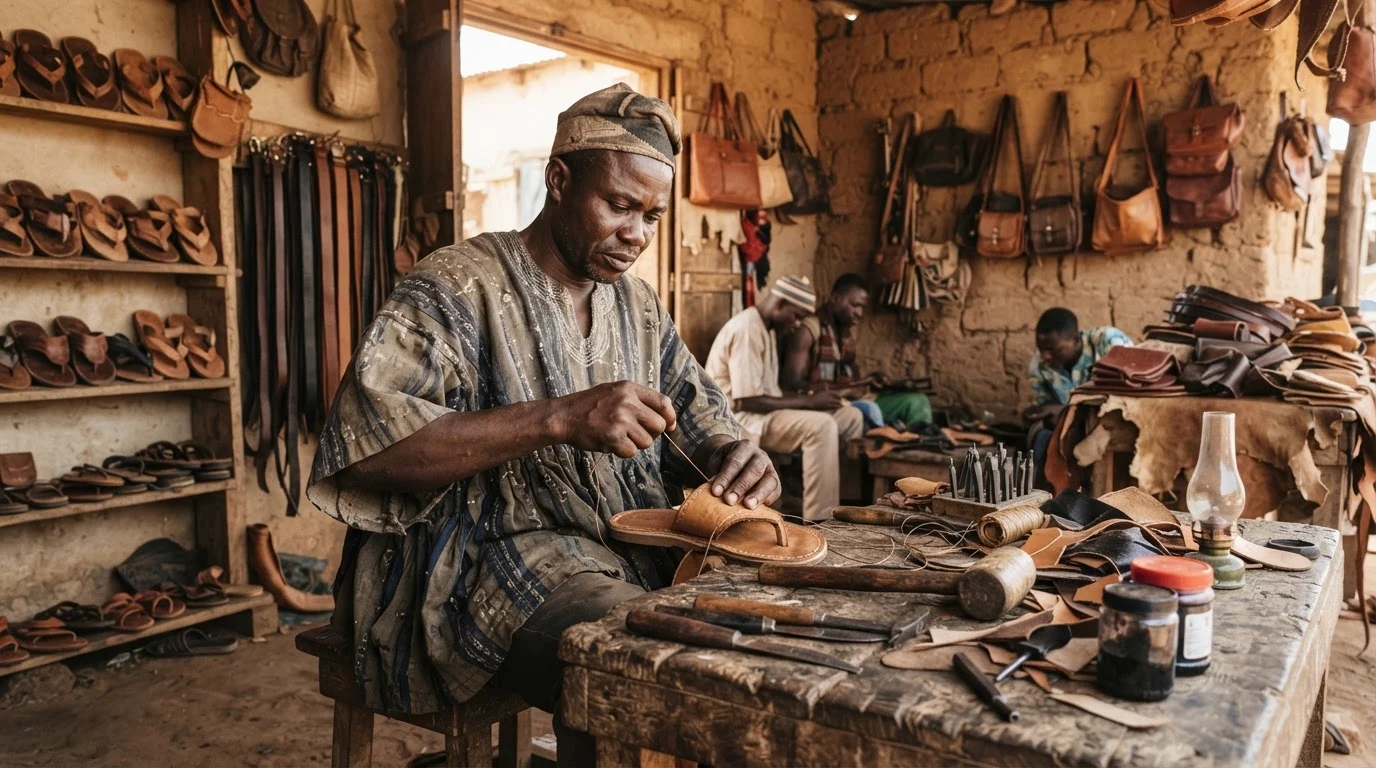
Artisanal Ghanaian leatherwork at Bolgatanga, the small skilled end of a value chain that could be far larger
Artisanal leatherwork, Bolgatanga
Artisanal leatherwork at Bolgatanga: the small, skilled end of a value chain that could be far larger if Ghana tanned its own hides instead of exporting them raw.
~7%
of an animal's live weight is hide, and Ghana does almost nothing with it
US$59m to 296m
sub-Saharan leather-product exports over a decade, a boom Ghana sits out

🐄 The stolen animal in the supply: rustling and laundering

The chain has one more feature that no honest value-chain analysis can leave out: some of the animals moving through it are stolen. Over 8 million head have been stolen in Burkina Faso since 2017, and Ghana's markets launder much of it, so about a third of border-area households rank rustling their biggest threat (Clingendael, 2025).

Ghana's opaque, cash-based livestock markets are the place where rustled Sahel cattle are washed into the licit trade; the country has become, in the researchers' words, a laundering hub for the theft (Clingendael, 2025). The trade is not petty. Armed groups in the Sahel fund themselves from it, with one JNIM affiliate estimated to earn roughly 25 to 30 million CFA a month from rustling (Clingendael, 2025), which means a butcher in Kumasi buying an unpapered cheap animal may be, unaware, at the end of a chain that finances insurgency.

8 million+
head stolen in Burkina Faso since 2017, much of it laundered through Ghana's markets
25 to 30 m CFA
a month earned from rustling by a single JNIM affiliate
~34%
of Paga-area households rank rustling the single biggest threat to their community

The supply-integrity risk is felt hardest at the border. The Paga crossing alone moved about 1.7 million livestock between 2018 and 2023, about 83 percent of it bound for Ghana, most from Burkina Faso (Johnson et al., 2025), and in the communities along it the fear is concrete: about 34 percent of surveyed households in the Paga area rank cattle rustling the single biggest threat to their community (Clingendael, 2025).

For a business, this is a direct commercial hazard, not a distant geopolitical footnote. An animal of unknown origin carries unknown disease, unknown legal exposure and a reputational risk that a formal buyer, a supermarket, an exporter, a bank financing the deal, cannot accept.

MARKET SIGNAL: TRACEABILITY IS THE PRODUCT. The integrity gap is itself the opening. Because the market cannot today tell a legally-sourced animal from a laundered one, whoever can offer that assurance owns a premium. A phone-camera muzzle-print now identifies an individual animal at about 99.9 percent accuracy with no tag or chip, a cheap, tamper-proof identity that directly attacks rustling and laundering (Shojaeipour et al.; live sources, 2021 to 2026). That makes verified, traceable origin a cheap, saleable service in a market that is currently blind, and it attacks rustling, disease and dealer opacity in a single move (Pillar 8). The stolen animal in the supply is a reason to build the traceable supply.

🐄 The missing middle, and where to capture the value

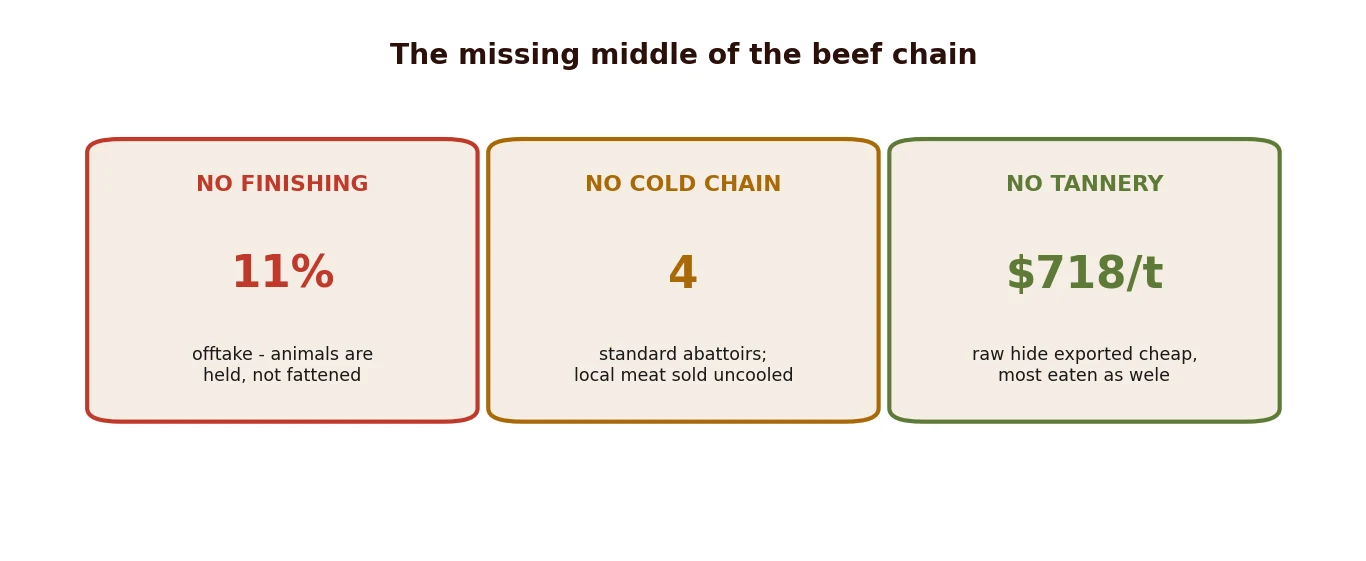
The missing middle of the beef chain: no finishing, no cold chain, no modern tannery between the northern herd and the southern plate
Figure 24 The missing middle of the beef chain: no finishing, no cold chain, no modern tannery
What this shows

No finishing, no cold chain, no modern tannery. The middle of the beef chain is missing, and the missing middle is the opportunity.

Step back from the individual links and one shape defines the whole chain: a wide, empty middle. Between the northern herd and the southern plate there should sit finishing, cold chain, modern slaughter, tanning and traceability, and almost none of it exists.

Ghana has only four standard abattoirs, and imported frozen meat is cold-stored while local fresh meat is sold uncooled, an asymmetry that favours imports (Oppong-Apane, 2016), there are no commercial cattle breeding farms and the state's seven breeding stations underperform, so improved stock is scarce (Animal Production Directorate; MADE, 2014), and the national programme meant to modernise farming largely skips beef cattle (Pillar 7). The chain is not broken in one place; its entire middle is missing, which is precisely why the openings are so large.

Not every opening is equal, though. The table below ranks the value-capture opportunities by how wide the gap is against how much capital and coordination it takes to enter, so an entrant can see where to start rather than simply that the field is open.

Table 11: The value-capture openings ranked: where the gap is widest against what it takes to enter
Value-capture openingWhy the gap existsCapital and difficultyRank
Cattle finishing and feedlotsOfftake 11 percent; store-of-wealth herd; carcass below Sahel weightModerate; buy-feed-sell in a defined window1 - clearest, most repeatable
Hide recovery and modern tanningNo tannery; hide wasted or eaten; regional leather boomHigher; needs a slaughter tie-in2 - largest untouched by-product
Northern slaughter plus cold chainLive-haul loses 15 percent; imports own the chilled shelfHigh; plant plus logistics3 - big prize, capital-heavy
Cross-border aggregation with traceability70 percent foreign slaughter; laundering; opaque marketModerate; papers, quarantine, muzzle-ID4 - de-risks the whole chain
Branded, clean butchery and retailRetail near GH¢85/kg; modern channel import-fedModerate; HACCP-grade supply5 - captures the premium shelf
Offal and wele upgradingCheap imported offal competes; wele informalLow; hygiene and packaging6 - fast entry, thinner margin

Sources: MADE Northern Ghana (2014); Oppong-Apane (2016); Mogre et al. (2024); Rich and Wane (2021); Appiah-Brempong et al. (2020); UNCTAD (2018); live market data (2026). Author synthesis of ranking.

WHAT THIS MEANS. Start where the gap is wide and the capital is modest, then climb. Finishing is the first rung because it needs the least to begin and turns the store-of-wealth animal into meat, which is the sector's core problem in miniature. Hide recovery, aggregation and clean butchery follow as the operation grows and can tie into slaughter. The capital-heavy prizes, a modern abattoir with cold chain and a first tannery, are where a well-financed player or a public-private partnership should aim, because they unlock every gap downstream at once (Pillars 5 and 7).

🐄 The two ends of the chain: the input gate and the retail plate

The input gate

The middle links of this chain, the corridor, the ladder, the haul, slaughter, value distribution, leather and rustling, each have their section above. The two links that book-end them appear only in the master table, and each deserves its own value-chain reading. Take the input gate first. It is run by vets, drug and feed dealers and the seven state breeding stations, and its defining feature is absence: there are no commercial cattle breeding farms and the state's seven breeding stations underperform, so improved stock is scarce (Animal Production Directorate; MADE, 2014).

On the few farms that actually finish an animal, medicine is the biggest cost at about 40 percent of the bill, and females are held about 50 months, a long, capital-slow cycle (Roelen, 2017), so the largest single cost at the input gate is health, not feed, while about 95 percent of farms use no feed supplement at all (MADE, 2014). The value leak here is quiet but compounding, because an under-fed, under-treated animal enters the chain lighter and later, and every downstream link inherits that weakness. The opening is that animal-health services, improved-stock supply and feed provision are input-side businesses that de-risk everyone downstream, and they take far less capital than a slaughter plant (Pillars 1 and 3).

~40%
of a fattener's bill is medicine, the largest single cost at the input gate
~95%
of farms use no feed supplement at all
~50 months
females are held, a long, capital-slow cycle
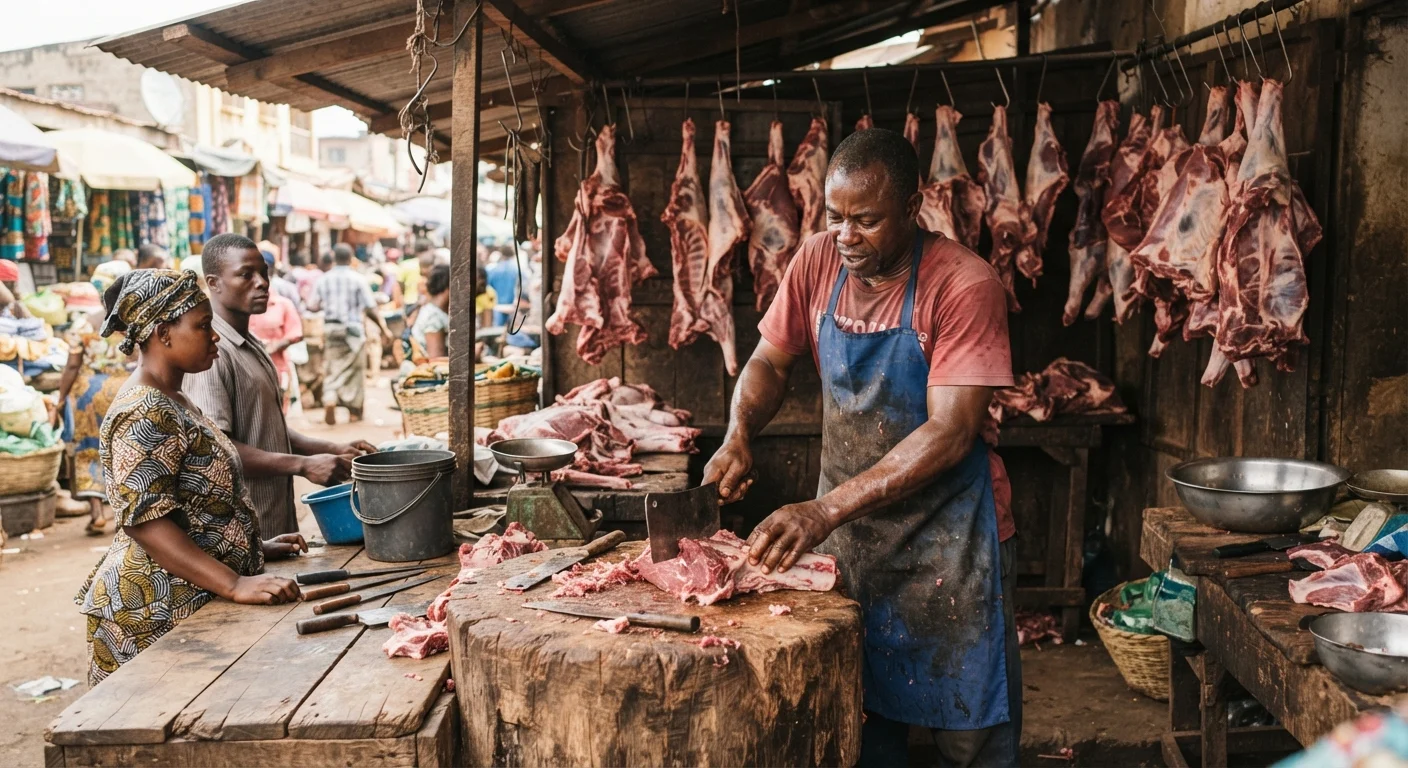
An open-air butcher's stall in a busy Accra market, a butcher in a stained apron cleaving warm beef on a scarred wooden block, unchilled cuts hung on hooks behind him under a corrugated roof, customers waiting at the counter, documentary photograph, rich warm tones, dappled natural light, no text, no watermark
Retail near GH¢85 a kilogram
The channel split: local meat sells warm off an open counter while the chilled, branded, premium shelf is import-fed.
The retail plate

At the far end sits the plate. Retail is run by butchers, a hereditary trade that controls the slab, and by cold-store retailers, with retail beef ran at about GH¢85 a kilogram in 2026, in a range of about GH¢67 to 100, up about 20 percent on the year (Selina Wamucii; live market search, 2026). The leak here is a channel split: the modern chilled and branded shelf is import-fed, while local meat sells warm and uncooled off an open counter, so the fastest-growing, highest-margin end of the market is the one place local beef is almost absent.

Consumers pay a premium for the assurance that graded, chilled, imported meat carries, which is exactly the premium local supply forgoes by arriving warm and untraceable (Ministry of Food and Agriculture, 2024). The opening is branded, clean, traceable, chilled local beef sold into the modern channel, capturing the premium slice the import now owns (Pillars 2 and 8).

Read together, these two ends bracket the missing middle. The input gate under-feeds and under-treats the animal before it starts its journey, and the retail plate hands the premium shelf to imports at the end of it; the finishing, cold chain, slaughter and traceability that should join them are the very middle this pillar has shown to be empty. Build at both ends and in the middle, and the chain finally runs the right way.

🐄 The Opening: the untanned hide and the missing middle 🐄
01

Hide recovery and a first modern tannery. The raw material already exists at every abattoir, is currently wasted or eaten, and the finished-leather market is growing fast across the region. A clean, chrome-free tannery taking graded hides off a modern northern abattoir is the single largest untouched by-product opportunity in the sector (Appiah-Brempong et al., 2020; UNCTAD, 2018).

02

By-product upgrading beyond the hide. Blood, bone, offal and trimmings all have markets; capturing even part of the roughly 10 percent of live weight that offal represents (Rich & Wane, 2021) turns waste into a second revenue line for a modern slaughter operation.

03

The missing middle is the business of the sector. Every gap between the herd and the plate is a place where value should be added and is not, which means a private operator who fills one of them creates a new margin rather than competing for an existing one. The chain does not need a bigger herd; it needs its middle built.

🐄 The risks that sit inside the value chain 🐄

Cattle rustling and stolen-stock laundering

VERY HIGH
What it is

A large share of the cattle moving through Ghana's markets crossed a border informally, and some were stolen. Ghana's cash-based, papers-light markets launder rustled Sahel cattle into the licit trade, so a buyer can end up funding organised theft and even insurgency without knowing it.

Evidence

Over 8 million head have been stolen in Burkina Faso since 2017; Ghana is a laundering nerve-centre; a JNIM affiliate earns roughly 25 to 30 million CFA a month from rustling; 34 percent of Paga-area households rank rustling their top threat (Courtright & de Bruijne, Clingendael, 2025).

Who it hits

Butchers, dealers, exporters and banks who buy or finance animals of unknown origin, and border communities who bear the theft.

How to manage it, and the opening

Buy only from known herders and verified markets, and keep origin records on every animal. The mirror-image opening is traceable sourcing itself, which a phone-camera muzzle-print can now make cheap and tamper-proof (Pillar 8).

Transport losses on the long haul south

HIGH
What it is

Because Ghana moves live animals rather than meat, every animal is trucked hundreds of kilometres to market and loses weight, condition and often its life on the way. The loss is built into the structure of the chain, not caused by one bad operator.

Evidence

The average haul is about 528 km and 18 hours, with roughly 15 percent in-transit mortality, only about 40 percent of vehicles fit for purpose and an 88.5 percent breakdown rate (Mogre et al., 2024).

Who it hits

Traders and finishers who buy animals in the north to sell in the south, and anyone whose margin depends on the animal arriving in good condition.

How to manage it, and the opening

In the short term, load properly, break the journey, and carry fewer animals per vehicle. The real fix, and the opening, is to slaughter near the herd and move chilled meat instead of live animals (Pillars 5 and 7).

Dealer margins captured in the south

HIGH
What it is

The margin in this chain is captured downstream, by dealers and butchers in the south, not by the producer who raised the animal. A business built at the production end alone is building where the return is thinnest and slowest.

Evidence

An animal bought for GH¢3,000 to 5,000 in the north resells for GH¢6,400 to 17,000 in the south; large dealers net GH¢4,000 to 12,000 a head, more than the farmer earns (Clingendael, 2025).

Who it hits

New producers who assume raising cattle is where the money is, and cooperatives that sell live animals at the farm gate.

How to manage it, and the opening

Move up the ladder: finish, aggregate, process or brand, rather than only rear. Capturing even one downstream step, finishing or clean butchery, shifts the entrant from the lowest rung to a faster, larger margin.

The hide thrown away as wele

MEDIUM
What it is

Ghana discards the leather value of its cattle, exporting raw hide cheap and eating most of the rest as wele, while importing finished leather goods back at many times the price. An entire by-product chain simply does not exist.

Evidence

There is no modern tannery in Ghana; raw hide exports about US$718 a tonne while sub-Saharan leather-product exports have grown over 400 percent; most hides are eaten as wele rather than tanned (Appiah-Brempong et al., 2020; UNCTAD, 2018).

Who it hits

The whole sector, which forgoes a second revenue line off every animal, and northern economies that could host tanning jobs.

How to manage it, and the opening

The opening is to recover graded hides off a modern abattoir and build the first clean tannery, capturing the raw-to-finished uplift the region's leather boom is already rewarding.

Unpapered cattle moving through an opaque, cash-based Ghanaian market where rustled Sahel stock is laundered into the licit trade
The stolen animal in the supply
Cash-based, papers-light markets wash rustled Sahel cattle into the licit trade.
Cattle crowded into an unfit truck for the long southbound haul, where roughly one animal in seven dies on the way
528 km, and one in seven dies
The haul south is the single largest avoidable loss in the chain, and it happens only because Ghana moves animals, not carcasses.
A southern cattle dealer counting the margin captured on animals bought cheap in the north and resold in the south
The dealer out-earns the farmer
The margin is captured downstream: the dealer turns capital over in weeks for the fattest return, the producer waits years for the thinnest.
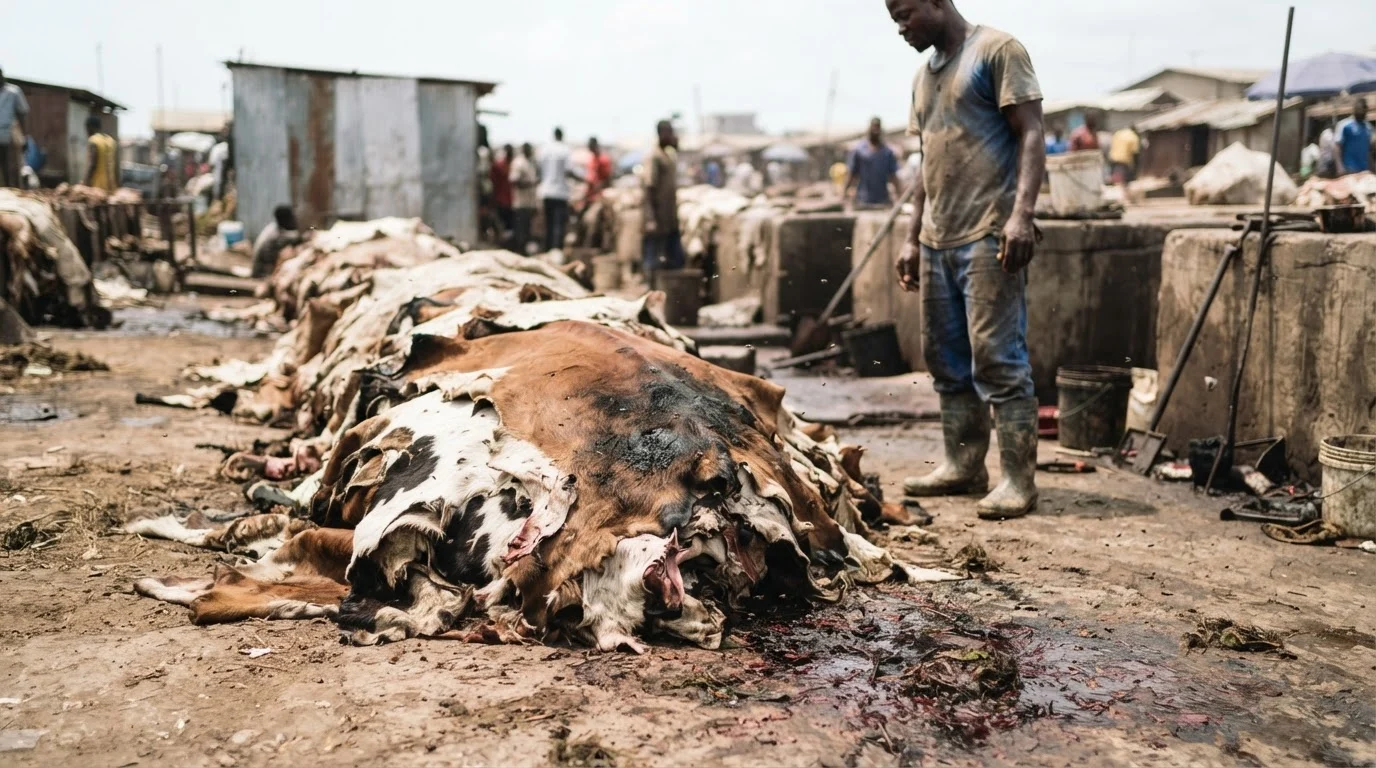
A cow hide destined to be singed and eaten as wele rather than tanned, the leather value Ghana throws away
The hide eaten, not tanned
Every hide eaten is a rational sale for the butcher and a national value chain that never gets built.
🐄 Key takeaways 🐄
01

The chain runs the wrong way: Ghana moves the live animal, not the meat, from the northern herd to the southern plate, so weight and value are lost on the road and captured in the south.

02

Most of the animals slaughtered are foreign, walked in from the Sahel through corridors like Paga, which moved 1.7 million livestock in five years. Ghana's beef supply is largely an informal cross-border trade.

03

The margin is captured by dealers and butchers, not producers: an animal bought GH¢3,000 to 5,000 in the north resells for GH¢6,400 to 17,000 in the south, and the dealer out-earns the farmer.

04

Value leaks four ways, to the Sahel, to frozen-offal importers, to southern middlemen, and to the hide eaten as wele instead of tanned, because Ghana has no modern tannery.

05

The missing middle, finishing, cold chain, modern slaughter, tanning and traceability, is the biggest opening in the sector; the chain does not need a bigger herd, it needs its middle built.

Where this connects. This chain is fed by the store-of-wealth herd and the slow, lean animal of Pillar 1, which is why finishing recurs here as the first opening; it is priced by the margins and the unbuilt cost model of Pillar 5, where the finishing economics are worked through; and its missing middle is the direct result of the policy gap in Pillar 7, where the flagship programme, the ranching tax holiday and the finance rails that could build that middle are set out.

Written for each reader

🐄 Practitioner intelligence 🐄

Hover any card to pause and lift it.

For students

Learn to read this chain as a map of margins, not a list of stages. The most useful thing to understand is why the producer, who carries years of risk, earns less than the dealer who moves the animal in weeks: value is added and captured in the south, not in the north where the cattle are. Trace one animal from a northern market to an Accra butcher and write down who pays what at each step; that exercise teaches more than any textbook. Watch the by-products too, the hide and the offal, because the value thrown away there is where the least-contested openings sit.

For entrepreneurs

Do not build at the production end alone, because that is where the margin is thinnest and slowest. Build in the missing middle: finishing first, because it needs the least capital and directly converts the store-of-wealth animal into meat, then aggregation, clean butchery or hide recovery as you grow. The trap that catches newcomers is buying live animals to move south on the same 528 km haul that kills 15 percent of them; the whole point is to shorten that road by slaughtering nearer the herd. Keep origin records from day one, both to stay clear of laundered stock and because traceable supply is itself a product you can sell.

For investors

The thesis worth backing is one that captures the missing middle, not one that adds another herd. Diligence should ask where in the chain the venture sits: a plan that only rears cattle is buying the lowest rung of the margin ladder, while finishing, cold-chain slaughter, tanning and traceable aggregation capture the value the chain now leaks to dealers, importers and waste. Underwrite the supply-integrity risk explicitly, because an opaque, partly-laundered cross-border supply is a real reputational and legal exposure for any formal buyer or exporter. The capital-heavy prizes, a modern abattoir with cold chain and a first tannery, unlock every downstream gap at once and suit a patient or blended-finance backer.

For ecosystem actors

The lever is to help the north add value before the animal leaves it. Every step that moves slaughter, chilling, tanning or aggregation closer to the herd keeps weight, by-products and jobs in the producing regions instead of shedding them on the road. Support a credible traceability and certificate-of-origin scheme, because it de-risks the supply, attacks rustling and unlocks the formal buyers and banks the chain now cannot reach. Measure success as the share of value captured north of the transport haul, not as headcount, and treat the missing middle, not a bigger herd, as the thing worth building.

Download full PDF
UpcomingThis document isn't available yet.