Ghana Agribusiness PlaybookBeef Cattle
An investor reviewing a ranch and feedlot plan against the policy that barely mentions it
Beef Cattle · Series intelligence

Finance, Policy and the Enabling Environment

The flagship farm programme was built for poultry and gives beef almost nothing. The state is not coming, and that is the opening.
Finance, Policy and the Enabling Environment · Pillar 07

The most useful thing to understand about beef-cattle policy in Ghana is what beef cattle does not get. The flagship farm programme is built for poultry and gives cattle no production target and almost no money; there is no dedicated ranching policy; and the old state breeding ranches are defunct.

For an entrant that cuts two ways: the public tailwind is thin, so do not wait for it, but the field is open and the one real incentive, a ten-year tax holiday, is generous. This pillar maps the doors and financing rails an entrant can actually use, and weighs the programme by what it funds rather than by what it promises.

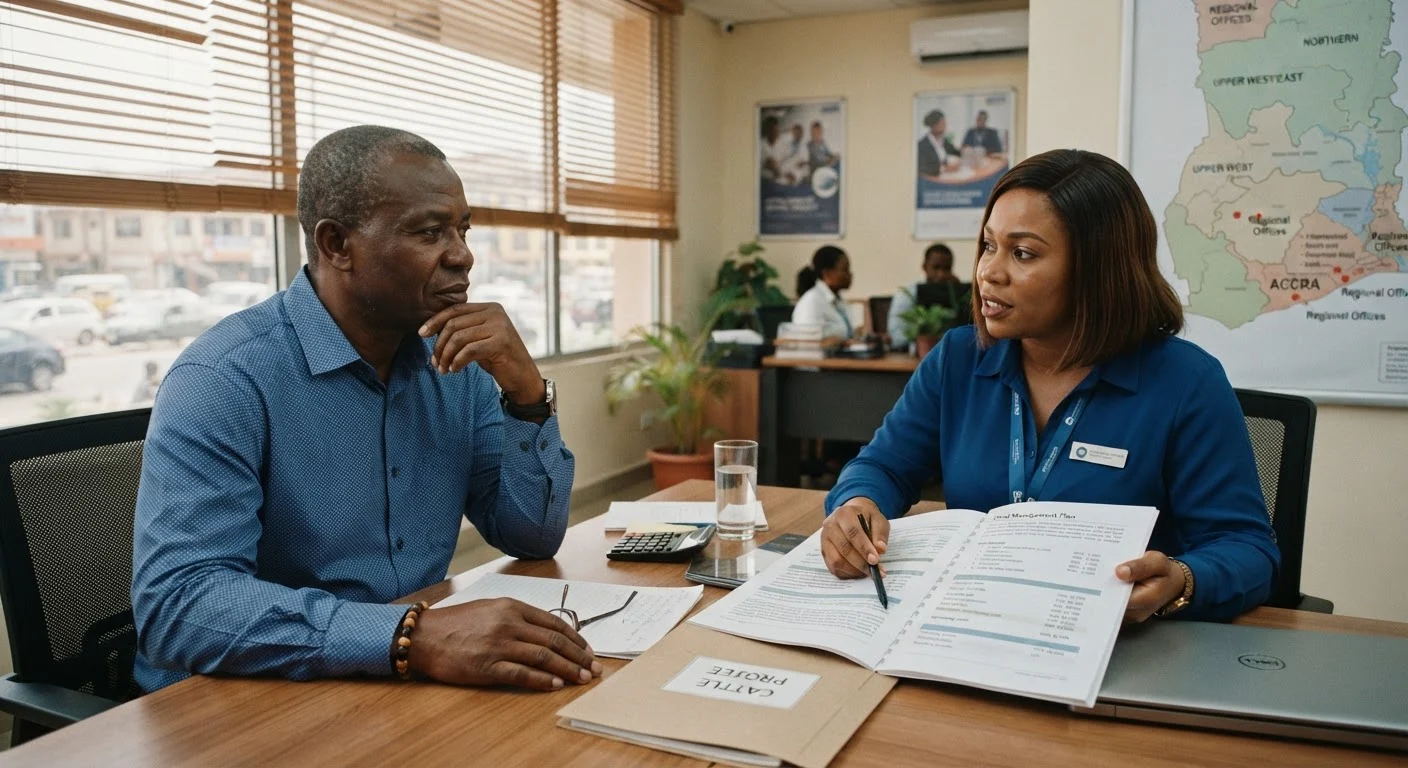
A Ghanaian cattle rancher in a pressed shirt sitting across a desk from an agribusiness lending officer in an Accra bank branch, a loan file, a laptop and a printed herd plan open between them, the officer's pen resting on a figure halfway down the page, venetian blinds and a wall map of Ghana behind, documentary photograph, warm earthy tones, natural light, no text, no watermark
The state is not coming, and that is the opening
Plan around the programme, not on it: The public tailwind is thin, so do not wait for it. The field is open and the one real incentive is generous.
10 years
of income tax at 1 percent for a registered cattle ranching business, then 25 percent
GH¢2.84m
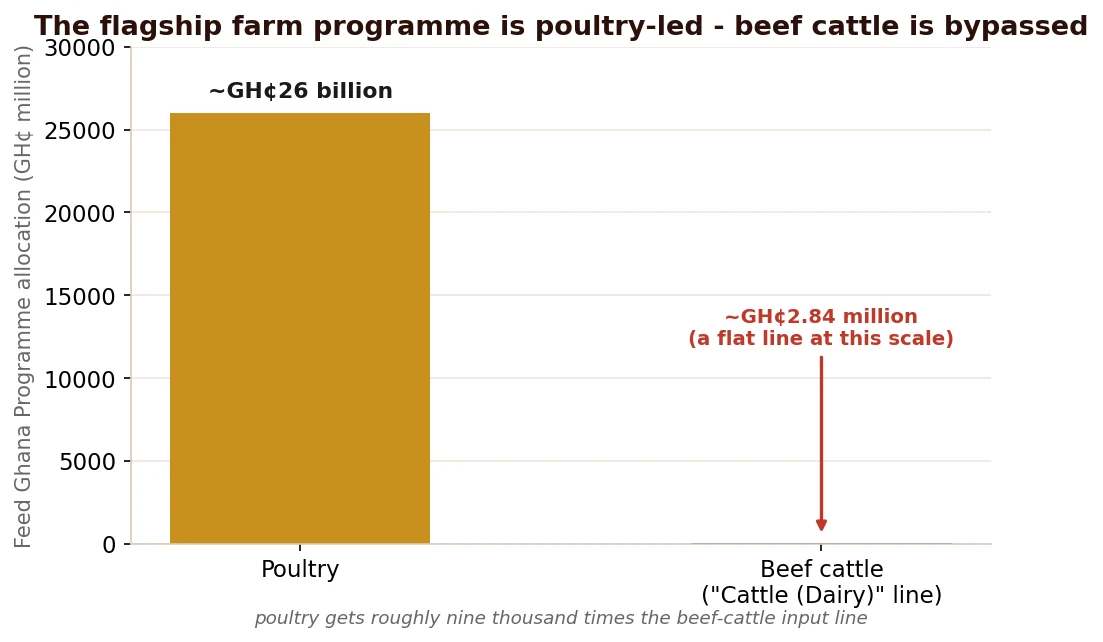
of Feed Ghana money for beef cattle, against about GH¢26 billion for poultry
GIPC to GIPA
the 2026 investment-promotion change to confirm the holiday under before you build a model on it

🐄 The flagship programme is built for poultry 🐄

The flagship farm programme is built for poultry: beef cattle carries no target and a rounding-error budget
Figure 25 The flagship farm programme is built for poultry: beef cattle carries no target and a rounding-error budget
What this shows

The flagship farm programme is built for poultry. Beef cattle gets almost none of it, which is a policy gap and, for a private entrant, an open field.

Start with the number that frames everything. The flagship Feed Ghana Programme, about GH¢302 billion over 2025 to 2028, is poultry-led: beef cattle carries no production target and only a GH¢2.84 million input line, against about GH¢26 billion for poultry (Ministry of Food and Agriculture, 2025).

Read that split slowly. A GH¢302 billion four-year transformation programme names cattle in its scope, then sets no head or output target for beef cattle and budgets an input line of about GH¢2.84 million against roughly GH¢26 billion for poultry. The programme's own cattle interventions sit under a 'dairy' sub-component, and its only livestock production targets name poultry, sheep, goats and pigs, not cattle (Ministry of Food and Agriculture, 2025). The flagship is poultry and small-ruminant led. Beef cattle is, in budget terms, a rounding error inside it.

GH¢302bn
the Feed Ghana Programme's four-year headline, 2025 to 2028
No target
no beef-cattle head or output target is set anywhere inside it
📡 MARKET SIGNAL: PLAN AROUND THE PROGRAMME, NOT ON IT

Do not build a business plan that leans on the Feed Ghana Programme to pull beef cattle forward, because on the numbers it will not. That sounds like bad news, and for anyone waiting for subsidy it is. But read it the other way: the programme is not going to flood the sector with subsidised competitors either, the way it may in poultry. The field stays open and unsubsidised, which favours a disciplined private operator who plans to stand on real margins (Pillar 5) rather than on a grant that is not coming.

🐄 The one real incentive: a ten-year tax holiday 🐄

Against that thin programme support sits one real incentive, and it lives in statute, so it cannot lapse the way a four-year plan can. Cattle ranching gets a 10-year income-tax concession, taxed at 1 percent during it and 25 percent after, and a feedlot or abattoir using local raw materials gets a 5-year holiday (Income Tax Act 2015 (Act 896); Ghana Revenue Authority, 2015).

Put plainly: a company that ranches cattle pays income tax at just 1 percent of chargeable income for its first ten years, then reverts to the standard 25 percent corporate rate (Income Tax Act 2015, Act 896; Ghana Revenue Authority). Cattle is treated more favourably than any other livestock, which get only five years, and a feedlot or abattoir that processes local animals gets its own five-year holiday. For a slow-cycle, capital-heavy business (Pillar 5), a decade of near-zero income tax is a real cushion over exactly the years when a ranch or feedlot is trying to reach scale.

Handle the rate honestly, because the public sources disagree. The statute is clear: 1 percent during the holiday, 25 percent after. A widely cited United States investment guide instead says ranching is 'exempt for ten years and pays 8 percent thereafter' (U.S. Department of State, 2025); the 8 percent figure appears nowhere in Act 896 and looks like a conflation with the non-traditional-export rate, so treat the Act and the Ghana Revenue Authority as the authority and the 8 percent as unsupported.

One more thing to watch: the incentive is administered through the investment-promotion regime, and the GIPC is being renamed GIPA under an investment-promotion bill that passed Parliament in 2025 to 2026 (Ghana Investment Promotion Centre, 2026). The ten-year holiday is expected to survive the change, but confirm it under the new Act before you build a model on it.

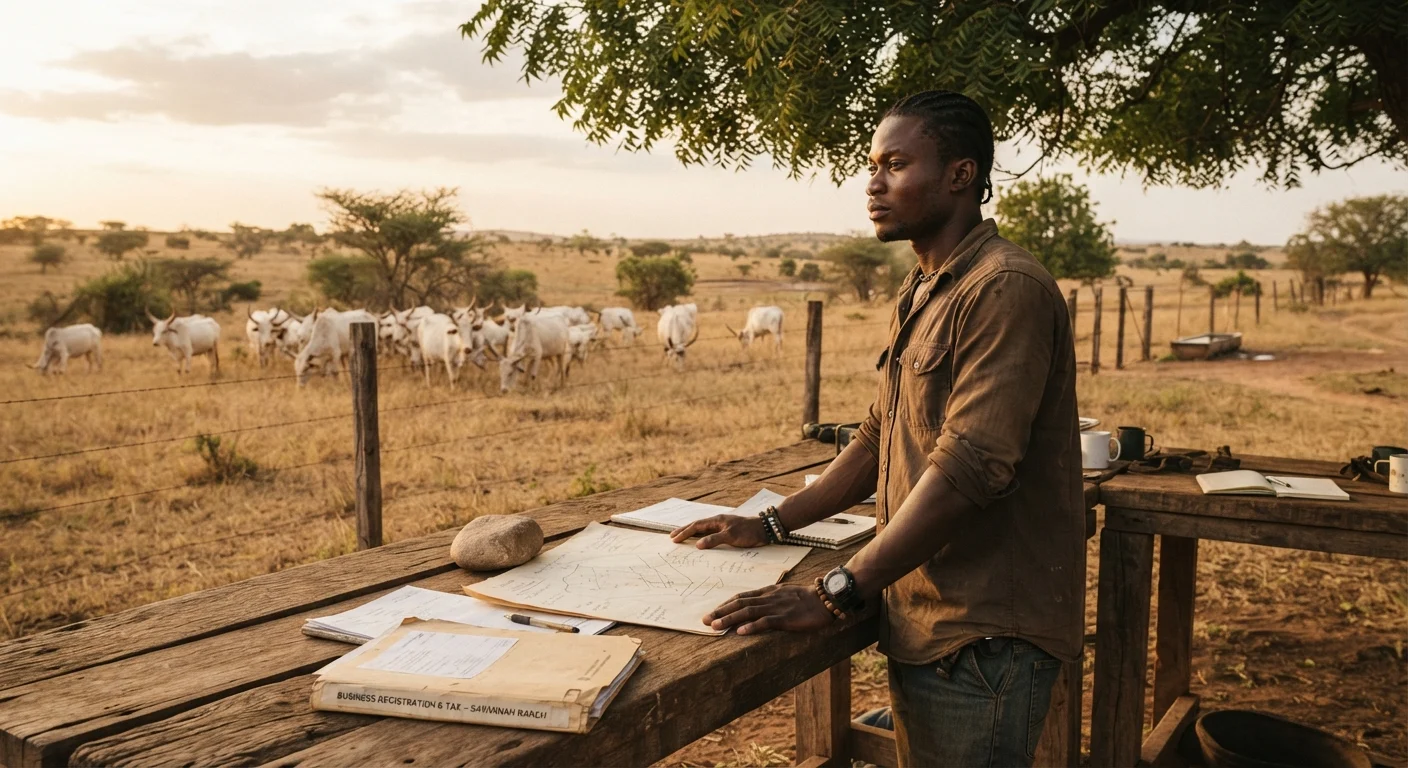
A young Ghanaian ranch owner standing at a rough timber table under a shade tree on a savannah ranch, a hand-drawn paddock plan and a tax registration folder weighted down with a stone against the wind, a herd of white Sanga cattle grazing beyond the wire fence line, dry season grass and thorny acacia, documentary photograph, warm earthy tones, low golden light, no text, no watermark
It lives in statute, so it cannot lapse
A real cushion: A decade of near-zero income tax is a real cushion over exactly the years when a ranch or feedlot is trying to reach scale.
1%
income tax on a cattle ranching business for its first ten years
25%
the standard corporate rate it reverts to once the holiday ends
5 years
holiday for a feedlot or abattoir using local raw materials
🎯 OPPORTUNITY
01

The tax holiday plus a bankable finishing or ranching plan. The 10-year, 1 percent window is worth the most to the exact business the sector needs most, a formal operation that finishes or ranches cattle at scale, because it shelters the early years when margins are thinnest (Pillar 5).

02

The agro-processing route. A feedlot, abattoir or hide-processing plant using local raw materials earns a five-year holiday, which stacks with the value-capture openings in slaughter, cold chain and leather (Pillar 6).

03

First-mover registration. Because so few formal cattle businesses exist, an entrant who registers correctly and banks the holiday early holds an advantage that later, unregistered competitors cannot easily match.

🐄 The policy gap: no ranching policy, defunct state ranches 🐄

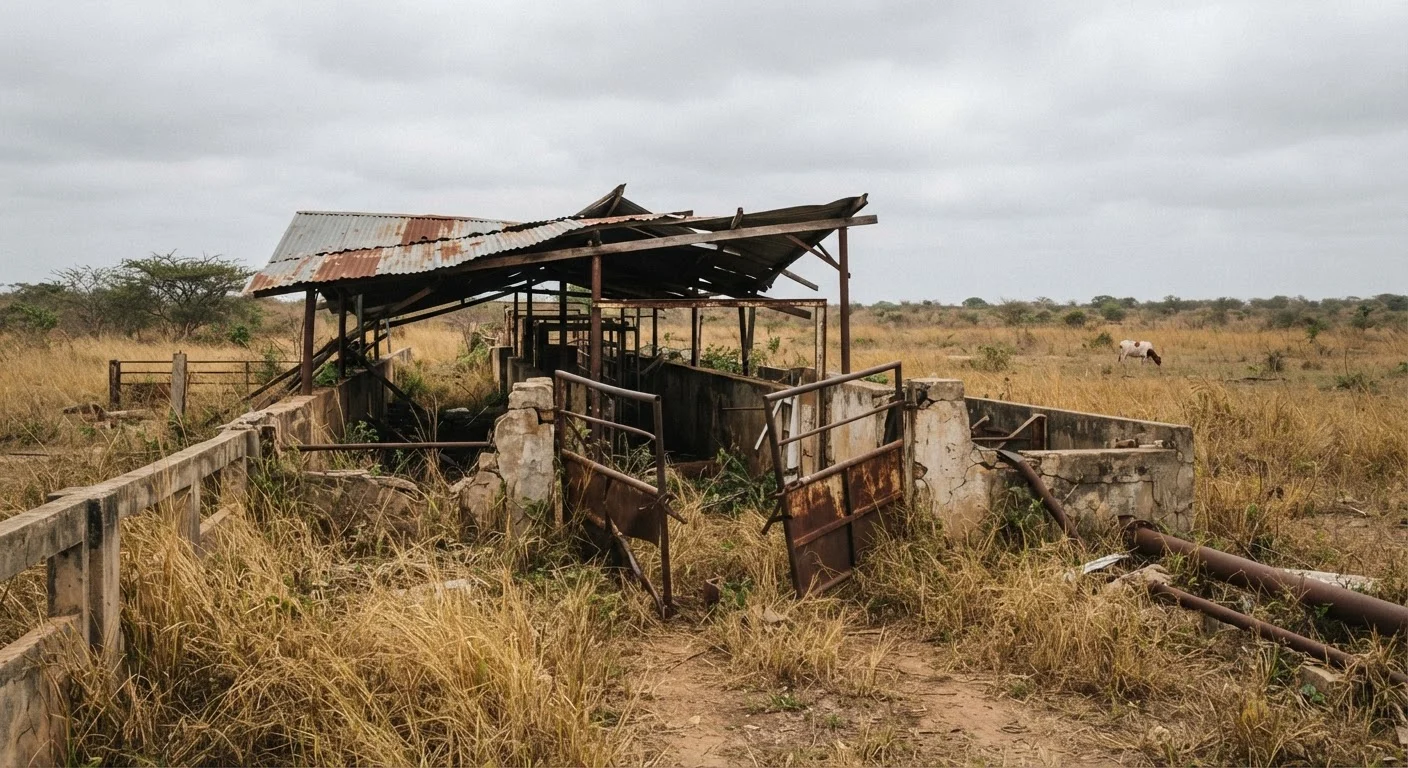
The abandoned buildings of a defunct state cattle ranch in Ghana, a collapsed corrugated roof over an empty concrete crush pen, rusted steel gates hanging open on broken hinges, tall dry grass reclaiming the yard, a single stray cow grazing in the far distance, flat overcast savannah light, documentary photograph, muted earthy tones, no text, no watermark
The state's own record is a warning
Tadzewu, Branam and the Ghana Livestock Company: No public breeding rail to plug into, and no ranching blueprint to follow.

Now the gap itself, stated plainly. Ghana has no dedicated cattle-ranching policy and its old state ranches are defunct, a gap the Feed Ghana Programme itself names (author synthesis of policy sources, 2025). Ghana has no dedicated cattle-ranching policy or law.

Ranching appears only as a tax line in Act 896, as a problem the Feed Ghana Programme names ('lack of a structured, well-managed cattle ranching system'), and as scattered herder-ranch pilots in places such as Afram Plains South (Acting for Life, 2019; Ministry of Food and Agriculture, 2025). The state's own record is a warning: the old commercial ranches at Tadzewu and Branam and the Ghana Livestock Company are defunct, and the Animal Production Directorate's seven breeding stations underperform and no longer supply improved stock (MADE Northern Ghana, 2014). There is no public breeding rail to plug into, and no ranching blueprint to follow.

🔍 WHAT THIS MEANS

A policy vacuum is not the same as a closed door; it is an unwritten one. Because no ranching policy defines the model, an entrant who builds a working, well-run ranch or feedlot sets the template rather than fits one, and the improved-stock and breeding gap left by the collapsed state stations (Pillar 1) is a supply business in its own right. The caution the history teaches is the opposite of the incentive: state-led ranching failed on land conflict and weak management, so the winning model is privately run, modest in its land footprint, and built with the herders around it rather than by fencing them out.

🐄 The financing rails, and how to get on them 🐄

If the programme money is not there, the financing rails partly are, and they are the part of the enabling environment an entrant should actually use. The central rail is a risk-sharing guarantee. GIRSAL has issued over GH¢604 million of guarantees to 17 banks, unlocking about GH¢1.18 billion of loans, and the programme aims to lift farm lending from about 5 to 10 percent by 2028 (GIRSAL; Feed Ghana Programme, 2025).

GIRSAL does not lend to you; it stands behind the bank that does, covering up to about 70 percent of the default risk, which is how a cattle plan that a bank would otherwise refuse can become bankable. Alongside it sit two development-partner pools aimed squarely at the northern savannah where the cattle are: the Ghana Agricultural Sector Investment Programme at about US$115 million, and an African Development Bank Savannah Investment Programme top-up of about US$20 million, both covering livestock (IFAD/GASIP; African Development Bank, 2023). The table below reads the incentives and rails the way an entrant should, by what each is worth and what the catch is.

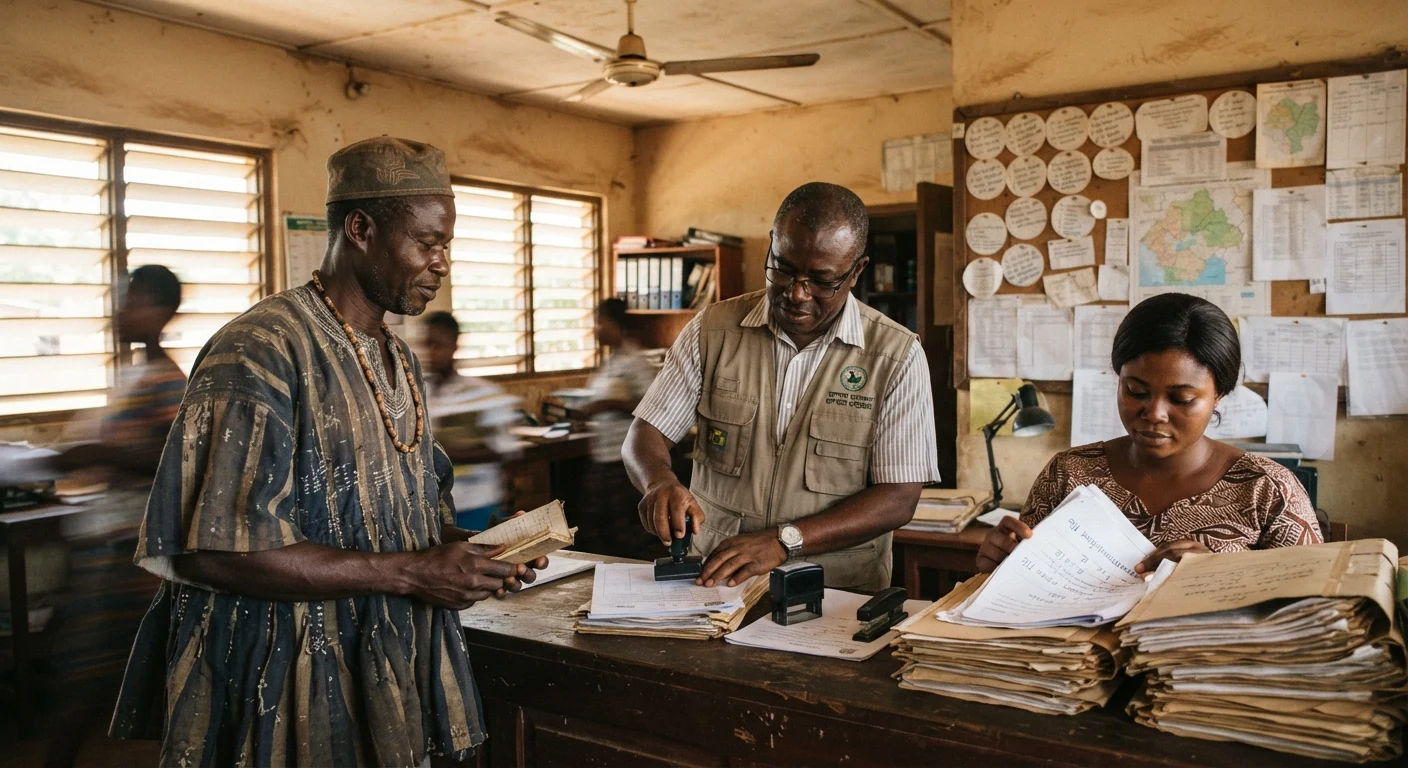
A Ghanaian feedlot operator standing at a district veterinary and licensing office counter, an officer pressing a rubber stamp onto a permit form while a second clerk checks an environmental permit file from a stack of manila folders, a noticeboard of pinned circulars and a slow ceiling fan above, worn wooden counter, documentary photograph, warm earthy tones, natural light through louvred windows, no text, no watermark
The guarantee, not the grant, is the lever
How a refused plan becomes bankable: GIRSAL does not lend to you. It stands behind the bank that does, which is how a refused cattle plan becomes bankable.
GH¢604m+
of GIRSAL guarantees issued to 17 banks, unlocking about GH¢1.18 billion of loans
~70%
of a bank's default risk covered by the guarantee that stands behind it
Table 12: The incentives and financing rails read for the entrant: what each is worth, and the catch
Incentive or railWho gives itWhat it is worthThe catch
10-year ranching tax holidayGRA / GIPC-GIPA (Act 896)Income taxed at 1 percent for 10 years, then 25 percentMust be a registered ranching business; confirm it survives the GIPA Act
Agro-processing tax holidayGRA (Act 896)5-year holiday for a feedlot or abattoir on local raw materialsShorter than ranching; must use local animals
GIRSAL credit guaranteeGIRSAL with Bank of GhanaCovers up to 70 percent of a bank's default riskGuarantee is to the bank, not to you; you still need a bankable plan and a partner bank
GASIP and AfDB Savannah financeIFAD/GoG; AfDB-GAFSPAbout US$115m and US$20m pools targeting northern livestockWindow-based and competitive; northern-focused
Feed Ghana Programme inputsMinistry of Food and AgricultureImproved breeds, feed and vaccines in principleOnly about GH¢2.84m for cattle and no target; do not depend on it
GIPC/GIPA plant exemptionsGIPC-GIPADuty and VAT relief on plant, machinery and partsForeign investors must register; not an automatic profit-tax holiday

Sources: Income Tax Act 2015 (Act 896); Bank of Ghana (2024); GIRSAL; IFAD GASIP; African Development Bank (2023); U.S. Department of State (2025).

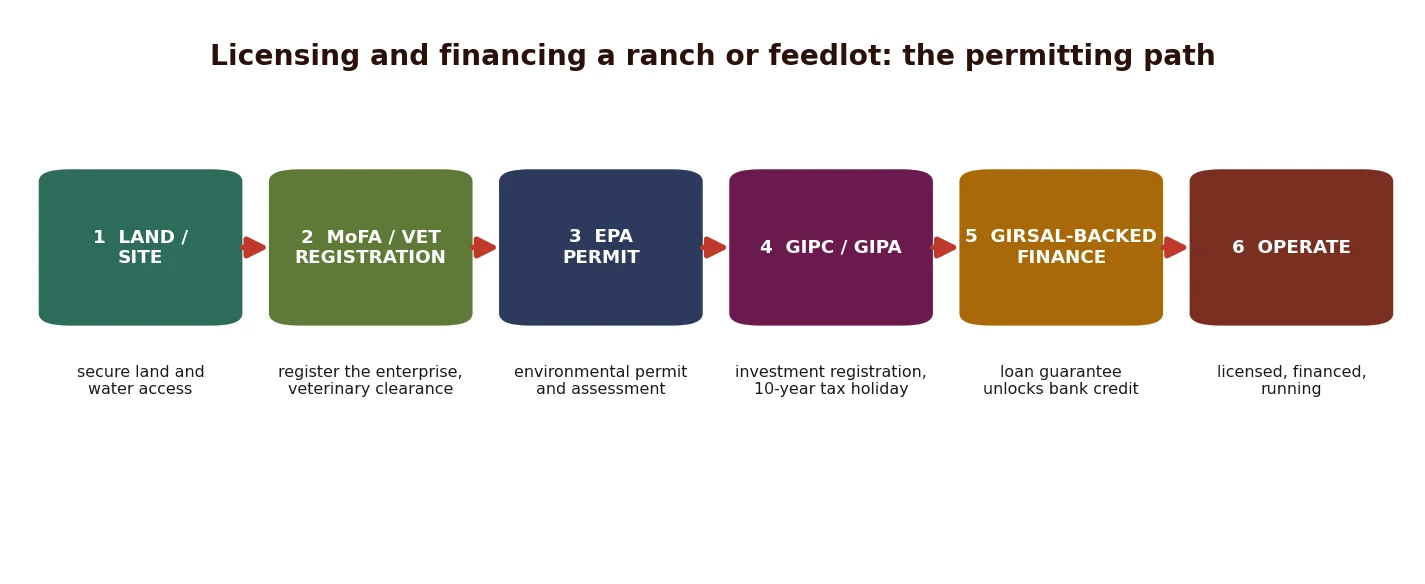
How to get a ranch or feedlot licensed and financed
Figure 26 How to get a ranch or feedlot licensed and financed
What this shows

A commercial ranch or feedlot must register and clear veterinary, environmental and land steps. The paperwork is a cost, but once held it is a moat.

🔍 WHAT THIS MEANS

The single most useful move an entrant can make is to treat GIRSAL, not the Feed Ghana Programme, as the public lever. A guarantee that lets a bank say yes is worth more to a real cattle business than a subsidy line it will never see. Pair the guarantee with the tax holiday and the agro-processing holiday, and the state has quietly done more for your economics through its financing and tax rails than through its flagship programme.

🐄 The institutions: the doors to knock on 🐄

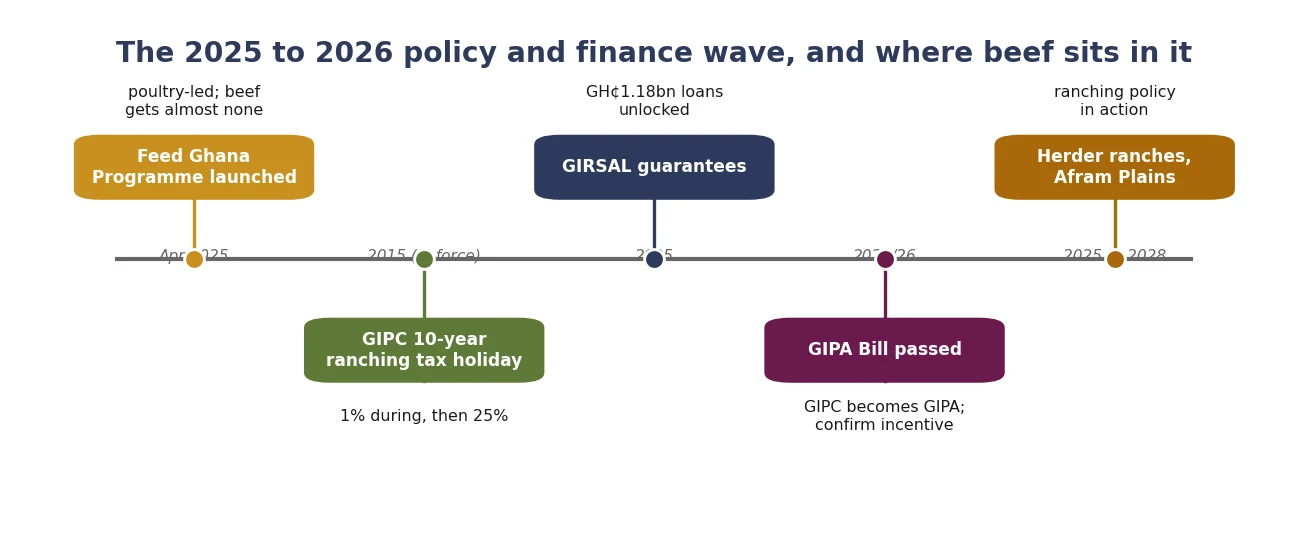
The policy and investment timeline: from the 2016 livestock strategy to the 2025 Feed Ghana Programme and the 2026 GIPC-to-GIPA change
Figure 27 The policy and investment timeline: from the 2016 livestock strategy to the 2025 Feed Ghana Programme and the 2026 GIPC-to-GIPA change
What this shows

A wave of policy and finance is arriving, but it is aimed at poultry and general agriculture. For beef cattle the tax holiday and the financing rails matter more than the flagship programme.

Behind the money sits a small, knowable set of institutions, and knowing which door does what saves months. Policy and extension run through the Ministry of Food and Agriculture, with two directorates that matter most for cattle: the Animal Production Directorate, which owns breeding and husbandry (and the underperforming stations), and the Veterinary Services Directorate, which owns animal health, vaccination and disease control (Pillar 3). Investment registration and the tax incentives run through the GIPC, now becoming GIPA. Product standards, meat safety and any processed or exported product run through the Ghana Standards Authority and the Food and Drugs Authority (FAIRS, 2025). These are the offices an entrant will actually deal with, and none of them is hard to reach.

Keep the sector's weight in proportion when you sit across from them. Livestock is about 13 percent of agricultural output, and agriculture about 22 percent of the whole economy (Ministry of Food and Agriculture, SRID, 2024). Livestock is a real but junior part of the farm economy, and cattle is a junior part of livestock, which is precisely why the policy attention and the budget flow elsewhere. That is the honest backdrop to every meeting: you are building in a corner the state has not prioritised, so you will get a tax holiday and a loan guarantee, but not hand-holding.

~13%
livestock's share of agricultural output, a real but junior part of the farm economy
~22%
agriculture's share of the whole economy, the honest backdrop to every meeting
📡 MARKET SIGNAL: A THIN INSTITUTIONAL MAP REWARDS RELATIONSHIPS

The institutional map is thin, and that is a signal about how to work it. With few offices between you and a licence, relationships matter more than paperwork volume: a working link to the district veterinary officer and the Animal Production Directorate beats any brochure, because they control the health and breeding levers your business lives on. Build those links early, before you need a permit in a hurry.

🐄 The risks that sit inside the policy and finance picture 🐄

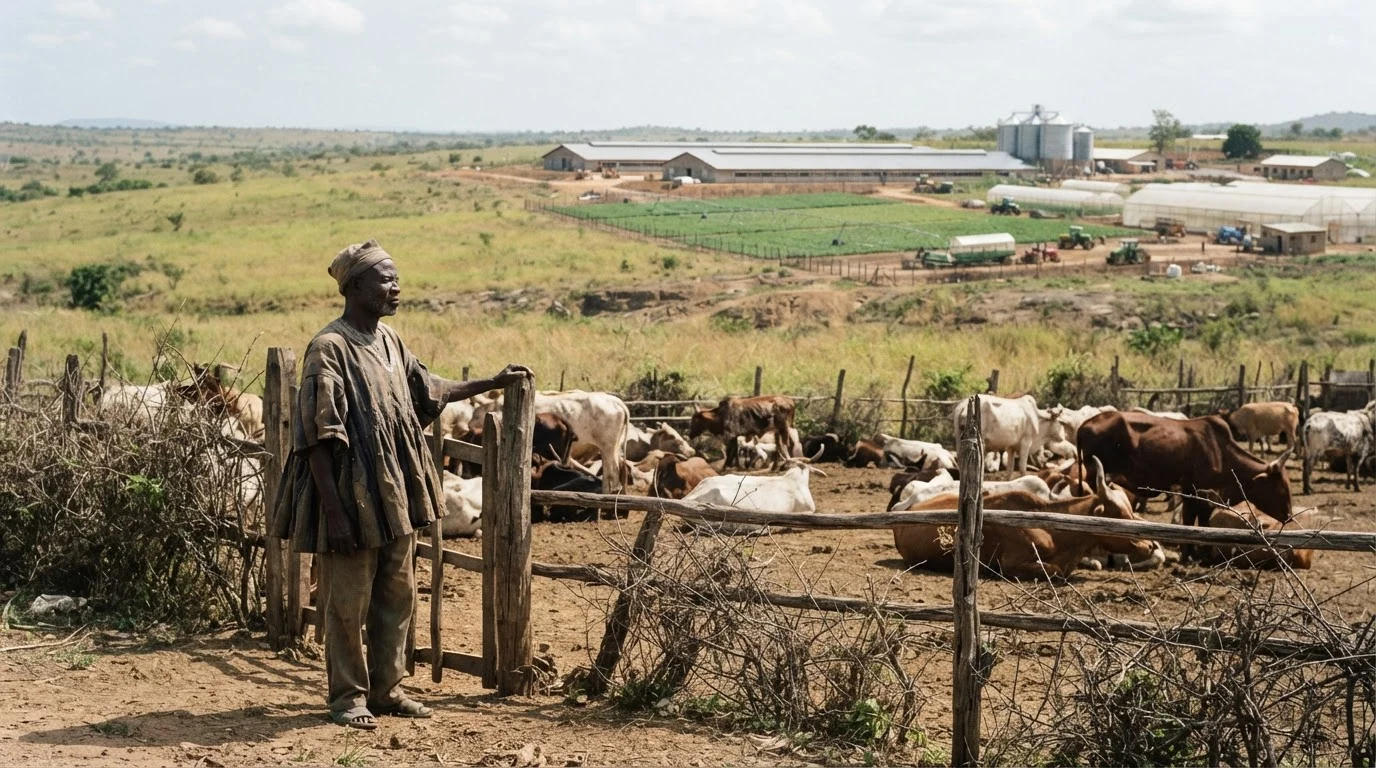
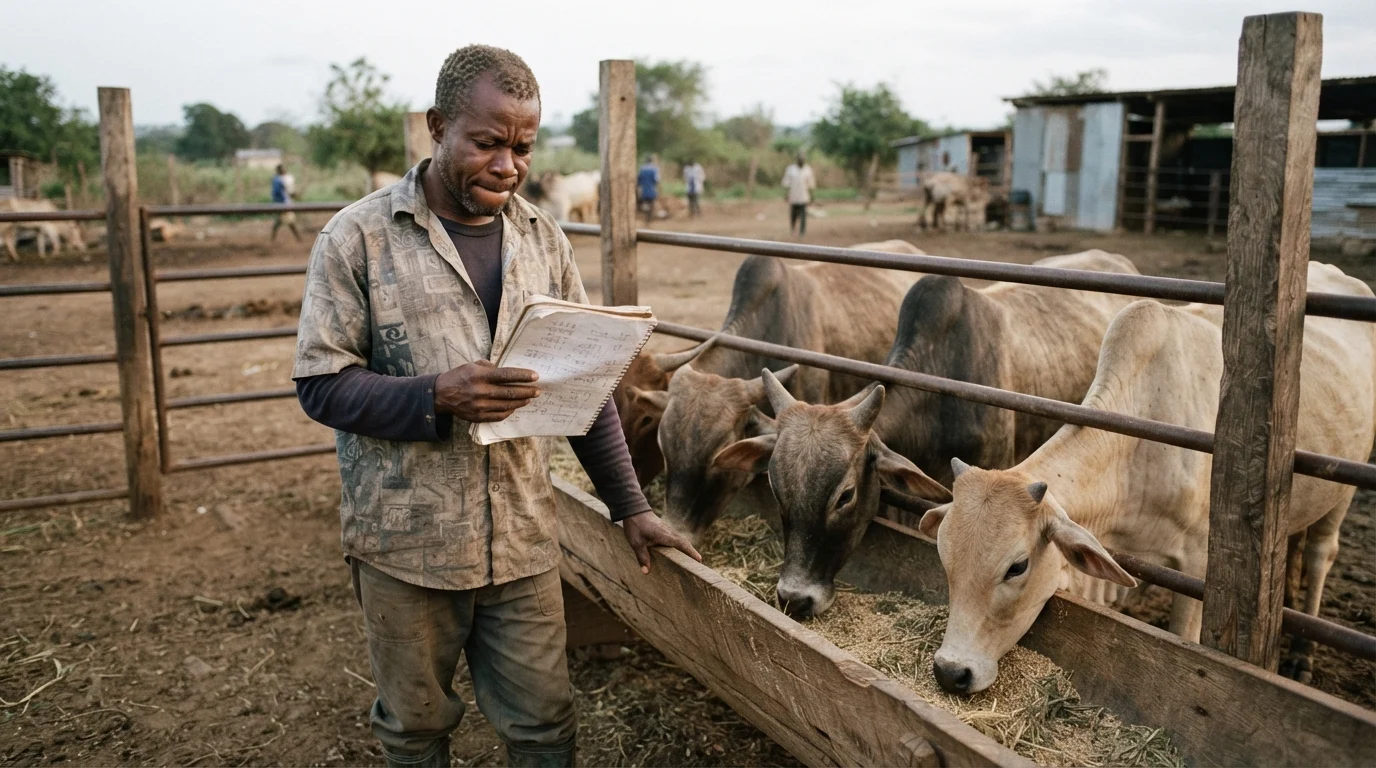
A herd owner standing at a fence beside his cattle, waiting on state support that is not coming

Policy that bypasses beef cattle

HIGH
What it is

The flagship Feed Ghana Programme is poultry-led and gives beef cattle no production target and a negligible budget line, so an entrant who assumes the state will co-invest, subsidise inputs or build the missing breeding and ranching infrastructure will be left waiting for support that the numbers say is not coming.

Evidence

The programme budgets about GH¢2.84 million for cattle against roughly GH¢26 billion for poultry, and sets no beef-cattle head or output target (Ministry of Food and Agriculture, 2025).

Who it hits

Entrants and lenders whose business case depends on public subsidy, cheap improved stock or state-built ranching capacity.

How to manage it, and the opening

Build a plan that stands on its own margins and uses the tax holiday and GIRSAL guarantee, not the programme. Treat any public input that does arrive as upside, never as the base case, and capture the openings the state's absence leaves open.

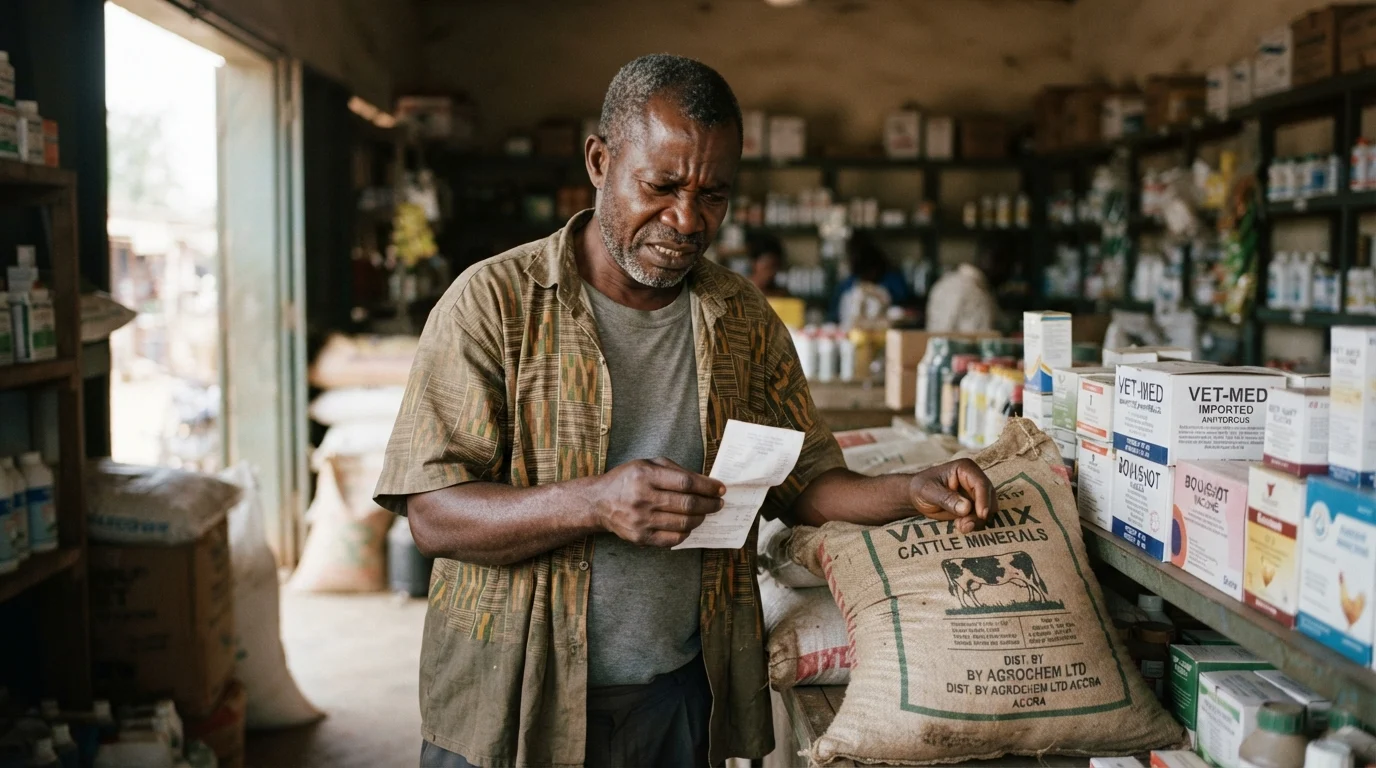
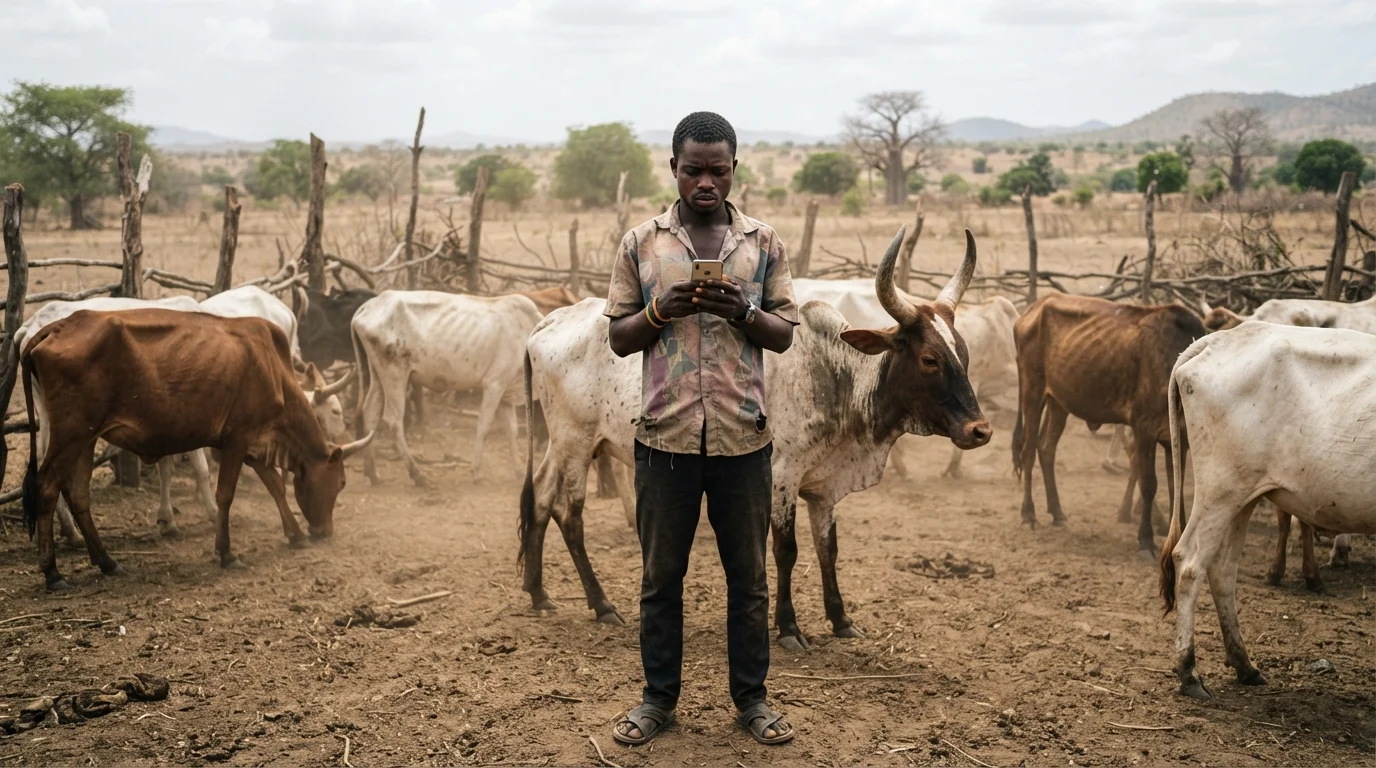
A trader holding a paper of figures as a cedi swing moves the live-cattle price under him

Currency and import-price swings

HIGH
What it is

Beef prices, input costs and the competitiveness of local against imported meat all move with the cedi. A firming cedi cuts the local live-cattle price, as it did in 2026, squeezing a finisher's margin, while a falling cedi lifts feed, medicine and equipment costs and the value of the tax holiday can be eroded by inflation.

Evidence

A mature cow fell to about GH¢20,000 to 25,000 in 2026 from about GH¢30,000 in 2025 as the cedi firmed, even as retail beef rose about 20 percent on the year (Ghana News Agency, 2026; Selina Wamucii, 2026).

Who it hits

Finishers and feedlots who buy stock and inputs on one currency footing and sell months later on another.

How to manage it, and the opening

Do not over-borrow in a currency you do not earn, keep the finishing window short to limit exposure, and price against the landed cost of imported beef so a cedi swing does not quietly turn a margin negative overnight.

Building a business that depends on a programme or subsidy

MEDIUM
What it is

Ghana's livestock support has a history of being announced, underfunded and superseded: Rearing for Food and Jobs gave way to Planting for Food and Jobs 2.0 and then to the Feed Ghana Programme, each poultry-weighted. A plan whose returns depend on a named programme inherits the risk that the programme is thin, is redirected or lapses.

Evidence

Successive livestock programmes have been 'underfunded' with most support going to poultry, and the current flagship sets no beef-cattle target (USDA FAS, 2023; Ministry of Food and Agriculture, 2025).

Who it hits

New entrants who anchor a model on subsidised inputs, grants or a specific programme window rather than on statute and real demand.

How to manage it, and the opening

Anchor the business on the durable rails instead: the statutory tax holiday, the GIRSAL guarantee mechanism, and genuine market demand (Pillar 2). These outlast any single programme and do not depend on a budget line being honoured.

🔑 KEY TAKEAWAYS
01

The flagship Feed Ghana Programme is poultry-led: beef cattle gets no production target and only about GH¢2.84 million against roughly GH¢26 billion for poultry, so do not plan on it.

02

The one genuinely generous incentive is a statutory 10-year ranching tax holiday, taxed at 1 percent then 25 percent, with a 5-year holiday for a feedlot or abattoir on local animals.

03

There is no dedicated ranching policy and the state ranches and breeding stations are defunct, a gap to fill privately rather than a template to follow.

04

The financing rails are usable: a GIRSAL guarantee covering up to 70 percent of a bank's risk, plus GASIP and AfDB pools aimed at the northern savannah.

05

The institutions are few and knowable, MoFA with its Animal Production and Veterinary Services Directorates, GIPC/GIPA and the Ghana Standards Authority, so relationships beat paperwork.

Where this connects. The tax holiday and the GIRSAL guarantee are the public side of the enterprise economics that Pillar 5 works through, and they are worth most to the finishing, processing and cold-chain openings mapped along the chain in Pillar 6. Because the state's programme support is thin, the entry strategy in Pillar 8 leans on these durable rails, the statutory holiday and the financing guarantee, rather than on a programme that bypasses beef cattle.

Written for each reader

🐄 Practitioner intelligence 🐄

Hover any card to pause and lift it.

For students

Learn to read a policy landscape for what it does not say. The lesson here is that a flagship programme can name a commodity and still starve it, so trace the actual budget line, not the press release. Study the Income Tax Act's Sixth Schedule and the GIRSAL guarantee model, because those two mechanisms, a 10-year tax holiday and a risk-sharing guarantee, are the real public support in this sector. The habit to build is checking the statute and the money flow behind any announced 'support', because in beef cattle the gap between what is promised and what is funded is the whole story.

For entrepreneurs

First move: register your ranching or feedlot business correctly and secure the Act 896 tax concession through the GRA, because a decade at 1 percent income tax is the single biggest thing the state will do for you. Then build a bankable plan and approach a partner bank with a GIRSAL guarantee rather than waiting for the Feed Ghana Programme, which has no money for you. The trap to avoid is designing the business around subsidies or improved stock the state no longer supplies. Confirm the tax holiday survives the GIPC-to-GIPA change before you finalise your model, and treat any programme input that arrives as a bonus, not a pillar.

For investors

Diligence should separate durable rails from lapsing programmes. Underwrite the statutory tax holiday and the GIRSAL guarantee, which are real and bankable, and give zero weight to Feed Ghana Programme support for beef cattle, because the budget shows there is effectively none. A venture whose returns depend on public subsidy has misread the policy, whereas one that banks the tax holiday and stands on market margins is working with the grain. Price in currency risk explicitly: cedi swings move both the live-cattle price and imported-beef competitiveness, and stress the model against a firming and a falling cedi before committing.

For ecosystem actors

The highest-value public actions are the cheapest ones: confirm and protect the 10-year ranching tax holiday through the GIPC-to-GIPA transition, and widen GIRSAL guarantees and northern-savannah investment windows toward cattle finishing and processing. A modest, dedicated ranching and breeding policy, built with herders rather than by fencing them out, would fill the gap the defunct state ranches left. The failure to avoid is announcing another poultry-weighted programme and calling it livestock support, which grows the headline without moving a single beef-cattle margin.
Download full PDF
UpcomingThis document isn't available yet.