Ghana Agribusiness PlaybookGoats & Sheep
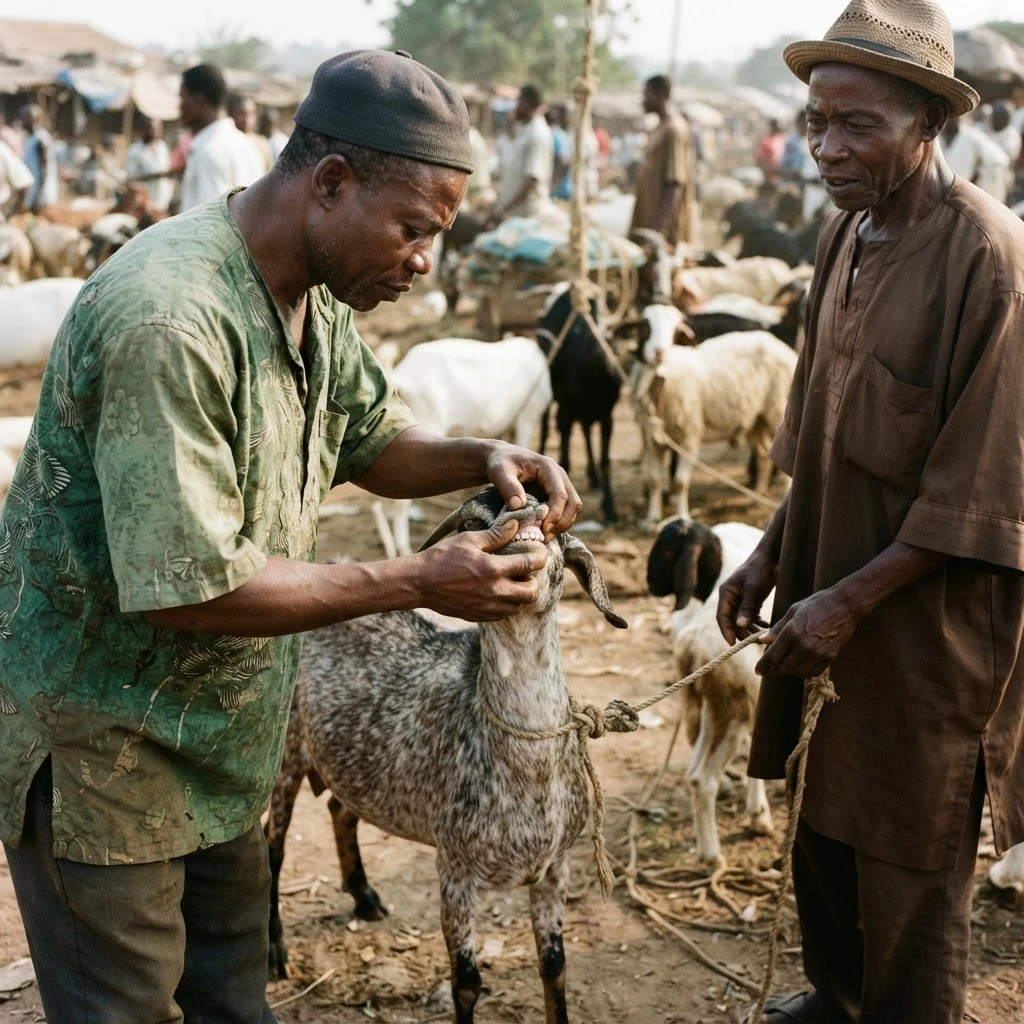
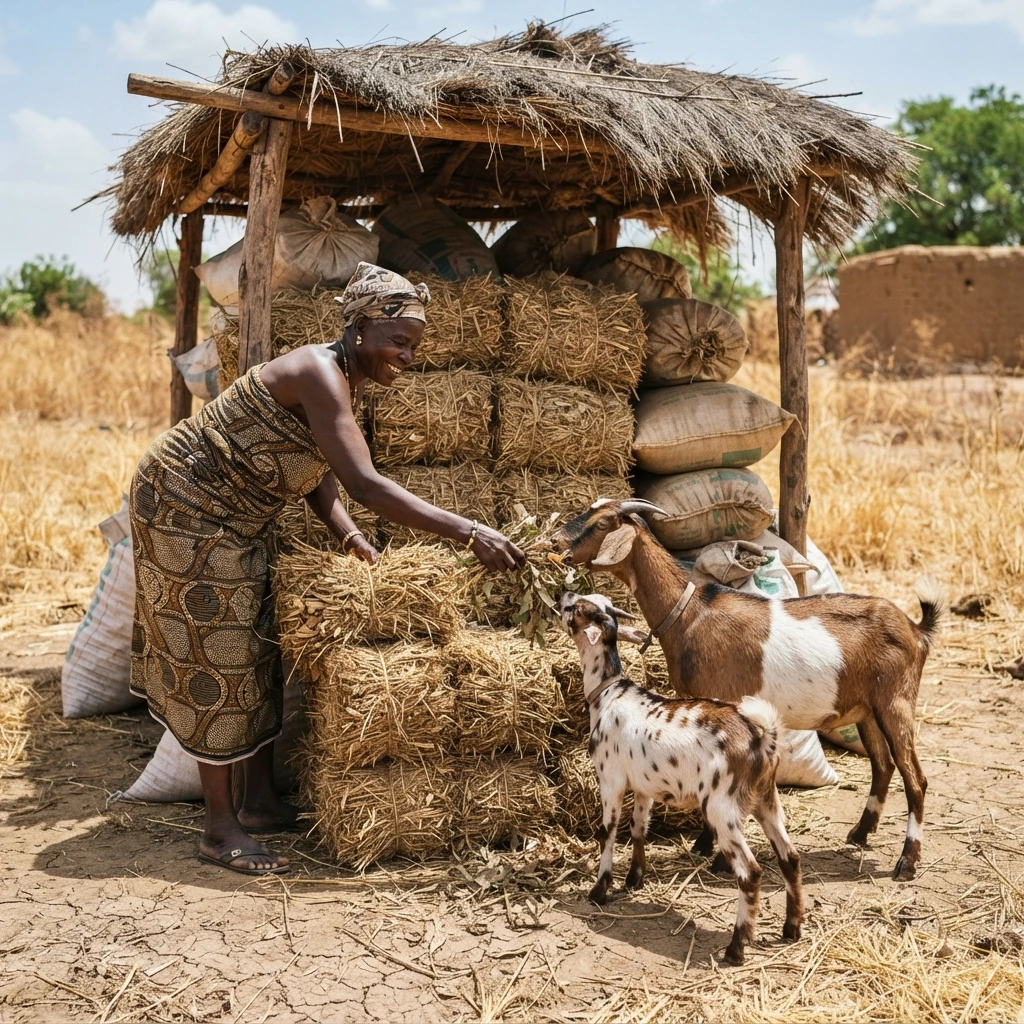
A trader checking a goat's teeth at a Ghanaian livestock market, mixed local and Sahelian breeds tethered nearby
Goats & Sheep · Pillar 01

Species and Breed Profiles

Ghana keeps small, hardy local breeds and larger northern animals in opposite systems, and the state's own restocking programme still had to source its improved breeding stock from a Burkina Faso border that closed on 8 May 2026.
Species and Breed Profiles · Pillar 01

Ghana keeps two kinds of small ruminant that matter for business: the small, hardy local breeds and the larger animals of the north and the Sahel. Knowing which animal suits which system and market is the first business decision a keeper makes, because it sets the weight, the price and the survival rate of everything that follows.

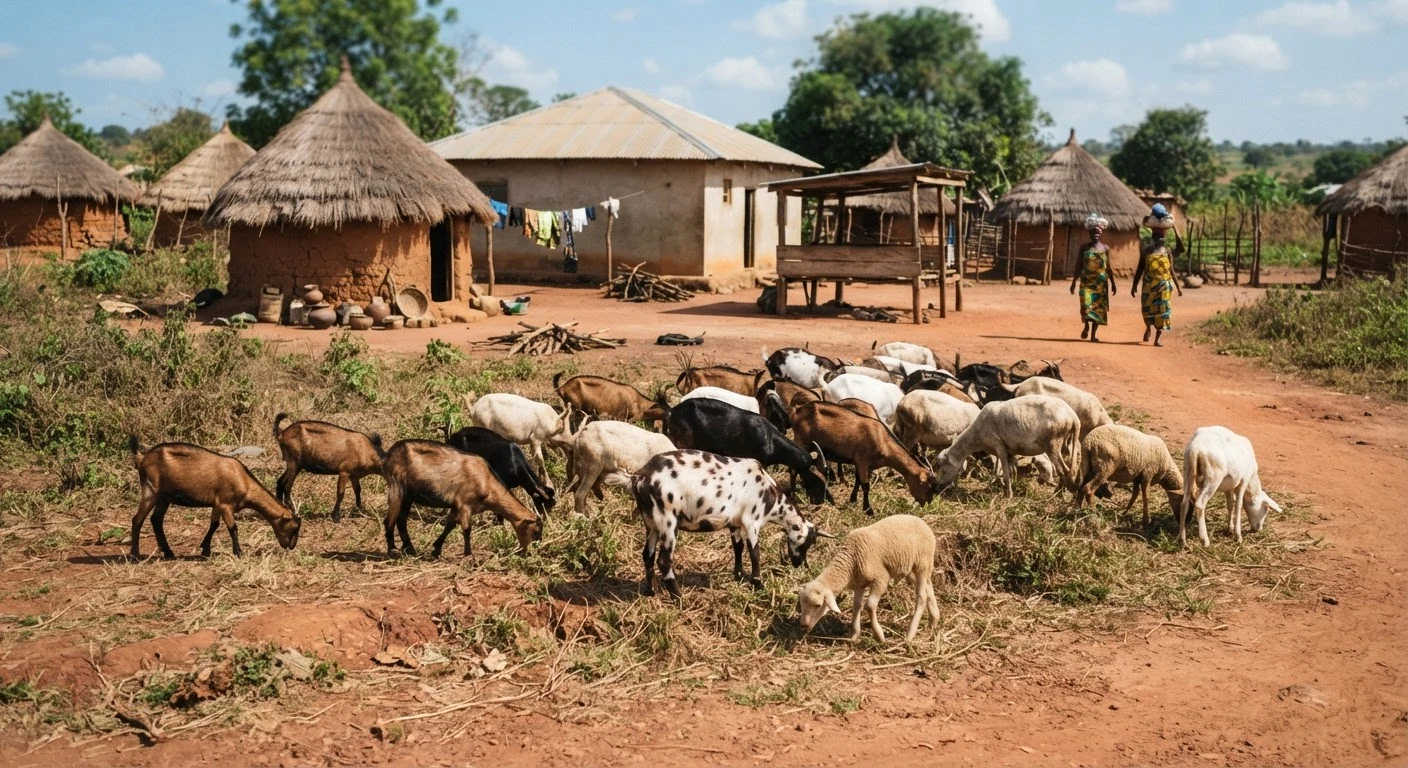
The local goat and sheep are both called West African Dwarf, or Djallonke. They are small, they survive disease and the wet forest climate that kills bigger animals, and they breed often. The northern and imported animals are much larger and fetch higher prices, especially as festival rams, but they need the drier climate and better feeding of the north1. Between these sits one composite breed developed in Ghana itself, the Nungua Blackhead sheep2.

A mixed flock of small West African Dwarf goats and sheep grazing together beside a rural Ghanaian compound at midday, red laterite soil, thatched huts in the background, documentary photograph
Two kinds of animal
The first decision: which animal suits your system and market.
18 to 25 kg
mature weight of the West African Dwarf, the goat most Ghanaian keepers own
140 to 185%
litter size (prolificacy) of the West African Dwarf goat
~20%
of kids die before weaning, a rate barely moved in 30 years

🐐 Small versus large: the weight trade-off every keeper faces 🐐

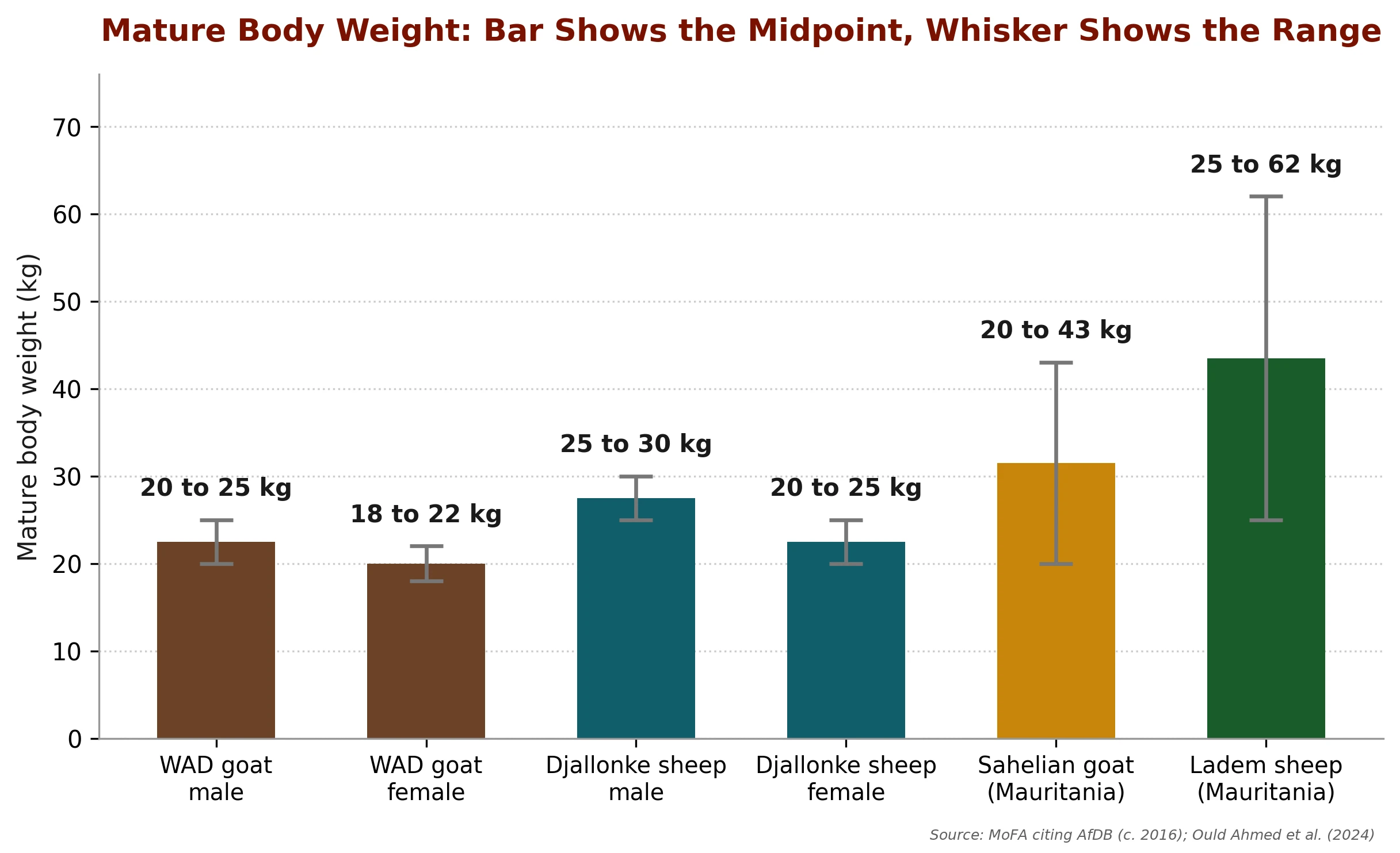
The West African Dwarf goat matures at 20 to 25 kg in adult males3 and 18 to 22 kg in adult females, and the Djallonke sheep is similarly small, while the goat reaches 20 to 43 kg for the Sahelian goat in Mauritania4 and the sheep 25 to 62 kg for the Ladem sheep in Mauritania. Size sells: the heavier northern rams command the festival premium, but they need better feed and a drier climate to thrive.

Mature body weight by breed: the small West African Dwarf goat and sheep against the larger Sahelian and Ladem breeds
Figure 1 Mature body weight varies sharply by breed, from the small West African Dwarf to the large Sahelian
What this shows

Read it as a cost, not a ranking. The two tallest bars belong to animals that are not adapted to the humid south and, in the Sahelian and Ladem case, are measured in Mauritania rather than Ghana, so the weight advantage shown here is not available to most Ghanaian keepers at any price. The whisker matters more than the bar: a 20 to 43 kg range means selection inside a breed moves more weight than switching breed does.

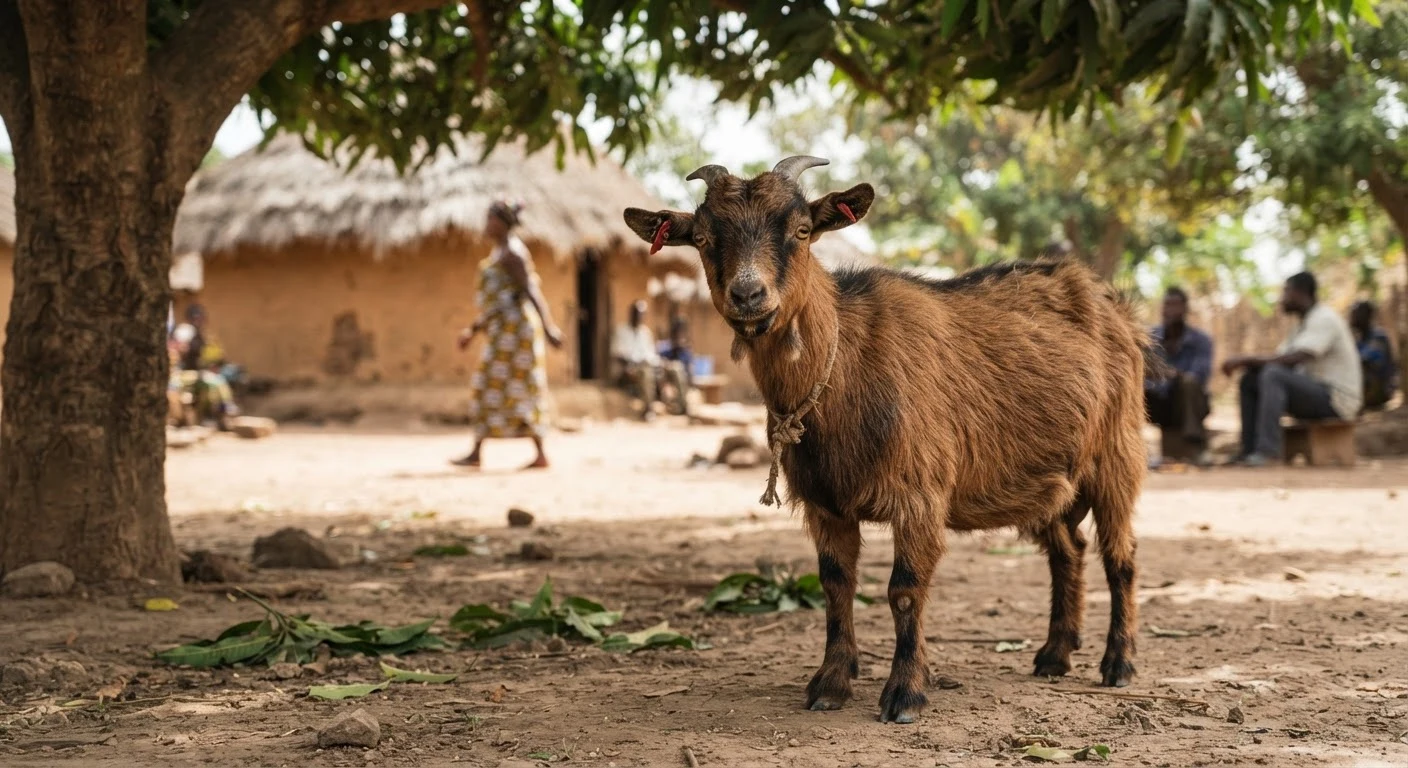
A close-up portrait of a small, tough West African Dwarf goat standing in the shade of a mango tree in a Ghanaian village, its short legs and stocky build visible, documentary photograph
Small and safe
Tough enough for the forest belt, but sold by the animal, not the kilogram.
20-43 kg
Sahelian goat weight range, measured on a small sample in Mauritania
25-62 kg
Ladem sheep weight range, same Mauritania sample

🐐 The West African Dwarf: small, tough and the national workhorse 🐐

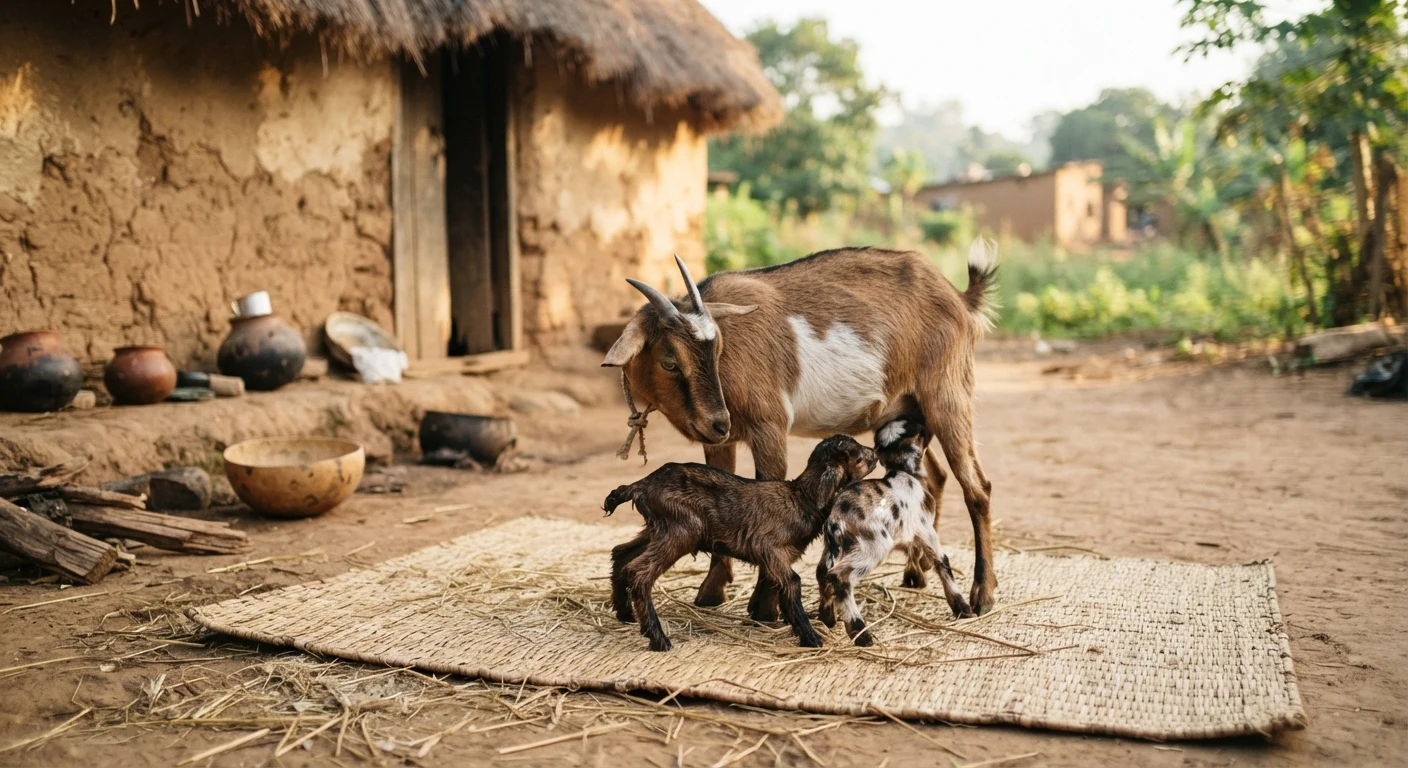
The West African Dwarf goat is the animal most Ghanaian keepers own. It is small, but it makes up for size with toughness and fertility. It tolerates trypanosomiasis, the disease carried by tsetse flies that stops larger livestock living in the forest belt, and it breeds well: a doe carries a litter size of 1.40 to 1.85 across the breed’s range5, and 1.50 kids per parturition in the Kumasi record, from 54 parturitions. She kids for the first time at about fourteen months, and can kid again roughly every eight months, on 140 monitored first kiddings and 67 intervals6. Studies at the national breeding station at Kintampo and at the CSIR Animal Research Institute put birth weight at about 1.15 to 1.40 kg, daily weight gain before weaning at about 32 to 36 grams, and weaning weight at around 5 kg7. A study of 1,384 goats across four agro-ecological zones confirmed the breed’s wide spread and varied coat, horn and wattle types8.

A West African Dwarf goat doe nursing two newborn kids on a woven mat outside a rural Ghanaian home, morning light, documentary photograph
The commercial strength
Prolific by breed: a Kumasi record of 1.50 kids a parturition.
150%
Kumasi litter-size record, from 54 parturitions
~14 mo
age at first kidding, 417.57 days on 140 monitored cases
Table 2: West African Dwarf Goat Performance, by the Numbers
MeasureFigureWhat it means for the business
Mature weight (male / female)20 to 25 kg / 18 to 22 kgSmall carcass; sells by the animal, not by weight
Prolificacy140 to 185 percent (Kumasi record 150 percent)Flock multiplies fast; the breed's main commercial strength
Age at first kiddingabout 14 months (417.57 days)First income a little over a year after a doe is kept
Kidding intervalabout 8 months (246.90 days)A doe can give roughly three kiddings in two years
Daily gain before weaningabout 32 to 36 gramsSlow growth; a reason to consider larger breeds for meat
Pre-weaning mortalityabout 20 to 22 percent, consistent across 1980, 2007 and 2014Where a breeding flock's profit is actually won or lost

Sources: Ministry of Food and Agriculture (c. 2016), citing African Development Bank (2001); Wilson (1991); Birteeb et al. (2015); Ayizanga et al. (2018); Ofori et al. (2021). Performance figures come from research-station and on-farm studies; on-farm results under extensive keeping are usually lower than station figures.

Where the profit is really won or lost.The doe’s reproductive ceiling is high, and what decides whether it is reached is survival rather than fertility. Roughly one kid in five dies before weaning, and that has hardly moved in thirty years: 22 percent mortality on a station trial9 and 79.9 percent survival on 675 Accra Plains records to 20121011. None of it comes from a herd run commercially, so treat it as the bar to beat rather than as your own rate. Average mortality runs at 32.3 percent in goats and 20.4 percent in sheep in the traditional system12, a figure the source neither dates nor scopes by age, alongside only about 55 percent of lambs and kids surviving to one year in monitored humid-zone flocks in Nigeria, with 20 to 30 percent dying before weaning. Keeping kids alive to weaning, not the size of the litter, is where a breeding flock’s profit is made or lost, so record your own deaths by age and month.

🐐 The sheep: Djallonke, Sahelian and the Nungua Blackhead 🐐

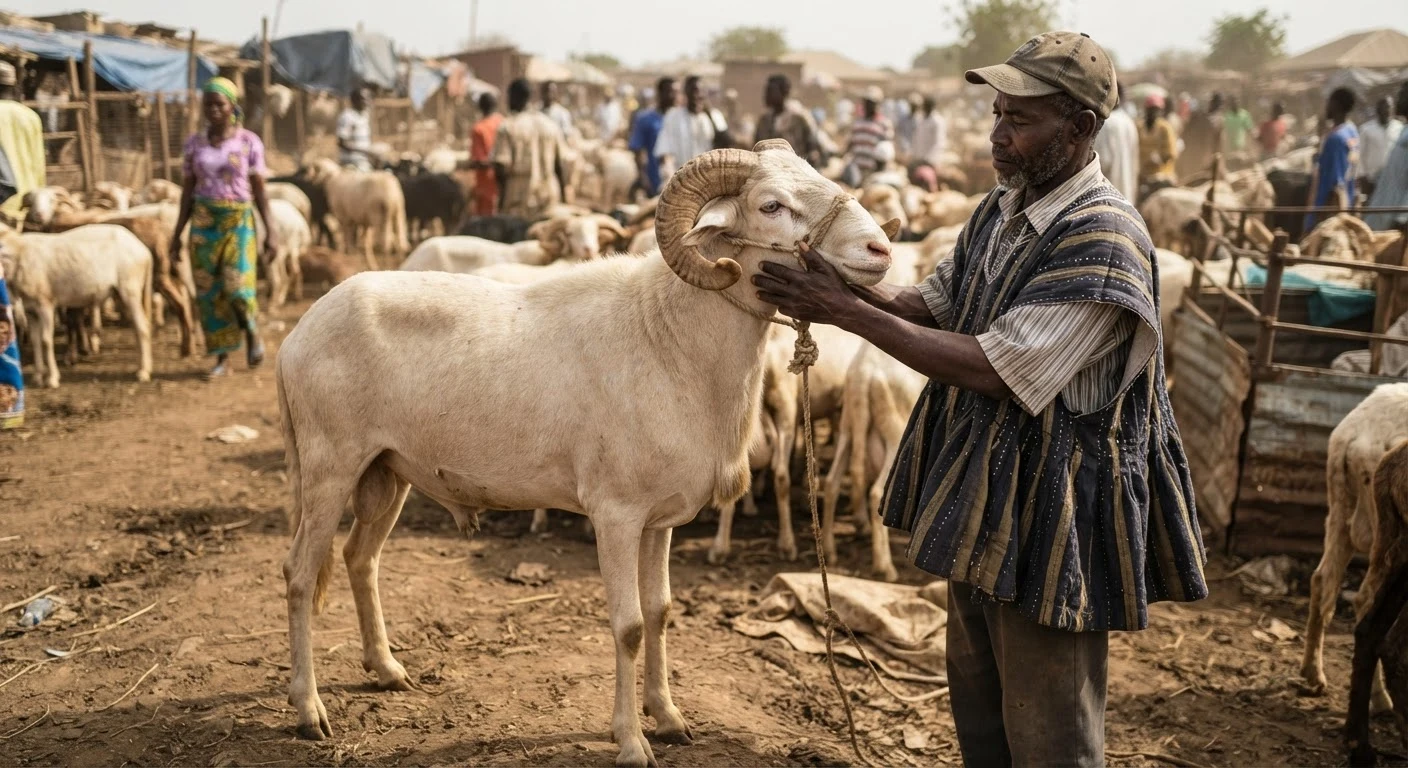
A large, tall Sahelian ram with long legs and pale coat being inspected by a trader at a northern Ghana livestock market ahead of a festival, documentary photograph
The festival ram
Big and dearer, but it needs the drier north and better feeding.

Ghana’s sheep follow the same split. The West African Dwarf or Djallonke sheep is small and hardy, with a birth weight of about 1.7 kg on 528 records and a high twinning rate of about 56 percent, lambing roughly every eleven months13. The Sahelian sheep of the north is far larger and is the animal most often bought as a festival ram. The Nungua Blackhead is a Ghanaian composite, a cross of the imported Blackhead Persian with the local Djallonke, developed for more size while keeping local hardiness, and it produces fewer twins than the local breeds14. Its birth, weaning and mature weights are not well established, and a buyer should ask the breeding station for its own weight records rather than trust a published range. Genetic work on Ghanaian Djallonke and Sahelian sheep found regions of the genome that co-locate with genes for disease resistance, immune response and tropical adaptation, which point to genetics worth keeping rather than replacing; the comparison there is between the hardier Djallonke and the larger Sahelian, both West African breeds, not between local and imported stock15.

1.7 kg
Djallonke sheep birth weight, on 528 records
56%
Djallonke twinning rate, lambing roughly every 11 months
Table 3: Ghana's Main Sheep and Goat Breeds Compared
BreedTypeMature weightKey traitBest use
West African Dwarf goatLocal goat18 to 25 kgHardy, prolific, disease-tolerantBackyard flocks nationwide
Sahelian goatNorthern / imported goat (measured in Mauritania)20 to 43 kgLarge frame, needs dry climateMeat and trade in the north
West African Dwarf (Djallonke) sheepLocal sheep20 to 30 kgHardy, twins oftenBackyard flocks nationwide
Nungua Blackhead sheepGhanaian compositeNot establishedMore size, keeps local hardinessImproved meat flocks
Sahelian / Ladem sheepNorthern / imported sheep (measured in Mauritania)25 to 62 kgLarge; the festival ramFestival fattening and trade

Sources: Ministry of Food and Agriculture (c. 2016), citing African Development Bank (2001); Ould Ahmed et al. (2024); Ngere and Aboagye (1981); Yaro et al. (2019). The Sahelian and Ladem ranges are the minimum and maximum weights across both sexes on a small weighed sub-sample of 16 goats and 27 sheep in Mauritania; for the Sahelian goat the 43 kg maximum is a female, the heaviest male weighing 40 kg. No archived source gives a mature weight for the Nungua Blackhead.

The breed trade-off every keeper faces. Small and safe, or large and demanding. The West African Dwarf breeds survive almost anywhere in Ghana, breed fast and need little, but they are small and grow slowly, so they sell by the animal rather than by weight. The Sahelian animals are big and fetch the festival premium, but they need the drier north, better feed and more care, and they do worse in the humid south. The commercial answer for most entrants is to start with the hardy local breeds for survival and numbers, then improve them through better feeding and selective crossing, rather than importing large animals into a climate and system that will not keep them alive.

🐐 Where the stock itself comes from 🐐

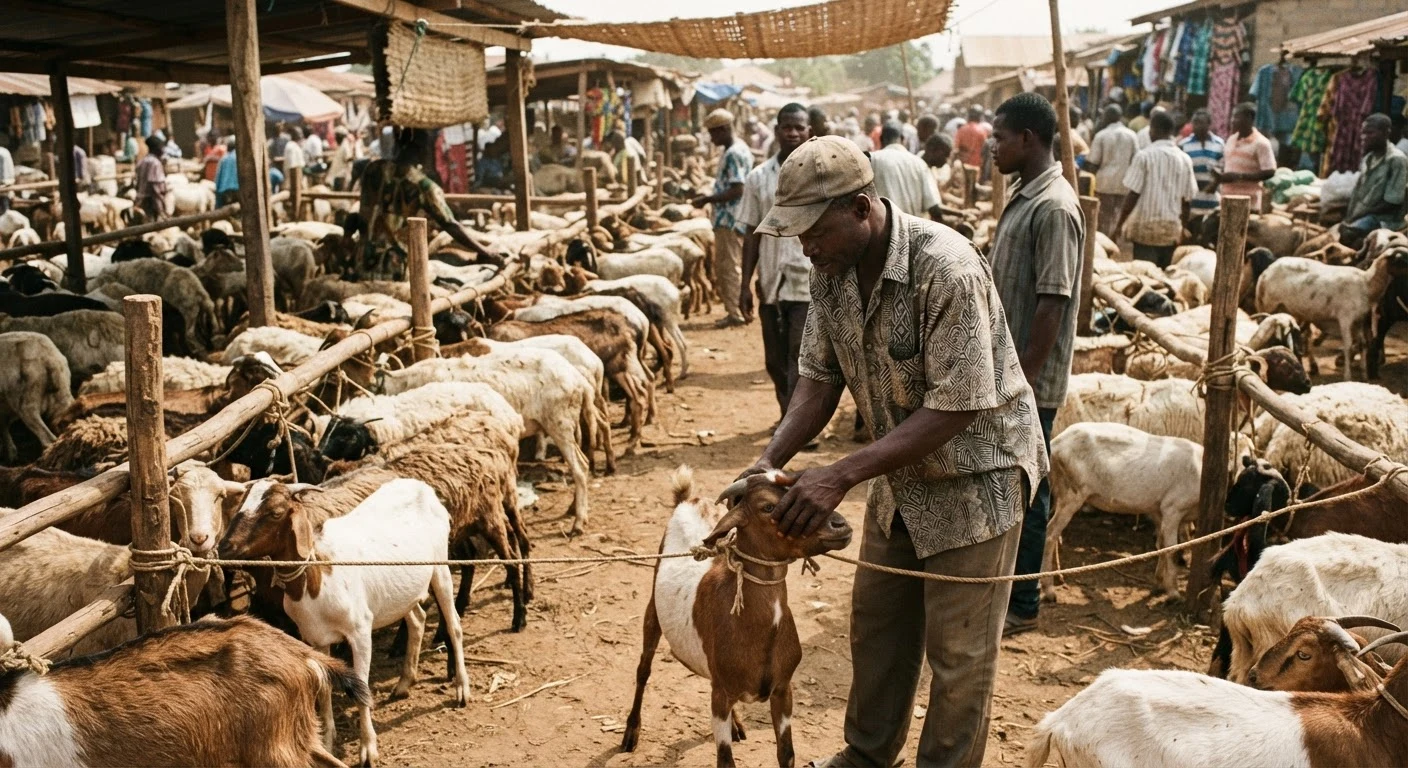
Breed choice assumes there is somewhere to buy good breeding stock, and for an improved animal there mostly is not. Ghana’s own restocking programme distributed 7,500 Djallonke breeding sheep to 750 farmers, sourced from Burkina Faso16, and 1,290 improved West African Dwarf breeding goats to 25 outbreeder farmers and two breeding stations, sourced from Burkina Faso. Burkina Faso then banned livestock exports from 8 May 2026, until further notice17. A state programme with a procurement budget could not assemble improved breeding stock inside Ghana at scale, and the country it turned to has since closed its border, which is the clearest evidence that no domestic multiplier exists (see Pillar 6). Buying blind, from a live market with no health or parentage record, is still the norm.

A crowded live animal market in Ghana with goats and sheep tethered in rows and buyers examining animals by hand, no visible health records or tags, documentary photograph
Buying blind
No health record, no parentage record: still the norm.
7,500
Djallonke breeding sheep imported from Burkina Faso for the state restocking programme
1,290
improved West African Dwarf breeding goats sourced the same way
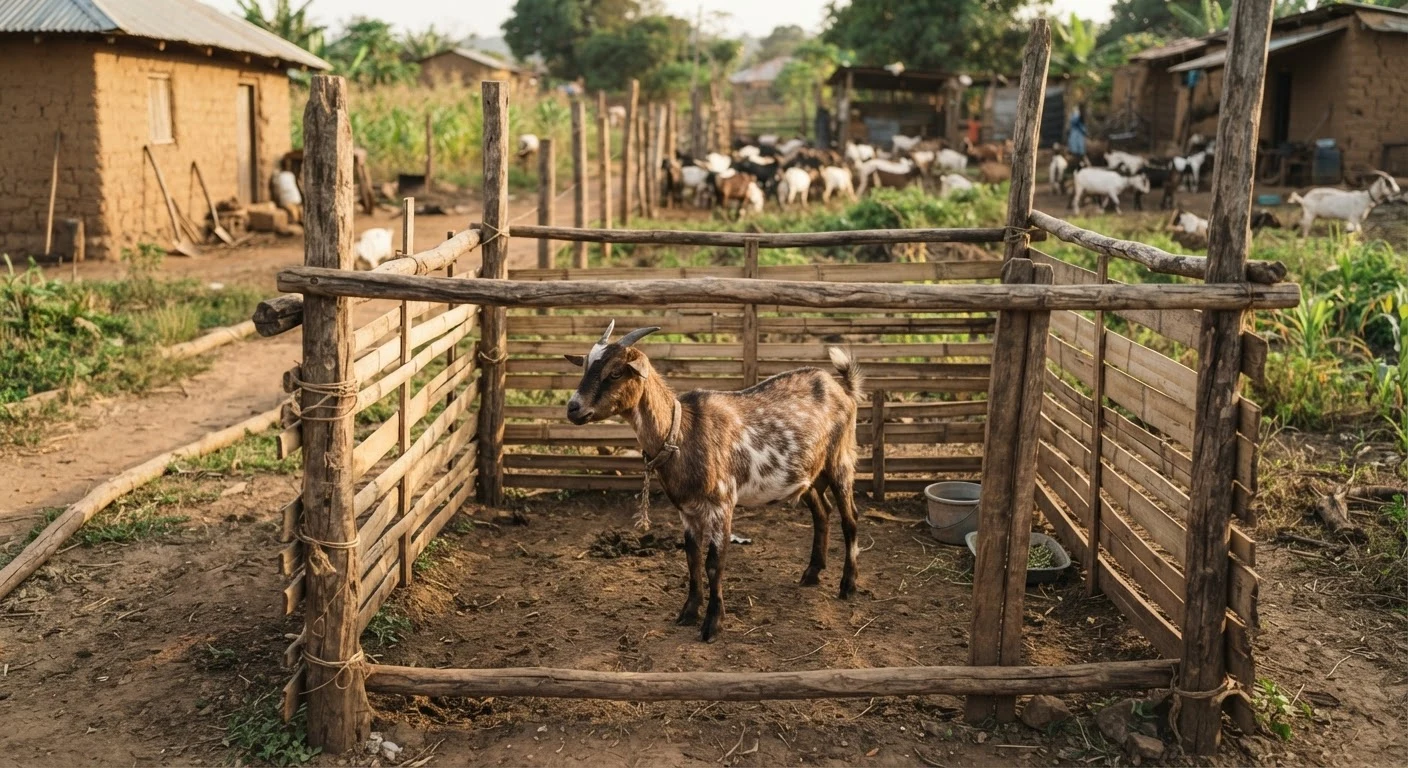
A newly purchased goat penned alone in a simple wooden quarantine enclosure on a Ghanaian smallholding, separate from the main flock, documentary photograph
The safer way in
Small lots, separate sources, two weeks apart from the flock.

🐐 The risks that sit inside the breed and stock decision 🐐

A Ghanaian farmer holding a goat by its harness at a live market, checking it over with no visible health or vaccination record

Breeding stock of unknown health and provenance

HIGH
What it is

Buying breeding or fattening animals with no record of vaccination, disease history or parentage, which is how almost all stock in Ghana changes hands.

Evidence

Farmers put peste des petits ruminants at about half the animals in an affected herd in a farming year18. Nothing in a live-market transaction discloses it.

Who it hits

Every entrant, and hardest the one who buys a founding flock in a single purchase, because one infected animal reaches all of it.

How to manage it, and the opening

Buy in small lots from separate sources, quarantine every new animal for at least two weeks, and vaccinate on arrival rather than on schedule.

A herd of West African Dwarf goats grazing on thin dry-season pasture in rural Ghana, documentary photograph
🐐 Openings: where the stock gap pays 🐐
01

A commercial breeding multiplier. This is the emptiest link in the book. The state's own restocking programme could not assemble improved stock inside Ghana and bought it from Burkina Faso, and that border closed on 8 May 2026. A nucleus flock selling health-checked, parentage-recorded breeding animals has no domestic competitor.

02

Selection services rather than stock. Weight varies more within a breed than between breeds, so a service that selects and prices animals well is worth more to a buyer than an exotic breed label, and it can be sold before a single animal is owned.

03

Kid and lamb survival as the product. Roughly one kid in five dies before weaning and that figure has barely moved in thirty years. Colostrum management, housing and timed treatment sold together as a survival package attacks the one number that decides whether a breeding flock grows.

🐐 Key takeaways 🐐
01

Ghana keeps small hardy local breeds (West African Dwarf, also called Djallonke) and larger northern and Sahelian animals; the split decides weight, price and survival.

02

The West African Dwarf goat is the national workhorse: small at 18 to 25 kg, but prolific at 140 to 185 percent, so flocks multiply fast.

03

Early survival, not litter size, is the breed's real commercial weakness: roughly one kid in five dies before weaning, a figure that has hardly moved between a 1980 station trial and 675 records kept to 2012.

04

The Sahelian sheep and goat are the festival and trade animals, larger and dearer, but they need the drier north and better feeding. Ghana cannot reliably multiply even its own local breeds: the state's restocking programme bought Djallonke sheep and improved West African Dwarf goats from Burkina Faso, a border that has since closed.

05

The Nungua Blackhead is Ghana's own composite, bred for size while keeping local hardiness, though no archived study gives its weights; genome work on Ghanaian Djallonke and Sahelian sheep points to candidate genes for disease resistance and tropical adaptation.

Written for each reader

🐐 Practitioner intelligence 🐐

Hover any card to pause and lift it.

For students

If you are thinking of entering, do not start by buying animals of your own. Offer to record births, weights, deaths and treatments for a neighbour's flock in exchange for a share of the kids born: it costs nothing, and it gives you the one asset this sector genuinely lacks, a real performance record, before you risk any capital. The first-timer mistake is buying a founding flock of many animals from one market in one visit, since a single infected or unrelated animal then compromises all of it. What you leave with is a record book and a judgement of animal health that no course can teach.

For entrepreneurs

Start with the hardy local breeds for survival and fast multiplication, not with imported large animals you cannot keep alive. Improve weight over time through better feeding and selective crossing once your health and feeding system works, and keep records on every animal from day one, even a ruled notebook: it is the cheapest asset this sector currently lacks and it is what a lender or a buyer will eventually pay a premium for. A dated photograph of each animal on a phone, filed beside its weight and treatment dates, costs nothing and turns that notebook into the kind of record a digital herd tool or a vaccine-delivery service can read later.

For investors

Breed choice is the first risk screen. A flock of disease-tolerant local breeds with high prolificacy is a lower-risk asset than imported large breeds in the wrong climate. Value lies in improving survival and growth of local stock and in a reliable supply of health-verified breeding animals, which nobody in Ghana currently sells at scale.

For ecosystem actors

Public support should protect and improve the local breeds rather than replace them: fund the breeding stations, multiply improved Nungua Blackhead and selected West African Dwarf stock, and channel it through the Feed Ghana Programme, because the local genetics are a national asset that survives where imports do not.

Where this connects.The stock-supply gap traced here runs straight into Pillar 6, which sets out why no domestic multiplier exists. The health risk of buying blind is priced in Pillar 3, and the margin a small animal loses at the farm gate is mapped in Pillar 6’s price ladder.

Footnotes
  1. Ministry of Food and Agriculture, "Livestock development in Ghana: Policies and strategies," Government of Ghana (c. 2016). The document carries no publication date; its latest internal references are 2015 and it is signed by the Minister who held office in 2015 and 2016, so it is dated c. 2016 here. Note that FAOLEX record gha148233, sometimes given for this title, is a 2004 document and is not the text used.
  2. Ministry of Food and Agriculture, "Livestock development in Ghana" (c. 2016).
  3. Ministry of Food and Agriculture, "Livestock development in Ghana" (c. 2016).
  4. Ould Ahmed, M., El Hadj, Y., and Sidaty, S. B, "Profiles of local breeds of Sahelian goat and Ladem sheep and proposals for their genetic improvement in Mauritania," Tropical Animal Health and Production 56, 373 (2024), https://doi.org/10.1007/s11250-024-04213-6.
  5. Wilson, R. T, "Small ruminant production and the small ruminant genetic resource in tropical Africa" (Animal Production and Health Paper 88), Food and Agriculture Organization of the United Nations (1991), https://www.fao.org/4/t0376e/t0376e.pdf.
  6. Ayizanga, R. A., Tecku, P. K. M., and Obese, F. Y, "Growth and reproductive performance of West African Dwarf goats at the Animal Research Institute, Katamanso Station," Ghana Journal of Agricultural Science 52, 43-53 (2018), https://www.ajol.info/index.php/gjas/article/view/179638.
  7. Birteeb, P. T., Danquah, B. A., and Salifu, A. R. S, "Growth performance of West African Dwarf goats reared in the transitional zone of Ghana," Asian Journal of Animal Sciences 9(6), 370-378 (2015), https://doi.org/10.3923/ajas.2015.370.378.
  8. Ofori, S. A., Hagan, J. K., Kyei, F., and Etim, N. N, "Phenotypic and genetic characterization of qualitative traits in the West African Dwarf goat of Ghana," Scientific African 13, e00857 (2021), https://doi.org/10.1016/j.sciaf.2021.e00857.
  9. International Livestock Centre for Africa, "Small ruminants" (ILCA Bulletin No. 7), ILCA (1980, March).
  10. Baiden, R. Y, "Birth weight, birth type and pre-weaning survivability of West African Dwarf goats raised in the Dangme West District of the Greater Accra Region of Ghana," Tropical Animal Health and Production 39(2), 141-147 (2007), https://doi.org/10.1007/s11250-007-4354-7.
  11. Hagan, B. A., Nyameasem, J. K., Asafu-Adjaye, A., and Duncan, J. L, "Effects of non-genetic factors on the birth weight, litter size and pre-weaning survivability of West African Dwarf goats in the Accra Plains," Livestock Research for Rural Development 26(1), Article 13 (2014), https://www.lrrd.org/lrrd26/1/haga26013.htm.
  12. Ministry of Food and Agriculture, "Livestock development in Ghana" (c. 2016).
  13. Ampong, E., Obese, F. Y., and Ayizanga, R. A, "Growth and reproductive performance of West African Dwarf sheep (Djallonke) at the Livestock and Poultry Research Centre, University of Ghana," Livestock Research for Rural Development 31(1), Article 8 (2019), https://www.lrrd.org/lrrd31/1/fyobe31008.html.
  14. Ngere, L. O., and Aboagye, G, "Reproductive performance of the West African Dwarf and the Nungua Black Head sheep of Ghana," Animal Production 33(3), 249-252 (1981), https://doi.org/10.1017/s0003356100031615.
  15. Yaro, M., Munyard, K. A., Morgan, E., Allcock, R. J. N., Stear, M. J., and Groth, D. M, "Analysis of pooled genome sequences from Djallonke and Sahelian sheep of Ghana reveals co-localisation of regions of reduced heterozygosity with candidate genes for disease resistance and adaptation to a tropical environment," BMC Genomics 20, 816 (2019), https://doi.org/10.1186/s12864-019-6198-8.
  16. Ghana Investment Promotion Centre, "Ghana's agriculture sector report," GIPC (2022, November).
  17. Ecofin Agency, "Burkina Faso halts cattle exports amid push for food sovereignty" (2026, 12 May), accessed 26 July 2026, https://www.ecofinagency.com/news-industry/1205-55483-burkina-faso-halts-cattle-exports-amid-push-for-food-sovereignty.
  18. Nuvey, F. S., Mensah, G. I., Zinsstag, J., Hattendorf, J., Fink, G., Bonfoh, B., and Addo, K. K, "Management of diseases in a ruminant livestock production system: A participatory appraisal of the performance of veterinary services delivery and utilization in Ghana," BMC Veterinary Research 19, 237 (2023), https://doi.org/10.1186/s12917-023-03793-z.
Download full PDF
UpcomingThis document isn't available yet.