Ghana Agribusiness PlaybookGoats & Sheep
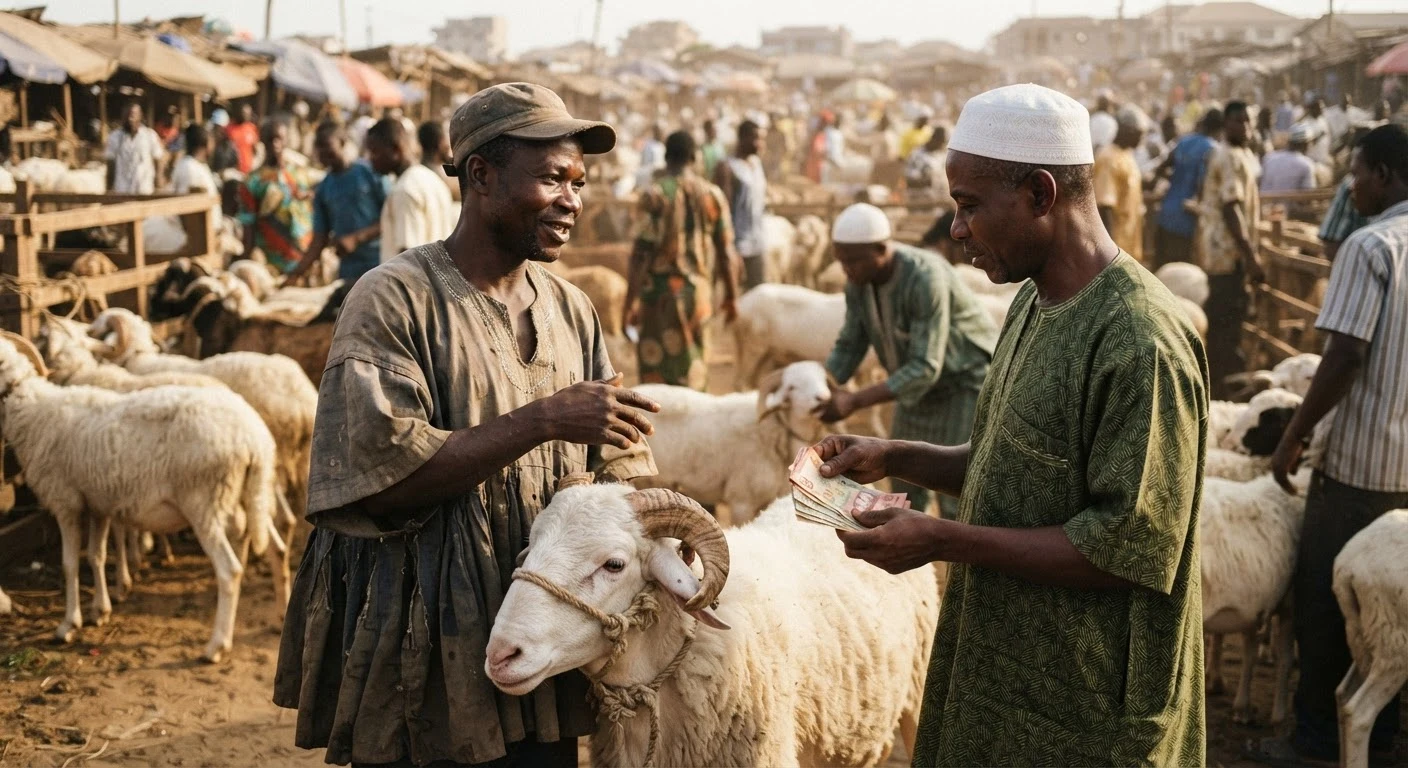
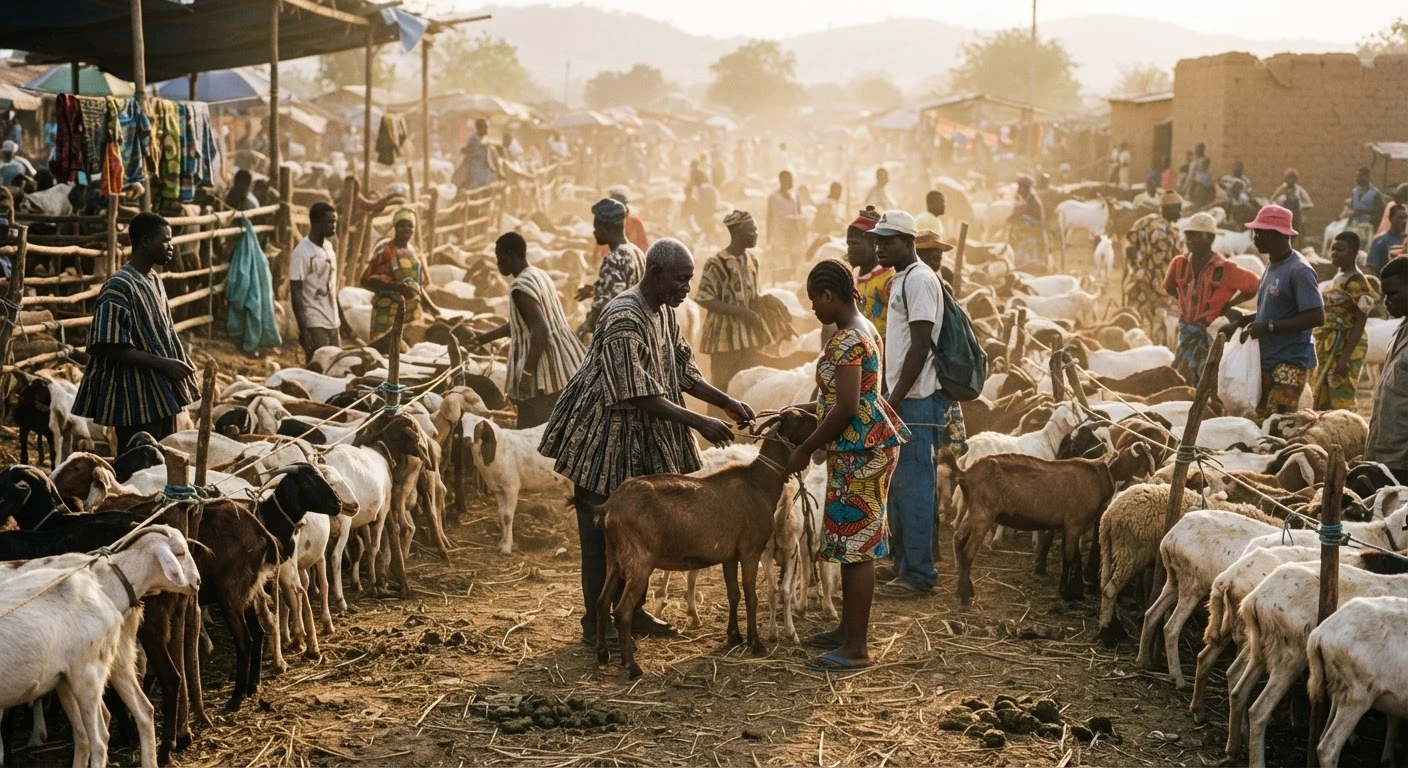
A trader and a customer negotiating over a tethered festival ram at a busy Ghanaian livestock market
Goats & Sheep · Pillar 02

Demand and Markets

Demand is steady all year on chevon, khebab and chop bars, then spikes hard at Eid-ul-Adha, and in the same 2026 festival week ram prices rose about 31 percent in Accra while falling about 40 percent in Kumasi.
Demand and markets · Pillar 02

Demand for goats and sheep in Ghana is steady through the year and then spikes hard at certain dates. The key fact for any business is that demand outruns domestic supply, so the gap is filled by live animals trekked or trucked in from the Sahel.

The steady demand comes from everyday eating: chevon and mutton in light soup, grilled khebab sold at roadside stands at night, chop bars, and the hotel and restaurant trade in the cities. The spikes come from the festival and ceremony calendar, above all Eid-ul-Adha, when Muslim families buy a ram to sacrifice. Ghana’s own market runs to about 35 thousand tonnes of goat meat, roughly 7.4 percent of West Africa’s 471 thousand tonnes1, a commercial estimate rather than an official count, and total demand rises with the population regardless of what any single figure says about per-head eating23.

A busy Ghanaian livestock market with goats and sheep tethered in rows, traders and customers negotiating prices, dust and afternoon light, documentary photograph
Demand outruns supply
The base fact: Ghana cannot yet raise enough to meet its own table.
~35,000 t
Ghana's own goat meat market, a commercial estimate rather than an official count
7.4%
of West Africa's 471,000-tonne goat meat market
40%+
the rise in one Eid-ul-Fitr week’s livestock prices in Accra and Tamale checks5

🐐 The festival calendar: where the money spikes 🐐

Nothing shapes the small-ruminant market like the festival calendar. Eid-ul-Adha, known across West Africa as Tabaski, is the single biggest event: every Muslim household that can afford it buys a ram to slaughter, and demand runs far ahead of supply for the few weeks before the date. Eid-ul-Fitr at the end of Ramadan brings a second Muslim peak. Christmas and Easter lift demand among Christian families, and goats and sheep are bought all year for funerals, naming ceremonies and marriages, occasions for which live animals are especially sought out4. These dates are not a side note; they are the business. In one Eid-ul-Fitr week, checks in Accra and Tamale markets found livestock prices more than 40 percent above the same period a year earlier, though traders reported low patronage at those prices5.

A trader showing off a large white Sahelian ram to a buyer at a crowded Eid-ul-Adha livestock market in Accra, cash changing hands, documentary photograph
Tabaski: the single biggest date
Every household that can afford it: buys a ram to slaughter.
Table 4: The Small-Ruminant Demand Calendar
OccasionWhenWhat sellsDemand effect
Eid-ul-Adha (Tabaski)Annual (moves ~11 days earlier each year)Rams, ideally large white SahelianThe biggest peak; demand outruns supply
Eid-ul-FitrEnd of RamadanGoats and sheep for the feastSecond Muslim peak
Christmas and New YearDecemberGoats and sheep for family mealsStrong urban demand
EasterMarch or AprilGoats and sheepChristian-season lift
FuneralsYear-round, heavy at weekendsGoats and sheep slaughtered for mournersSteady, large, culturally obligatory
Naming and marriage ceremoniesYear-roundLive animals as gifts and for feastingSteady baseline demand

Sources: USDA FAS (2023); Graphic Online (2026); ModernGhana (2025). The Muslim festivals follow the lunar calendar and move earlier each year, so the peak date shifts across the seasons over time.

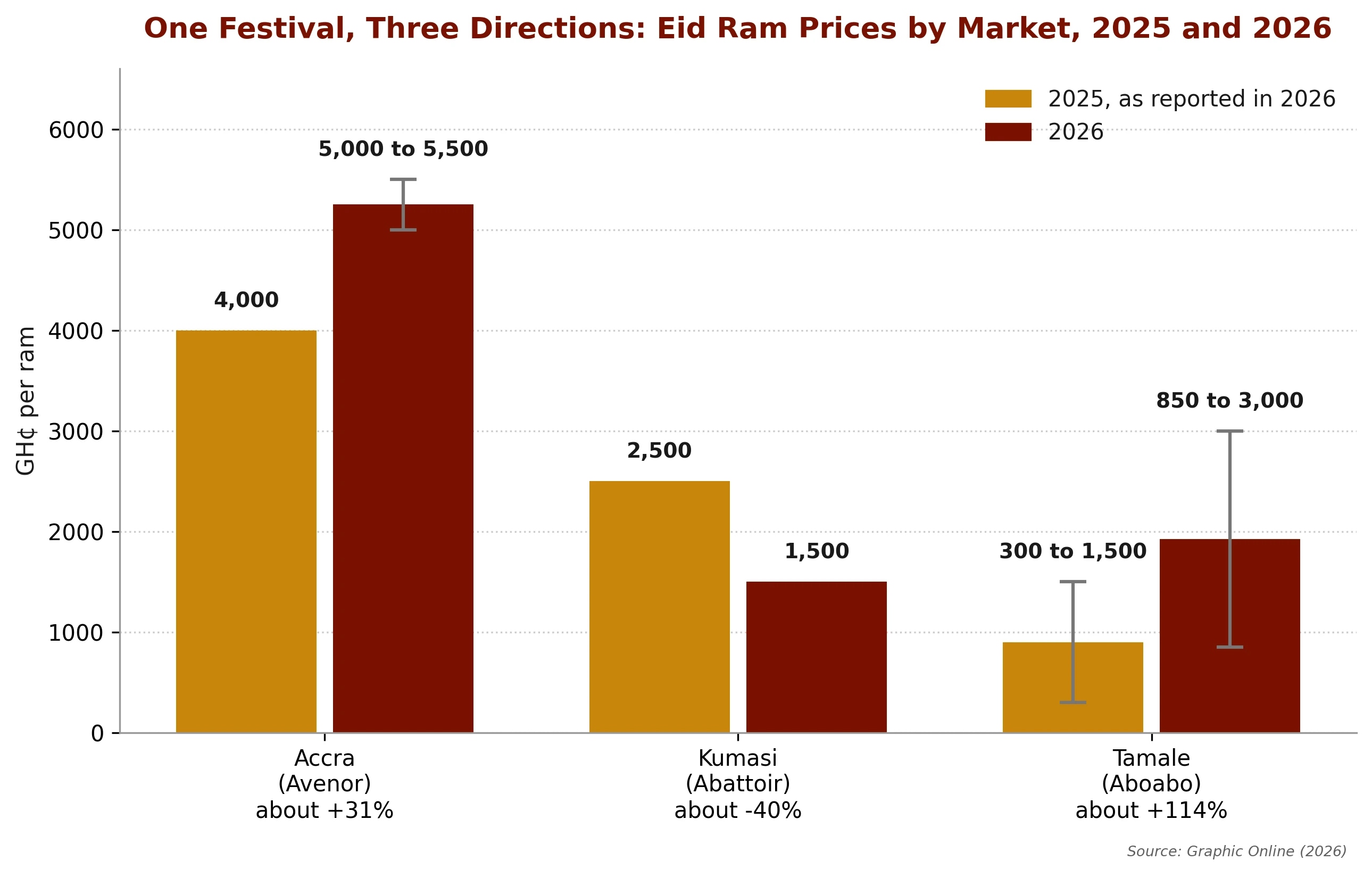
Festival ram prices swing sharply by year and by market, driven by the exchange rate and cross-border supply
Figure 2 Festival ram prices swing sharply by year and by market, driven by the exchange rate and cross-border supply
What this shows

Two markets rose and one fell in the same festival week, so any average of these three bars would describe a market that does not exist. The whiskers matter as much as the bars: Accra’s rise is 25 percent at the bottom of the 2026 quote and 38 percent at the top, and Tamale compares two wide ranges rather than two prices. The firm reading is directional, and it is that the market a seller chooses in May decides more than anything done to the animal beforehand.

In 2026, Accra ram prices rose to about GH¢5,000 to 5,500, up from about GH¢4,000 the year before, as the Burkina Faso and Niger export bans cut supply, while in Kumasi rams sold from about GH¢1,500, down from about GH¢2,500 in the same window a year earlier, held down by a stronger cedi that had cut the cost of imported animals6. Tamale moved the same way as Accra rather than Kumasi, though the reporting from the ground called the move marginal beside Accra’s spike: rams that had sold between about GH¢300 and GH¢1,500 at the previous Eid fetched about GH¢850 to 3,000 this time, on costlier animals bought in from surrounding markets rather than any surge in local demand, with traders there reporting slow sales at the higher prices. Two of the three markets rose and one fell in the same festival week, and for a fattening business the gap between the lean-season buying price and the festival selling price is the whole margin, read market by market rather than as one national trend.7

GH¢5,000–5,500
Accra 2026 ram price, up from about GH¢4,000 a year before
GH¢1,500
Kumasi 2026 ram price, down from about GH¢2,500 a year before

🐐 Everyday demand: khebab, chop bars and the urban plate 🐐

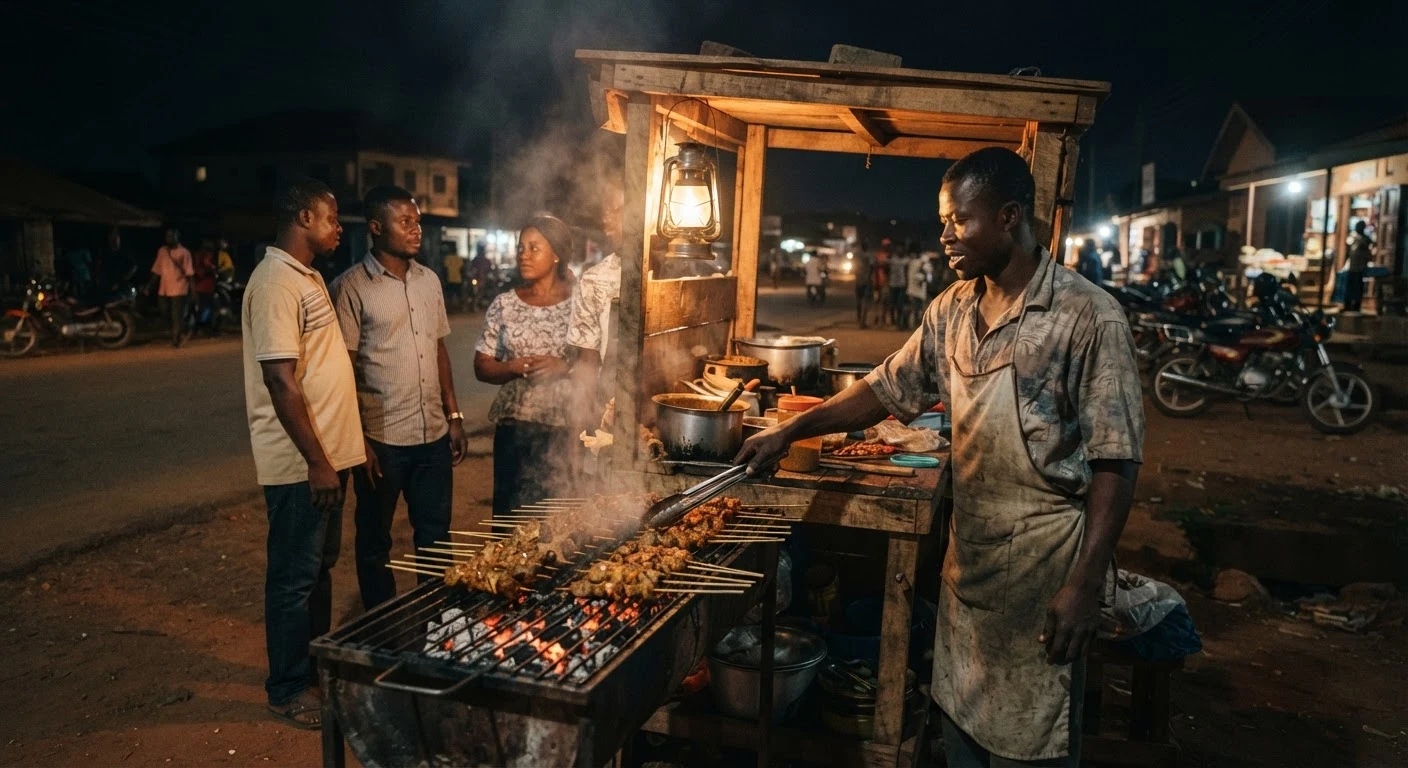
Away from the festivals, the steady market is urban and informal. The most visible channel is khebab, also called chichinga or kyikyinga, the spiced grilled meat sold at roadside stands across every town at night, which is a major and reliable outlet for goat and mutton. Chop bars, the local eateries that sell cooked food, and the hotel and restaurant trade in Accra and Kumasi take a steady volume. Consumption studies in Kumasi found that locally produced goat meat is eaten more than imported meat, and that chevon is a clear part of the urban meat basket8. This everyday demand is less dramatic than the festival spike, but it is steadier, and it is the base load that a supplier can plan around between festivals.9

A roadside khebab stand at night in a Ghanaian town, a vendor grilling spiced goat meat skewers over hot coals, customers waiting, documentary photograph
The steady base load
Khebab, chop bars and hotels: less dramatic than Eid, but there every night.

The one Ghana-specific per-head series puts goat meat at 0.93 kg a person in 2014 rising to 1.02 kg in 201810and sheep meat at 0.78 kg rising to 0.83 kg over the same period, and it stops in 2018. Eating rose by about a tenth over four years, which is slow growth. Chase price and timing, not volume: nobody is measuring the trend. Esoko already pushes market prices to farmers by SMS elsewhere in Ghana’s agriculture sector, valued by its own chief executive at about US$100 a farmer a year, perhaps 10 to 15 percent of annual revenue11, but it is not documented as carrying a live-animal price series for goats or sheep, an absence that is itself useful for a seller trying to work out what an animal is worth.

0.93 → 1.02 kg
goat meat eaten per person a year, 2014 to 2018
0.78 → 0.83 kg
sheep meat eaten per person a year, same period

What this means.Nobody is tracking this trade’s price the way Esoko already does for other crops sold by Ghanaian farmers. The number worth chasing is price and timing, not volume: a market that moves slowly on eating but sharply on festival timing rewards whoever prices ahead of the calendar, not whoever guesses at a yearly growth rate.

🐐 The cross-border supply the home market leans on 🐐

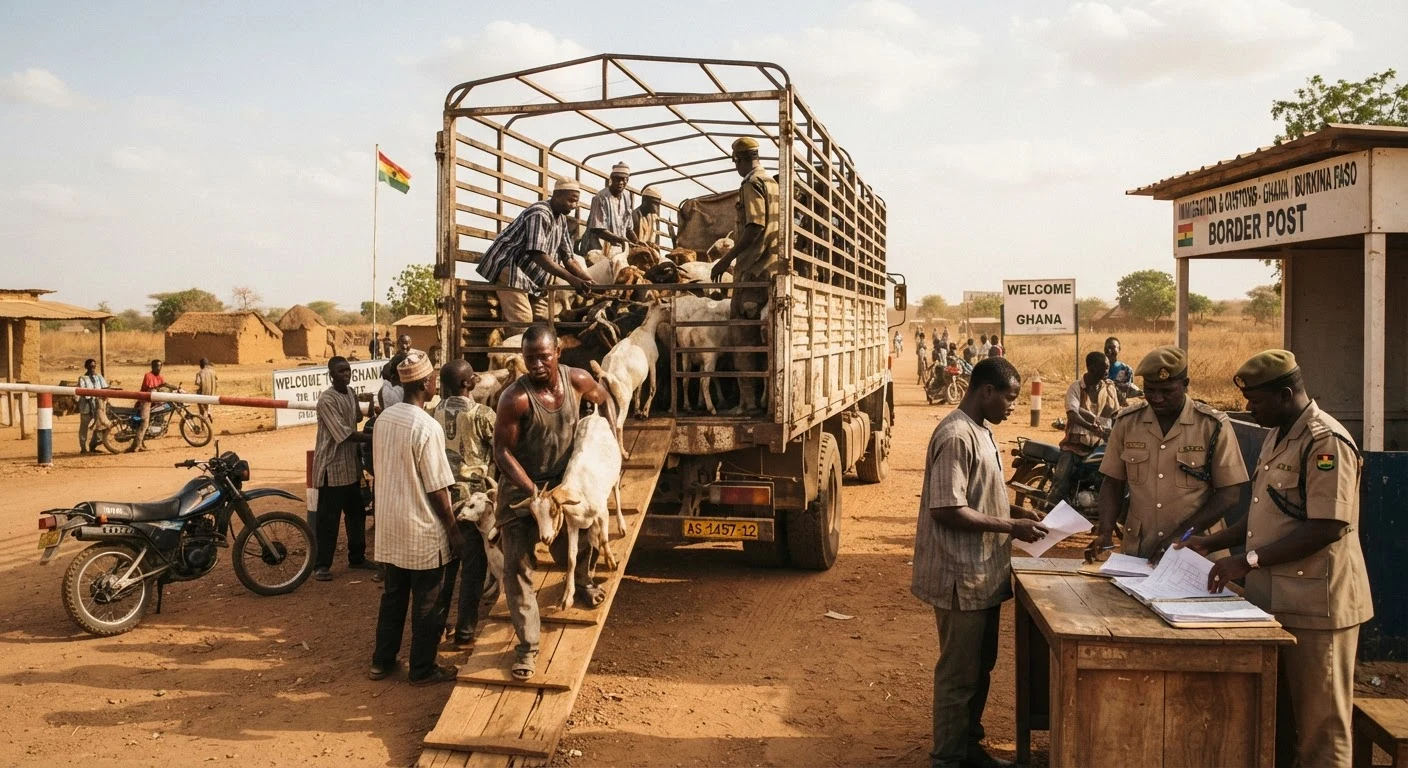
Sahelian traders loading a truck with goats and sheep at a Ghana-Burkina Faso border post, customs officials checking paperwork nearby, documentary photograph
97% from one country
Burkina Faso: supplies almost all of what is recorded.
54,469 head
sheep and goats recorded as live imports in 2024, down about a tenth on 2023
97%
of recorded live imports by head come from Burkina Faso
93.6%
self-sufficiency in sheep and goat meat by 2018, once a border-crossed animal is slaughtered here
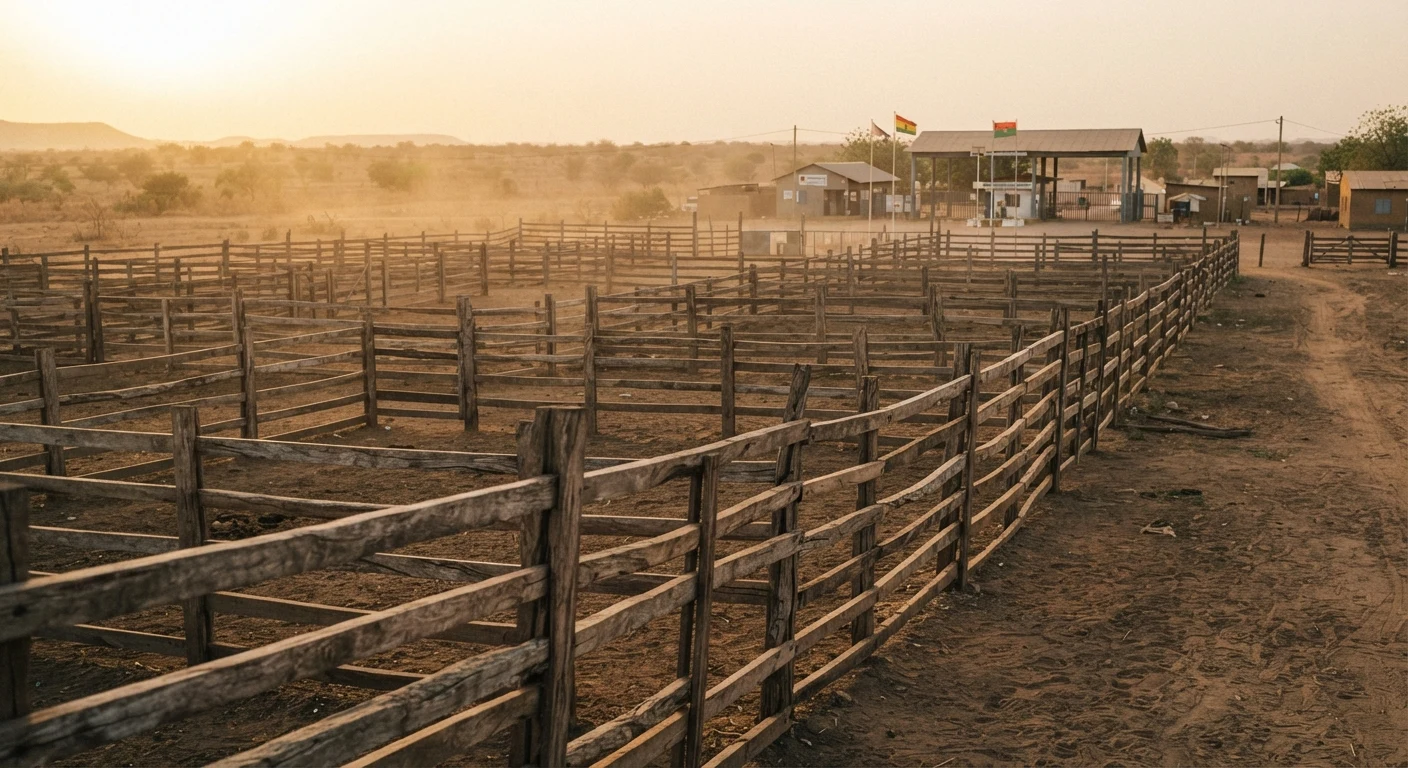
Empty livestock holding pens at a Ghana-Burkina Faso border post after the 2026 export ban, bare wooden rails and no animals waiting, dust settling in late afternoon light, documentary photograph
The tap just shut
Empty pens at the border, since 8 May 2026.

Ghana does not raise enough of the big festival ram to meet demand, so those animals are brought in live from Burkina Faso, Mali and Niger. The dependence is narrower than it looks: recorded live imports are 24,413 sheep and 30,056 goats imported live in 2024, about 54,469 head, both species down about a tenth on 202312, about one animal in ninety of national slaughter, and even the customs figure, three times higher, leaves it in low single figures. What is concentrated is the segment: the festival ram is where the Sahel matters, and a border closure is felt in the Accra Eid market long before anywhere else. Of what is recorded, Burkina Faso supplies about 97 percent of recorded live imports by head in 2023, and 98 percent by weight1314.

The gap is a live-animal gap rather than a meat one, and the distinction matters: on a meat balance Ghana was 93.6 percent self-sufficient in sheep and goat meat in 2018, because an animal walked across the border and slaughtered here counts as domestic output15. The country is short of the animals, not of the abattoir. This makes the Ghanaian market unusually exposed to two outside forces. The first is the exchange rate: because the animals are paid for in CFA francs, a weak cedi makes them dearer and a strong cedi makes them cheaper, which is why 2025 prices fell when the cedi recovered16. The second is cross-border politics: Niger banned livestock exports in March 202617, and Burkina Faso banned its own from 8 May 2026, until further notice18, to protect their own markets; because Ghana was Burkina Faso’s largest customer, taking about 60 percent of its livestock exports by value, the cut was felt hardest in the Accra trade, where sellers reported animals no longer crossing the border19. The Burkina Faso to Ghana corridor was already the main and growing route for Sahelian animals into the country, with sheep and goat exports from Burkina Faso up from 555.7 tonnes in 2020 to 8,608 tonnes in 2024, on Burkinabe national statistics.

🎯 The 2026 supply shock, and why it is an opening.In May 2026 Burkina Faso banned all livestock exports, following Niger, to feed its own people first. Ghana had relied on Burkina Faso for the bulk of its imported festival animals. The immediate effect was uneven rather than a uniform squeeze: Accra saw higher prices and traders there blamed a shortage of animals crossing the border, while the Kumasi abattoir took in more than 5,000 animals by 21 May 2026 against about 3,000 in the same period a year earlier, and the traders’ association there said it did not expect the closures to affect Ghanaian supply materially because domestic stock was adequate. The lasting message for a Ghanaian producer is simple: the country has been importing animals it could raise itself, and its main supplier has just shut the tap. That is the clearest import-substitution opening in the sector. A domestic breeder or fattener who can put festival-ready rams into the market now faces less competition from cheap Sahel imports than at any time in years.

🐐 By-products: skins, hides and a niche in milk 🐐

Goats and sheep are bought for meat first, but they leave by-products with their own small markets. Ghana produced about 7,155 tonnes of goat skins and 4,546 tonnes of sheep skins in 202420. Skins and hides feed a mostly artisanal leather trade, and the wider African pattern is telling: unfinished leather and hides and skins make up 27 percent of Africa’s livestock exports, largely without any value addition21, which is the shape of the missed value here as much as anywhere. What Ghana’s own skins are worth, and where that value leaks, is traced link by link in Pillar 6. Goat milk is a much smaller story: in Ghana mainly cow’s milk is consumed and processed, and sheep’s and goat’s milk play almost no role in daily supply, so a dairy-goat market here is at an early, niche stage rather than an established business22.

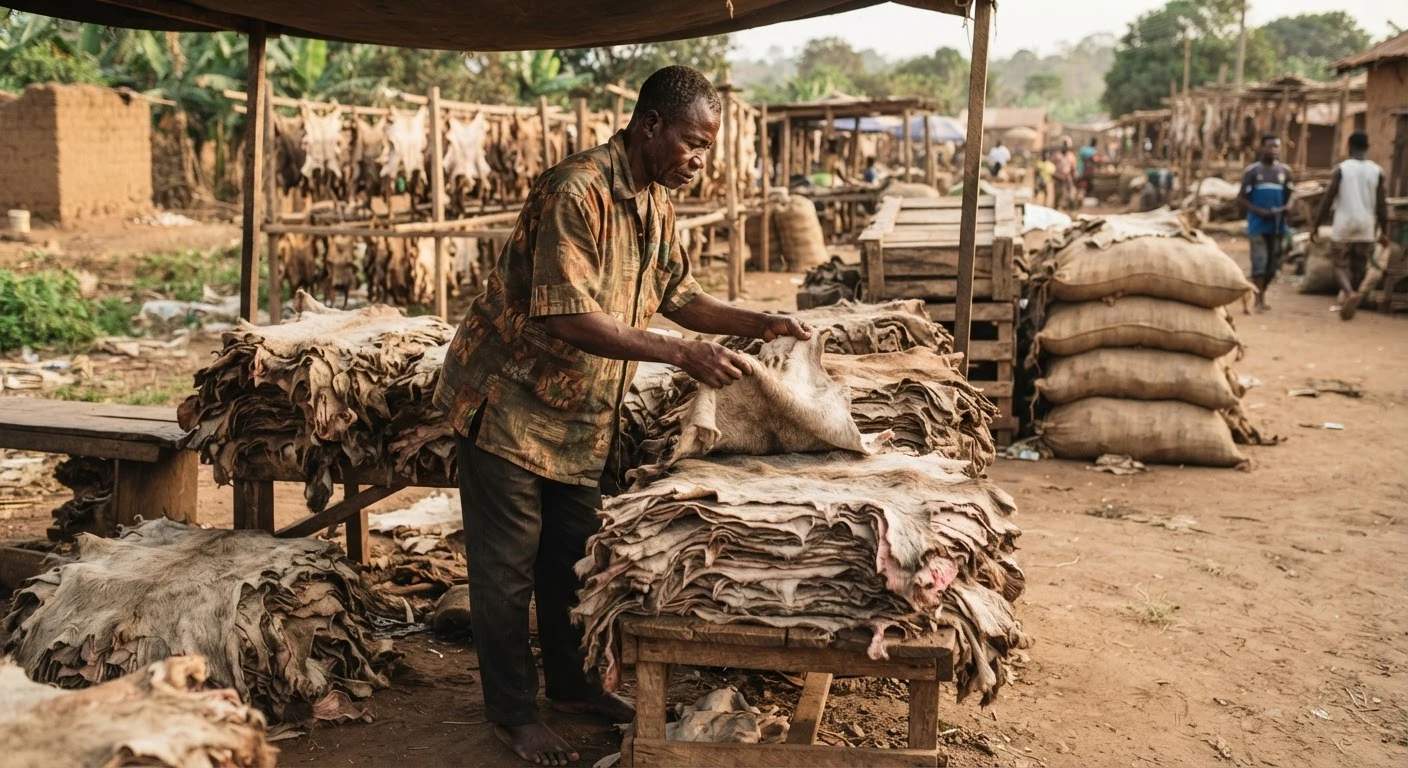
A Ghanaian trader sorting stacks of raw goat and sheep skins at an open-air hides and skins market, sacks and drying racks in the background, documentary photograph
27% of Africa's exports, unfinished
Raw, not finished: the skins mostly leave the country as hides, not leather.
7,155 t
goat skins produced in Ghana, 2024
4,546 t
sheep skins produced in Ghana, 2024
🐐 Openings: where the demand pays 🐐
01

Festival supply, contracted early. The demand peaks are on a calendar and the prices are not: Accra rose and Kumasi fell in the same 2026 Eid week. A supplier who contracts with urban butchers and event buyers months ahead converts the most volatile part of this market into a known price, and the buyer will pay for that certainty too.

02

Import substitution on the festival ram specifically. The Sahel dependence is narrow but real, and both supply routes closed in 2026. Finishing large rams domestically for the Eid window addresses the one segment where the imported animal actually dominates.

03

The khebab and chop-bar trade as an anchor customer. The everyday urban trade is steady, informal and almost entirely unserved by anyone offering consistent quality and consistent supply. A reliable weekly volume at an agreed grade is a genuinely scarce offer in this market.

🐐 The risks that sit inside the market and timing decision 🐐

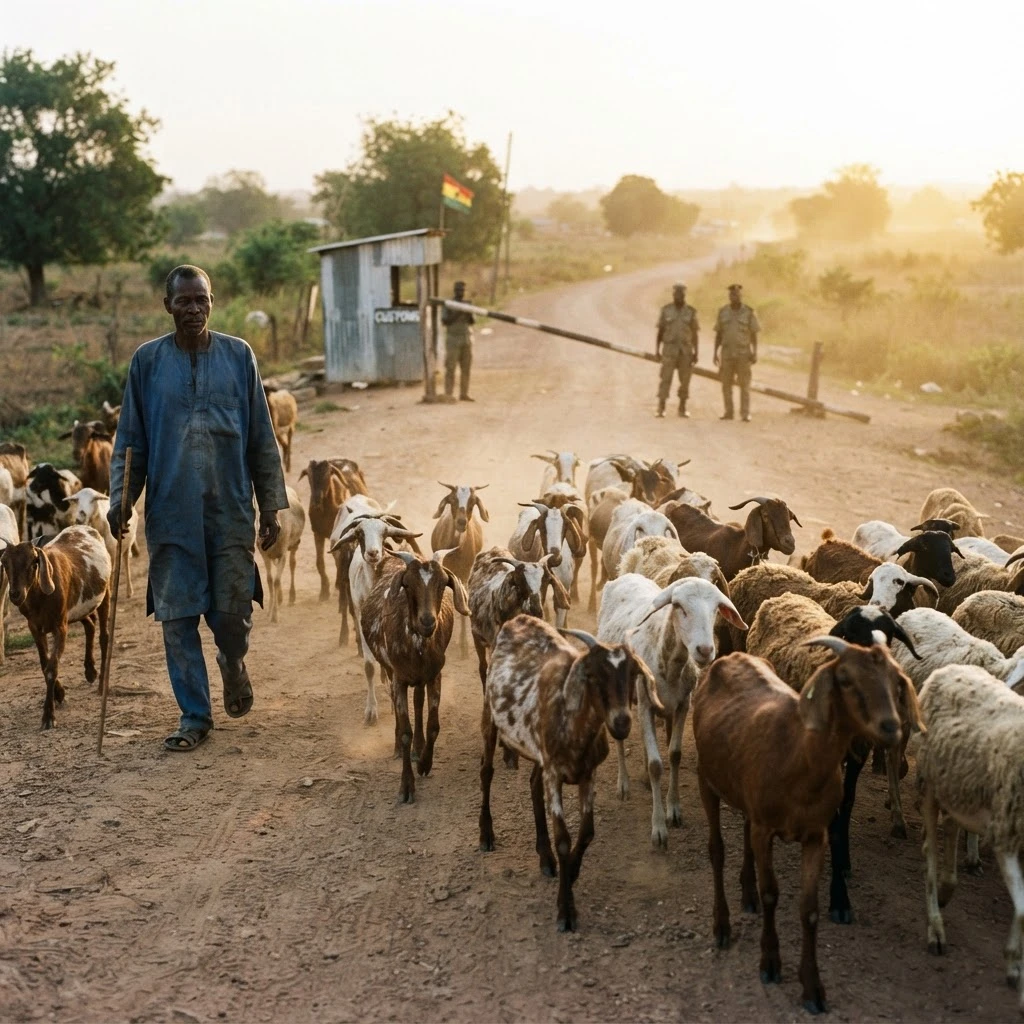
Herders trekking a mixed line of goats and sheep along a dusty road toward a Ghana-Burkina Faso border crossing, dust rising around the animals, documentary photograph

Cross-border supply dependence

MEDIUM TO HIGH
What it is

Ghana leans on live animals from the Sahel, especially for festival rams, so a border closure or conflict in Burkina Faso, Mali or Niger can cut supply and spike prices.

Evidence

Burkina Faso supplies about 97 percent of recorded live imports by head, and Ghana takes about 60 percent of Burkina Faso’s livestock exports by value; Niger banned livestock exports in March 2026 and Burkina Faso followed from 8 May 20262324. The 2026 bans did not bite evenly: Accra prices rose while Kumasi abattoir intake was up by roughly two-thirds on the year25, so the exposure is real but its timing is not uniform across markets.

Who it hits

Traders and fatteners who rely on imported stock, and consumers facing higher festival prices. It is also an opening for domestic producers.

How to manage it, and the opening

Diversify sources and build domestic supply links. For a producer, treat the cut in imports as the opening it is: domestic festival supply faces less competition than in recent years.

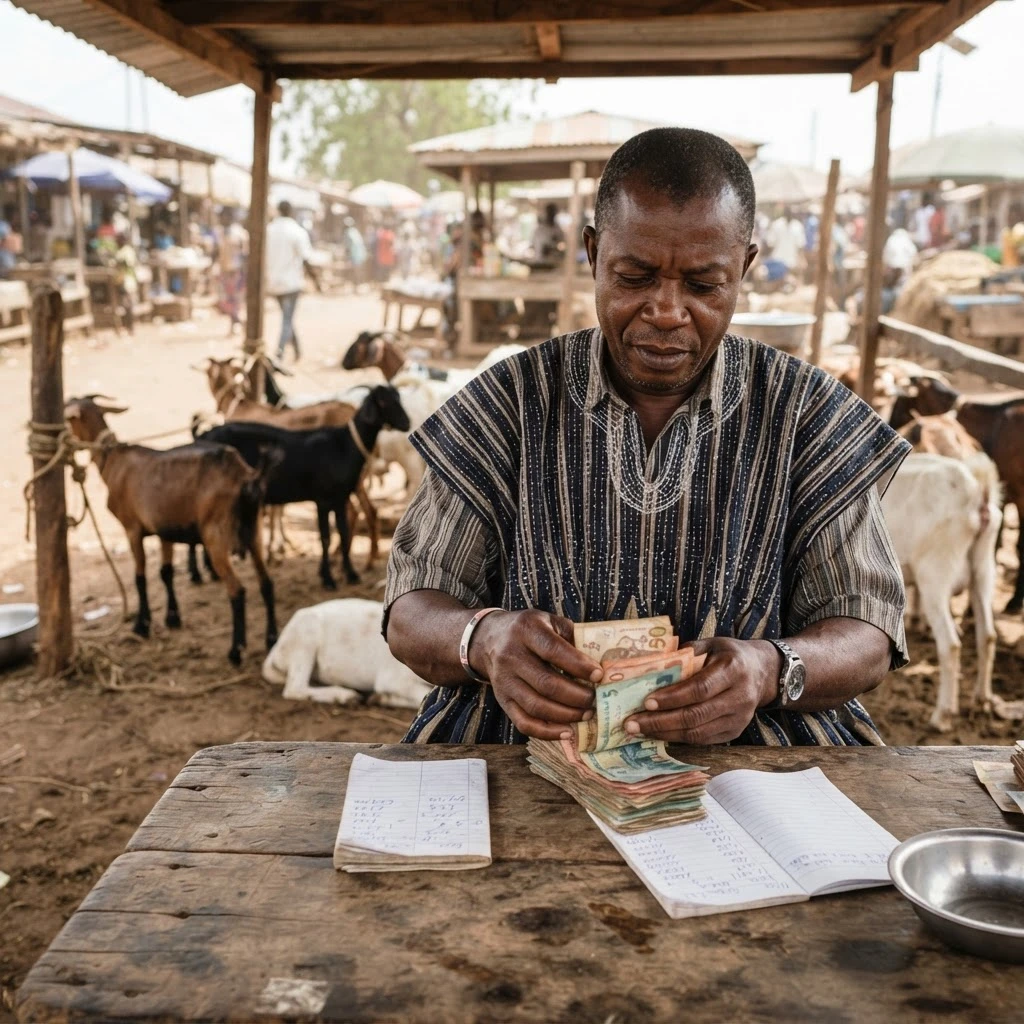
A Ghanaian livestock trader counting cedi banknotes beside a pen of goats and sheep at a busy festival market, documentary photograph
🐐 Key takeaways 🐐
01

Demand is steady year-round (khebab, chop bars, hotels) and spikes hard at festivals, above all Eid-ul-Adha, when ram demand outruns supply.

02

Ghana's goat meat market alone runs to about 35 thousand tonnes, roughly 7.4 percent of West Africa's total, a commercial vendor estimate rather than an official count; growth in this market shows in value and the festival premium, not a measured per-head trend. The one Ghana-specific per-head series, MoFA's own, has goat meat rising from 0.93 to 1.02 kg a person between 2014 and 2018 and stopping there.

03

The Sahel dependence is concentrated, not general. Recorded live imports are about one animal in ninety of national slaughter, but they are the large festival rams, and Burkina Faso supplies about 97 percent of them by head.

04

Niger banned livestock exports in March 2026 and Burkina Faso followed from 8 May. The exposure is real but it did not bite evenly: Accra prices rose and traders blamed the border, while at the Kumasi abattoir intake rose and prices fell.

05

Skins and hides are a real if under-developed by-product; goat milk is a niche, not yet a market.

Written for each reader

🐐 Practitioner intelligence 🐐

Hover any card to pause and lift it.

For students

If you are thinking of entering, do not aim at the festival peak in your first season: the traders who supply Accra's Eid market have done it for years and know the price before you do. Start by supplying the everyday khebab and chop-bar trade in your own town, a steadier, lower-margin channel that teaches you buyers and prices before you risk capital on one festival date. The first-timer mistake is buying festival stock in the final weeks before Eid, when both price and animal health are at their worst; buy earlier and hold instead. What you gain is a buyer relationship and a read on local prices worth more than one good festival sale.

For entrepreneurs

Build your selling plan around the calendar. Time your biggest sales to Eid-ul-Adha and Christmas, when prices peak, and use khebab stands, chop bars and hotels as your steady between-festival outlet. With Sahel imports cut in 2026, a reliable domestic supply of festival rams can capture a premium that used to go across the border.

For investors

The investable signal is a large, under-supplied home market that grows with the population and whose main foreign source has just been restricted. That is a structural opening for import substitution. Size the festival premium and the everyday khebab and hotel demand before committing capital, and treat the exchange rate as a key variable in any price forecast.

For ecosystem actors

Public bodies can turn the 2026 supply shock into lasting domestic capacity: support festival-season supply planning, market information on prices, and aggregation that lets local producers reach the urban festival market that imports used to serve.

Where this connects.The demand and price signals mapped here rest on a supply chain examined elsewhere: Pillar 1 shows no domestic multiplier breeds the improved rams this market pays a premium for, the health risk of buying blind across a border is priced in Pillar 3, and the margin lost between the farm gate and the festival price shown here is mapped stage by stage in Pillar 6. The price information gap this pillar flags, and what a service like Esoko’s would need to close it for goats and sheep, is taken further in Pillar 7.

Footnotes
  1. IndexBox, Western Africa: Goat meat market analysis, forecast, size, trends and insights (Preview) (2026, 23 March), accessed 26 July 2026, https://www.indexbox.io/store/western-africa-goat-meat-market-analysis-forecast-size-trends-and-insights/.
  2. United States Department of Agriculture, Foreign Agricultural Service, Ghana: Livestock voluntary report 2023 (GAIN Report No. GH2023-0003), USDA FAS (2023), https://fas.usda.gov/data/ghana-ghana-livestock-voluntary-2023.
  3. United Nations Statistics Division, Ghana imports of live sheep and goats and of sheep and goat meat (HS 0104 and 0204), 2021 to 2023 (Data set, UN Comtrade public preview) (2023), https://comtradeplus.un.org/.
  4. United States Department of Agriculture, Ghana (2023).
  5. Graphic Online, Livestock patronage low, prices skyrocket as Muslims mark Eid-ul-Fitr (2024, 10 April), https://www.graphic.com.gh/news/general-news/ghana-news-livestock-patronage-low-prices-skyrocket-as-muslims-mark-eid-ul-fitr.html.
  6. Graphic Online, Eid-ul-Adha 2026: Animal traders anticipate last-minute sales boom (2026, May), https://www.graphic.com.gh/news/general-news/ghana-news-eid-ul-adha-animal-traders-anticipate-last-minute-sales-boom.html.
  7. Graphic Online, Eid-ul-Adha 2026 (2026).
  8. Annan, R. A., Apprey, C., Oppong, N. K., Petty-Agamatey, V., Mensah, L., and Thow, A. M, "Public awareness and perception of Ghana's restrictive policy on fatty meat, as well as preference and consumption of meat products among Ghanaian adults living in the Kumasi Metropolis," BMC Nutrition 4, 2 (2018), https://doi.org/10.1186/s40795-018-0209-z.
  9. Annan et al., "Public awareness and perception" (2018).
  10. Wirtschaft und Entwicklung, Ghana: Country analysis, dairy and meat sector, Wirtschaft und Entwicklung (n.d.). The document carries no publication date; its data series run to 2018.
  11. GSMA Mobile for Development Intelligence, Esoko, GSMA (Case study) (2012).
  12. Ministry of Food and Agriculture, Statistics, Agriculture in Ghana (2024).
  13. UN Comtrade, Ghana imports of live sheep (2023).
  14. Courtright, J., and de Bruijne, K, Cattle wahala: Addressing the political economy of cattle rustling and smuggling between Ghana, Burkina Faso and Togo, Netherlands Institute of International Relations Clingendael (Clingendael report) (2025, May), https://www.clingendael.org/sites/default/files/2025-06/cattle-wahala.pdf.
  15. Wirtschaft und Entwicklung, Ghana (n.d.).
  16. ModernGhana, Cedi gains: Prices of goat, sheep, cow, other animals dropped ahead of Eid ul-Adha (2025, 3 June), accessed 26 July 2026, https://www.modernghana.com/news/1405473/cedi-gains-prices-of-goat-sheep-cow-other-anim.html.
  17. Agence France-Presse, Eid shoppers hit by soaring sheep prices in Ivory Coast (As reported by Africanews) (2026, 24 May), accessed 26 July 2026, https://www.africanews.com/2026/05/24/eid-shoppers-hit-by-soaring-sheep-prices-in-ivory-coast/.
  18. Ecofin Agency, Burkina Faso halts cattle exports (2026).
  19. Graphic Online, Eid-ul-Adha 2026 (2026).
  20. Food and Agriculture Organization of the United Nations, FAOSTAT: Crops and livestock products, Ghana, 1961 to 2024, FAO (Data set) (2024), https://bulks-faostat.fao.org/production/Production_Crops_Livestock_E_Africa.zip.
  21. African Development Bank, Livestock Investment Master Plan (LIVEMAP), Co-badged with the Food and Agriculture Organization, the International Livestock Research Institute, IGAD, CIRAD, AU-IBAR, the World Organisation for Animal Health, IFPRI and TAAT. The document carries no publication date on its cover; 2021 is the file's internal creation date (Working document) (2021).
  22. Wirtschaft und Entwicklung, Ghana (n.d.).
  23. UN Comtrade, Ghana imports of live sheep (2023).
  24. Ecofin Agency, Burkina Faso halts cattle exports (2026).
  25. Graphic Online, Eid-ul-Adha 2026 (2026).
Download full PDF
UpcomingThis document isn't available yet.