Ghana Agribusiness PlaybookGoats & Sheep
A mixed flock of goats and sheep grazing loose on open savannah at dusk while a keeper watches from a distance
Goats & Sheep · Pillar 04

Production Systems and Regime

Most Ghanaian keepers still let their animals loose to find their own food, and the only multi-region survey on record found not one household running intensive commercial housing for either species.
Production Systems · Pillar 04

Most goats and sheep in Ghana are kept the way they have always been kept: let out in the morning to find their own food and brought back at night, with little planned feeding, breeding or health care. This is the reality a new entrant is competing against, and also the reason a better-run flock can do so well, because the bar set by the average keeper is low.

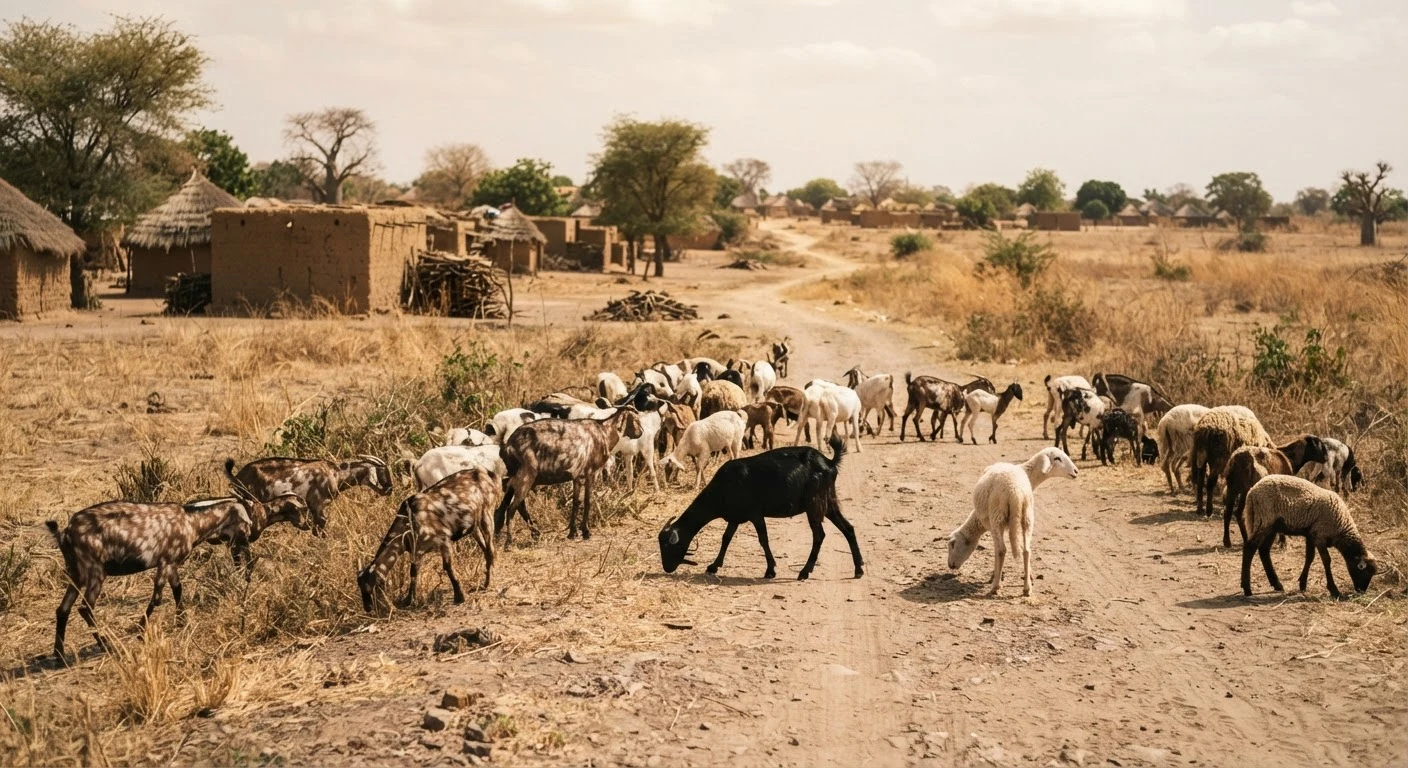
A mixed flock of West African Dwarf goats and sheep grazing freely along a dirt road on the edge of a northern Ghanaian village, no shepherd in sight, dry-season grass and scattered trees, documentary photograph
Free range, no shepherd
The commonest system: the one a new entrant is really competing against.
67.7%
of goat keepers run free range with no shepherd
52.3%
of sheep keepers run free range with no shepherd
7.9
head, the typical goat flock size in the middle belt and south

🐐 The systems, as the only survey that counts them found them 🐐

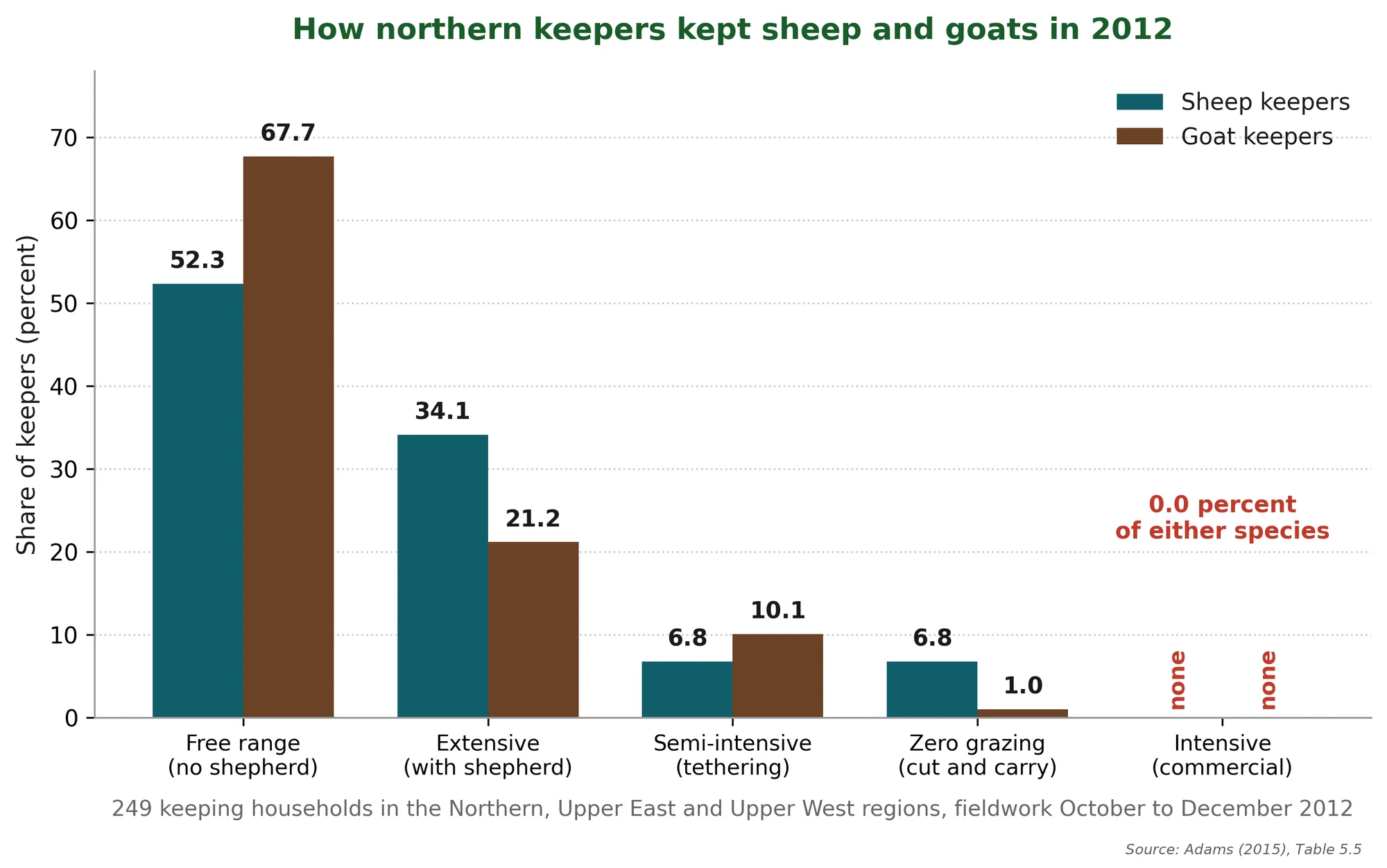
The only Ghanaian survey to map small-ruminant production systems across more than one region, and to report goats separately from sheep, covers 249 keeping households in the Northern, Upper East and Upper West regions in 2012. Free range with no shepherd is commonest for both species, at 52.3 percent of sheep keepers1 and 67.7 percent of goat keepers; extensive grazing follows, at 34.1 percent of sheep keepers, using a shepherd, and 21.2 percent of goat keepers, using a shepherd; then tethering, at 6.8 percent of sheep keepers and 10.1 percent of goat keepers, and cut-and-carry zero grazing, at 6.8 percent of sheep keepers and 1.0 percent of goat keepers. Intensive commercial housing was recorded in not one household in the northern sample, for either species. Flocks are small. The typical goat flock is about 7.9 head in middle-belt and southern Ghana2, and northern sheep holdings average about 12 head. These are 2012 shares and northern only. Read them as the shape of the sector, not as this year’s count. Other Ghanaian surveys do report feeding systems, but each within a single zone: urban households in Kumasi and Effiduasi3 and the transitional zone around Ejura-Sekyedumase4.

Intensive commercial housing, the tier every extension manual treats as the top rung a keeper climbs, held not a single one of the 249 small-ruminant-keeping households in that northern sample, for either species5. That is a northern picture, not a national one. Adams et al. (2025) asked 400 registered keepers in peri-urban Ashanti in 2024 and found 50.5 percent of them, 202 of 4006 on free range, 30 percent, 121 of 400 semi-intensive and 20 percent, 77 of 400 intensive. The intensive tier is absent from northern villages and is one keeper in five within reach of Kumasi. These shares count registered farms rather than animals, so do not read them as what other goat keepers near you are doing.

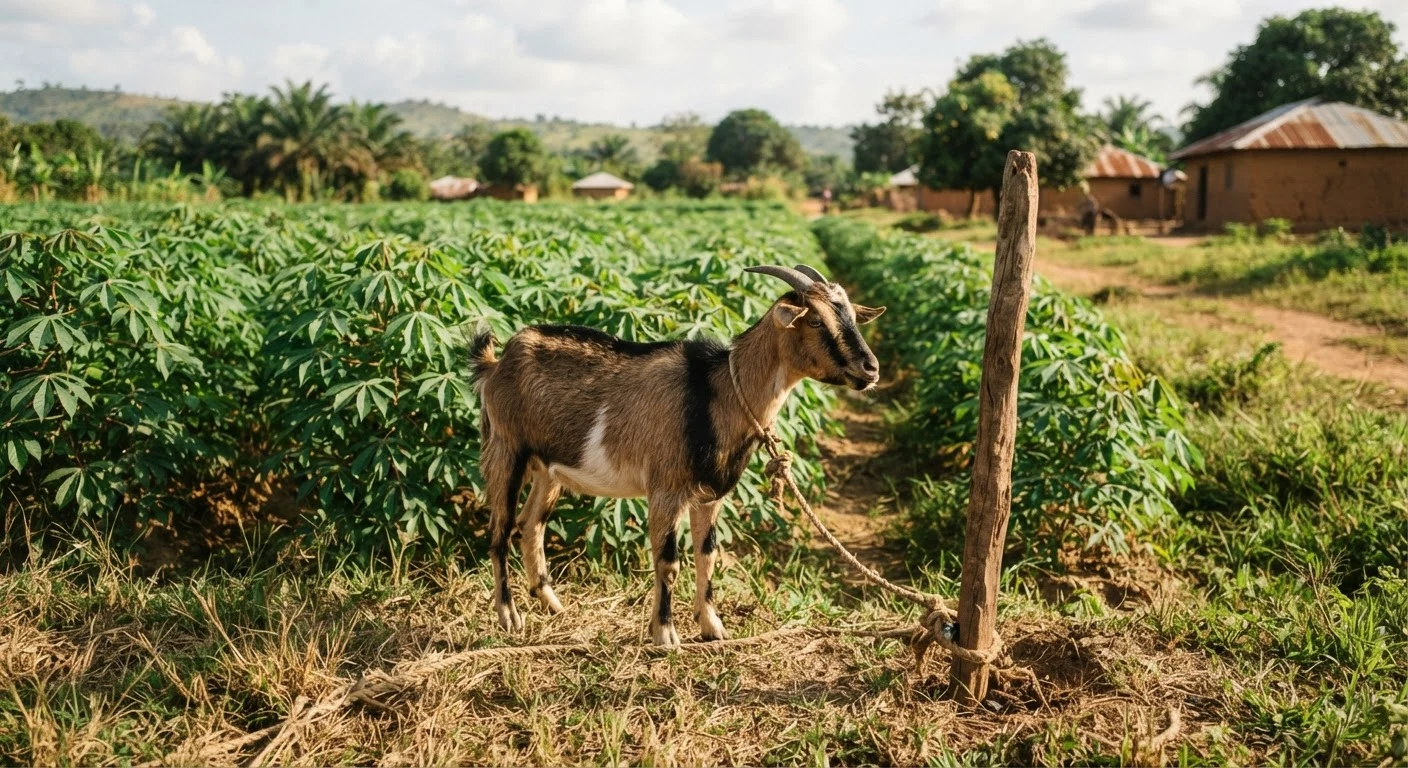
A goat tethered by a rope to a wooden stake at the edge of a smallholder's cassava field in rural Ghana, protecting the crop from browsing, documentary photograph
Fitted to the land
Tethering protects the crop; the system a keeper runs is set by the land, not ambition.
Most northern keepers run low-input systems; intensive commercial housing was recorded in neither species there
Figure 4 Most northern keepers run low-input systems; intensive commercial housing was recorded in neither species there

What this shows.Read the fifth pair first. Intensive commercial housing, the system every extension manual recommends, was recorded in not one of these 300 northern households, for either species. That zero is northern, not national: a 2024 survey of registered keepers in peri-urban Ashanti put one in five on intensive systems, and the text sets the two side by side. Then read the gap between the two bars on the left: goats are turned loose far more often than sheep and shepherded far less, a real difference in supervision cost between the two species, and the only Ghanaian evidence that separates them. The fieldwork is 2012, so treat the shares as the structure of the sector rather than as this year’s count.

Table 6: Ghana's small-ruminant production systems, sheep against goats
SystemSheepGoats
Free range, no shepherd52.3%67.7%
Extensive, with a shepherd34.1%21.2%
Tethering6.8%10.1%
Zero grazing (cut and carry)6.8%1.0%
Intensive (commercial housing)0.0%0.0%

Source: Adams (2015), Table 5.5. Shares are of sheep keepers and of goat keepers respectively, not of the whole sample: 300 households in the Northern, Upper East and Upper West regions were surveyed in October to December 2012, of whom 249 kept sheep, goats or both. Columns sum to 100 percent within each species.

🐐 The three systems, and the ladder between them 🐐

The systems form a ladder. At the bottom, the extensive system needs almost no cash but gives poor control: animals roam, eat what they find, breed at random and are exposed to disease, theft and traffic. In the middle, the semi-intensive system houses animals at night and gives some extra feed, usually crop residues, cassava peel, bran and household waste78. Those two halves of the package are not equally well evidenced, and it is worth being plain about which is which. Night housing is the half the Ghanaian evidence supports: roaming animals stray from the homestead and are exposed to theft and to being killed9, and urban keepers restrict their animals’ movement precisely to cut losses to accidents and poisonings, which together with theft account for most non-disease losses. The extra feed is the half that is not guaranteed. Where supplementary feed was sporadic and inadequate, confined animals actually fared worse than free-roaming ones, and in the transitional zone a higher incidence of tethering may have contributed to lower pre-weaning daily gain. At the top, the intensive system keeps animals housed and fed, which gives the most control but costs the most and needs the most skill, and no household in the survey above ran one. The commercial path for a new entrant is to start semi-intensive and climb, because each step up the ladder buys more control over when animals are ready to sell and cuts exposure to theft and predators. The growth gain is a conditional prize, not an automatic one: it arrives only if the feed supply behind it is steady and adequate, and it can reverse if it is not.

Tethering sits between extensive and semi-intensive in the capital it asks for, and zero grazing, the fourth of the five categories Adams records, sits above semi-intensive in the control it gives but demands the heaviest labour of the four systems keepers actually use. None of the four is a fixed choice: a keeper on cropped land tethers to protect the crop, a keeper on open range lets animals go, and the same household can run a different system in different years as the land around it changes.

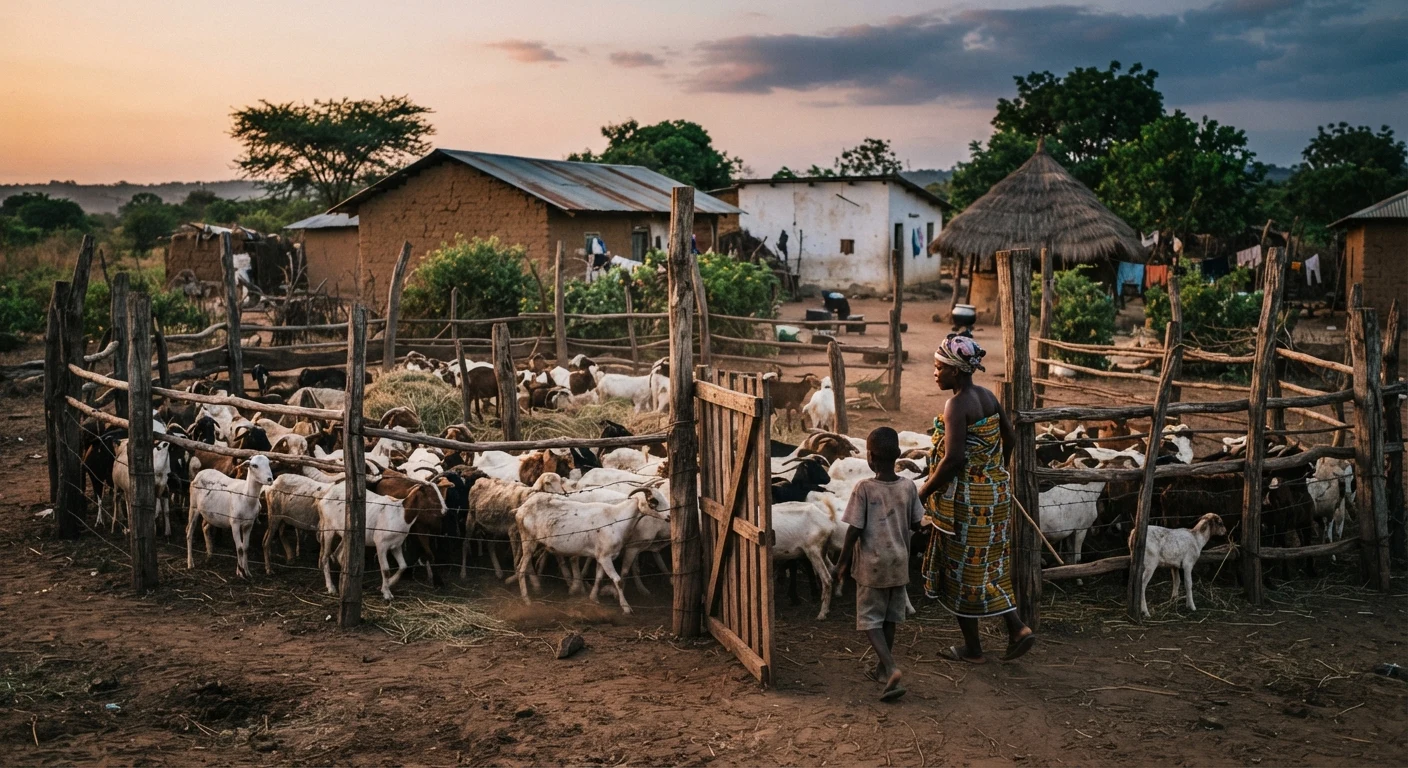
A simple wooden-post night kraal for goats and sheep beside a rural Ghanaian compound at dusk, animals being herded inside for the night, documentary photograph
The half the evidence supports
Night housing cuts theft, predator and traffic losses; the extra feed beside it is a separate, unproven bet.
10.1%
of goat keepers tether, the capital-light step up from free range
1.0%
of goat keepers run zero grazing, the most labour-heavy of the four
Table 7: The three production systems compared
FeatureExtensiveSemi-intensiveIntensive
HousingNone or minimalNight housingFull housing
FeedingFree grazing and browseGrazing plus supplementsCut-and-carry and formulated feed
Capital neededVery lowLow to moderateHigher
Exposure to theft, predators and trafficHighestCut by night housingLowest
GrowthWhatever animals findOnly as good as the supplement is steadySet by the ration
Control over breeding and sale timingLittleSomeMost
Best forSavings, very low budgetsCommercial entry pointFattening and improved flocks

Sources: Duku et al. (2010); Baah et al. (2012); Adams (2015); Adams et al. (2025). The housing rows rest on those sources' loss and exposure findings. No Ghanaian study ranks growth by system, though Adams et al. (2025) now ranks survival and income and is set out below. Shares by system and species are in the table above (Adams, 2015).

🐐 How far up the ladder is far enough 🐐

The ladder has now been measured once in Ghana, and it does not simply say further up is better10. The free-range farms in that sample averaged 8.9 animals lost a year and about GH¢2,694 a year at 2023 prices. Moving to semi-intensive was worth 4.8 fewer animals lost a year and about GH¢2,388 a year more at 2023 prices at the top of the range and 1.3 fewer animals lost a year and about GH¢869 a year more, and that smaller pair is the safer number to build a plan on. Moving all the way to intensive was worth neither: it showed no income advantage, because the extra feed and labour cancelled the gain. Maximum confinement is not the optimum.11

Two things to hold on to. The gain is measured on one municipality pair in the forest zone, and the two estimates of it differ by a factor of three, which is why the smaller is the one to plan on. Where the gain sits is not in doubt: semi-intensive pays, and going further has to be justified by the specific business rather than assumed from the ladder.

What this means for an entrant.The playbook’s advice does not change direction, but it does acquire a stopping point. Semi-intensive is the commercial entry point, and on the only Ghanaian evidence that measures it, that is also where the money is. Full confinement is a fattening technique for a defined window and a known buyer, not a destination every keeper should be climbing towards, and an entrant who budgets for it should budget for the feed and labour bill that cancelled the gain in Ashanti. One finding cuts against the obvious: the keepers who confined had the lowest market access of the three groups, 80.6 percent against 88.6 on free range and 90.1 semi-intensive. Being close to a city is not by itself a reason to build a pen.12

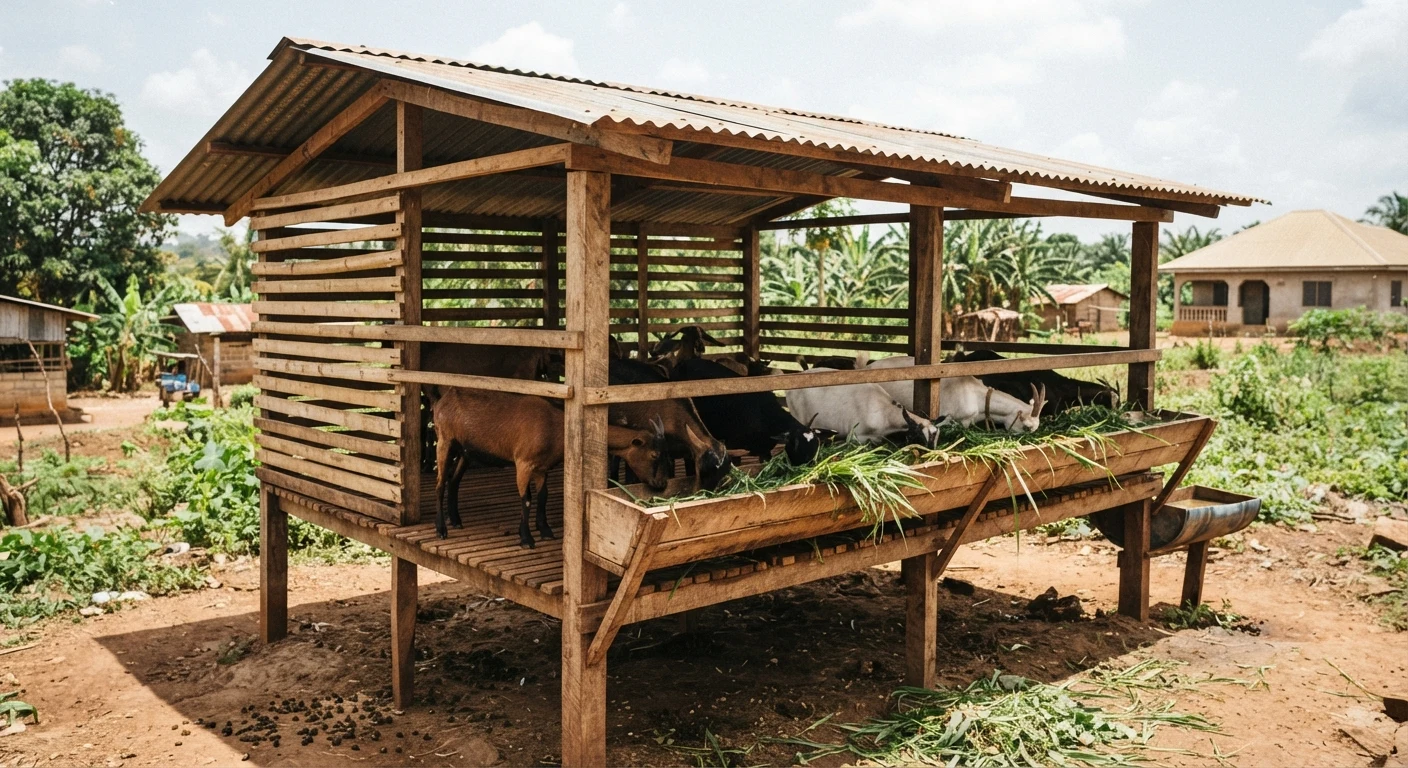
A small intensive goat housing unit with a raised slatted floor and corrugated roof on a registered farm in peri-urban Ashanti, Ghana, feed troughs visible, documentary photograph
One keeper in five, near Kumasi
The tier that measured no extra income once the feed and labour bill was counted.
GH¢2,694
a year lost on free range, before any system change, at 2023 prices
GH¢2,388
more a year moving to semi-intensive, at the top of the measured range
GH¢869
more a year at the bottom of the range, the safer number to plan on

🐐 Feeding: the dry-season problem 🐐

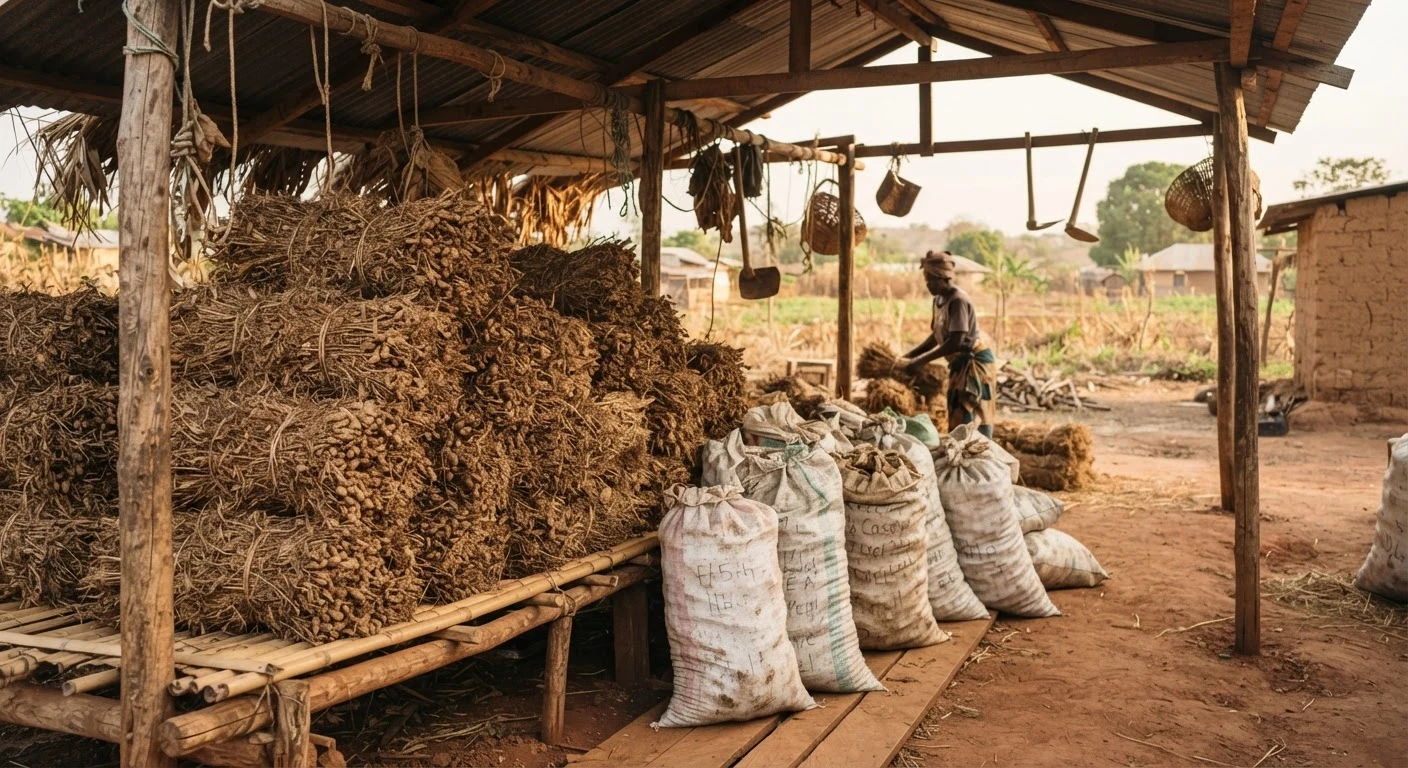
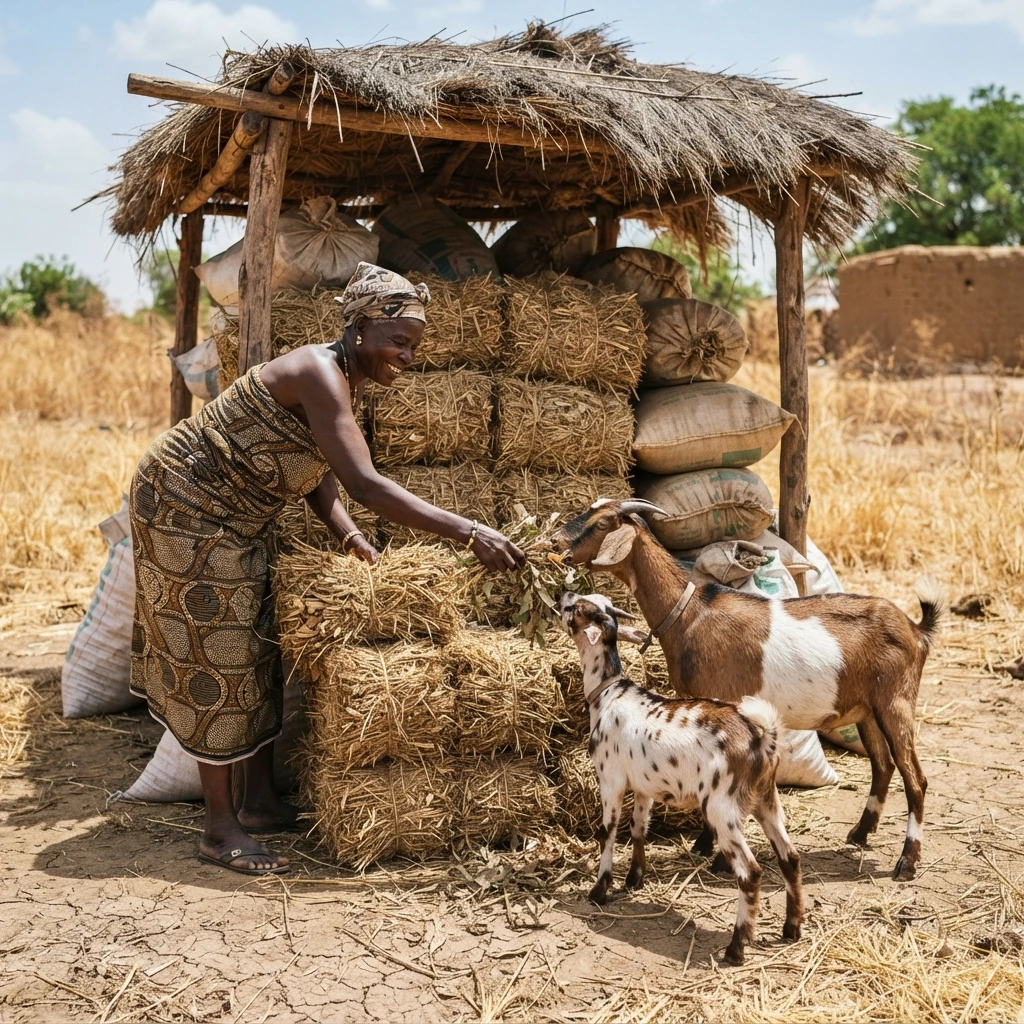
Feed is the constraint that decides how well any system works, and the hard part is the dry season. In the rains there is grazing and browse for free; in the long dry season the grass dries off and animals lose weight just as festival demand is building. The practical answer is to store and supplement: crop residues such as groundnut and cowpea haulms, cassava and yam peels, agro-industrial by-products such as bran and brewers’ grains, and fodder trees and shrubs. A West African review names agro-industrial by-products, fodder trees and crop residues as the main feeds for bridging the gap, and warns that how much they add is poorly known and that they are sometimes misused as a result1314. Store them, but weigh what you feed and weigh the animals, because nobody can tell you the gain in advance. For a fattening business in particular, securing cheap dry-season feed is the difference between profit and loss.

Stacked bundles of dried groundnut and cowpea haulm and sacks of cassava peel stored under a shed roof on a Ghanaian farm ahead of the dry season, documentary photograph

🐐 Breeding and flock structure 🐐

Under the common extensive system, breeding is uncontrolled: bucks and rams run with the females year-round, so kidding and lambing happen at random and there is no selection for size or growth. A typical goat flock is 56.1 percent adult breeding females, 27.5 percent intact adult males with a further 1.2 percent castrates, and only 15.2 percent kids15. Adult males are nearly twice the young-stock share, which is the surplus-male problem stated in one line: the flock is carrying far more breeding males than it can use and producing too few young to grow on. Bringing this under control is one of the cheapest improvements available. Keeping a good buck or ram, separating young males, and timing matings so that animals are ready for the festival peaks turns a random flock into a planned one. Improved stock from the national breeding station at Kintampo and the Nungua Blackhead programme can lift growth and size when the feeding and health are in place to support them16. The system a keeper runs and the control they exert over breeding are the same decision seen from two angles: both trade cash and labour for predictability, and neither is worth much without the other.

56.1%
of a typical flock are adult breeding females
27.5%
are intact adult males, plus 1.2% castrates
15.2%
only, are kids: the surplus-male problem in one number
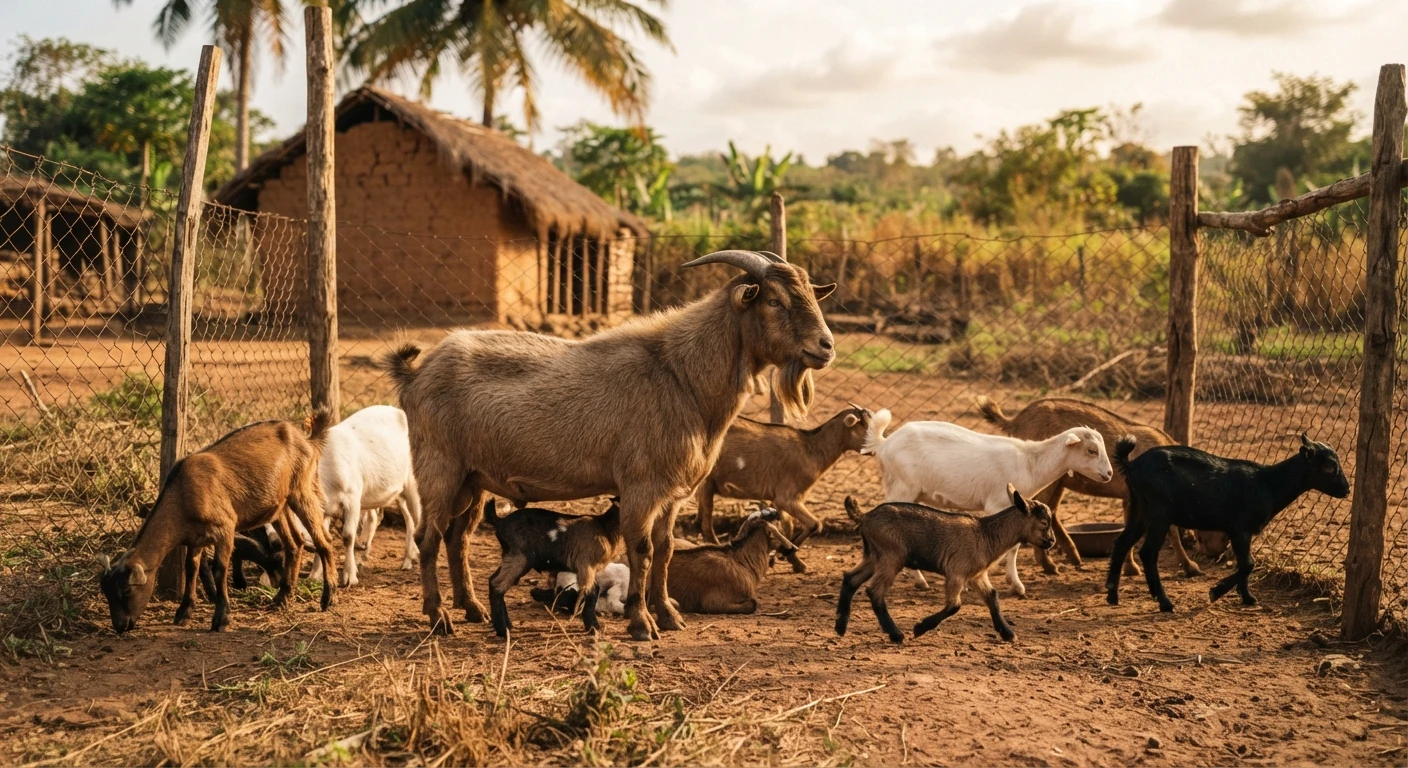
A well-built breeding buck goat standing among a small flock of does and kids in a fenced enclosure on a Ghanaian farm, documentary photograph
Cheap to fix
A kept buck, separated young males and timed matings turn a random flock into a planned one.

🐐 The risks that sit inside the production-system decision 🐐

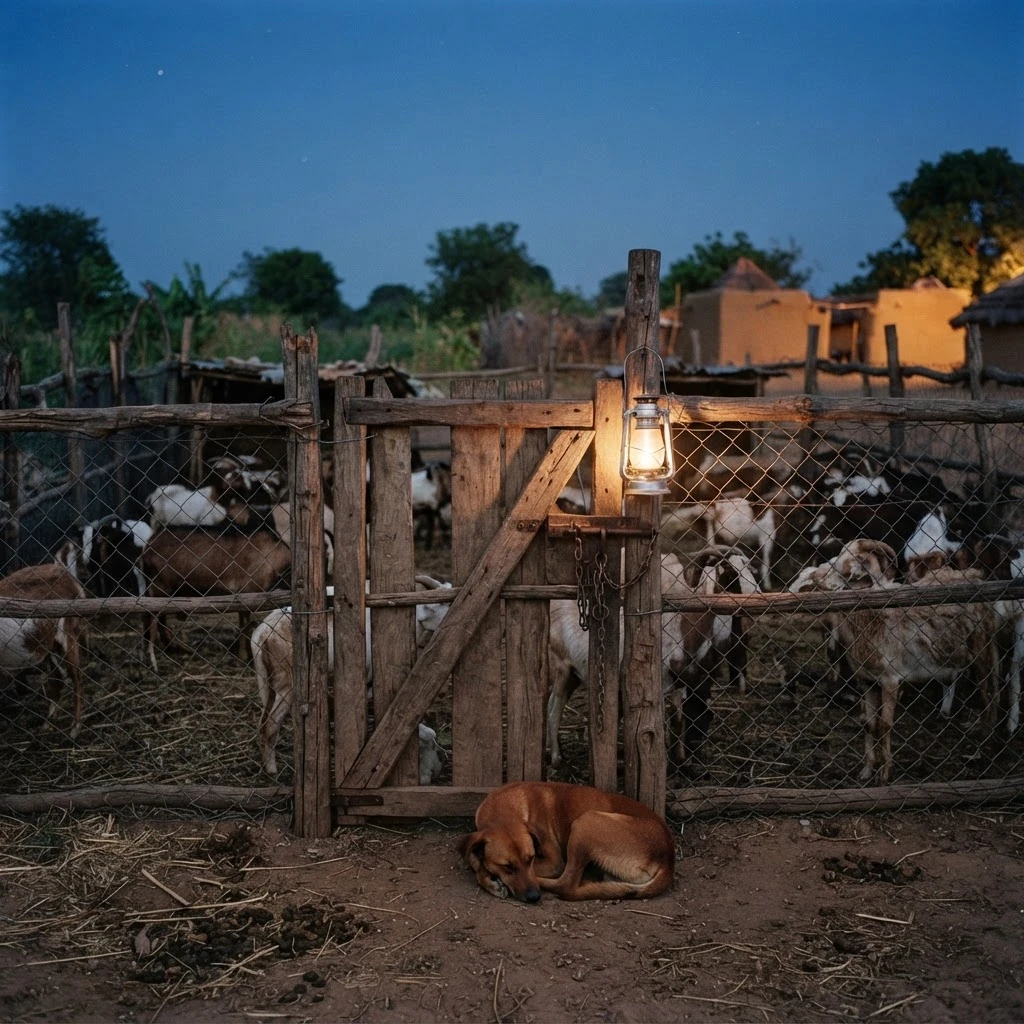
A guard dog resting inside a fenced enclosure with a group of goats in rural Ghana

Theft and predation

HIGH
What it is

Loss of animals to theft and, in some areas, to predators or road accidents, a serious problem for free-roaming flocks.

Evidence

In northern studies, losses to mortality and theft together wiped out more than half of the market benefit that flocks would otherwise have produced17. Among urban keepers, theft accounted for 17 percent of animal losses and road accidents a further 12 percent18. No source used here measures whether theft is rising or falling.

Who it hits

Keepers who let animals roam free or tether them unattended; the loss falls directly on the owner's capital.

How to manage it, and the opening

House animals at night in a secure kraal, herd or supervise grazing, brand or mark animals, and build community watch arrangements. Night housing also protects against disease and weather.

A person feeding goats in a field in Ghana during the dry season

Dry-season feed shortage

MEDIUM TO HIGH
What it is

In the long dry season the natural grazing dries off and animals lose weight just as festival demand builds, so they are thin when they should be prime.

Evidence

A West African review found agro-industrial by-products, fodder trees and crop residues are the main feeds documented for bridging the dry-season gap, while concluding that their effects on ruminant performance are poorly known in the region and are sometimes misused as a result1920.

Who it hits

All flocks, but most a fattening business that needs steady weight gain, and the southern, humid-zone keeper without stored feed.

How to manage it, and the opening

Store dry-season feed in advance: groundnut and cowpea haulms, cassava and yam peels, bran and brewers' grains, and fodder trees. For fattening, secure cheap feed before the lean season starts.

🐐 Openings: where the system change pays 🐐
01

Semi-intensive conversion, sold as a package. The only Ghanaian study that measures the ladder finds the gain concentrated in one rung of it, and the pen, the feed store and the water point are exactly what a smallholder cannot design or cost alone. A build and commission service priced against the measured income gain is a defensible offer.

02

Dry-season feed supply. Feed decides whether housing pays at all, and this pillar is blunt that confined animals did worse than roaming ones where supplement was sporadic. Baled crop residue, stored haulm and agro-industrial by-product delivered on contract turns the ladder's biggest failure mode into somebody's revenue.

03

Fitting the system to the land. The system a keeper ends up with is set by the site and the cropping calendar rather than by ambition, so the advisory service that pays is the one matching system to land, not the one selling the top rung to everybody.

🐐 Key takeaways 🐐
01

Free range and extensive grazing account for the great majority of keepers. Intensive commercial housing was recorded in none of the 249 small-ruminant-keeping households in the northern survey, for either species, and in one keeper in five among registered keepers in peri-urban Ashanti, so the commercial tier is geographic rather than absent.

02

Climbing one rung pays and climbing two may not. Against free range, semi-intensive was worth 4.8 fewer animals lost a year and about GH¢2,388 more income; full confinement showed no significant income advantage, on one peri-urban study.

03

Flocks are small, typically about 7.9 goats in the middle belt and south or twelve sheep in the north, and mostly held as savings rather than run as a business.

04

The systems form a ladder; climbing from extensive to semi-intensive buys control over breeding and sale timing and cuts exposure to theft, predators and traffic. The growth gain is conditional on steady feed, not automatic: where supplementary feed was sporadic and inadequate, confined animals fared worse than free-roaming ones.

05

Dry-season feed shortage is the binding constraint; storing crop residues and by-products is essential, especially for fattening, though the West African review of these feeds concludes that how much they add to performance is poorly known.

06

Uncontrolled breeding is common and cheap to fix; a kept buck or ram, separated young males and timed matings turn a random flock into a planned one.

Written for each reader

🐐 Practitioner intelligence 🐐

Hover any card to pause and lift it.

For students

If you are thinking of entering, choose semi-intensive keeping over free-range from day one, starting with the night housing: it is the part of the step the Ghanaian evidence clearly supports, because it removes the theft, predator and traffic losses that free-roaming invites. Whether it pays for itself in cash is worked out in Pillar 5. Nobody in the northern survey had gone further to true intensive housing, and one keeper in five had in peri-urban Ashanti, where the study that measured it found the extra step bought no income at all. The first-timer mistake is assuming land and free grazing are enough; they are enough to keep animals the way most keepers do, but they leave the flock carrying every loss the roaming systems carry. Be careful with the other half of the step: where supplementary feed was sporadic, confined animals did worse than roaming ones, so do not buy the pen until you know where the feed comes from. What you gain from the semi-intensive step is a flock you can actually count, weigh and treat, not just watch.

For entrepreneurs

Enter at the semi-intensive level: night housing is the cheapest step that materially cuts losses to theft, predators and weather. Treat the supplementary feeding beside it as a separate decision that only pays if you can keep the feed steady, because where it was sporadic, confined animals did worse than roaming ones. Solve dry-season feed early by storing crop residues and by-products, and bring breeding under control with a kept buck or ram and timed matings. Keep a written or phone record of every animal from the day it enters the flock, noting the system it is kept under, what it is fed and when it is sold: it costs nothing and is the discipline that separates a business from a herd left to itself. You are competing against casual keepers, so disciplined husbandry is a real edge.

For investors

The investable proposition is the move up the system ladder. A semi-intensive or intensive unit with controlled breeding, stored feed and a health protocol is a credible, scalable business; a plan that assumes high productivity on a free-roaming extensive system is not, and the survey above is the benchmark against which such a plan should be tested. Feed security is the make-or-break line in any model.

For ecosystem actors

Public support should help keepers climb the ladder: improved breeding stock from the national stations, dry-season feed and fodder schemes, and the Feed Ghana Programme's breeds, feed and vaccine support, targeted at the semi-intensive transition where the productivity gains are largest.

Where this connects. The mortality and disease loss that these systems expose a flock to is priced in Pillar 3, the cash cost of the feed store, the herder and the pen is worked through in Pillar 5, and the festival calendar that makes the dry-season feed gap costly in the first place is set out in Pillar 2.

Footnotes
  1. Adams, F, Socio-economic analysis of small ruminant livestock production in Northern Ghana, KNUST Institutional Repository (Doctoral thesis, Kwame Nkrumah University of Science and Technology) (2015, May), https://ir.knust.edu.gh/bitstream/123456789/9264/1/Faizal%20Adams.pdf.
  2. Ofori, S. A., and Hagan, J. K, "Characteristics and trait preferences of West African Dwarf goat keepers in Ghana," Tropical Animal Health and Production 53, 356 (2021), https://doi.org/10.1007/s11250-021-02781-5.
  3. Baah, J., Tuah, A. K., Addah, W., and Tait, R. M, "Small ruminant production characteristics in urban households in Ghana," Livestock Research for Rural Development 24(5) (2012), https://www.lrrd.org/lrrd24/5/baah24086.htm.
  4. Duku, S., van der Zijpp, A. J., and Howard, P, "Small ruminant feed systems: Perceptions and practices in the transitional zone of Ghana," Journal of Ethnobiology and Ethnomedicine 6, 11 (2010), https://doi.org/10.1186/1746-4269-6-11.
  5. Adams, Socio-economic analysis of small ruminant (2015).
  6. Adams, F., Mensah, A., Donkor, E., Ullah, A., Anim-Jnr, A. S., Mensah, J. O., Etuah, S., and Boakye Appiah, G, "Income over loss: How management systems lower mortality and increase farm incomes from small ruminants in urbanizing Africa," Small Ruminant Research 253, 107626 (2025), https://doi.org/10.1016/j.smallrumres.2025.107626.
  7. Duku et al., "Small ruminant feed systems" (2010).
  8. Baah et al., "Small ruminant production characteristics" (2012).
  9. Adams, Socio-economic analysis of small ruminant (2015).
  10. Adams et al., "Income over loss" (2025).
  11. Adams et al., "Income over loss" (2025).
  12. Adams et al., "Income over loss" (2025).
  13. Alimi, N., Assani, A. S., Sanni Worogo, H. S., Baco, M. N., and Traore, I. A, "Livestock feed resources used as alternatives during feed shortages and their impact on the environment and ruminant performance in West Africa: A systematic review," Frontiers in Veterinary Science 11, 1352235 (2024), https://doi.org/10.3389/fvets.2024.1352235.
  14. Duku et al., "Small ruminant feed systems" (2010).
  15. Ofori and Hagan, "Characteristics and trait preferences" (2021).
  16. Ministry of Food and Agriculture, Medium-term expenditure framework (MTEF) for 2025 to 2028: Programme based budget estimates for 2025, Government of Ghana (2025).
  17. Adams et al., "Economic benefits of livestock management" (2021).
  18. Baah et al., "Small ruminant production characteristics" (2012).
  19. Alimi et al., "Livestock feed resources used" (2024).
  20. Duku et al., "Small ruminant feed systems" (2010).
Download full PDF
UpcomingThis document isn't available yet.