Ghana Agribusiness PlaybookGoats & Sheep
An extension officer showing a young keeper a livestock app on a smartphone beside a flock at dusk
Goats & Sheep · Series intelligence

Strategic Outlook, plus AI and Digital

The state is genuinely behind this sector: breeds, feed, vaccines, a five percent income-tax rate held for five years, and a GIRSAL guarantee that repays lenders 70 percent of a defaulted loan. The support is real, so the live question is no longer whether to start but where.
Strategic outlook · Pillar 08

Ghana’s small-ruminant sector has a state actively behind it: breeds, feed, vaccines, a tax break and a credit guarantee. This closing pillar sets out what that support actually offers, reads the PESTLE and SWOT forces around the sector, maps where a new entrant should start by capital and skill, and draws together the investment case the whole book has been building toward, closing with the AI and digital tools a keeper can genuinely use today.

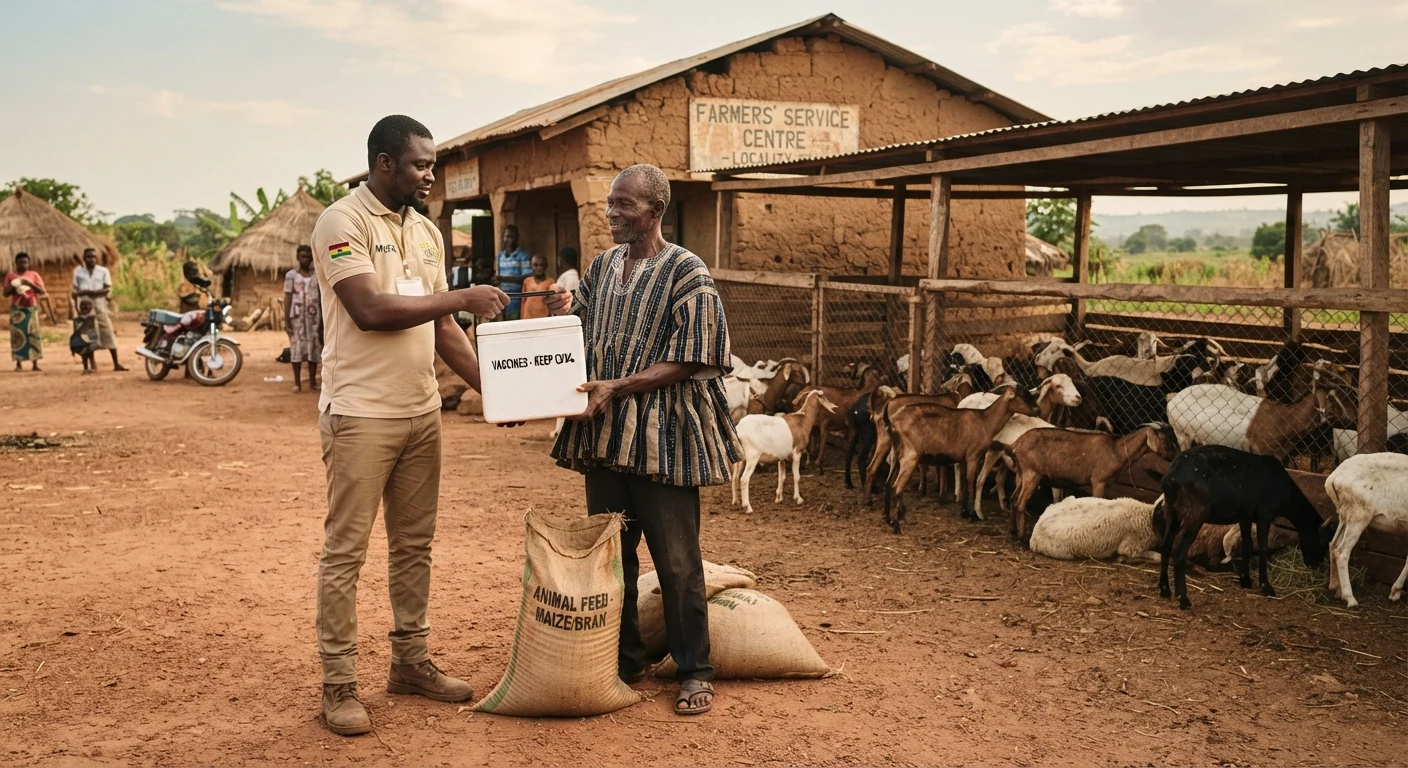
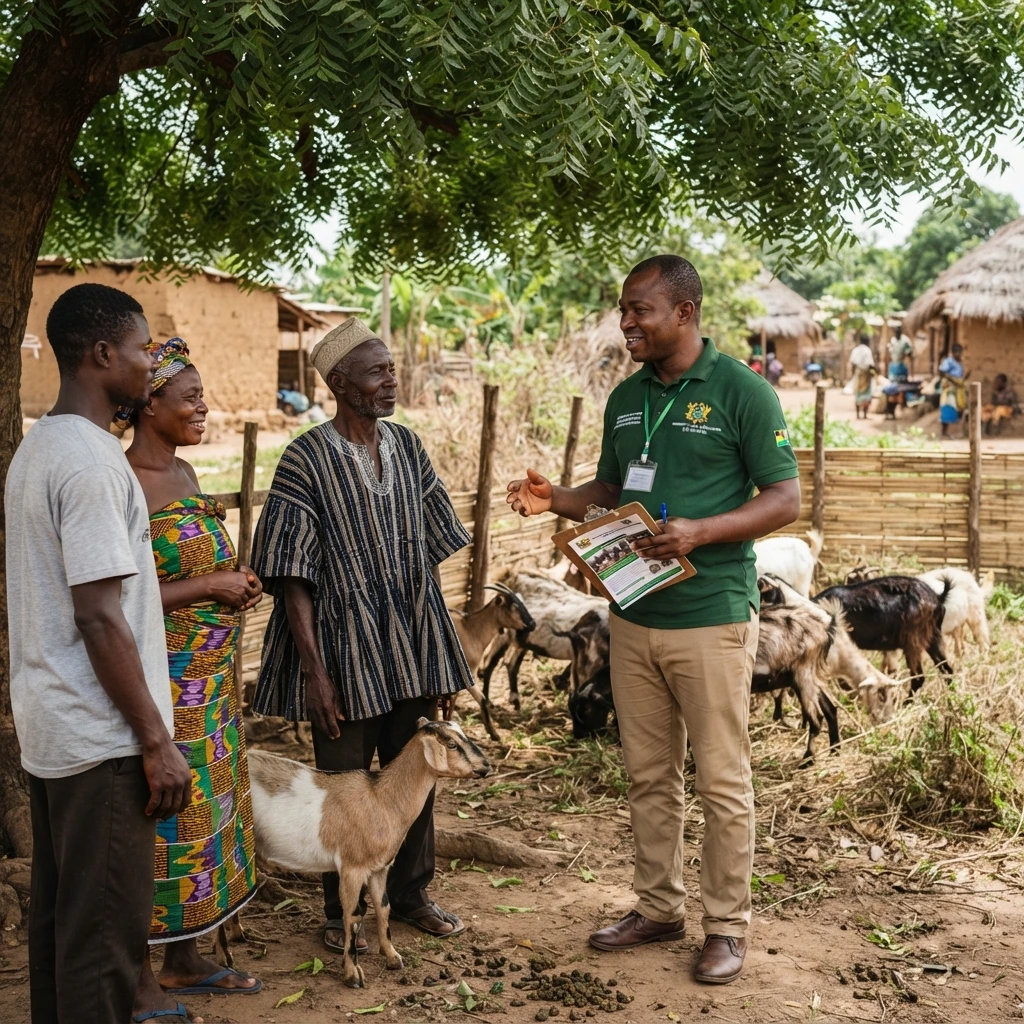
A Ministry of Food and Agriculture extension officer delivering vaccine boxes and feed sacks to a small-ruminant keeper outside a rural Farmers' Service Centre, a goat and sheep flock in the pen behind them, documentary photograph
Concrete, not just a headline
The state is actually behind this: breeds, feed, vaccines, a tax break and a credit guarantee.
5% × 5 yrs
the income-tax concession rate for livestock other than cattle, not a holiday
70%
of a defaulted loan's outstanding principal GIRSAL pays the lender
2025–2028
the four-year span of the Feed Ghana Programme

🐐 What the State now offers 🐐

Government support for the sector is stronger than it has been in years, and it is concrete. The Feed Ghana Programme, a four-year agricultural transformation launched in 2025, covers sheep and goats among its target value chains and provides improved breeds, feed and vaccines, along with Farmers’ Service Centres in every region1. The tax system favours the sector, though less generously than the headline suggests: the Income Tax Act’s Sixth Schedule gives farming of livestock other than cattle, which is exactly goats and sheep, a five-year concessionary period taxed at five percent of chargeable income, rather than a full tax holiday2. Model it correctly: the ten-year end of the five-to-ten-year agricultural range belongs to cattle and tree crops, not to goats and sheep, and this is not a holiday because the Income Tax (Amendment) Act 2023 sets the rate at five percent of chargeable income rather than exempting it. Confirm the current position with the Ghana Revenue Authority before committing.

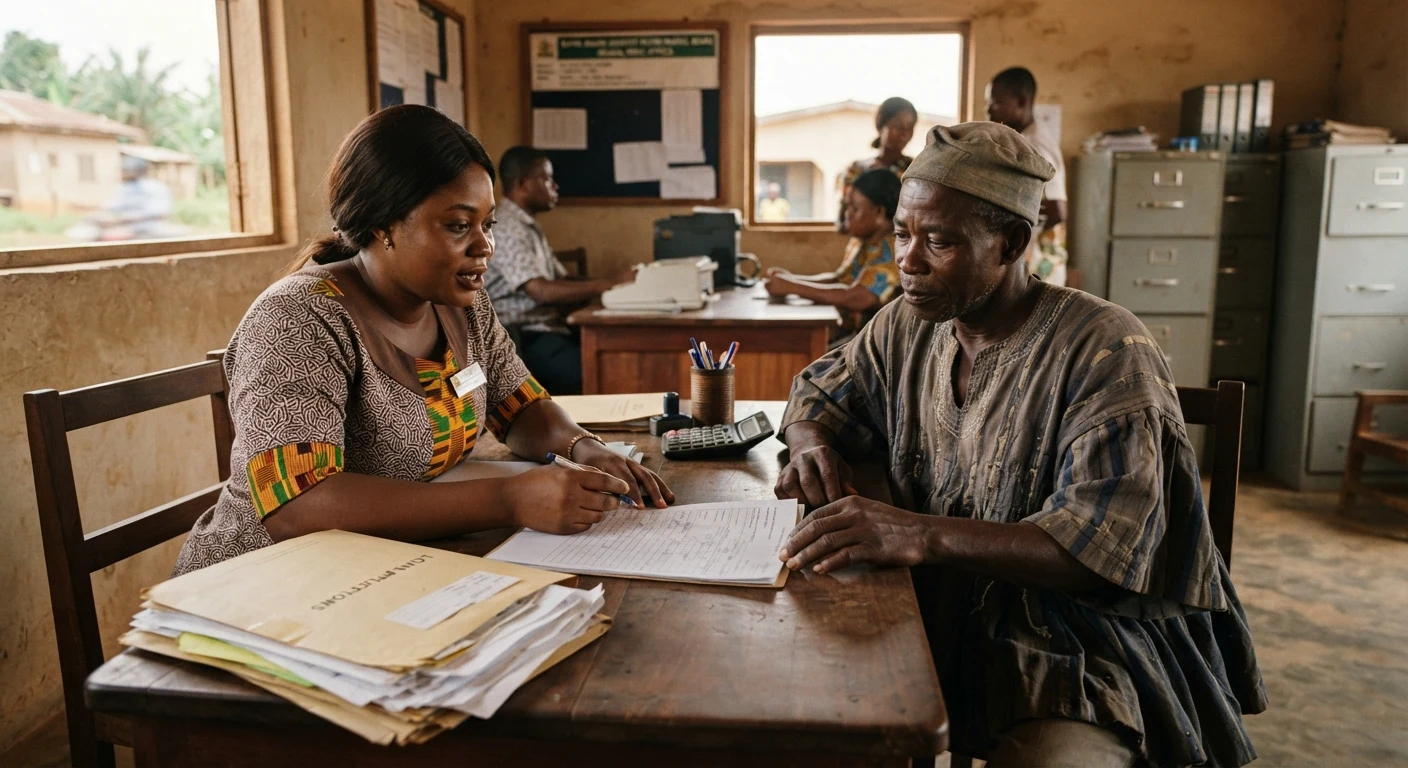
Finance is being de-risked: GIRSAL, the agricultural credit guarantee company, covers up to 70 percent of the outstanding loan principal on default, with the interest excluded3. Livestock is eligible: GIRSAL’s own published list names it alongside poultry and aquaculture, and covers inputs, production, aggregation, processing and marketing. The guarantee is to the lender, not to the borrower: it reduces the bank’s loss and does not reduce the debt. Rearing for Food and Jobs, the earlier restocking programme, was a module of Planting for Food and Jobs and ran from 2019 to 2023; it appears in neither the 2025 expenditure estimates nor the Feed Ghana document, so treat it as closed and Feed Ghana as the operative framework. The actual deliveries under it, and where the animals came from, are set out in Pillar 1.

A loan officer at a rural Ghanaian bank branch reviewing a GIRSAL credit-guarantee application form with a small-ruminant farmer, a folder of documents on the desk between them, documentary photograph
De-risking the lender, not the debt
What the guarantee actually does: reduces the bank’s loss, not the borrower’s balance.
270
Farmers' Service Centres planned under Feed Ghana
3
national breeding stations with funded budget lines: Nungua, Ejura, Kintampo
Table 17: The Public Support a Small-Ruminant Business Can Use
SupportWhat it offersWho runs it
Feed Ghana Programme (2025 to 2028)Improved breeds, feed, vaccines; Farmers' Service Centres in every regionMinistry of Food and Agriculture
Income-tax concessionFive years for livestock other than cattle, taxed at five percent of chargeable income rather than exempt; confirm the current position with the Ghana Revenue AuthorityGhana Revenue Authority, under the Income Tax Act
GIRSAL credit guaranteePays the lender up to 70 percent of outstanding loan principal on default, interest excluded; livestock is a named eligible sub-sector, covering production, aggregation and processingGIRSAL
Veterinary servicesVaccination and disease control (PPR, others)Veterinary Services Directorate
National breeding stationsFunded budget lines for the Nungua Livestock, Ejura Sheep and Kintampo Goat breeding stations; what stock each releases, and on what terms, is not publishedMinistry of Food and Agriculture

Sources: Ministry of Food and Agriculture (2025); Republic of Ghana, Income Tax Act 896 (2015); Ghana Investment Promotion Centre (2022); Bank of Ghana (2024); and, for the breeding stations and the veterinary line, the Ministry's own medium-term expenditure estimates for 2025. The tax row is the Act's own Sixth Schedule figure for livestock other than cattle, not the agency's wider sector range; the guarantee row is GIRSAL's own published eligibility list, which the Bank of Ghana's account of the scheme does not repeat.

🐐 The forces around the sector: PESTLE and SWOT 🐐

Two standard scans place the sector for an entrant. PESTLE reads the external forces around goats and sheep; SWOT reads the sector’s own hand against them.

PESTLE: the forces around the sector

Table 18: PESTLE Snapshot
ForceWhat it means for goats and sheep
PoliticalA strong livestock push: the Feed Ghana Programme from 2025, the earlier Rearing for Food and Jobs closed in 2023, and an import-substitution agenda
EconomicA stronger cedi cut import costs in 2025 and again into 2026; the 2026 Sahel export bans expose a supply route Ghana leans on heavily, though by mid-2026 the Ghanaian price effect was mixed rather than uniformly upward (Pillar 2); the import bill and self-sufficiency figures are sized in Pillar 7
SocialGoats and sheep are culturally central, kept by women as well as men; festival and ceremonial demand is large and reliable
TechnologicalPPR vaccines, improved West African Dwarf and Nungua Blackhead breeds, and semi-intensive housing exist but are under-used; the phone-based tools already working in Ghana are set out later in this pillar
LegalA five-year income-tax concession for livestock other than cattle, taxed at five percent rather than exempt; veterinary and disease-control rules; the global PPR eradication target for 2030
EnvironmentalDry-season feed scarcity, drought and a warming north (Pillar 4); small ruminants are more drought-tolerant than cattle

Sources: Ministry of Food and Agriculture (2025); Ghana Investment Promotion Centre (2022); Africanews (2026).

SWOT: the sector at a glance

Table 19: SWOT for a Goats and Sheep Venture
Helpful to a ventureHarmful to a venture
Internal (the sector's own hand)Strengths: hardy, prolific local breeds; low entry cost; strong cultural and festival demand; State backing through Feed Ghana, the income-tax concession and GIRSALWeaknesses: high young-stock mortality; PPR and worms; thin processing; a middleman-controlled trade; no published enterprise budget
External (the environment)Opportunities: the structural import-substitution opening exposed by the 2026 Sahel export bans; the festival price premium; value addition (packaged chevon, leather); organised aggregationThreats: cross-border supply shocks; exchange-rate price swings; disease outbreaks; theft and dry-season drought

Read clockwise: build on the strengths and opportunities while funding the fixes for the weaknesses and threats.

Source: synthesis of Pillars 1 to 7.

What the two scans agree on. Read PESTLE and SWOT together and the same instruction falls out: build on hardy, low-cost stock and reliable festival demand, use the State backing that now exists, and treat cross-border supply shocks and disease as things to manage rather than to assume away.

🐐 The opportunity map: where to enter 🐐

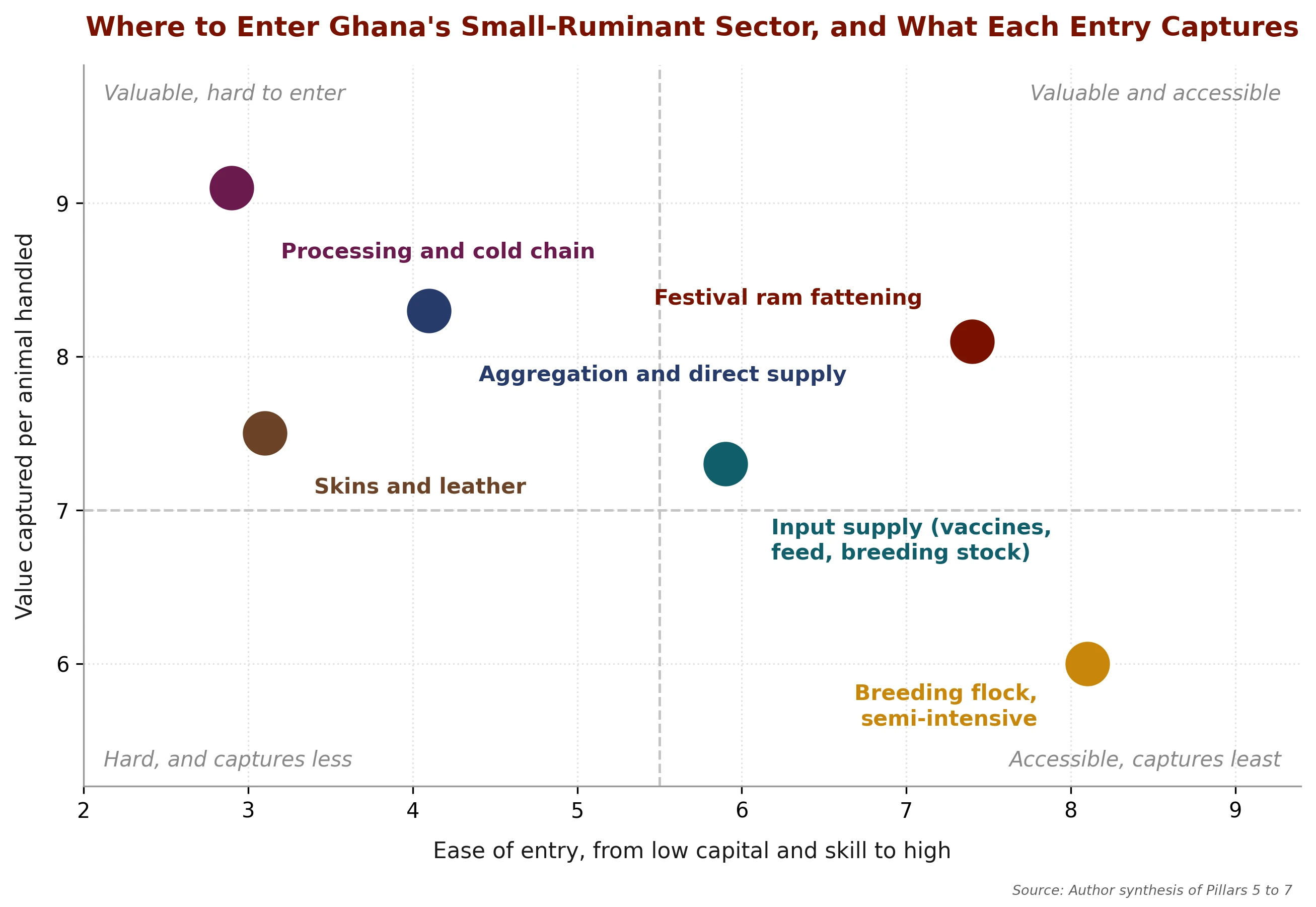
Value captured per animal handled against ease of entry, with all four quadrants read
Figure 14 Value captured per animal handled against ease of entry, with all four quadrants read
What this shows

Read the quadrants before the dots. The top right is nearly empty, and that is the finding: only festival fattening combines real value capture with an entry cost a new operator can meet, which is why it is crowded every festival season. The top left holds the three openings this book keeps returning to, processing and cold chain, aggregation, and skins and leather, all of which capture more per animal and need capital and a supply relationship first. Skins and leather has moved up from v1’s placement: production nearly doubled while export value halved, and FAO records no Ghanaian export of sheep and goat leather at all, an unexploited gap rather than an unattractive branch. Breeding alone sits bottom right, accessible and capturing least, the whole argument of the map.

The accessible entries are festival ram fattening and an improved breeding flock; the higher-value but harder openings are input supply, organised aggregation, processing with cold chain, and skins and leather, on rising production against falling export value (Pillar 6). Selling live at the farm gate captures the least. The map is the investment map: move up the chain rather than just keeping more animals.

~2×
Ghana's skins and leather production, while export value fell to about half (FAO)
0
Ghanaian exports of sheep and goat leather that FAO records, an unexploited gap

🐐 Where to enter, by capital and skill 🐐

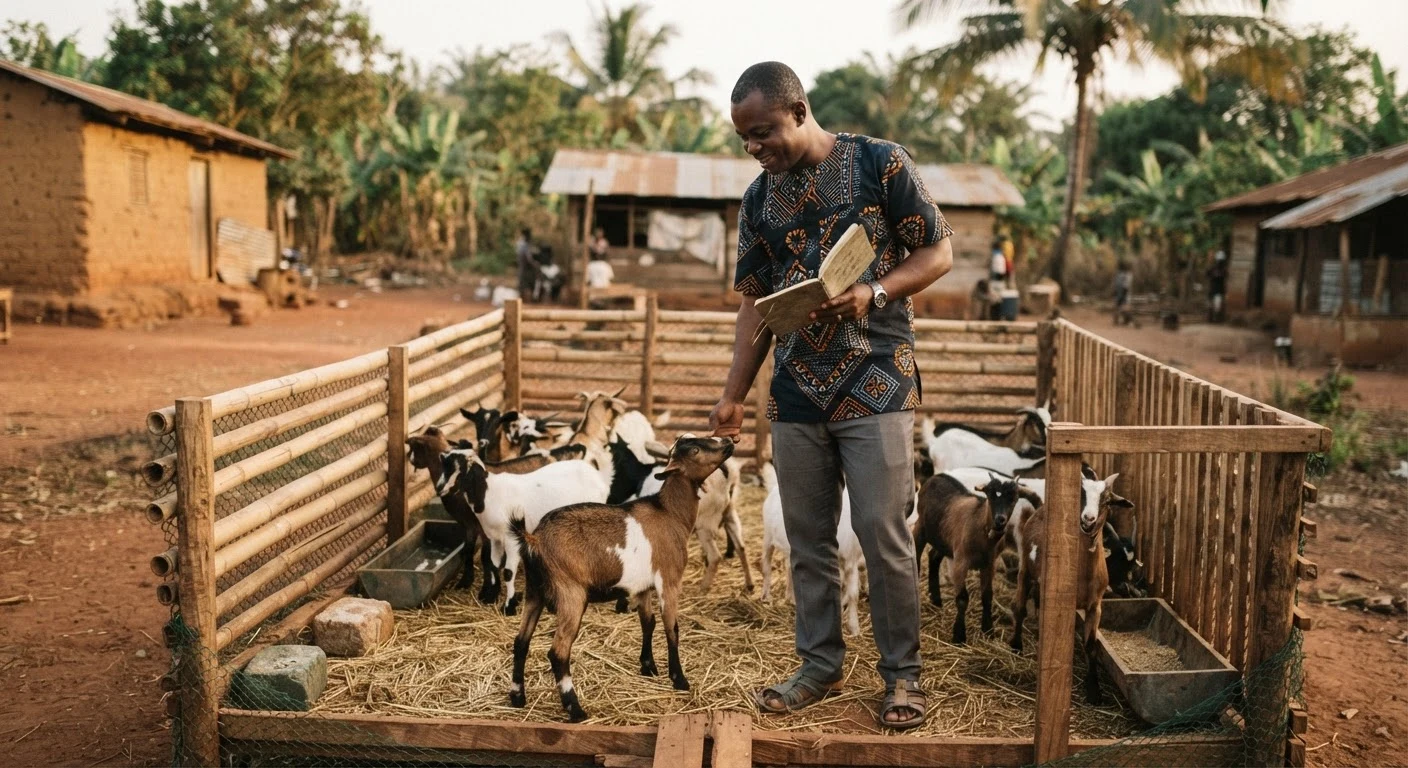
The right entry point depends on how much capital and skill an entrant brings. With a little money, the lowest-risk start is a small improved breeding flock kept semi-intensively, climbing the system ladder as cash and confidence grow. With modest seasonal capital, festival ram fattening is attractive, and more so while the Sahel export route Ghana leans on is under suspension4, though the Ghanaian price effect of that suspension was still mixed by mid-2026 and should not be counted on as a premium: buy lean, feed for the seventy-five to ninety days set out in Pillar 5, and sell into the Eid or Christmas peak.

With more capital and an eye on the gaps in the chain, the higher-margin plays are aggregation, linking many small producers to urban buyers, input supply of vaccines, feed and breeding stock to an under-served market, and processing, the hygienic slaughter, cold chain and packaged chevon that the country currently lacks. Each of these solves a real constraint in the sector while capturing margin that is currently lost or sent abroad.5 Many operators combine models, for example a breeding base plus seasonal fattening, or production plus aggregation.

A Ghanaian entrepreneur inspecting a small semi-intensive breeding flock of West African Dwarf goats in a simple raised night pen, notebook in hand, documentary photograph
The lowest-risk start
Climb the ladder: a small breeding flock first, as cash and confidence grow.
75–90 days
the festival ram fattening window (Pillar 5)
Table 20: Entry Strategies by Capital Level
Capital levelEntry strategyWhy it works now
LowSemi-intensive improved breeding flockLow entry cost; stock multiplies; climb the ladder
Modest, seasonalFestival ram fattening (75 to 90 days, see Pillar 5)Sahel export route suspended; festival demand; fast cycle
ModerateInput supply (vaccines, feed, breeding stock)Under-served rural market; strengthens every flock
HigherAggregation and direct urban supplyBypasses middlemen; serves festival and hotel demand
HigherHygienic slaughter, cold chain, packaged chevonFills the missing processing layer; captures lost value

Sources: synthesis of Pillars 1 to 7; Ministry of Food and Agriculture (2025); Africanews (2026).

🐐 AI and digital: what a smallholder can adopt now 🐐

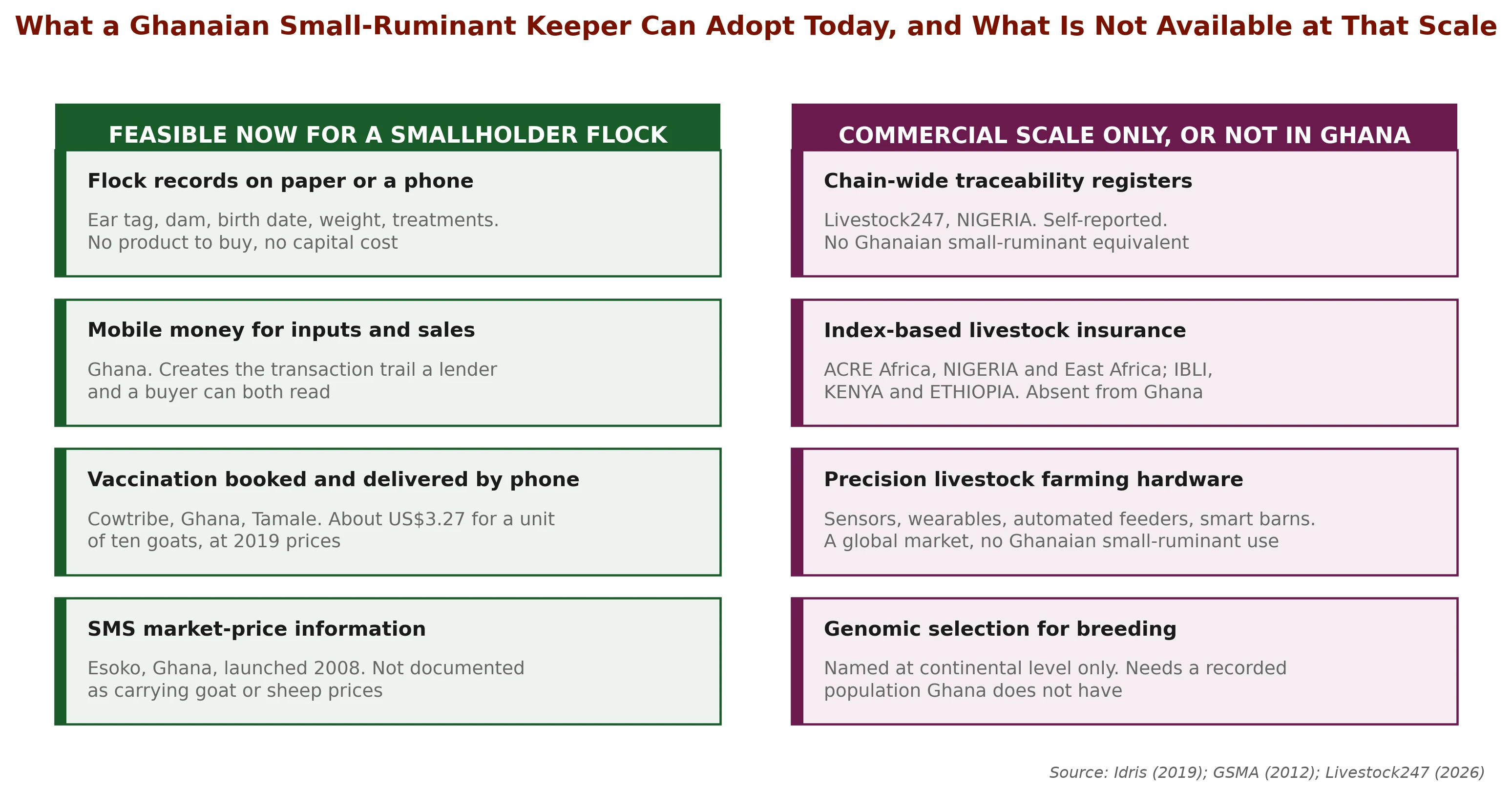
The digital tools available to a Ghanaian small-ruminant keeper today, against those that require commercial scale or do not operate in Ghana at all
Figure 15 The digital tools available to a Ghanaian small-ruminant keeper today, against those that require commercial scale or do not operate in Ghana at all
What this shows

The distinction, not the list, is the point. Everything in the left column can be started this season by a keeper with a phone and no capital budget; the first rung costs nothing because it is a habit, not a product. Everything in the right column needs either a commercial balance sheet or an institution Ghana does not yet have, and two of its four rungs have no Ghanaian deployment at all: the countries printed inside those boxes are where the platform actually operates, not where a Ghanaian keeper can buy it. Adopting the left column in order is a realistic twelve-month programme; treating the right column as available is the failure mode this section exists to prevent.

Two tools already work in Ghana at a price a goat or sheep keeper would recognise. Cowtribe, the Tamale-based vaccine service Pillar 3 covers in depth, is a proven Ghanaian model worth building on. Esoko, the Ghana-founded SMS price service Pillars 2 and 7 cover, shows the opportunity, a price service Ghana has built once, and the gap, since it is not documented as carrying goat or sheep prices. Below both, the cheapest step costs nothing: a phone note or a ruled book recording ear tag, dam, birth date, weight and treatments turns a flock nobody can assess into one a lender can value, and mobile money turns a sale into a record a lender can read. Records, mobile money, then a subscription service, is the realistic order of adoption this year.

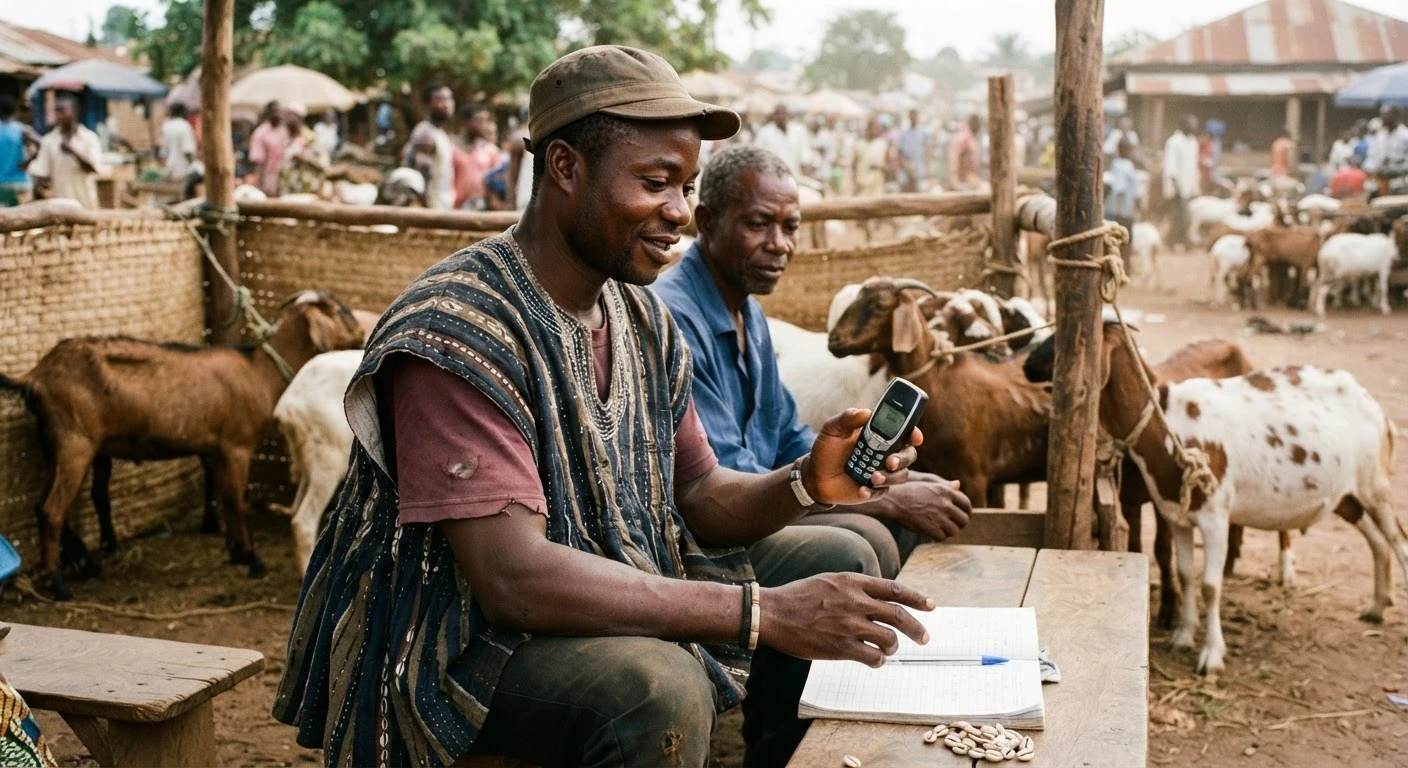
A Ghanaian small-ruminant keeper using a basic mobile phone to record a sale on mobile money at an open-air livestock market, goats tethered behind, documentary photograph
A habit, not a product
The cheapest step costs nothing: a phone note and mobile money, kept from day one.

🐐 Further up the ladder: real, but not yet Ghanaian 🐐

Further up the ladder sit tools that are real but not Ghanaian, precedent rather than evidence about this country. Livestock247 runs a digital livestock ecosystem in northern Nigeria, self-reporting 110,123 traceable animals, 277,168 vaccinations and 103,529 rural herder households across 15 Nigerian states6, buildable in West Africa but not operating in Ghana. Index-based livestock insurance is the sharper absence: ACRE Africa runs it across Nigeria, Kenya, Tanzania, Uganda, Rwanda, Zambia and Ethiopia7, and the International Livestock Research Institute’s IBLI programme runs the same approach in Kenya and Ethiopia, where it made its first payout in Wajir in 20148; Ghana has no equivalent. Precision hardware and genomic selection sit further out again: both need a commercial herd size or a recorded, performance-tested population Ghana does not have, so both come after the record-keeping habit above, not before it.

110,123
traceable animals Livestock247 self-reports across northern Nigeria
277,168
vaccinations Livestock247 self-reports
103,529
rural herder households across 15 Nigerian states Livestock247 self-reports

The African Development Bank’s continental livestock plan, which never mentions Ghana, lists improved processing infrastructure and cold chain management, digital finance and e-commerce, post-production handling technology, improved branding and certification, and partnerships between producers and buyers with the finance attached to make them work among its own priorities for African livestock chains, close to the openings this playbook derives from Ghanaian evidence. The same document’s gender and inclusion theme states that value chains in which women are very active, such as smallholder dairy and the production of small ruminants and poultry, should be actively supported, naming this commodity though it never names Ghana. The same framework sets out the mismatch that sits underneath every financing conversation in this pillar: livestock earns about 40 percent of agricultural gross domestic product across Africa, varying from 15 to 80 percent across countries in the developing world, while agriculture as a whole receives about 4.8 percent of all commercial bank lending, some US$660 million a year out of about US$14 billion. A sector earning two fifths of farm output and drawing one twentieth of bank credit is the continental version of what GIRSAL exists to fix.9

~40%
of African agricultural GDP that livestock earns
4.8%
of commercial bank lending agriculture receives, about US$660m of US$14bn a year

📡 Market signal. The realistic digital opportunity here is records, mobile money and a subscription service already proven in Ghana. Traceability, index insurance and precision hardware belong to Nigeria, East Africa or a different scale of business.

🐐 Openings: where the policy window is 🐐
01

Be the counterparty the state programmes need. Feed Ghana runs to 2028 with small ruminants named in it and 270 service centres planned, and programmes of that shape need organised private counterparties far more often than they find them. Position early rather than waiting to be a beneficiary.

02

Package the finance rather than the animal. Livestock is an eligible sub-sector for the credit guarantee, most operators do not know it, and the guarantee covers most of the lender's principal exposure. Whoever assembles bankable small-ruminant proposals is selling into a financing route that already exists and is under-used.

03

Enter where the tax position is understood. The concession is five years at a reduced rate rather than a holiday, and it is written for an individual rather than a company on the face of the Act. Getting that settled with the Revenue Authority before choosing a legal structure is worth more than the concession itself.

🐐 The risks that sit inside the policy and entry decision 🐐

A government extension officer and a small-ruminant keeper standing beside a locked Farmers' Service Centre store, an official Feed Ghana Programme signboard weathered at the edges, documentary photograph

Policy and programme discontinuity

MEDIUM TO HIGH
What it is

The incentives behind this investment case are programme commitments, not durable entitlements, and they change with the government that made them.

Evidence

A new four-year framework, the Feed Ghana Programme, launched in 2025 while the previous flagship, Rearing for Food and Jobs, ran only to 2023 and is absent from the 2025 documents, and no archived document sets out how the two relate, so an entrant cannot tell from the public record which commitments survive; and the credit guarantee reached only about 137 agribusinesses in five years10, a scarce allocation, not a standing right.

Who it hits

Anyone whose returns depend on a subsidy or a distributed animal, and any investor with an unconfirmed tax position.

How to manage it, and the opening

Model the business twice, once with every incentive and once with none, and proceed only if the second version still works. Get the tax position in writing from the Ghana Revenue Authority first.

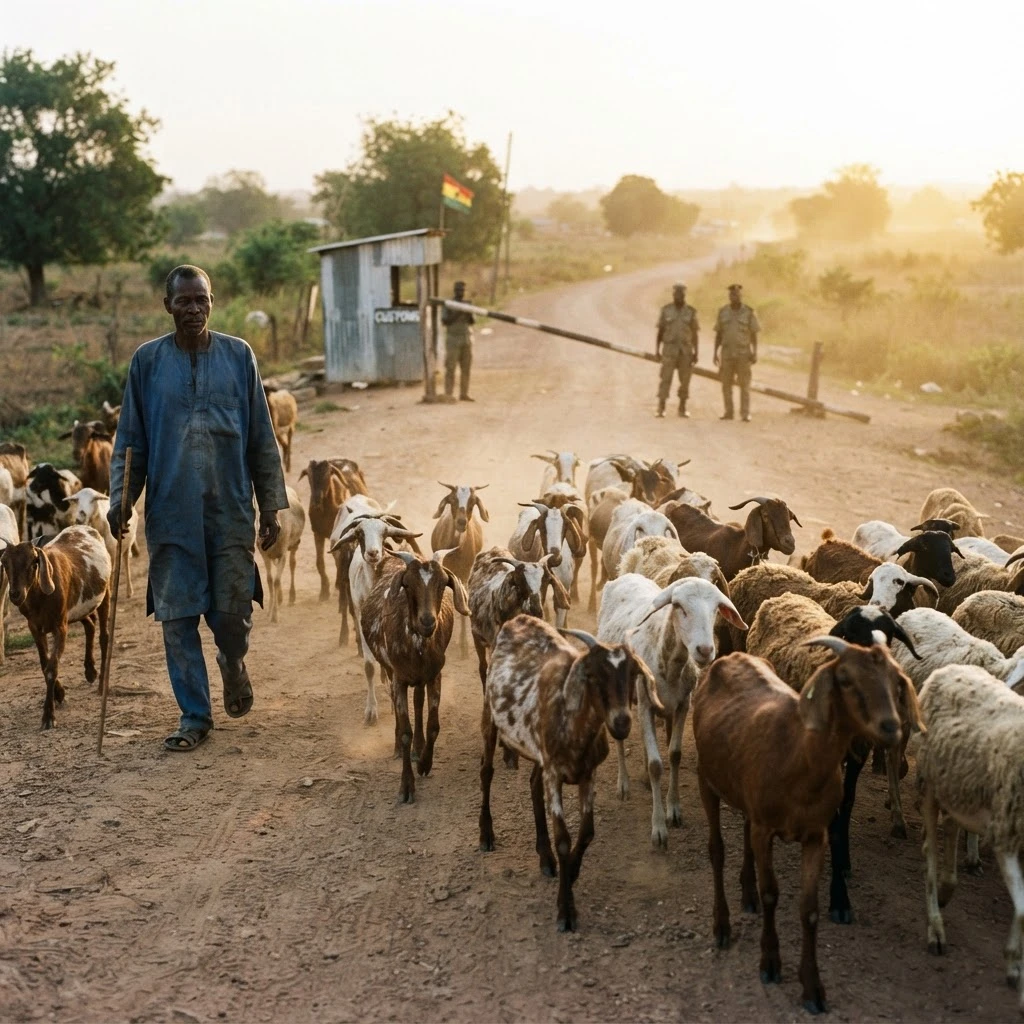
Herders trekking a mixed line of goats and sheep along a dusty road toward a Ghana-Burkina Faso border crossing, documentary photograph

🐐 The investment case in one paragraph 🐐

A large and rising home market, under-supplied by local farmers and heavily exposed to a single Sahel import source that suspended exports in 2026, meets a low cost of entry, fast-multiplying stock, a five-year income-tax concession at a five percent rate, a credit guarantee covering up to 70 percent of an agricultural loan’s default risk, and active State support through the Feed Ghana Programme. The winners will be the operators who treat goats and sheep as a real business: who keep the animals alive through vaccination and good feeding, time their sales to the festivals, and capture margin by aggregating, supplying inputs or processing rather than selling live at the farm gate. The risks, disease, mortality, theft and a middleman-controlled trade, are exactly the problems a disciplined business can solve while the casual majority cannot.

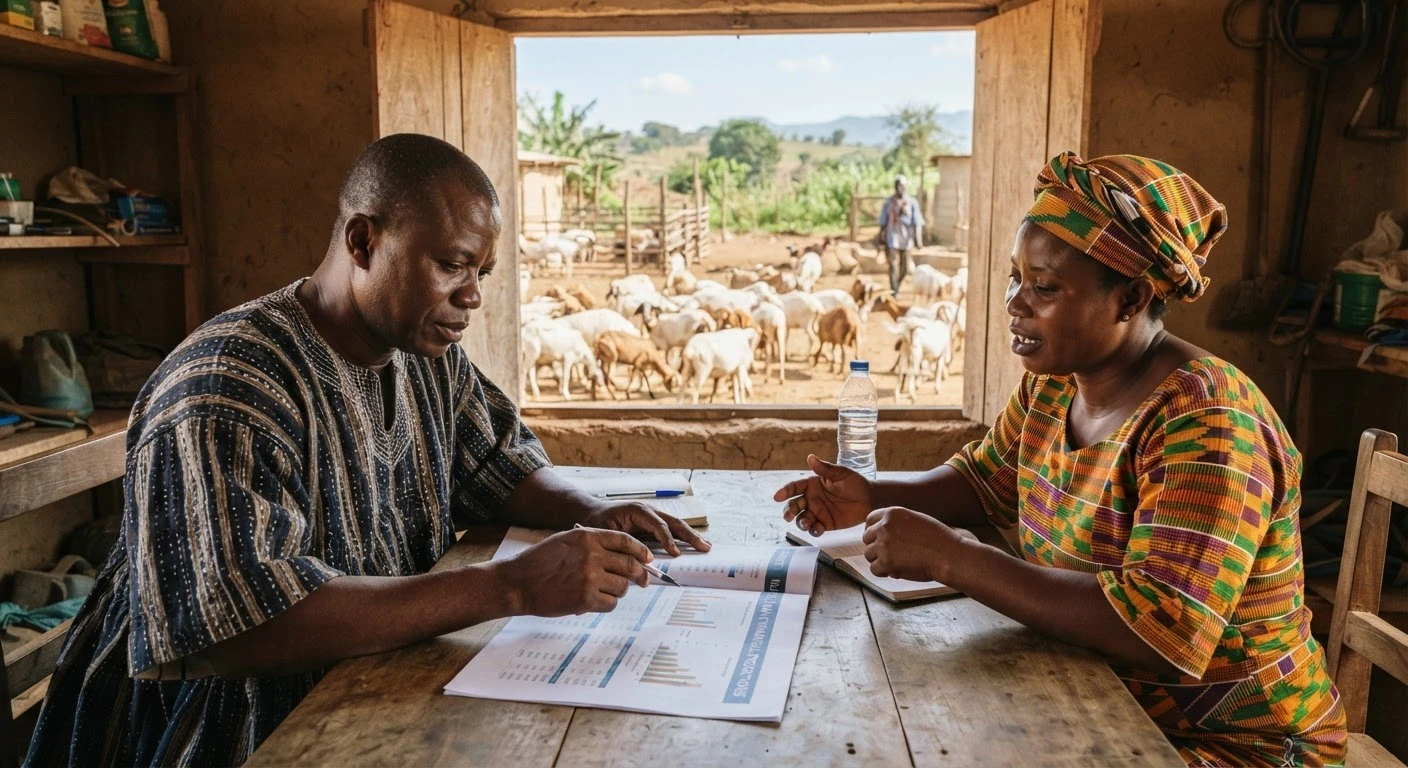
A Ghanaian investor and a small-ruminant business owner reviewing a business plan and financial projections across a table, a flock visible through the window behind them, documentary photograph
The whole book, in one paragraph
A disciplined business: vaccinate, time sales to festivals, and move up the chain.
5% × 5 yrs
income-tax concession rate
70%
of loan principal GIRSAL covers on default
🐐 Due-diligence checklist before you commit capital 🐐
01

Confirm a cost and returns budget for your chosen system, breed and district.

02

Confirm current local prices: lean-season buying, festival selling, feed and veterinary costs.

03

Secure a dry-season feed plan and supply before the lean season starts.

04

Budget for PPR vaccination, a deworming calendar and night housing from day one.

05

Map your route to market: festival timing, khebab and chop-bar buyers, hotels, direct sales.

06

Check eligibility for the Feed Ghana Programme, the income-tax concession and a GIRSAL-backed loan, and confirm both figures in writing.

07

Plan against the exchange rate and any change in the Sahel export bans, both of which can move prices.

🐐 Key takeaways 🐐
01

The investment case is a large, under-supplied, festival-driven market whose main Sahel import source suspended exports in 2026, with low entry costs and strong State backing. The exposure is real, but a Ghanaian shortage had not shown up by mid-2026: Pillar 2 shows the 2026 festival price moved in different directions in different markets.

02

The State offers improved breeds, feed and vaccines, a five-year income-tax concession for livestock other than cattle taxed at five percent rather than exempt, and a credit guarantee that pays the lender up to 70 percent of outstanding principal on default, interest excluded.

03

Entry points scale with capital: breeding flock, then festival fattening, then input supply, aggregation and processing. Skins and leather is a genuine and under-priced opening.

04

The African Development Bank's continental livestock plan lists the same openings and names small ruminants among its gender and inclusion priorities.

05

The realistic digital opportunity for a smallholder is records, mobile money and a proven Ghanaian subscription service; traceability, index insurance and precision hardware belong to Nigeria, East Africa or a different scale of business.

Written for each reader

🐐 Practitioner intelligence 🐐

Hover any card to pause and lift it.

For students

The business intelligence pillar is a lesson in reading an investment case from the whole value chain: matching a market gap to entry strategies, public incentives and the constraints that must be solved.

For entrepreneurs

Pick your entry by your capital and skill, and use what the State offers, checked rather than assumed: the concession is five years at a five percent rate, not a holiday, and is worth confirming with the Ghana Revenue Authority, and remember GIRSAL protects the lender, not you: it pays the bank up to 70 percent of outstanding principal on default and does not reduce your debt. Start with a semi-intensive breeding flock or festival fattening, then climb toward aggregation, input supply and processing, and keep flock records from day one.

For investors

The thesis is import substitution into a structural supply gap, de-risked by State support that needs its own diligence: get the tax position in writing, and price the credit guarantee as default-risk cover, not a loan guarantee.

For ecosystem actors

The public opening is to convert the 2026 suspension of the Sahel export route into lasting domestic capacity: deliver the Feed Ghana Programme's breeds, feed and vaccines at scale, de-risk lending through GIRSAL, and invest in the processing infrastructure that lets Ghana keep the value it now sends across the border. A continental investment plan names small ruminants as a chain where women are very active and should be supported.

Where this connects.The market sizing and competitive structure this outlook draws on are set out in Pillar 7; the stakeholder power-interest grid and the margin detail behind the opportunity map sit in Pillar 6. The breeding-stock supply gap under the State’s own restocking programme, and the border closure now blocking it, is traced in Pillar 1.

Footnotes
  1. Ministry of Food and Agriculture, Medium-term expenditure framework (MTEF) (2025).
  2. Republic of Ghana, Income Tax Act, 2015 (Act 896), Sixth Schedule (temporary concessions), paragraph 1, Ghana Revenue Authority (2015), https://pef.org.gh/documents/INCOME%20TAX%20ACT%202015%20(ACT%20896).pdf.
  3. Ghana Incentive-Based Risk-Sharing System for Agricultural Lending, Frequently asked questions and Agricultural Credit Guarantee Scheme (2026), accessed 28 July 2026, https://www.girsal.com/faq/ and https://www.girsal.com/agricultural-credit-guarantee-scheme/.
  4. Africanews, Burkina livestock ban welcomed by consumers but hits traders hard (2026, 26 May), accessed 26 July 2026, https://www.africanews.com/2026/05/26/burkina-livestock-ban-welcomed-by-consumers-but-hits-traders-hard/.
  5. Africanews, Burkina livestock ban welcomed (2026).
  6. Livestock247, Livestock247 (2026).
  7. ACRE Africa, Index-based livestock insurance (2026), accessed 26 July 2026, https://acreafrica.com/livestock-insurance/index-based-livestock-insurance/.
  8. International Livestock Research Institute, Index-based livestock insurance (IBLI) (2026), accessed 26 July 2026, https://ibli.ilri.org/.
  9. African Development Bank, Livestock Investment Master Plan (LIVEMAP) (2021).
  10. Bank of Ghana, Governor's remarks at the GIRSAL (2024).
Download full PDF
UpcomingThis document isn't available yet.