Ghana Agribusiness PlaybookMaize
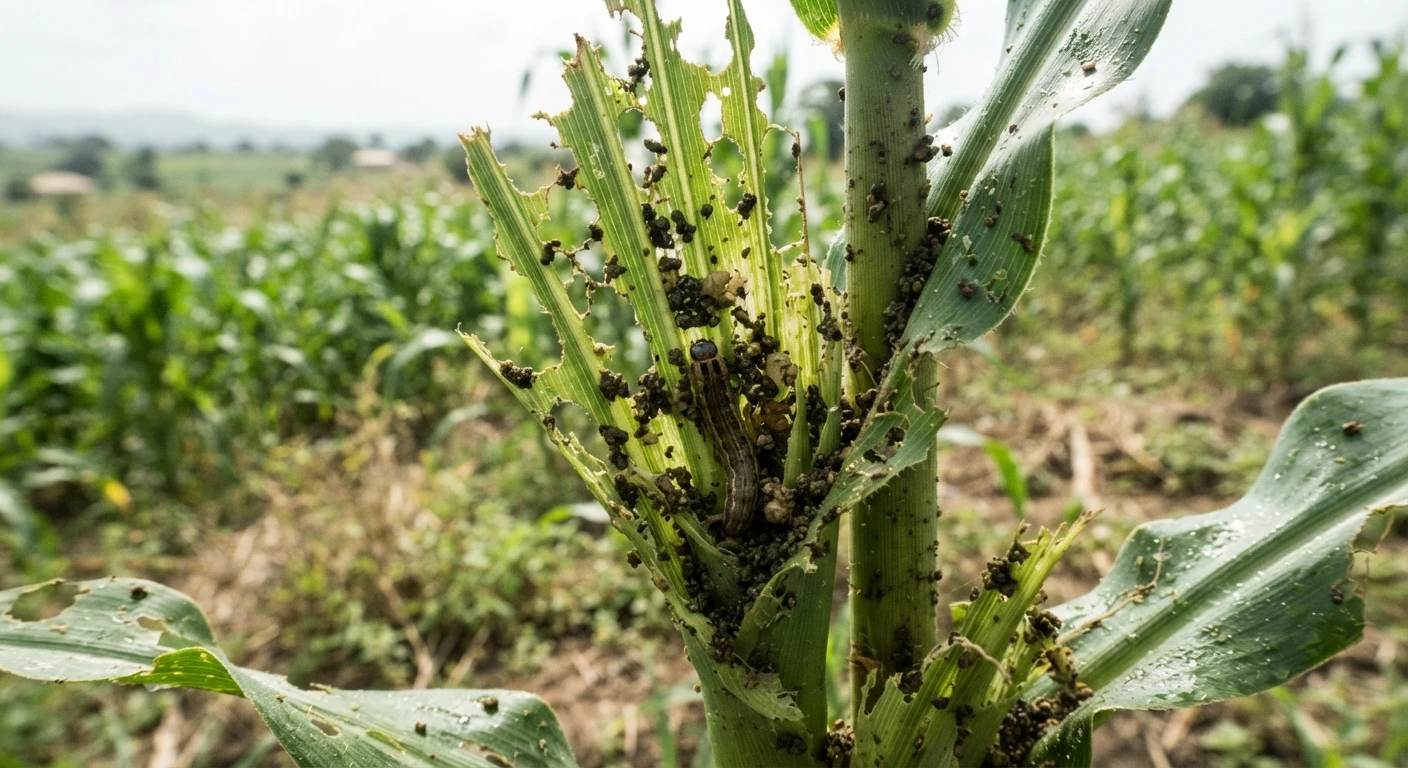
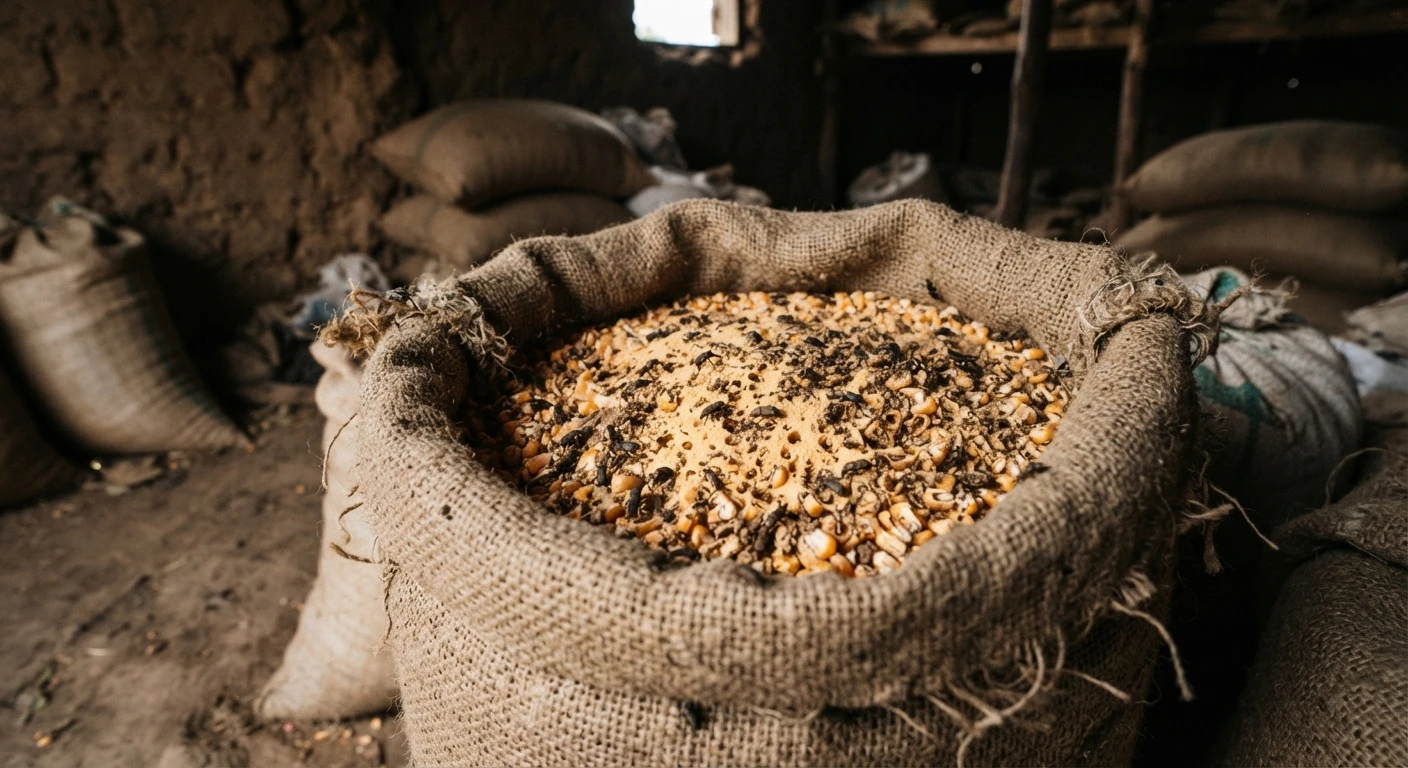
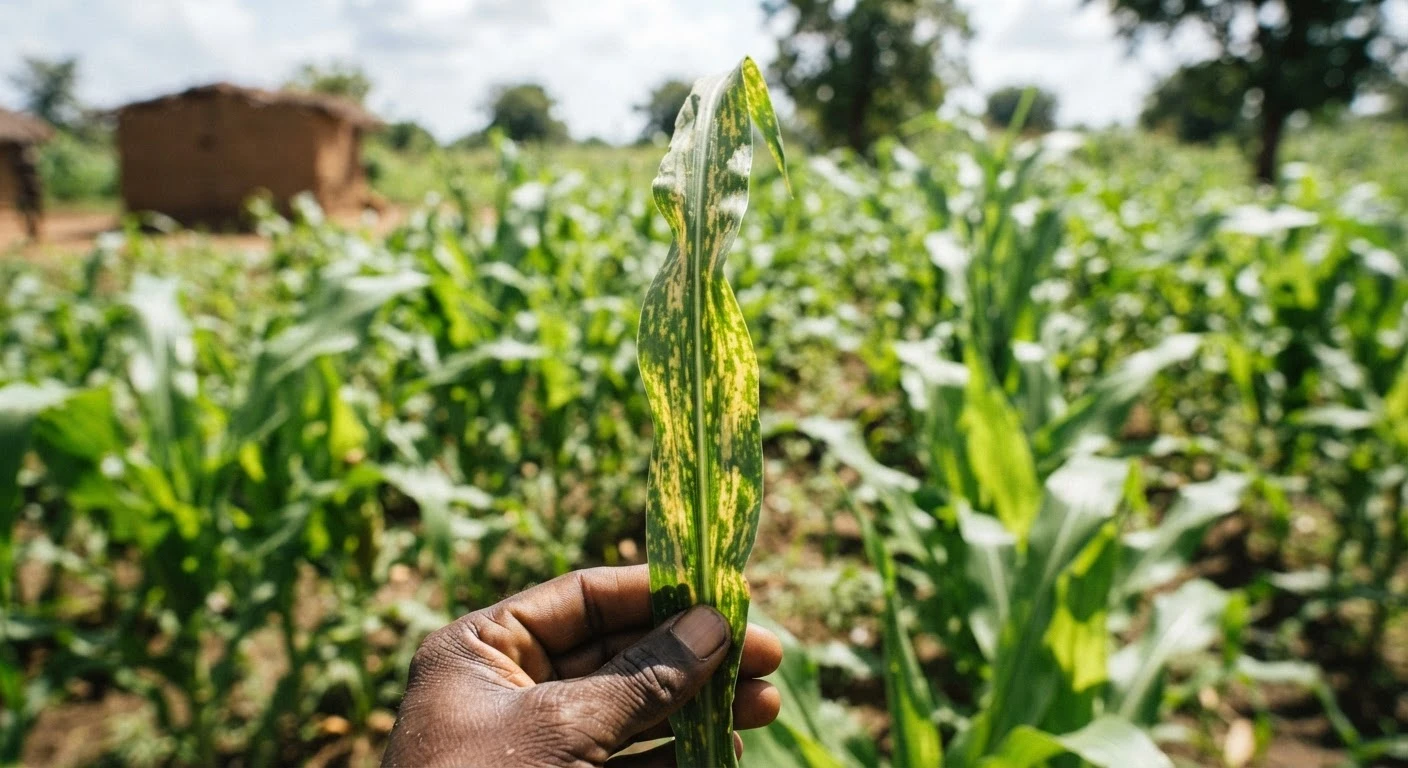
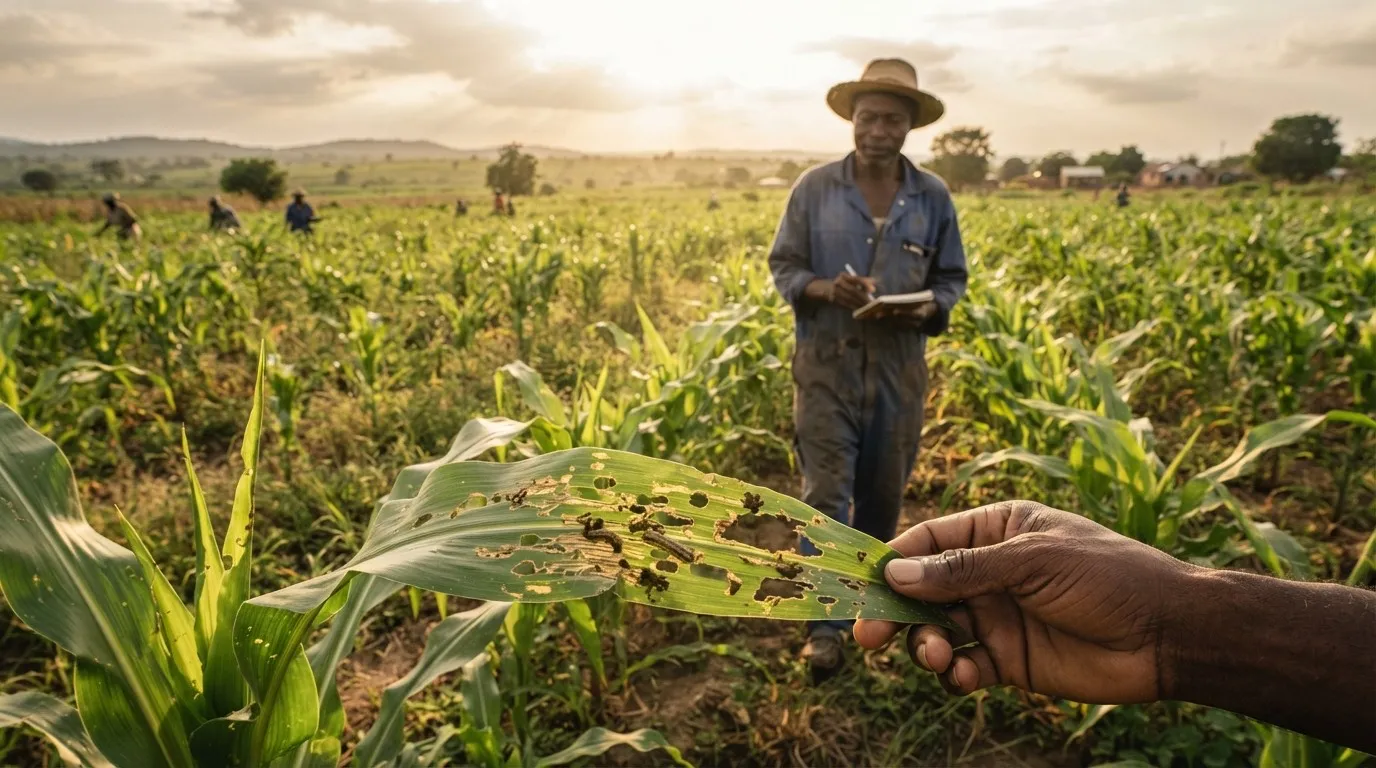
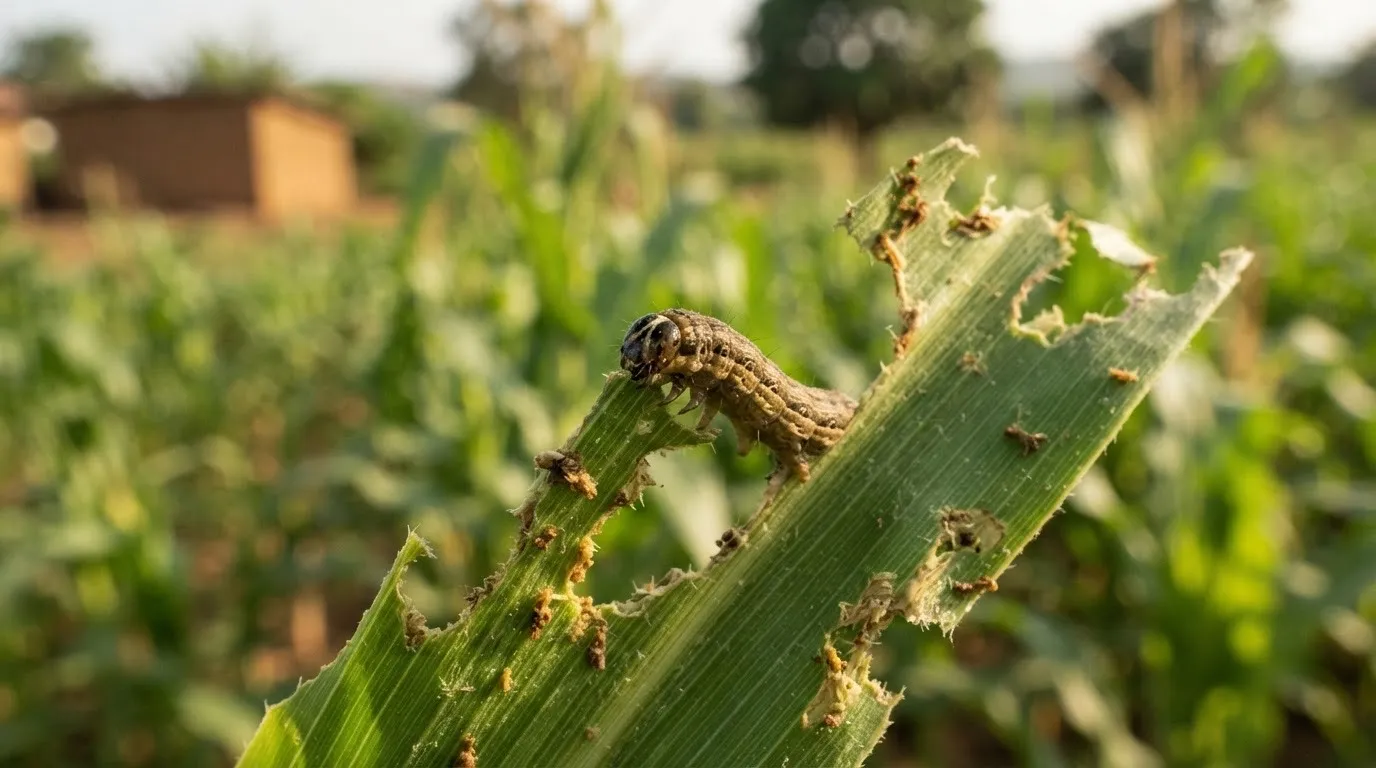
Fall armyworm damage on a maize leaf, and grain drying on a tarpaulin
Maize · Pillar 03

Disease and Risk Profile

Every threat to the crop is a market for someone.
Disease and Risk · Pillar 03

Most guides treat pests and disease as problems to survive. This one treats them as markets. Every threat that costs a maize farmer money is, for someone else, a product to sell or a service to provide: the armyworm creates a market for scouting and biopesticides, the mould creates a market for testing and safe storage, and the drought creates a market for tolerant seed and insurance. The losses are real and large, but they are also the clearest map of where a new business can add value. This pillar reads the big risks that way, and points to the opening inside each.

Fall armyworm damage on a maize leaf and cob in the field
Every threat is a market
The size of each loss is also the clearest map of where a new business can add value.
22-67%
fall armyworm can take of a field's yield
~84%
Aflasafe plus hermetic storage cuts aflatoxin
~15%
of the maize crop is lost after harvest

The pillar keeps to the threats and their management. The warehouse-receipt mechanism that lets a farmer store safely and borrow against the grain sits in the value-chain and business-intelligence pillars, and is only touched here as a loss to be avoided, so nothing is repeated.

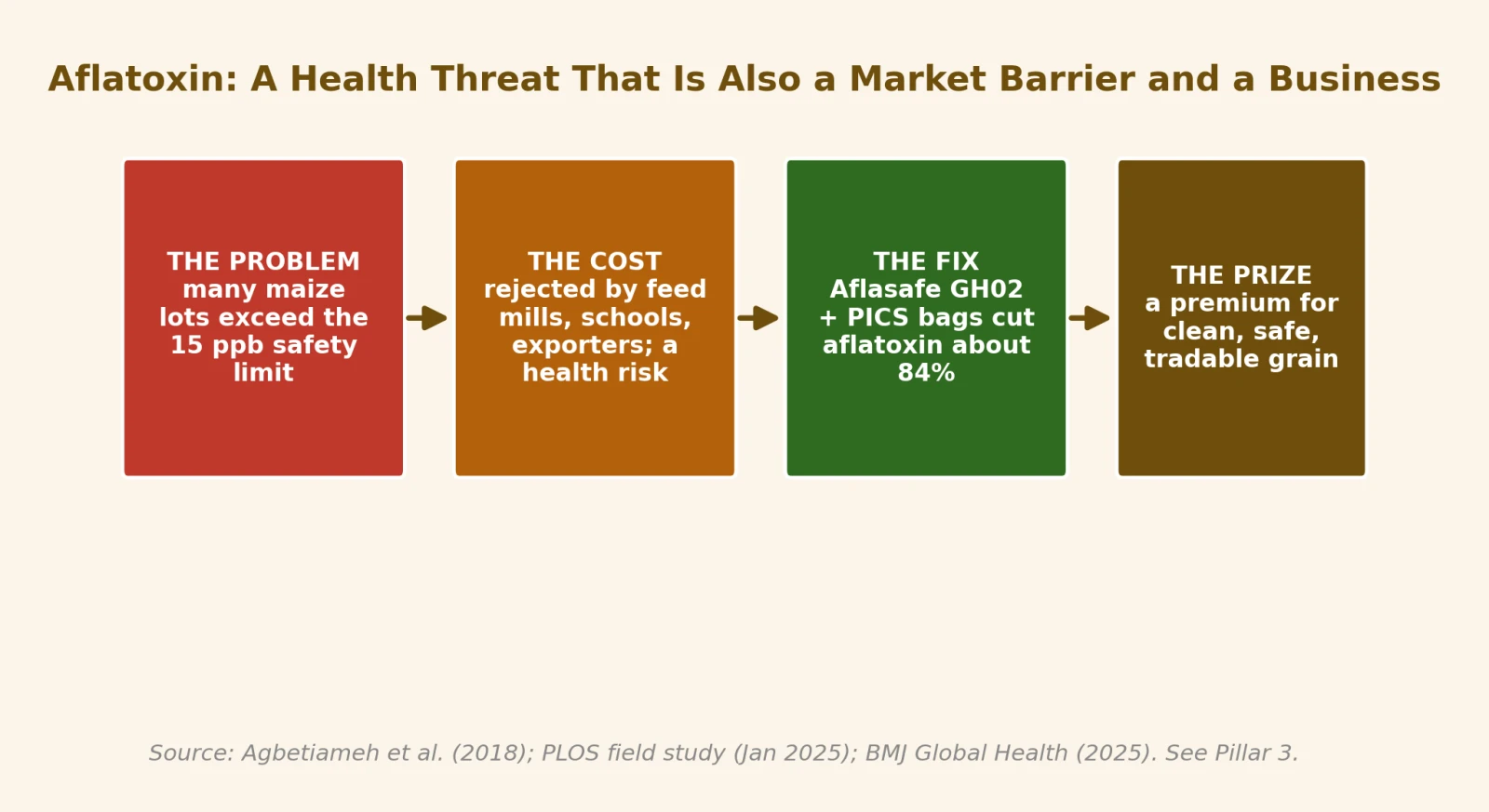
Aflatoxin: a health threat, a market barrier, and a business
Figure 5 Aflatoxin: a health threat, a market barrier, and a business
What this shows

Contaminated grain is rejected by feed mills, schools and exporters, so aflatoxin is a barrier to the best-paying buyers. Read from the other side, that barrier is a market: Aflasafe GH02 plus hermetic storage cuts the toxin by about 84 percent, which turns clean grain into a premium product a testing and certification business can sell.

15%+
of maize samples exceed the safety limit nationally
445 ppb
the highest aflatoxin reading found on open markets

🌽 Fall armyworm: the pest that changed maize farming 🌽

Since it arrived in 2016, fall armyworm has been the biggest single pest threat to Ghanaian maize. Depending on the season it takes between about 22 and 67 percent of a field's yield, worst in the dry-season crop (field studies, 2023 to 2025). National losses were put at about 132,450 tonnes in 2016, 180,000 in 2017 and 36,000 in 2018 as farmers learned to fight it (Koffi et al., 2020). The important business point is not the loss itself but how badly it is being fought. Trials in northern Ghana show that the products that work are already known: neem (3 percent azadirachtin), Bacillus thuringiensis (Bt) formulations, and a granulosis-virus-plus-Bt mix all matched chemical sprays on cob damage and yield (Kondo et al., 2024). The problem is timing, not chemistry. A farmer who sprays six or more times spends around GH¢1,000 on chemicals that are often mistimed and still loses a large share of the crop, when a single well-timed, scouted spray could save most of it (Tambo et al., 2023). That gap between what farmers spend and what works is the opening.

A field agent scouting a maize plant for fall armyworm larvae
Timing, not chemistry
The products that work are already known, so the opening is a scouting and timed-spray service.
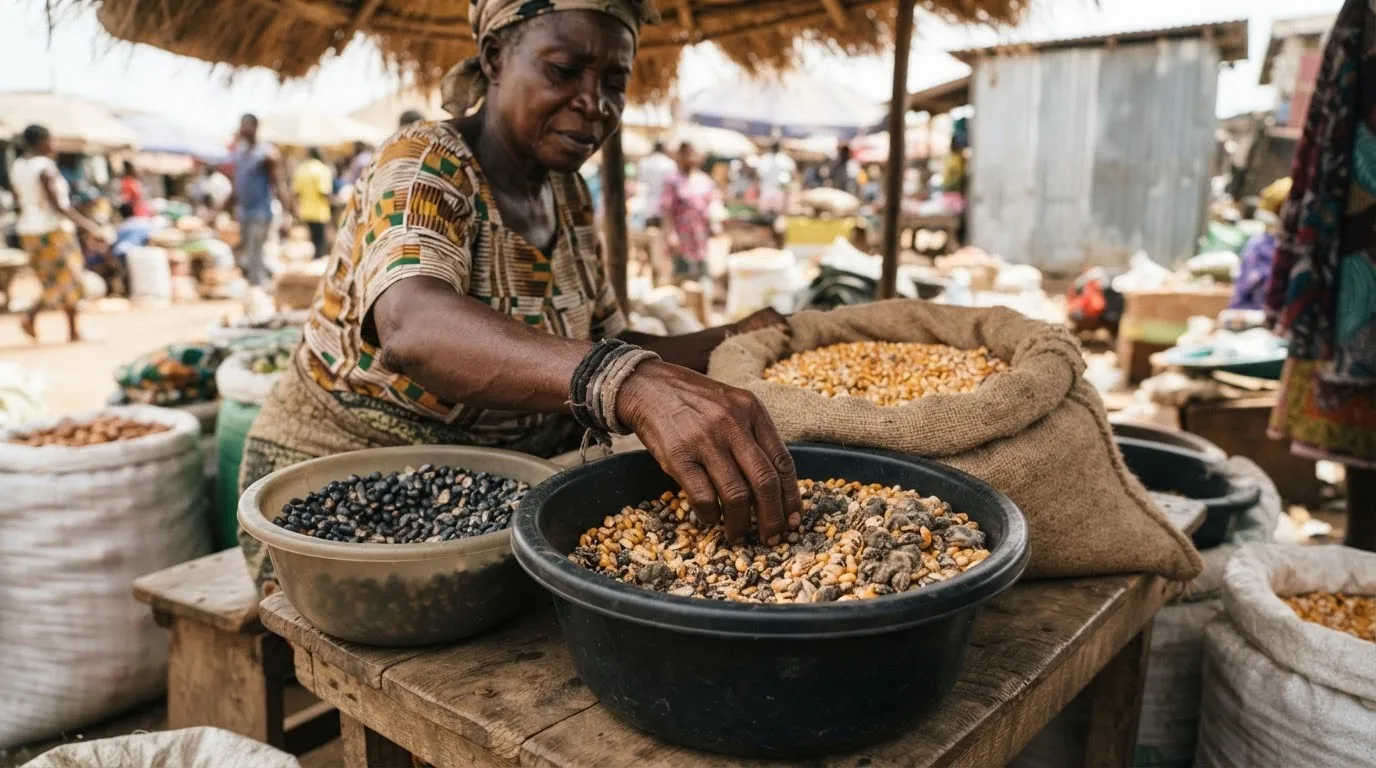
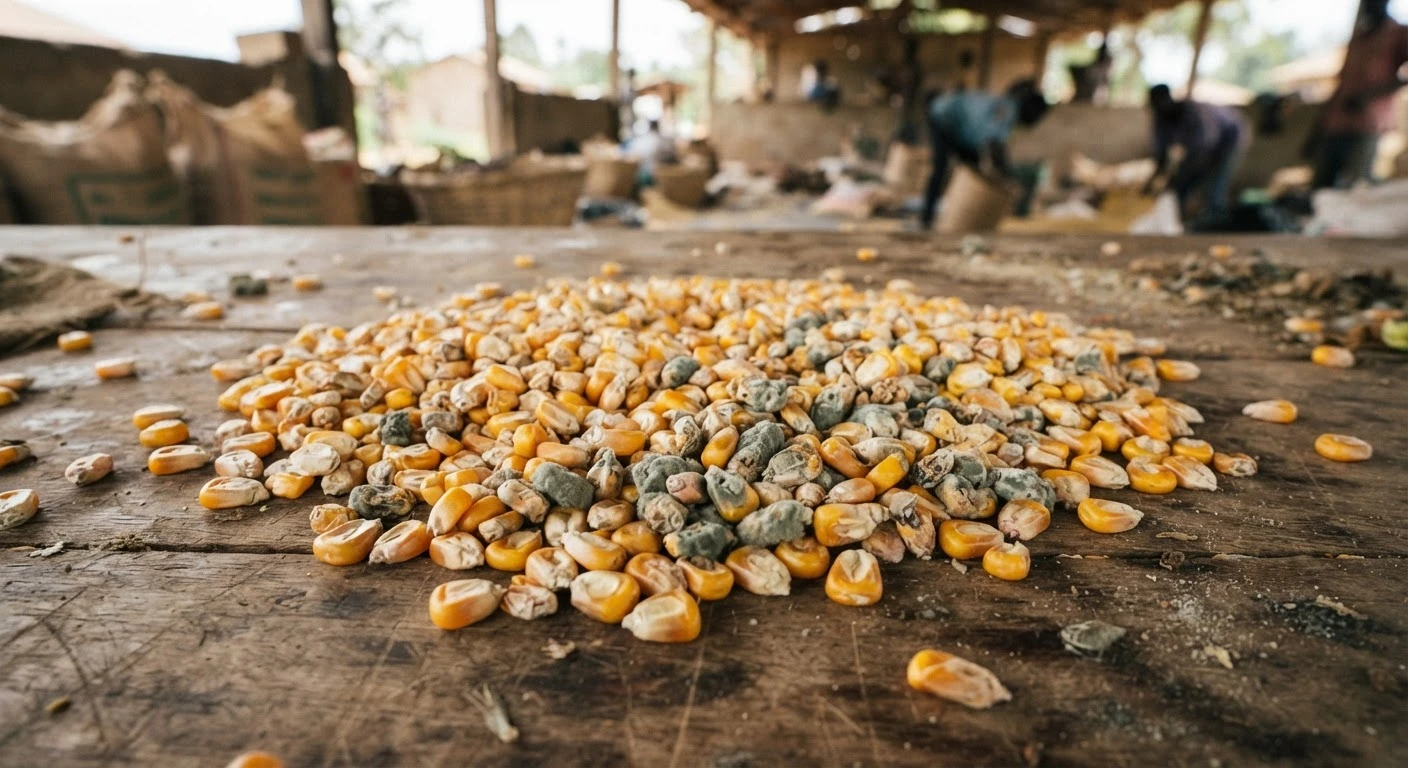
Mould-contaminated maize grain being sorted from clean grain
Clean grain is a premium product
Biopesticides matched chemical sprays on cob damage and yield in northern trials.
Maize grain sealed in an airtight PICS hermetic storage bag
US$2 a bag
Hermetic bags are cheap products with a large, proven market.
GH¢1,000
wasted on mistimed sprays by a farmer who sprays six or more times
2016
the year armyworm arrived and changed maize farming

🌽 Aflatoxin: a health threat that is also a market barrier

Aflatoxin is a poison made by a mould that grows on maize in the field and in poor storage, and it is Ghana's most serious and most commercially damaging maize problem. In one national survey about 15 percent of maize samples exceeded the safety limit (Agbetiameh et al., 2018), while a survey of maize on open markets found roughly half of samples over the limit, some testing as high as 445 parts per billion (Kortei et al., 2021). A 2024 sampling of a poultry-feed chain found nearly all of it contaminated (Nkansah et al., 2024). Beyond the grain it downgrades and spoils, aflatoxin carries a real health cost: Ghana has one of Africa's highest liver-cancer rates, at about 16 cases per 100,000 people a year, to which dietary aflatoxin contributes (Nartey et al., 2025). Read commercially, aflatoxin is the reason a farmer cannot reach the buyers who pay best, which makes clean grain a premium product, not just a safe one. The tools exist: Aflasafe GH02, applied in the field, cut the main aflatoxin toxin by about 84 percent, and total aflatoxin by roughly 80 to 99 percent, in Ghanaian trials, and it works best when paired with fast drying and airtight storage (Kaburi et al., 2025). The maximum level allowed in maize is commonly given as 15 parts per billion, but published sources cite between 10 and 20, so the current Ghana Standards Authority figure should be confirmed before it is used in a contract.

~half
of open-market maize samples were over the aflatoxin limit
~84%
reduction in the main toxin from Aflasafe GH02 in Ghana trials
Maize grain being tested for aflatoxin at a point of aggregation
Testing is a service business
Aflatoxin is the reason a farmer cannot reach the buyers who pay best, which makes clean grain a premium product.

🌽 Storage loss: half the battle is fought after harvest

About 15 percent of Ghana's maize is lost after harvest, and where storage is poor the figure reaches 30 percent (Ministry of Food & Agriculture and International Food Policy Research Institute, 2020). In 2021 the national loss was put at about 276,569 tonnes, worth roughly US$134 million, which is close to GH¢1.5 billion at about GH¢11.2 to the US dollar (African Postharvest Losses Information System, 2021). The fix is cheap and proven: airtight hermetic bags such as PICS cost about US$2 a bag and cut grain weight loss to under half a percent, against nearly a quarter in an ordinary sack over six months (Opoku et al., 2023). Yet fewer than one in five farmers use them (Adams et al., 2024). The payoff for those who do adopt is not small: a 2024 study found that taking up hermetic storage raised farm income by about 90 percent and cut post-harvest losses by 14 to 19 percent, while narrowing the income gap between richer and poorer farming households (Adams et al., 2024). That is the clearest return-on-investment case in the whole crop, and it is a ready-made pitch for anyone selling storage.

+90%
farm income lift from taking up hermetic storage
1 in 5
fewer than this share of farmers use hermetic bags today
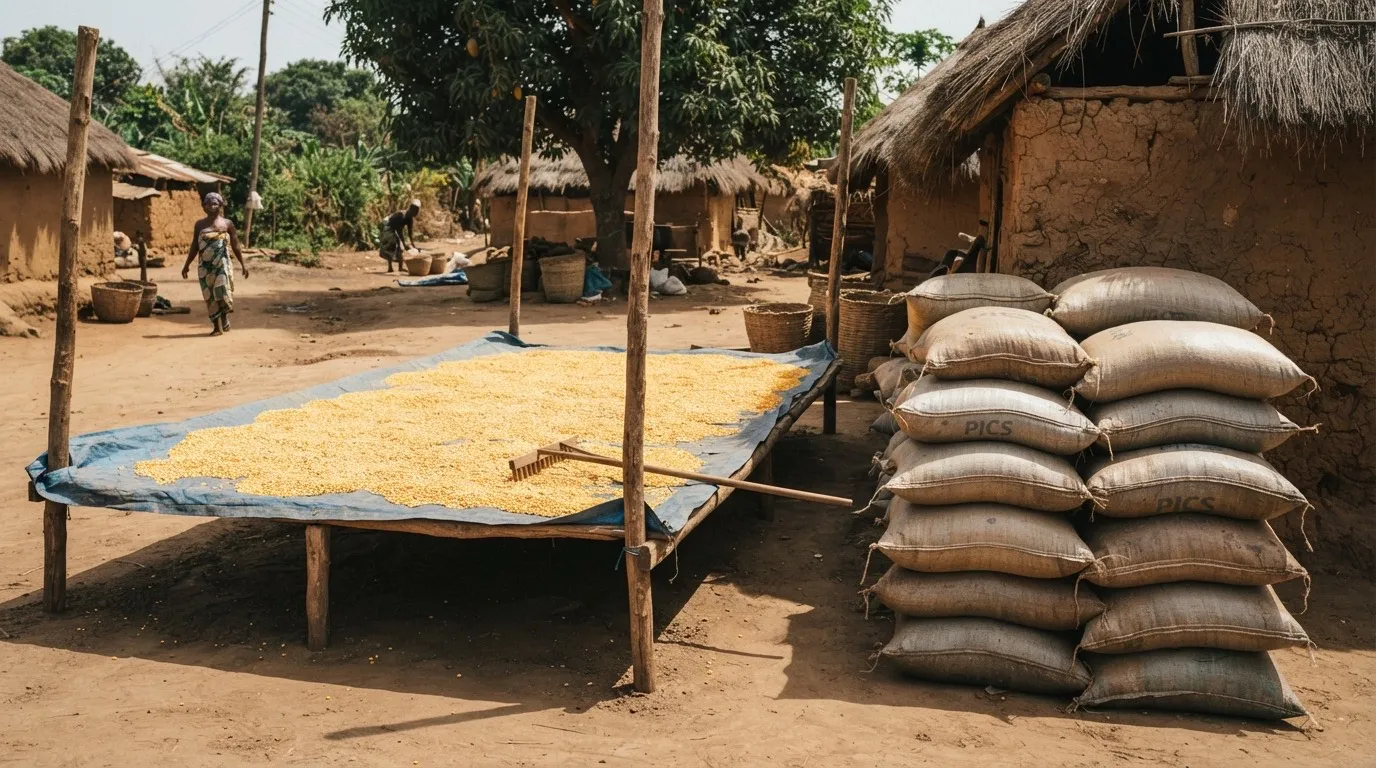
Stacks of airtight hermetic maize storage bags in a rural warehouse
The clearest ROI in the crop
PICS bags cost about US$2 and cut weight loss to under half a percent, against nearly a quarter in an ordinary sack.
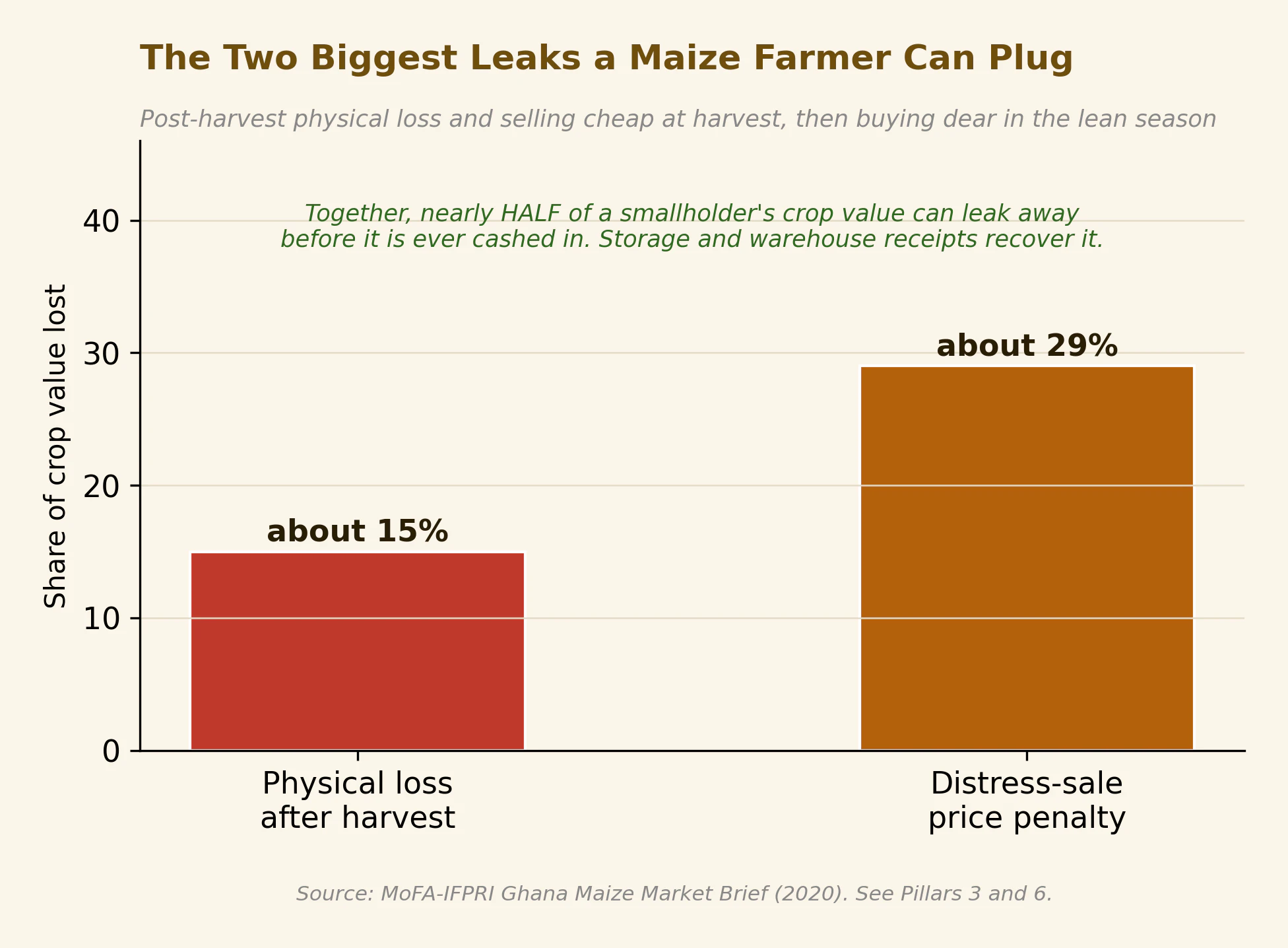
The two biggest leaks a maize farmer can plug
Figure 6 The two biggest leaks a maize farmer can plug
What this shows

A farmer loses about 15 percent of the crop to spoilage and another roughly 29 percent of its value by selling cheap at harvest and buying dear later. Storage and warehouse receipts recover both. This is the clearest business case in the whole crop, and it is developed in full in the value-chain and business-intelligence pillars.

~15%
of the crop lost to spoilage after harvest
~29%
of value lost to selling cheap at harvest and buying dear later

🌽 The second leak: the value lost to distress selling

There is a second, larger leak that is not physical. Farmers who sell the moment they harvest, when prices are lowest, and buy grain back in the lean season lose about 29 percent of their crop's value to the price swing (Ministry of Food & Agriculture and International Food Policy Research Institute, 2020). Put together, spoilage and distress selling can strip nearly half the value from a smallholder's maize before it is ever properly cashed in. Anything that lets a farmer store safely and sell later, hermetic bags, a community warehouse, or a warehouse receipt that unlocks a loan against stored grain, captures that value. The warehouse-receipt mechanism itself sits in the value-chain and business-intelligence pillars.

🌽 Drought and the shrinking rains: the master risk 🌽

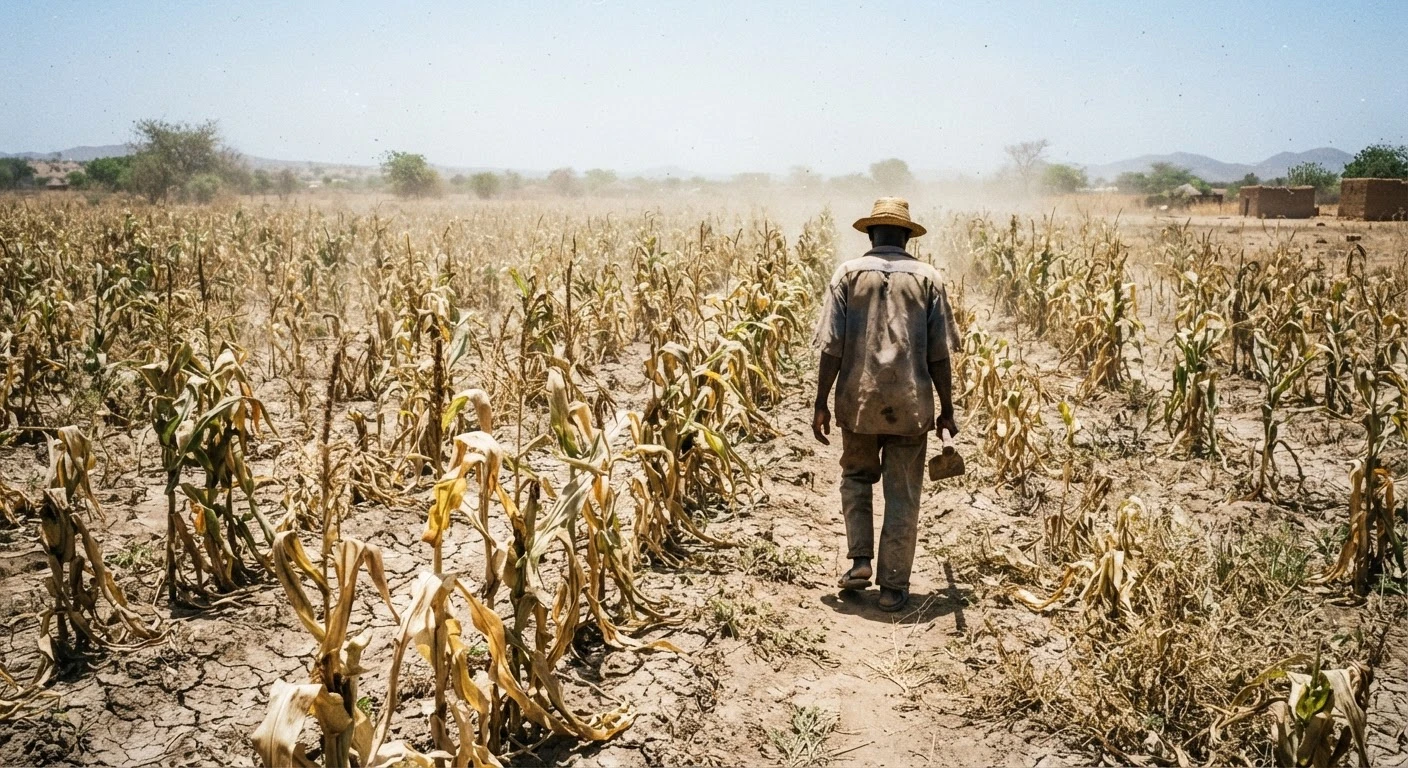
More than 80 percent of Ghana's maize is rain-fed, so weather is the risk that overrides all others. The 2024 drought cut national output by about 28 percent and hit some 871,000 hectares and 436,000 farmers, and it was the direct cause of the emergency imports and the export ban that shaped the 2026 market (United States Department of Agriculture, 2026). Yields fall as temperatures climb, and models project maize yields declining further as the climate warms, by some estimates from around 7 percent now toward as much as half by 2050 (Gyamerah et al., 2024). This is why the drought-tolerant varieties in Pillar 1 matter commercially, and why weather-index insurance and small-scale irrigation are growing markets rather than charity. The Ghana Agricultural Insurance Pool has offered drought-index cover for maize since 2011, though take-up is still small (Ghana Agricultural Insurance Pool, n.d.).

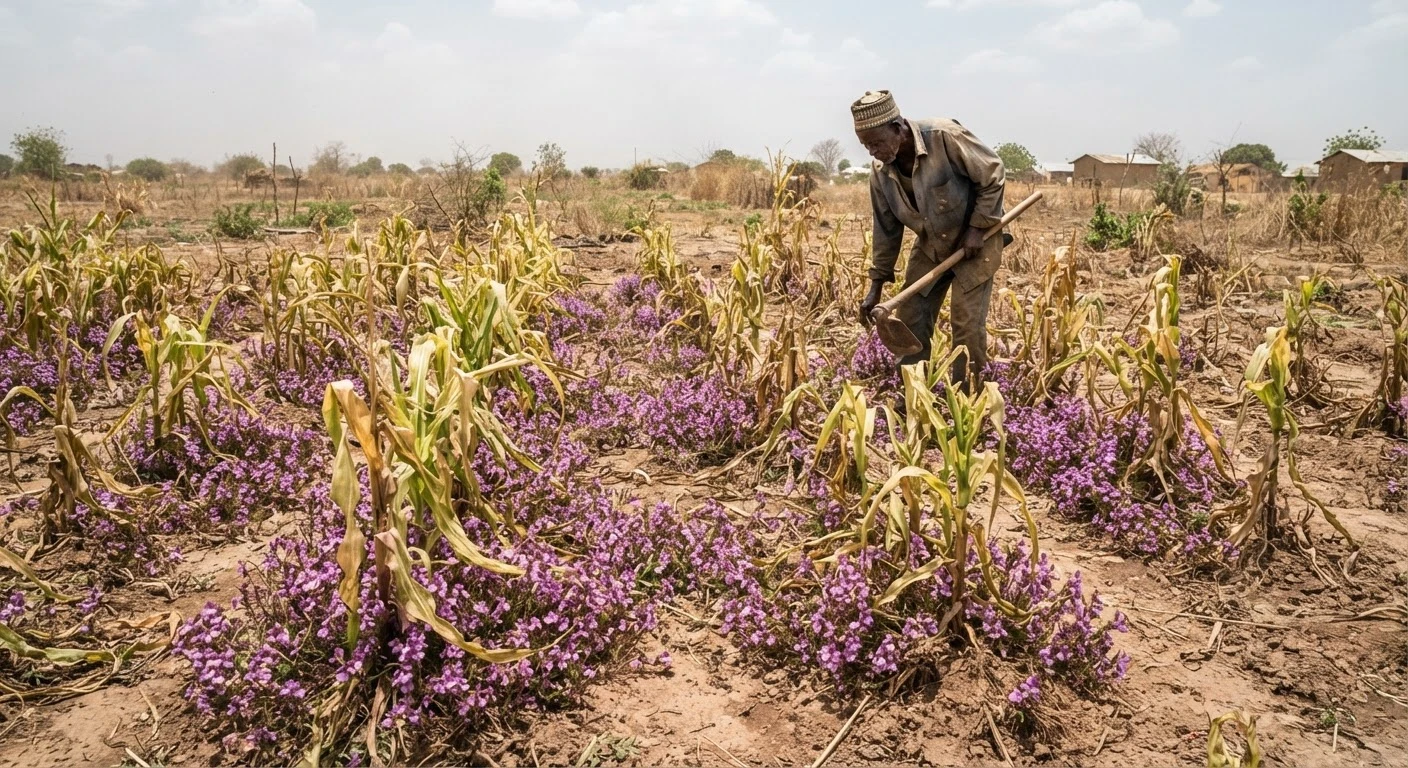
Two lower-profile threats are worth watching. Maize streak virus, spread by leafhoppers, typically infects around a fifth of plants in affected areas and can take a whole field in a bad outbreak, and the parasitic weed Striga saps yields on tired northern soils; both are managed mainly by planting resistant or tolerant varieties (Mushayi et al., 2025), which keeps a steady demand for resistant seed and clean-field advice, each a small business in itself. Further out, maize lethal necrosis is a viral disease that can destroy an entire field. It is established in East and Central Africa but has not been confirmed in Ghana or the rest of West Africa, and Ghana's breeders at WACCI are already working on resistant lines (research studies, 2024). For a seed, diagnostics or surveillance business, the opening is to get ahead of it, positioning resistant varieties and early detection before the disease arrives, not after it has spread.

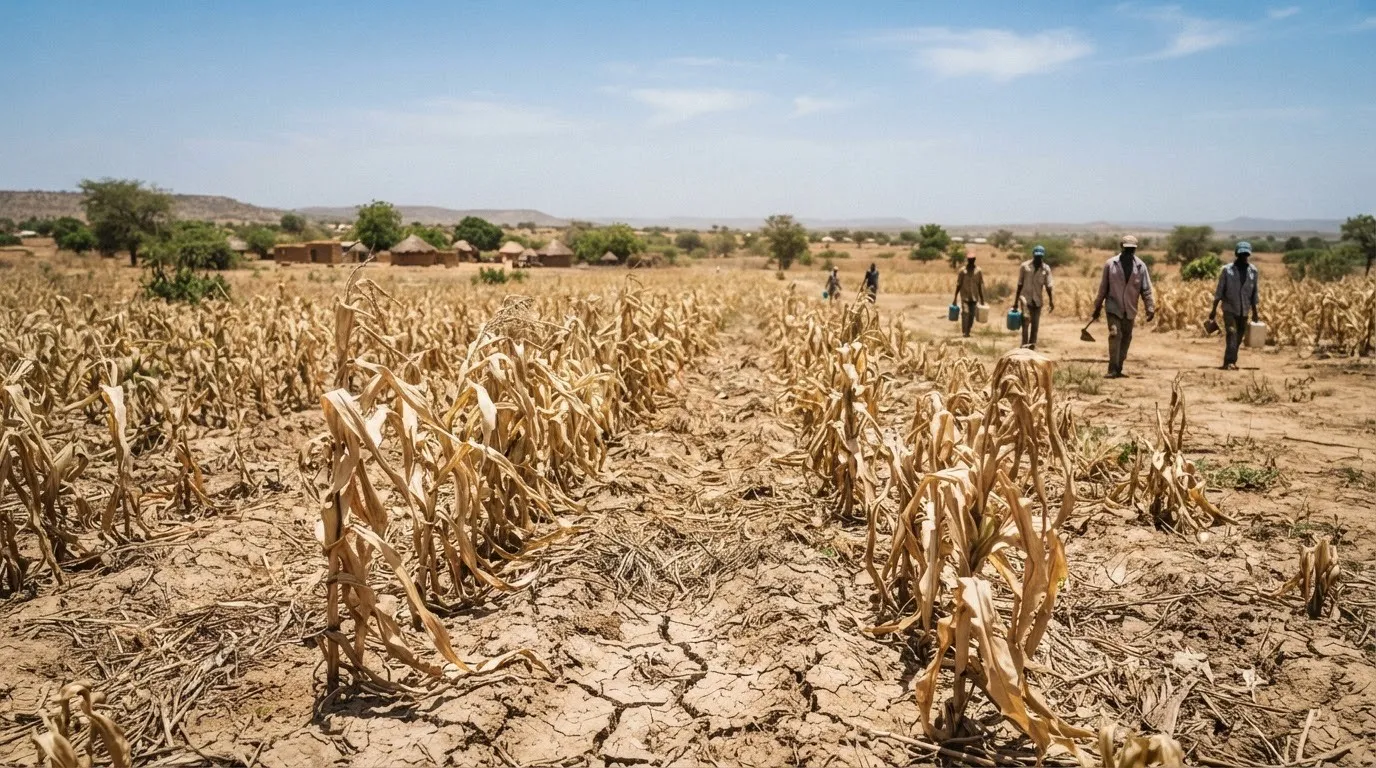
A drought-stressed maize field with curled, dry leaves under a hot sky
The largest single risk
Drought-tolerant seed, index insurance and irrigation are growing markets rather than charity.
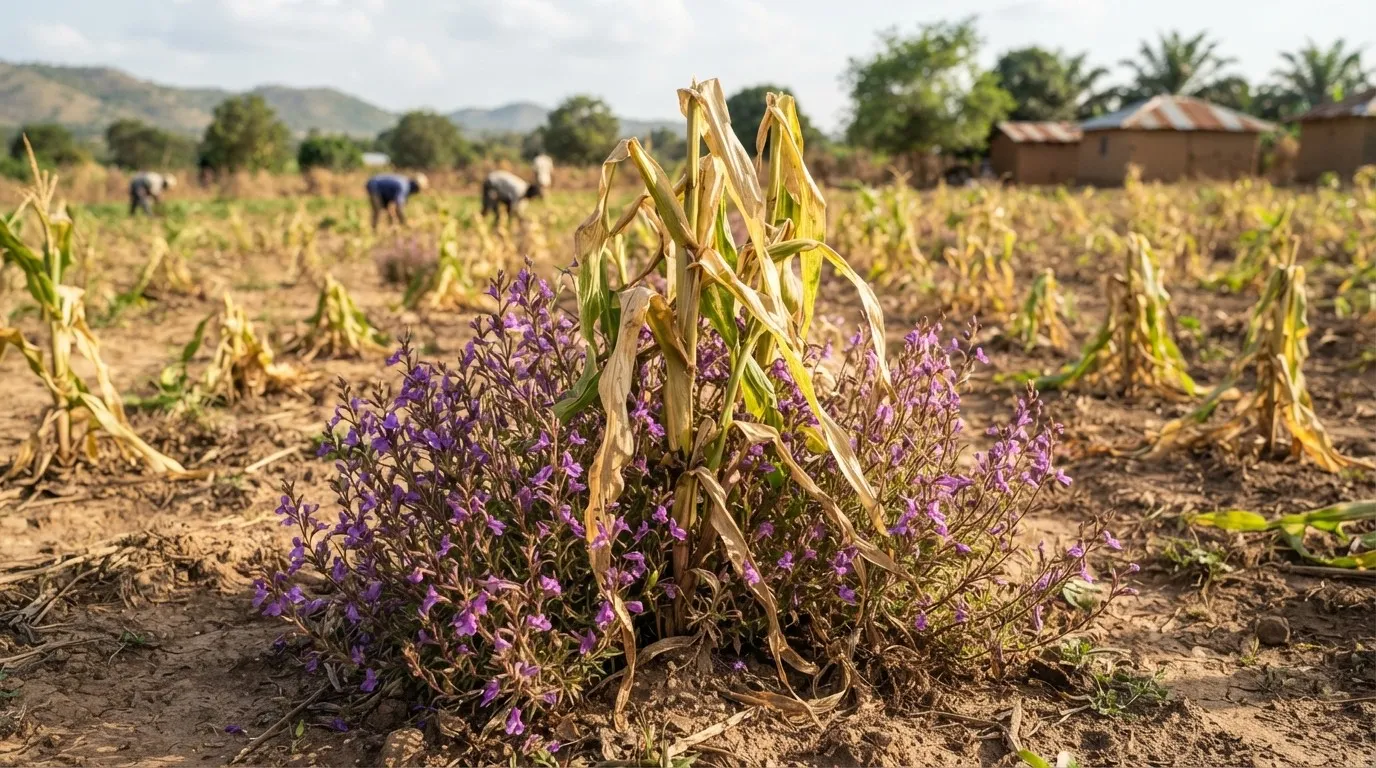
Purple-flowered Striga parasitic weed growing among stunted maize plants
Watch: streak virus and Striga
Streak virus and Striga keep a steady demand for resistant seed and clean-field advice.
~28%
national maize output cut by the 2024 drought
80%+
of Ghana's maize is rain-fed, so weather overrides all

🌽 The maize risk map: what each threat costs, and the business inside it 🌽

Filter by severity

Fall armyworm

VERY HIGH
What it is

Larvae eat leaves and cobs, taking between about 22 and 67 percent of a field's yield, worst in the dry-season crop. It has been the biggest single pest threat to Ghanaian maize since it arrived in 2016.

Evidence

National losses were about 132,450 tonnes in 2016 and 180,000 in 2017, falling to 36,000 by 2018 as farmers learned to fight it (Koffi et al., 2020; field studies, 2023 to 2025).

Who it hits

All maize ecologies, worst in the dry-season crop.

How to manage it, and the opening

Scout and time a single well-placed spray, use proven biopesticides such as neem and Bt formulations, and plant tolerant varieties. The opening: a scouting and timed-spray service, biopesticide distribution, and the armyworm-tolerant Wobil Moya hybrid.

Aflatoxin (mould toxin)

VERY HIGH
What it is

A poison made by a mould that grows on maize in the field and in poor storage. It downgrades and spoils grain, fails safety limits, and carries a real health cost, and it is the reason a farmer cannot reach the buyers who pay best.

Evidence

About 15 percent of maize samples exceeded the safety limit nationally, and roughly half of open-market samples were over it, some as high as 445 parts per billion (Agbetiameh et al., 2018; Kortei et al., 2021).

Who it hits

Any producer selling to feed mills, school-feeding programmes and exporters, all of whom test and reject.

How to manage it, and the opening

Apply Aflasafe GH02 in the field, dry fast and store airtight, and test and certify the result. The opening: aflatoxin-safe grain aggregation, a testing and certification service, and Aflasafe application, selling a proven reduction of about 84 percent.

Storage pests

HIGH
What it is

Weevils and the larger grain borer eat stored grain, taking up to about 24 percent of its weight in six months in an ordinary sack. Half the battle for a maize crop is fought after harvest.

Evidence

About 15 percent of Ghana's maize is lost after harvest, reaching 30 percent where storage is poor; the 2021 national loss was about 276,569 tonnes, worth roughly US$134 million (Ministry of Food & Agriculture and International Food Policy Research Institute, 2020; African Postharvest Losses Information System, 2021).

Who it hits

Every producer without airtight storage, worst for cash-poor smallholders.

How to manage it, and the opening

Use airtight hermetic bags such as PICS, which cost about US$2 and cut weight loss to under half a percent. The opening: hermetic bag supply, financing and demonstration, plus drying and warehousing services.

Drought and erratic rain

HIGH
What it is

More than 80 percent of Ghana's maize is rain-fed, so a failed or late season starves the crop of water and overrides every other risk.

Evidence

The 2024 drought cut national output by about 28 percent and hit some 871,000 hectares and 436,000 farmers, and drove the emergency imports and export ban that shaped the 2026 market (United States Department of Agriculture, 2026).

Who it hits

The rain-fed majority, concentrated in the north.

How to manage it, and the opening

Plant drought-tolerant varieties, take up weather-index insurance, and develop small-scale irrigation. The opening: drought-tolerant seed, index cover built for maize, and affordable irrigation kit for a dry-season crop.

Maize streak virus

MEDIUM
What it is

Spread by leafhoppers, it stunts plants and streaks the leaves, typically infecting about a fifth of plants in affected areas and taking a whole field in a bad outbreak.

Evidence

Up to 100 percent loss in bad cases; managed mainly by planting resistant or tolerant varieties (Mushayi et al., 2025).

Who it hits

Affected maize-growing areas, on continuously cropped fields.

How to manage it, and the opening

Plant resistant varieties and keep fields clean. The opening: steady demand for resistant seed and clean-field advice, each a small business in itself.

Stem borers and Striga

MEDIUM
What it is

Stem borers hollow the stem while the parasitic weed Striga saps the crop on tired northern soils, together taking 10 to 70 percent of yield in bad cases.

Evidence

10 to 70 percent loss in bad cases; both managed mainly by tolerant varieties and better agronomy (Mushayi et al., 2025).

Who it hits

Northern uplands on poor, tired soils.

How to manage it, and the opening

Plant tolerant seed and use push-pull and agronomy advice. The opening: tolerant seed and an agronomy advisory service.

🌽 The Opening: turning each threat into a product or service 🌽
01

A scouting and timed-spray service against armyworm. Farmers waste money spraying at the wrong time. A field agent who scouts, identifies the pest and sprays the right product once, at the right moment, sells a service that pays for itself in saved crop.

02

Biopesticide and Bt distribution. Effective, safer products such as neem and Bt formulations work as well as chemicals but are under-supplied in rural markets. Stocking and demonstrating them, and selling the armyworm-tolerant Wobil Moya hybrid, is an agro-dealer opportunity.

03

Aflatoxin-safe grain aggregation. Buy, dry, test and store to a guaranteed low-aflatoxin standard, then sell at a premium to feed mills, schools and exporters who reject everything else. Clean grain is a branded product, not just a safe one.

04

A testing, certification and Aflasafe service. Simple aflatoxin testing at the point of aggregation lets buyers trust a lot, and applying Aflasafe GH02 with hermetic bags sells a proven reduction of about 84 percent as a package. The test, the certificate and the application are all service businesses.

05

Hermetic storage supply. PICS-type bags cost about US$2, cut losses to near zero, and reach fewer than one in five farmers. Stocking, financing and demonstrating them, alongside drying and warehousing, is a straightforward rural business with proven demand.

06

Weather-index insurance, drought seed and small irrigation. As the rains grow less reliable, index insurance and drought-tolerant hybrids move from optional to essential, and affordable irrigation for a dry-season crop is a premium-yield play. Distributing any of them taps a growing, climate-driven market.

🌽 Key takeaways 🌽
01

Every maize threat is also a market: armyworm sells scouting and biopesticides, aflatoxin sells testing and safe storage, drought sells tolerant seed and insurance.

02

Fall armyworm takes 22 to 67 percent of yield, yet many farmers waste about GH¢1,000 on mistimed sprays, when well-timed biopesticides work as well as chemicals.

03

Aflatoxin is the barrier to the best-paying buyers: over 15 percent of maize exceeds the safety limit, and feed mills, schools and exporters reject it. Aflasafe plus good storage cuts it about 84 percent, making clean grain a premium product.

04

About 15 percent of the crop is lost after harvest and about another 29 percent of value is lost to distress selling. Cheap hermetic bags fix the first, and storage and warehouse receipts fix the second.

05

Over 80 percent of maize is rain-fed, so drought is the master risk, and drought-tolerant seed, index insurance and small irrigation are growing markets rather than charity.

Written for each reader

🌽 Practitioner intelligence 🌽

Hover any card to pause and lift it.

For students

Risk is where a graduate can start a business with almost no capital. You do not need land to sell a solution to a problem every farmer has. Learn to identify fall armyworm and time a spray, to run a simple aflatoxin test, or to demonstrate a hermetic bag, and you have a service to sell across a whole district. The gap to fill: farmers know they have these problems but not the timed, proven fix. Being the trained person who delivers it is a job and a venture. The downside to avoid is selling a product without teaching the timing, because a mistimed spray or a wet bag fails and destroys your reputation.

For entrepreneurs

Build the fix into a service, not a one-off sale. Your first move is to pick one threat, armyworm, aflatoxin or storage, and offer the complete solution: product plus application plus a guarantee. Secure a supply of the proven input, biopesticide, Aflasafe or PICS bags, and a few demonstration farmers, then scale on word of mouth. The trap: competing on the cheapest chemical, because you win on results, not price. The incentive to use is that clean, safe grain earns a premium from the buyers in Pillar 2.

For investors

The thesis is that risk-mitigation inputs, biopesticides, Aflasafe, hermetic bags, drought seed and index insurance, have proven effectiveness and very low penetration, so the runway is long. Diligence asks: the effectiveness evidence, the distribution model, and whether the venture sells a product or a stickier service. The risk: adoption is slow because farmers are cash-poor, so pair the product with credit or an off-take that guarantees the farmer a premium for using it.

For ecosystem actors

The highest-return lever is turning proven fixes into reach. Fund and measure the last mile for Aflasafe, hermetic storage and drought-tolerant seed, and back weather-index insurance. The measurable outcome is post-harvest loss falling below 15 percent and the share of aflatoxin-safe grain rising. The failure to avoid is running awareness campaigns without making the actual product affordable and available, which teaches farmers the problem but not the solution.
Download full PDF
UpcomingThis document isn't available yet.