Ghana Agribusiness PlaybookMaize
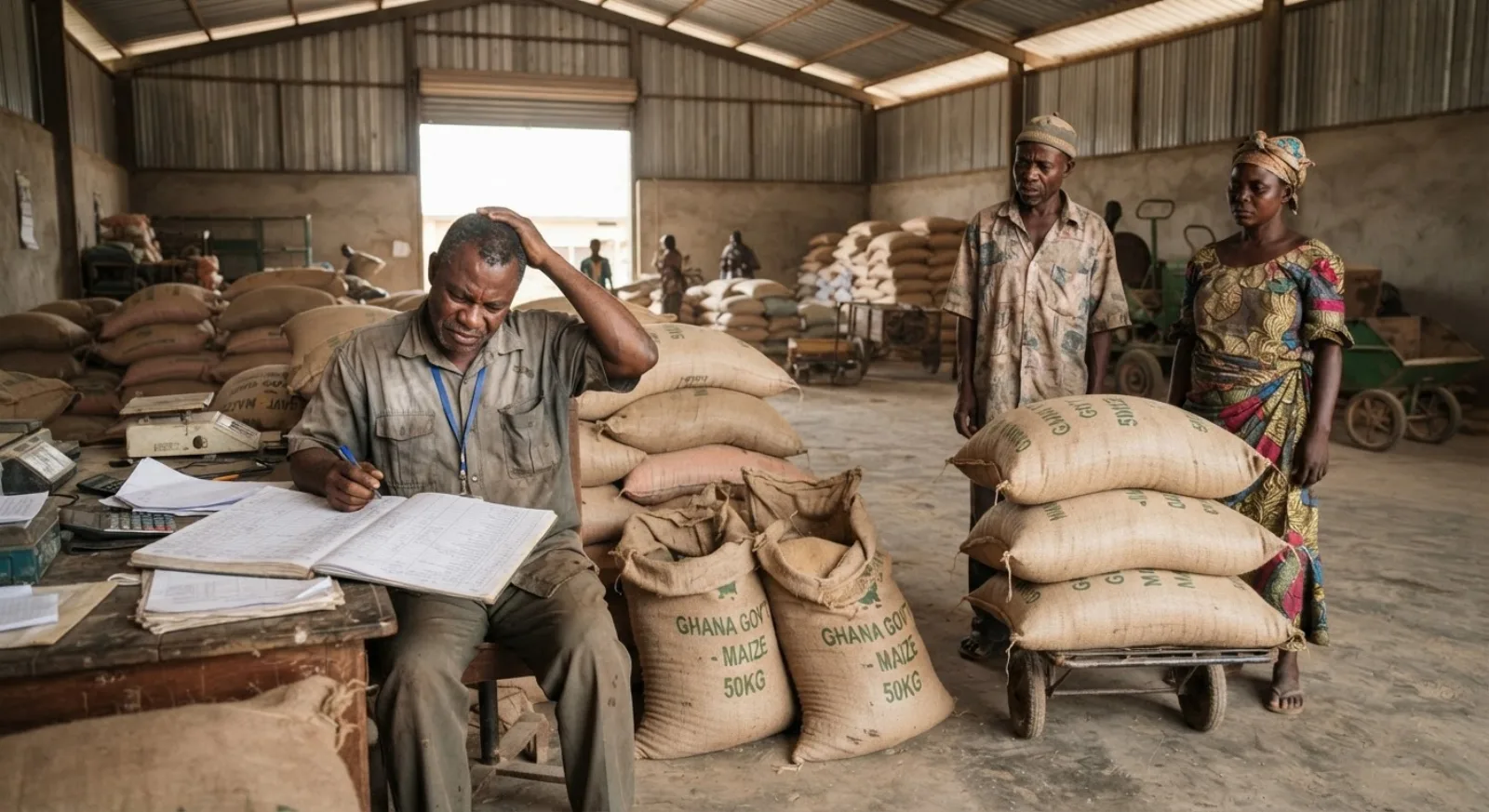
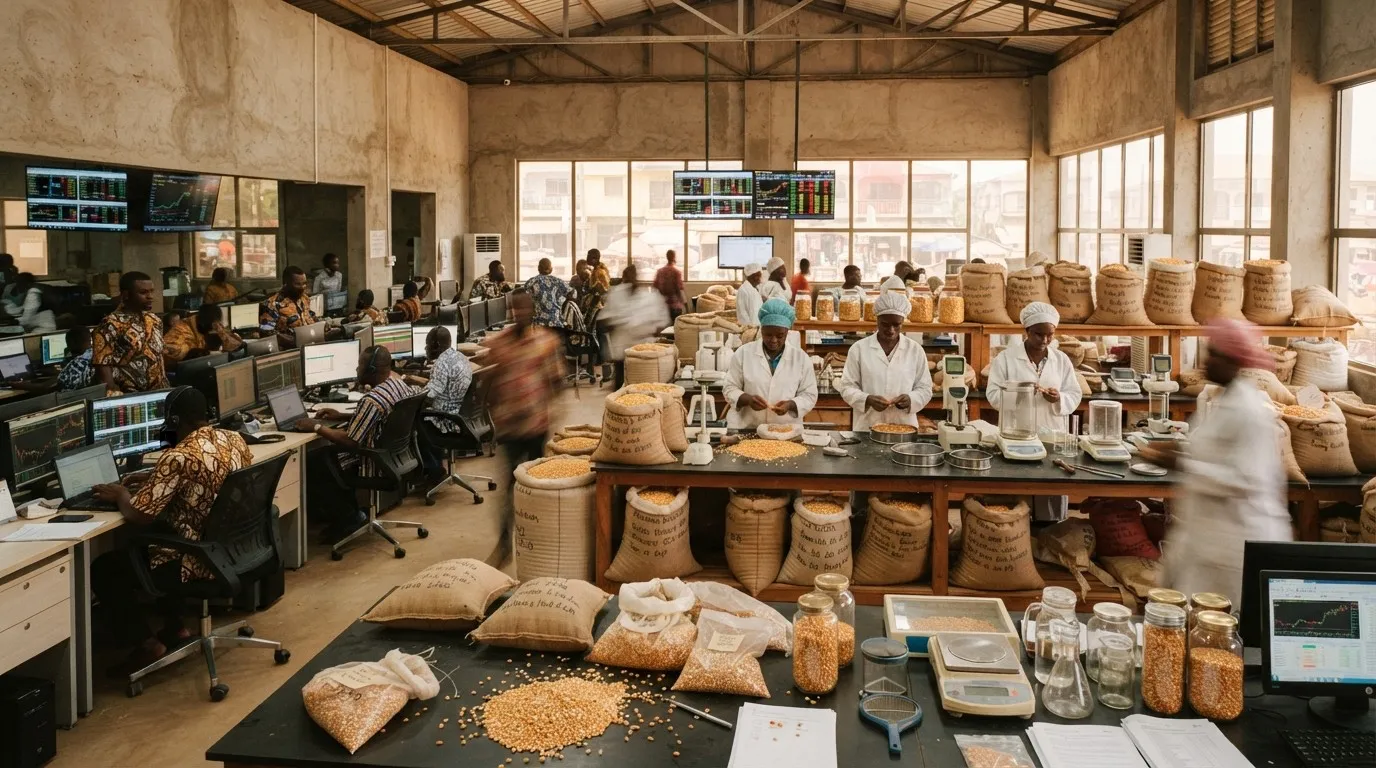
Grain trading floor of the Ghana Commodity Exchange
Maize · Series intelligence

Business and Market Intelligence

The size of the opportunity, the demand pull, and the finance now flowing in.
Business and Market Intelligence · Pillar 07

The first six pillars mapped the crop. This one reads the market as an investor or entrepreneur would, and answers three questions: what are the current signals telling us, where is the money to finance a venture, and where is the smart capital already flowing. The short version is that 2026 is a buyer's and builder's market, not a grower's. The grain is cheap, the finance rails are unusually well developed, and public and development money is pouring specifically into the maize and poultry chain. The opening is to plug a private business into rails that are already being built.

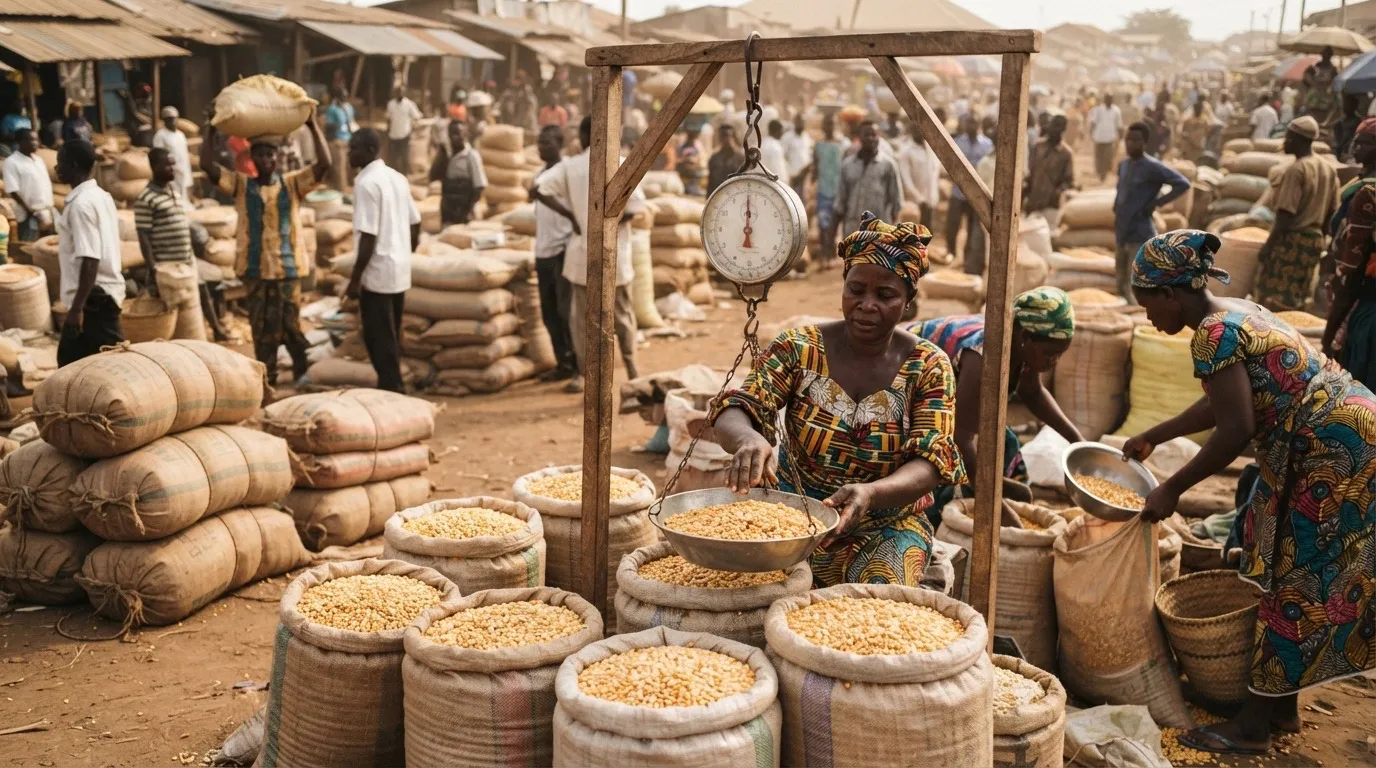
A busy Ghanaian grain market with sacks of maize stacked at stalls and traders weighing grain for buyers
A buyer's and builder's market
Where the smart money goes: In 2026, value has moved from growing the grain to storing, financing and processing it.
~49%
fall in the maize price as a bumper harvest behind a closed border tipped the country into glut
GH¢1.68 bn
already placed by GIRSAL guarantees across 178 agribusinesses
GH¢1.7 bn
of public spending committed to agricultural transformation for 2026

🌽 The money: finance rails are unusually well built 🌽

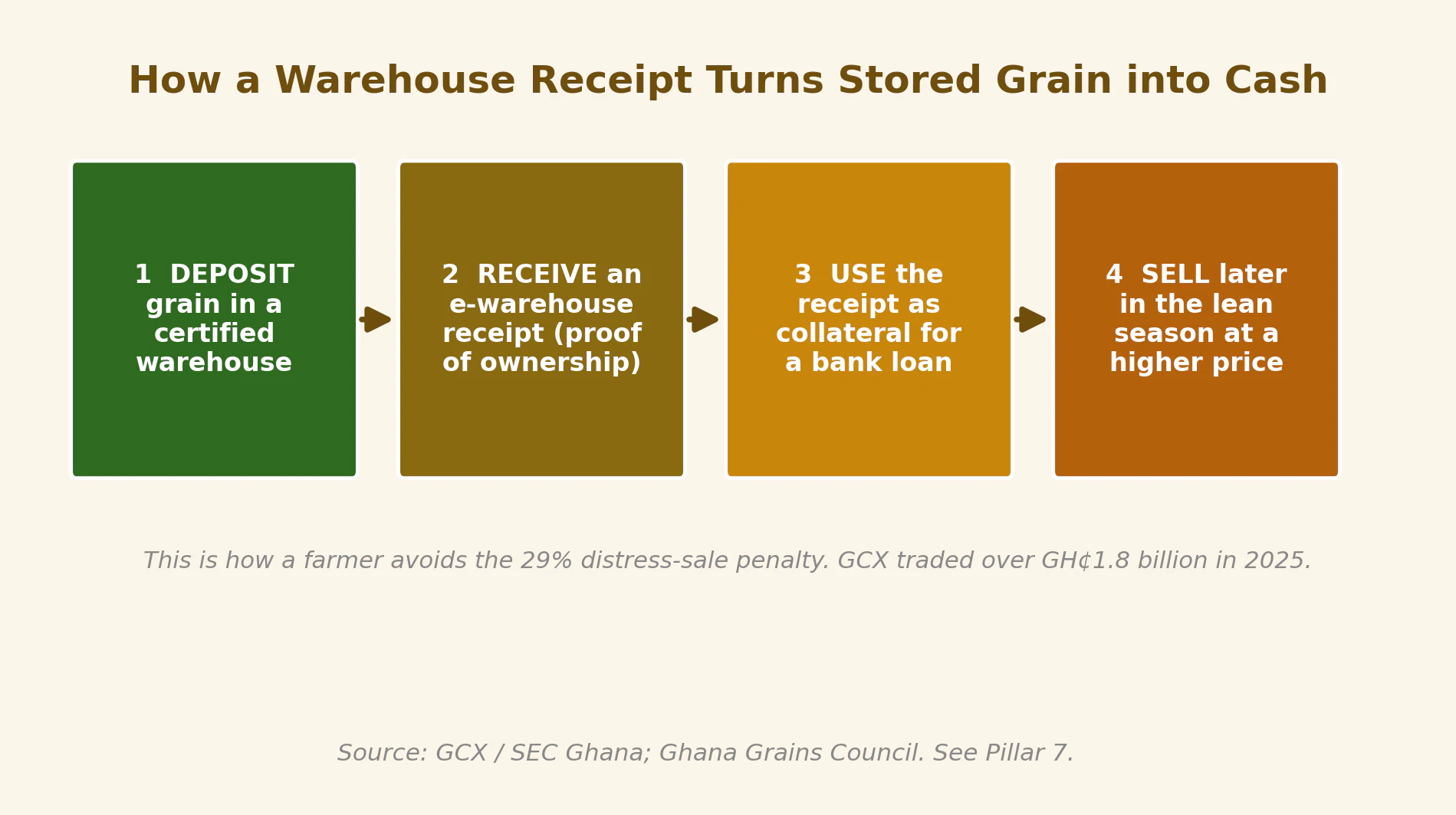
How a warehouse receipt turns stored grain into cash
Figure 11 How a warehouse receipt turns stored grain into cash
What this shows

A farmer deposits grain, receives an electronic receipt, borrows against it, and sells later at a higher price. This is how the roughly 29 percent distress-sale penalty is avoided, and it is a live, financed system: the Ghana Commodity Exchange traded over GH¢1.8 billion in 2025 and served more than 50,000 farmers, and maize is its most-traded grain.

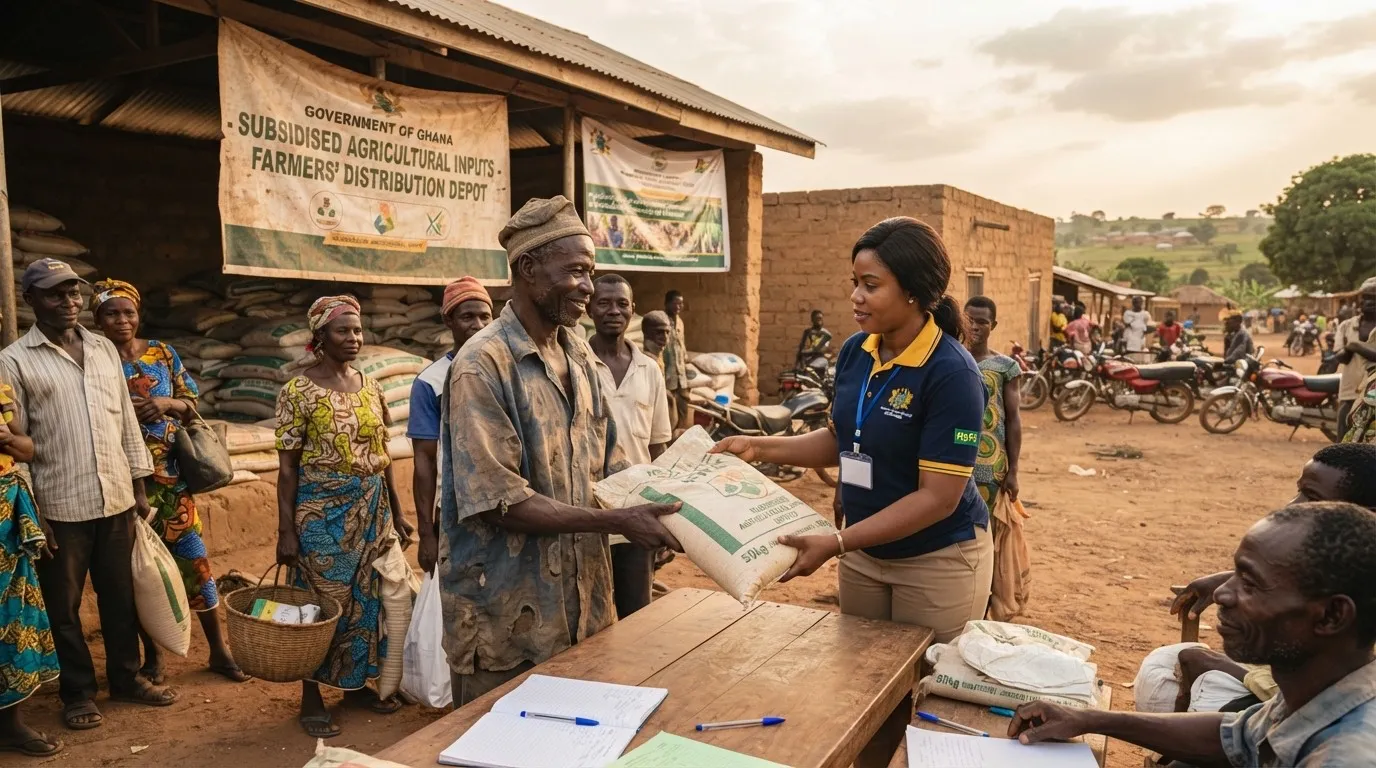
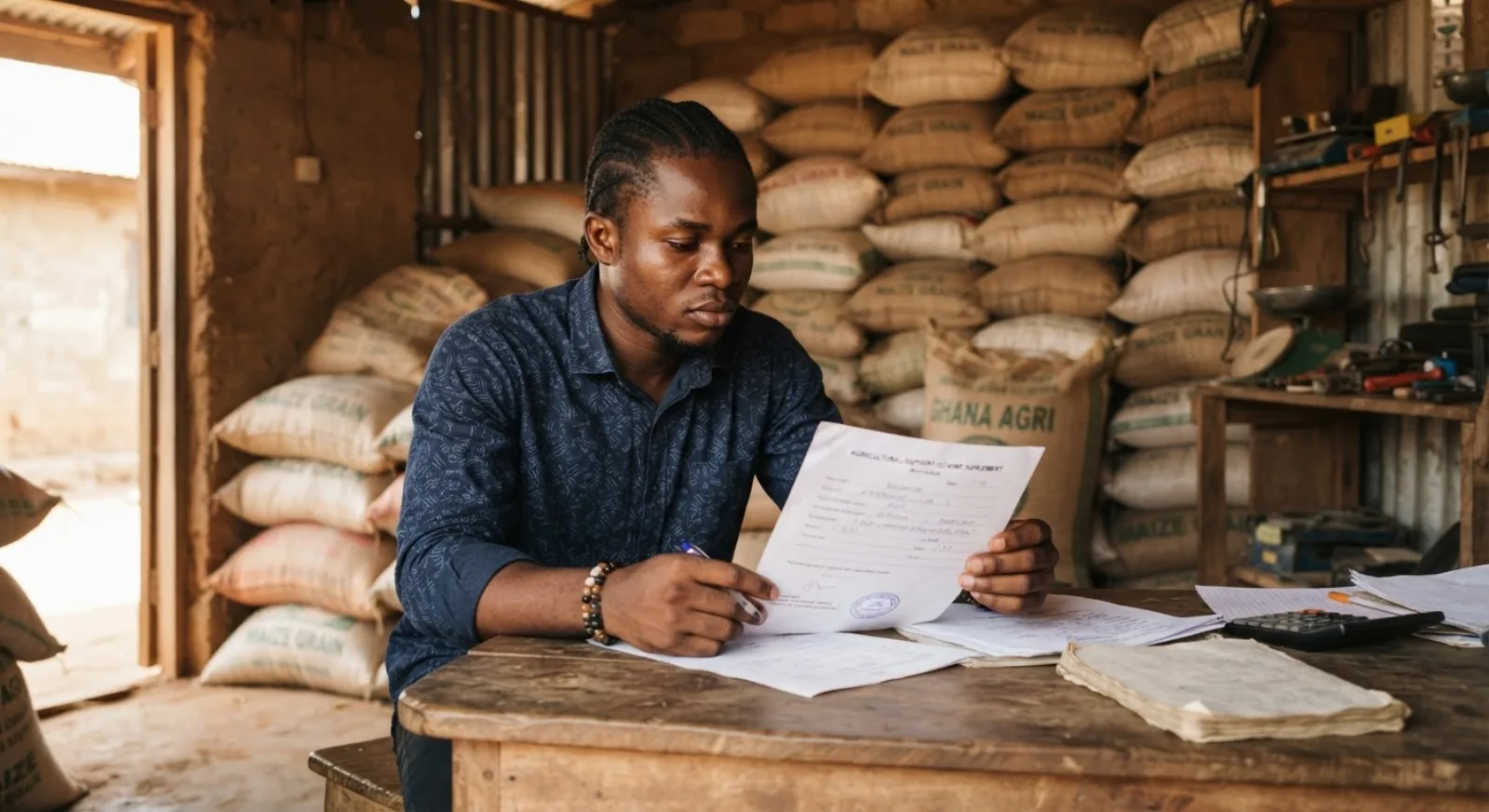
A farmer receiving a warehouse receipt or a loan at a bank or GCX certified warehouse in Ghana
Live finance rails
Maize is better served by finance than most Ghanaian crops: GIRSAL guarantees, warehouse-receipt credit and DFI programmes are live.

A common reason good agribusiness ideas fail is that they cannot get credit. Maize is better served than most Ghanaian crops here, because a set of finance rails has been built specifically for grain value chains. The most important is GIRSAL, a state-backed scheme that guarantees up to 70 percent of an agricultural loan so that banks will lend; it has channelled more than GH¢1.68 billion to 178 agribusinesses, works through 22 financial institutions, and its guarantees are now accepted by the Bank of Ghana as loan collateral (GIRSAL, 2026). In June 2025 it added a Loan Portfolio Guarantee aimed at smaller businesses, which put more than GH¢14.9 million into 1,291 agri-enterprises in its first six months, most of them youth-led (GIRSAL, 2026). Alongside it sits warehouse-receipt finance, which lets a farmer or aggregator borrow against grain stored in a certified warehouse.

How to fund a maize venture, step by step: first secure a buyer or offtake, because finance follows a confirmed market. Deposit graded grain in a Ghana Grains Council or GCX certified warehouse and take the electronic receipt. Borrow against that receipt, or apply through one of GIRSAL's 22 partner banks using its up-to-70-percent guarantee. Then layer on input credit from Planting for Food and Jobs and drought cover from the insurance pool to lower your cost and risk.

70%
of an agricultural loan guaranteed by GIRSAL, so banks will lend against grain
~29%
distress-sale penalty a warehouse receipt lets a farmer avoid

🌽 The investment landscape: public and development money is leading 🌽

The clearest signal of where maize is heading is where the big money is going, and in 2026 it is going into the maize and poultry chain deliberately. In June 2026 the World Bank and development partners launched the AgriConnect Compact, a national programme that names maize and poultry as priority chains and includes a smallholder outgrower scheme with guaranteed offtake (World Bank, 2026). The government committed about GH¢1.7 billion to agricultural transformation for 2026, and the state announced five maize-to-flour factories to soak up the surplus (World Bank, 2026). The one gap is named private investment, and that gap is itself the opportunity: the offtake structures, guarantees and warehouse-finance rails are being built with public money, and private operators who move into them early face little private competition.

On incentives, maize as a crop does not enjoy the ten-year tax holiday that cattle production does, nor the five-year holiday for other livestock, so a maize venture should not be built around a tax break. What it can use instead is the free fertiliser, the input-credit and guarantee schemes, the one-district-one-factory and agro-processing support for value addition, and, once the export ban lifts, the wider West African market under the African Continental Free Trade Area.

5 factories
of maize-to-flour capacity announced by the state to soak up the surplus
June 2026
AgriConnect Compact names maize and poultry as priority chains with guaranteed offtake
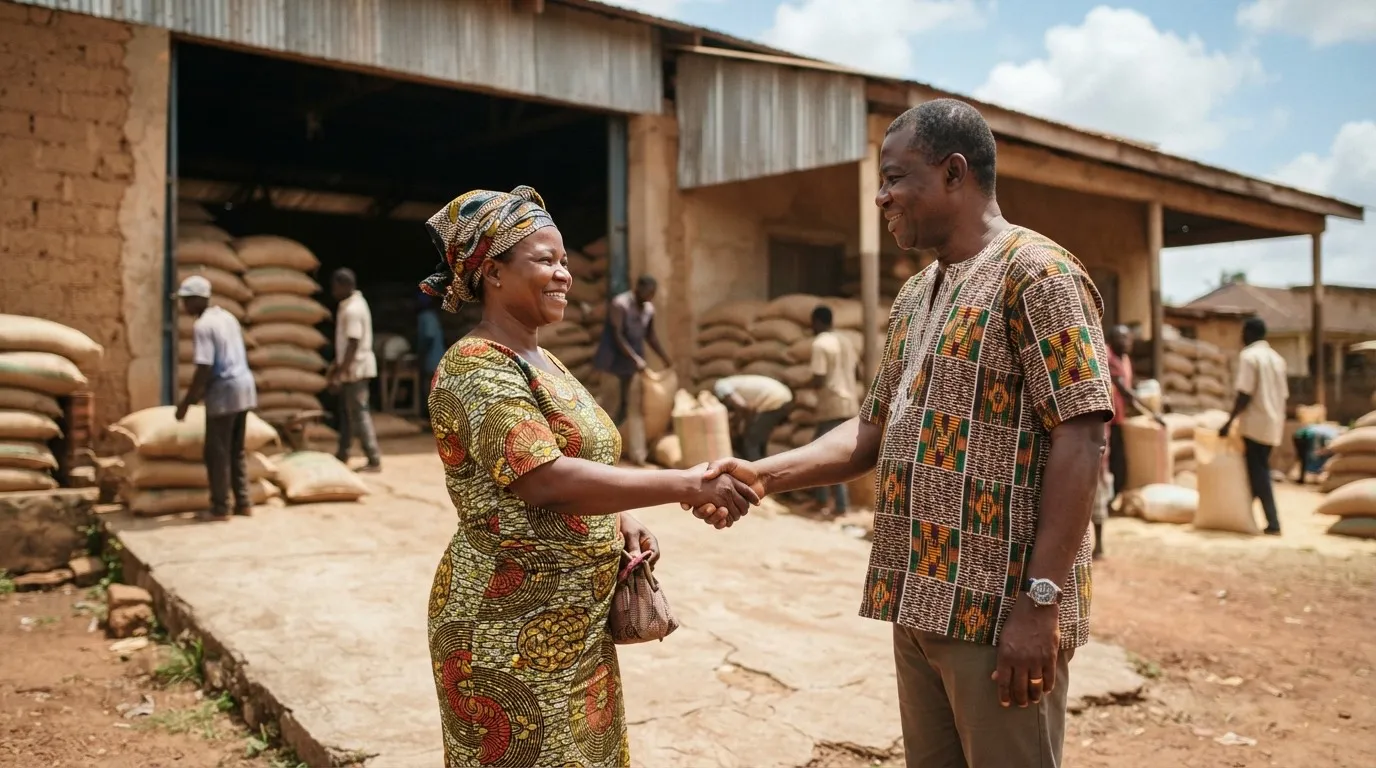
A signing or launch event for an agribusiness finance or offtake programme in Ghana with officials reviewing documents
Public money first
Public and development money is leading; the gap is private operators to use the rails.

🌽 The 2026 signals, and where to find the finance

Table 13: the 2026 market signals and what they mean for a maize business
Signal (2026)What it means for a business
Price crashed about 49 percent; the country is in glutCheap raw material for processors, feed mills and storers; a poor time to be a pure grower
Grain export ban still in forceThe surplus is trapped at home, so build for domestic absorption now and treat export as future upside
Maize imports collapsed toward 30,000 tonnesVolume import-substitution is shrinking, but the yellow feed-maize gap remains the real opening
GCX trade at record pace (Q1 2026 beat all of 2025)Formal, receipted grain trade is scaling fast, a channel and a credit rail to use
Free fertiliser for the 2026 seasonThe cheapest season in years to grow, and it frees farmer cash to pay for services
AgriConnect, DBG and GH¢1.7bn public spend on agriculturePublic and development money is flowing into the maize and poultry chain; a private venture can plug in
Feed Ghana poultry ladder (12% to 104% by 2029)Feed-maize demand is set to rise on a published schedule, a rare forward demand signal

Several signals are recent and some, such as the announced factories and the buffer-stock floor, are stated but not yet funded or delivered; treat policy as a tailwind to verify, not a guarantee.

Sources: Synthesis of USDA FAS (2026); Ghana Commodity Exchange (2025); Ministry of Food and Agriculture (2025); World Bank (2026).

Table 14: the maize money map, where to find finance and how to reach it
InstrumentWho runs itWhat it fundsHow to access it
Credit guaranteeGIRSAL with partner banksCovers up to 70% of an agri loan; over GH¢1.68bn placedApply through one of 22 partner banks
Warehouse-receipt financeGCX, Ghana Grains Council, banksWorking capital against stored grainDeposit in a certified warehouse, borrow on the receipt
Crop insuranceGhana Agricultural Insurance PoolDrought and area-yield cover for maizeThrough GAIP-linked banks and input schemes
Input creditPlanting for Food and Jobs 2.0Seed and fertiliser on credit against an offtakeVia MoFA and aggregator schemes
Programme supportFeed Ghana, Farmer Service CentresFree or subsidised inputs, mechanisation, adviceThrough Farmer Service Centres
Value-chain financeDevelopment Bank Ghana, AgriConnectAggregation, processing, guaranteed-offtake outgrowerThrough participating banks and the programmes

Sources: GIRSAL (2026); Ghana Commodity Exchange (2025); Ministry of Food and Agriculture (2025); World Bank (2026).

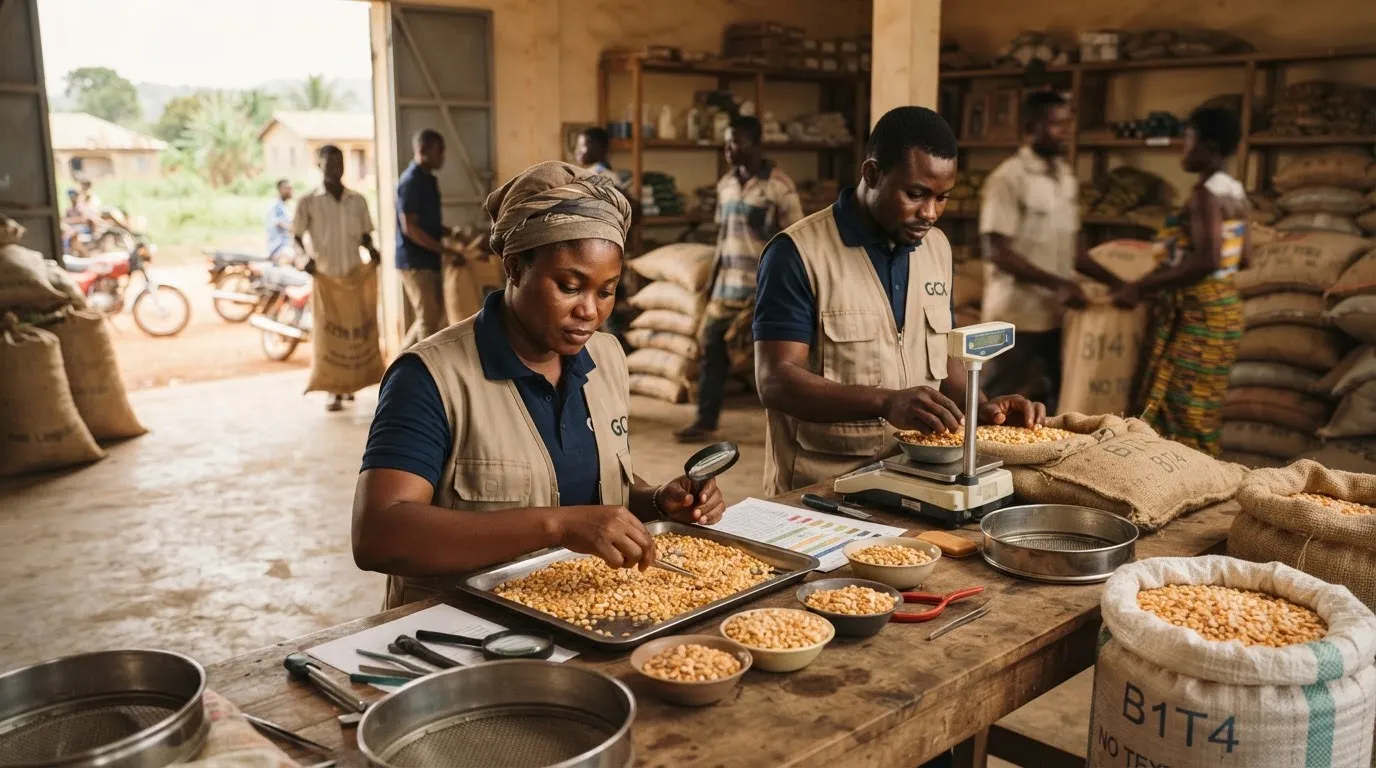
Bags of graded maize at a Ghana Commodity Exchange certified warehouse with a trader recording a receipt
GH¢1.8 bn traded in 2025
The exchange is both a graded-grain market and a working-capital rail, and maize is its top commodity.
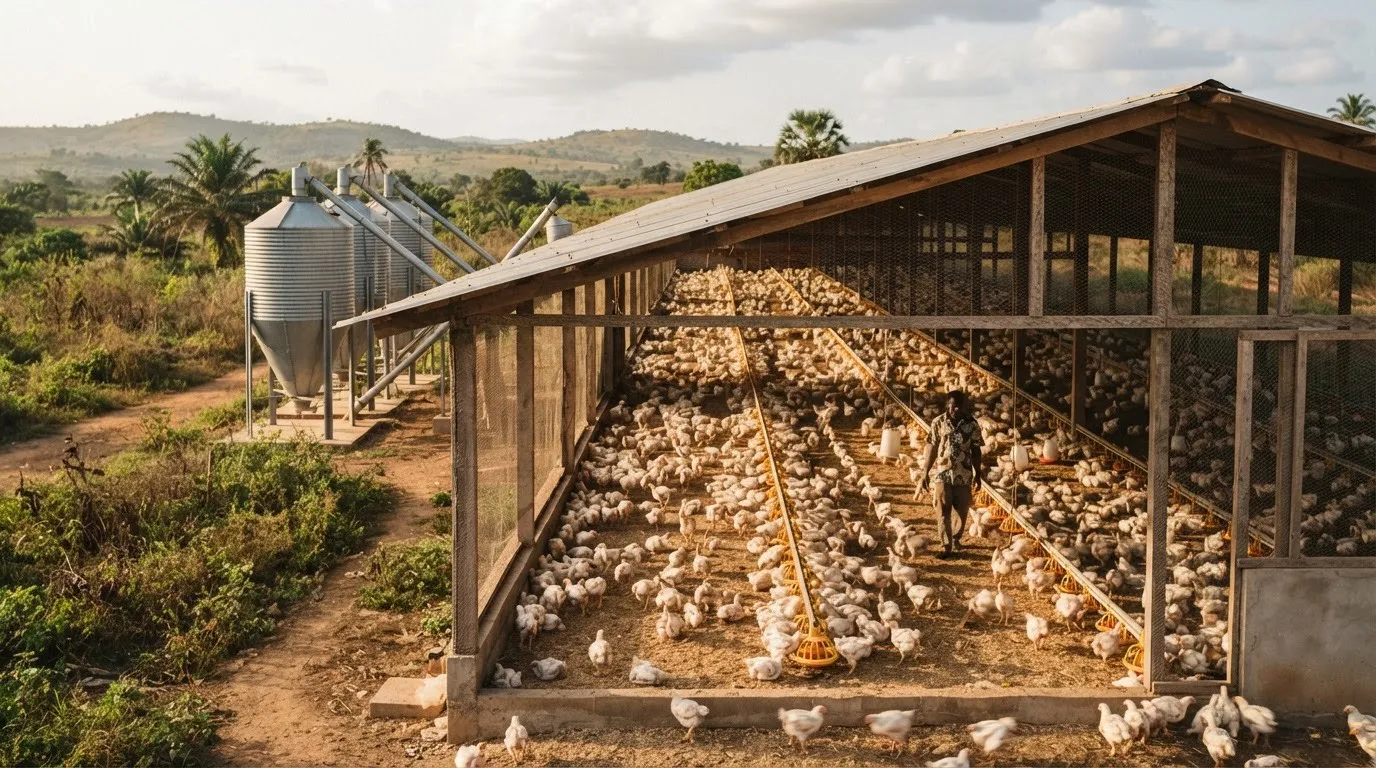
A Ghanaian poultry farm with birds feeding, representing the feed-maize demand from the poultry sector
Feed-maize demand
The poultry ladder puts feed-maize demand on a published schedule out to 2029.

🌽 Reading the demand pull 🌽

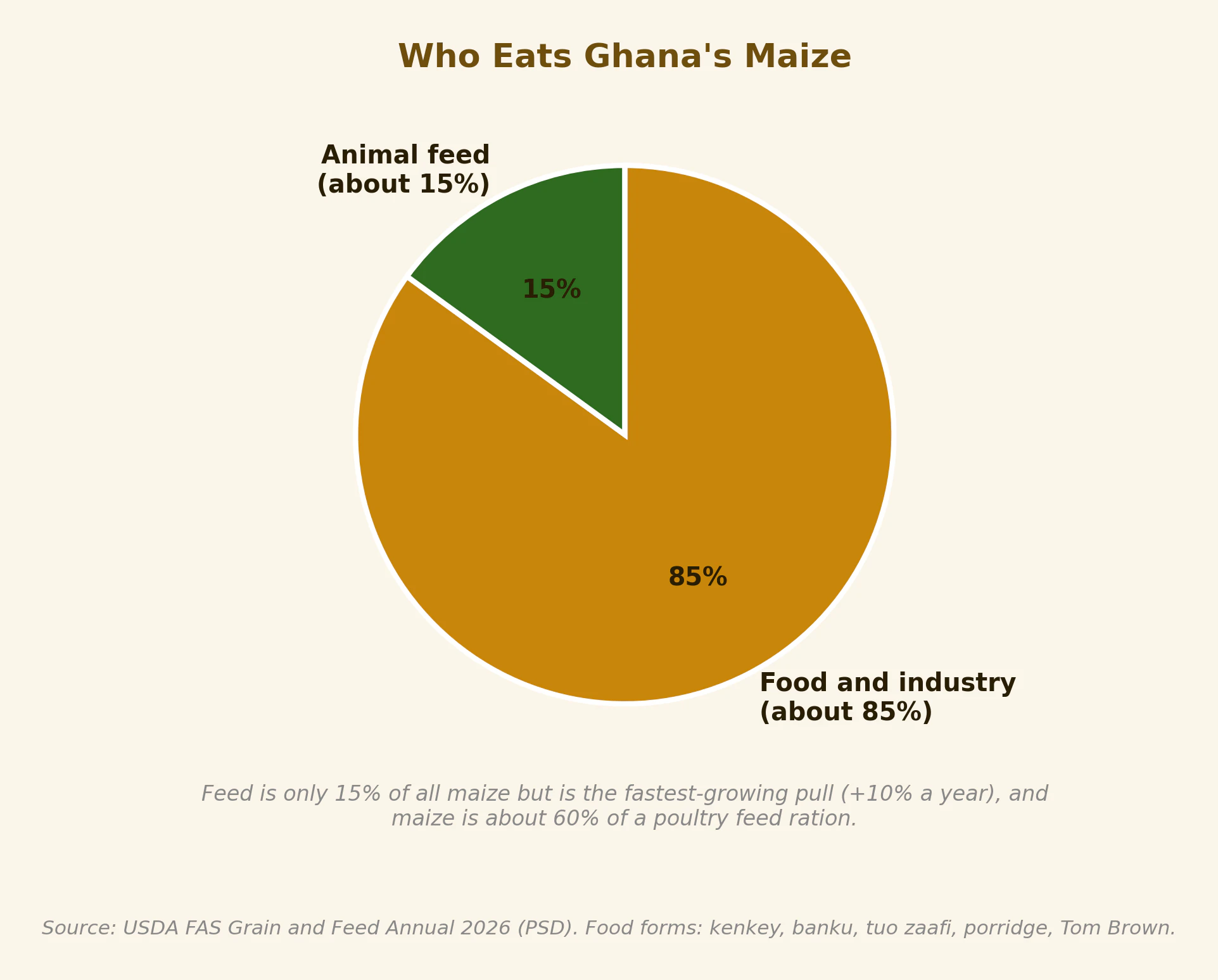
The feed-maize demand pull from the Feed Ghana poultry ladder
Figure 12 The feed-maize demand pull to 2029
What this shows

The Feed Ghana poultry ladder lifts domestic supply from about 12 percent of demand toward 104 percent by 2029, and every extra bird eats yellow maize. That published schedule is a rare forward demand signal: the feed-maize gap, not human food, is the durable opening a processor or aggregator can build a plan around.

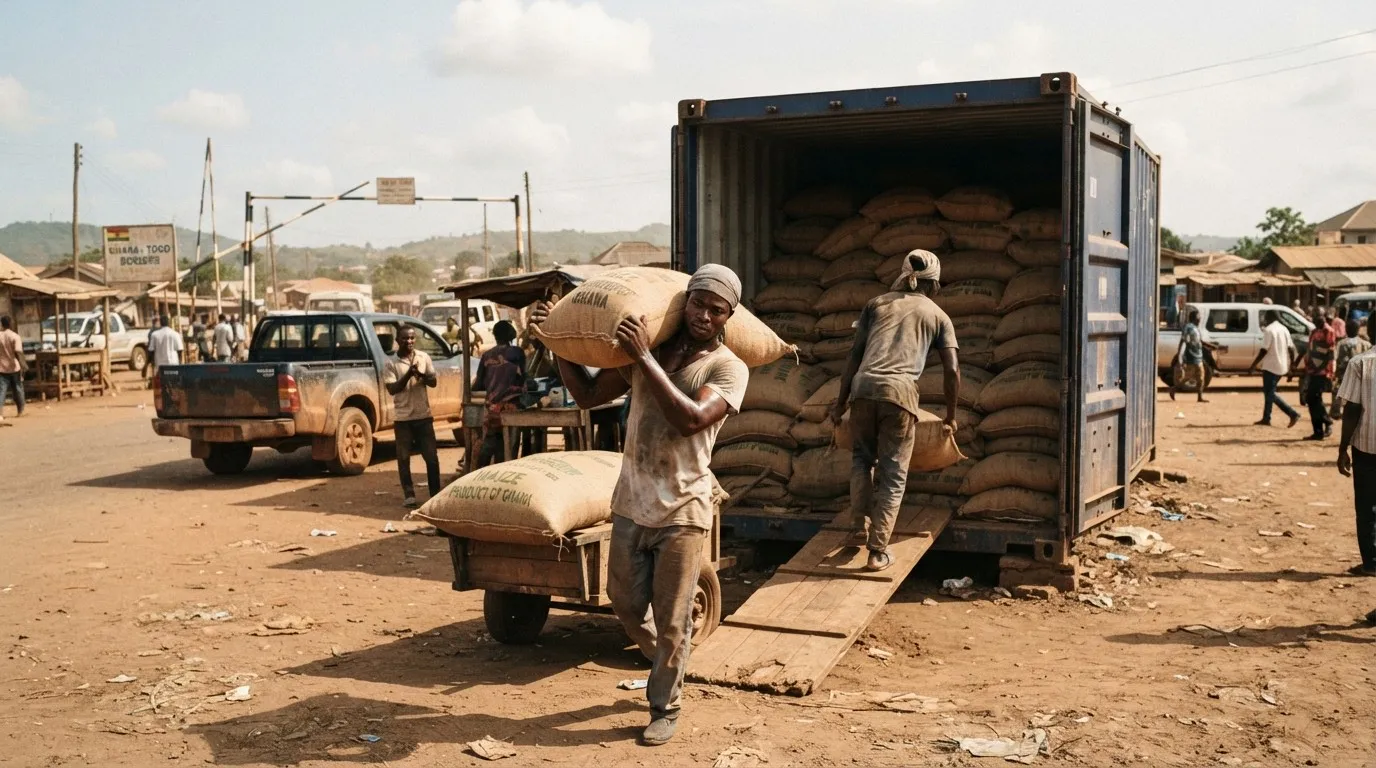
Graded maize in certified storage bags ready for regional trade, representing the future export opening under AfCFTA
Ready for the export turn
An operator with graded stock, certified storage and finance is ready the moment the export ban lifts.

Every number in this playbook points the same way. A bumper harvest behind a closed border has crashed the price and left the country in surplus, so the value has moved from growing grain to storing, financing and processing it. The signals turn into a single instruction: build for domestic absorption now, buy the cheap grain, and hold it under finance until the lean season or the export turn.

12% to 104%
of poultry demand met at home by 2029 on the Feed Ghana ladder, each bird eating yellow maize
50k+ farmers
served by the Ghana Commodity Exchange, its most-traded grain being maize
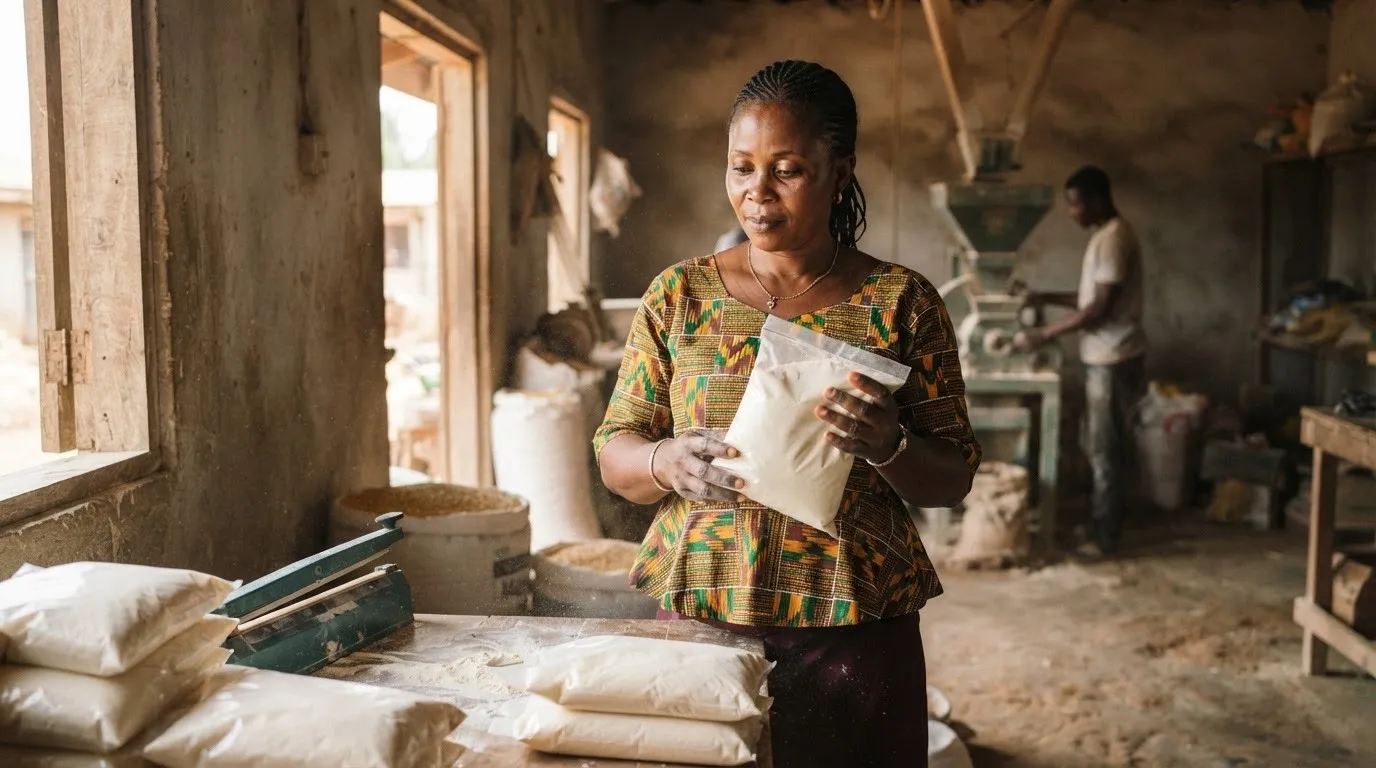
A mid-scale maize processing or feed-milling plant in Ghana with grain moving through the line
Build what the state only plans
Government has announced maize-to-flour factories but not built them; a private mid-scale processor can move faster.
🌽 The Opening: business and investment 🌽
01

Plug into the rails being built. AgriConnect's guaranteed offtake, GIRSAL's loan guarantee and the warehouse-receipt system are public infrastructure a private aggregator or processor can build on rather than replace.

02

Use warehouse receipts as both trade and credit. Buying graded grain cheap in the glut, storing it under receipt, borrowing against it, and selling in the lean season is a financed, low-loss business model the system now supports.

03

Build the processing the state is only planning. Government has announced maize-to-flour factories but not delivered them; a private, mid-scale feed mill or fortified-food processor can move faster and capture the cheap-grain margin now.

04

Position for the export turn. The export ban will lift eventually. An operator with graded stock, certified storage and finance in place is ready to sell into the regional market under AfCFTA the moment it does.

🌽 Key takeaways 🌽
01

2026 is a buyer's and builder's market, not a grower's: cheap grain, strong finance rails, and public money flowing into the maize and poultry chain.

02

Finance is unusually available: GIRSAL guarantees up to 70 percent of a loan (over GH¢1.68 billion placed across 178 agribusinesses), and warehouse receipts turn stored grain into working capital.

03

The Ghana Commodity Exchange is scaling fast, traded over GH¢1.8 billion in 2025, served more than 50,000 farmers, and is both a grain market and a credit rail; maize is its top commodity.

04

The AgriConnect Compact, Development Bank Ghana and about GH¢1.7 billion of public spending are backing maize and poultry, but named private investment is scarce, which is the opening.

05

Maize has no tax holiday, so build on market economics and use free inputs, guarantees and warehouse finance to improve returns, never as the reason a venture works.

06

Treat government promises as upside, not the base case, because policy swings and funding often lags the announcement.

Written for each reader

🌽 Practitioner intelligence 🌽

Hover any card to pause and lift it.

For students

This pillar is where a graduate learns to speak the language of finance and policy, which is rare and valuable in agriculture. Learn how GIRSAL, warehouse receipts and the GCX actually work, and you can help farmers and agribusinesses access credit they cannot reach alone, as a loan officer, an aggregator's finance lead, or an adviser who prepares bankable proposals. The gap to fill: most farmers and small agribusinesses do not know these rails exist or how to use them, so the person who bridges them to finance is genuinely needed. The trap to avoid: chasing programme money for its own sake; learn the business first, then use the finance to grow it.

For entrepreneurs

First move: design a venture that uses the rails without depending on them. Build a real business, an aggregator, a feed mill, a storage operation, that would work at market prices, then layer on GIRSAL credit, warehouse-receipt finance and programme offtake to lift returns. Secure a commercial customer before you rely on a programme one. The trap: building a business that only works because of a government promise, since those promises change and are often underfunded. The incentive to use: the cheap 2026 grain plus the guarantee and warehouse-finance rails.

For investors

The thesis: maize offers cheap raw material, strong finance rails and a wave of public and DFI capital, but few private operators using them, so the risk-adjusted opening is in downstream businesses that plug into existing infrastructure. Diligence asks: does the model work at market prices without subsidy, is finance secured through GIRSAL or warehouse receipts, and is there a commercial rather than only a programme offtake. The risk: policy and delivery risk, so discount government promises and stress-test the model at market prices with private finance only.

For ecosystem actors

The highest-return lever is closing the gap between generous policy and actual delivery. Fund the buffer-stock purchases you promise, get the announced factories built or crowd in private ones, and make the finance rails easy for small operators to reach. The measurable outcome is private investment into maize aggregation and processing rising, and more farmers and SMEs actually drawing on GIRSAL and warehouse-receipt credit. The failure to avoid: announcing programmes and prices without the funding and delivery to back them, which erodes the trust the whole market runs on.
Download full PDF
UpcomingThis document isn't available yet.