Ghana Agribusiness PlaybookMaize
From maize field to feed mill to poultry, the full value chain
Maize · Pillar 06

Value Chain Analysis

The value has moved downstream, into the steps Ghana is weakest at.
Value Chain Analysis · Pillar 06

This is the most important pillar in the playbook, and it is deliberately the most detailed, because the value chain is where the real money in maize is decided. A grain of maize passes through eight stages between the input shop and the plate, and at every stage someone adds cost, someone adds value, and value leaks away. The farmer who grows it keeps only about 56 percent of the price it finally sells for, on a historical, directional estimate; the other 44 percent or so is captured downstream by aggregators, processors and retailers (Ministry of Food & Agriculture and International Food Policy Research Institute, 2020). Understanding who captures what, and where the value leaks, is the whole map of where a business should stand in maize.

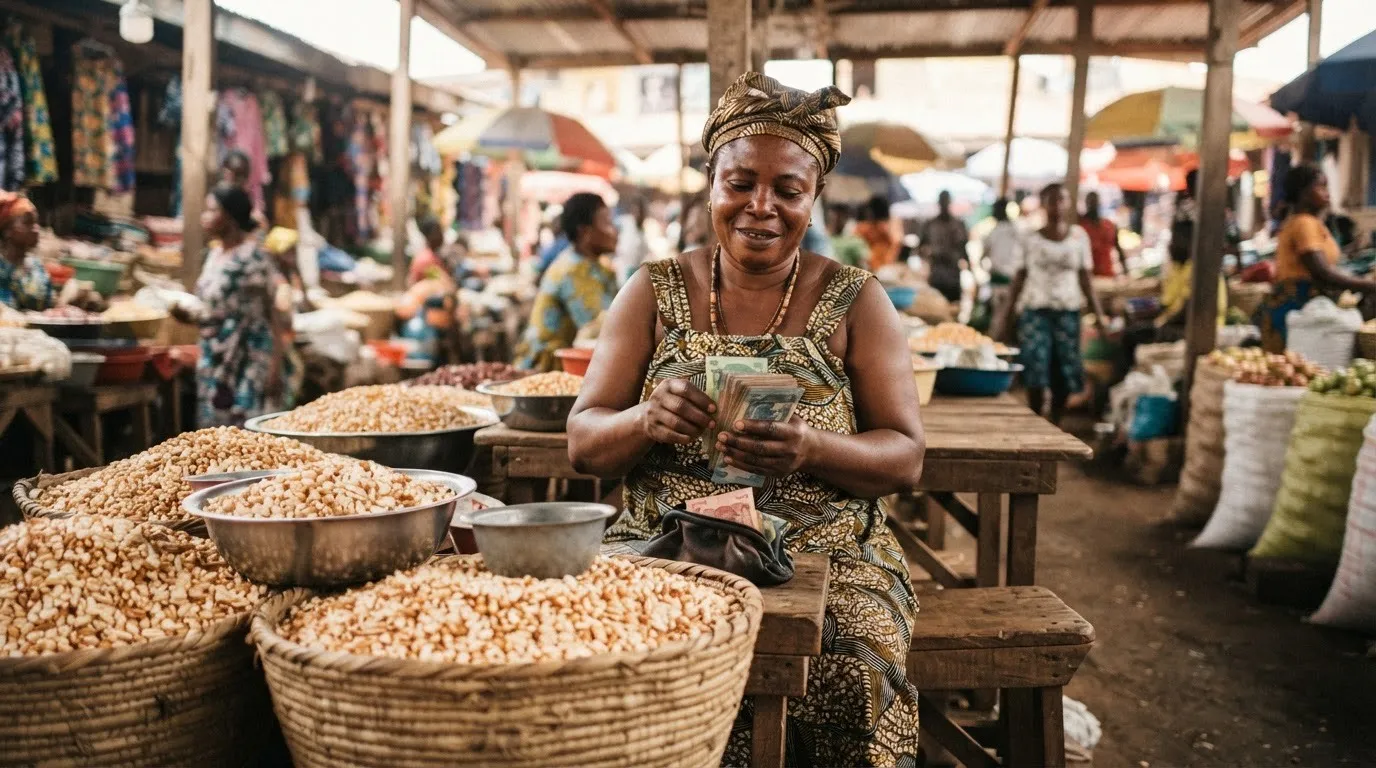
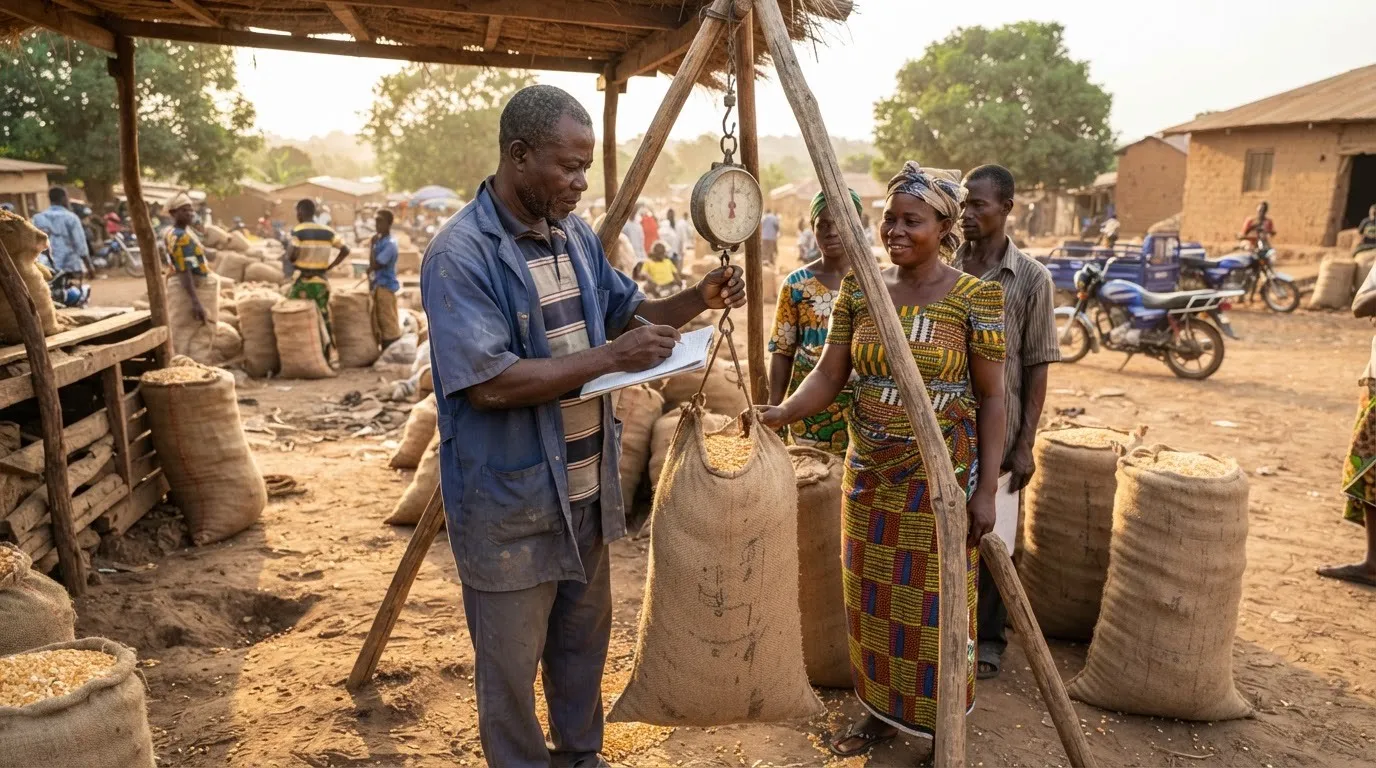
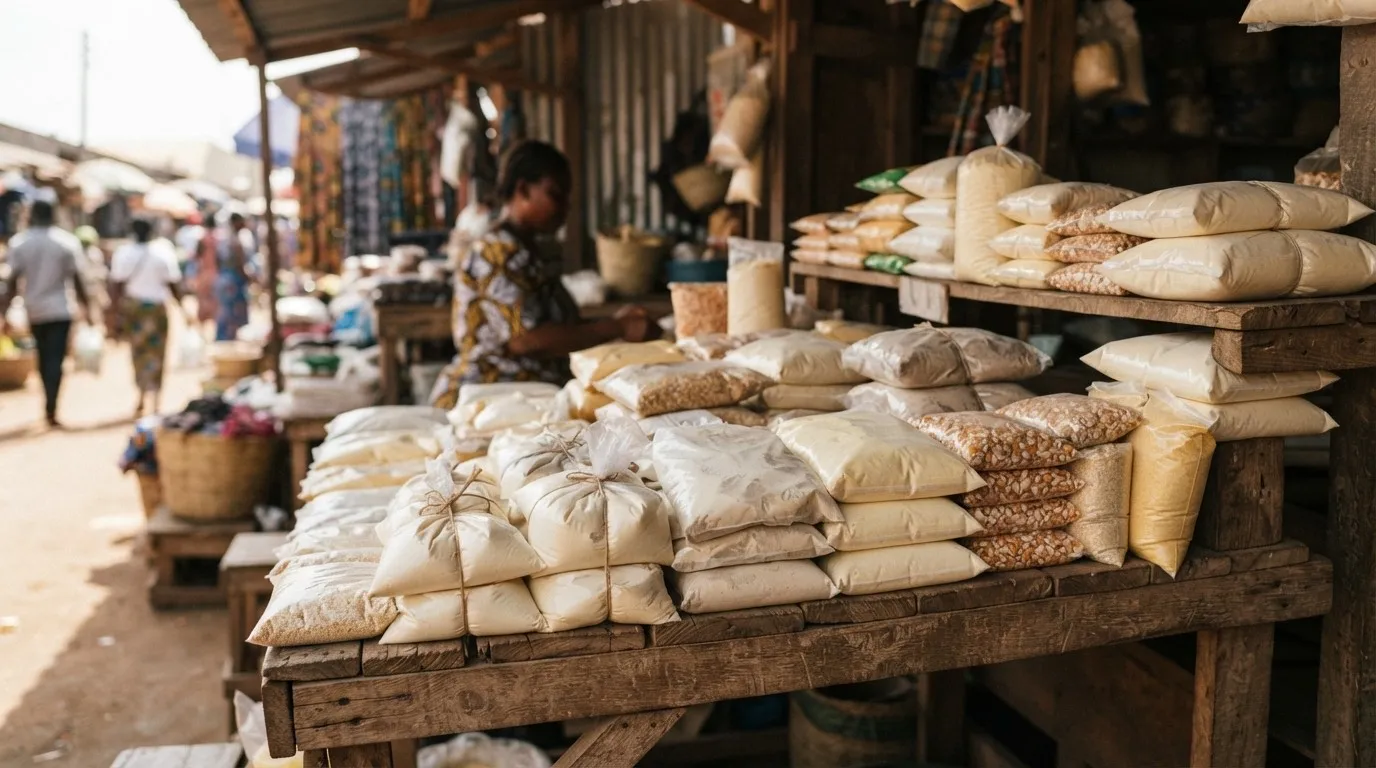
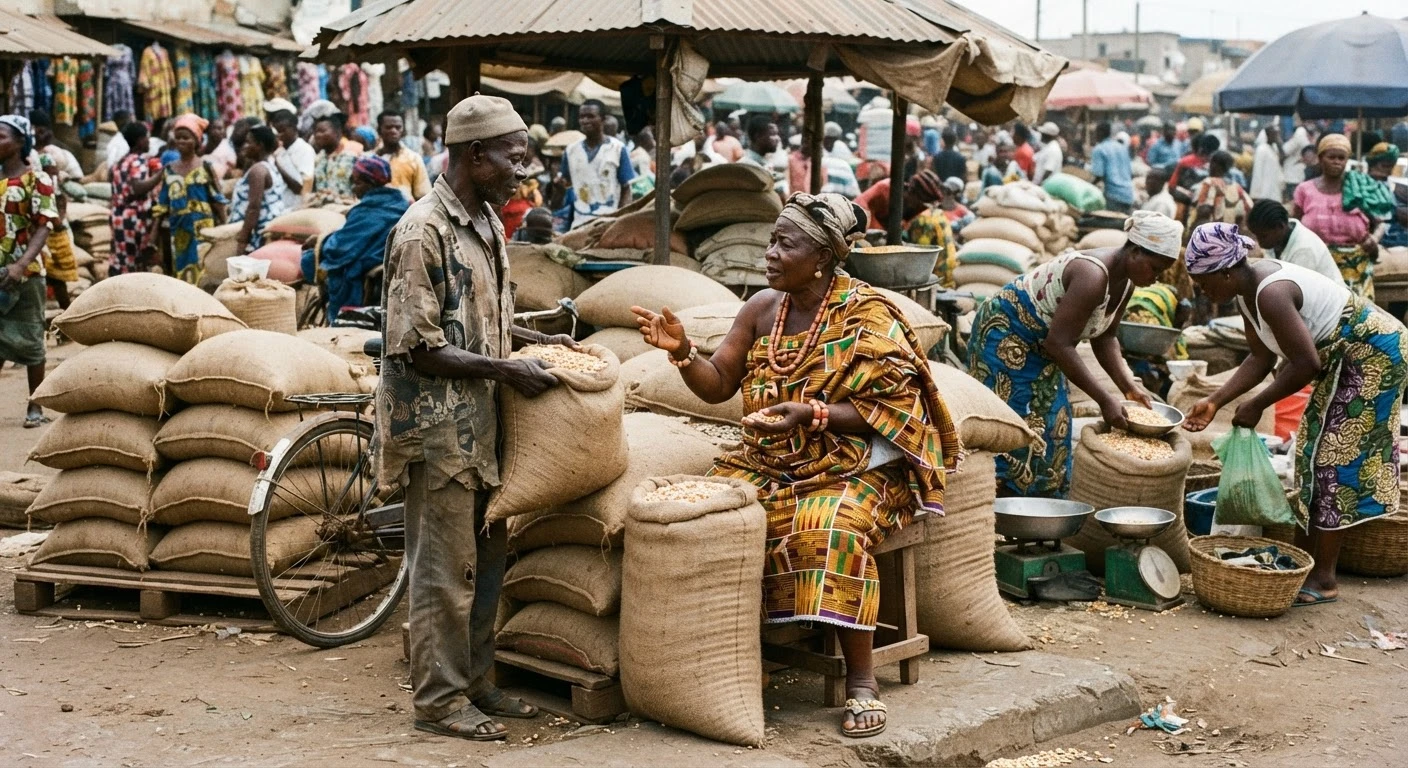
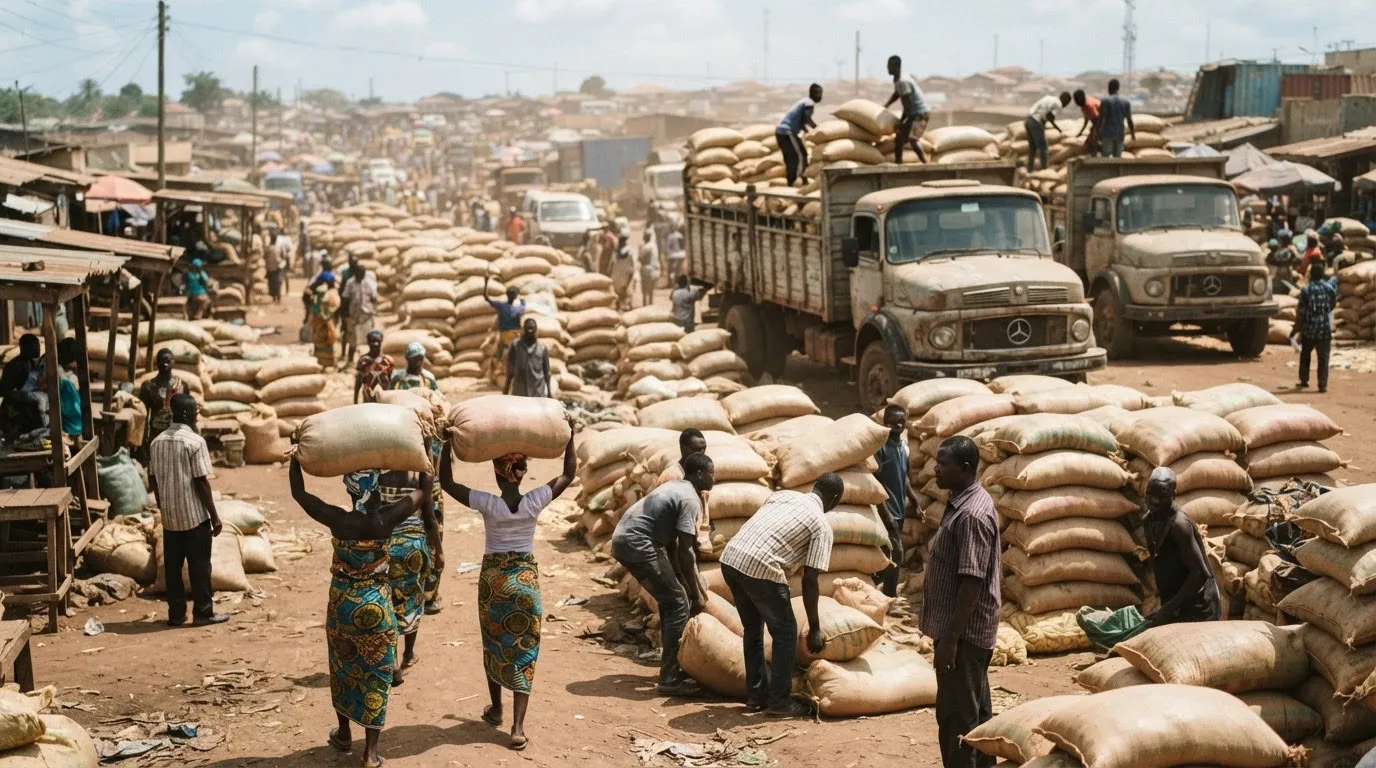
A busy maize assembly market such as Techiman with women traders and stacked 100 kg sacks in Ghana
Where the value leaks
From an input shop to the plate: A grain of maize gains and loses value at each of eight handoffs between the input shop and the plate.
8 stages
from the input shop to the plate, each a place value is made or lost
~56%
of the final retail price is all the farmer keeps
Aggregation
moves about 93% of the crop and is the biggest opening

This pillar walks the chain stage by stage, and it is written to stand on its own as a complete value chain analysis. It draws the earlier pillars together rather than repeating them: the variety and seed detail sits in the first pillar, the demand and feed pull in the market pillar, and the cost and finance detail in the cost and finance pillars. Here the point is simpler, that a grain of maize gains and loses value at each handoff, and that the openings for a new business are mostly downstream of the farm.

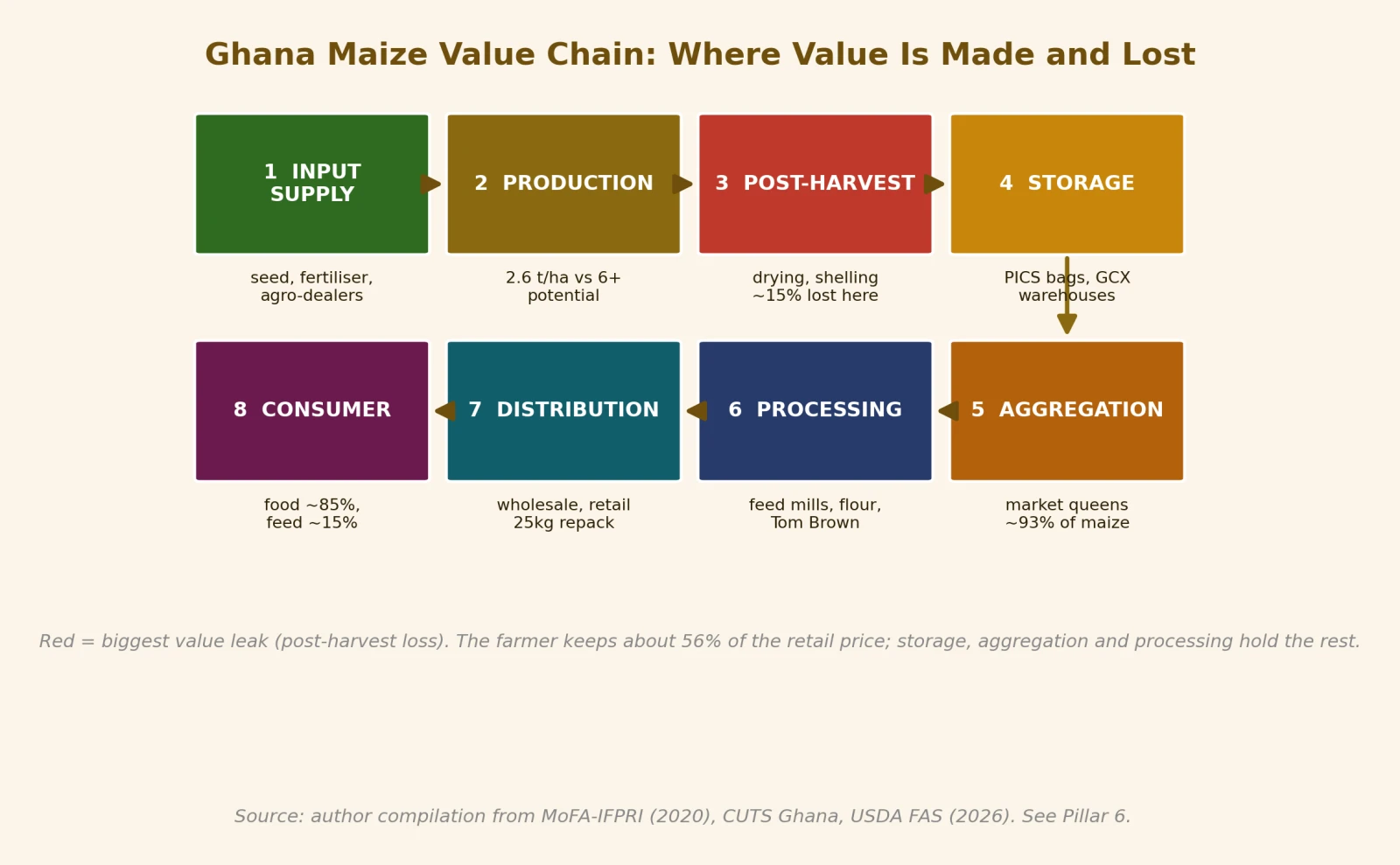
The Ghana maize value chain, where value is made and lost
Figure 10 The Ghana maize value chain, where value is made and lost
What this shows

Eight stages from input supply to the consumer. The biggest single value leak is post-harvest loss; the biggest value pools are storage, aggregation and processing. The farmer keeps about 56 percent of the retail price, so the openings for a new business are mostly downstream of the farm.

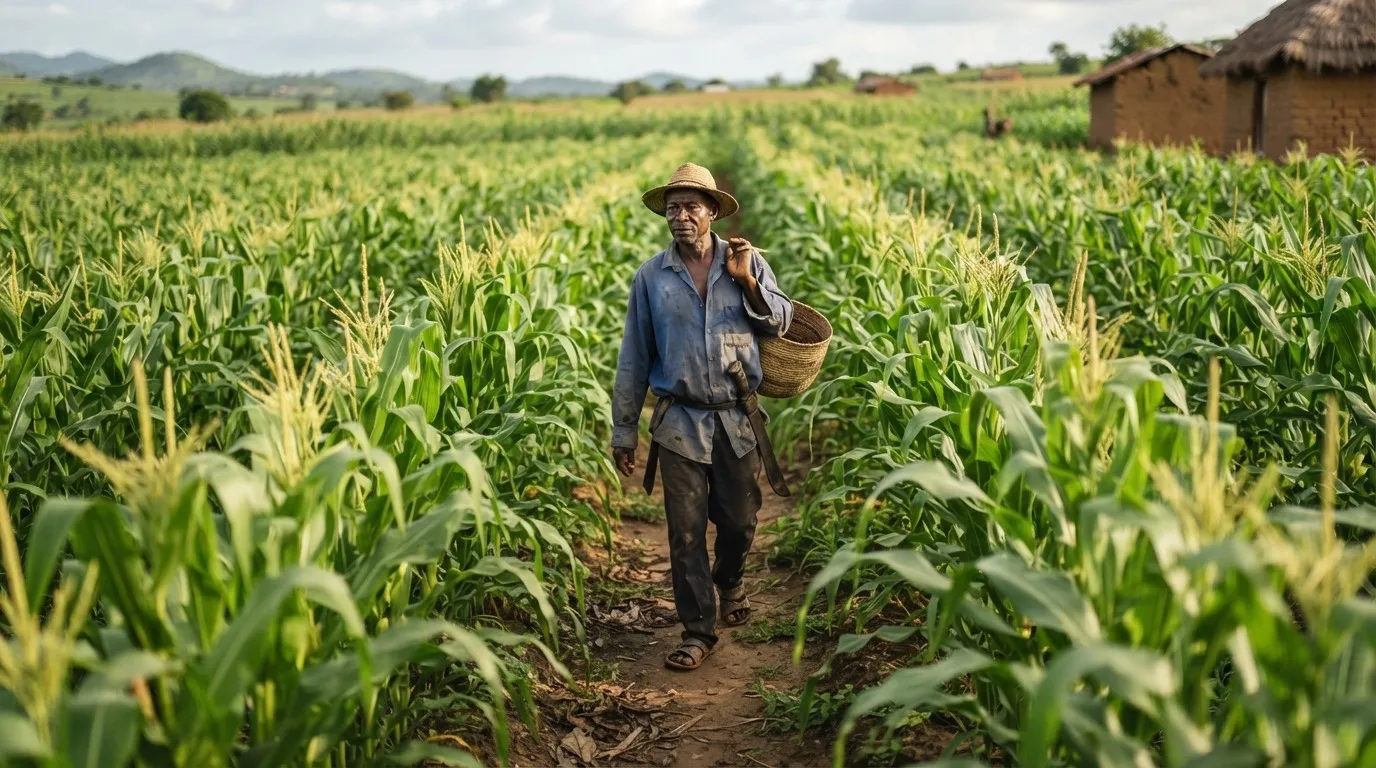
Smallholder maize farmers harvesting cobs in a field in Ghana
The farmer earns least per unit of effort
The roughly one million smallholders who grow the crop capture the least per unit of effort, which is why the openings sit downstream.
Table 8: The eight stages of Ghana's maize value chain
StageMain actorsWhat happensWhere the value sits
1. Input supplyAgro-dealers, seed and fertiliser firmsSeed, fertiliser and agrochemicals are sold to farmersSets the yield ceiling for everything after
2. ProductionAbout a million mostly smallholder farmersThe crop is grownFarmer keeps about 56% of the final retail price
3. Post-harvestFarmers and hired labourDrying, shelling and baggingAbout 15% of the crop is lost right here
4. StorageFarmers, community and certified warehousesGrain is held or sold immediatelyHolding to the lean season recovers about 29% of value
5. AggregationMarket queens, aggregators, farmer groupsGrain is bulked and moved to marketAbout 93% flows through informal women traders
6. ProcessingFeed mills, grain millers, food processorsGrain becomes feed, flour or fortified foodHighest margins, and the most under-served stage
7. DistributionWholesalers and retailersRepackaging into 25 kg and smaller units, selling onThe retail markup is quietly widening
8. ConsumerHouseholds, poultry industry, food makersFinal useFood about 85%, feed about 15%

The eight stages read left to right from the input shop to the plate; the value pools are downstream, at storage, aggregation and processing.

Source: Author compilation from Ministry of Food and Agriculture and International Food Policy Research Institute (2020), CUTS Ghana, Andam et al. (2017), USDA FAS (2026).

🌽 Who shapes the chain: the players and the referees 🌽

Before walking the stages, it helps to know who holds power in this chain, because a new business has to work with, around or against them. The map below lists the actors who make the market and the institutions that referee it. The market queens and aggregator networks move most of the crop, the Ghana Standards Authority and Ghana Grains Council referee quality and storage, the Ghana Commodity Exchange gives a formal market and a credit rail, and the development banks are where the money to build comes from.

A market queen and aggregators bulking maize at a Ghanaian assembly market
Incumbents to partner with
Market queens and aggregator networks move most of the crop; the institutions referee quality, storage and finance.
Table 9: The maize value chain stakeholder map
PlayerRole in the chainWhy they matter to a new business
Smallholder farmersGrow most of the crop, largely unorganisedYour supply base; organising them is half the battle
Market queens and aggregatorsMove about 93 percent of the maizeThe incumbents to partner with or out-service, not fight on price
Feed millers and food processorsBuy for feed, flour and foodThe best-paying buyers, and under-served
Ghana Standards AuthoritySets and tests the grain gradesThe referee on quality; its testing is a bottleneck
Ghana Grains CouncilCertifies warehouses, runs warehouse receiptsThe storage and quality backbone
Ghana Commodity ExchangeTrades graded grain and issues e-receiptsYour formal market and a credit rail
NAFCO (buffer stock)Buys at the floor priceA state offtaker, but funding is patchy
MoFA and Feed GhanaPolicy, inputs, extensionSets the rules, subsidies and free inputs
GIRSAL, DBG and banksGuarantees and value-chain financeWhere the money to build comes from

Sources: Development Bank Ghana (2024); author synthesis. Detail on the finance players is in the finance pillar.

🌽 Walking the chain, stage by stage 🌽

Stage 1 · Input supply, the node that sets the ceiling

Everything downstream is capped by what happens here. Ghana has roughly 3,389 agro-dealers, of whom about 80 percent sell fertiliser and about 59 percent sell seed, and they are the last point at which quality can be assured before the grain is even planted (Krausova & Banful, 2010). Because certified seed reaches only about a third of farmers, this stage is both a bottleneck and an opening: the agro-dealer who stocks certified seed and genuine inputs, and pairs them with advice, sells into a market that policy is actively expanding.

Stage 2 · Production, where the farmer earns least per unit of effort

The roughly one million, mostly smallholder, farmers who grow the crop capture only about 56 percent of its final retail value, and in 2026 even that is loss-making at the average yield and price. The lesson of the chain is that standing only at this stage is the hardest place to make money, which is why the opportunities sit mostly downstream, and why the farmer's best move is to reach further down the chain through storage and aggregation rather than sell raw grain at the farm gate.

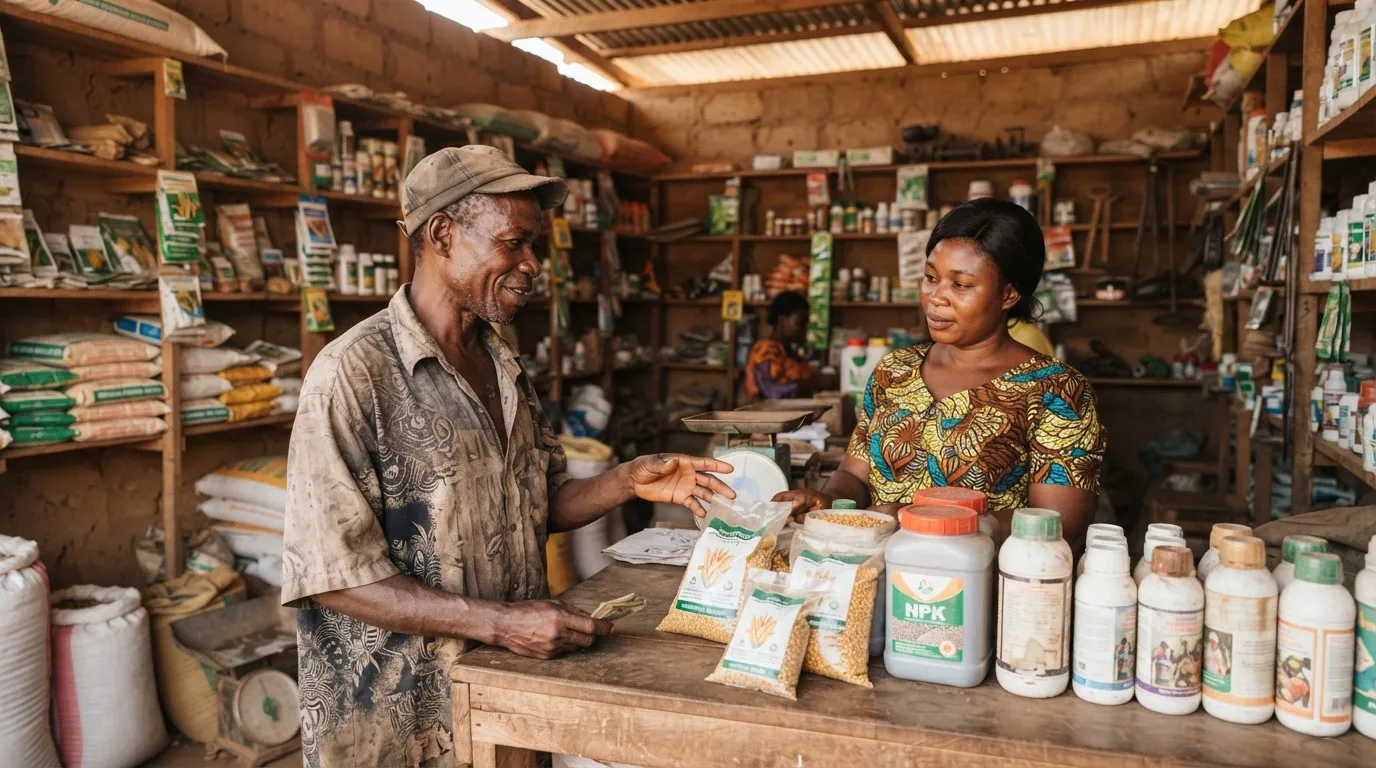
An agro-dealer shop in Ghana selling certified maize seed, fertiliser and agrochemicals
The last node that sets the ceiling
Roughly 3,389 agro-dealers are the last point at which quality can be assured before the grain is even planted.
Smallholder farmers tending a maize field in the middle belt of Ghana
Hardest place to make money
Standing only at the farm gate is the hardest place to make money, which is why the openings sit downstream.

🌽 Post-harvest and storage: the two biggest leaks 🌽

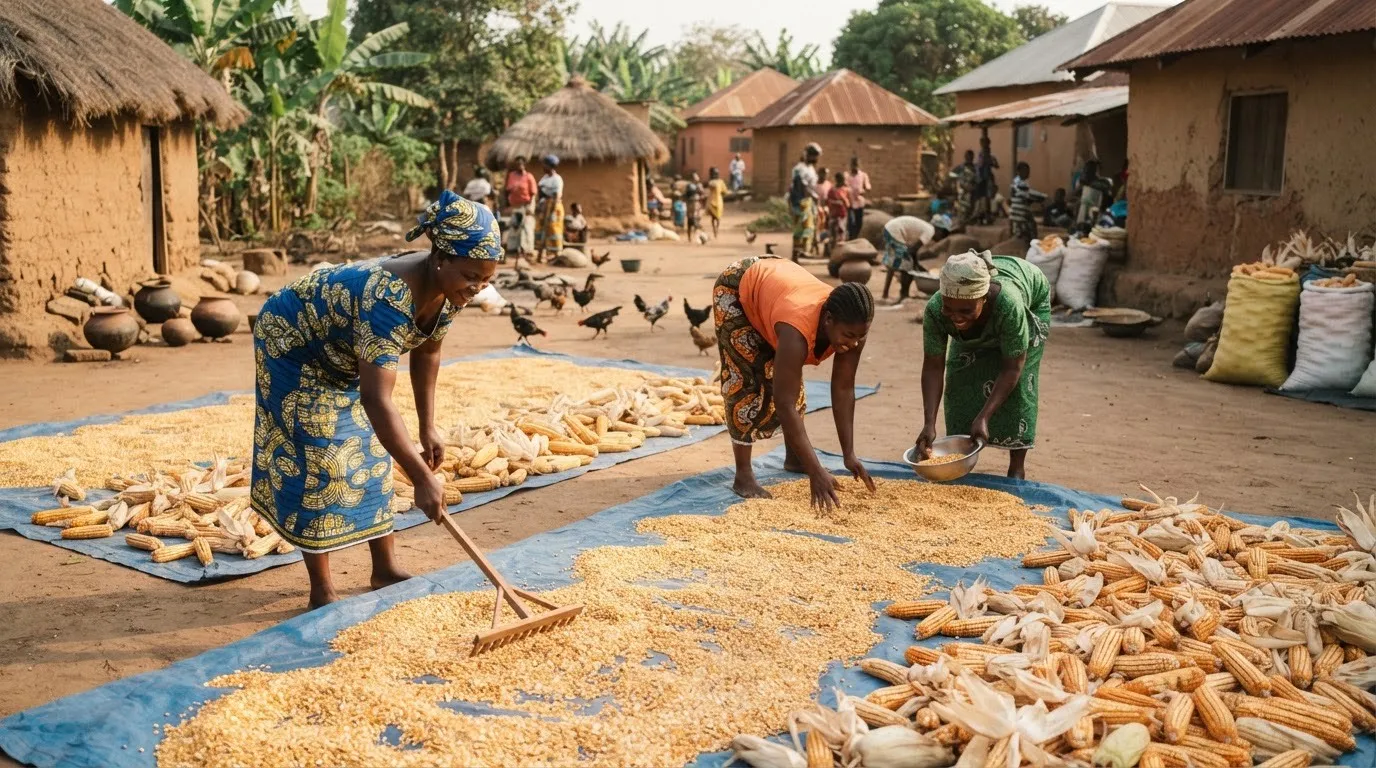
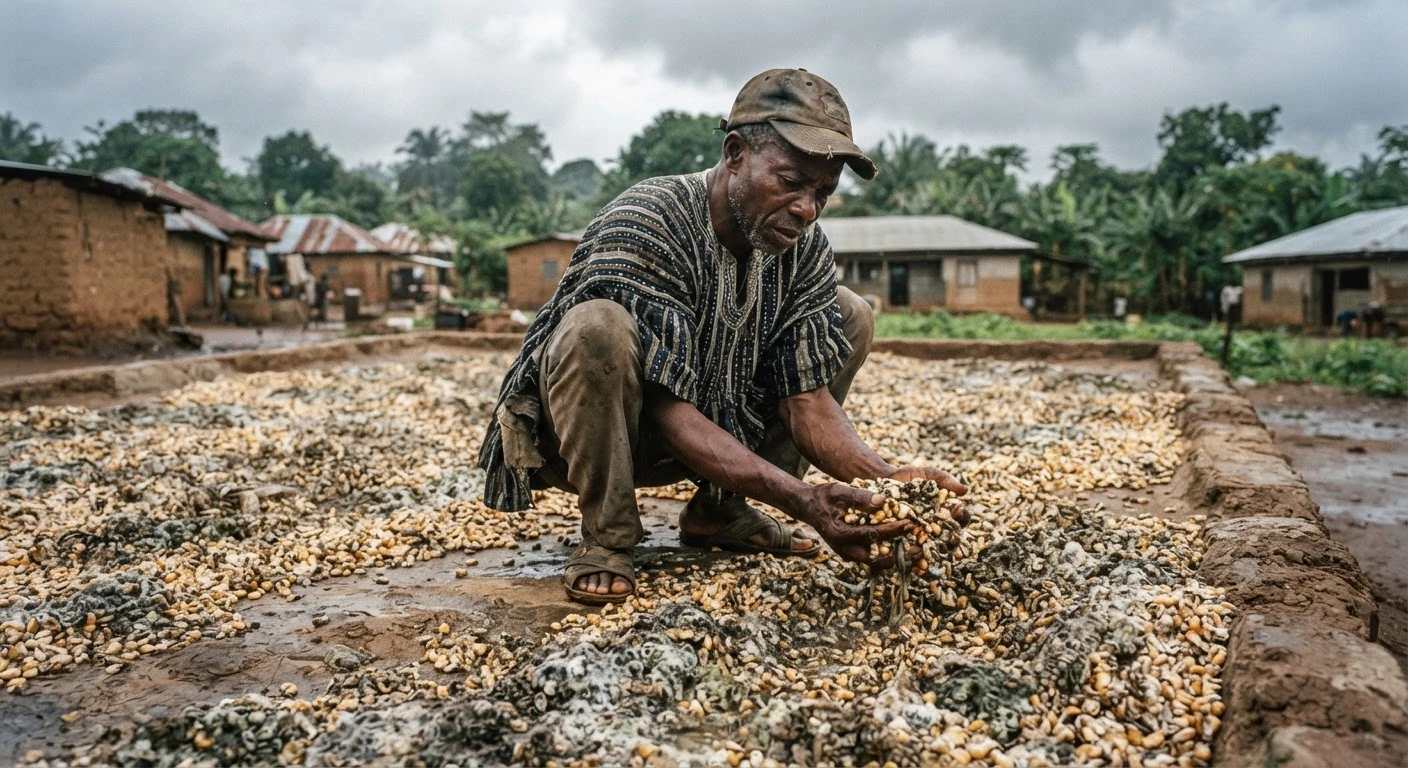
Maize drying on a floor and being shelled at a rural collection point in Ghana
The biggest single leak
About 15 percent of the crop is lost at drying, shelling and bagging, the biggest single physical leak in the chain.
Stage 3 · Post-harvest handling

About 15 percent of the crop is lost at drying, shelling and bagging, more where handling is poor. The physical root of this is timing: in the middle belt the major-season crop must be dried in a window of only about four weeks in August and September, when the weather is still wet, which is why grain moulds and picks up aflatoxin (Development Bank Ghana, 2024). The north can field-dry into November and December but then loses grain to insects instead. For a business, that lost 15 percent is the raw material of a post-harvest service: mobile shelling, drying floors and quality grading all sell into a proven, quantified loss.

Grading is the quiet key to the whole chain. Ghanaian maize can be graded to the Ghana Standards Authority standard (GSS 211:2013), from grade 1 with under 11 percent blemished grain to grade 5, but aflatoxin and heavy-metal testing is available mainly at the Standards Authority head office in Accra, which is a real bottleneck (Safo et al., 2023). A grading and testing service closer to the farm would let ordinary grain reach the buyers who pay for quality.

~15%
of the crop lost at drying, shelling and bagging
~4 weeks
the wet August to September drying window that breeds aflatoxin
Stage 4 · Storage, the leak that is not physical

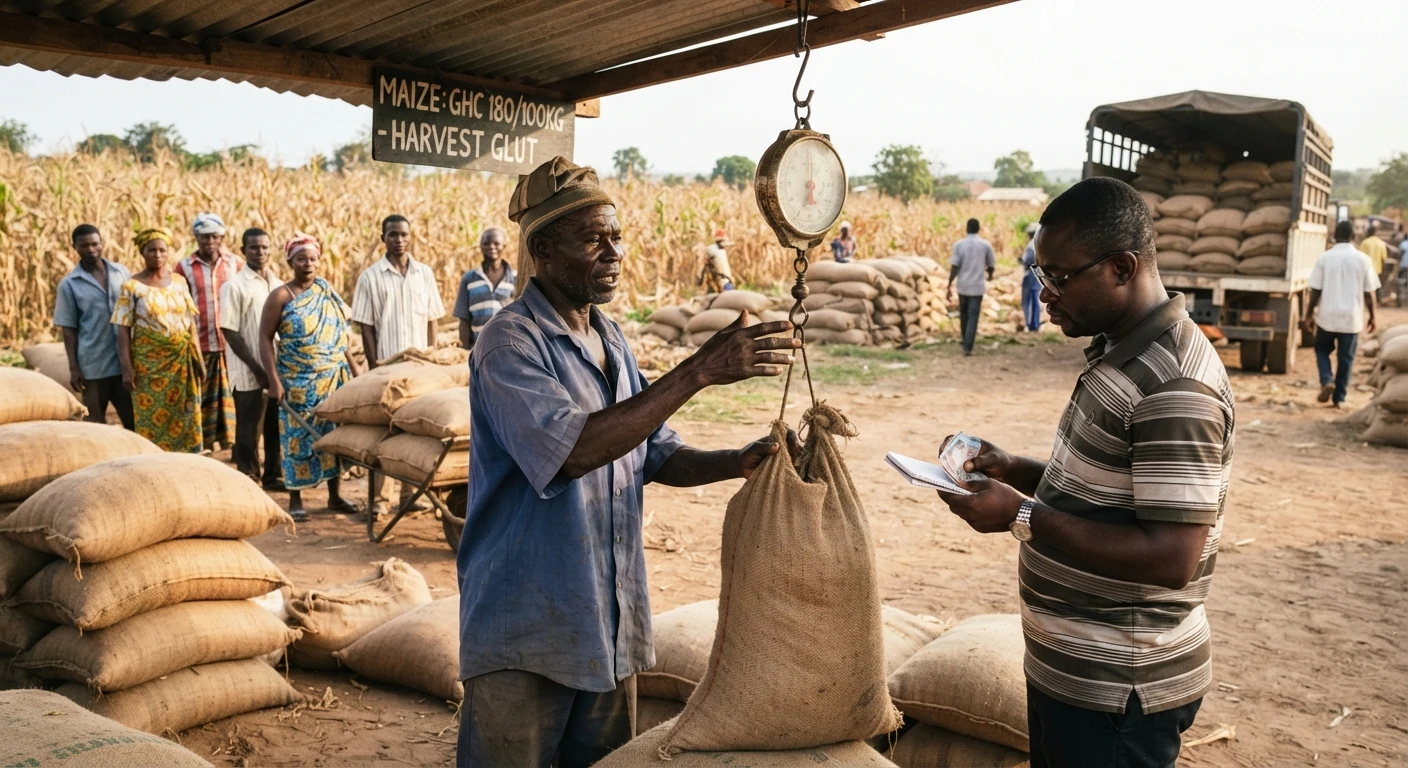
The second, larger leak is timing. Farmers who sell at harvest, when everyone sells and the price is lowest, and buy back in the lean season lose about 29 percent of their crop's value to the price swing (Ministry of Food & Agriculture and International Food Policy Research Institute, 2020). Storage fixes this, and the infrastructure is arriving: the Ghana Commodity Exchange runs up to nine certified warehouses, six of them core maize sites, the Ghana Grains Council certifies around 28 more, and a warehouse receipt against stored grain can now be used as collateral for a loan (Ghana Commodity Exchange, 2025).

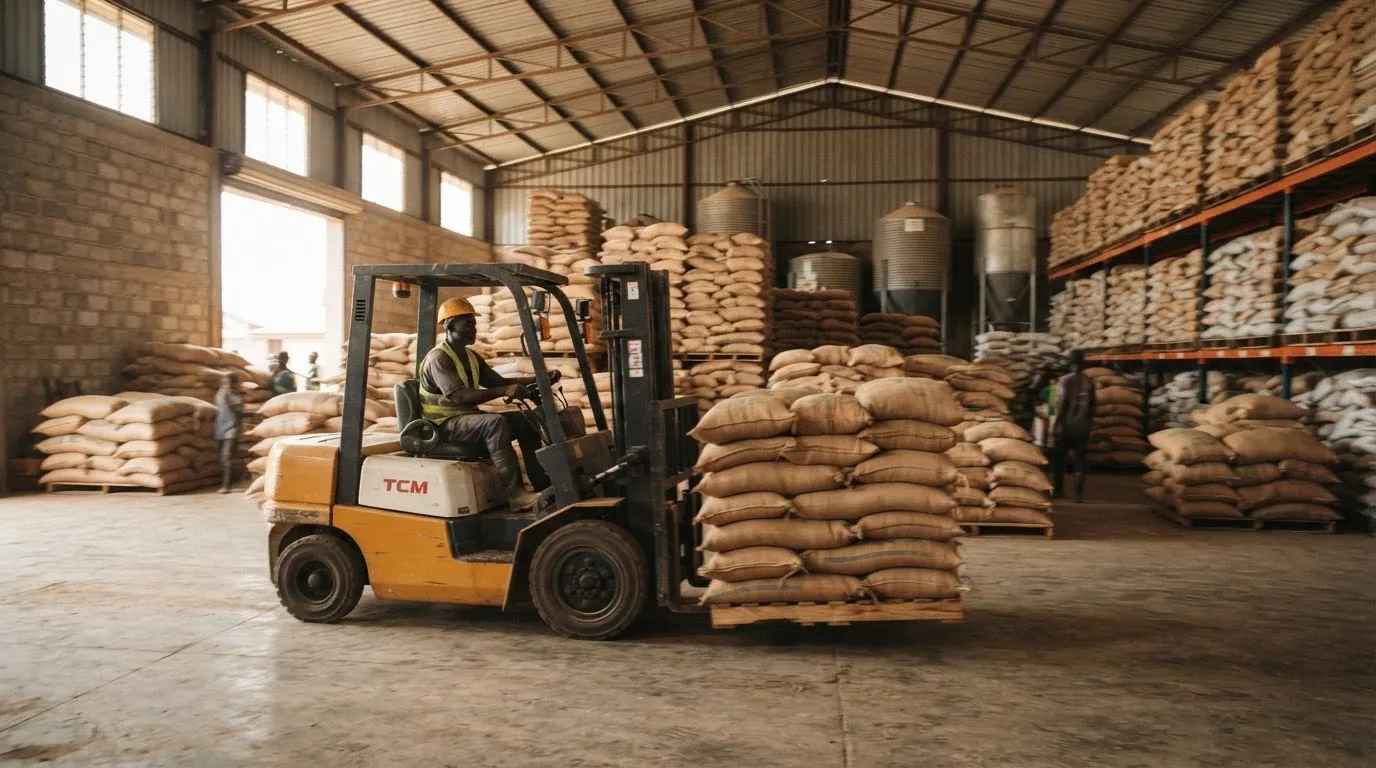
A certified warehouse with neatly stacked bags of graded maize stored for the lean season in Ghana
Store, don't dump
Store graded grain, borrow against the receipt, and sell into the lean season instead of dumping at harvest.
~29%
of value lost to the harvest-to-lean price swing
+GH¢34/bag
more earned by warehouse-receipt users in a northern study
~9 + 28
Ghana Commodity Exchange and Ghana Grains Council certified warehouses

The field evidence for this is strong. A study of 400 northern maize farmers found that those who used the warehouse-receipt system sold about 12 more bags and earned about GH¢34 more per bag than those who did not, and that access to a loan, membership of a farmer group, and having an established buyer were what drove participation (Safo et al., 2023). Yet only about a third of farmers used it, and just 2.5 percent had ever sold to a formal private buying company such as Premium Foods, which shows how thin the formal channel still is. Whoever helps a farmer hold grain, a community warehouse, a hermetic-bag supplier, or a receipt-backed lender, captures a share of that 29 percent.

🌽 Aggregation: where a newcomer can do the most 🌽

Maize bulked up at a Ghanaian aggregation hub such as Techiman where the price is set
93% moved informally
About 93 percent of Ghana's maize passes through informal women-trader networks; formalising aggregation with pre-finance and grading is the highest-impact entry point in the chain.

This is the stage that moves the most maize and, for a new business, offers the most room to make a difference. About 93 percent of Ghana's maize is bulked and moved by market queens and women-trader networks, while the state buys less than 5 percent (CUTS Ghana). These traders re-bag grain, move it from farm to city, and often pre-finance farmers. Their dominance is also the opening: a professional aggregator who offers pre-financing and a guaranteed, fair-priced offtake demonstrably lifts a smallholder's marketed volume by about 128 kg (Mzyece et al., 2023). The main assembly hub is Techiman in the middle belt, with Ejura, Wenchi, Kumasi and Tamale as feeder markets, and the wholesale price gap along the Bolgatanga to Techiman corridor is about 22 percent, which is itself a logistics-arbitrage opportunity.

The traders' grip is real and has a price attached. Their associations are estimated to hold maize prices around 31 percent above what open competition would give, and they act as a barrier to new entrants (Armah et al., 2019). The state's attempt to counter this through the buffer-stock company had an unintended effect: after it began buying, the Kumasi market became less efficient, passing price falls on to consumers quickly but price rises only slowly. The lesson for a new aggregator is that you cannot beat the market queens on price alone; you win by offering grading, credit and a link to a premium buyer that they do not.

~93%
of maize bulked and moved by market queens and women-trader networks
+128 kg
more sold per farmer with pre-financed, fair-priced aggregation

🌽 Processing, distribution and the consumer 🌽

Stage 6 · Processing, the highest margin and most under-served

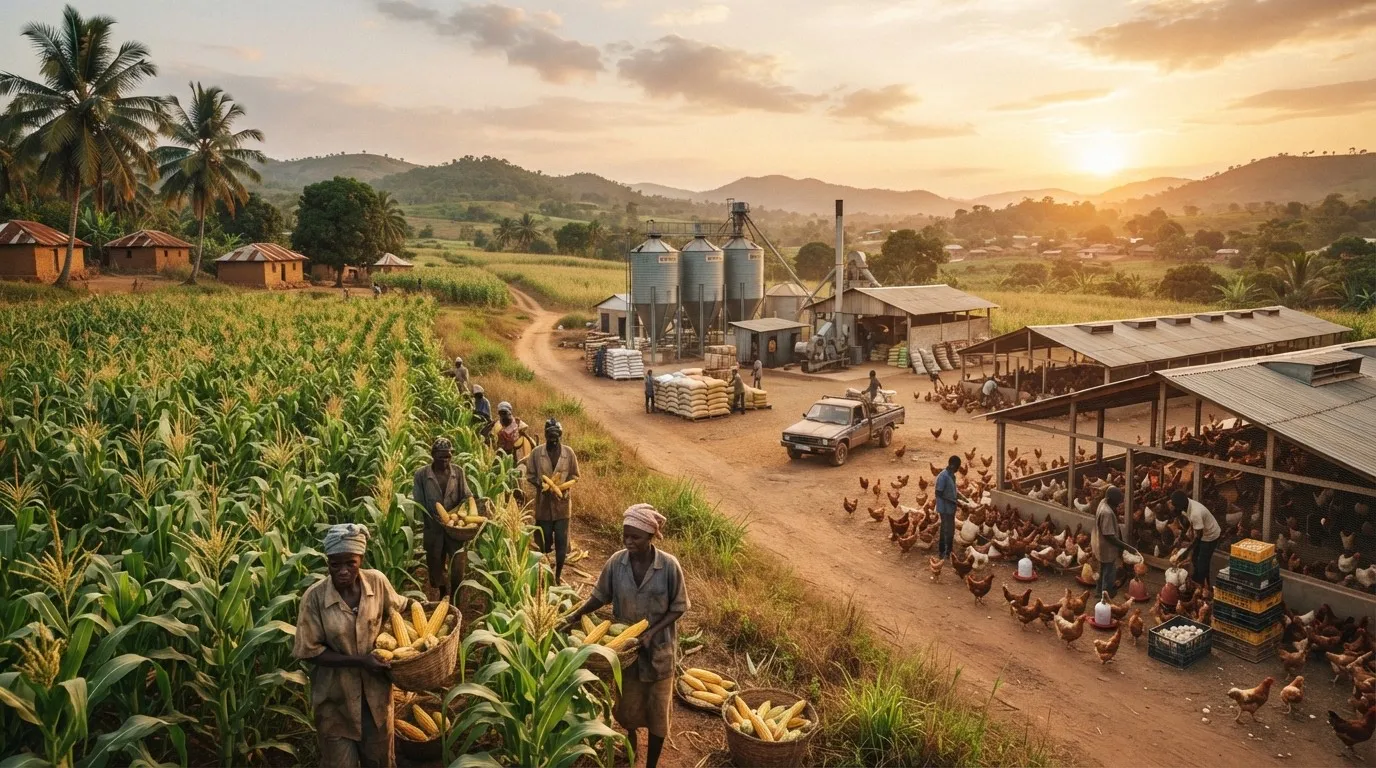
Processing is where the margins are highest and the field is thinnest. Feed milling is the fastest-growing pull, since maize is about 60 percent of a poultry ration and feed demand is rising about 10 percent a year, yet mills run at only 40 to 50 percent capacity. Food processing into flour, grits and fortified weaning food such as Tom Brown is dominated by micro-scale operators, with only a few branded players such as the reported example Believe Foods. Maize makes up about 43 percent of Ghana's grain market, so the raw material base is large (Verified Market Research, 2025). The opening is an integrated, mid-scale processor, a feed mill with a poultry offtake, or a branded fortified-food line, that turns cheap surplus grain into a higher-value product.

Stage 7 · Distribution and retail, where the spread is widening

At the end of the chain, wholesalers and retailers repackage the 100 kg and 50 kg bags into the 25 kg and smaller units households buy, and this repackaging step is where the retail margin is booked. Notably, real wholesale prices have fallen about a fifth since 2012 while real retail prices have stayed flat, so the retail markup has been widening rather than being passed to consumers (Ministry of Food & Agriculture and International Food Policy Research Institute, 2020). A business that grades, brands and packs maize into standardised retail units can capture part of that widening spread instead of leaving it to informal traders.

Stage 8 · The consumer, the demand that pulls the chain

The chain ends with three buyers: households eating about 85 percent as food, the poultry and livestock industry taking about 15 percent as feed, and industry taking a smaller share. Which of these a business chooses to serve should set every decision upstream, from the variety grown to the grade and the packaging, because the consumer is what pulls value back up the chain.

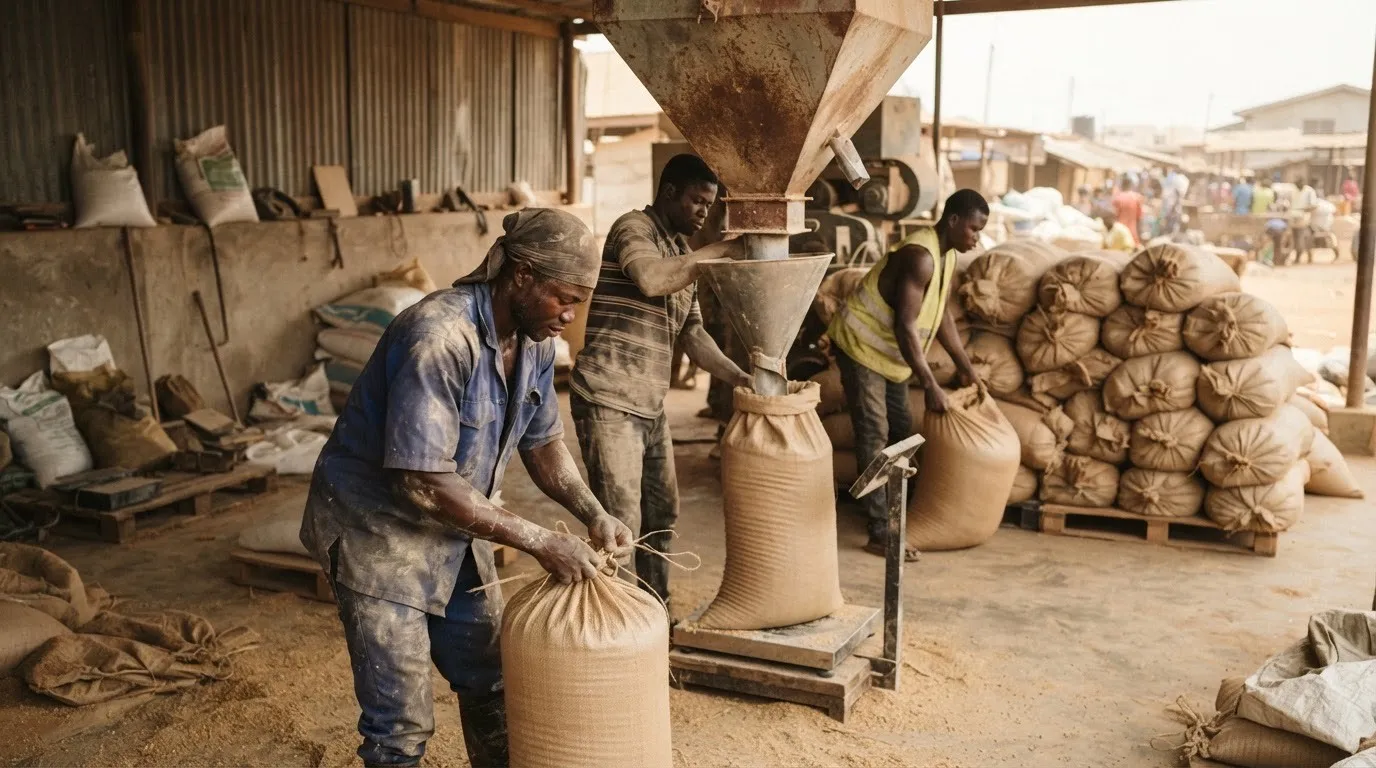
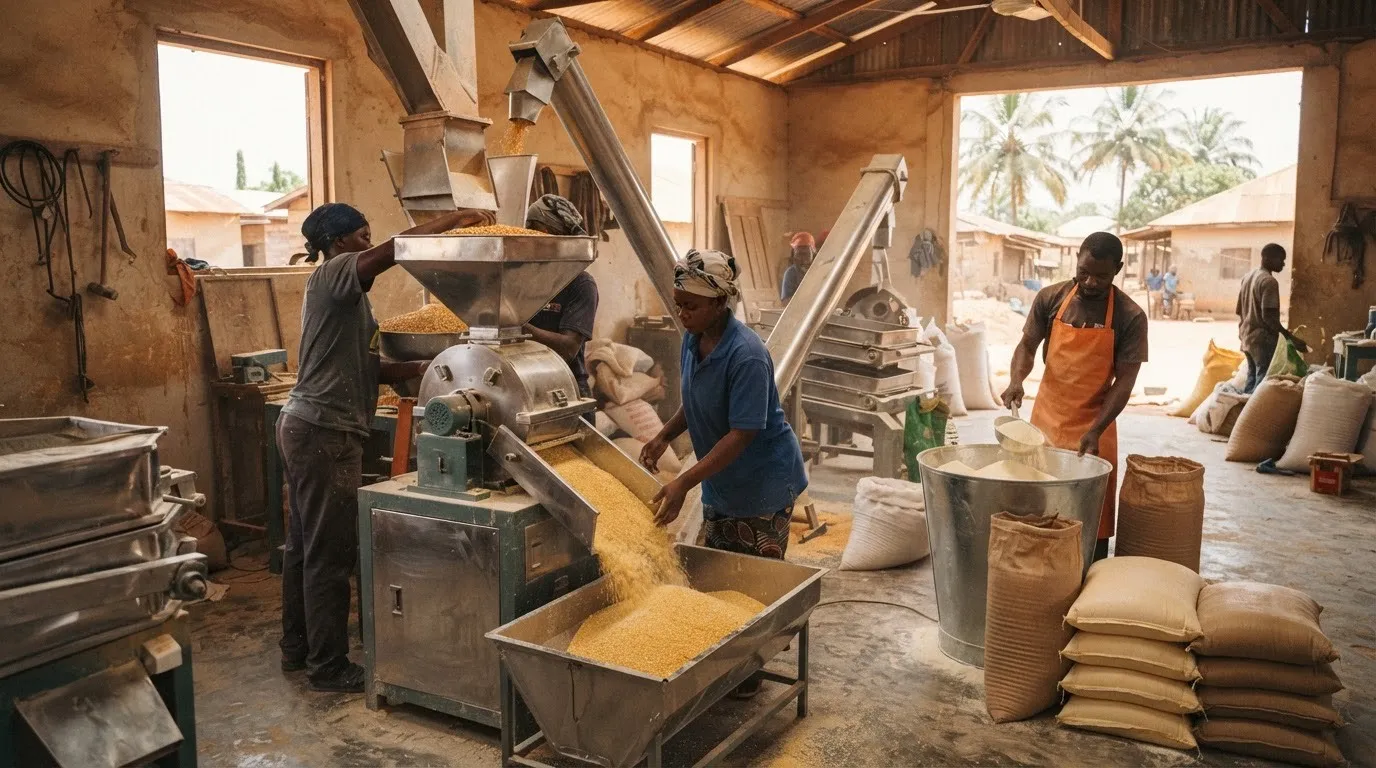
Interior of a modern maize feed mill producing poultry ration in Ghana
Highest margin
Processing is the highest-margin and most under-served stage: feed milling and fortified food turn cheap surplus grain into a higher-value product.
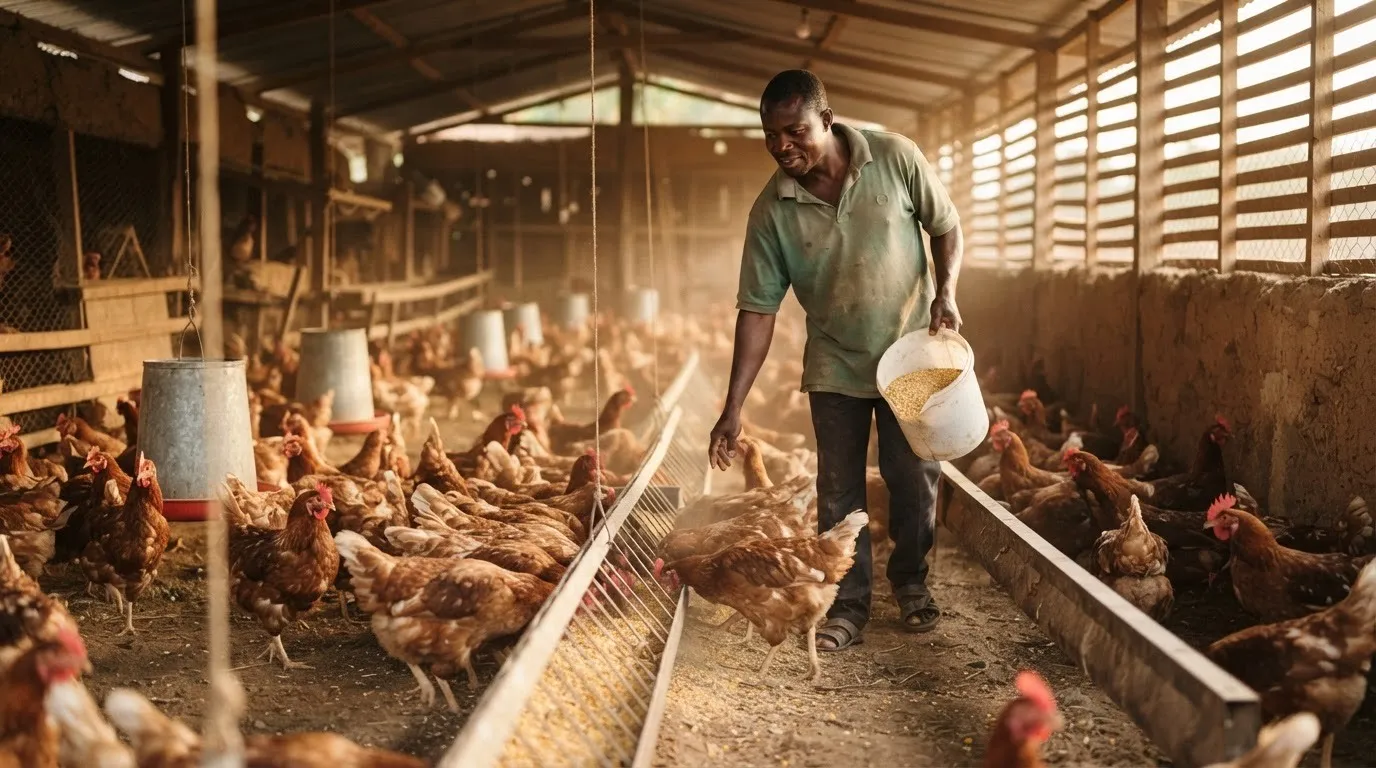
A poultry farm in Ghana where maize-based feed is the main input
Feed demand +10%/yr
Poultry is the pull: maize is about 60 percent of a ration and feed demand is rising about 10 percent a year, yet mills run at 40 to 50 percent capacity.
Branded maize flour and fortified weaning food packs on a Ghanaian shop shelf
Retail spread widening
Graded, branded 25 kg and smaller packs capture the retail margin that informal traders now book.
40 to 50%
the capacity feed mills run at, with feed demand rising about 10% a year
~43%
maize's share of Ghana's grain market, a large raw-material base

🌽 Who earns what: a bag of maize from farm to buyer 🌽

Maize being processed into flour and grits at a mid-scale Ghanaian food processor
Value builds downstream
The farmer keeps about 56 percent of the retail price; the rest is booked downstream at storage, aggregation and processing.

The exact margin at every step is not published for Ghanaian maize, and pinning it down is one of the field-research gaps for this entry. But the anchors that are known let us sketch how the value builds, and where the farmer sits in it.

~GH¢360
the farm-gate value of a 100 kg bag in early 2026
~56%
the farmer's final share of the retail price
Table 10: How the value of a 100 kg bag builds along the chain
As the bag passes throughBasis
Farm gate (early 2026)about GH¢360USDA FAS (2026), sourced
Held and sold in the lean seasonabout GH¢34 per bag moreSafo et al. (2023), sourced
Wholesale, Techiman corridorabout 22 percent above farm gateMoFA-IFPRI (2020), sourced
Retail, repacked into 25 kg unitsmarkup widening over timeMoFA-IFPRI (2020)
The farmer's final shareabout 56 percent of the retail priceMoFA-IFPRI (2020)

A full step-by-step margin decomposition is a flagged field-research gap; the figures above are the sourced anchors, not a complete accounting.

Sources: USDA FAS (2026); Safo et al. (2023); Ministry of Food and Agriculture and International Food Policy Research Institute (2020).

🌽 Where value leaks, and the opening at each point 🌽

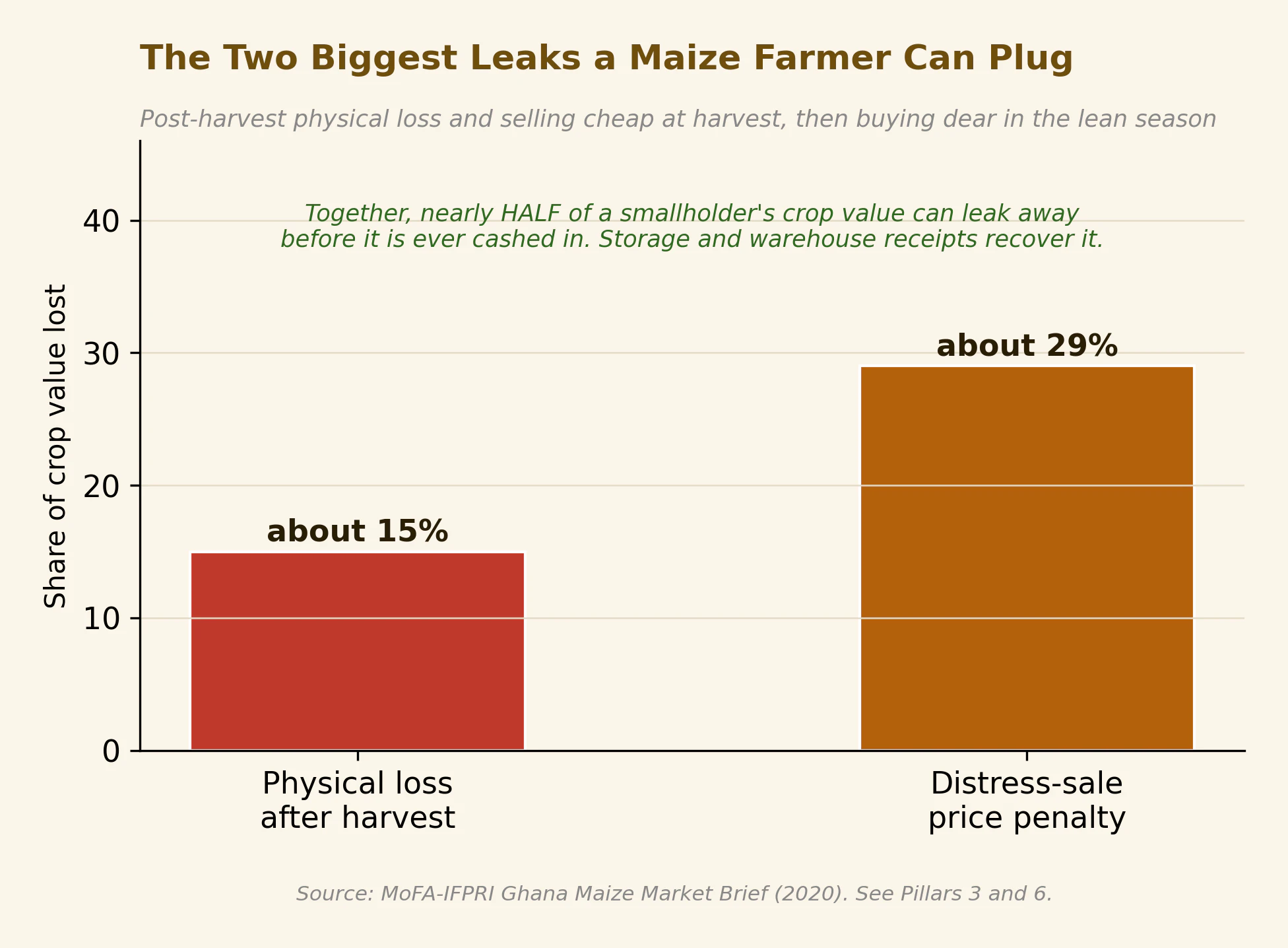
Every leak in the chain is also an opening, because the value that drains away is value a well-run business can recover. The largest drains are the roughly 15 percent physical post-harvest loss and the roughly 29 percent distress-sale penalty, both of which storage, drying and warehouse receipts turn into a service. The mid-chain margin taken by informal traders, the 22 percent corridor markup, and the under-served feed and food processing are each a place a new entrant can stand.

Where value leaks along the maize chain and the opening at each point
Figure 11 Where value leaks along the maize chain
What this shows

Read stage by stage, the chain shows where value drains away and where a business can recover it. The two largest drains, physical post-harvest loss and distress selling, sit at and just after the farm; the largest pools of recoverable value sit in storage, aggregation and processing.

Table 11: The maize value chain read as a map of openings
StageWhere value leaksThe opening
Farm and post-harvestAbout 15% physical loss plus about 29% distress-sale penaltyHermetic storage, community or certified warehouse, and receipt-backed credit recover 15 to 30% of crop value
AggregationInformal traders capture the mid-chain margin; 93% flows outside any formal systemA professional aggregator with pre-financing lifts marketed volume about 128 kg per farmer and delivers cleaner grain to mills
LogisticsAbout 22% wholesale markup along the Bolgatanga to Techiman corridorCorridor logistics and graded 25 kg branded retail packs capture the spread
Storage and financeThin certified capacity; grain sold cheap for lack of creditA certified warehouse with drying and grading, plus receipt finance to farmer groups
Processing and feedFeed demand growing 10% a year is under-served; food processing is micro-scaleAn integrated maize-to-feed mill with poultry offtake; a branded, fortified food line
RetailThe real retail markup is widening, not reaching the farmerGraded, branded, standardised retail packaging

Source: Author compilation from Ministry of Food and Agriculture and International Food Policy Research Institute (2020), CUTS Ghana, Cogent Economics and Finance (2023), USDA FAS (2026).

🌽 The three fixes that matter most 🌽

A certified warehouse with drying and grading equipment holding stored maize in Ghana
Waiting for its first movers
Warehousing, aggregation and processing are the fixes that recover the most value with the least new farming.

Three fixes matter most, and all of them sit downstream of the farm. Certified warehousing with warehouse receipts, professional aggregation with pre-financing, and integrated processing into feed and fortified food are the interventions that recover the most value with the least new farming.

The money to do this is being lined up. The Development Bank Ghana puts the five-year financing need across the rice, maize, soya and poultry chains at about US$1.04 billion, of which roughly US$354 million is still an unfilled gap, and it is itself committing around US$450 million, including US$50 million to expand the commodity exchange (Development Bank Ghana, 2024). A proposed exchange subsidiary would pre-finance certified aggregators to grade grain at the farm gate, dry it, store it and export it, which is exactly the model this pillar points to. Tellingly, the same report names private investors for rice but none for maize, which confirms that the maize value chain is still waiting for its first serious private movers.

US$1.04bn
five-year financing need across rice, maize, soya and poultry
US$354m
of it still an unfilled gap; the maize chain awaits its first private movers
Table 12: Priority interventions along the maize chain
InterventionWho leads itThe measurable win
Certified warehousing plus warehouse receipts at Techiman or EjuraAggregators, Ghana Grains Council, banksRecover 15 to 30% of crop value; unlock credit against stored grain
Professional aggregation with pre-financingAgri-SMEs and farmer groupsAbout 128 kg more sold per farmer; cleaner, graded grain reaches mills
Integrated maize-to-feed millingProcessors and investorsDisplace feed-maize imports; give farmers a steady, quality-paying offtake
Branded, fortified food processingFood SMEsCapture the retail and nutrition premium above raw grain
Drying and aflatoxin control at aggregationAggregators and service providersMeet the standards of feed mills, schools and exporters

Some scheme and finance figures are latest-available and should be verified with the operators before any decision.

Sources: Author synthesis of the value-chain evidence in this pillar; Development Bank Ghana (2024).

🌽 The Opening: the value chain as a whole 🌽
01

Stand downstream of the farm. The farmer keeps about 56 percent of value but earns least per unit of effort. The openings, and most of the 44 percent captured downstream, are in storage, aggregation and processing, not at the farm gate.

02

Own the aggregation stage. It moves about 93 percent of the crop, it is almost entirely informal, and formalising it with pre-finance and grading lifts farmer volumes by about 128 kg each and feeds clean grain to the best buyers.

03

Build the missing processing. Feed milling and fortified food are under-served and high-margin, and the 2026 grain glut makes the raw material cheap. An integrated maize-to-feed mill or a branded fortified-food line captures the value the informal chain cannot.

04

Recover the leaks. Post-harvest loss and distress selling together drain nearly half of a smallholder's crop value; storage, drying and warehouse receipts turn that leak into a business that recovers 15 to 30 percent of crop value.

🌽 The risks that sit inside the value chain 🌽

A chain dominated by informal, hard-to-displace traders

MEDIUM
What it is

The market-queen networks that move 93 percent of maize are efficient, entrenched and often pre-finance farmers, so a new formal aggregator cannot simply undercut them; it must offer something they do not, such as guaranteed grading, a premium buyer, or cheaper credit.

Evidence

About 93 percent of maize is aggregated by informal women traders; the state moves under 5 percent, and trader associations are estimated to hold prices about 31 percent above open competition (CUTS Ghana; Armah et al., 2019).

Who it hits

New aggregators and off-takers who assume farmers will switch on price alone.

How to manage it, and the opening

Compete on what the informal chain cannot offer: a guaranteed quality premium, warehouse-receipt credit, and a link to a feed mill or exporter, rather than trying to beat the market queens at their own game. The opening: an aggregator that out-services the incumbents rather than fighting them on price.

Post-harvest loss and aflatoxin at the drying window

HIGH
What it is

About 15 percent of the crop is lost at drying, shelling and bagging, and the middle belt must dry the major-season crop in a wet four-week window, which is why grain moulds and picks up aflatoxin and then fails the grade that feed mills, schools and exporters require.

Evidence

About 15 percent physical loss at post-harvest, with aflatoxin driven by the four-week August to September drying window in the middle belt (Development Bank Ghana, 2024).

Who it hits

Every farmer whose grain is discounted or rejected, and any processor or exporter relying on local grain to meet a quality standard.

How to manage it, and the opening

Build drying floors, mobile shelling and grading close to the farm, and add aflatoxin control at aggregation. The opening: a post-harvest service that sells into a proven, quantified 15 percent loss and lets ordinary grain reach the buyers who pay for quality.

Distress selling and the thin formal channel

MEDIUM-HIGH
What it is

Farmers who sell at harvest, when everyone sells and the price is lowest, and buy back in the lean season lose about 29 percent of their crop's value to the price swing, yet only about a third use warehouse receipts and just 2.5 percent have ever sold to a formal buyer.

Evidence

About 29 percent of value lost to the harvest-to-lean price swing; warehouse-receipt users sold about 12 more bags at about GH¢34 more per bag (Ministry of Food & Agriculture and International Food Policy Research Institute, 2020; Safo et al., 2023).

Who it hits

Smallholders without storage or credit, and any brand or mill needing a steady, year-round local supply.

How to manage it, and the opening

Use certified warehousing and the warehouse-receipt system to store and release grain steadily, and finance farmer groups against stored grain. The opening: a certified warehouse with drying and grading, plus receipt finance that captures a share of that 29 percent.

A warehouse of neatly stacked graded maize bags stored for the lean season in Ghana
Store, don't dump
Warehousing and receipts turn a harvest glut into a steady, financed supply.
🌽 Key takeaways 🌽
01

The farmer keeps about 56 percent of the maize retail price; about 44 percent is captured downstream, which is where most business openings sit.

02

The two biggest leaks are post-harvest loss (about 15 percent) and distress selling (about 29 percent of value); storage, drying and warehouse receipts recover both.

03

Aggregation is the highest-impact stage: about 93 percent of maize moves through informal women traders, and formalising it with pre-finance lifts farmer sales by about 128 kg each.

04

Processing, especially feed milling and fortified food, is the highest-margin and most under-served stage, and the 2026 glut makes its raw material cheap.

05

The winning strategy is to stand downstream of the farm, recover the leaks, and offer what the informal chain cannot: grading, credit and a link to the best-paying buyer.

Written for each reader

🌽 Practitioner intelligence 🌽

Hover any card to pause and lift it.

For students

The value chain is the single best map for a graduate deciding where to work or start. Do not default to farming; look at where value is captured and under-served, which is aggregation, storage and processing. You can start as an aggregation coordinator, a quality grader, a warehouse clerk, or by running a small drying or shelling service, all of which need skill more than capital. The gap to fill: the chain is informal and ungraded, so anyone who can bring quality control, record-keeping and a link to a serious buyer is valuable. The trap to avoid is entering as one more raw-grain trader competing with entrenched market queens; enter where you add something they do not.

For entrepreneurs

Choose your stage deliberately. First move: pick the stage where you can add value the informal chain cannot, most often aggregation with grading and pre-finance, or small-scale processing, and secure a buyer before you build. Secure the offtake, a feed mill, a school, an exporter, first, then organise the supply. The trap: buying and reselling raw grain on thin margins against traders who have done it for generations. The tailwind is the cheap 2026 grain and the finance rails, warehouse receipts and GIRSAL, now being built for exactly these models.

For investors

The thesis: value in Ghanaian maize is captured downstream of the farm, in stages that are informal, under-served and now backed by public finance. A business that formalises aggregation or builds missing processing capacity sits on the 44 percent the farmer does not keep. Diligence asks: a defensible position, grading, credit or offtake the informal chain lacks, warehouse and processing capacity, and a signed offtake. The risk: displacing entrenched traders is hard, so back models that partner with or out-service them rather than assume they vanish.

For ecosystem actors

The highest-return lever is formalising and de-risking the midstream. Fund certified warehousing, warehouse-receipt finance and grading infrastructure at the main hubs, and support aggregator-processor linkages. The measurable outcome is a rising share of maize passing through graded, receipted, formal channels, and feed mills sourcing more clean local grain. The failure to avoid is building warehouses without the finance and grading that make farmers actually use them, leaving the informal chain untouched.
Download full PDF
UpcomingThis document isn't available yet.