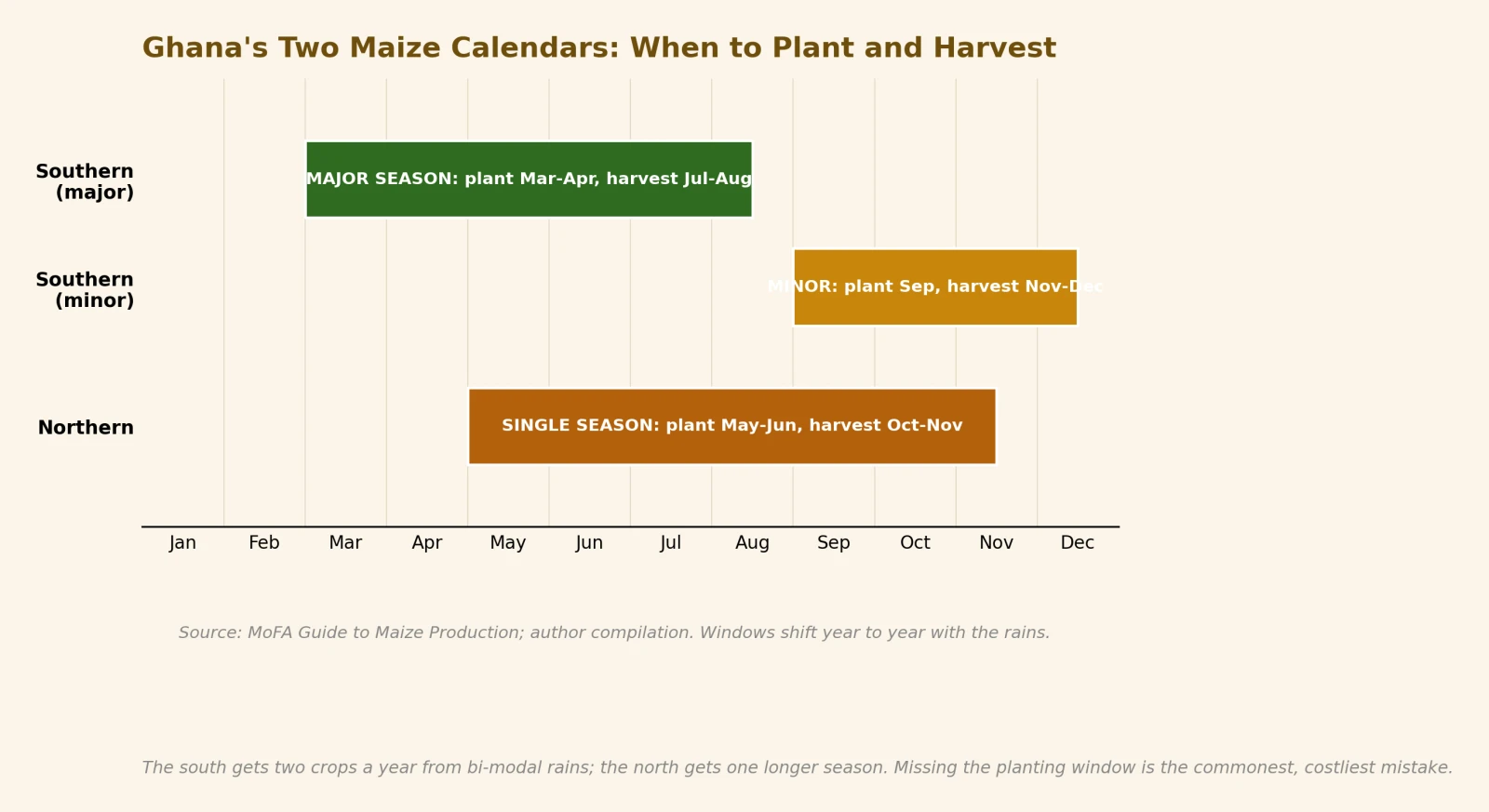
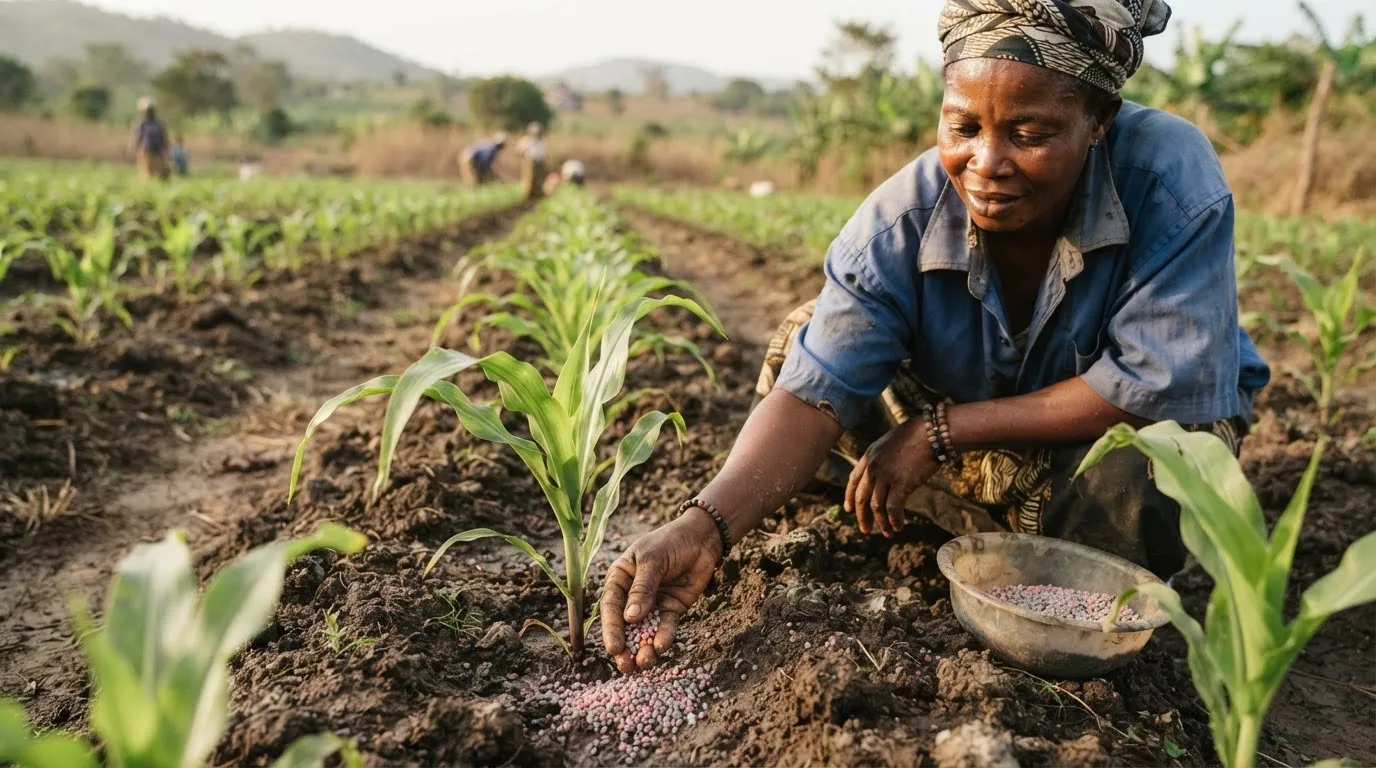
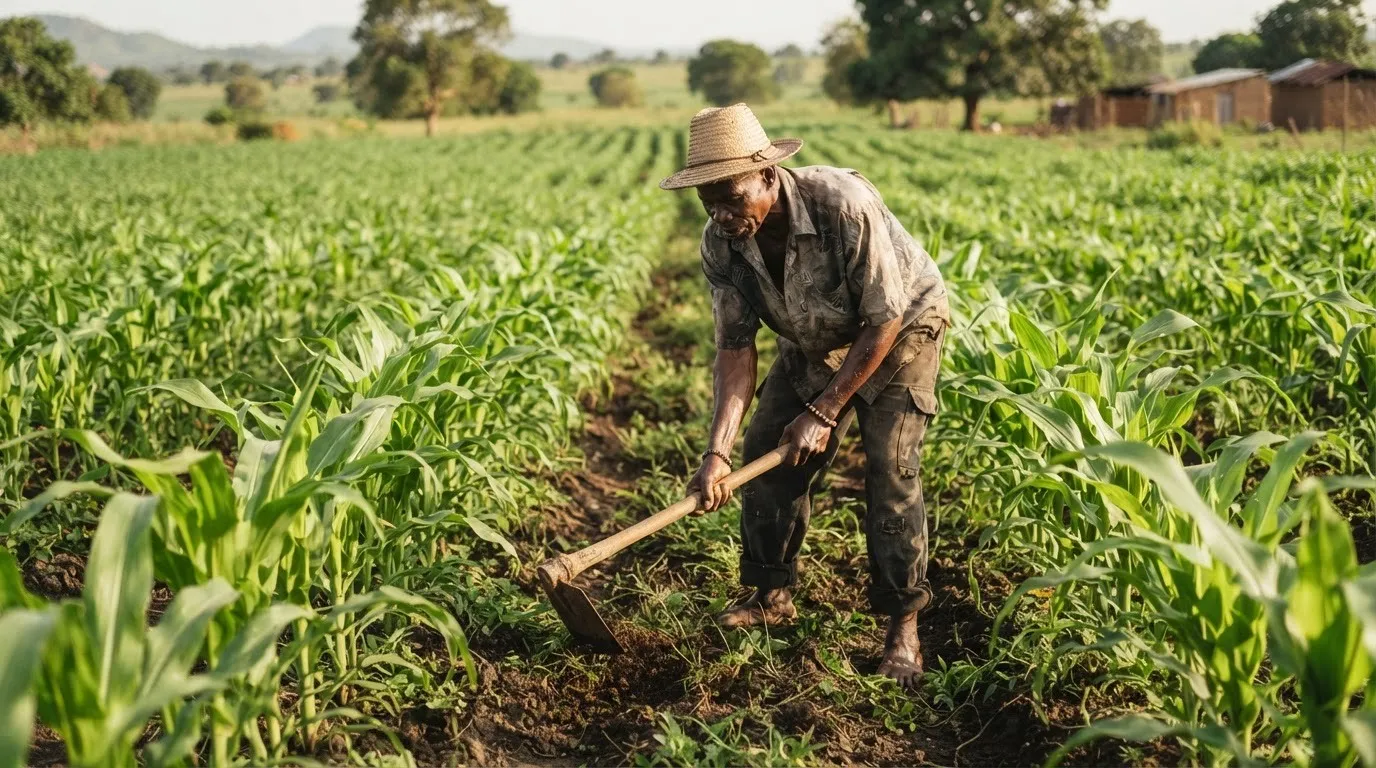
The planting regime is where a graduate with agronomy knowledge is most useful, because timing is a skill most farmers lack. You can earn as a field officer who tells a group of farmers exactly when to plant, top-dress and weed, or by running a small mechanisation service; a sprayer or sheller needs far less capital than a tractor. The gap to fill: extension officers are too few to reach most farmers, so timely, practical advice is scarce. Being the person who delivers it, by phone, WhatsApp group or in person, is a real job. The downside to avoid is giving generic advice; it must be tied to this season's rains and this farmer's field.
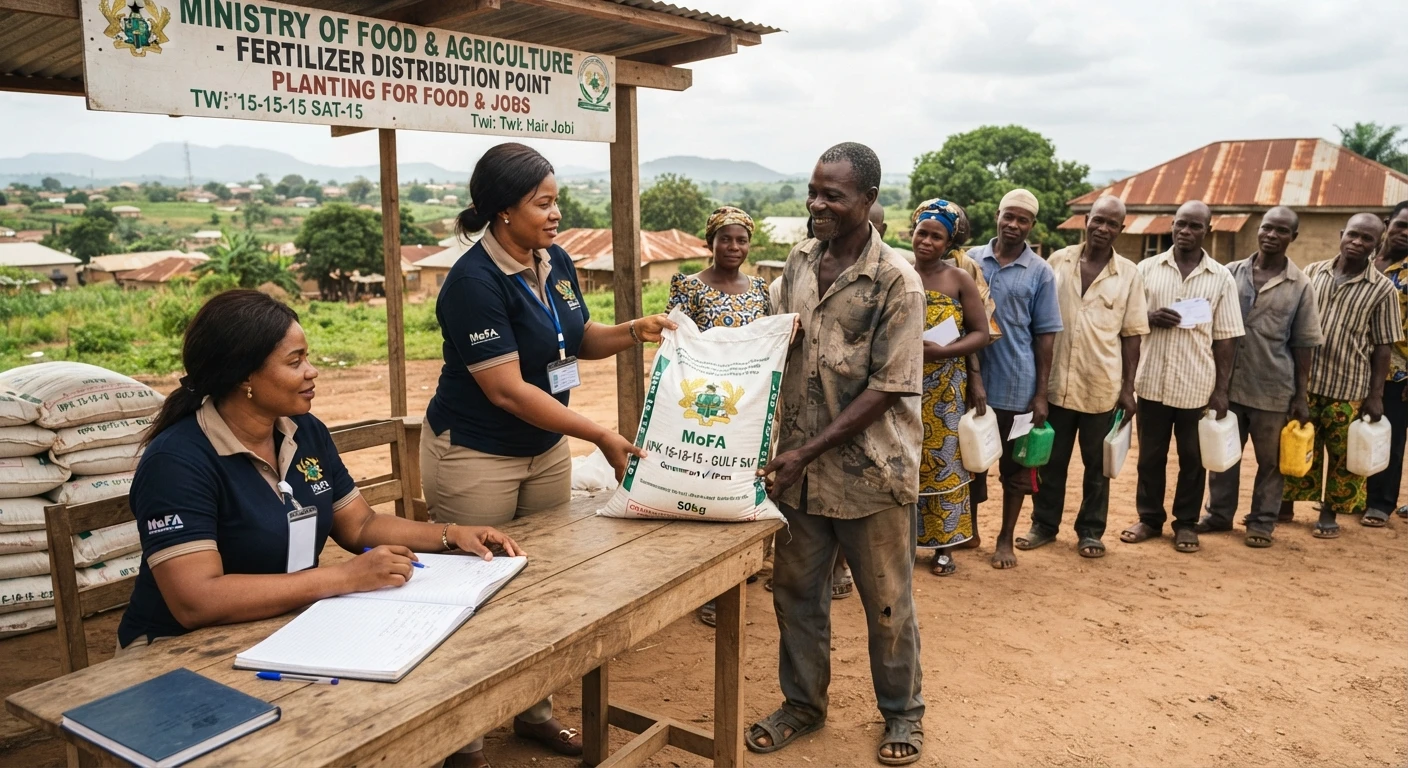
First move: own one operation and sell it. A sheller, a knapsack or motorised sprayer, or a two-wheel tractor serves a whole community and pays back fast because labour is the farmer's biggest cost. Secure the machine and a cluster of farmers, then add services. The trap: buying a big tractor on credit before you have enough customers to keep it working; start with the smallest machine that sells. The incentive to use is the free-fertiliser season, which frees up farmer cash to pay for your service.
The thesis: mechanisation and timely-input services are under-supplied and directly lift yields, so they scale with the yield gap. Diligence asks: machine utilisation rates, the size and loyalty of the farmer base, and whether the model bundles advice, which is stickier, or just hires out iron, which is a commodity. The risk: policy dependence and weather, so favour models that earn across both seasons and both zones rather than betting on one harvest.
The highest-return lever is timeliness at scale: fund mechanisation hire and last-mile extension so more farmers plant and feed on time. The measurable outcome is average yield rising toward 4 tonnes a hectare and the share of farmers planting within the recommended window going up. The failure to avoid is handing out free fertiliser without the advice and machinery to use it well, which spends public money without closing the yield gap.
The planting regime is where a graduate with agronomy knowledge is most useful, because timing is a skill most farmers lack. You can earn as a field officer who tells a group of farmers exactly when to plant, top-dress and weed, or by running a small mechanisation service; a sprayer or sheller needs far less capital than a tractor. The gap to fill: extension officers are too few to reach most farmers, so timely, practical advice is scarce. Being the person who delivers it, by phone, WhatsApp group or in person, is a real job. The downside to avoid is giving generic advice; it must be tied to this season's rains and this farmer's field.
First move: own one operation and sell it. A sheller, a knapsack or motorised sprayer, or a two-wheel tractor serves a whole community and pays back fast because labour is the farmer's biggest cost. Secure the machine and a cluster of farmers, then add services. The trap: buying a big tractor on credit before you have enough customers to keep it working; start with the smallest machine that sells. The incentive to use is the free-fertiliser season, which frees up farmer cash to pay for your service.
The thesis: mechanisation and timely-input services are under-supplied and directly lift yields, so they scale with the yield gap. Diligence asks: machine utilisation rates, the size and loyalty of the farmer base, and whether the model bundles advice, which is stickier, or just hires out iron, which is a commodity. The risk: policy dependence and weather, so favour models that earn across both seasons and both zones rather than betting on one harvest.
The highest-return lever is timeliness at scale: fund mechanisation hire and last-mile extension so more farmers plant and feed on time. The measurable outcome is average yield rising toward 4 tonnes a hectare and the share of farmers planting within the recommended window going up. The failure to avoid is handing out free fertiliser without the advice and machinery to use it well, which spends public money without closing the yield gap.