Ghana Agribusiness PlaybookMaize
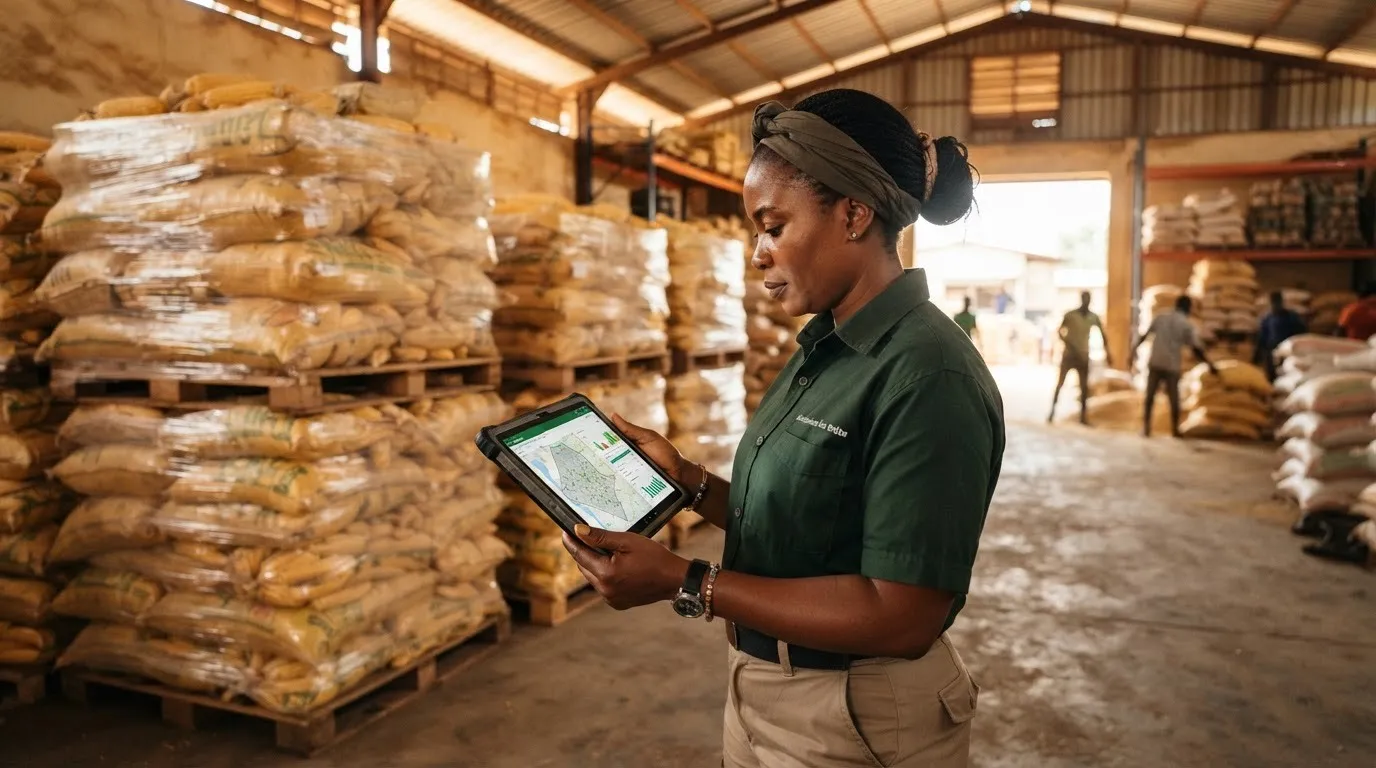
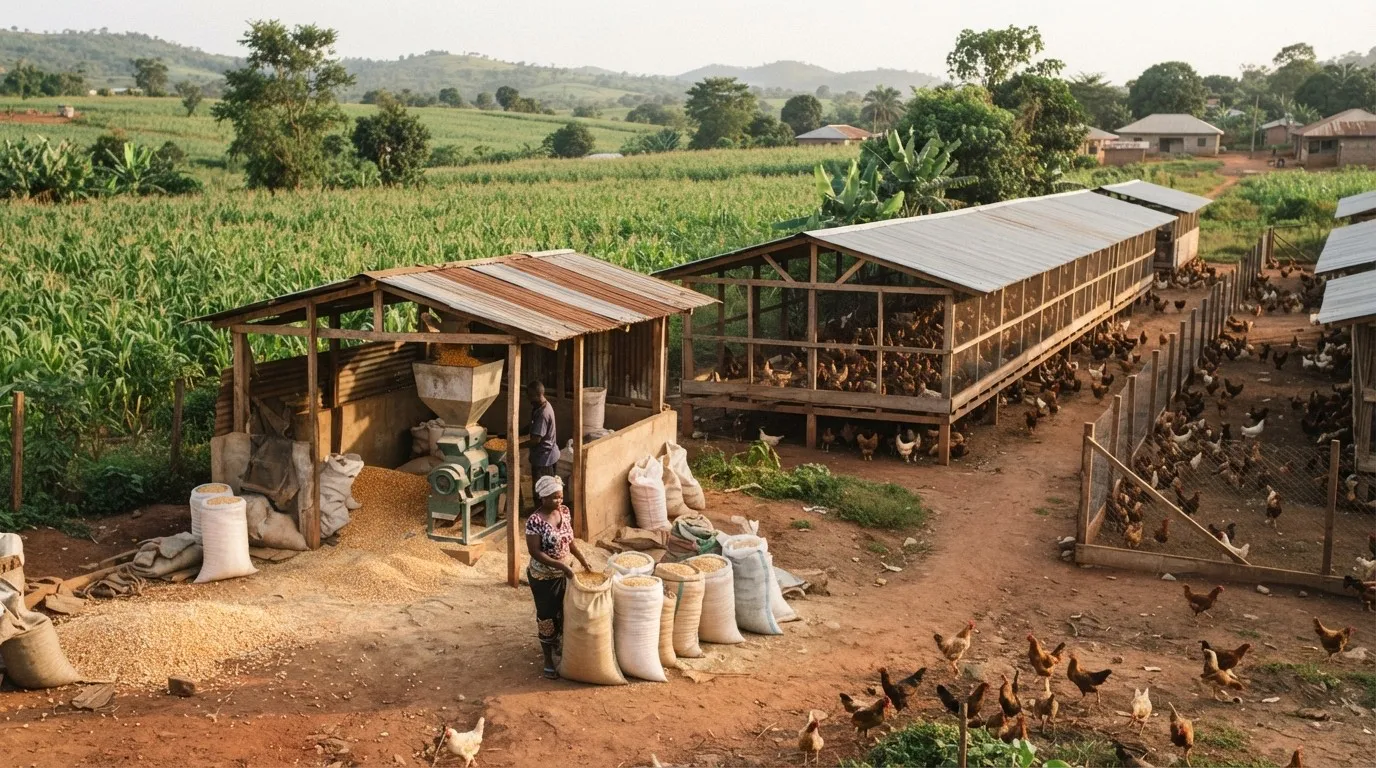
An agribusiness operator reviewing a maize aggregation and storage plan
Maize · Series intelligence

Strategic Outlook

How to venture in: the frameworks, the checklist and the mistakes to avoid.
Strategic Outlook & Executive Advisory · Pillar 08

The seven pillars mapped the crop. This closing pillar steps back and reads the whole environment a maize venture operates in, using four standard tools, a PESTLE scan of the wider forces, Porter's five forces, a strengths and threats reading, and a stakeholder map, and then turns them into plain advice: a checklist for venturing in, and the mistakes that most often sink a maize business. These are judgements, grounded in the evidence of the earlier pillars but sharpened into opinion.

A wide aerial view of Ghana maize fields at golden hour stretching toward a feed mill and town
The moment is good
The opening is downstream: Cheap 2026 grain, a falling import bill, strong finance and policy backing all point to the same opening: build downstream.
4 tools
PESTLE, five forces, SWOT and a stakeholder map, on one page
5 steps
the venture checklist before you commit money
5 mistakes
that most often kill a maize venture, the reverse of the checklist

🌽 The wider forces: a PESTLE scan 🌽

The instinct is to start a maize business with a field or a machine. The wiser first move is to scan the wider forces around maize, because they decide whether the venture has a tailwind or a headwind before a single cedi is spent. A PESTLE scan reads the political, economic, social, technological, legal and environmental forces around Ghanaian maize, and on balance they favour a builder who can store, grade and finance, with the economic price risk and the environmental climate risk the ones to plan against.

Table 15: PESTLE: the wider forces acting on maize
ForceWhat it means for a maize business
PoliticalA strong government push behind maize, the Feed Ghana Programme, free fertiliser, the buffer-stock company and the AgriConnect Compact, but policy swings often and is not always funded, and the export ban is a lever that can trap or release the market
EconomicThe 2026 glut crashed the price by about half, which hurts growers but hands processors and storers cheap raw material; the cedi is steadier at about GH¢11.2 to the dollar, the maize import bill is falling, and food inflation has eased
SocialMaize is about a quarter of the calories Ghanaians eat, so its price is politically sensitive; the chain is smallholder-dominated and women market queens control the trade; biofortified maize carries a nutrition angle for schools and health buyers
TechnologicalThe yield gap is largely a technology-adoption gap; improved hybrids, Aflasafe, hermetic bags, warehouse e-receipts and mobile market information are the tools that close it, and each is a business in its own right
LegalGrain is graded to the Ghana Standards Authority standard, aflatoxin limits and the warehouse-receipt law shape trade, seed must be certified, the grain export ban is in force, and maize as a crop carries no tax holiday
EnvironmentalOver 80 percent of maize is rain-fed, so drought and erratic rain are the master risk; heat and humidity worsen aflatoxin; and climate change is projected to cut yields further over the coming decades

Sources: Synthesis of Pillars 1 to 7; Feed Ghana Programme (2025); GIRSAL (2026); Bank of Ghana (2026).

🌽 The competitive structure: Porter's five forces 🌽

Where PESTLE reads the weather, Porter's five forces reads the board a business actually plays on: who it competes with, who can enter, who supplies it, who buys from it, and what can be substituted for its product. In Ghanaian maize the pressure is harshest in the crowded raw-grain trade and softest in storage, milling and processing.

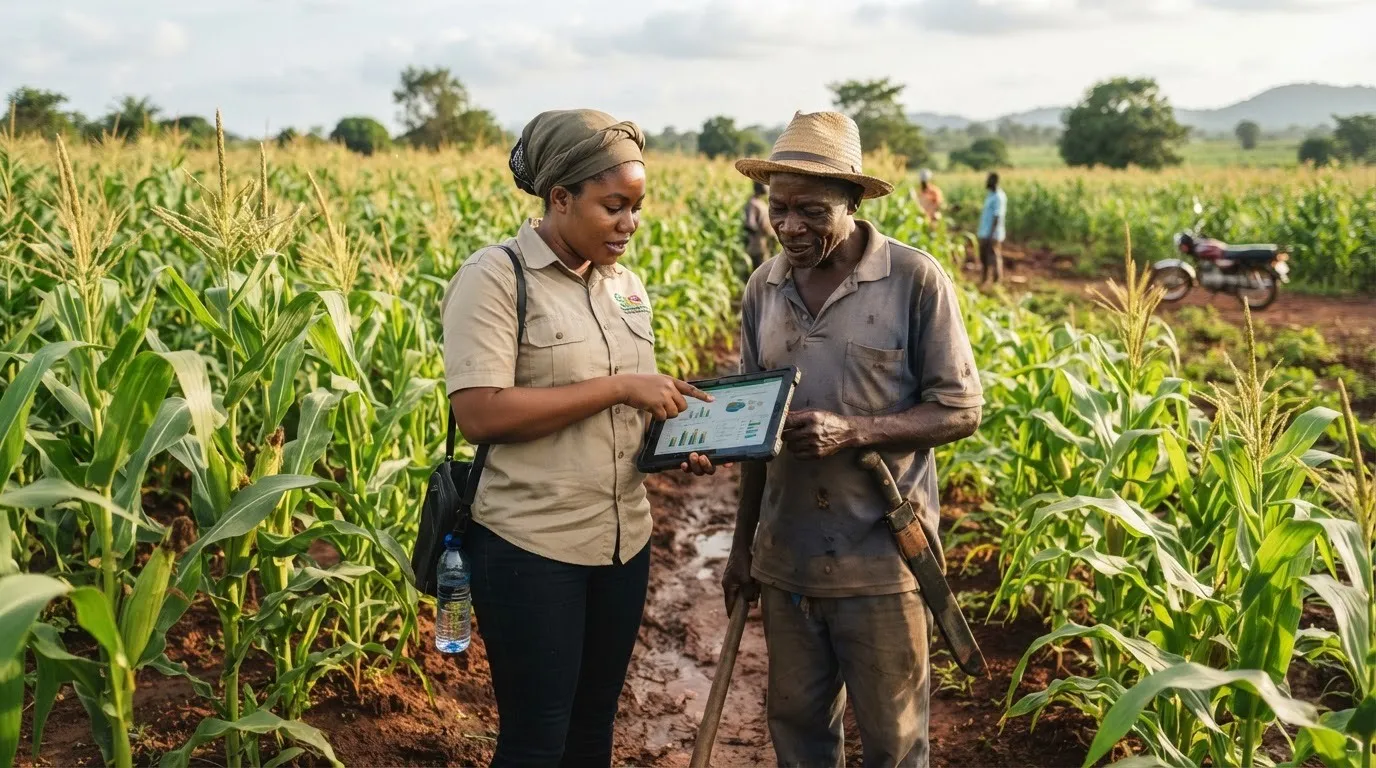
A Ghanaian entrepreneur reviewing a maize business plan and market charts
Think like a strategist
Run a PESTLE and a five-forces scan on a real maize business, and you become the analyst that ventures and lenders need.
Table 16: Porter's five forces on a Ghanaian maize business
ForcePressureWhy
Supplier power (seed, fertiliser, farmers)Low to mediumMany scattered smallholders and free fertiliser weaken supplier power, but certified seed and clean yellow feed maize are genuinely scarce.
Buyer power (feed mills, processors, traders)Medium to highFeed mills and market queens are few and set the terms, though the sheer number of farmers dilutes it; buyers who want quality will pay for it.
Threat of new entrantsMediumGrain trading is easy to enter, but storage, milling and processing need capital and skills, which protects those stages from a flood of newcomers.
Threat of substitutesMediumFeed can shift to soya, wheat bran or cassava, and food staples compete with rice and cassava, which caps how high the maize price can go.
Competitive rivalryHigh in trading, low in processingThe raw-grain trade is crowded and informal; feed milling and value-added processing are under-served and far less contested.

The structure is harshest in the crowded raw-grain trade and softest in storage, milling and processing, which is exactly where a business should enter.

Source: Synthesis of Pillars 1 to 7.

🌽 Strengths, weaknesses, opportunities and threats 🌽

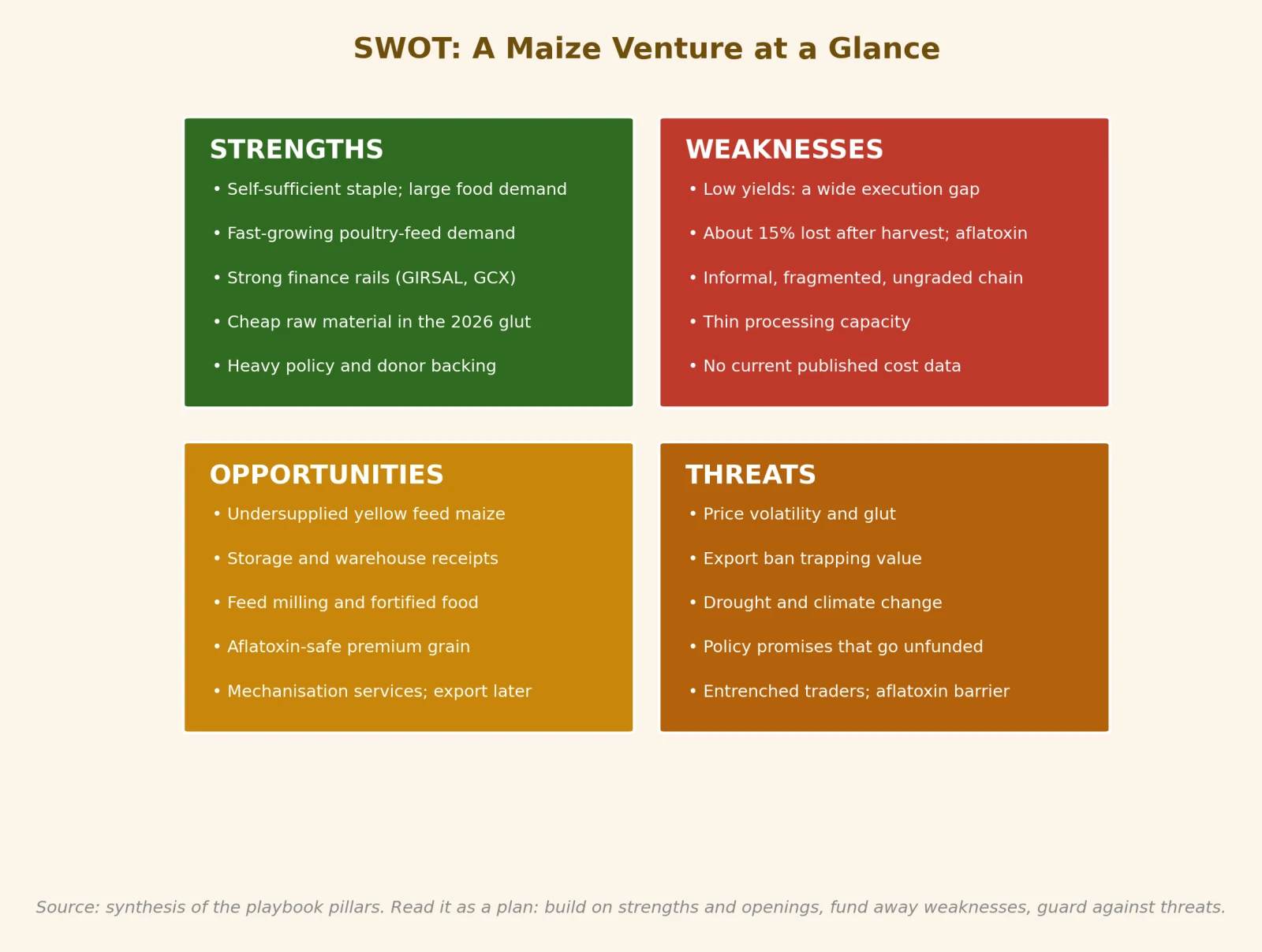
A strengths, weaknesses, opportunities and threats scan puts the whole crop on one page. It is worth reading not as a list but as a single judgement: the strengths and openings are real, and the weaknesses and threats are mostly manageable with storage, grading and finance.

Ghana maize: strengths, weaknesses, opportunities and threats
Figure 12 A maize venture at a glance: strengths, weaknesses, opportunities and threats
What this shows

Read it as a plan: build on the strengths and opportunities while funding away the weaknesses and guarding against the threats. The strengths and openings are real; the weaknesses and threats are mostly manageable with storage, grading and finance.

A clean maize warehouse with graded, bagged grain in hermetic storage and a manager checking moisture
Manageable with finance
The weaknesses and threats are mostly manageable with storage, grading and finance; build on the strengths and openings.

🌽 Who holds the cards: the stakeholder map 🌽

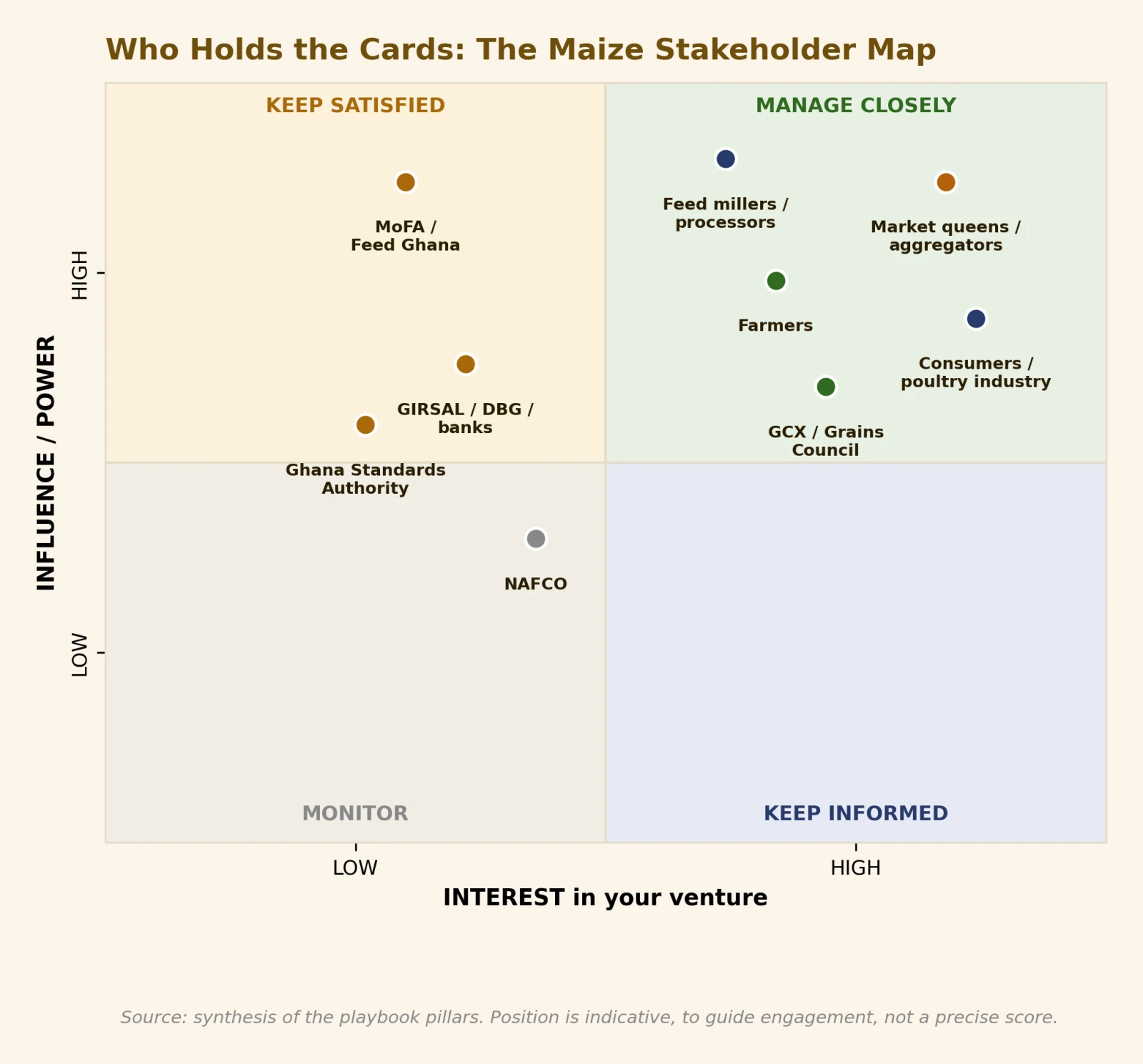
A maize venture does not operate alone. The grid and table below set out the main players, how much influence each has, how interested each is in your venture, and how to engage them. The rule of thumb: manage closely the players with both high influence and high interest, and do not waste effort on those with neither.

The maize stakeholder power and interest grid
Figure 13 The maize stakeholder power and interest grid
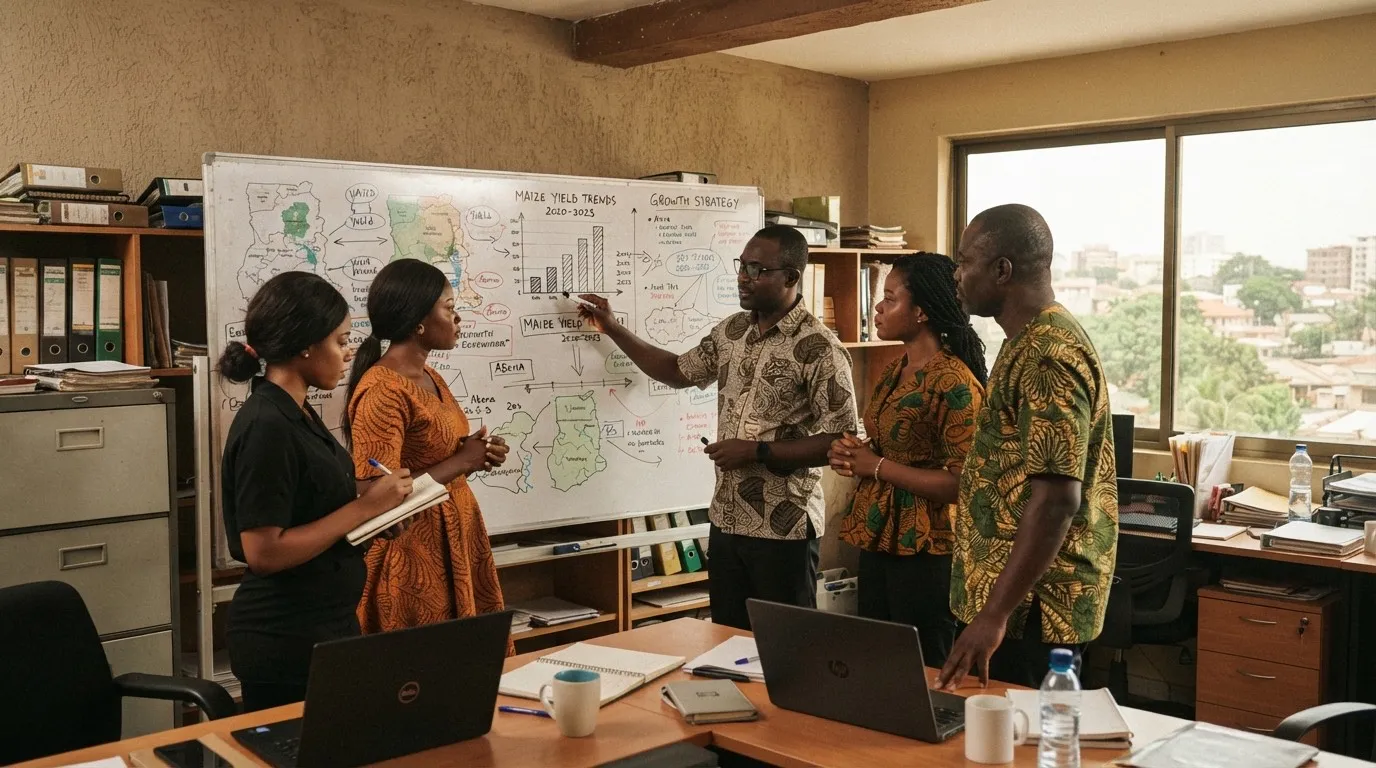
A boardroom advisory meeting of Ghanaian maize business people discussing strategy
Manage the relationships
The actors who decide success are the feed mills, market queens, farmers and finance houses; manage those relationships closely.
What this shows

Feed millers, market queens, farmers and the finance houses sit in the manage-closely and keep-satisfied zones; these are the relationships that decide whether a venture works. The buffer-stock company and the standards authority matter but are lower-intensity.

Table 17: The main players, their interest, their influence, and how to engage them
StakeholderRole and interestInfluenceHow to engage them
Smallholder farmersGrow the grain; want a fair price and reliable inputsHigh: the supply baseOutgrower contracts, pre-finance and bundled inputs
Market queens and aggregatorsMove about 93 percent of the maize; want their marginHigh: control the tradePartner with or out-service them; do not fight on price
Feed millers and processorsBuy for quality; want a steady, clean supplyHigh: the best-paying buyerSupply graded, dry, aflatoxin-safe grain on contract
MoFA and Feed GhanaSet policy, inputs and extensionHigh: sets the rulesAlign with the programmes; use the subsidies and service centres
Ghana Standards AuthorityGrades and tests the grainMedium: quality gatekeeperGet grain certified; press for testing closer to the farm
GGC, GCX and partner banksWarehousing, receipts and financeMedium to high: the finance railUse for storage and receipt-backed working capital
GIRSAL and DBGGuarantees and value-chain financeHigh: the capitalStructure bankable deals and use the loan guarantees
NAFCO (buffer stock)Buys at the floor priceMedium: funding is patchyTreat as a fallback offtaker, not a base case
Consumers and poultry industryFinal demandHigh: pulls the whole chainServe the segment that pays best and build to its grade

Source: Synthesis of Pillars 1 to 7.

Executive advisory: how to venture into maize
🌽 The venture checklist: five steps before you commit 🌽
01

Secure the buyer first. Get a confirmed buyer or offtake, in writing, before you build or plant. Most maize ventures fail because they reverse this order.

02

Validate the numbers. Pin down field prices, yields and costs for your own district and season before you rely on any figure or size an investment.

03

Line up a finance rail. Secure access to at least one, a GIRSAL-backed loan or warehouse-receipt credit, before you scale.

04

Control quality. Plan to control moisture and aflatoxin, so your grain meets the feed mills, schools and exporters who pay best.

05

Underwrite the downside. Build a model that stays profitable at a glut price with no government support; anything from policy is then a bonus, not the reason it works.

Buyer first
prove the offtake in writing before you build the volume or buy the assets
Downstream
the farmer keeps about 56 percent of the value but earns least; the money is in storage, milling and processing

🌽 Five mistakes that kill maize ventures 🌽

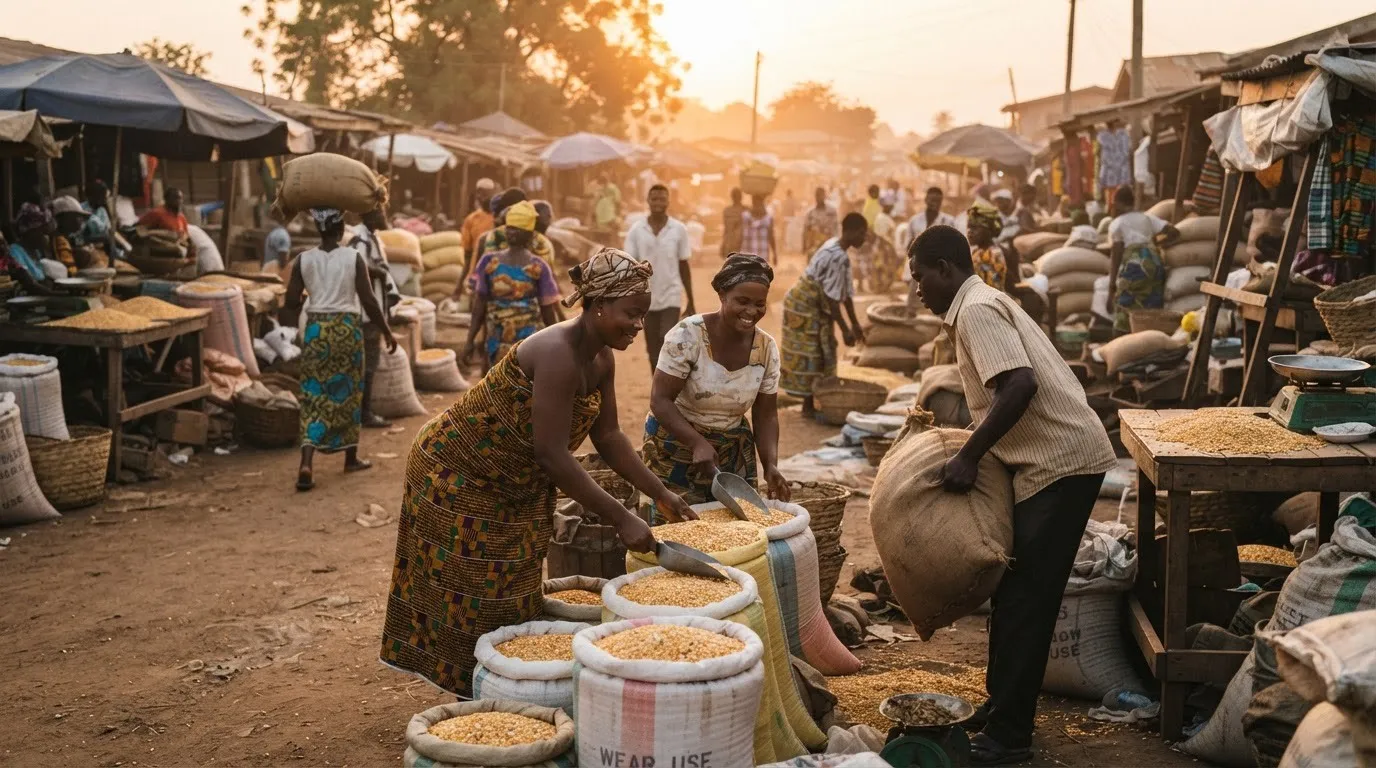
Bagged graded maize at a Ghanaian market with a market queen and a trader weighing grain
Own quality, own the buyer
Wherever you enter, guarantee dry, graded, aflatoxin-safe grain, because that is the one thing the whole chain is short of.

Mistake 1

KILLS VENTURES

Building a feed mill or factory ahead of a secured grain supply, the mistake that has idled plant after plant in Ghana.

Mistake 2

KILLS VENTURES

Entering as one more raw-grain trader, and then competing on price with market queens who have done it for generations.

Mistake 3

KILLS VENTURES

Sizing an investment on a price-spike year instead of validated field prices and yields.

Mistake 4

KILLS VENTURES

Selling grain without controlling moisture and aflatoxin, so it fails exactly the buyers, feed mills, schools and exporters, who pay the most.

Mistake 5

KILLS VENTURES

Betting on export before the ban lifts and the domestic base and grain quality are proven.

🌽 Where to start, by how much capital you have 🌽

The last judgement is the most practical: where to enter depends on the capital you have. There is a defensible door at every level, from an asset-light service to an integrated maize-to-feed mill, and the deepest returns sit at the top, but so does the risk.

A Ghanaian poultry feed mill filling bags of yellow maize feed with an operator at the line
Anchor on feed maize
Ghana grows mostly white food maize, but poultry needs yellow feed maize; supply it clean and graded and you have a paying, repeat buyer.
Table 18: Where to start in maize, by how much capital you have
Capital levelHow to enterConcrete examples
Low (a student or first-timer)Sell a service or coordinate; do not buy assetsScouting and timed-spray service; aflatoxin testing; aggregation coordination; digital market information; reselling hermetic bags; farm advisory
MediumOwn one asset or add value at small scaleAgro-dealership; a sheller, sprayer or two-wheel tractor for hire; professional aggregation with pre-finance; a small drying and storage point; cottage fortified food such as Tom Brown or grits
HighBuild the missing midstream and downstreamAn integrated maize-to-feed mill; mid-scale flour or grits processing; a certified warehouse with receipt finance; a commercial farm at scale with a secured offtake

Source: Author synthesis. Capital bands are indicative and should be sized against validated local costs.

🌽 The Opening: acting on the strategy 🌽
01

Start where you can add what the informal chain cannot: grading, credit, a link to a premium buyer, or a service farmers cannot do themselves.

02

Sequence the venture: prove the offtake first, then build the volume, then buy the assets. Most failures reverse this order.

03

Pick your stakeholders deliberately: manage the feed mills, aggregators and finance houses closely, and use the government programmes to lower cost, not to carry the business.

04

Get ahead of quality: the ventures that win are the ones that can guarantee dry, graded, aflatoxin-safe grain, because that is the one thing the whole chain is short of.

🌽 Key takeaways 🌽
01

The outside forces (PESTLE) favour a builder: cheap grain, strong finance and policy backing, against price, policy-delivery and climate risk.

02

The competitive forces (Porter) are harshest in raw-grain trading and softest in storage, milling and processing, which is where to enter.

03

The SWOT says the same thing: real strengths and openings, with weaknesses and threats that storage, grading and finance can manage.

04

Manage the high-power, high-interest players closely: feed mills, market queens, farmers and the finance houses.

05

Enter downstream, anchor on the yellow feed-maize gap, underwrite the downside, use the finance rails, and validate every number in the field before committing money.

Written for each reader

🌽 Practitioner intelligence 🌽

Hover any card to pause and lift it.

For students

This section is your decision toolkit. Before you commit to any maize venture, run it through these four questions: which outside force could sink it (PESTLE), how crowded is the stage you are entering (Porter), what is your honest strength and weakness (SWOT), and who do you need on side (the stakeholder map). The gap to fill: most first-time entrants skip this and jump at the most visible option, usually trading raw grain, which is the most crowded and least profitable stage. The downside to avoid is analysis for its own sake; use these tools to choose one stage and one buyer, then go and validate it in the field.

For entrepreneurs

Use the entry-by-capital table as your starting map. Match the venture to what you can actually fund, begin at the smallest viable asset, and secure the buyer before the building. The trap: over-reaching, building a mill or factory before the grain supply and the offtake are locked, which is the single commonest way maize ventures fail. The incentive to use is the cheap 2026 grain and the finance rails, which let a disciplined operator start small and scale on proof.

For investors

The strategic read is that risk-adjusted value sits downstream and midstream, protected by capital and skill barriers, and supported by public finance. Diligence asks: does the venture sit in a defensible stage, is the offtake real, does the model survive a glut price with no subsidy, and is the team able to guarantee grain quality. The risk: policy, price and delivery, so stress-test against all three before backing it.

For ecosystem actors

The highest-return lever is helping serious entrants act on good strategy rather than jump at the obvious. Support incubation and bankable-plan preparation so that capital flows to the defensible stages, not to another raw-grain trader or an unfed factory. The measurable outcome is more ventures entering storage, aggregation and processing with secured offtakes. The failure to avoid is funding ideas built on government promises rather than on real buyers and secured offtakes.

Download full PDF
UpcomingThis document isn't available yet.