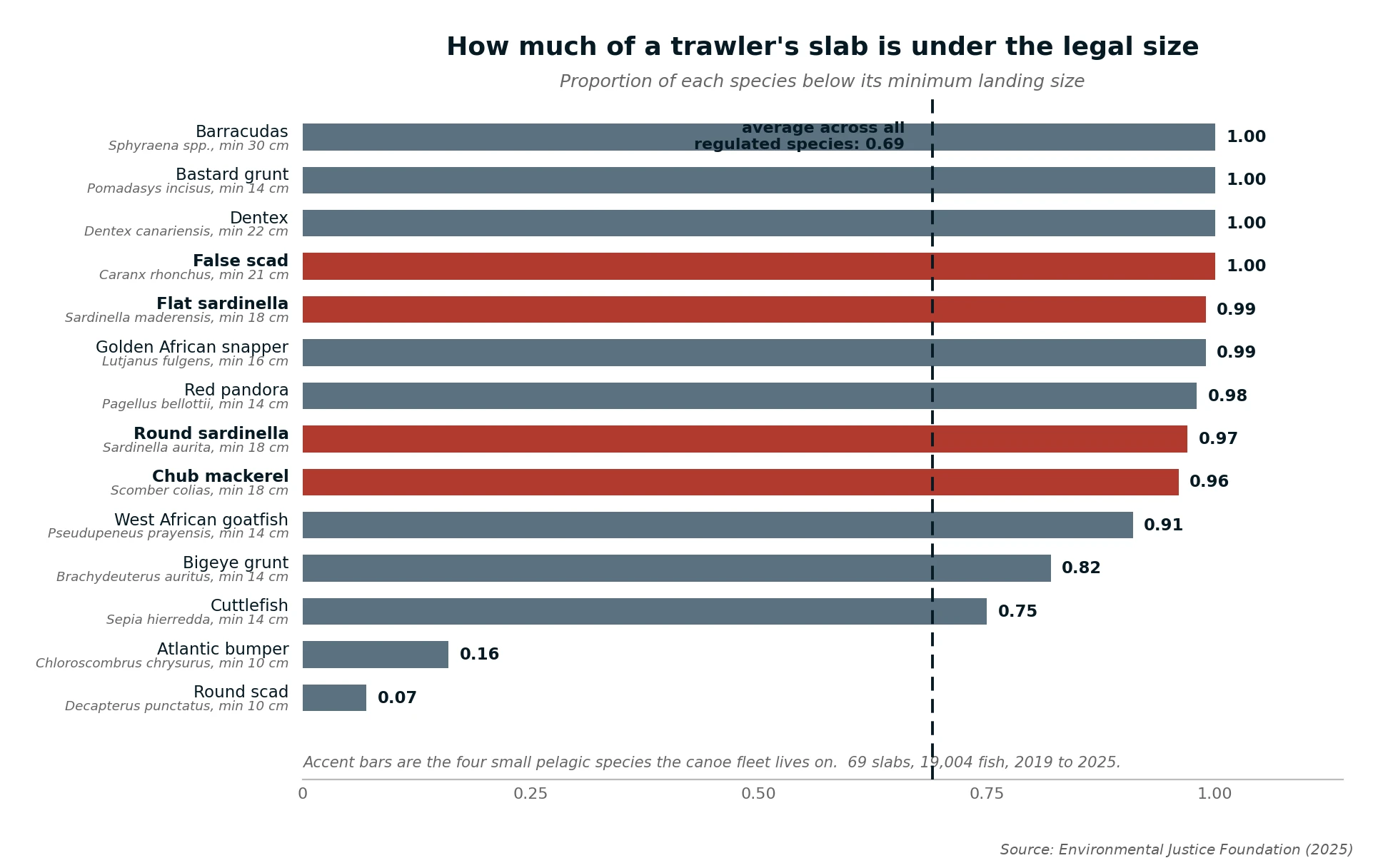
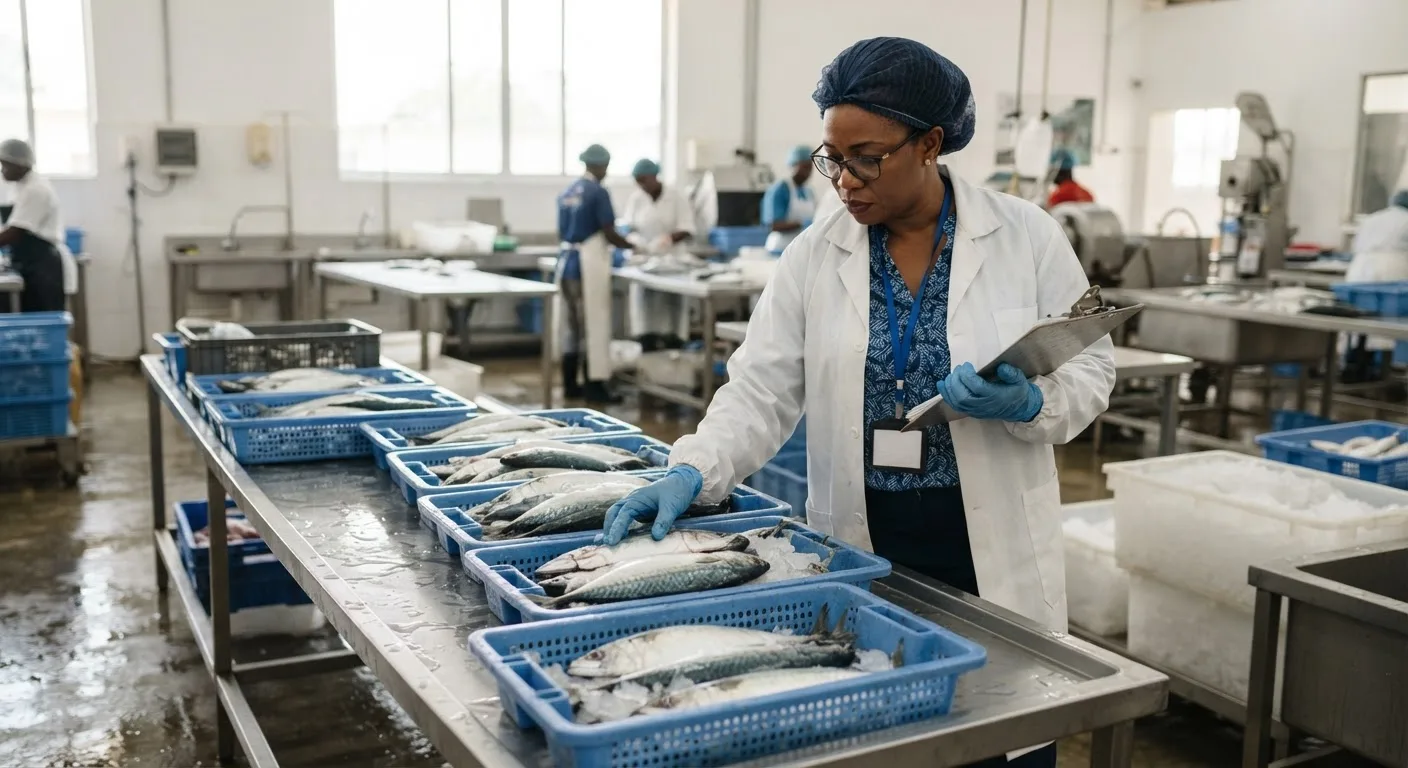
Enter through compliance: learn to measure fish. A season at one landing site with a measuring board and species guide, recording species, length and buyer per consignment, gives you a document few traders can produce: proof a batch was legal. Skip trading frozen slabs; that trade is documented undersized and no paperwork separates clean from the rest. You leave with a verification skill, the processors who need it, and a service sellable before you own stock.
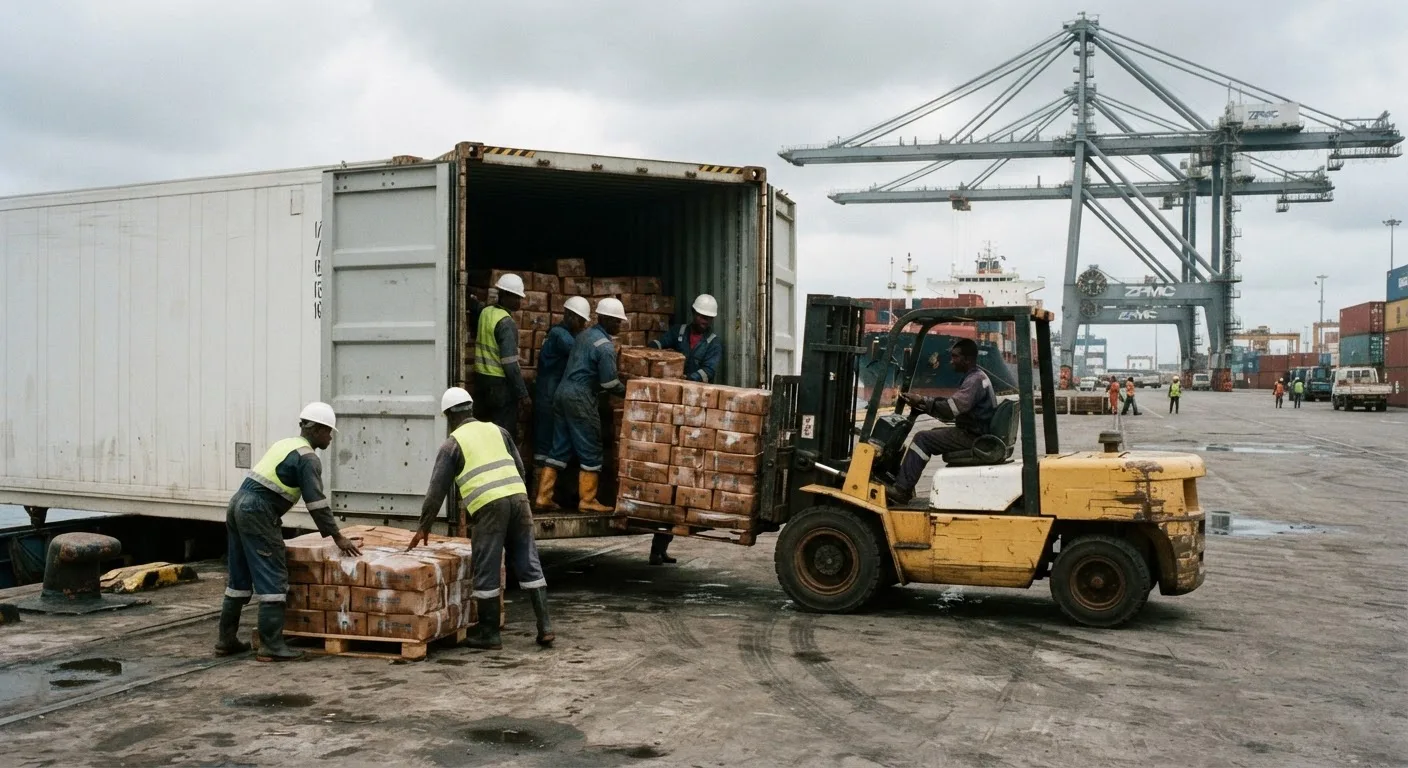
Secure a documented supply route before buying a box. Pick two or three landing sites, agree with named canoe owners or a trawl agent what you accept on size and records, and pay a small premium from the first consignment so the habit forms early. Ask the Ghana Standards Authority that week what export approvals your product class needs, since Food and Drugs Authority approval is necessary for Europe, not sufficient. The trap is the cheap consignment: van slab fish is Ghana's lowest landed cost, and it makes a customer, certifier or bank walk away, because it cannot be proved clean afterwards.
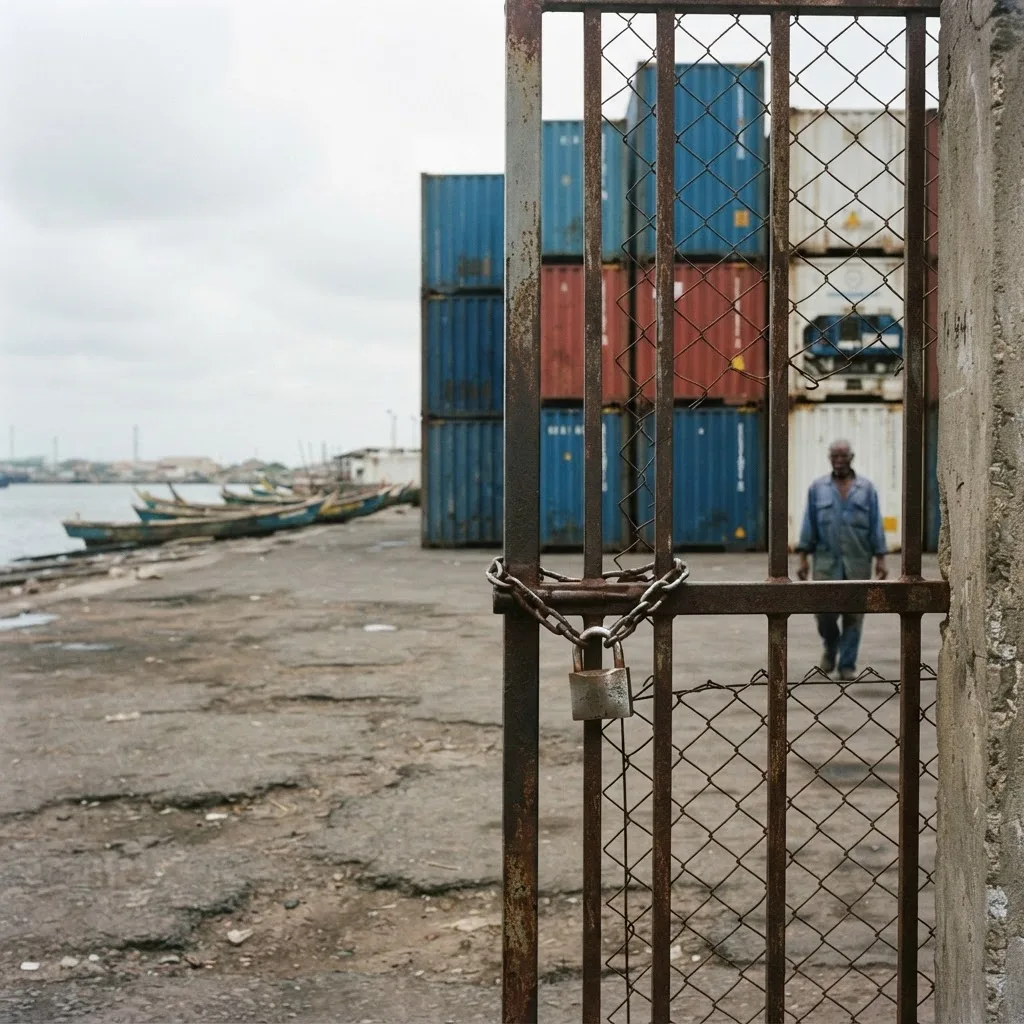
The thesis is regulatory arbitrage in reverse: Ghanaian fisheries access is underpriced and undermonitored, both moving, and the businesses that hold value will be the ones positioned for the tightening. Require any target buying fish to produce its supplier list with landing sites and size records, and treat inability as a finding. Require any vessel-owning counterparty's beneficial ownership in writing, since the law demands it of the regulator, who withholds it. Re-run the model with the licence fee raised from 0.4 per cent to a regional benchmark, and release the cheque against documented throughput. Market access is the dominant risk, sized by what revenue survives a red card.
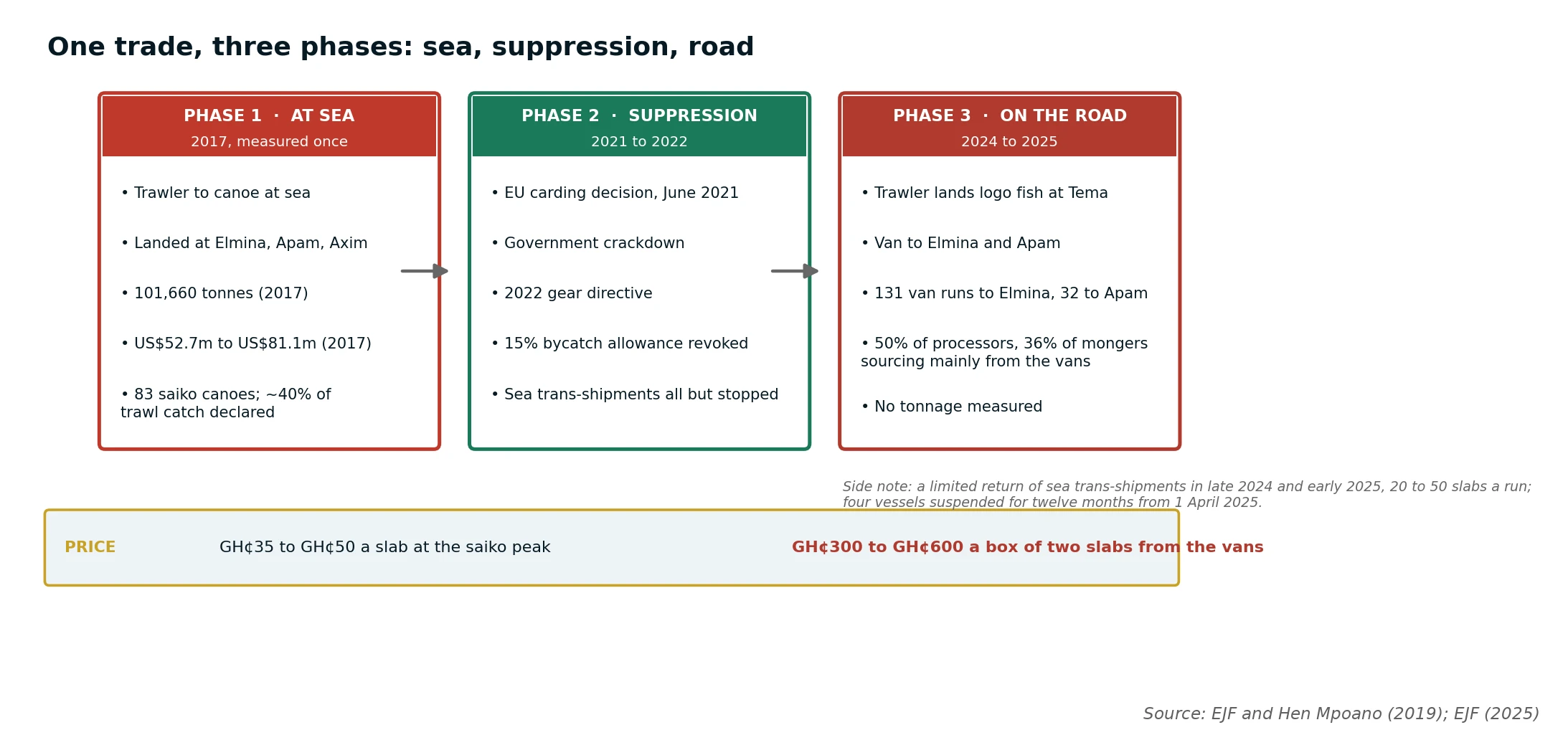
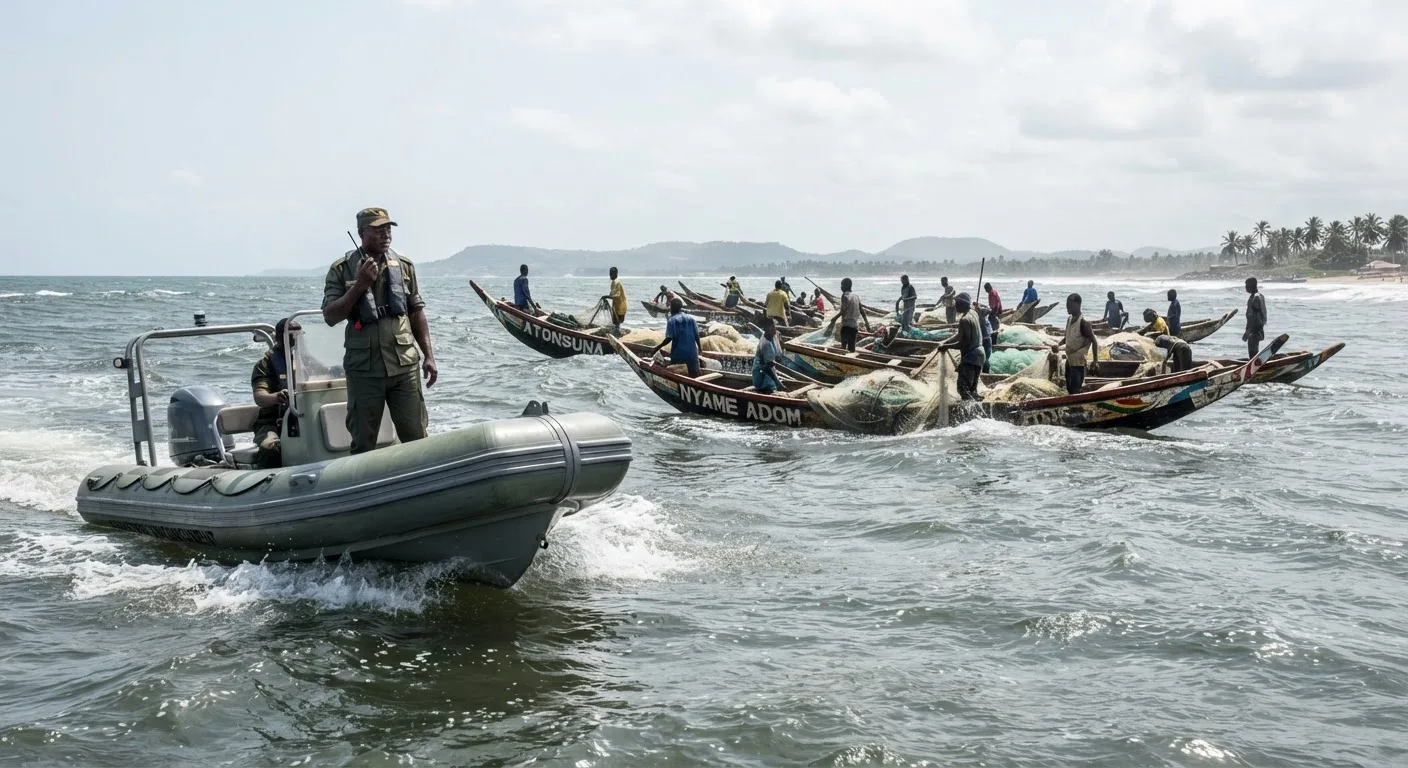
The lever is the licence condition. Industrial trawl licences valid only for demersal stocks, banning sale of species outside the licence, would remove the economic reason trawlers target small pelagics at all, at the cost of a drafting cycle, a chance the overdue Regulations now offer. Pair it with on-board electronic monitoring, rated at roughly 21 times its cost, and observer salaries paid by the state, not the vessel owners. The measurable outcome is the share of small pelagics in trawl landings, already sampled and publishable quarterly. The failure to avoid is announcing a measure and funding no way to verify it, which is how the 15 per cent bycatch allowance was abused for years. Public money should buy verification, because verification opens the market access private capital waits on.
Enter through compliance: learn to measure fish. A season at one landing site with a measuring board and species guide, recording species, length and buyer per consignment, gives you a document few traders can produce: proof a batch was legal. Skip trading frozen slabs; that trade is documented undersized and no paperwork separates clean from the rest. You leave with a verification skill, the processors who need it, and a service sellable before you own stock.
Secure a documented supply route before buying a box. Pick two or three landing sites, agree with named canoe owners or a trawl agent what you accept on size and records, and pay a small premium from the first consignment so the habit forms early. Ask the Ghana Standards Authority that week what export approvals your product class needs, since Food and Drugs Authority approval is necessary for Europe, not sufficient. The trap is the cheap consignment: van slab fish is Ghana's lowest landed cost, and it makes a customer, certifier or bank walk away, because it cannot be proved clean afterwards.
The thesis is regulatory arbitrage in reverse: Ghanaian fisheries access is underpriced and undermonitored, both moving, and the businesses that hold value will be the ones positioned for the tightening. Require any target buying fish to produce its supplier list with landing sites and size records, and treat inability as a finding. Require any vessel-owning counterparty's beneficial ownership in writing, since the law demands it of the regulator, who withholds it. Re-run the model with the licence fee raised from 0.4 per cent to a regional benchmark, and release the cheque against documented throughput. Market access is the dominant risk, sized by what revenue survives a red card.
The lever is the licence condition. Industrial trawl licences valid only for demersal stocks, banning sale of species outside the licence, would remove the economic reason trawlers target small pelagics at all, at the cost of a drafting cycle, a chance the overdue Regulations now offer. Pair it with on-board electronic monitoring, rated at roughly 21 times its cost, and observer salaries paid by the state, not the vessel owners. The measurable outcome is the share of small pelagics in trawl landings, already sampled and publishable quarterly. The failure to avoid is announcing a measure and funding no way to verify it, which is how the 15 per cent bycatch allowance was abused for years. Public money should buy verification, because verification opens the market access private capital waits on.