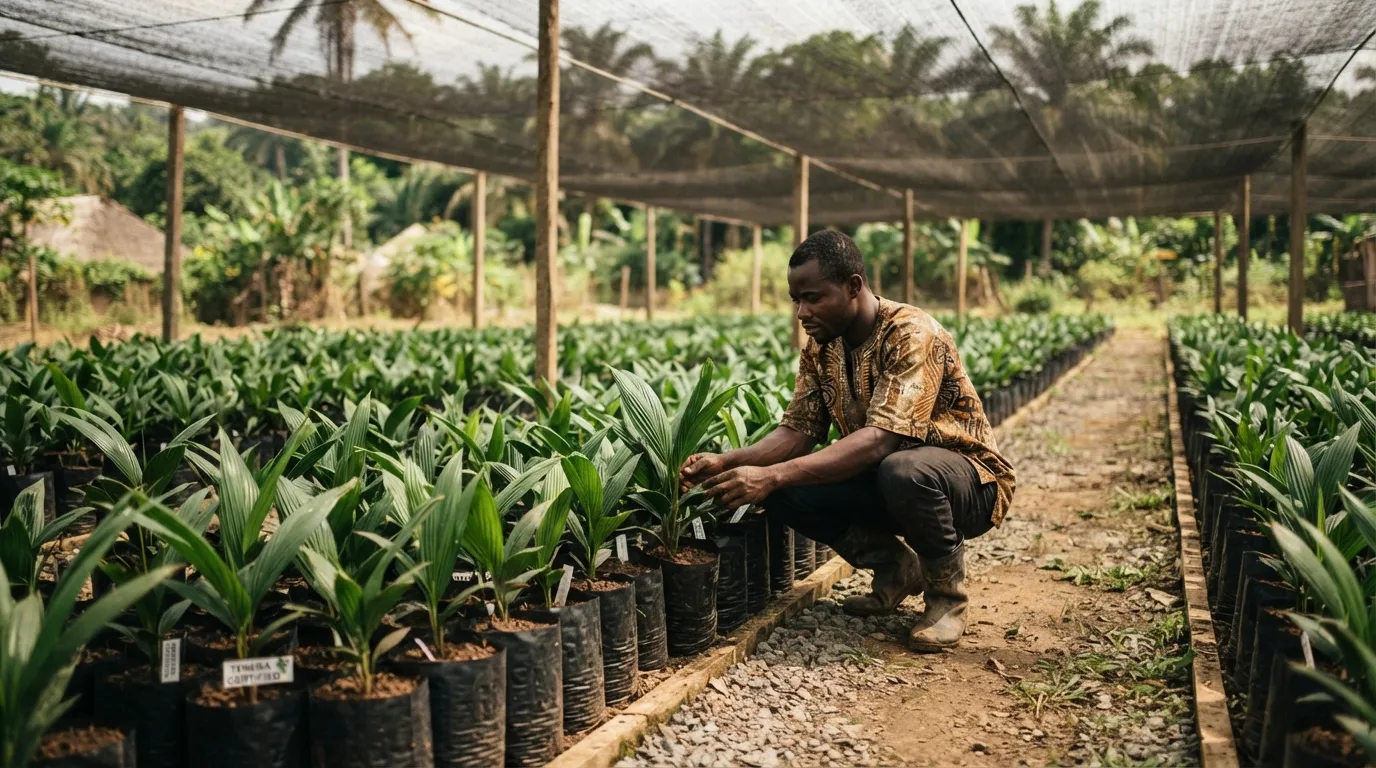
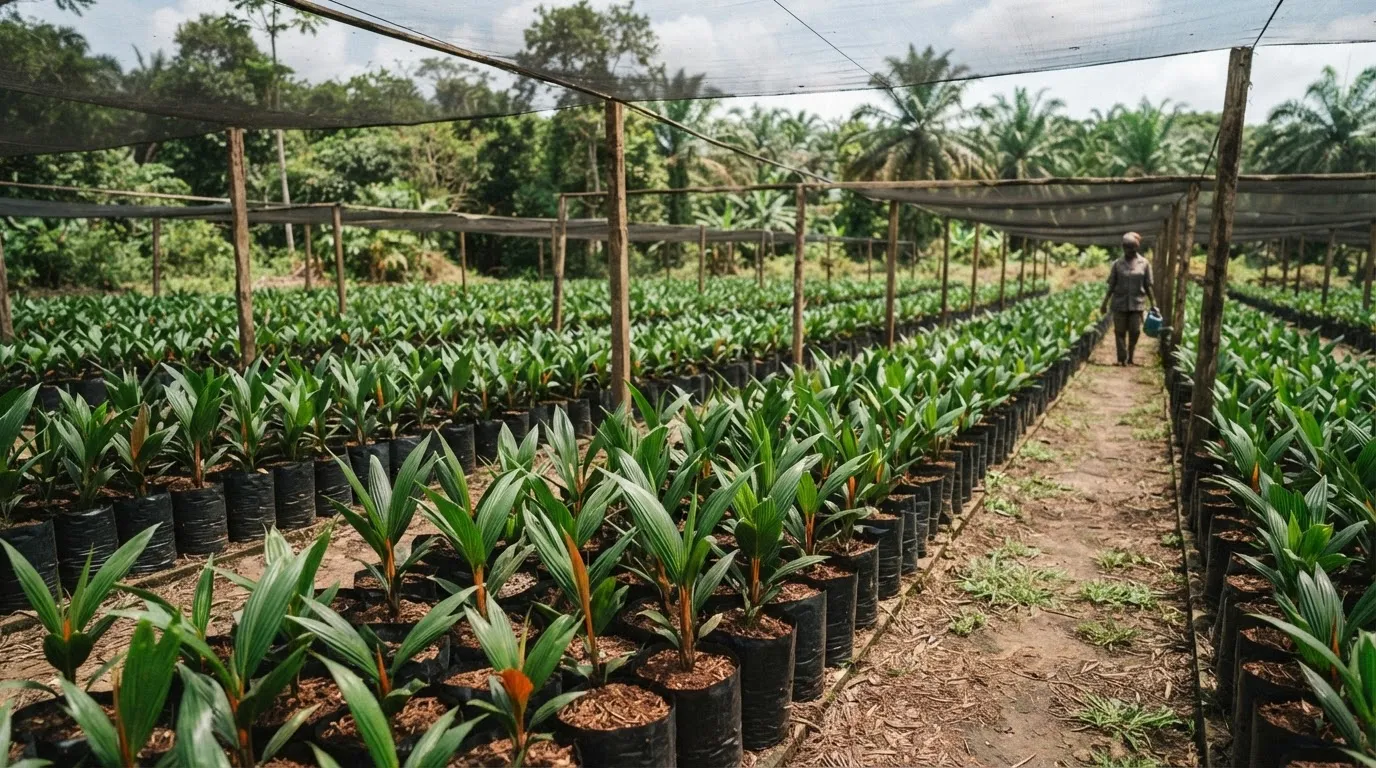
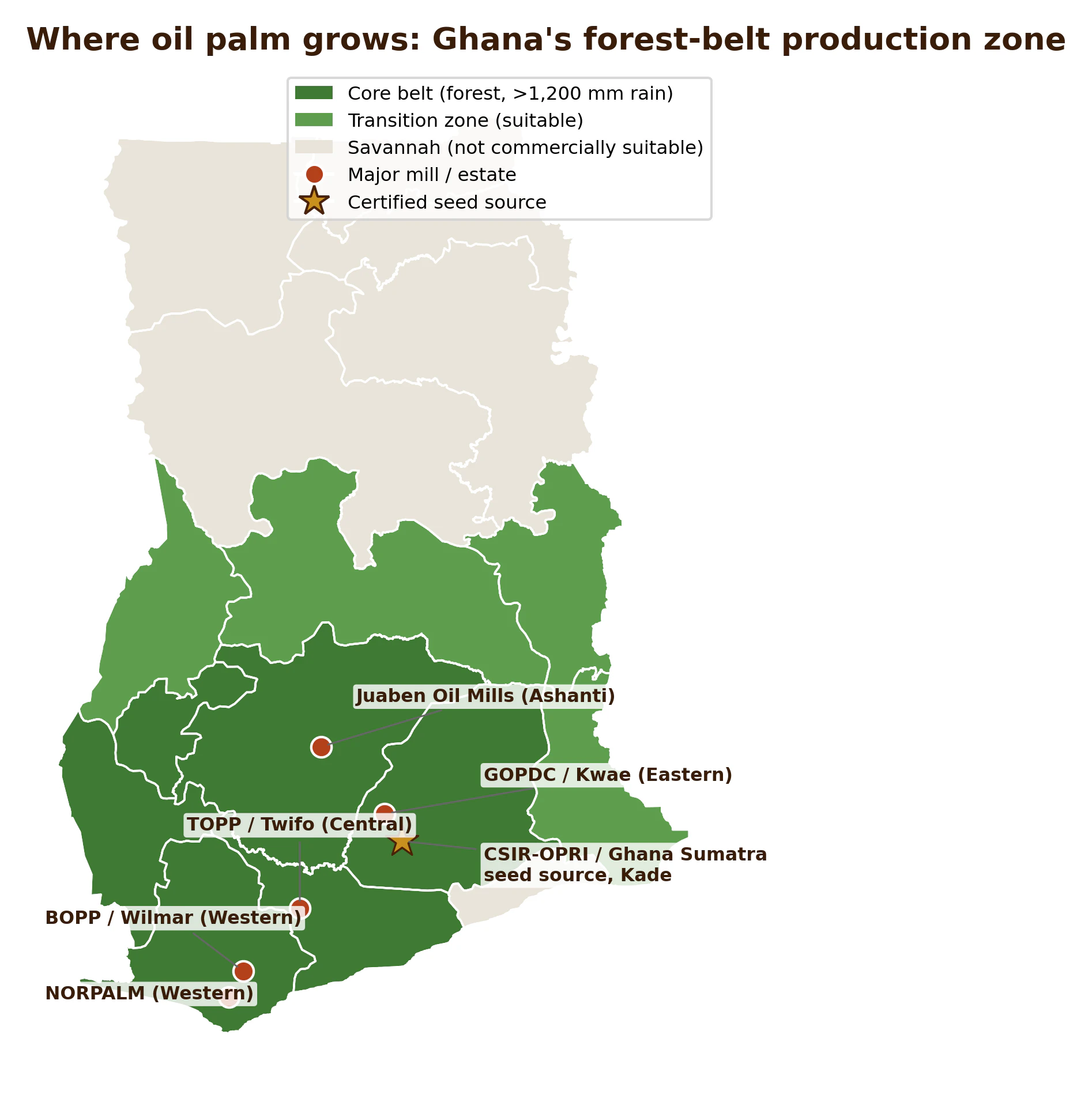
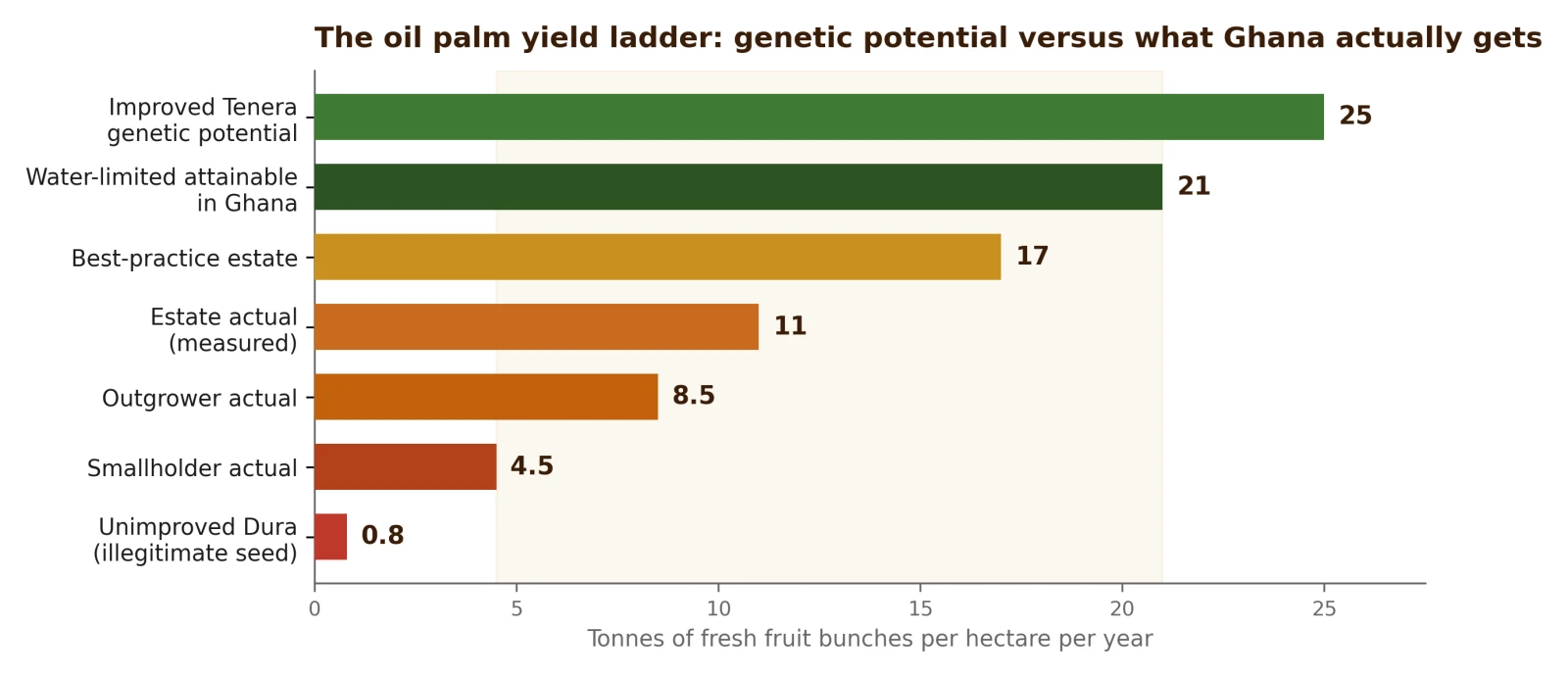
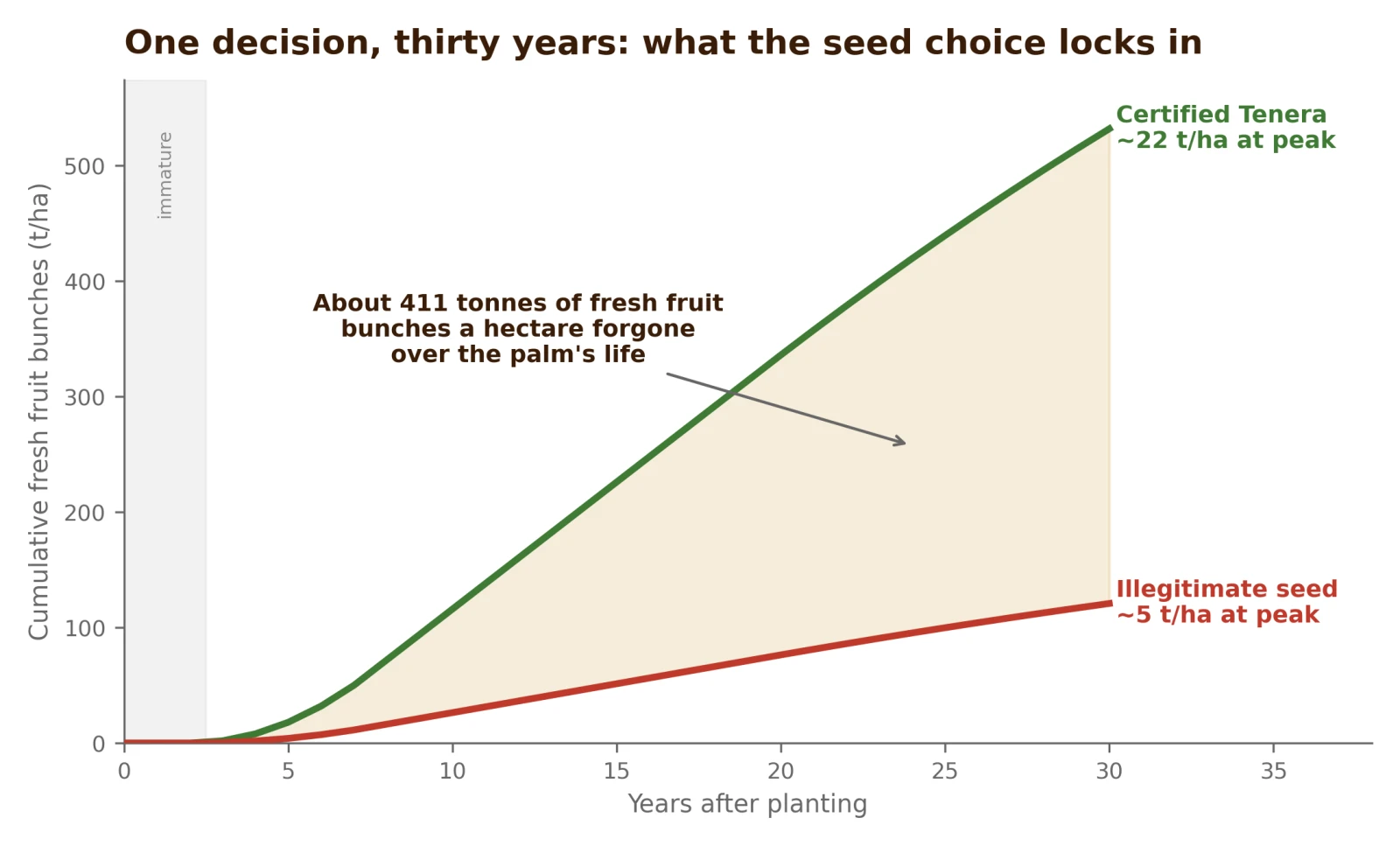
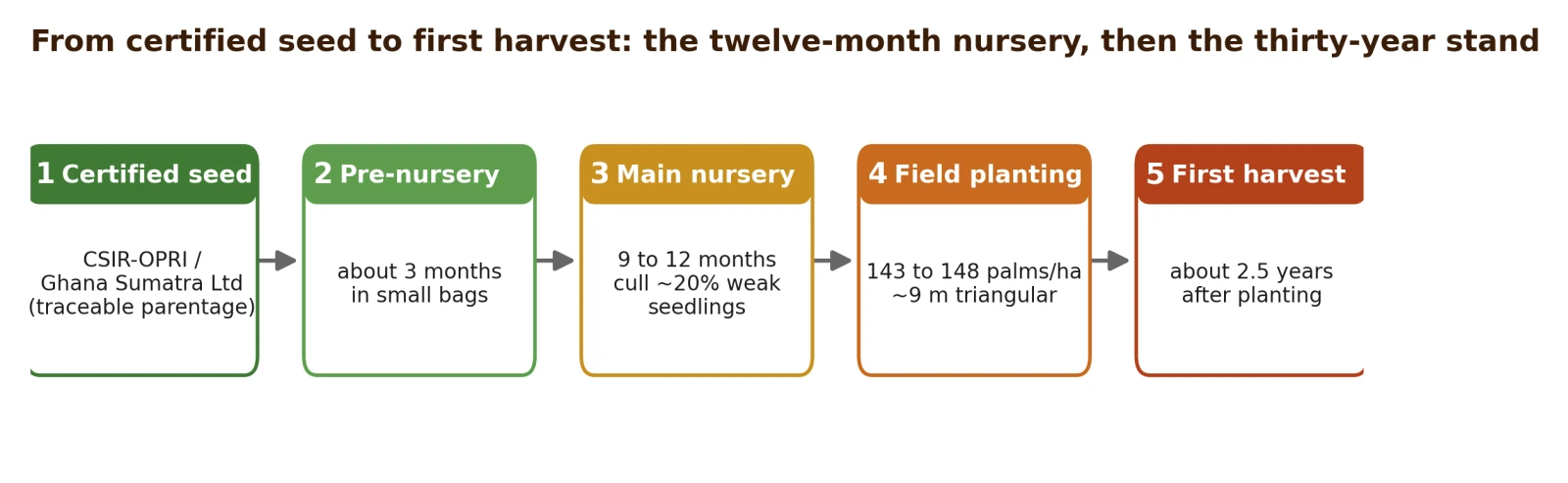
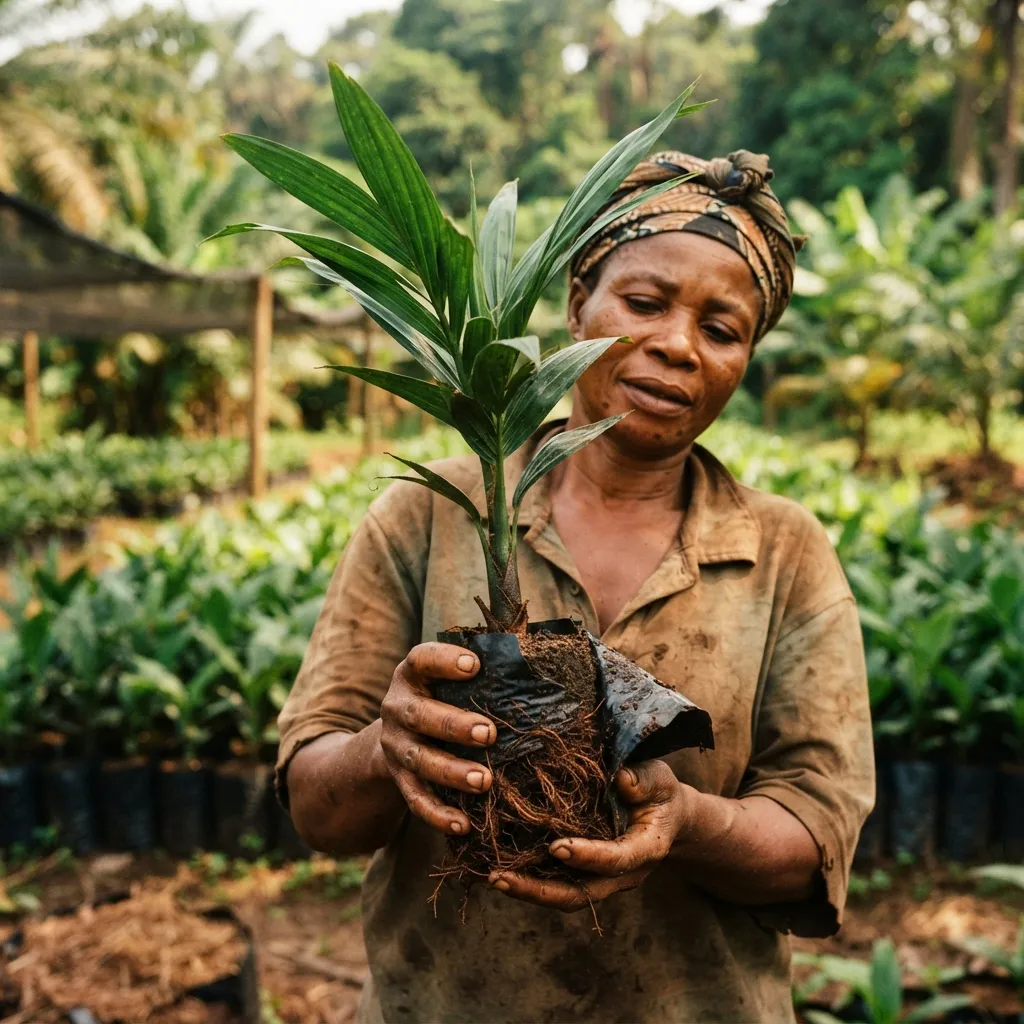
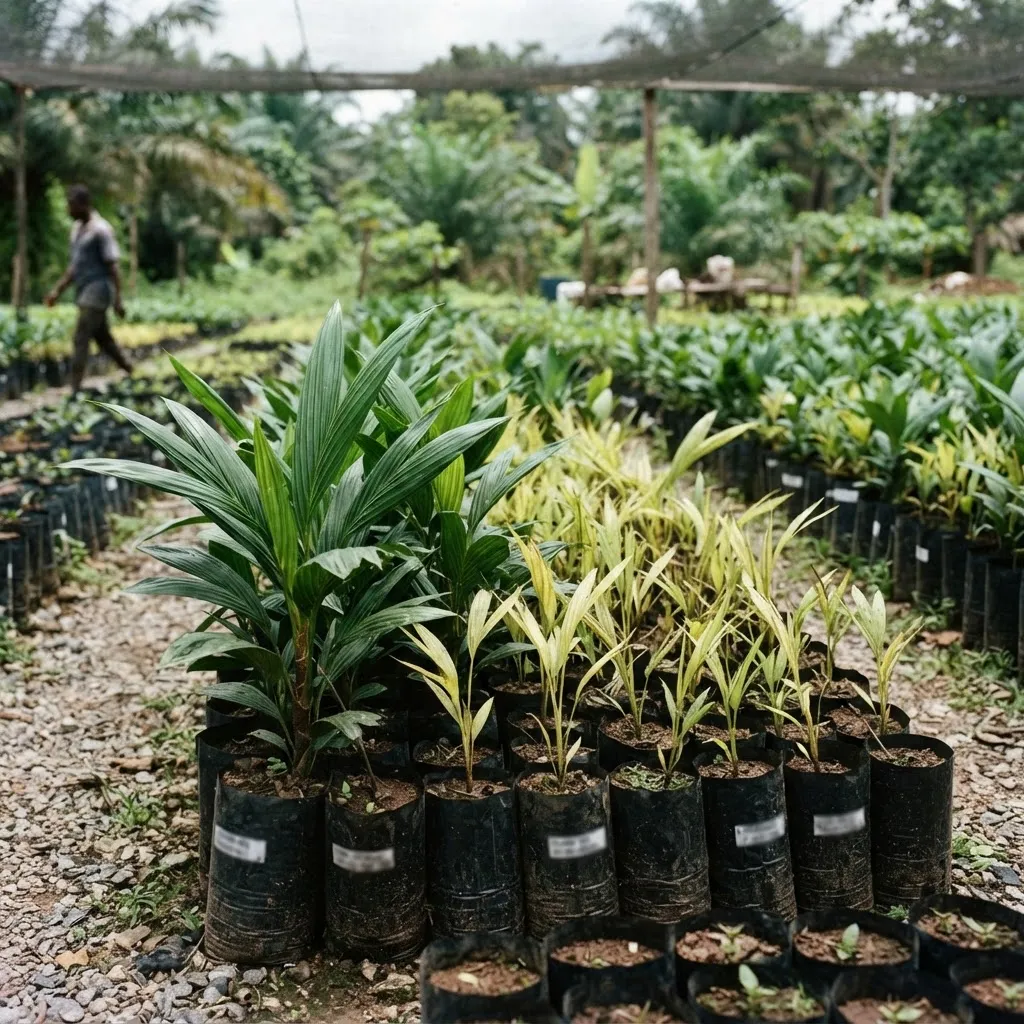
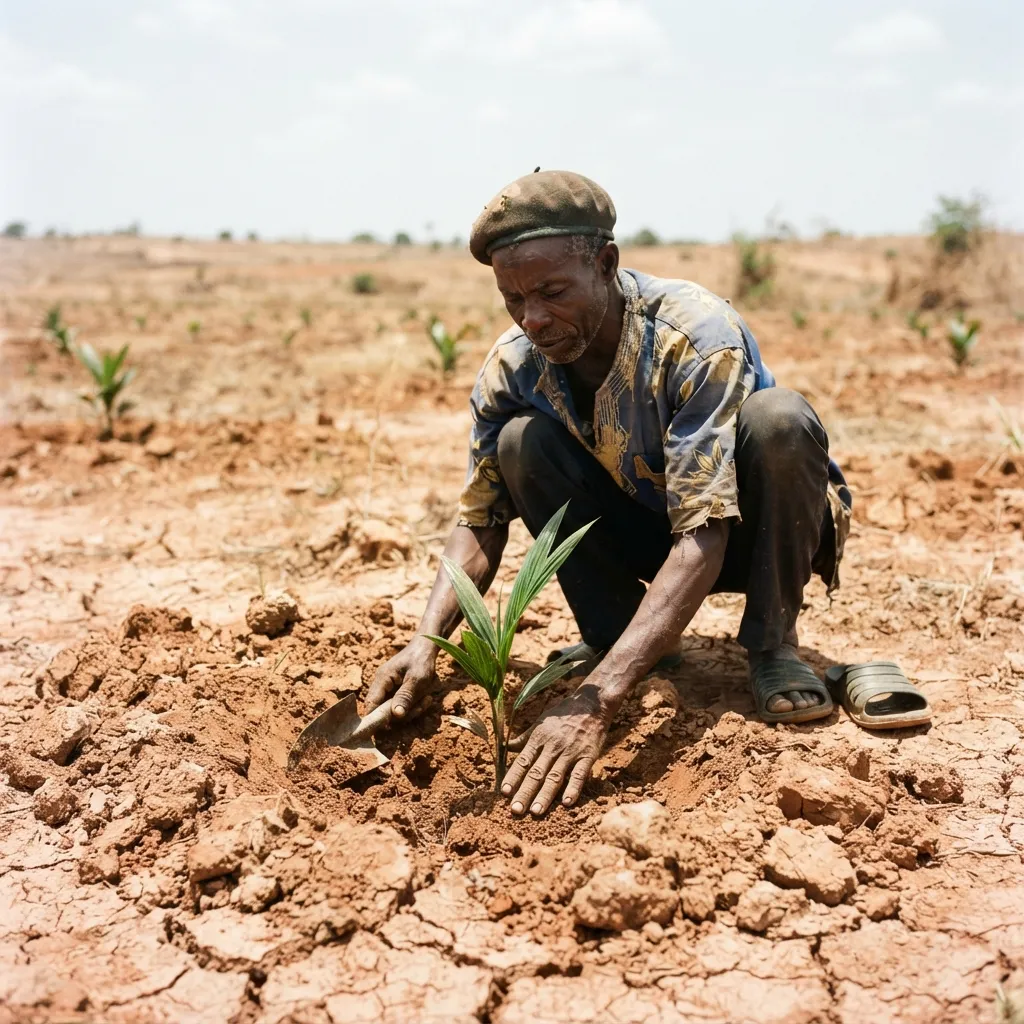
If you are thinking of entering oil palm with limited capital, start asset-light, before any land or planting. Become a certified-seedling nursery operator, or a seedling-verification and extension agent who helps farmers confirm their material is genuine. The mistake first-timers make is buying cheap roadside seedlings to save money at planting; in oil palm that saving is repaid as thirty years of low yield. What you gain first is a relationship with CSIR-OPRI or Ghana Sumatra, a working grasp of the certified-material system, and a cash-generating service before you ever own a hectare.
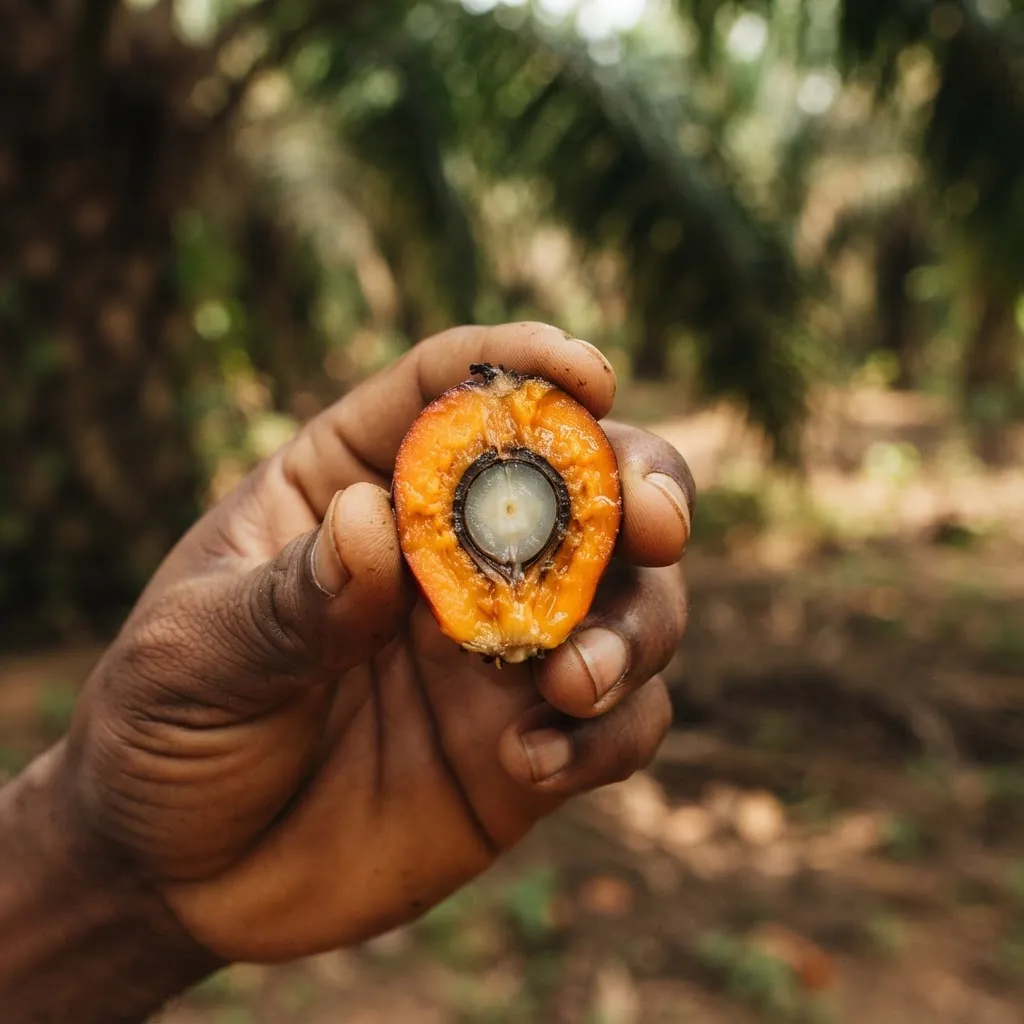
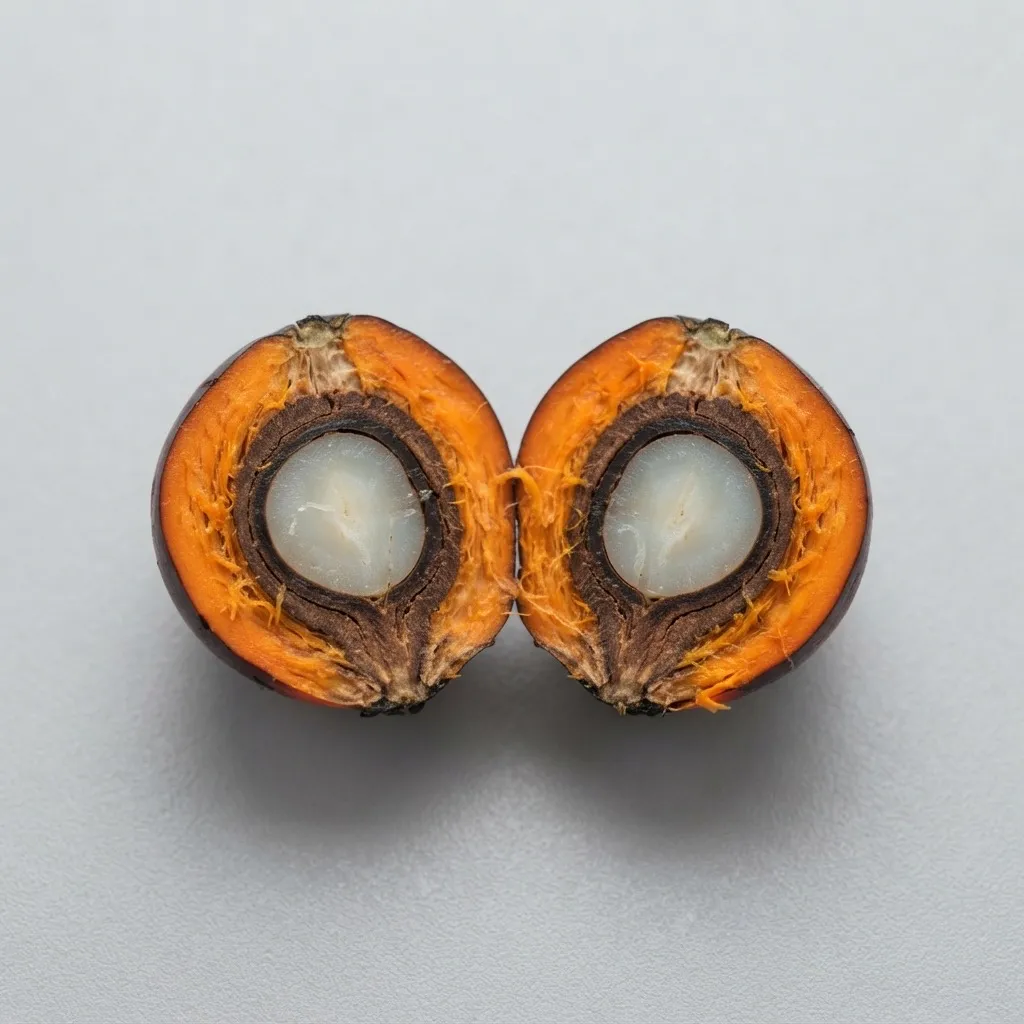
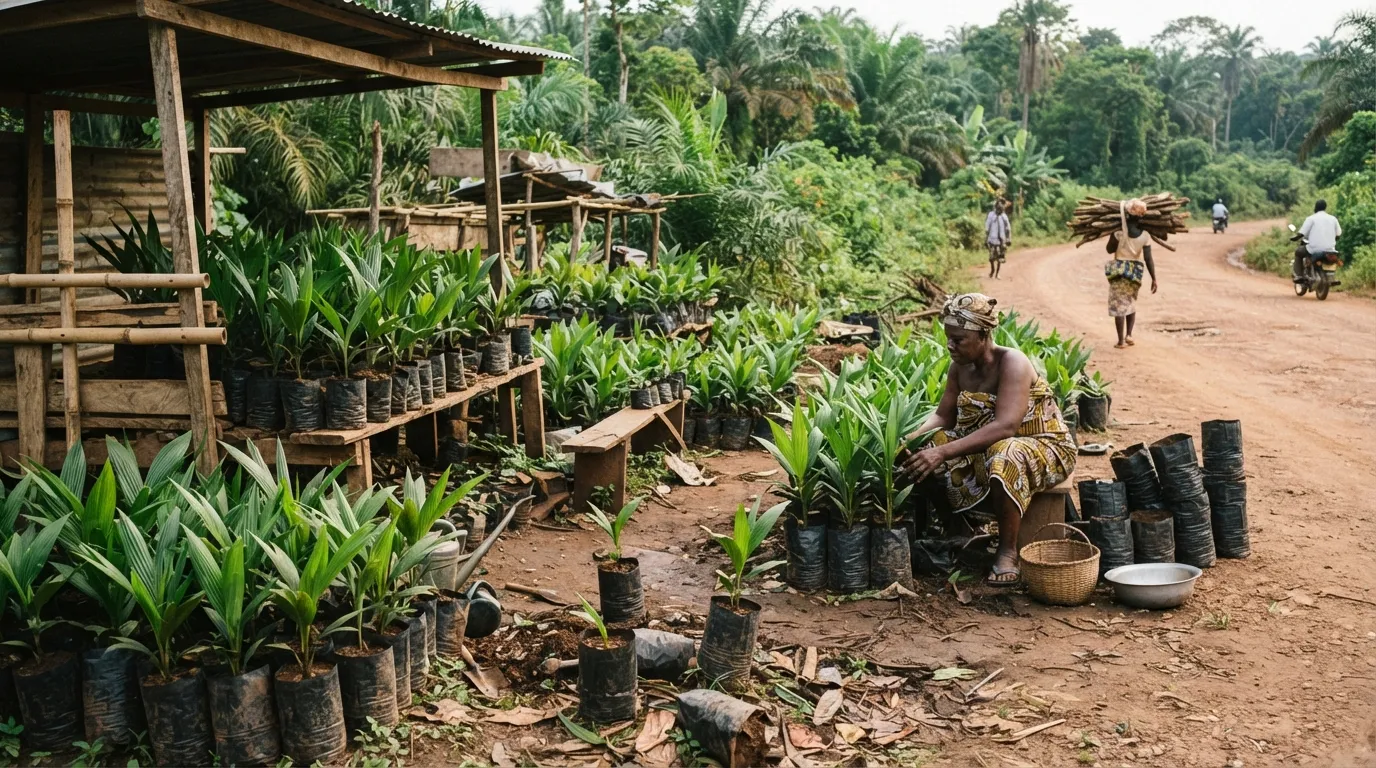
First move: lock a supply agreement with CSIR-OPRI or Ghana Sumatra for certified Tenera seed-nuts before you build a single nursery bed. Secure the seed source first, then build the nursery. The trap the sector punishes hardest is handling material of untraceable parentage; one bad batch ends a nursery's reputation for good. Anchor the venture to the 2026 to 2032 policy's 100,000-hectare drive, which is the policy-backed demand sitting behind the seedling business.
The thesis: certified planting material is a scarce, policy-backed, repeat-demand input into a sector for which the state is arranging a US$500 million finance window. Diligence asks on planting material: is the nursery's seed source genuinely CSIR-OPRI or Ghana Sumatra, with paperwork to prove it; what are the germination and cull rates, and does the operator cull honestly; and what offtake or expansion pipeline underwrites the seedling volume. Release the cheque in stages, as certified seed is bought and nursery throughput milestones are met. The dominant risk is illegitimate material entering the chain and destroying buyer trust; size it by auditing traceability.
The lever: fund and enforce a certified-seedling guarantee, so that genuine Tenera reaches smallholders at, or near, the price of roadside seedlings. The measurable outcome is the share of new plantings using certified material, and the smallholder yield that follows it. The failure to avoid is subsidising nurseries without a traceability and certification system behind them, which simply funds more of the wrong material. Public money here should crowd in private nurseries.
If you are thinking of entering oil palm with limited capital, start asset-light, before any land or planting. Become a certified-seedling nursery operator, or a seedling-verification and extension agent who helps farmers confirm their material is genuine. The mistake first-timers make is buying cheap roadside seedlings to save money at planting; in oil palm that saving is repaid as thirty years of low yield. What you gain first is a relationship with CSIR-OPRI or Ghana Sumatra, a working grasp of the certified-material system, and a cash-generating service before you ever own a hectare.
First move: lock a supply agreement with CSIR-OPRI or Ghana Sumatra for certified Tenera seed-nuts before you build a single nursery bed. Secure the seed source first, then build the nursery. The trap the sector punishes hardest is handling material of untraceable parentage; one bad batch ends a nursery's reputation for good. Anchor the venture to the 2026 to 2032 policy's 100,000-hectare drive, which is the policy-backed demand sitting behind the seedling business.
The thesis: certified planting material is a scarce, policy-backed, repeat-demand input into a sector for which the state is arranging a US$500 million finance window. Diligence asks on planting material: is the nursery's seed source genuinely CSIR-OPRI or Ghana Sumatra, with paperwork to prove it; what are the germination and cull rates, and does the operator cull honestly; and what offtake or expansion pipeline underwrites the seedling volume. Release the cheque in stages, as certified seed is bought and nursery throughput milestones are met. The dominant risk is illegitimate material entering the chain and destroying buyer trust; size it by auditing traceability.
The lever: fund and enforce a certified-seedling guarantee, so that genuine Tenera reaches smallholders at, or near, the price of roadside seedlings. The measurable outcome is the share of new plantings using certified material, and the smallholder yield that follows it. The failure to avoid is subsidising nurseries without a traceability and certification system behind them, which simply funds more of the wrong material. Public money here should crowd in private nurseries.