Ghana Agribusiness PlaybookOil Palm
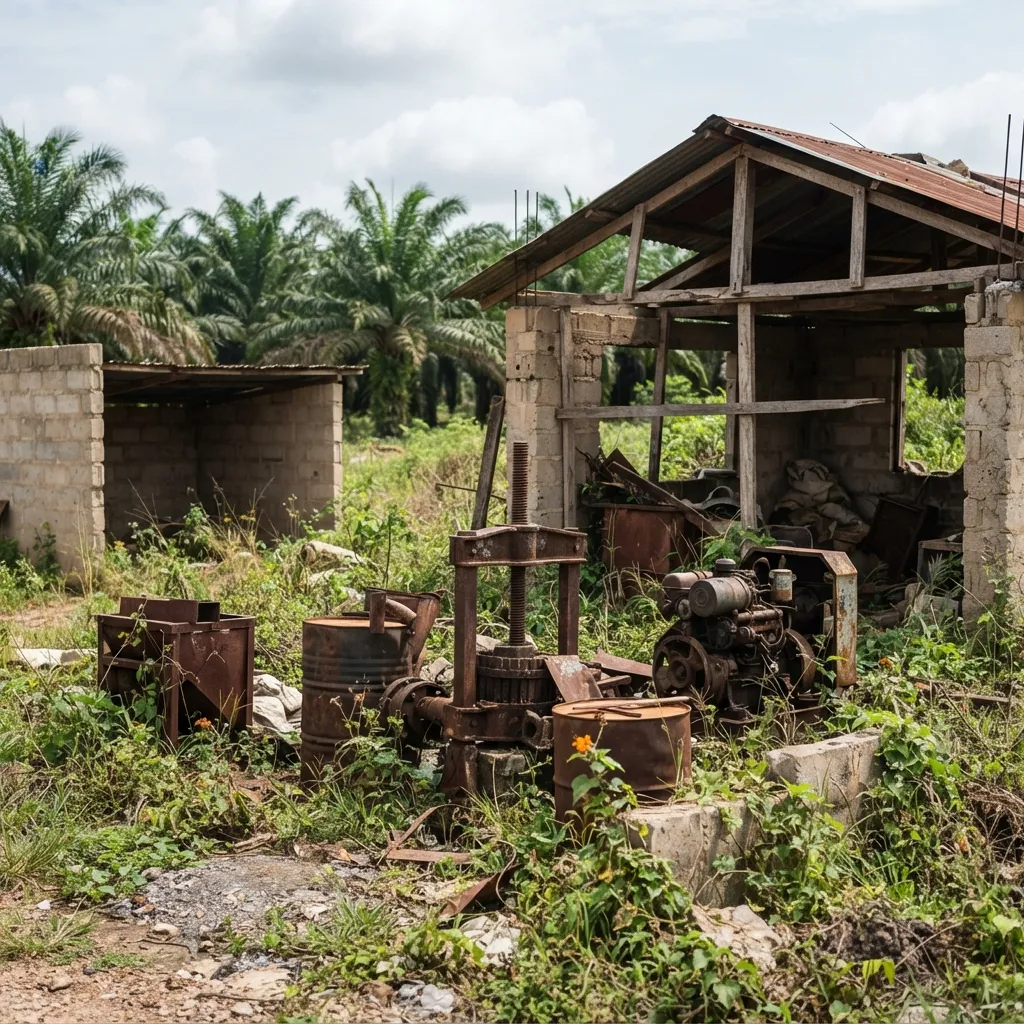
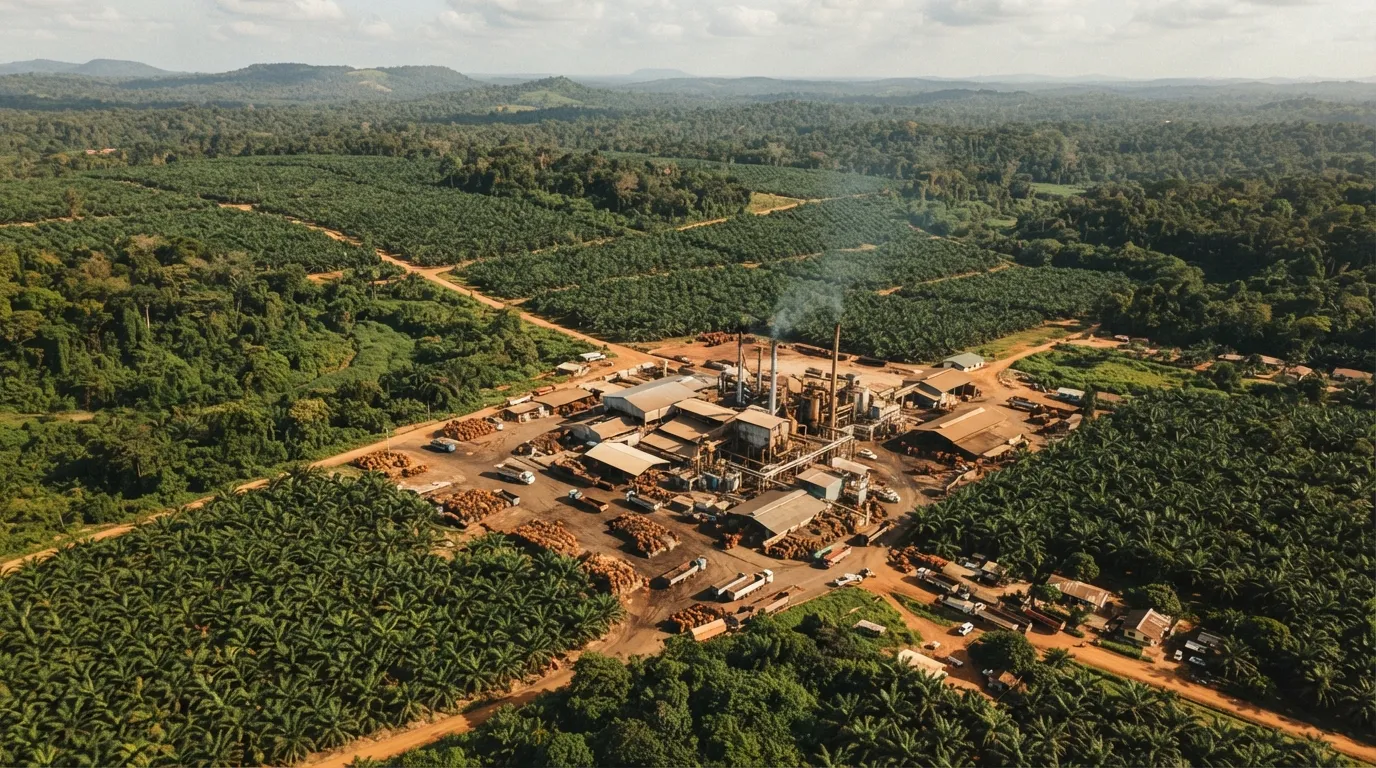
An oil palm estate and refinery reviewed on an investment plan
Oil Palm · Series intelligence

Business and Market Intelligence

The size of the opportunity, the demand pull, and the finance now arriving.
Business and Practitioner Intelligence · Pillar 07

The six pillars before this one map the sector. This one turns the map into moves. It is written for the person actually deciding whether, where and how to enter Ghana's oil palm business: the student weighing a first venture, the entrepreneur sizing a play, the investor placing a cheque. It pulls every opening in the playbook into one place, ranks them, and says plainly what to do and what to avoid.

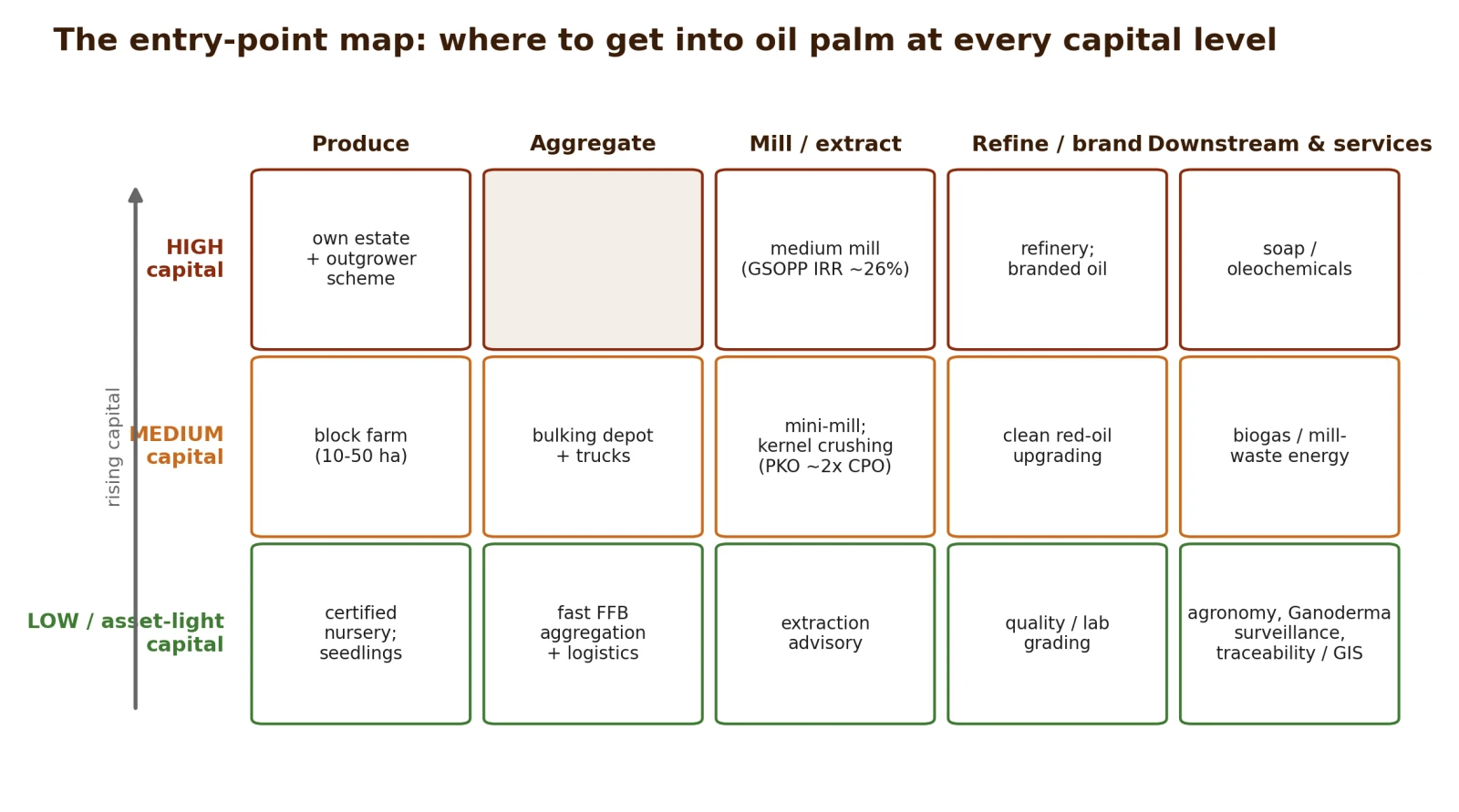
The first thing to understand is that oil palm is not one business; it is a chain of them, and you can enter at almost any capital level. The map below sets the openings out by how much money they need and where on the chain they sit. The important pattern is that the cheapest openings, the ones a first-time entrant can actually reach, are mostly services and aggregation, not owning land or a mill.

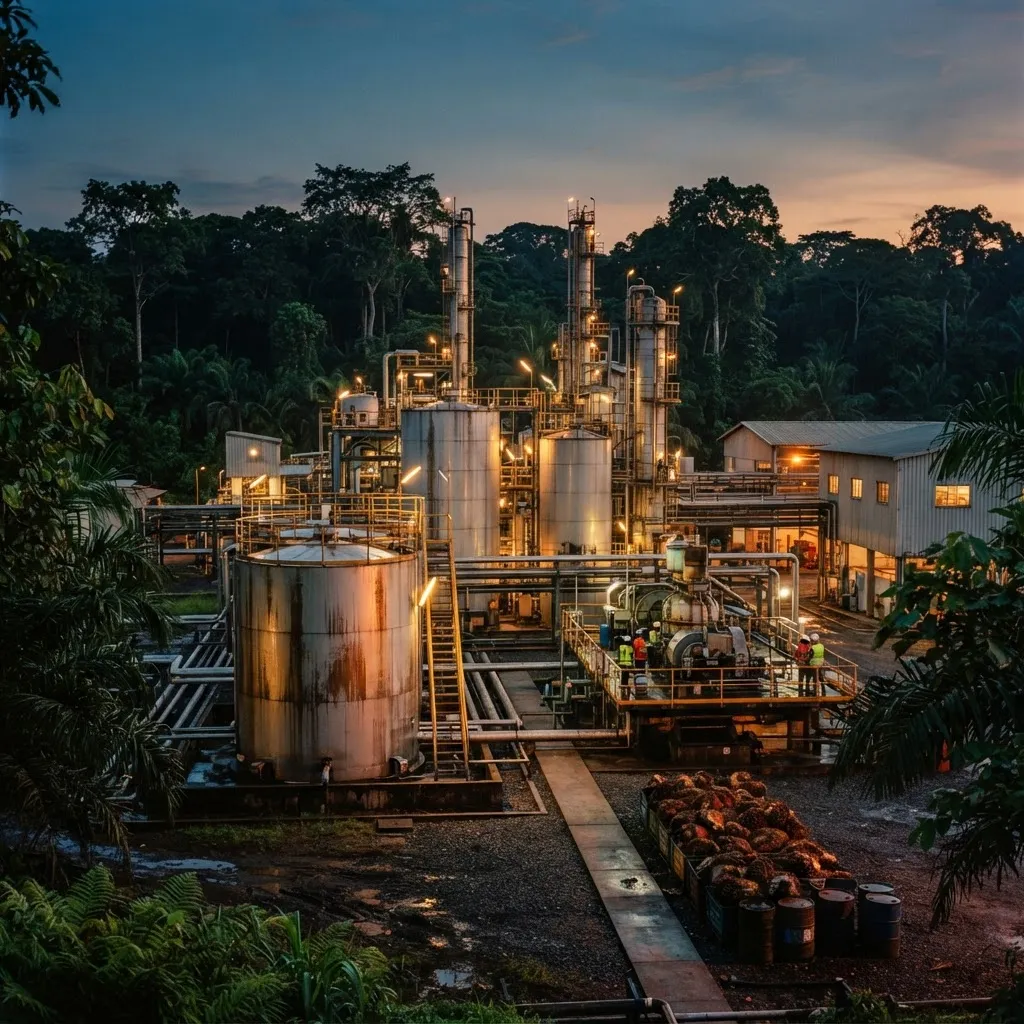
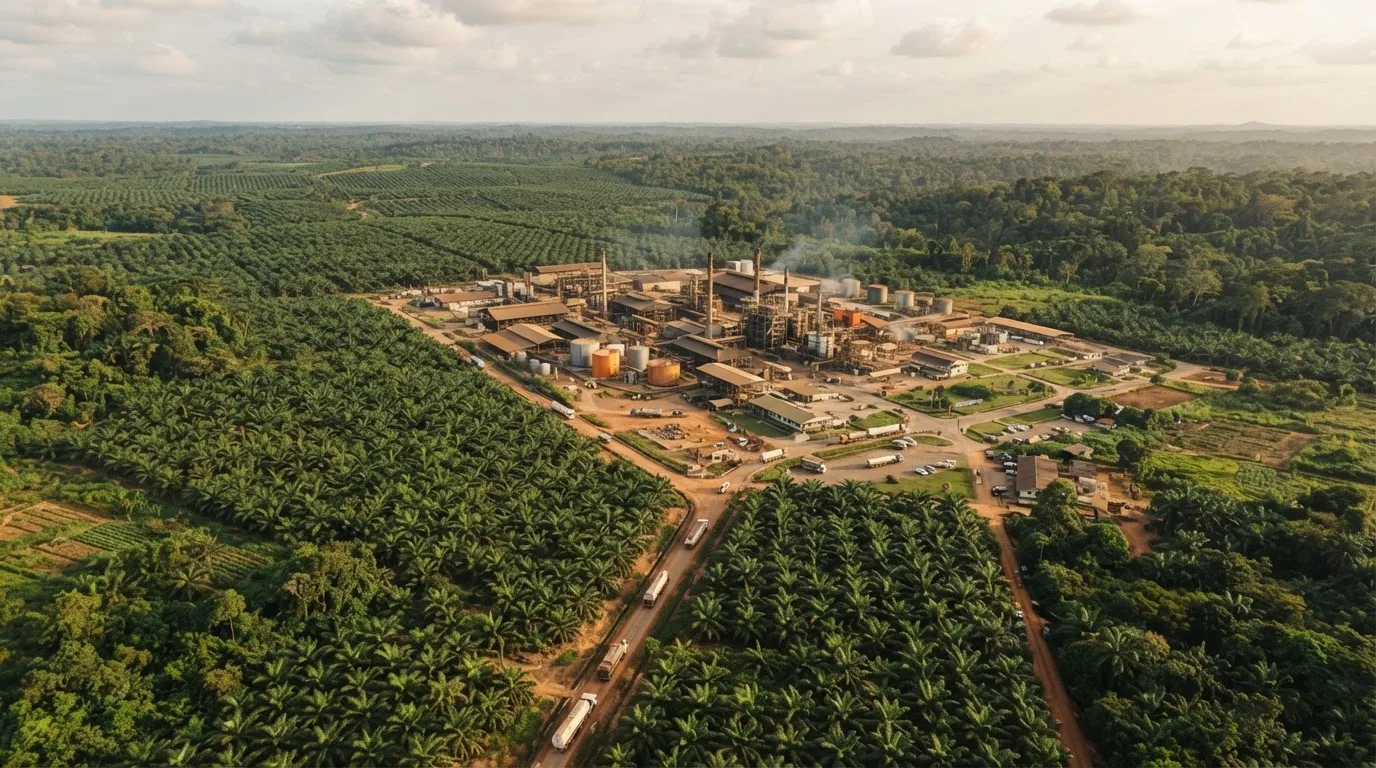
A mature oil palm estate in Ghana with rows of palms and a mill in the distance, representing the capital-heavy end of the chain
A chain of businesses
Turning the map into moves: Oil palm is not one business but a chain of them, and the cheapest openings are services and aggregation, not land or a mill.
US$500 m
Oil Palm Development Finance Window, covering up to 70 percent of project cost with a five-year moratorium
GH¢604 m
in GIRSAL guarantees, supporting about GH¢1.18 billion of agribusiness loans since 2019
100,000 ha
the national planting drive behind the certified-seedling shortfall

🌴 Where to get in, at any capital level 🌴

The entry-point map: openings in the oil palm chain by capital level and chain position
Figure 25 The entry-point map: openings by capital level and chain position
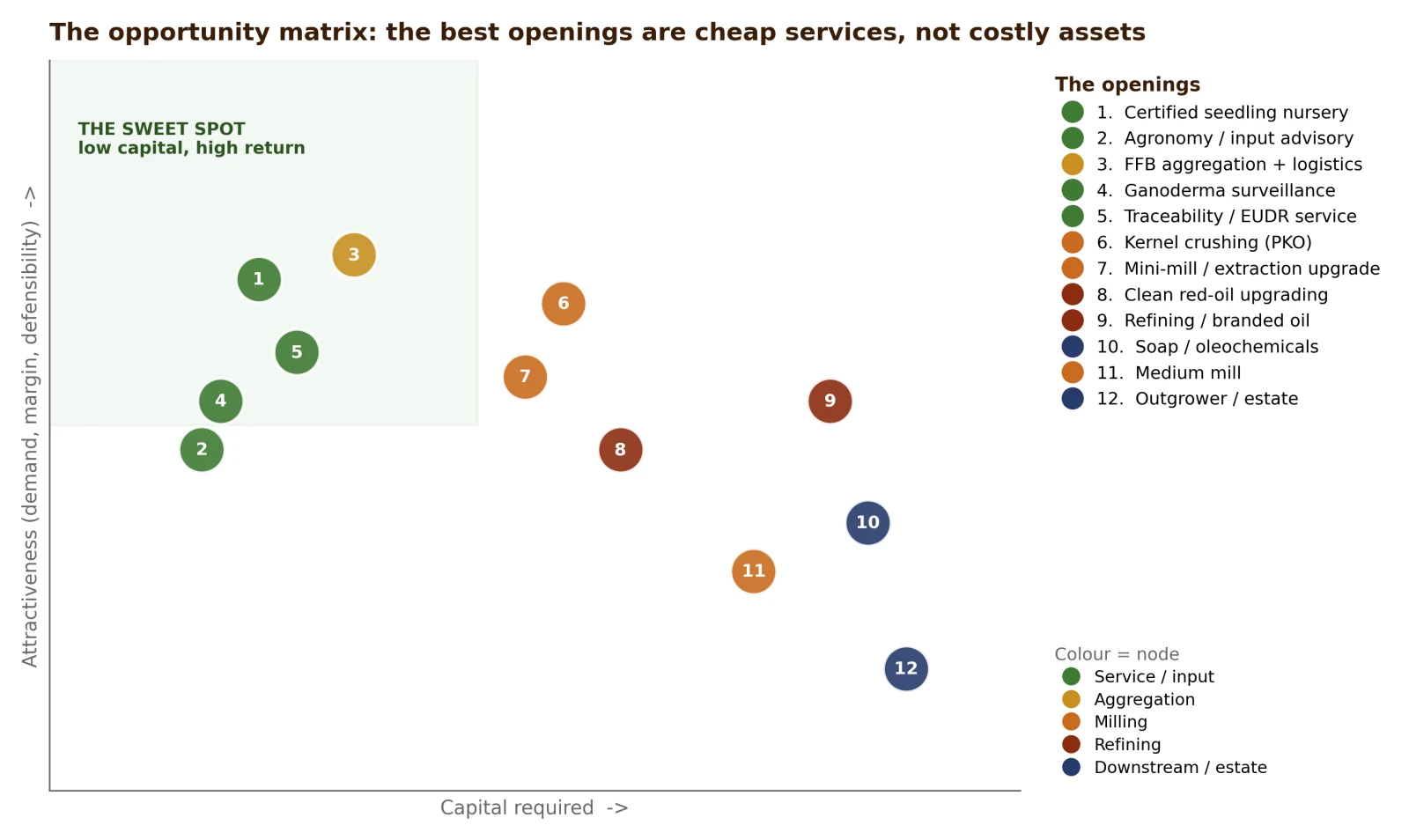
The opportunity matrix: the openings ranked by capital required against attractiveness
Figure 26 The opportunity matrix: capital required against attractiveness
What this shows

Most of the low-capital openings are services and aggregation, not owning land or a mill. That is where a first-time entrant should look.

The same openings, plotted by capital against how attractive they are, show a clear sweet spot in the top-left: high-value, low-capital plays that a Ghanaian entrant can start now. Certified nurseries, fresh fruit bunch aggregation, kernel oil, surveillance and traceability services all sit there.

The costly assets, an estate or a refinery, are more defensible but out of reach for most, and best entered later or with a partner.

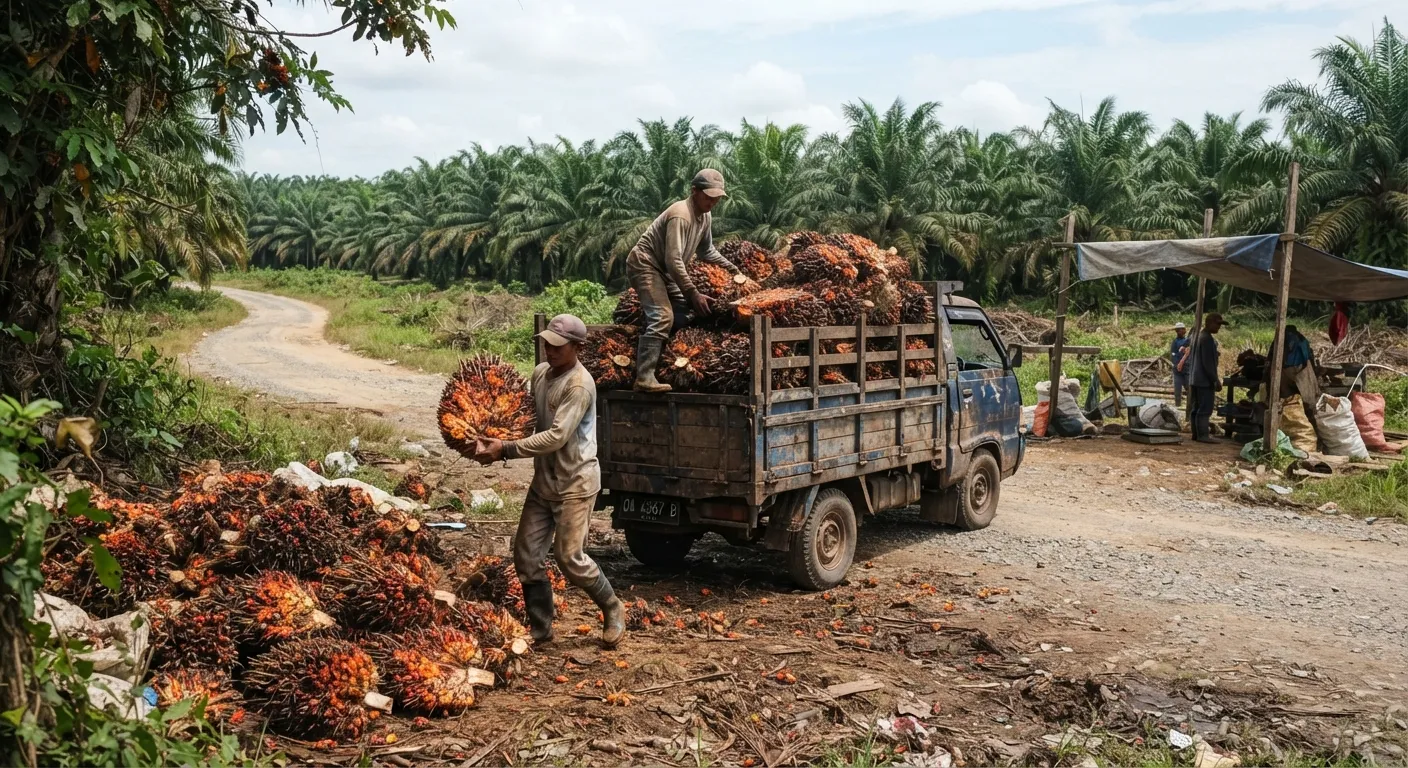
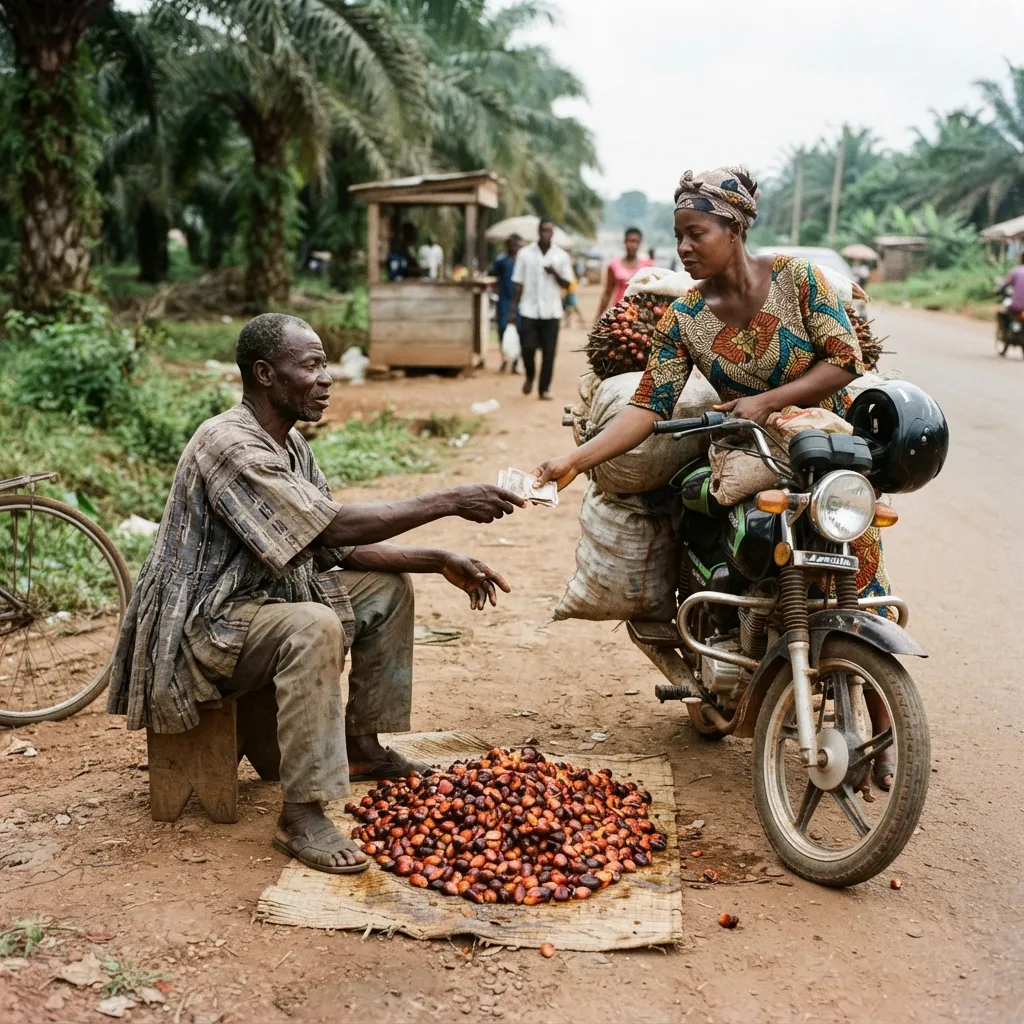
Traders aggregating fresh fruit bunches at a roadside collection point in Ghana, the low-capital entry into the oil palm chain
The low-capital sweet spot
Services and aggregation, not land or a mill, are where a first-time entrant should look.

🌴 The openings, and what to do about each 🌴

Every opening below was surfaced in an earlier pillar. Here they are gathered into one action list, each with the gap it fills, the main downside to respect, and the single recommended first move.

Table 8: the oil palm openings, ranked from lowest to highest capital, with the recommended first move for each
OpeningCapitalThe gap it fillsThe main downsideRecommended first move
Certified seedling nurseryLowthe seedling shortfall behind the 100,000 ha drivelong payback; needs certified seed accesslock a CSIR-OPRI or Ghana Sumatra seed supply first
Fresh fruit bunch aggregationLow to mediumthe missing middle between smallholders and millsthin margins; the 24-hour clocksecure a mill offtake and a farmer group before buying a truck
Agronomy and input advisoryLowunder-fertilised, low-yield smallholder farmsfarmers pay only if they see the yieldbundle the fertiliser with the advice; sell the yield gain
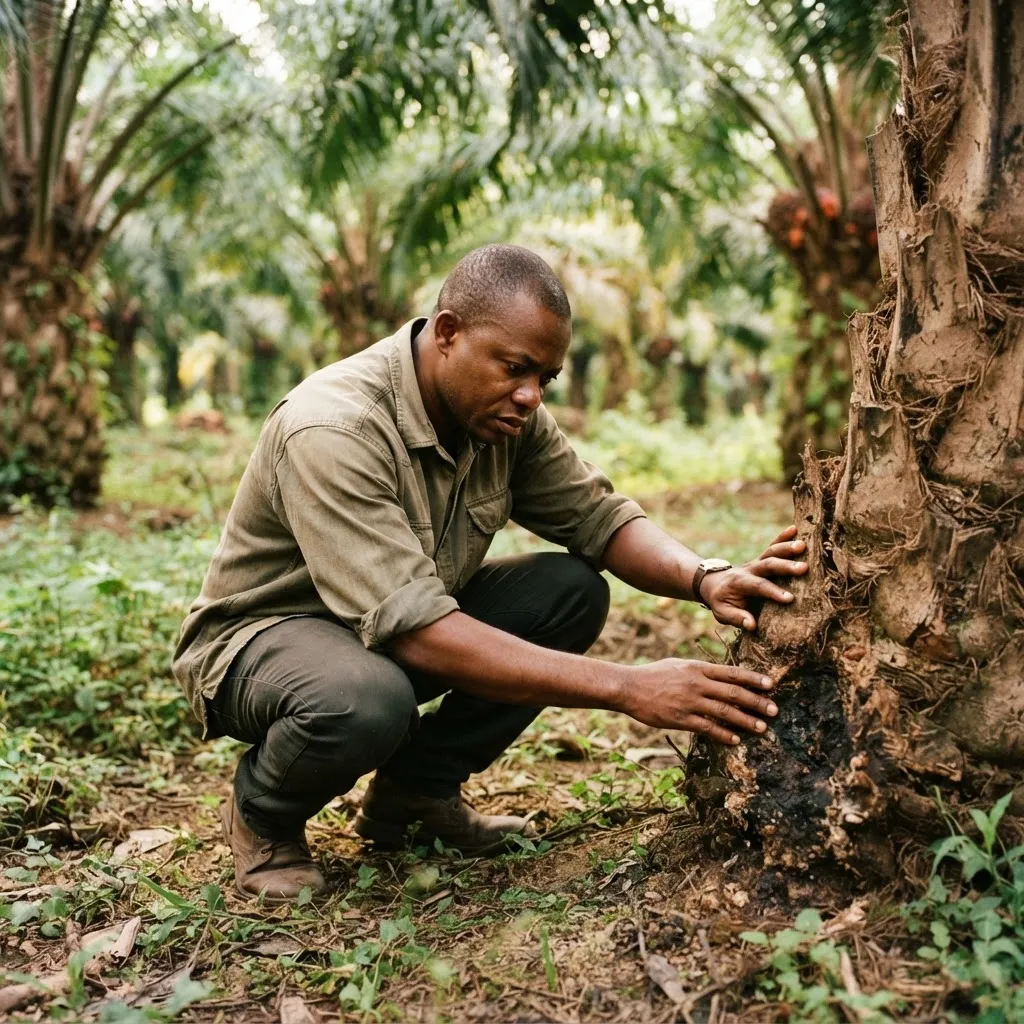
Ganoderma surveillance serviceLowan undetected, spreading, incurable diseasea young market; needs credibilitystart now, while incidence is low and monitoring still pays
Traceability and EUDR serviceLow to mediumthe export chain's compliance gapdepends on estates and exporters as clientslearn plot mapping and geolocation; sell to the estates
Kernel crushing and palm kernel oilMediuma high-value product Ghana exports or wastesneeds a kernel supply and a buyercontract kernel from mills; palm kernel oil sells near twice crude
Mini-mill or extraction upgradeMediumthe extraction wedge (11% against 20%)feedstock quality and quantitysite near the fruit; pay for prompt, clean delivery
Clean red-oil upgradingMedium to highthe refined-oil gap Ghana fills with importsmust meet a branded or industrial specsecure an offtake to spec before adding capacity
Refining or branded oilHighimport substitution in the branded marketcapital-heavy; quality-criticalpartner or co-invest; underwrite the offtake, not the tonnes
Soap and oleochemicalsHighdownstream value on raw materials Ghana hasscale and market accessintegrate backward from a secured crude and kernel supply

Source: Author synthesis of the openings identified across Pillars 1 to 6.

🌴 The digital and AI openings 🌴

A newer layer of openings sits on top of the ones above: the digital and AI tools that make them cheaper, faster and able to scale. None needs a plantation, only a phone, a drone or a satellite feed and the judgement to point it at a real oil palm problem.

In Ghana the binding constraints are connectivity and clean data, not the tools, so the winners will pair a working model with feet on the ground and a real buyer, estate or lender behind it.

An agribusiness operator reviewing satellite maps and data on a laptop for an oil palm venture
A real buyer behind it
Pair the model with feet on the ground: a working buyer, estate or lender.
A modern palm oil refinery line in Ghana producing clean branded cooking oil for import substitution
Import substitution
Refining and branded oil substitute for imports, but the value climbs up the chain, so enter where you can climb.
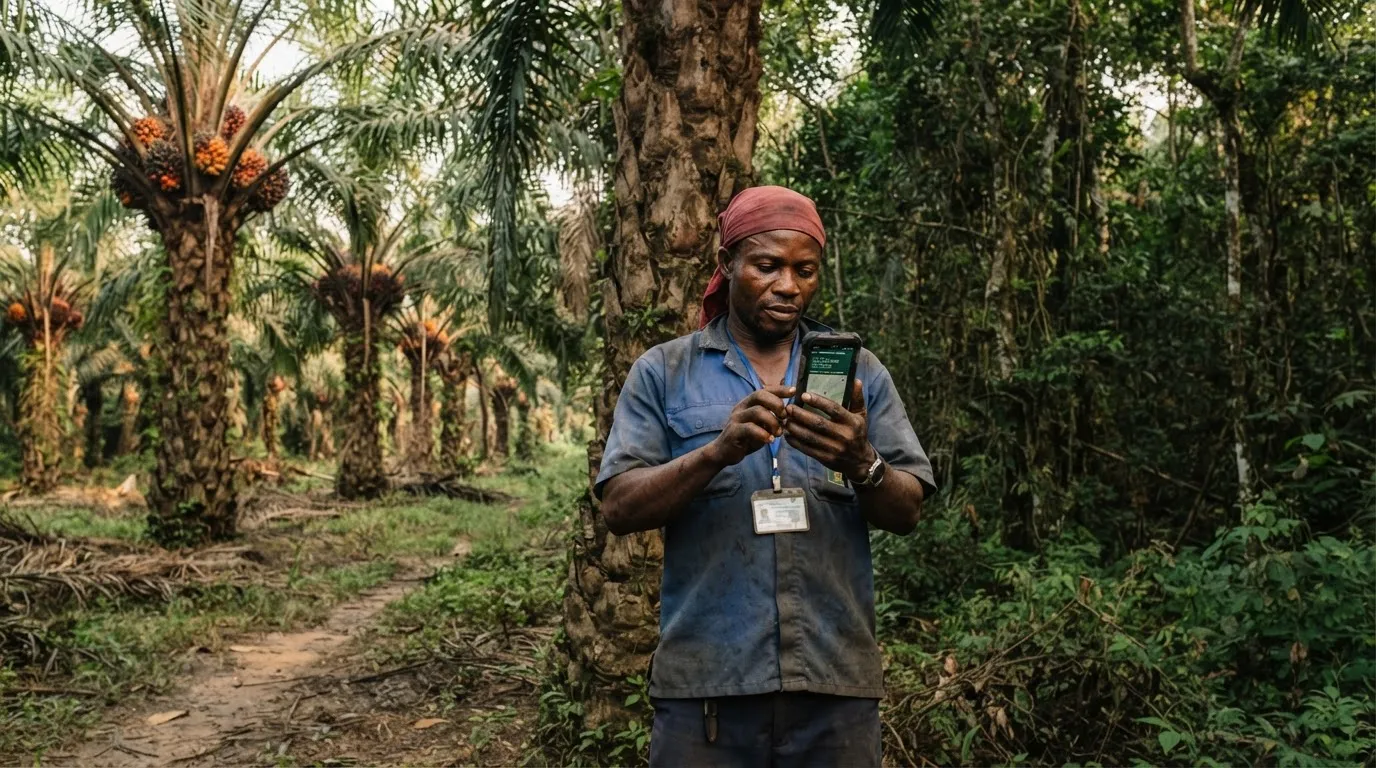
A field officer using a phone app to geolocate an oil palm smallholding for traceability
Only a phone
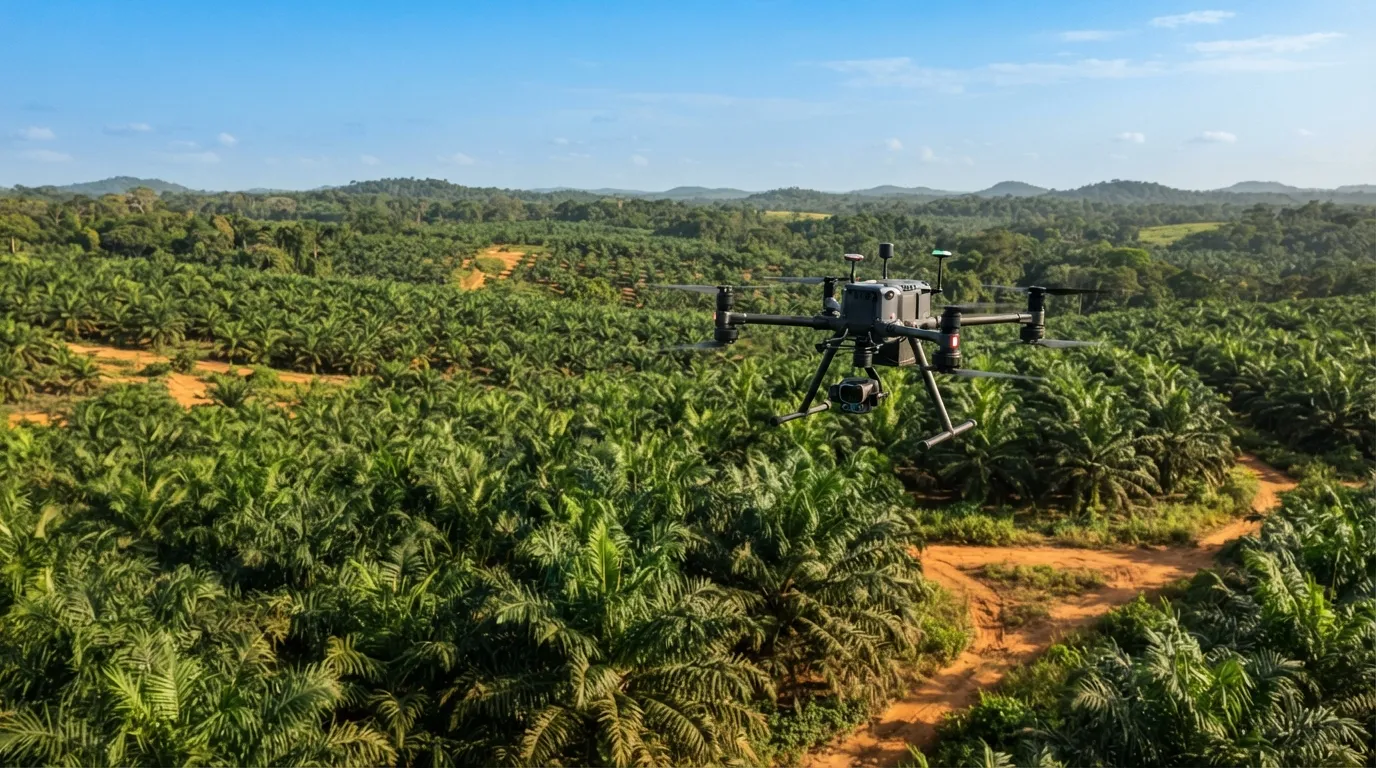
A drone flying over an oil palm block scanning for early Ganoderma and pest damage
Or a drone
Table 9: the feasible digital and AI openings across the Ghana oil palm chain
The digital or AI openingWhat it doesHow feasible in Ghana now
EUDR traceability and deforestation mappingSatellite imagery and AI map each supplying farm's boundary and test it against the 2020 deforestation cut-off, producing the due-diligence record an EU buyer now demands.High and urgent: the tools are off the shelf, and the 2026 to 2027 deadlines create the market.
Ganoderma and pest surveillanceDrone or phone photographs, read by a trained model, flag early crown yellowing, basal rot and pest damage before a walking scout would see them.Medium to high: imagery is cheap; a locally trained model and ground-truthing are the work.
Fresh-fruit-bunch gradingA camera and model at the mill gate grade ripeness and quality in seconds, so a mill can pay for quality, not just weight, and tackle the free-fatty-acid problem at reception.Medium: proven elsewhere; needs a Ghana-calibrated model and a mill willing to buy on grade.
Precision agronomy and fertiliserSatellite and sensor data with AI target fertiliser to the block that needs it and flag nutrient deficiency early, making the cheapest yield lever cheaper still.Medium: strongest for estates and outgrower schemes that already hold the data to feed it.
Aggregation and logistics matchingA mobile platform matches smallholder fruit to the nearest mill and routes collection, digitising the missing middle and shortening the milling clock.Medium to high: it builds on the mobile-money and phone reach smallholders already have.
Local-language advisoryA voice or text assistant in Twi, Ewe or Dagbani, built on modern language models, delivers agronomy, price and disease guidance to growers who will never read a manual.Medium: local-language coverage is improving fast; connectivity and trust are the barriers.
Credit and index insurance scoringSatellite yield history and AI scoring give a lender or insurer the risk picture they lack today, unlocking GIRSAL-backed loans and weather-index cover for growers with no formal records.Medium: the data exists; the partnership with a bank or insurer is the real build.

Source: Author synthesis of the feasible digital and AI openings across the Ghana oil palm chain.

What this means

The digital openings are the most asset-light of all: they sell a capability, not a crop, and they scale in a way a plantation never can. The trap is a clever model with no distribution. The winners pair the technology with the aggregation, estate, mill or lender relationships in the pillars above, and solve the connectivity and data problem for one real buyer rather than in the abstract.

🌴 Financing the entry 🌴

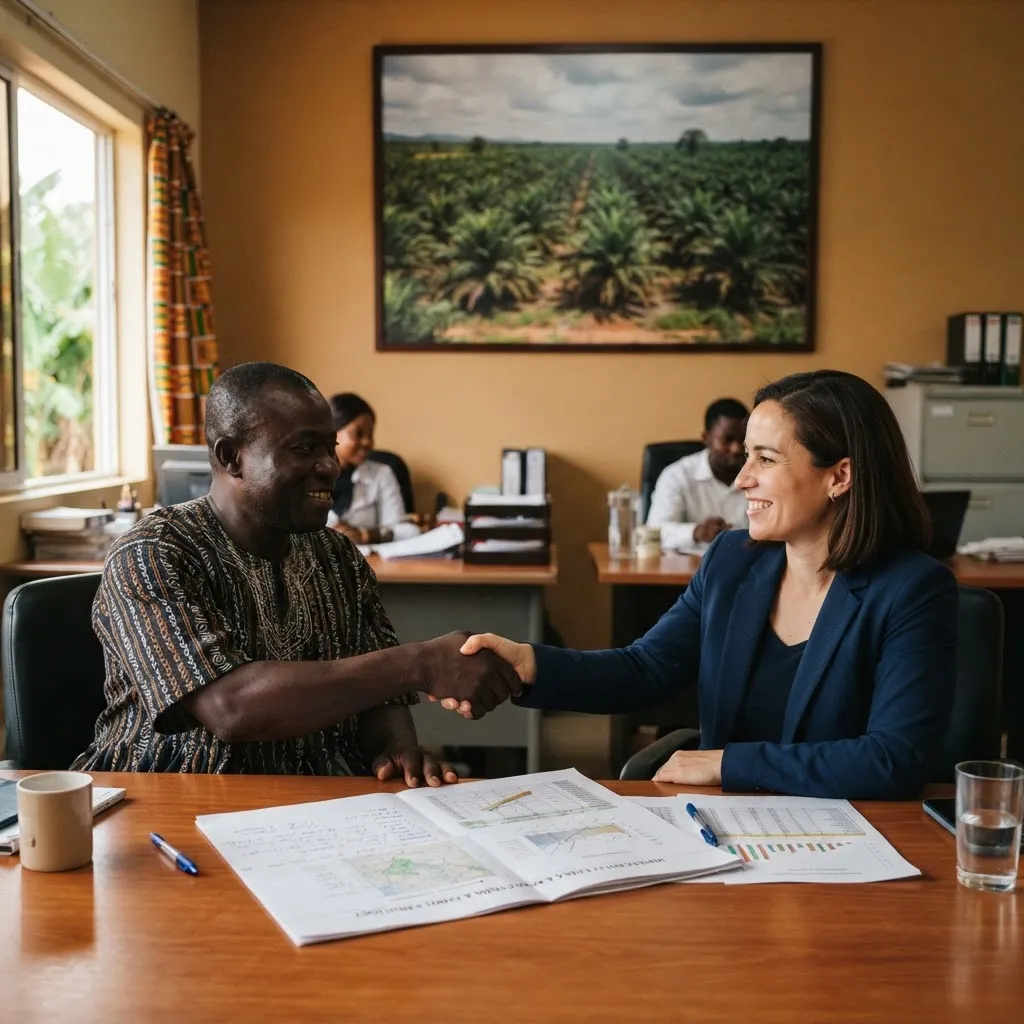
An entrepreneur signing an agribusiness loan or guarantee agreement at a Ghanaian bank, with an oil palm project file on the desk
The money is arriving
For the first time the money is arriving: a US$500 million policy window and the GIRSAL guarantee behind the entry.
🎯 Opportunity 🎯
01

Use the GIRSAL guarantee to make a bank comfortable with an aggregation or processing loan, rather than carrying all the credit risk yourself.

02

Position a service or supply business as the piece an estate or refiner needs, and let their offtake, not a cold loan application, be your security.

Money to enter oil palm is, unusually, becoming available. The new National Policy on Integrated Oil Palm Development carries a US$500 million Oil Palm Development Finance Window covering up to 70 percent of project cost with a five-year moratorium (Government of Ghana, 2025).

Alongside it, the GIRSAL scheme covers up to 70 percent of a loan's credit risk, with over GH¢604 million in guarantees supporting about GH¢1.18 billion of agribusiness loans since 2019 (GIRSAL / Bank of Ghana, 2024), and the Ghana Investment Promotion Centre offers tax incentives for agro-processing.

The capital each opening needs, and the returns it can earn, are set out in Pillar 5. The practical point is that the financing is aimed mostly at planting and processing; a first-time entrant in a service or aggregation business should look to the de-risking guarantees and to the estates and processors as partners, rather than wait for a plantation loan (Government of Ghana, 2025; GIRSAL, 2024).

70%
of a loan's credit risk covered by the GIRSAL guarantee, so a bank will lend
5 years
moratorium under the US$500 million Oil Palm Development Finance Window

The gap a newcomer fills is almost never production. Ghana has no shortage of fruit; it has a shortage of clean oil, reliable aggregation, certified seedlings, disease monitoring and traceable supply. Those are the gaps, and most of them are services and know-how, not land and machines. The student or first-time entrepreneur who learns one of them well enters the sector at low cost, next to the biggest and most bankable players, and with a skill that stays valuable as the sector grows.

🌴 The Opening: where you fit 🌴
01

Start in the top-left of the matrix. High-value, low-capital plays a Ghanaian entrant can start now: certified nurseries, fresh fruit bunch aggregation, kernel oil, surveillance and traceability services. The costly estate or refinery is best entered later or with a partner.

02

Sell a service into the high-value chain. The gap a newcomer fills is almost never production; it is clean oil, reliable aggregation, certified seedlings, disease monitoring and traceable supply, mostly know-how, not land and machines. Learn one of them well and enter at low cost.

03

Build the asset-light digital layer. EUDR traceability, Ganoderma surveillance, fruit grading and aggregation matching need only a phone, a drone or a satellite feed. Pair a working model with a real buyer, estate, mill or lender, and solve the data problem for one client.

04

Use the guarantees as your security. A US$500 million policy window and the GIRSAL guarantee are arriving. Position a service or supply business as the piece an estate or refiner needs, and let their offtake, not a cold loan application, be your security.

🌴 How oil palm ventures die 🌴

Just as useful as knowing what works is knowing what kills ventures in this crop. Six failure modes recur, and every one of them is avoidable.

⚠ The six ways ventures fail ⚠
01

Planting uncertified seed, and locking in thirty years of low yield (Pillar 1).

02

Running out of cash in the immature years, before the palm pays (Pillar 4).

03

Building milling or refining capacity against a headline national gap, then finding no clean feedstock or offtake to fill it (Pillars 2, 5).

04

Competing with imports on price instead of on clean, consistent quality (Pillar 2).

05

Ignoring the 24-hour milling clock, so the oil is downgraded before it is sold (Pillar 3).

06

Buying land already carrying Ganoderma, an un-hedgeable disease with no cure (Pillar 3).

The risks that sit inside the business decision

Entering at the wrong node, with no path up

HIGH
What it is

A business that plants fruit or makes red oil sits in the chain that keeps about 6 percent of the value and almost no profit. Entering there without a plan to move up, into extraction, aggregation, refining or a service, means working hard for the thin end of the chain for good.

Evidence

The value-distribution evidence in Pillar 6: brand owners and retail take about 66 percent of gross profit; smallholders almost none (Rijk et al., 2021).

Who it hits

First-time entrants who copy what they can see, which is production, rather than where the value is.

How to manage it

Choose a node with a route upward built in, or a low-capital service that sells into the high-value chain. Never enter the low chain by default.

Undercapitalised entry

HIGH
What it is

Oil palm punishes running out of money. The immature years, the milling clock and the feedstock quality problem all demand working capital at exactly the moment a thin balance sheet cannot provide it. Most failed ventures are not bad ideas; they are good ideas that ran out of cash at the wrong time.

Evidence

The immature valley gives no income for two to three years (Pillar 4); mills and aggregators need cash to pay for prompt, clean fruit (Pillars 3, 5).

Who it hits

Anyone entering a capital-heavy node without a funded runway through the loss-making phase.

How to manage it

Size the runway to the full immature or ramp-up period, not to year one, and use the guarantees and partnerships above to fund it. Start asset-light if the runway is short.

🌴 Key takeaways 🌴
01

Oil palm is a chain of businesses, and you can enter at almost any capital level. The cheapest, most reachable openings are services and aggregation, not land and mills.

02

The gap a newcomer fills is almost never production. It is clean oil, reliable aggregation, certified seedlings, disease monitoring and traceability, mostly know-how, not machines.

03

The sweet spot is high-value, low-capital: certified nurseries, fresh fruit bunch aggregation, kernel oil, surveillance and traceability services. Start there.

04

Ventures die in six avoidable ways, led by uncertain seed, the cash-flow valley, and building capacity with no feedstock or offtake. Design around them from the start.

05

For the first time, the money is arriving: a US$500 million policy window and the GIRSAL guarantee. Use the guarantees and the estates' offtake as security, not a plantation loan.

Who you are, and where you fit

🌴 Practitioner intelligence 🌴

The right opening depends on who is asking. The synthesis below is the single most useful thing this playbook can say to each kind of reader thinking of entering the sector.

For students

This is the pillar for you, because it says where a graduate with more skill than capital actually fits. Pick one low-capital opening from the map, a certified nursery, fresh fruit bunch aggregation, agronomy advisory, Ganoderma surveillance or traceability, and go deep on it. The mistake is waiting until you can afford land or a mill; you never will, and you do not need to. Learn the skill, start the service, build the relationships with estates and mills, and let the capital-heavy plays come later, if at all. Your degree plus one of these skills is a business.

For entrepreneurs

Read the opportunity matrix as your shortlist. Pick a node in the top-left, secure both ends before you spend, supply and offtake, and design around the six failure modes from day one. The single most repeated mistake is entering the low-value chain because it is visible and then being trapped there. Enter where you can climb, or sell a service into the high-value chain from the start. Move fast on the openings that are still uncontested, kernel oil, surveillance and traceability, before they fill up.

For investors

Use this pillar as a screen. The return in oil palm climbs up the chain, so favour deals at or moving toward the high-value nodes, refining, kernel oil, integrated aggregation, over pure production. Underwrite two things above all: a secured, close, quality feedstock or offtake, and a funded runway through the loss-making phase. The two dominant ways to lose money here are backing a business stuck at the thin end of the chain, and backing a good business that runs out of cash in the valley. Both are diligence-able before you commit.

For ecosystem actors

The lever here is human capital and enabling services. The sector's openings are mostly know-how, agronomy, quality, aggregation, traceability, so the highest-return public investment is in the skills and the shared platforms that let people fill them: extension, training, a traceability system, testing labs, and de-risking for first-time service businesses. The measurable outcome is the number of viable oil palm ventures started, especially by young people, and the share of them that survive. The failure to avoid is funding assets while leaving the human capital that makes those assets work unbuilt.
Download full PDF
UpcomingThis document isn't available yet.