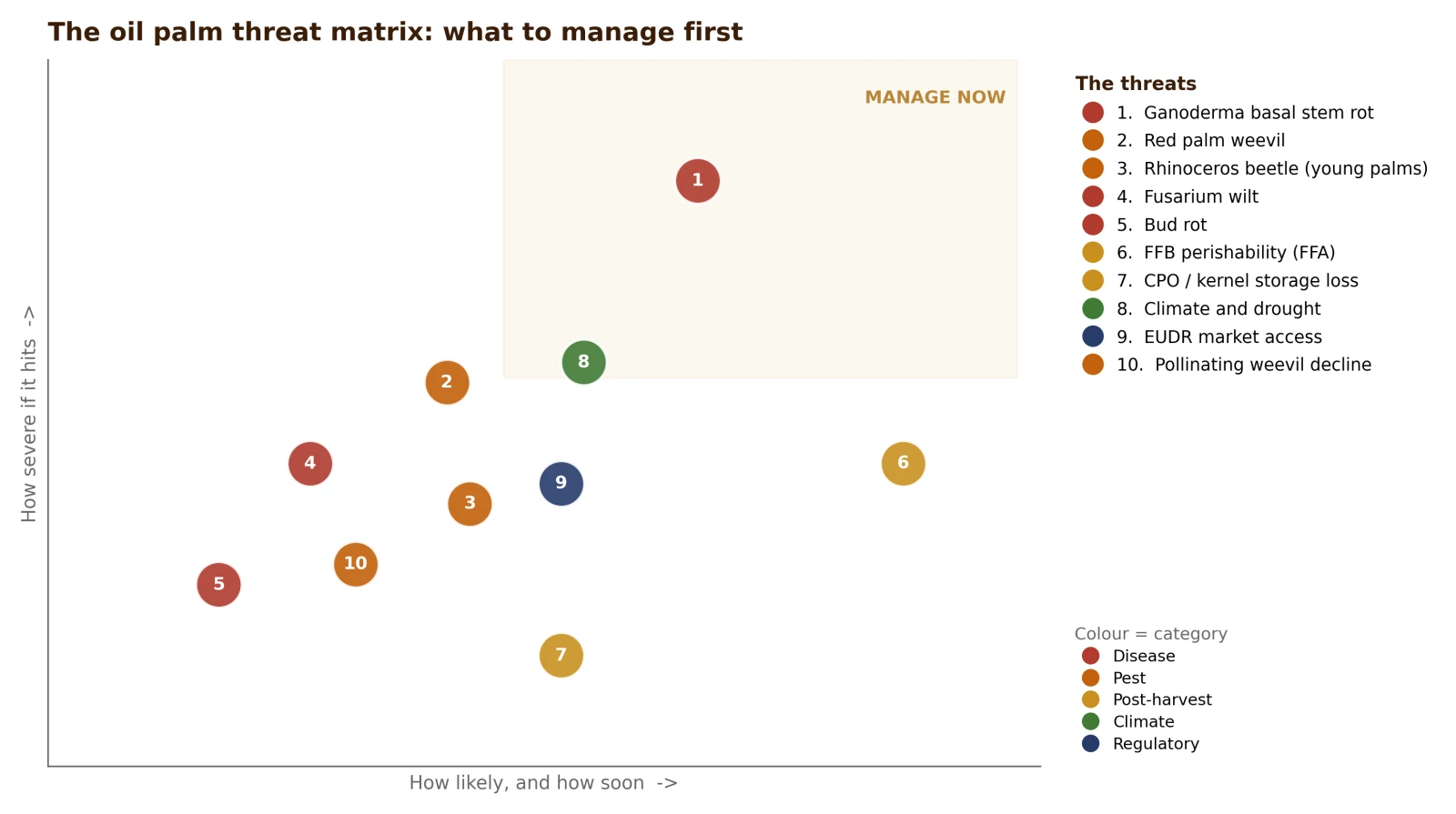
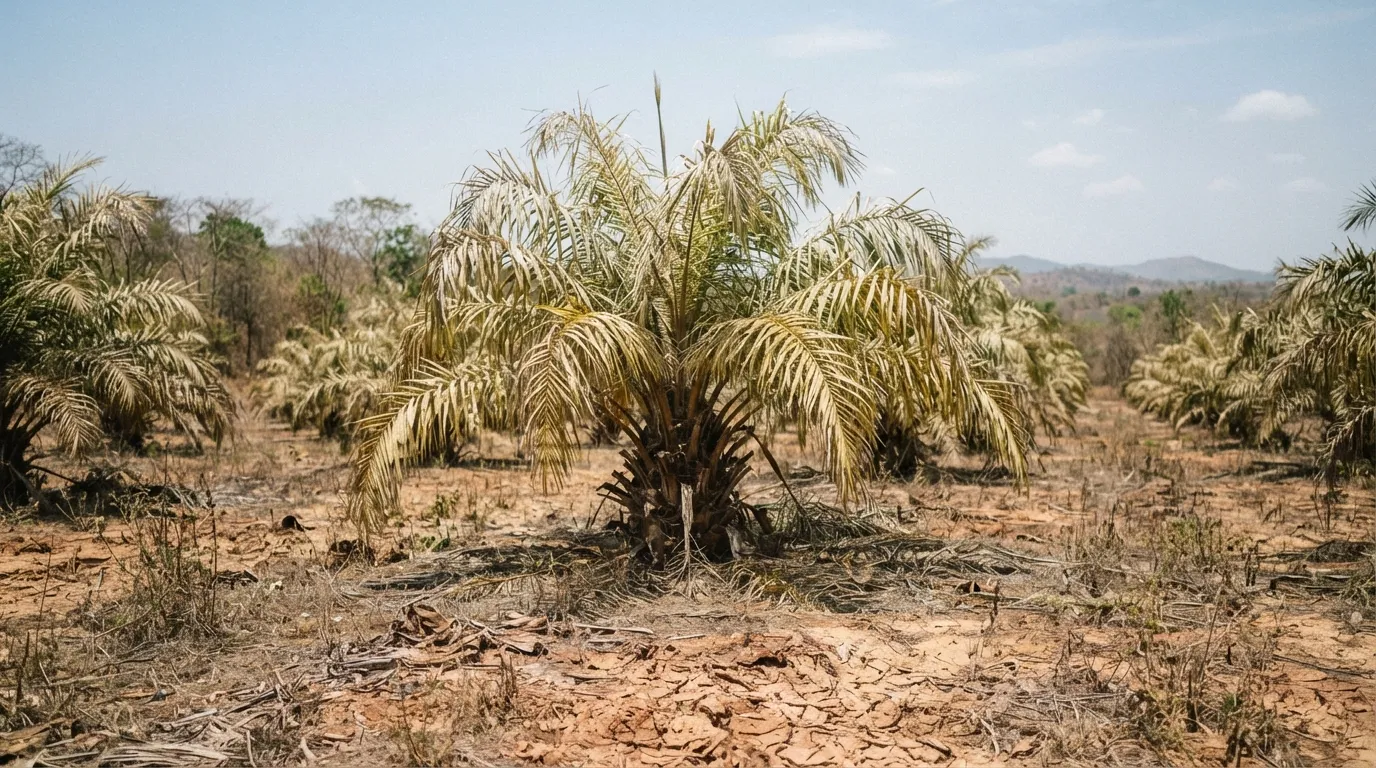
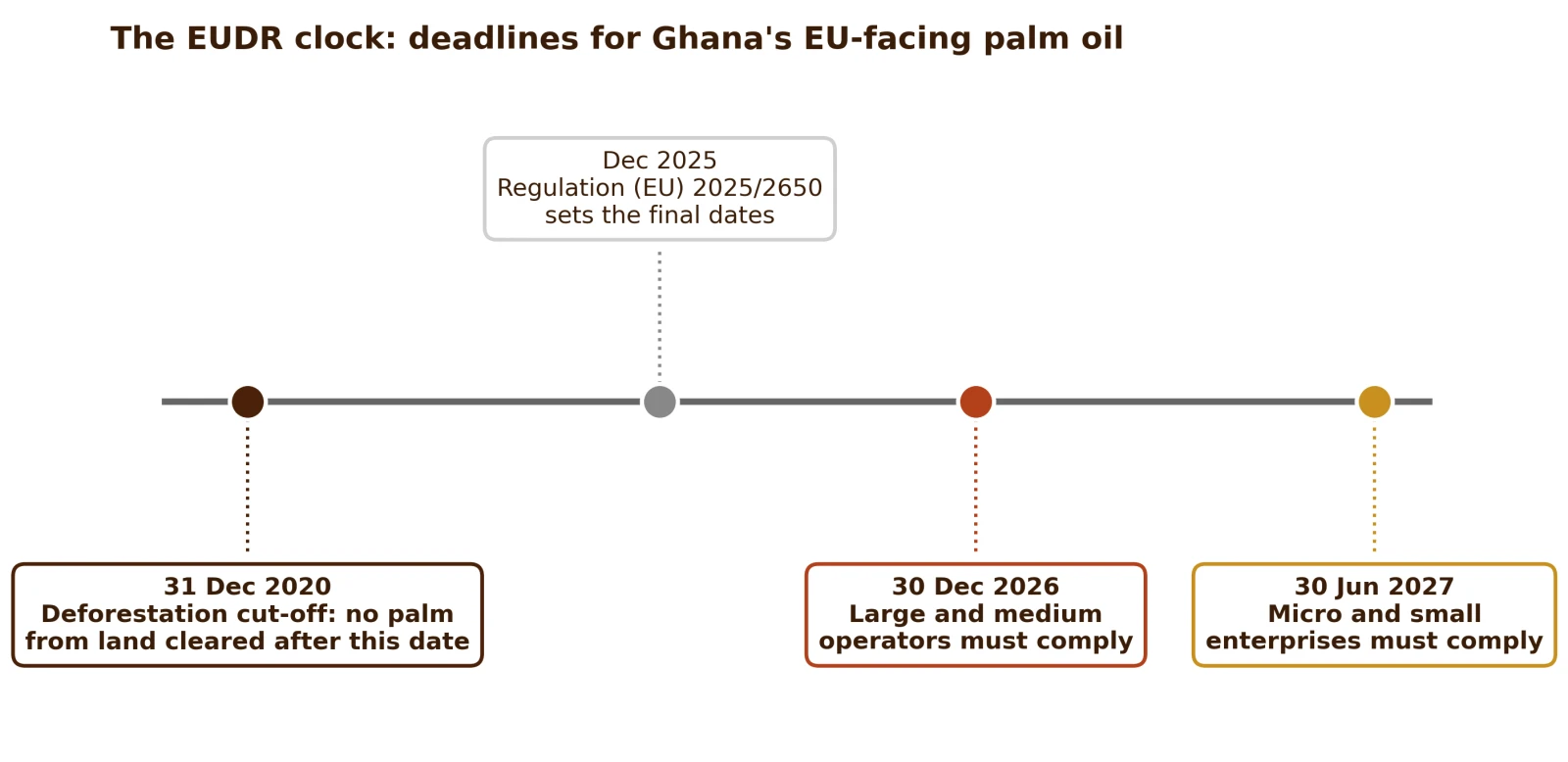
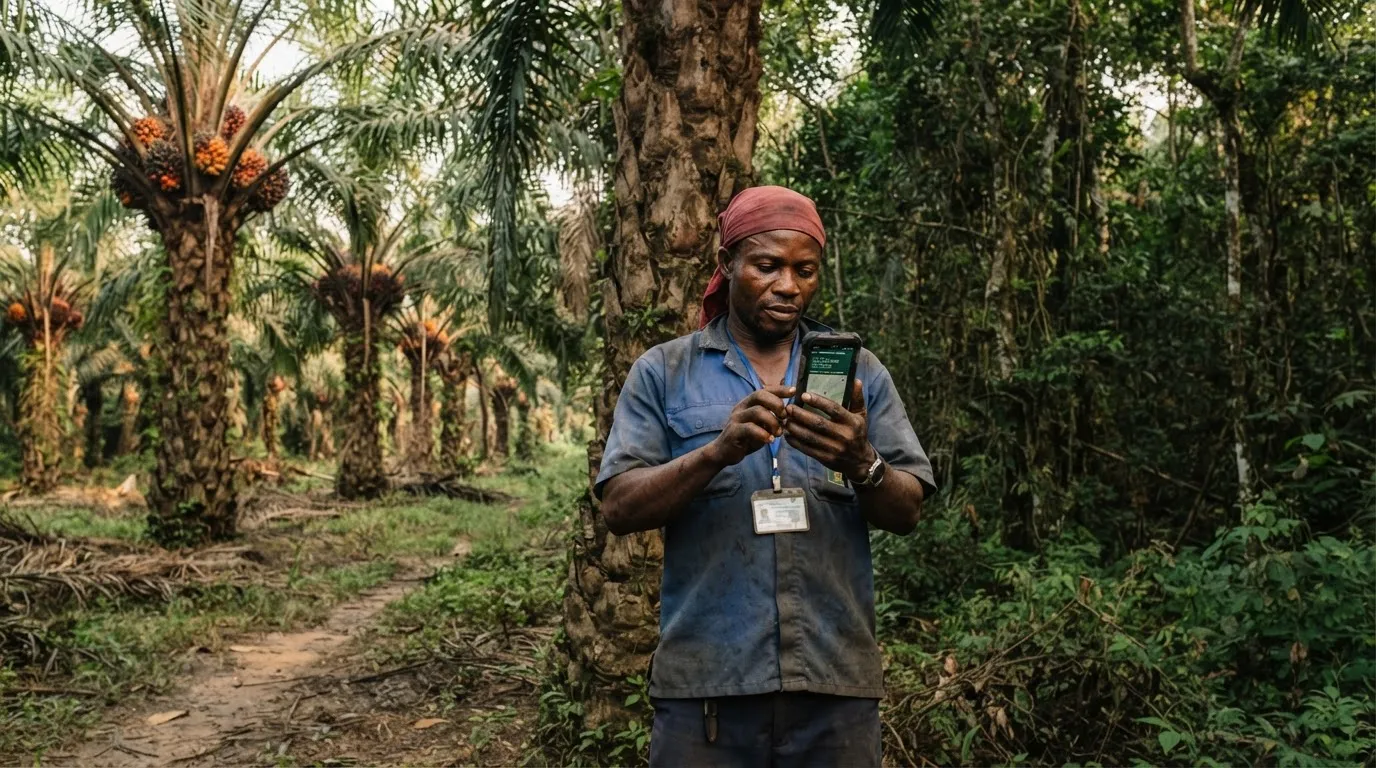
The newest risk is a rule. The European Union’s deforestation regulation brings palm oil into scope: to sell into the European Union, an operator must prove the oil did not come from land cleared of forest after 31 December 2020, and must geolocate the plots. After two delays, large and medium operators must comply from 30 December 2026 and micro and small enterprises from 30 June 2027, against a deforestation cut-off of 31 December 20201011. The Commission’s simplification review of May 2026 kept these dates, and a July 2026 delegated act widened the scope to more palm oil derivatives, with oleochemical supply chains given until 30 December 20271213. Ghana’s smallholder base, selling loose fruit to intermediaries without plot maps, is the weak point101114. Ghana’s position is easier than its neighbours’: the EU’s first country benchmarking in May 2025 classed Ghana as low risk, so buyers may apply simplified due diligence, though plot geolocation is still required, and micro and small primary producers can file a one-off simplified declaration1511.