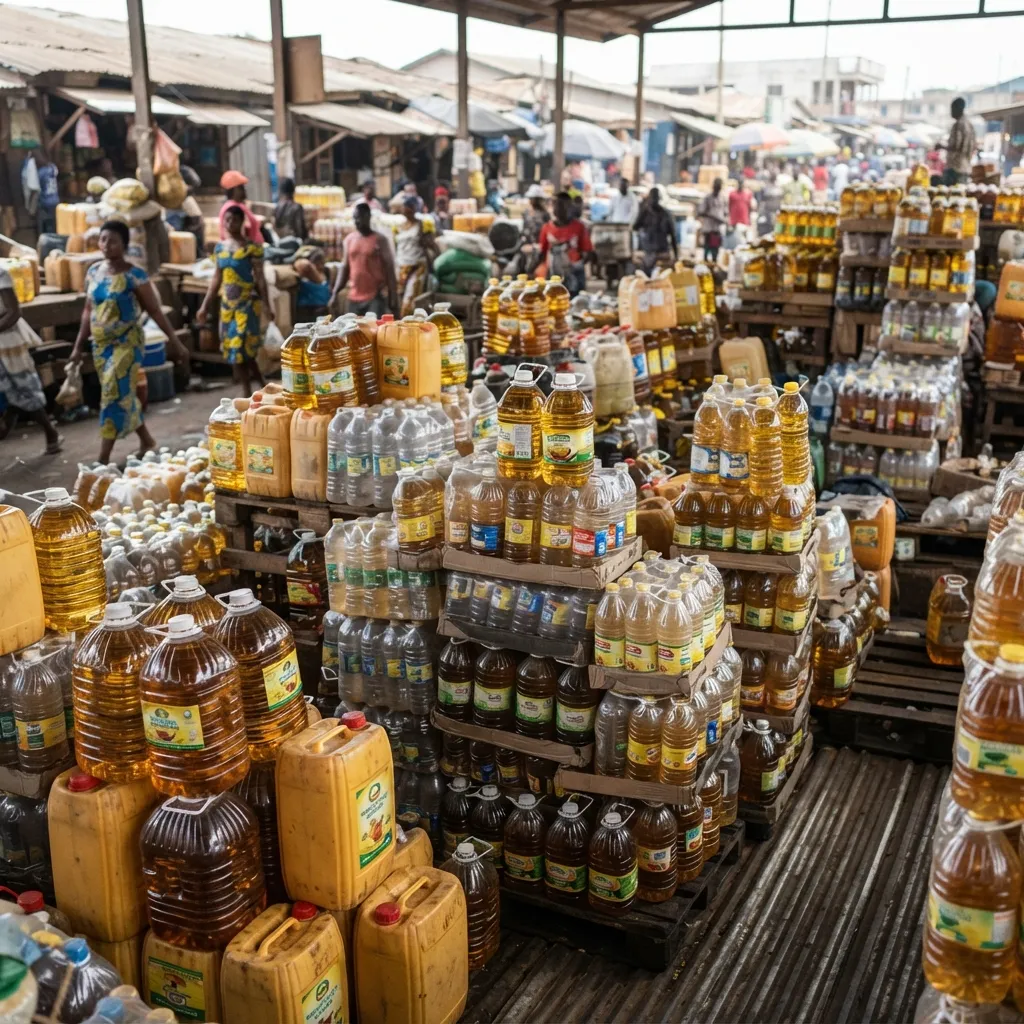
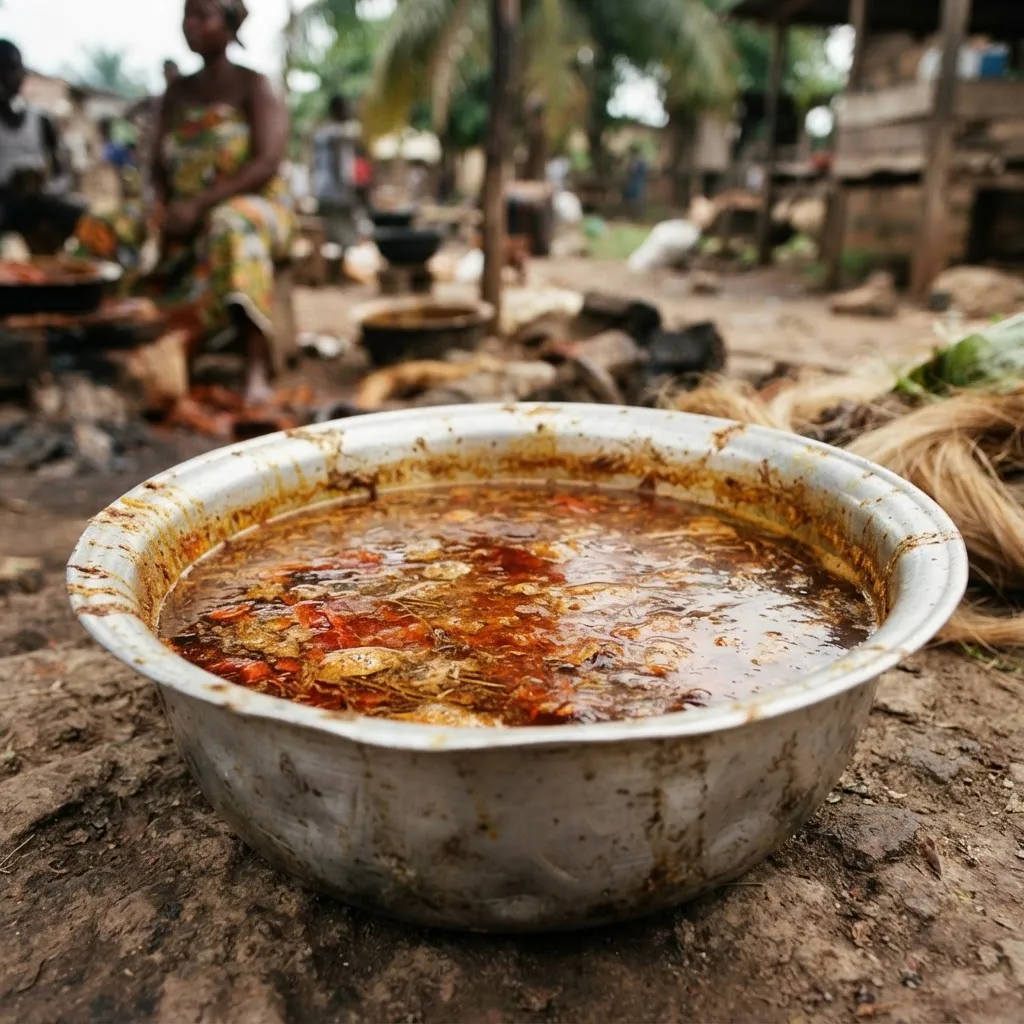
If you are entering on limited capital, do not try to own a refinery. Start where the market is thinnest and the capital lightest: aggregation and quality. Buy clean, well-dried red oil from artisanal mills, grade and consolidate it, and sell it on to a larger buyer to a consistent standard. The mistake first-timers make is chasing the branded-oil shelf before they can guarantee a consistent product; consistency, not a label, is what the market pays for. What you gain first is a book of mill suppliers and a real feel for quality, the two things every bigger play in this sector needs.
Ghana eats more palm oil than it makes, and fills the gap with imports paid for in scarce dollars. But the shortfall is not really a farming gap. It is a milling and refining gap. Seeing who buys palm oil, in what form, and at what price is the key to seeing where the import-substitution money actually sits.
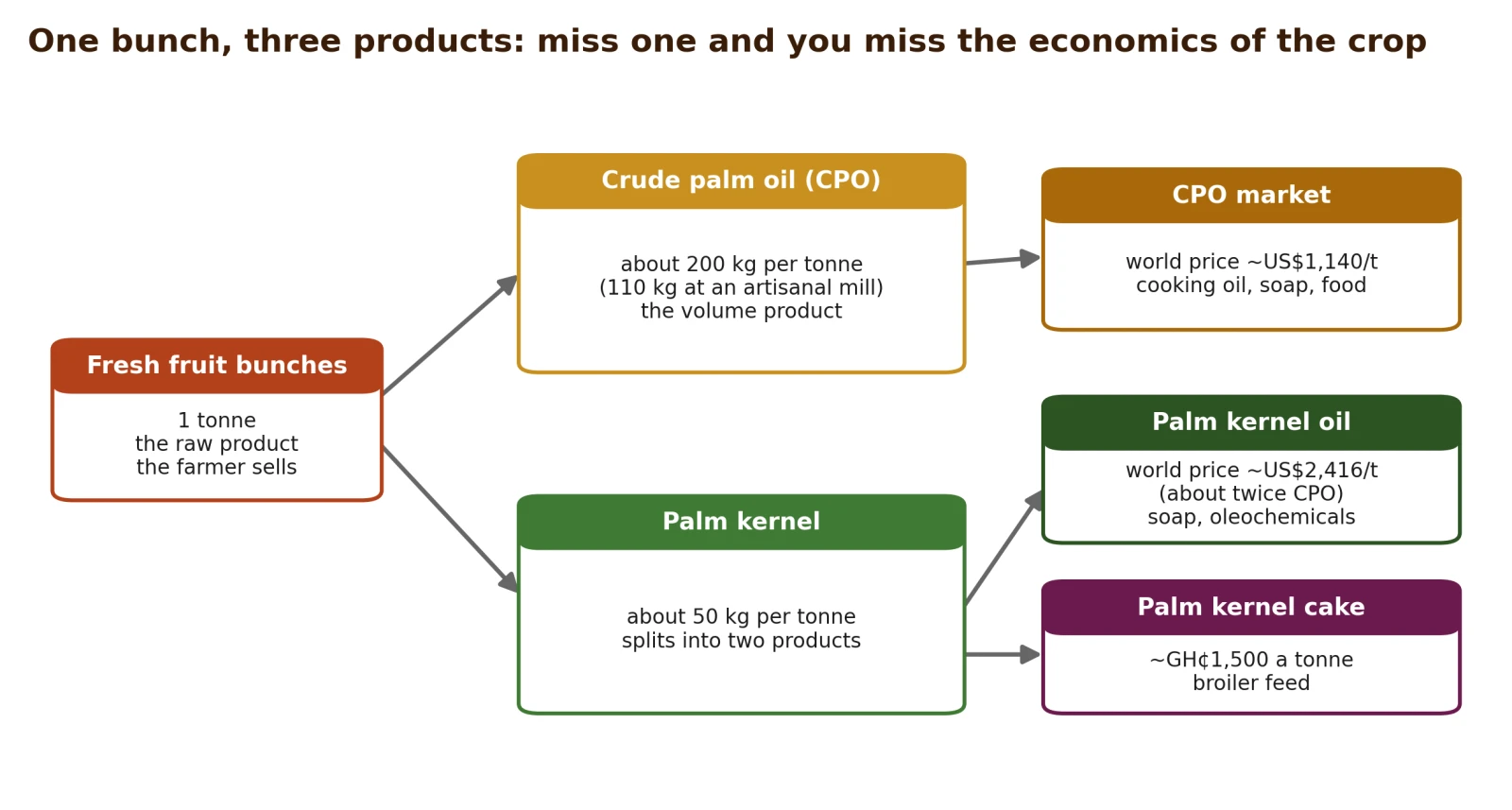
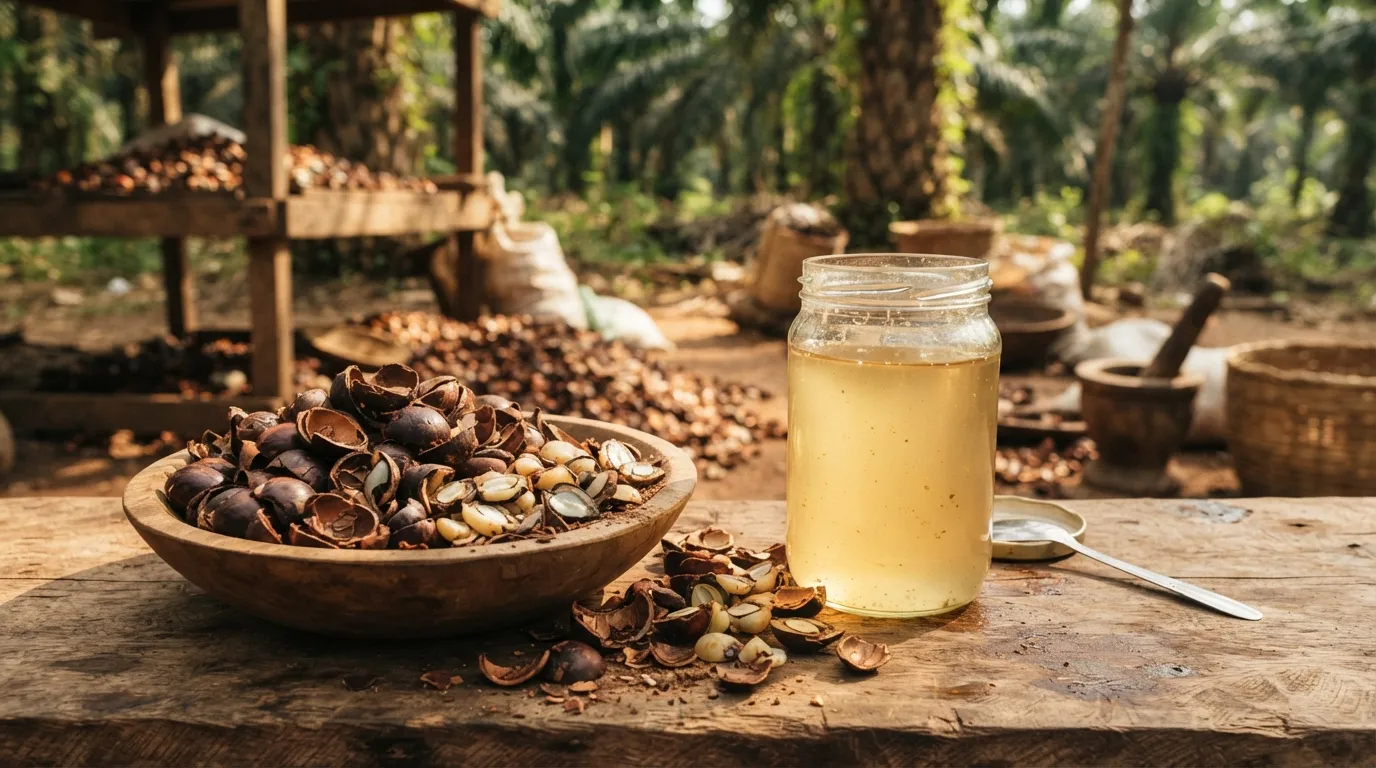
A tonne of fresh fruit bunches is not one product. Inside the mill it splits into three separate commercial streams, each with its own buyer, its own price and its own route to market. The oily outer flesh gives crude palm oil. The nut inside gives palm kernel oil and, as a by-product, palm kernel cake. Miss any one of them and you miss the economics of the crop (USDA FAS, 2024).

🌴 One bunch, three products 🌴

The scale of each stream is set by the mill. Ghana crushes about 90,000 tonnes of palm kernel a year into roughly 42,000 tonnes of palm kernel oil, and turns out about 50,000 tonnes of palm kernel cake, most of which goes to poultry feed at about GH¢1,500 a tonne (USDA FAS, 2024). Crude palm oil is the volume product and the one everyone watches, but palm kernel oil, as the prices below show, is quietly the richer prize.


🌴 Who buys the oil, and why demand keeps rising 🌴
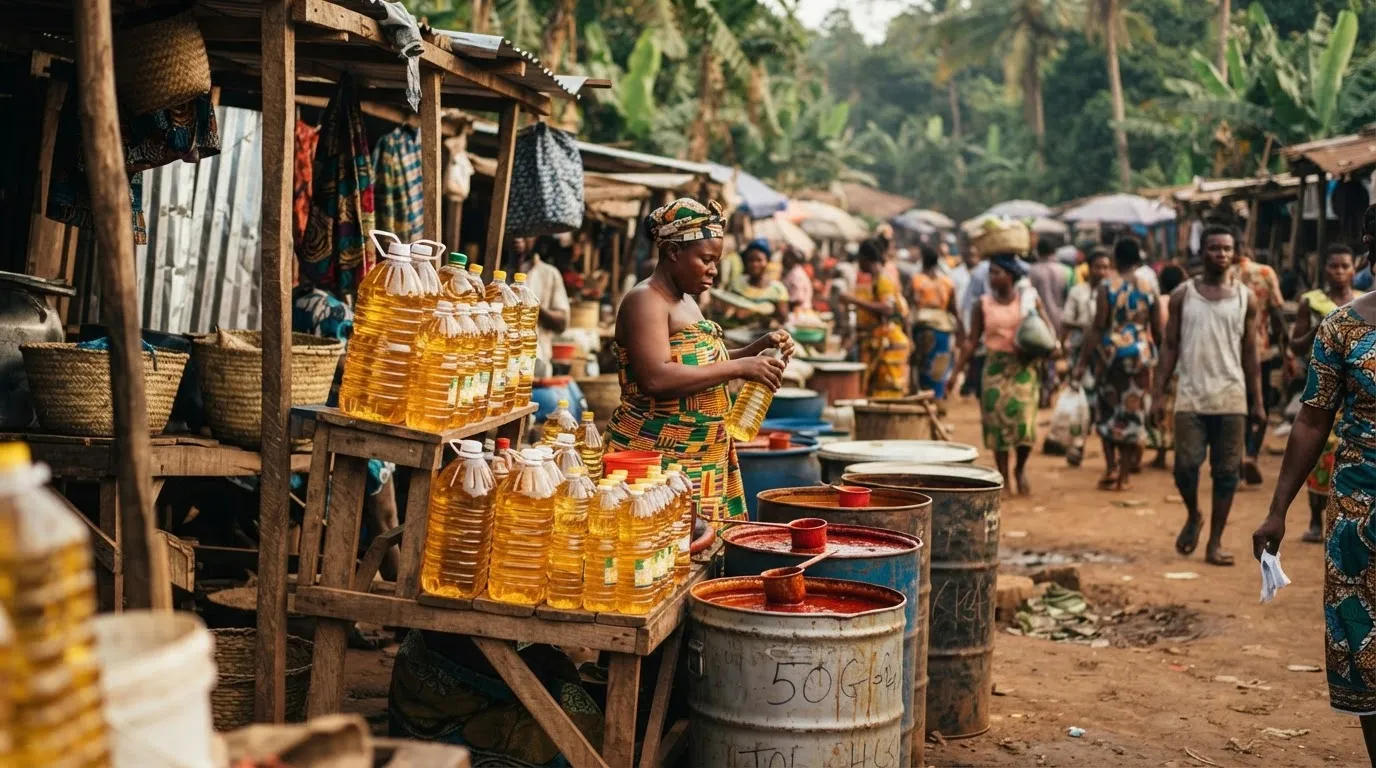
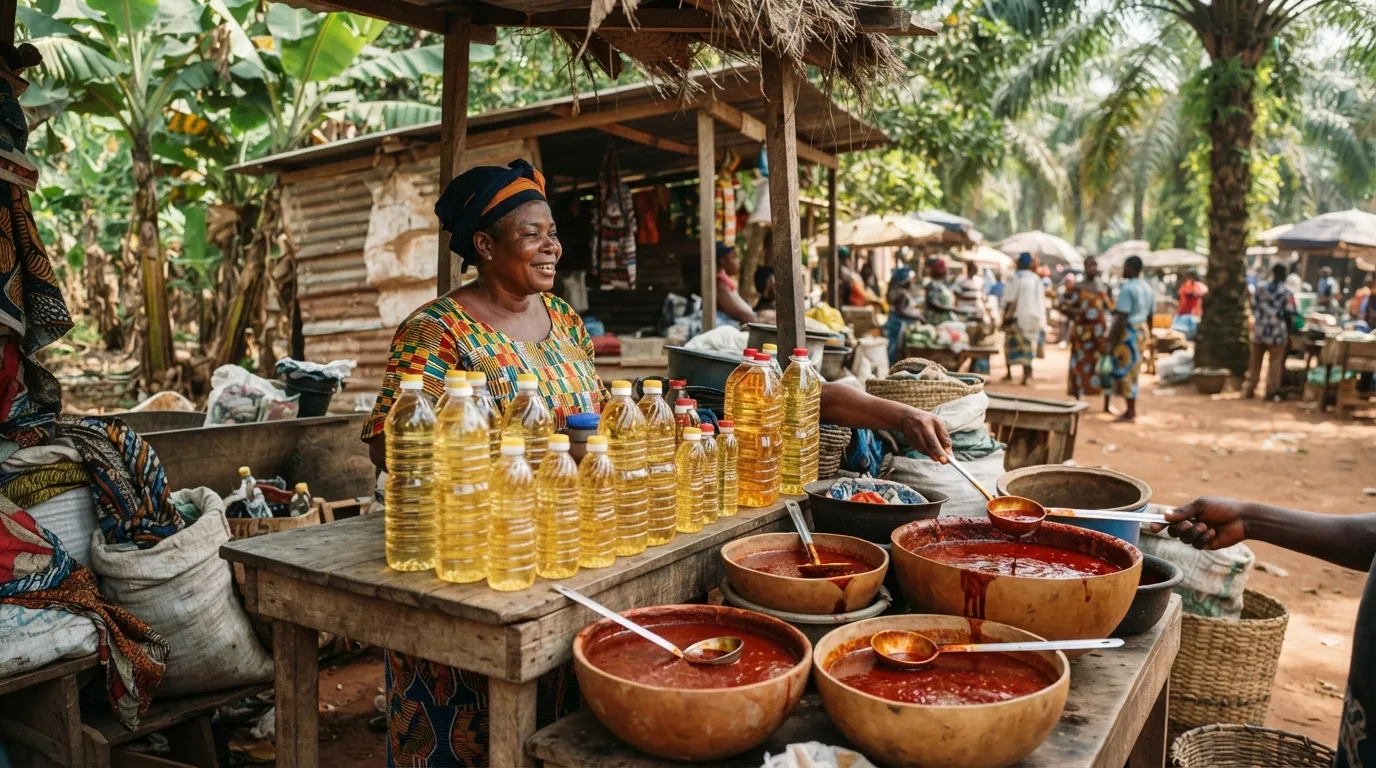
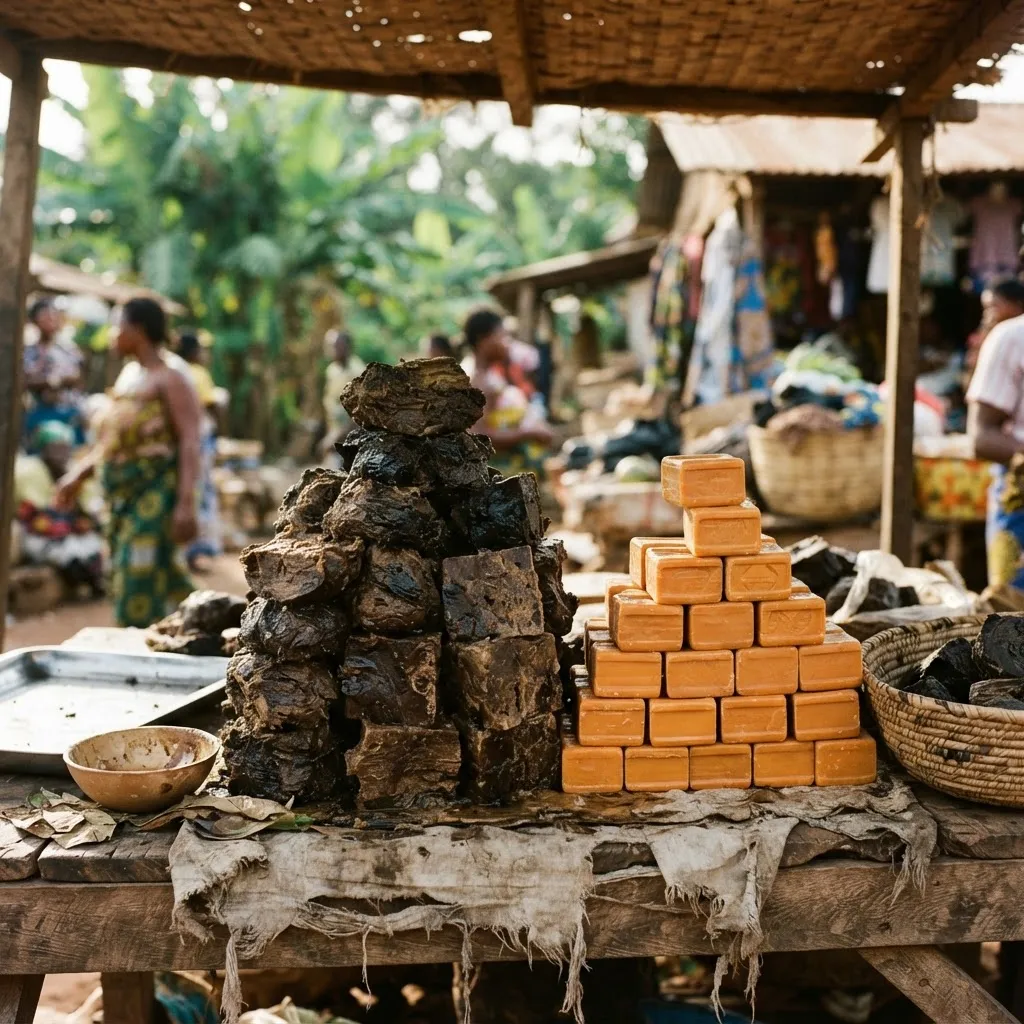
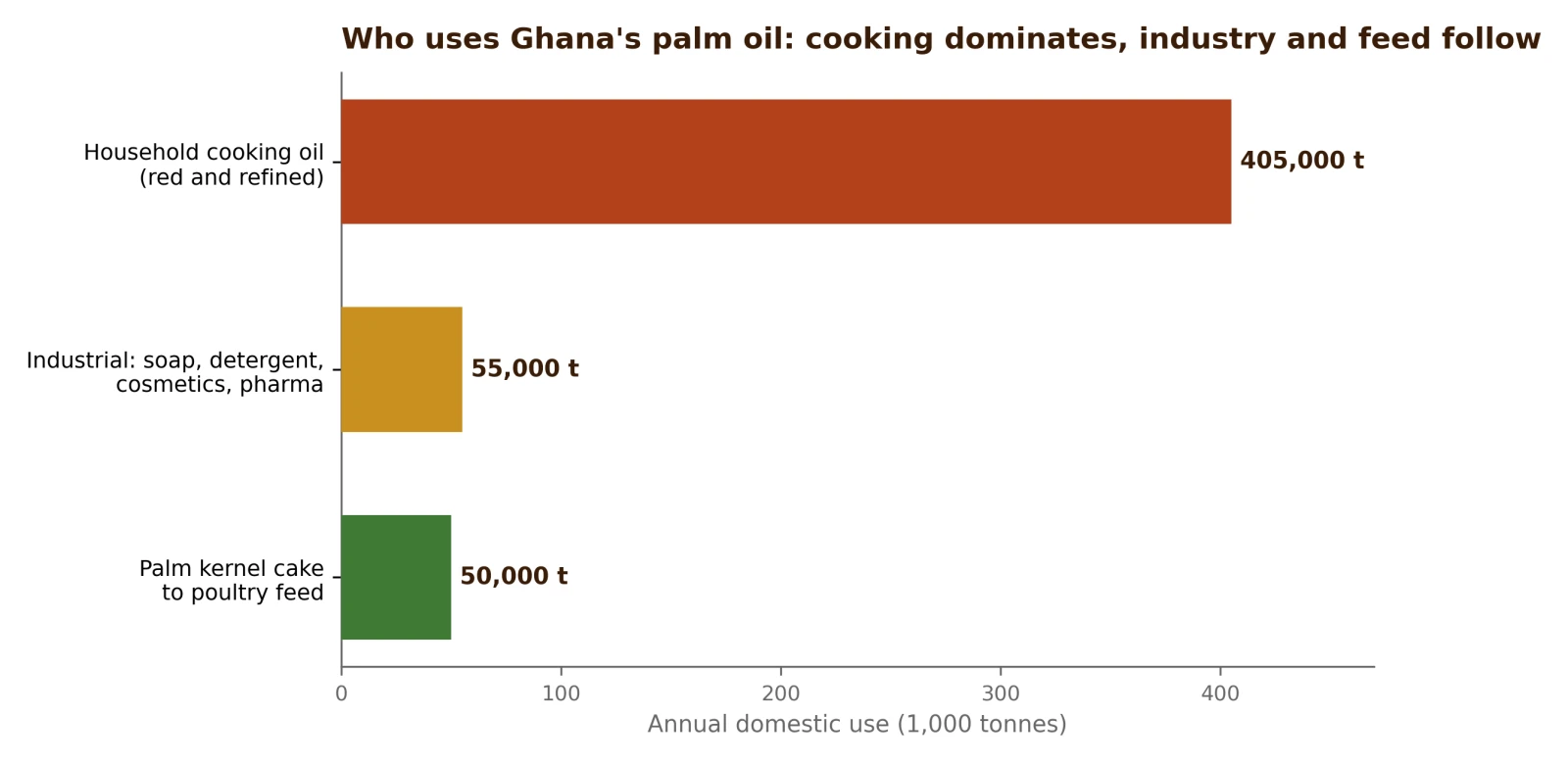
Ghanaians use about 10 to 11 kilograms of edible oil a person a year (Ofosu-Budu & Sarpong, 2013), and palm oil is the country's main cooking fat, making up roughly three-fifths of edible-oil demand (Ofosu-Budu & Sarpong, 2013). Household cooking is the largest single use by far, and most of it is low-value artisanal red oil sold from bowls, bottles and tins in open markets.
Industry, mainly soap, detergent, cosmetics and pharmaceuticals, takes about 55,000 tonnes a year, and the rest of the food-use total goes to household cooking and food processing (USDA FAS, 2024).

Household cooking is about six in every ten litres used, and most of it is low-value artisanal red oil. Demand is not flat. It rises with a population growing about two percent a year, with urbanisation, and with rising per-capita use. That is a structural pull under the whole market: even if production caught up today, consumption would keep moving the target. The demand side is not the problem. The supply side is.
Not every buyer takes the oil in the same form or pays the same price. Cooking dominates by volume and most of it is cheap red oil, while industry and the branded shelf pay for clean, consistent, refined oil. Read the table by how it pays, and the demand-side strategy almost writes itself.
| Channel / buyer | What they buy | How it pays | |
|---|---|---|---|
| Household cooking | Low-value artisanal red oil from bowls, bottles and tins | about 6 in 10 litres used | Largest use; low value, informal |
| Industry | Palm oil and palm kernel oil for soap, detergent, cosmetics, pharmaceuticals | about 55,000 tonnes a year | Industrial contract; pays for a defined spec |
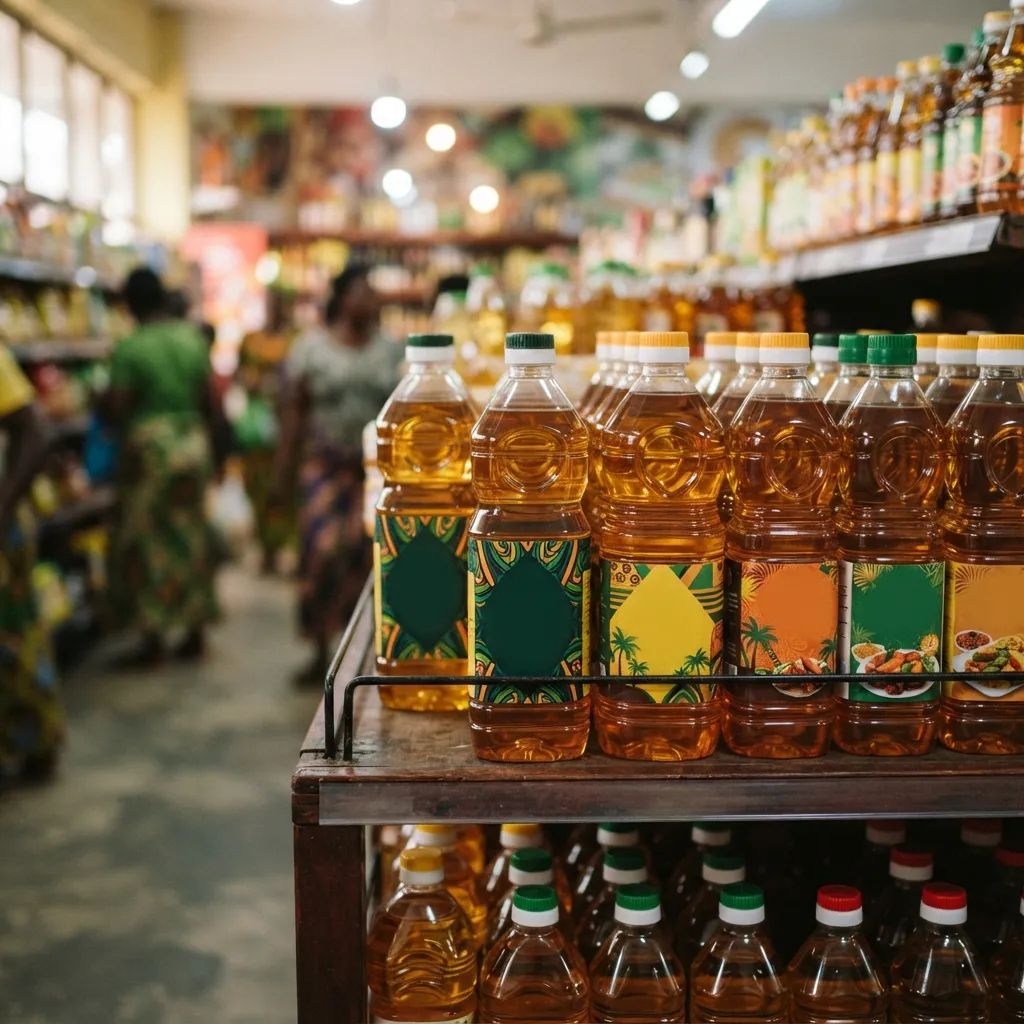
| Branded refined cooking oil | Clean, consistent refined oil for the retail shelf | the premium retail segment | Highest retail price; served by imports today |
| Food processing | Refined and semi-refined oil as an ingredient | the balance of food-use demand | Steady processor demand for consistent oil |
Source: USDA FAS (2024), New Post estimates for marketing year 2024/25. Cooking dominates by volume; industry and the branded shelf pay for refined quality.
🌴 The deficit is a milling gap dressed as a farming gap 🌴

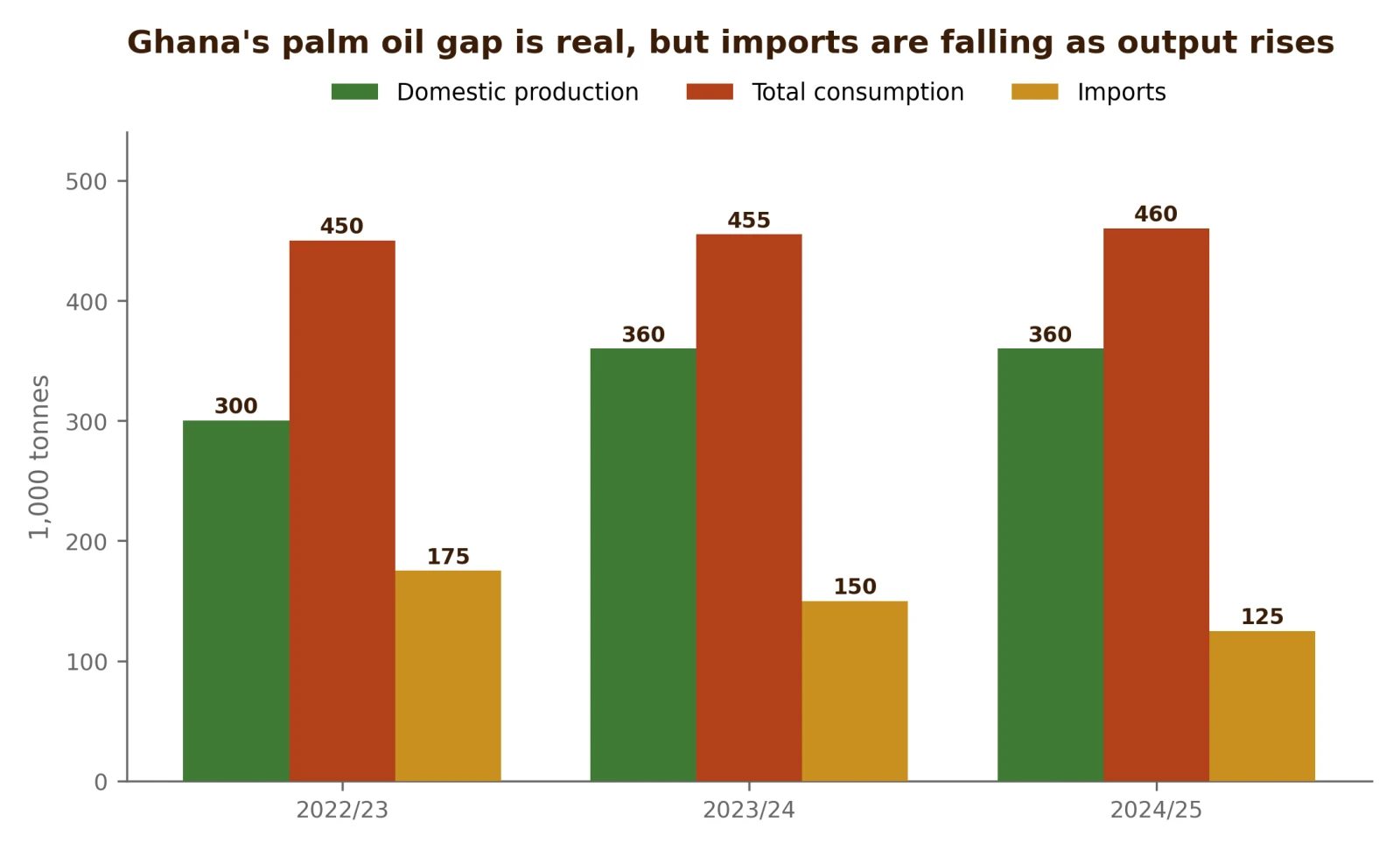
Look closer and the gap changes shape. Imports are falling, from a 2018/19 peak near 422,000 tonnes to about 125,000 tonnes now, as domestic output rises. And what Ghana imports is refined oil and cheap substitutes, because the country's artisanal red oil is too high in free fatty acid and moisture to serve the branded and industrial market.
So the deficit is not really a shortage of fruit. It is a shortage of clean, refined, consistent oil. The lever is not to grow more bunches; it is to extract and refine better. That is why this pillar points straight at Pillars 5 and 6.
The headline is that Ghana runs short of palm oil. Depending on which official series you read, the shortfall is either about a milled crude-palm-oil shortfall of about 50,000 tonnes a year (United States Department of Agriculture; CSIR-OPRI, 2024 to 2025) on the internationally comparable series, or closer to 100,000 tonnes on the higher post estimate, or a wider self-sufficiency gap of about 200,000 tonnes a year across all palm products (Government of Ghana, 2025) that the government uses when it counts every edible oil and imported substitute.
All three are real; they simply measure different things. Whichever you take, Ghana still spends more than US$200 million a year on imports (Government of Ghana, 2025) to close it. Production itself is cited from about 300,000 tonnes on the official series to over 400,000 on newer models, so every deficit figure carries that same uncertainty (Government of Ghana, 2025; USDA FAS, 2024).
🌴 Three markets, three price levels 🌴
Because the crop is really three products, it carries three price levels, and a practitioner needs to read all three. At the bottom sits the fresh fruit bunch, whose farm-gate floor the Tree Crops Development Authority now sets month by month, at a minimum farm-gate price of about GH¢1,723.96 a tonne of fresh fruit bunches (Tree Crops Development Authority, June 2026).
In the middle sits crude palm oil, which tracks the world benchmark of about US$1,140 a tonne (World Bank Pink Sheet, May 2026), set on the Malaysian exchange and pushed up in 2026 by Indonesia's biodiesel mandates, which pull palm oil into fuel and tighten world supply (World Bank, 2026). At the top sit retail cooking oils, where branded refined oil sells far above the artisanal red oil in the same market, at about GH¢41 to 62 a kilogram in Accra and Kumasi (Selina Wamucii, 2026). Those retail prices jumped after oils and fats prices rose about 24.7 percent in the year to January 2026 (Ghana Statistical Service, 2026), part of a wider food-price surge.

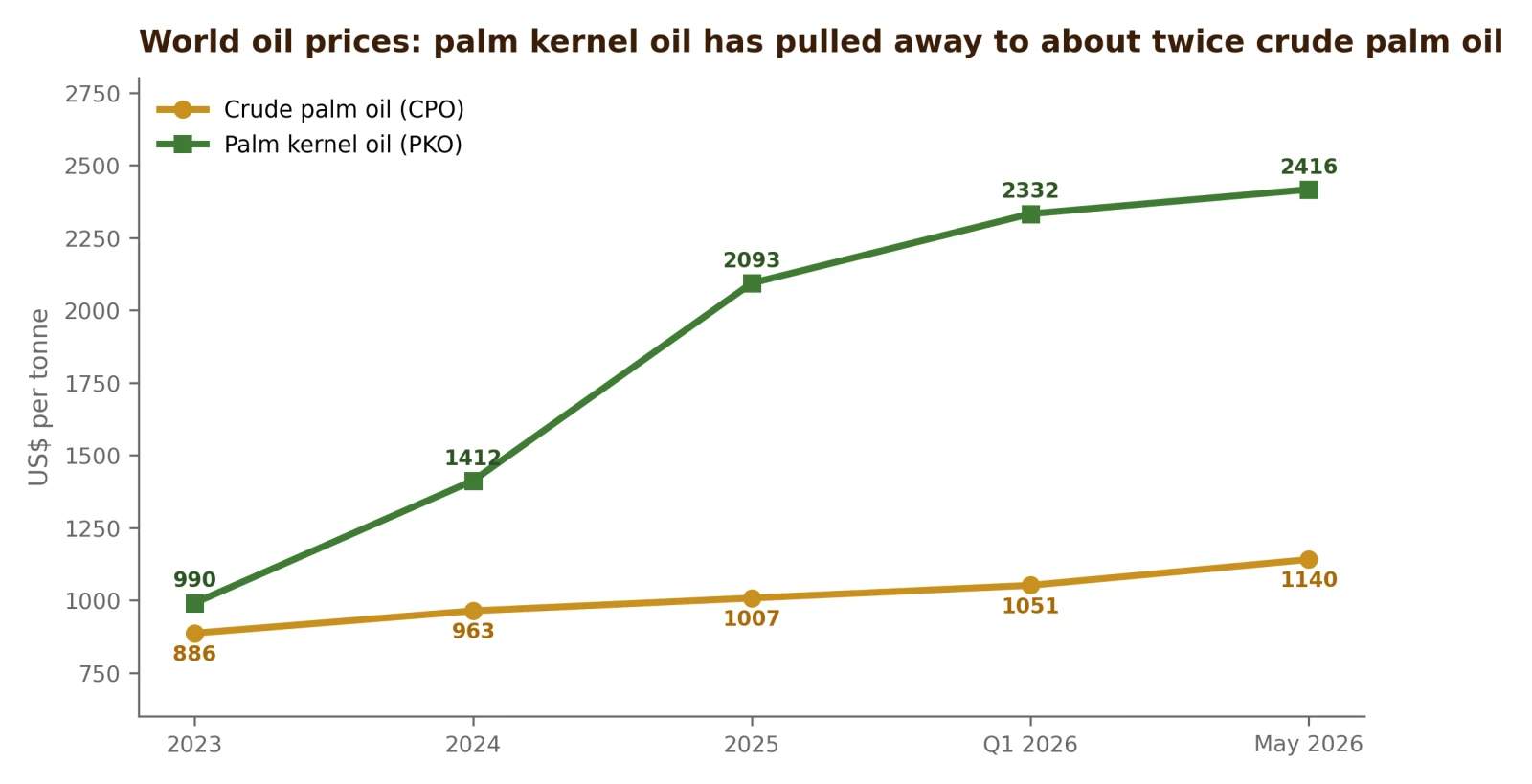
The clearest signal in the price data is palm kernel oil at about twice the crude-palm-oil price. Ghana already produces the kernel; it mostly exports or wastes the value. A kernel-crushing and palm-kernel-oil business rides a higher, faster-rising price than the crude oil everyone chases, and it competes for a raw material the big mills throw off as a by-product.

One crop, three price levels. The fresh fruit bunch carries a farm-gate floor, crude palm oil tracks a world benchmark, and palm kernel oil sits at about twice crude. Read all three, because the money is not where the volume is.
| Product / market | Price level | What sets it | The signal |
|---|---|---|---|
| Fresh fruit bunch (farm gate) | about GH¢1,723.96 a tonne | TCDA monthly minimum farm-gate floor | The floor under the whole crop |
| Crude palm oil | about US$1,140 a tonne | Malaysian world benchmark; Indonesia biodiesel pull | The volume product everyone watches |
| Palm kernel oil | about twice the crude price | Scarcer, richer stream, rising faster | The clearest signal: the kernel prize |
| Retail cooking oil | about GH¢41 to 62 a kilogram | Branded refined oil, far above artisanal red oil | Where refined quality is paid for |
Sources: Tree Crops Development Authority (June 2026); World Bank Pink Sheet (May 2026); Selina Wamucii (2026). Prices are indicative benchmarks; check against current field data.
🌴 The import bill, and the regional mirror 🌴


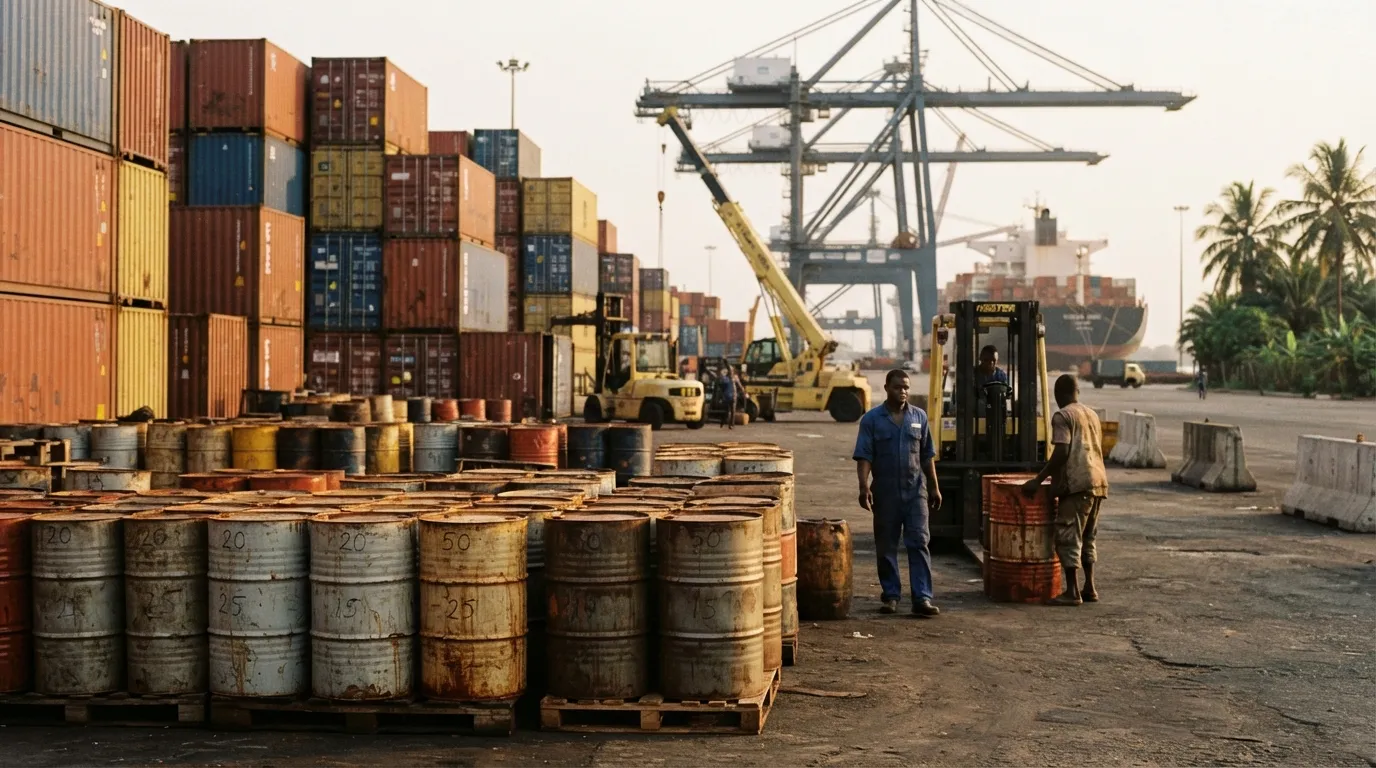
Ghana's palm oil imports are led by Malaysia (about US$48.8 million, 29,132 tonnes in 2023), then Indonesia and Cote d'Ivoire (World Bank World Integrated Trade Solution, 2023). The broader basket of vegetable fats and oils leans instead on Indonesia (IndexBox, 2024). Either way the bill is paid in foreign exchange, and it is the number the 2026 to 2032 policy is built to shrink (Government of Ghana, 2025).
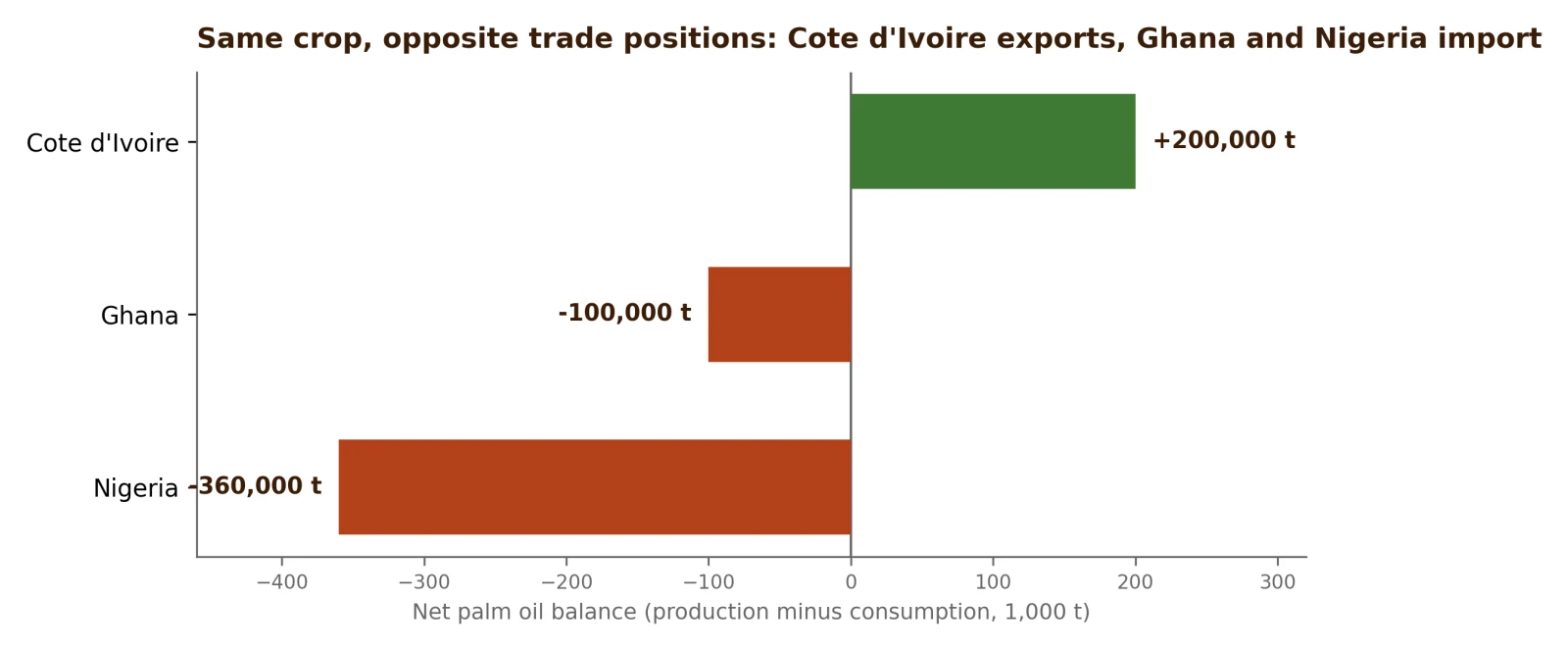
The sharpest lesson sits next door. Cote d'Ivoire grows the same palm in the same climate, yet produces about 600,000 tonnes of crude palm oil and exports a surplus of around 250,000 tonnes into the region, including to Ghana's neighbours. Nigeria, the giant, still imports about 425,000 tonnes a year, about 92 percent of it from Malaysia (USDA FAS, 2024, 2026). The difference between the exporter and the importers is not the field. It is milling capacity, refining and scale.
Import substitution in refined oil. The gap Ghana fills with imports is a gap for clean, consistent, branded local oil. The buyer already exists; the product does not yet. Compete on refined quality, not on price.
The regional market. West Africa as a whole is short of palm oil. A Ghanaian processor that reaches industrial quality is selling into an ECOWAS deficit, not just a domestic one, and Cote d'Ivoire proves the surplus is a milling question, not a climate one.
The kernel stream. Palm kernel oil at about twice the crude price, on a raw material the big mills already discard as a by-product, is the least contested opening in the demand picture.
Aggregate and grade the red oil. Buy clean, well-dried red oil from artisanal mills, grade and consolidate it to a consistent standard, and sell it on to a larger buyer. It is the lightest-capital way in, and it builds the mill-supplier book every bigger play needs.
🌴 The risks that sit inside the demand picture 🌴
Competing on price against cheap imports
HIGHImported refined oil and cheap substitutes are priced low, and fall further when the cedi strengthens. A local business that competes by being the cheapest oil on the shelf is always one currency move from being undercut, and can never fund the quality that would actually win the buyer.
USDA reports that the influx of imported substitutes priced below the domestic product is a direct disincentive to local production (USDA FAS, 2024).
Unbranded local oil sellers and any processor whose only edge is a low price.
Compete on clean, consistent, branded quality, not on price. The opening is the refined-oil quality gap the imports currently fill.
Making red oil the branded market will not buy
HIGHProducing more artisanal red oil that is too high in free fatty acid, moisture and dirt does not close the deficit; it creates a low-value surplus, because the branded and industrial buyers will not touch it. Ghana keeps importing clean refined oil while red oil is abundant.
The gap Ghana fills with imports is refined oil and substitutes, precisely because artisanal red oil cannot meet the branded and industrial specification (USDA FAS, 2024; see Pillar 3 on free fatty acid).
Artisanal mills that scale volume without fixing quality.
Invest in extraction and refining quality, and secure an offtake to a defined specification before adding capacity. The opening is clean, consistent oil for the market the imports now serve.
Palm oil is three products, not one: crude palm oil, palm kernel oil and palm kernel cake. Each has its own buyer and price, and the kernel products are the most overlooked.
Ghana's deficit is real but narrowing, and it is a milling and refining gap, not a farming gap. The country imports clean refined oil because its artisanal red oil cannot serve the branded market.
Demand rises structurally with population and urbanisation, so the market pulls harder every year. The constraint is supply quality, not appetite.
Palm kernel oil trades at about twice crude palm oil and is rising faster. It is the clearest price signal in the sector and the least crowded entry.
Cote d'Ivoire exports the same crop that Ghana imports. The whole difference is milling and refining capacity, which is exactly where the policy money and the private opening meet.