Ghana Agribusiness PlaybookOil Palm
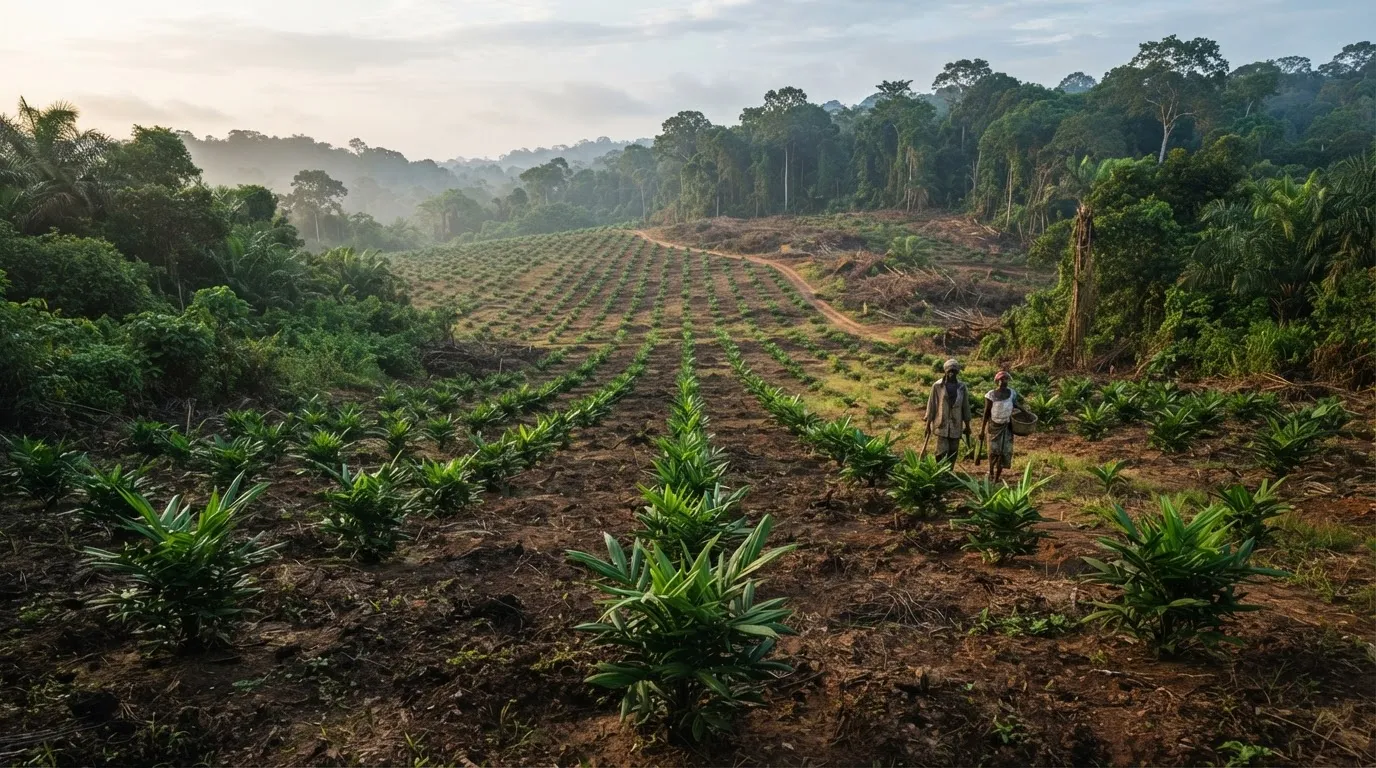
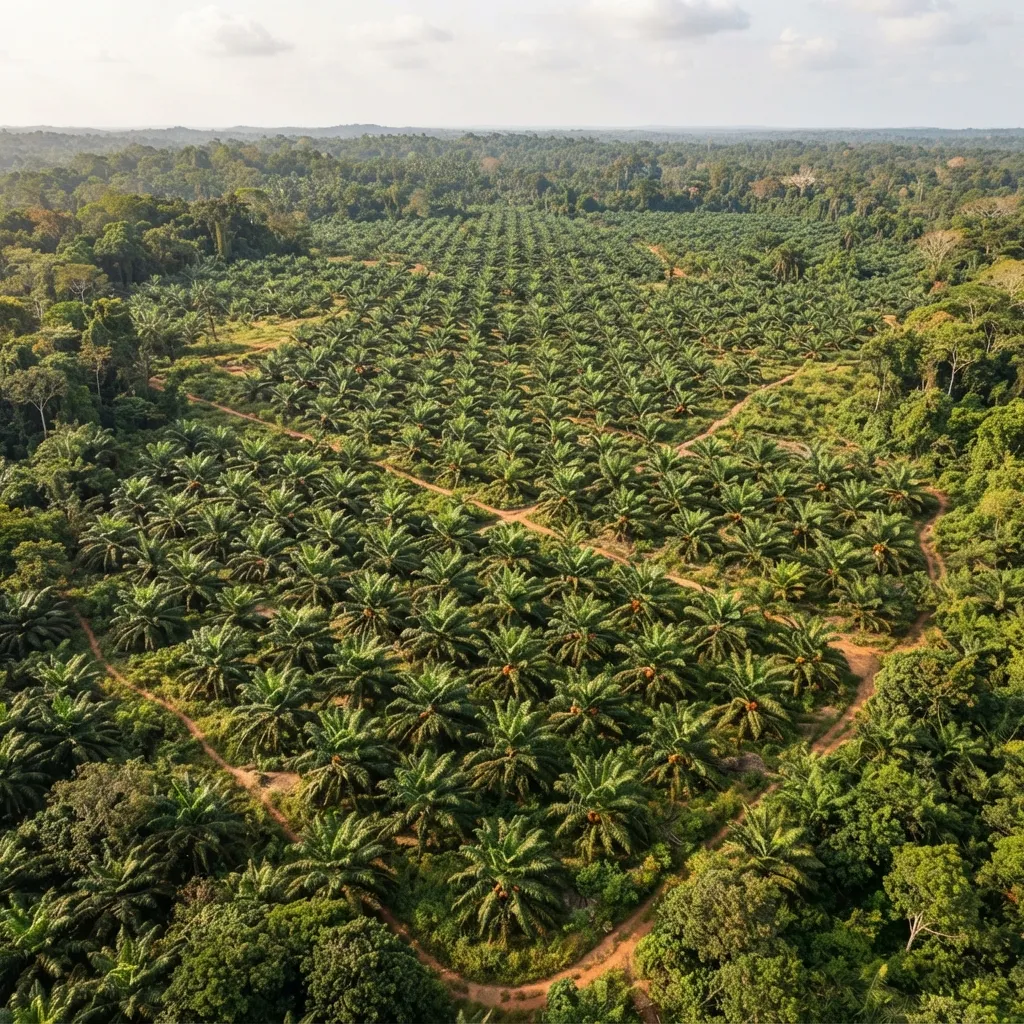
A well-spaced young oil palm plantation in triangular planting pattern
Oil Palm · Pillar 04

Planting Regime

The yield ladder is climbed in the field, from nursery to mature canopy.
Planting Regime and Agronomy · Pillar 04

The seed sets the ceiling; husbandry decides how close you get to it. Pillar 1 showed a 25-tonne palm and a 5-tonne reality. This pillar is about the field decisions, spacing, feeding and timing, that close that gap. Almost all of it comes down to two things: feeding the palm properly, and surviving the years before it pays.

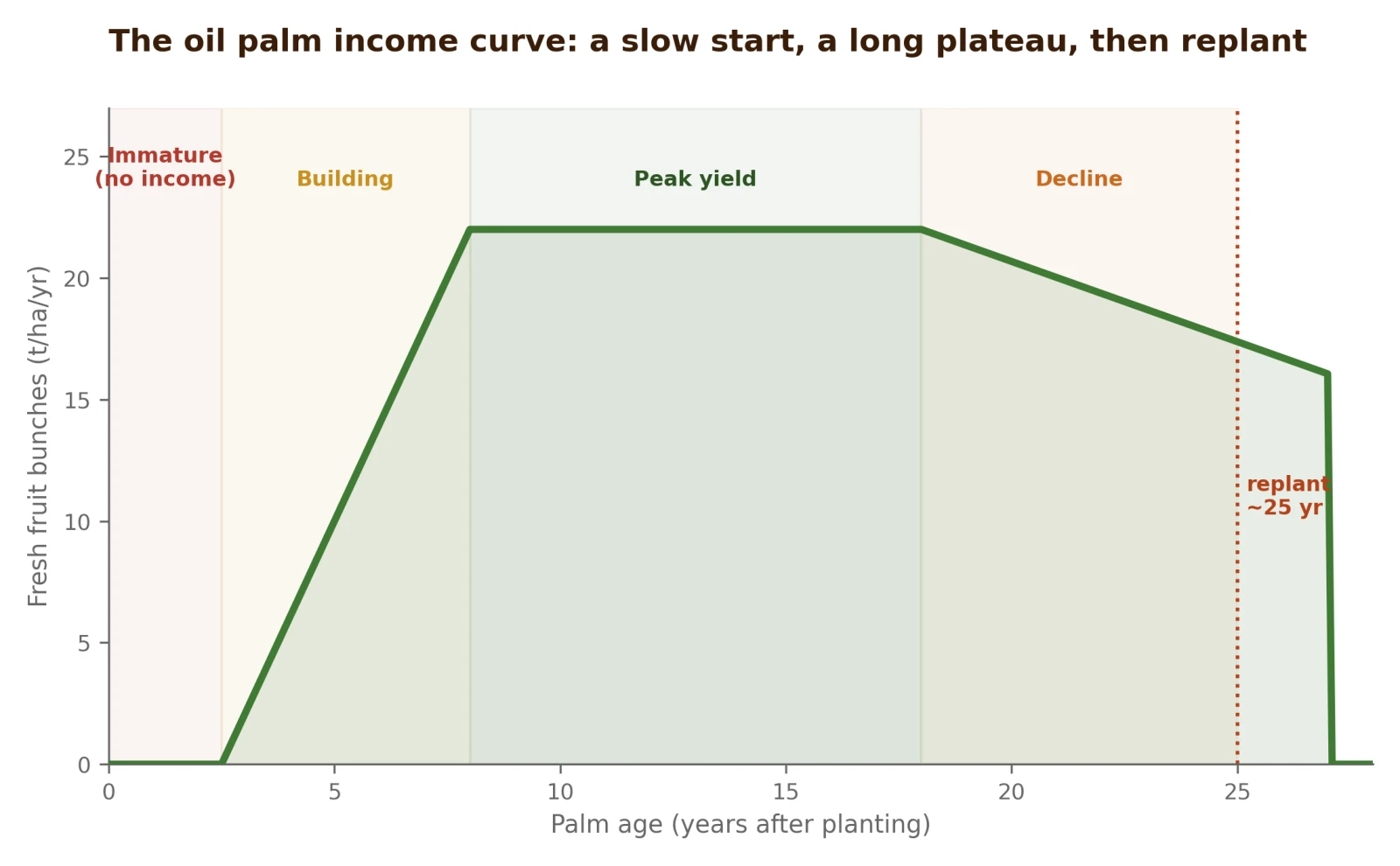
An oil palm is a slow, patient asset. It reaches first harvest at about two and a half years, an economic life of 25 to 30 years (CSIR-Oil Palm Research Institute, 2025). It earns nothing in those first years, builds to a peak by about year eight, holds a long plateau to about eighteen, then declines until it is replanted at about twenty-five. The shape of that curve governs everything about the business: the long wait at the start, and the long, steady payback once the palm is bearing (MPOB, 2002; MASDAR, 2011).

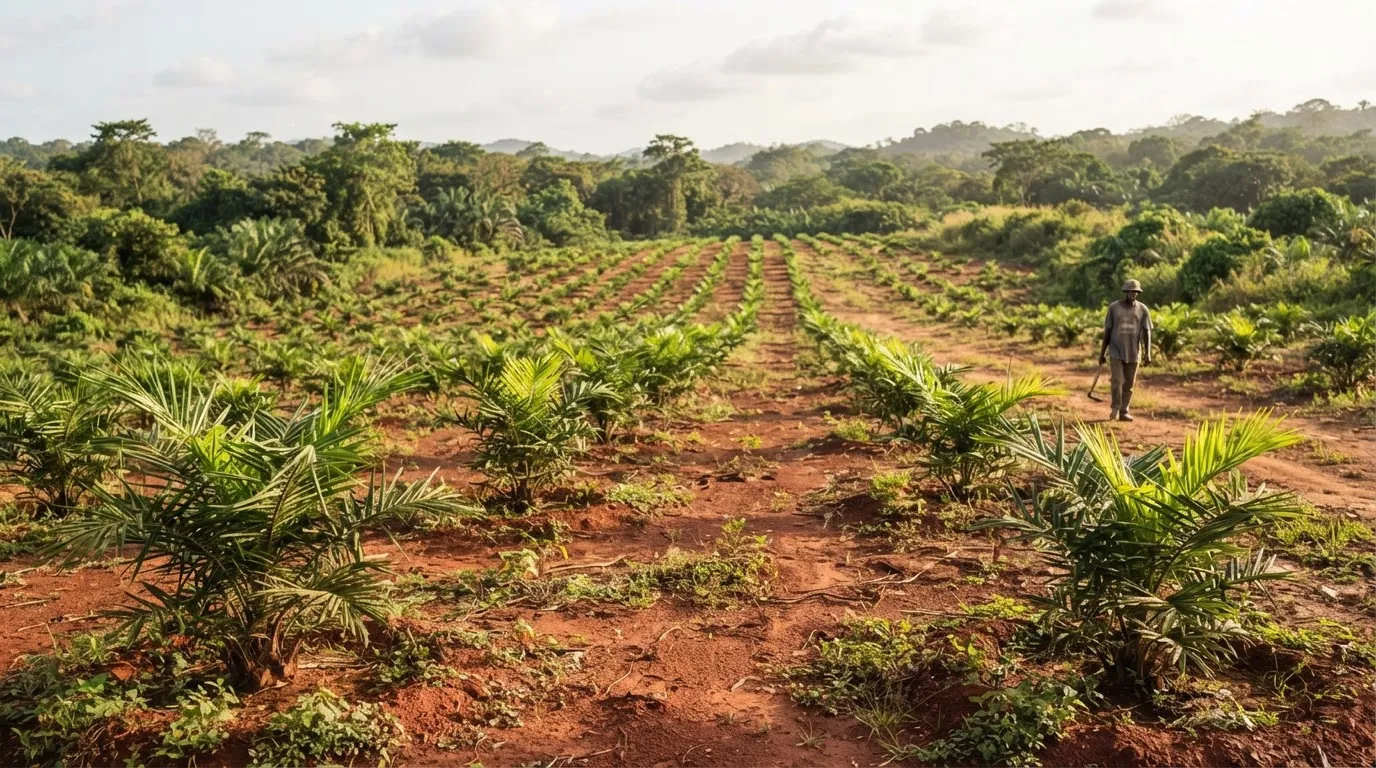
A young oil palm field with legume cover crop between the palms, on Ghana's forest soils
Husbandry, not luck
The seed sets the ceiling; husbandry decides how close you get.
~2.5 yr
to first harvest; the palm earns nothing before then
25 t / 5 t
the palm's ceiling against the smallholder reality
76 to 89%
yield rise when husbandry is corrected (Rhebergen et al., 2020)
The oil palm yield curve over a 25-year cycle, from the immature valley through peak yield to replanting
Figure 13 The oil palm yield curve over a 25-year cycle, from the immature valley through peak yield to replanting
What this means

The single most dangerous stretch in oil palm is the immature valley: the two to three years when the palm takes money and gives nothing back. More new plantings fail here, abandoned or starved of fertiliser, than are ever lost to disease. Everything else in this pillar is about two questions: how to lift the plateau, and how to survive the valley to reach it.

year 8
peak yield, after the build-up from first bearing
25 to 30 yr
economic life before the block is replanted
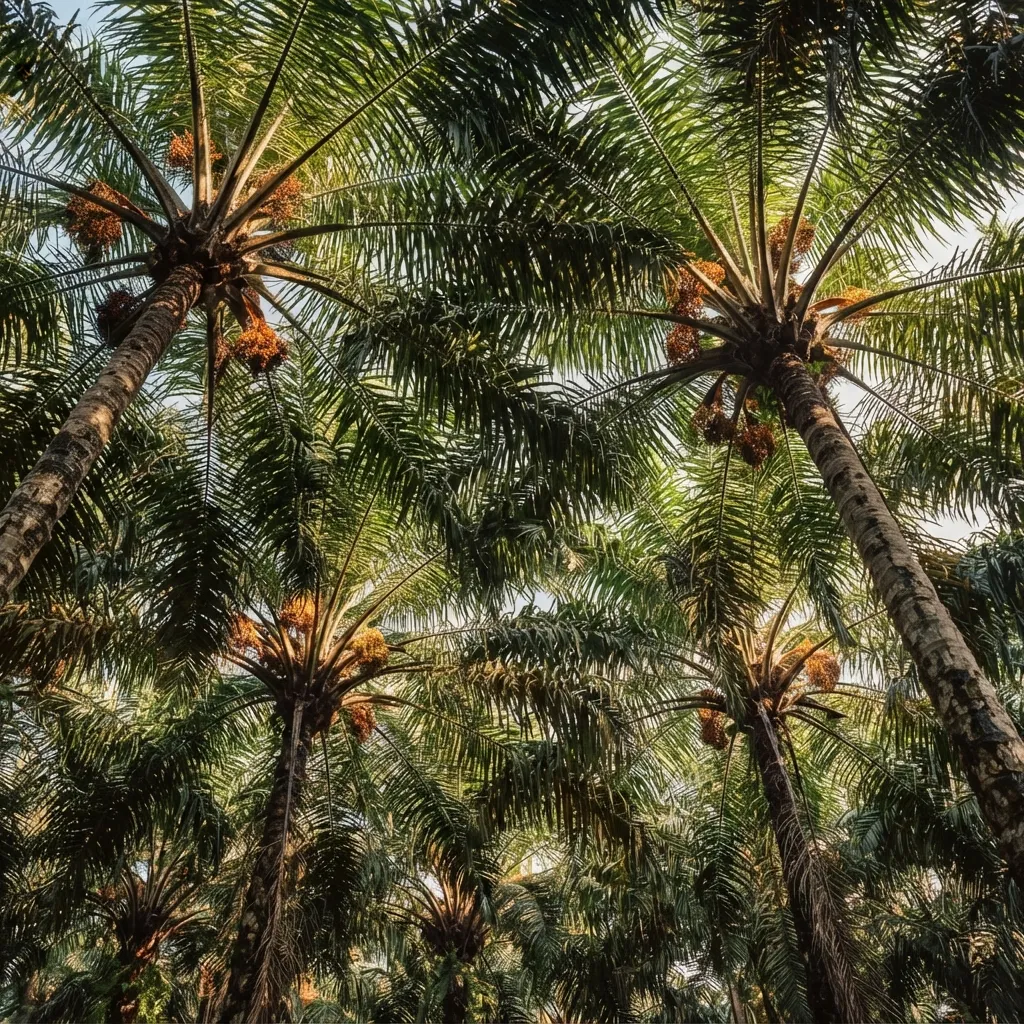
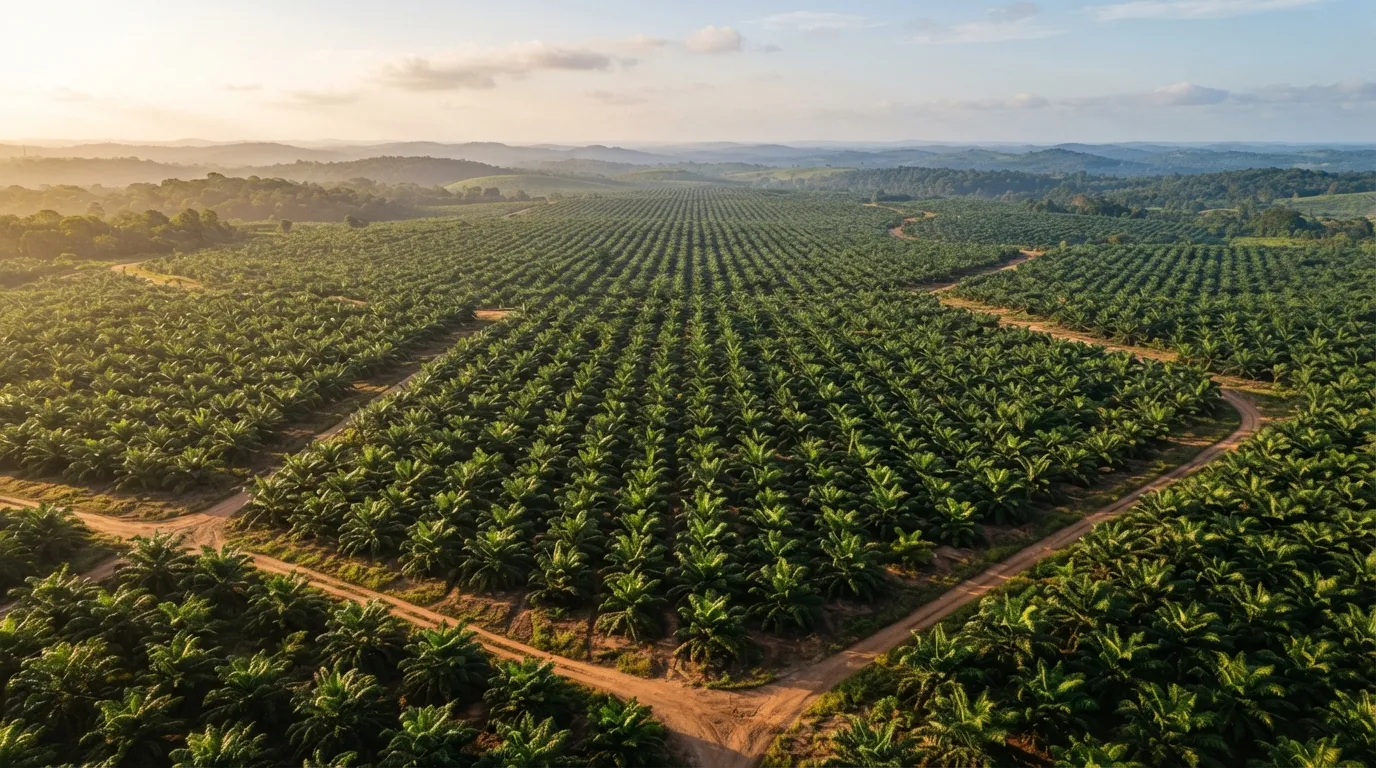
A mature oil palm plantation at full canopy, on the long plateau of the yield curve
The long plateau

🌴 Choosing the site: a thirty-year decision 🌴

Oil palm is a thirty-year commitment to a piece of land, so the site decision is made once and lived with for a generation. The crop forgives acid soils but not drought, waterlogging or distance from a mill. The checklist below is what an agronomist walks through before a single seedling goes in the ground (MASDAR, 2011; Rhebergen et al., 2020; Ofosu-Budu & Sarpong, 2013).

A mature oil palm block with a closed canopy on gentle, well-drained land near a mill
Close to a mill
The best site is the one closest to a mill with a clean disease history.
Table 4: a pre-planting site checklist for oil palm in Ghana
FactorWhat to look forPass or caution
Rainfallwell spread through the year, a short dry seasongood above about 1,500 millimetres a year; marginal below about 1,200, or a dry season over three months
Temperaturewarm and even all yearabout 24 to 32 degrees; cool highland sites fruit poorly
Soil depth and drainagedeep, free-draining soil, no hardpan or high water tableover about one metre of rootable soil; avoid waterlogged or flood-prone ground
Soil reaction (pH)the crop tolerates acid soilscomfortable at about pH 4.5 to 6.5; strongly alkaline soils are a caution
Slopegentle land is cheaper to work and harvestunder about 15 degrees is easy; steeper needs terracing and lifts cost
Previous land usea clean disease historyavoid land coming straight out of old oil palm carrying Ganoderma without a fallow or sanitation plan (Pillar 3)
Distance to a millthe fruit must be milled within a daysite within easy same-day haulage of a mill; remote plots lose oil quality and value (Pillar 3)

A pre-planting site checklist for oil palm in Ghana.

Sources: MASDAR (2011); Rhebergen et al. (2020); Ofosu-Budu and Sarpong (2013).

Two lines on this checklist quietly decide the economics: distance to a mill, and previous land use. A cheap, remote plot with no mill inside a day's haul makes low-grade oil however well it is farmed, and land carrying old Ganoderma can lose palms before they ever pay. The best site is not the cheapest hectare; it is the one closest to a mill with a clean disease history.

🌴 Raising the planting material: the nursery 🌴

Good palms start in the nursery, not the field. A seedling raised badly, or an unimproved Dura left in by mistake, carries its low yield for thirty years, so the nursery is where a grower first protects the genetics bought in Pillar 1. It runs in two stages over about a year before the seedling is strong enough to plant out (CSIR-OPRI, 2025; MASDAR, 2011).

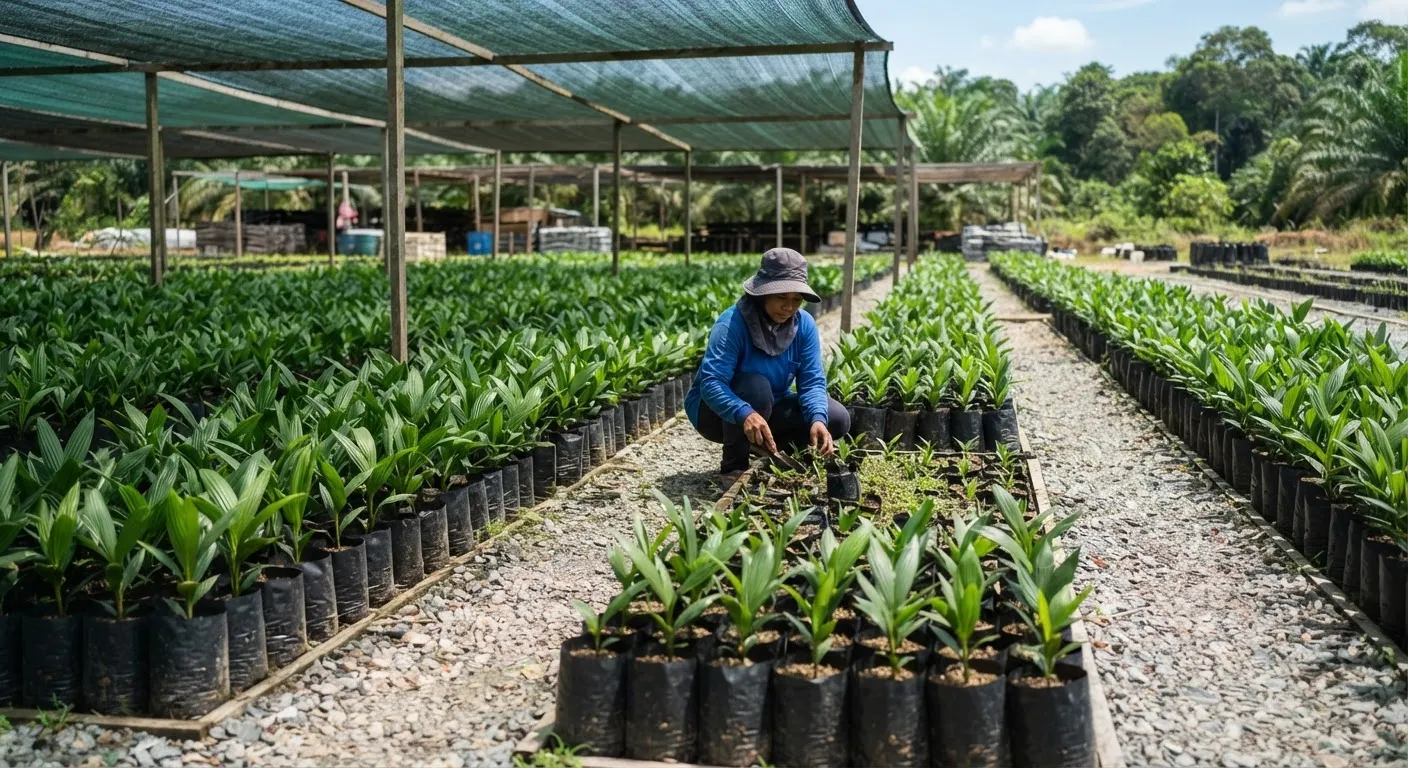
A certified oil palm nursery of young Tenera seedlings in large polythene bags under easing shade
Rogue the off-types
A certified Tenera nursery: the low-capital opening that protects the genetics before a seedling ever reaches the field.
Table 5: the oil palm nursery, stage by stage
StageWhat happensKey numbers
Pre-nursery (about 3 to 4 months)germinated sprouts raised in small bags under heavy shade, watered dailysmall polythene bags about 15 by 23 centimetres; deep shade eased off slowly
Main nursery (about 8 to 10 months)seedlings moved to large bags, shade removed, watered through the dry season, weededlarge bags about 25 by 40 centimetres; watered twice a day in dry spells
Roguing (throughout)off-types, runts and Dura segregants culled so only true Tenera reaches the fieldroughly 15 to 25 percent of seedlings discarded; never plant the culls
Field-ready (about 12 months)a healthy seedling passes to the field at the onset of the rainsabout 8 to 10 working leaves, a stem base over about 3 centimetres, roughly 80 to 100 centimetres tall

The oil palm nursery, stage by stage, over about a year before the seedling is planted out.

Sources: CSIR-OPRI (2025); MASDAR (2011).

01

The opening. A certified nursery is itself the business flagged in Pillar 1: raising true Tenera to the standard above, and selling the roguing discipline a smallholder cannot do alone, is a low-capital entry with the national planting drive as guaranteed demand.

🌴 Getting the field right: spacing and establishment 🌴

Density is a Goldilocks decision. Plant too close and the palms shade each other and fruit less; plant too wide and the land is wasted. The Ghana optimum is about 143 to 148 palms a hectare (Rhebergen et al., 2020) in a triangular pattern, at about 8.5 to 9 metres between palms, so each palm has room (Nuertey, 1999).

Planting is timed to the onset of the major rains, in a belt that takes its rain in two seasons a year (Ofosu-Budu & Sarpong, 2013). At establishment, a legume cover crop is sown between the young palms: it fixes nitrogen, smothers weeds and holds moisture, doing three jobs at once. The seedling comes from the nursery above and the seed story in Pillar 1; the point here is that the field decisions made in the first year are lived with for thirty.

143 to 148
palms a hectare, the Ghana optimum in a triangular pattern (Rhebergen et al., 2020)
8.5 to 9 m
between palms, so each one has room (Nuertey, 1999)
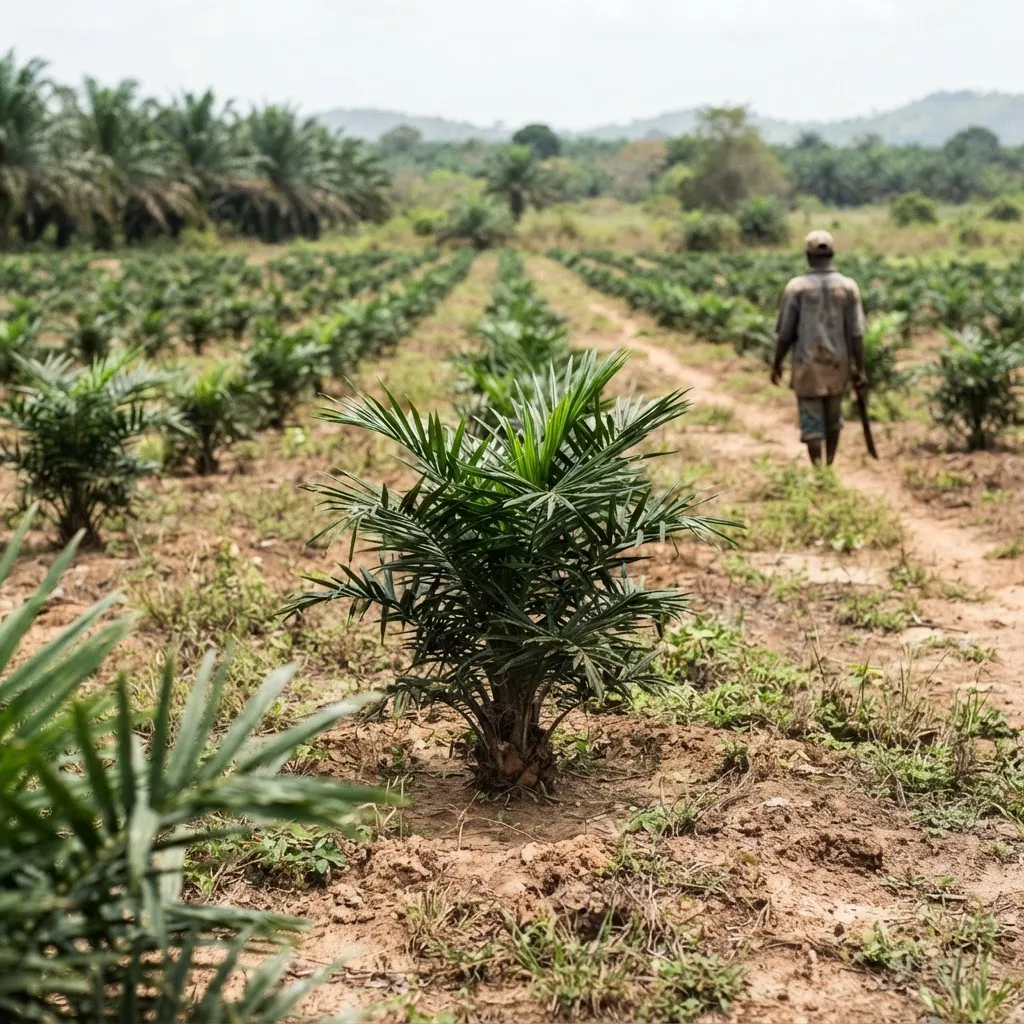
Young oil palms newly set out in a triangular pattern with a legume cover crop establishing between the rows
Triangular spacing
The field decisions made in the first year, density, cover crop and timing, are lived with for thirty.
Maize and plantain intercropped between immature oil palms to bring in food and income
Cover crop, three jobs
A legume cover crop fixes nitrogen, smothers weeds and holds moisture at once.

🌴 The fertiliser lever: the cheapest way to close the gap 🌴

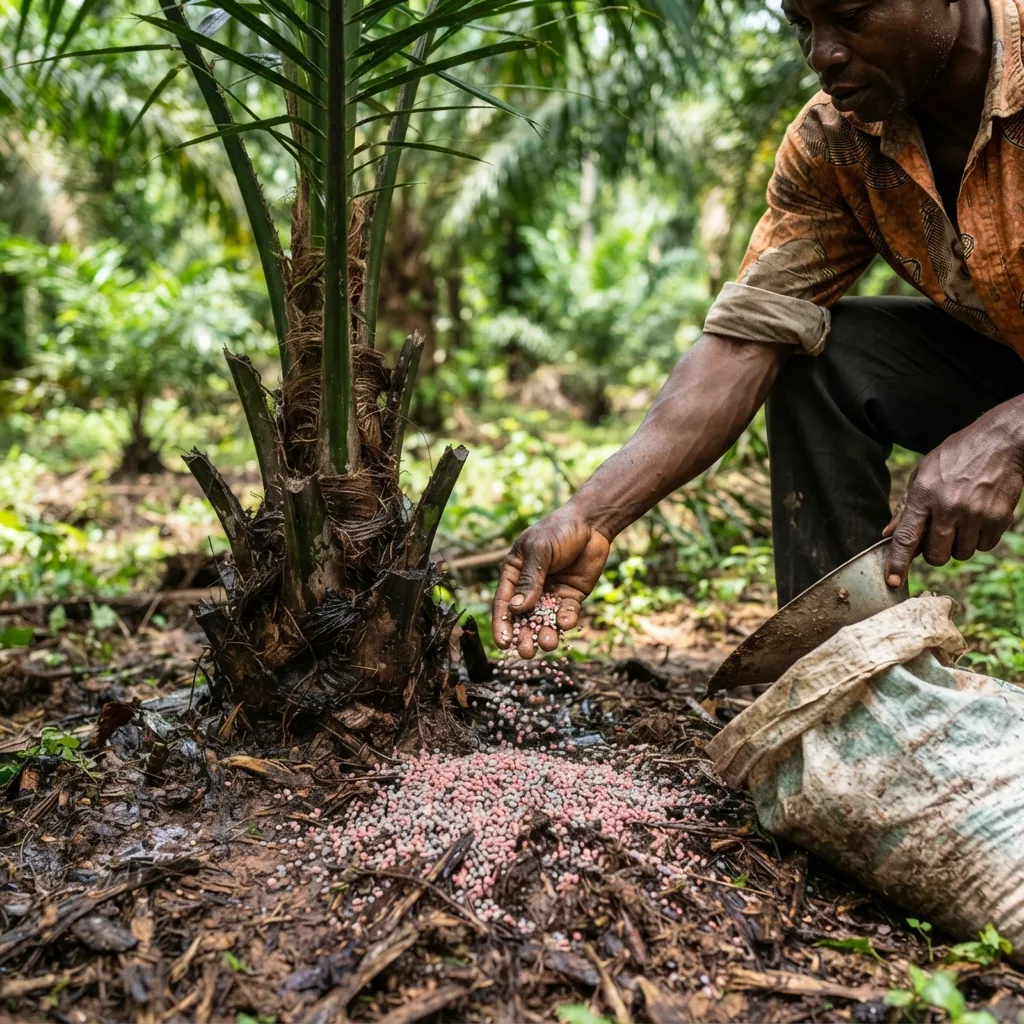
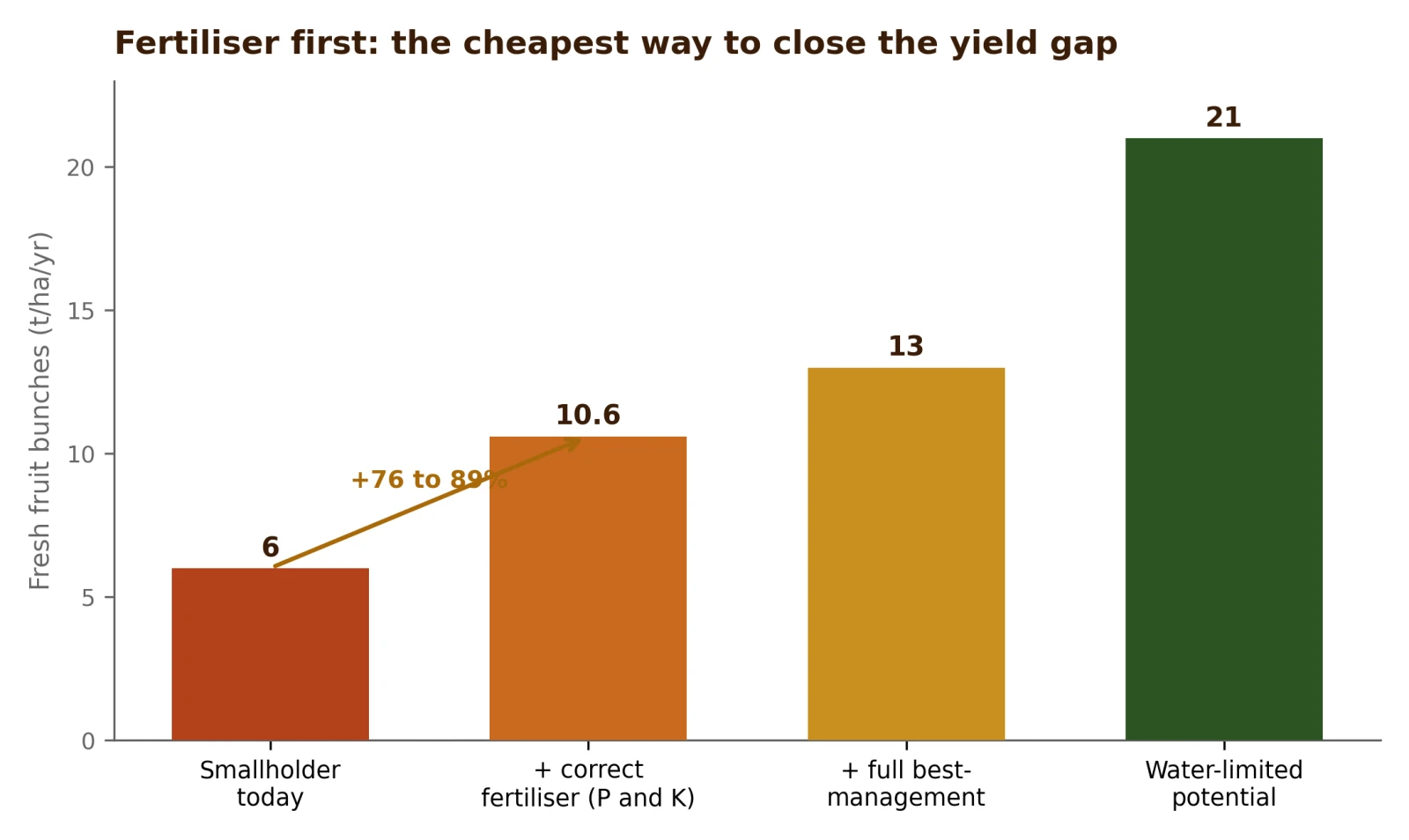
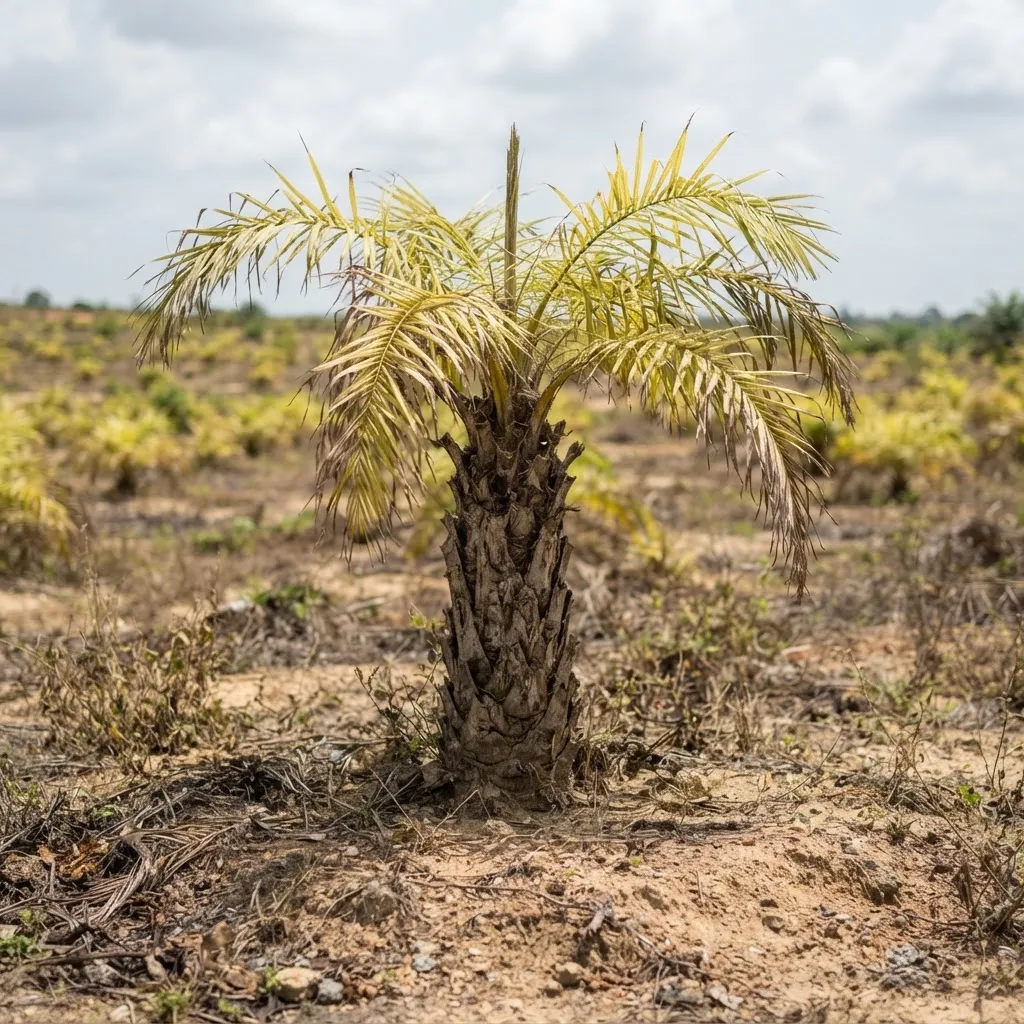
If there is one lever that closes the yield gap, it is fertiliser. Ghana's forest soils are short of phosphorus and potassium, and most smallholders under-apply fertiliser or skip it altogether. That is the main reason a smallholder harvests only about 3 to 6 tonnes a hectare (Ofosu-Budu & Sarpong, 2013) when the land could carry a water-limited potential of about 21 tonnes of fresh fruit bunches a hectare (Rhebergen et al., 2020). In Ghanaian trials, best management practice, led by correcting phosphorus and potassium, nearly doubled smallholder yields, a rise of about 76 to 89 percent (Rhebergen et al., 2020).

In practice that means a compound fertiliser such as NPK 10-10-30 for smallholders, rock phosphate to correct the acute phosphorus shortage, and a heavy mulch of empty fruit bunches, about 30 to 40 tonnes a hectare, recycled back from the mill (Rhebergen et al., 2020).

How correcting fertiliser and husbandry lifts smallholder yield toward the attainable ceiling
Figure 14 How correcting fertiliser and husbandry lifts smallholder yield toward the attainable ceiling
What this means

A farmer who skips fertiliser to save money is not saving; they are mining the soil and locking in a low yield for the life of the palm. The cedis spent on the right blend come back several times over in extra bunches. This is the clearest, cheapest, most under-used opportunity in the whole crop, and it is why input supply, soil testing and fertiliser advice are real businesses, not afterthoughts.

3 to 6 t
what a smallholder harvests, against about 21 t attainable (Rhebergen et al., 2020)
30 to 40 t
of empty fruit bunch mulch a hectare, recycled from the mill (Rhebergen et al., 2020)

🌴 The fertiliser schedule, year by year 🌴

The fertiliser lever only works if it is applied on a schedule, in split doses the palm can take up. The plan below is a best-practice starting point for Ghana's forest soils, built up as the palm grows into bearing (Rhebergen et al., 2020; MASDAR, 2011; CSIR-OPRI, 2025).

Table 6: an indicative year-by-year fertiliser schedule for oil palm on Ghana's forest soils
Palm ageMain nutrients to supplyIndicative rate a palm a yearTiming
At plantingphosphorus in the hole, plus a legume cover cropabout 150 to 250 grams of rock phosphate in the planting holeonce, at planting, on the rains
Year 1a balanced compound plus boronabout 0.5 kilograms of an NPK-magnesium compound; about 30 grams of boraxtwo to three splits through the rains
Year 2compound, building upabout 1.0 to 1.5 kilograms of compound; about 50 grams of boraxtwo to three splits
Year 3 (pre-mature)compound plus magnesiumabout 2.0 to 2.5 kilograms of compound; about 0.5 kilograms of kieseritetwo splits
Year 4 and maturea potassium-rich compound, magnesium, boron and mulchabout 2.5 to 4.0 kilograms of a potassium-rich compound; about 0.5 to 1.0 kilograms of kieserite; empty fruit bunch mulch where availabletwo splits a year, early and late rains

These rates are a starting point, not a prescription. The grower should tune the exact blend and quantity to a leaf and soil test for the block, because over-applying wastes money and under-applying mines the soil.

Sources: Rhebergen et al. (2020); MASDAR (2011); CSIR-OPRI (2025). Rates are per palm per year.

🌴 Surviving the valley: the immature years 🌴

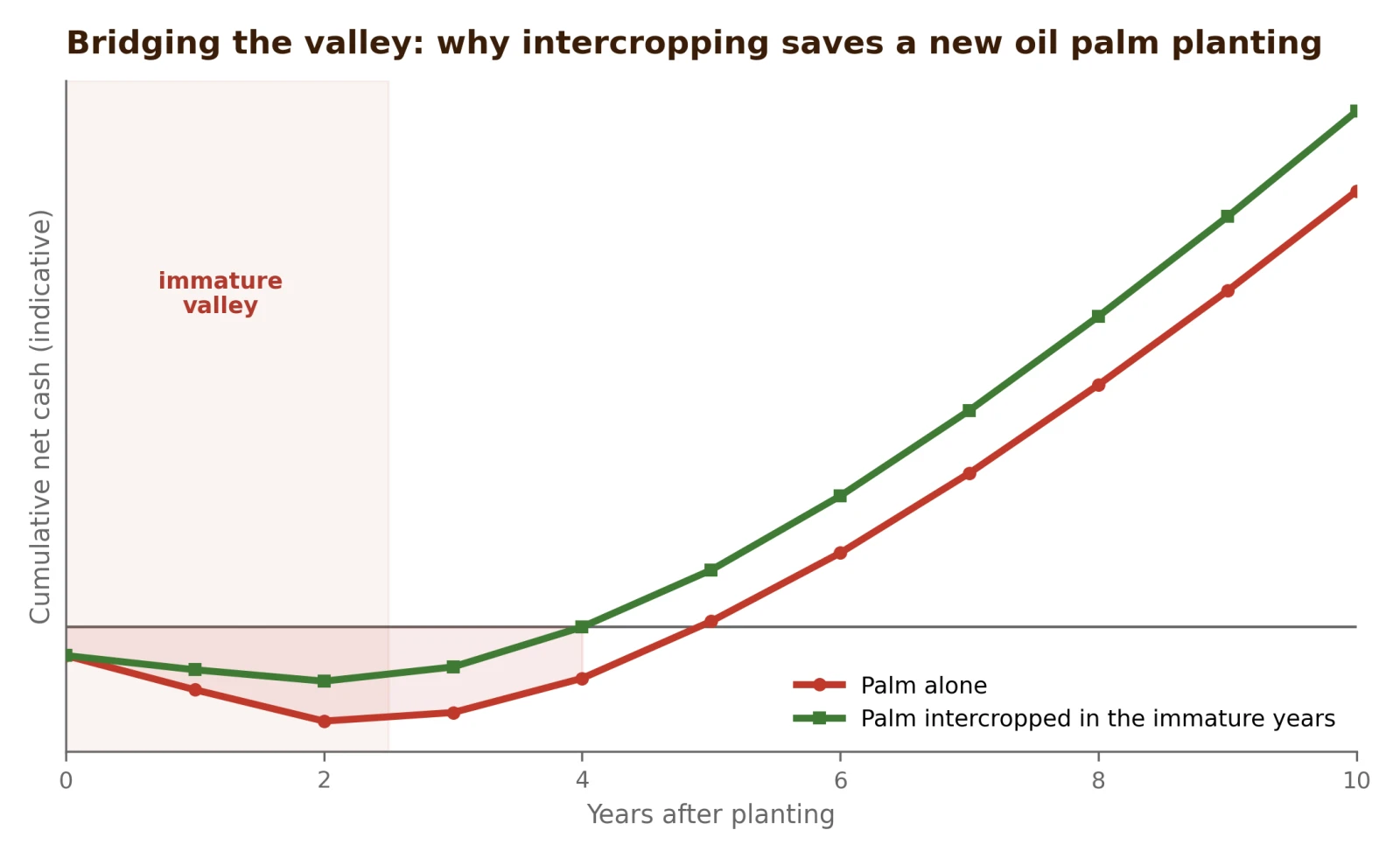
The immature cash-flow valley, and how intercropping shortens and shallows it
Figure 15 The immature cash-flow valley, and how intercropping shortens and shallows it

Indicative shape based on the age-yield curve and intercropping practice (Nuertey, 1999). The per-hectare numbers, and how far intercropping and finance close the gap, are modelled in Pillar 5.

What this shows

The immature valley is a cash-flow problem before it is an agronomy problem. For two to three years the palm needs weeding, fertiliser and protection, and returns nothing.

The classic Ghanaian answer is to intercrop: plant maize, plantain, cassava or cocoyam between the young palms for the first three to five years, until the palms close canopy. It brings in food and income, smothers weeds, and keeps the family on the land until the palm bears (Nuertey, 1999).

2 to 3 yr
of cost and no income, the valley that kills more plantings than disease
3 to 5 yr
of intercropping food crops until the palms close canopy (Nuertey, 1999)

Knowing when to replant

At the far end of the curve sits the replant decision. After about twenty-five years the palm yields less and grows too tall to harvest cheaply, and the block earns more cut down and replanted than left standing. Ghana is entering a replanting wave now, as the plantings of the 1990s age out. Timing it well, and replanting cleanly onto ground that may carry Ganoderma, is both a real risk (Pillar 3) and the business opening flagged in Pillar 1.

🌴 The Opening: agronomy and husbandry 🌴
01

A certified nursery. Raising true Tenera to the nursery standard, and selling the roguing discipline a smallholder cannot do alone, is a low-capital entry with the national planting drive as guaranteed demand.

02

Input supply with advice attached. Selling the right fertiliser blend plus the soil knowledge to use it is worth more than selling either alone.

03

Soil testing and agronomy extension. Paid for by the yield it unlocks, a service the estates run in-house and smallholders cannot.

04

Empty fruit bunch and mill-waste recycling. Low-cost fertiliser that closes a loop between the mill and the field, turning a waste stream into a yield gain.

🌴 The risks that sit inside the planting regime 🌴

Under-fertilising and mining the soil

HIGH
What it is

Skipping or under-applying fertiliser, especially phosphorus and potassium, does not save money; it locks the palm into a low yield for its whole life and strips the soil. It is the single biggest reason Ghanaian smallholder yields sit far below the attainable level.

Evidence

Best management practice, led by correcting phosphorus and potassium, nearly doubled smallholder yields in Ghana trials, a rise of about 76 to 89 percent (Rhebergen et al., 2020).

Who it hits

Smallholders and undercapitalised growers who treat fertiliser as an optional cost.

How to manage it

Fertilise to the soil's needs, test where possible, and recycle mill waste and empty fruit bunches. The opening is an input-supply-plus-advice business that sells the yield gain, not just the bag.

Running out of cash in the immature years

HIGH
What it is

The palm earns nothing for two to three years while it costs money every month. Growers who plant without a plan to cover that valley abandon or starve the block, and lose the whole thirty-year asset before it ever pays.

Evidence

The age-yield curve gives no fresh-fruit-bunch income before about two and a half years (MPOB, 2002; MASDAR, 2011); intercropping and phased planting are the classic bridges (Nuertey, 1999).

Who it hits

First-time and undercapitalised growers, and anyone planting a whole holding at once.

How to manage it

Intercrop the immature rows for food and income, phase the planting so mature blocks fund young ones, and line up patient finance before planting. The opening is intercropping systems and establishment finance.

🌴 Key takeaways 🌴
01

The seed sets the yield ceiling; agronomy decides how close you get. The gap between a 5-tonne and a 20-tonne hectare is mostly husbandry, and it is closable on land already planted.

02

Fertiliser is the cheapest lever in the crop. Correcting phosphorus and potassium nearly doubled smallholder yields in Ghana trials; skipping fertiliser mines the soil and locks in low yield.

03

The immature valley, two to three years of cost and no income, kills more new plantings than disease. Bridging it with intercropping and finance is make-or-break.

04

Density, cover crops and timing are cheap decisions with thirty-year consequences. Get them right in year one.

05

The replanting wave from the 1990s plantings is arriving, carrying both a Ganoderma risk and a real establishment-services business.

Written for each reader

🌴 Practitioner intelligence 🌴

Hover any card to pause and lift it.

For students

If you are entering with limited capital, agronomy is full of asset-light openings. The skill of taking a smallholder from six tonnes to eleven, by fixing fertiliser, spacing and weeding, is itself the product. Learn soil testing, fertiliser blending and establishment, and you can work as an agronomy adviser, an input agent, or an establishment contractor without owning a hectare. The mistake first-timers make is buying land first; the knowledge is worth more than the land, and it sells.

For entrepreneurs

First move: bundle the input with the advice. Sell smallholders the right fertiliser blend and the soil knowledge to use it, against the yield it unlocks, not as two separate things. Secure a fertiliser supply line and a group of farmers before you scale. The trap is selling fertiliser blind: the wrong blend on the wrong soil wastes the farmer's money and your reputation. A second play is an establishment-and-intercropping service that carries new growers through the immature valley.

For investors

The thesis: the yield gap is a fundable, closable inefficiency, and the return is the extra bunches husbandry buys. Diligence asks for this pillar: is the fertiliser regime costed and funded through the full immature period, not just year one; is there an intercropping or finance plan to cover the cash-flow valley; and is there a replanting schedule for ageing blocks. Underwrite the working capital through the valley, because that, not the agronomy, is where plantings fail. The dominant risk is an undercapitalised establishment that starves the palm just as it needs feeding.

For ecosystem actors

The lever: fund the husbandry package, not just the planting. Fertiliser access, soil testing and extension through the immature years are what actually close the yield gap; a subsidy or guarantee aimed there does more than one aimed at new hectares. The measurable outcome is fertiliser application rates and the smallholder yield that follows. The failure to avoid is paying for planting expansion while the husbandry that makes those palms productive is left unfunded, which simply multiplies low-yield blocks. Public money should buy the yield, not just the tree.

Download full PDF
UpcomingThis document isn't available yet.