Ghana Agribusiness PlaybookBroiler Chicken
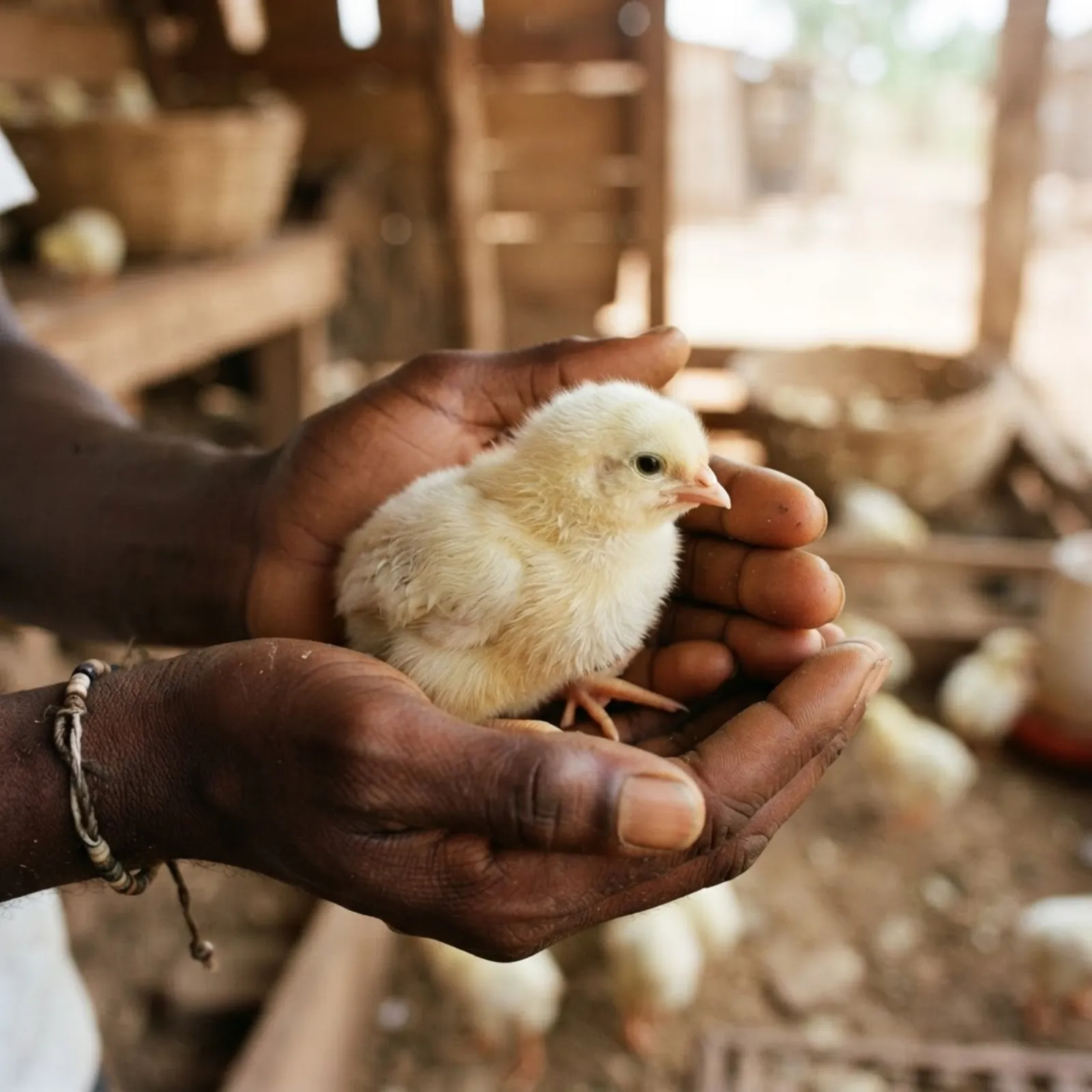
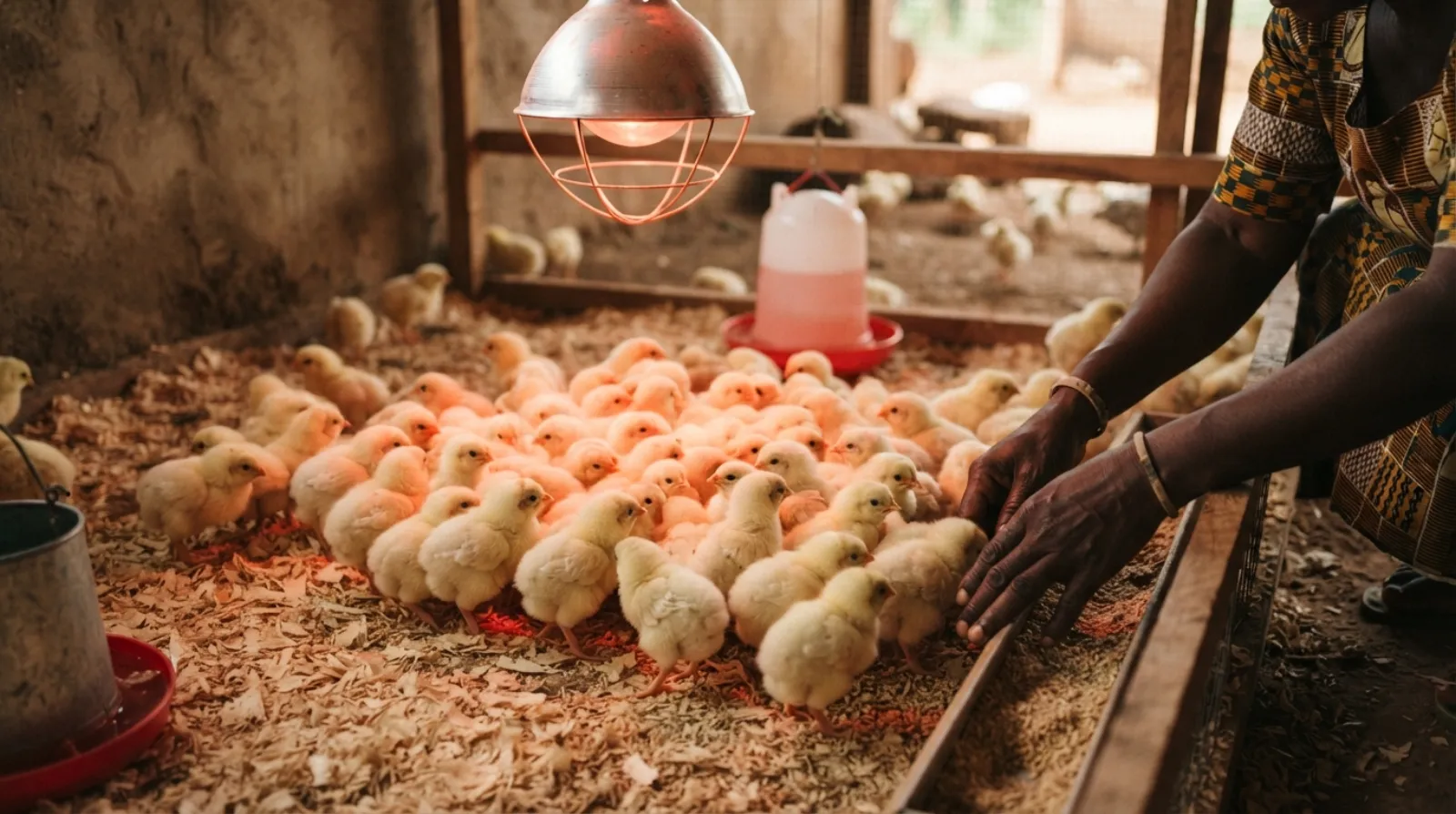
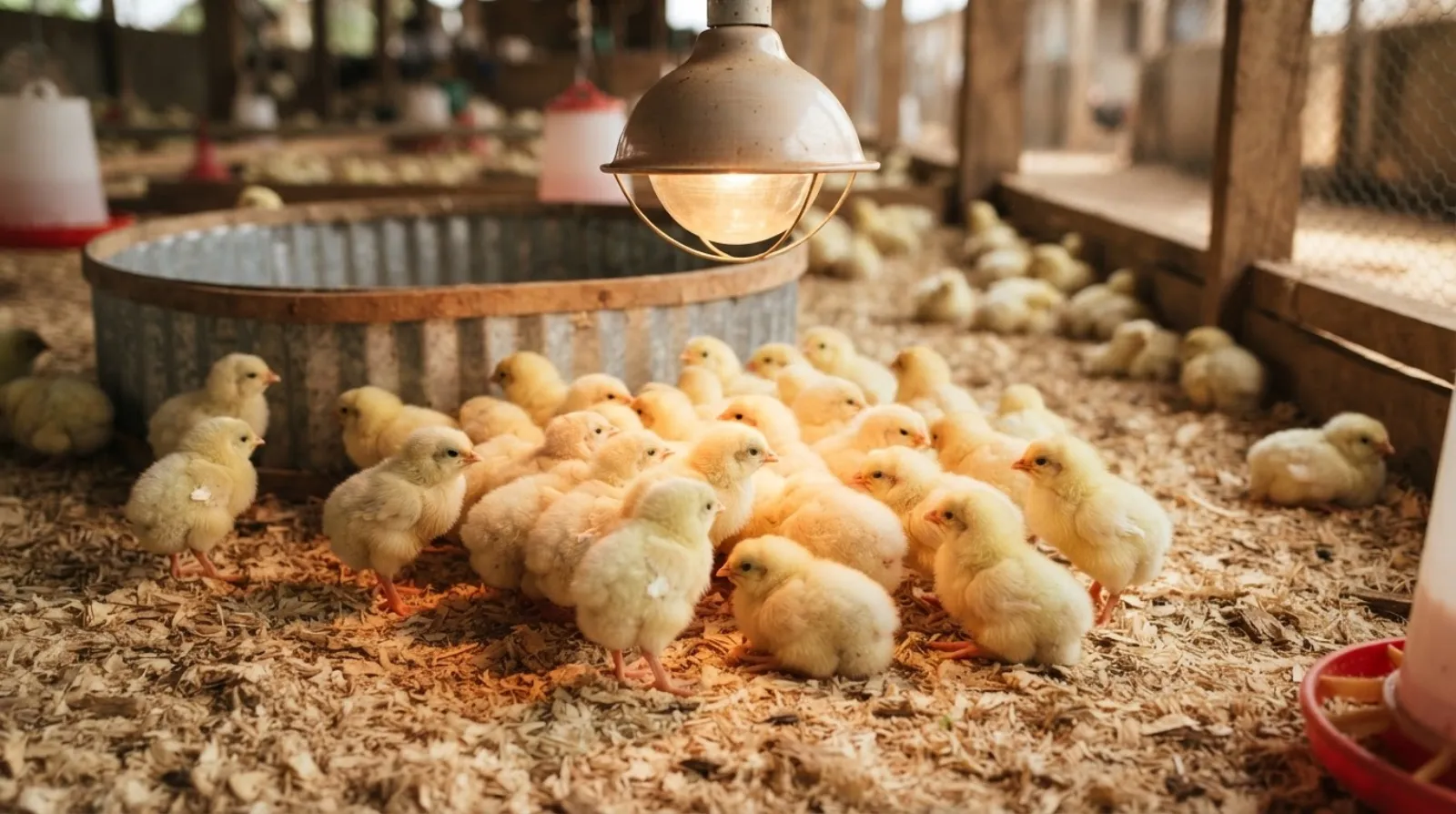
Day-old broiler chicks under a brooder lamp on a Ghanaian poultry farm
Broiler Chicken · Pillar 01

Species and Breed Profiles

The chick is the first cost and the first decision. Get the bird wrong and the cycle never recovers.
Species and breed profiles · Pillar 01

In a tree crop the planting decision locks in thirty years. In broiler chicken it resets every six weeks, which changes everything. The bird is not the risk. The chick that starts the cycle is, because almost all of it is imported, priced in dollars, and only as good as the management that follows it. This pillar shows why the chick, not the breed name, is the decision, and where the supply gap behind it becomes a business.

Two breeds dominate Ghana's broiler houses, and for most entrants the choice between them is the least important decision they will make. The Cobb 500 and the Ross 308 are both fast-growing commercial hybrids bred abroad for one job, turning feed into breast meat quickly.

Day-old broiler chicks huddled under a warm brooder lamp on fresh wood-shavings litter in a Ghanaian poultry house
The cycle resets every six weeks
The one lever: the chick that starts the cycle.
6 weeks
the cycle that resets the whole decision
~95%
of day-old chicks are imported and dollar-priced
1.4 vs 1.65
breed-sheet FCR against the Ghana field result

🐔 Why the chick decides more than the breed 🐔

On the breed sheet a Cobb 500 reaches about 2,521 grams at 35 days at a feed conversion of about 1.44, and about 3,278 grams by 42 days (Cobb-Vantress breed standard, 2022). The Ross is close behind: a Ross 308 reaches about 2,296 grams at 35 days at a feed conversion of about 1.40, and about 2,998 grams by 42 days (Aviagen breed standard, 2022). Those are manufacturer targets under controlled housing, not Ghanaian results, and that gap is the whole point of this pillar.

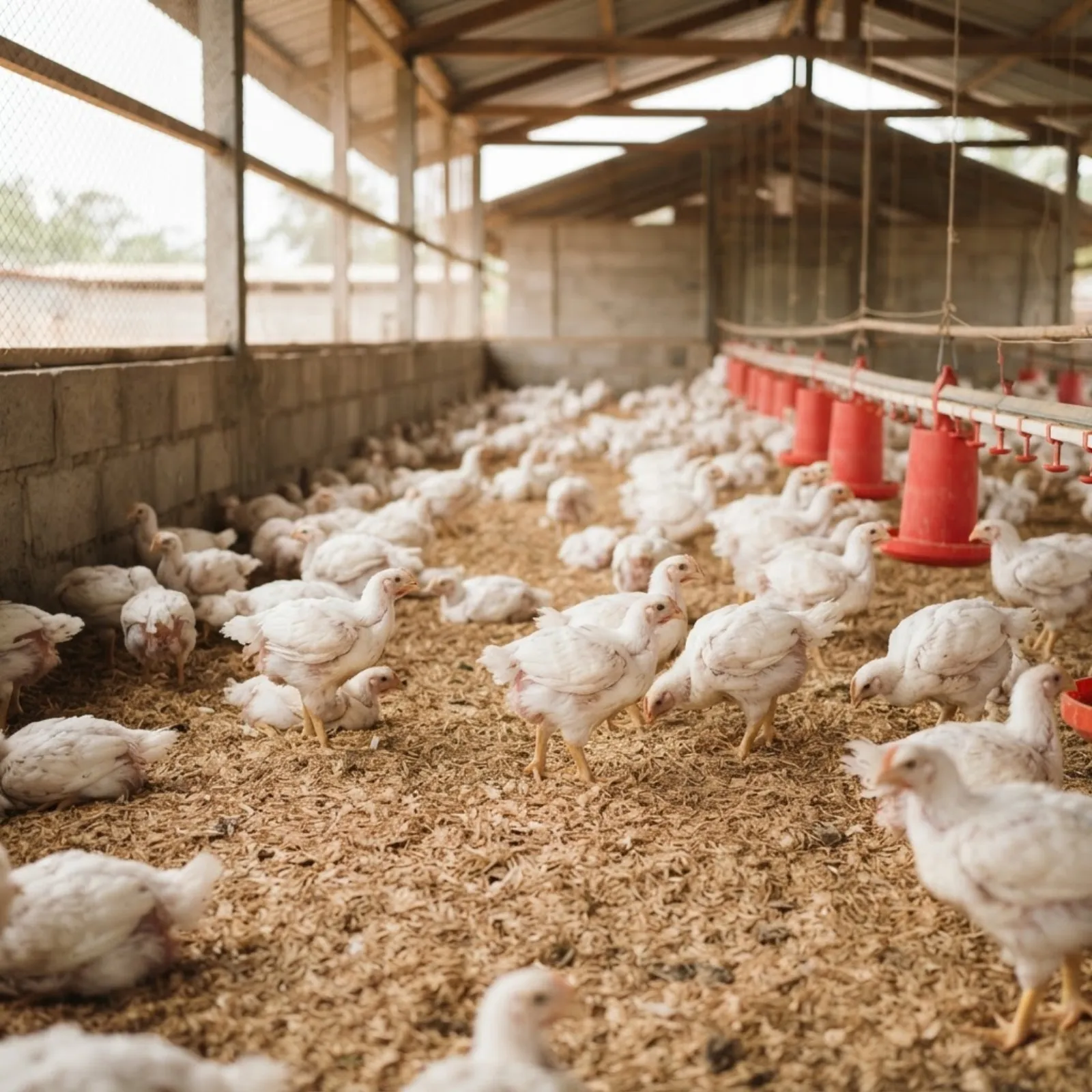
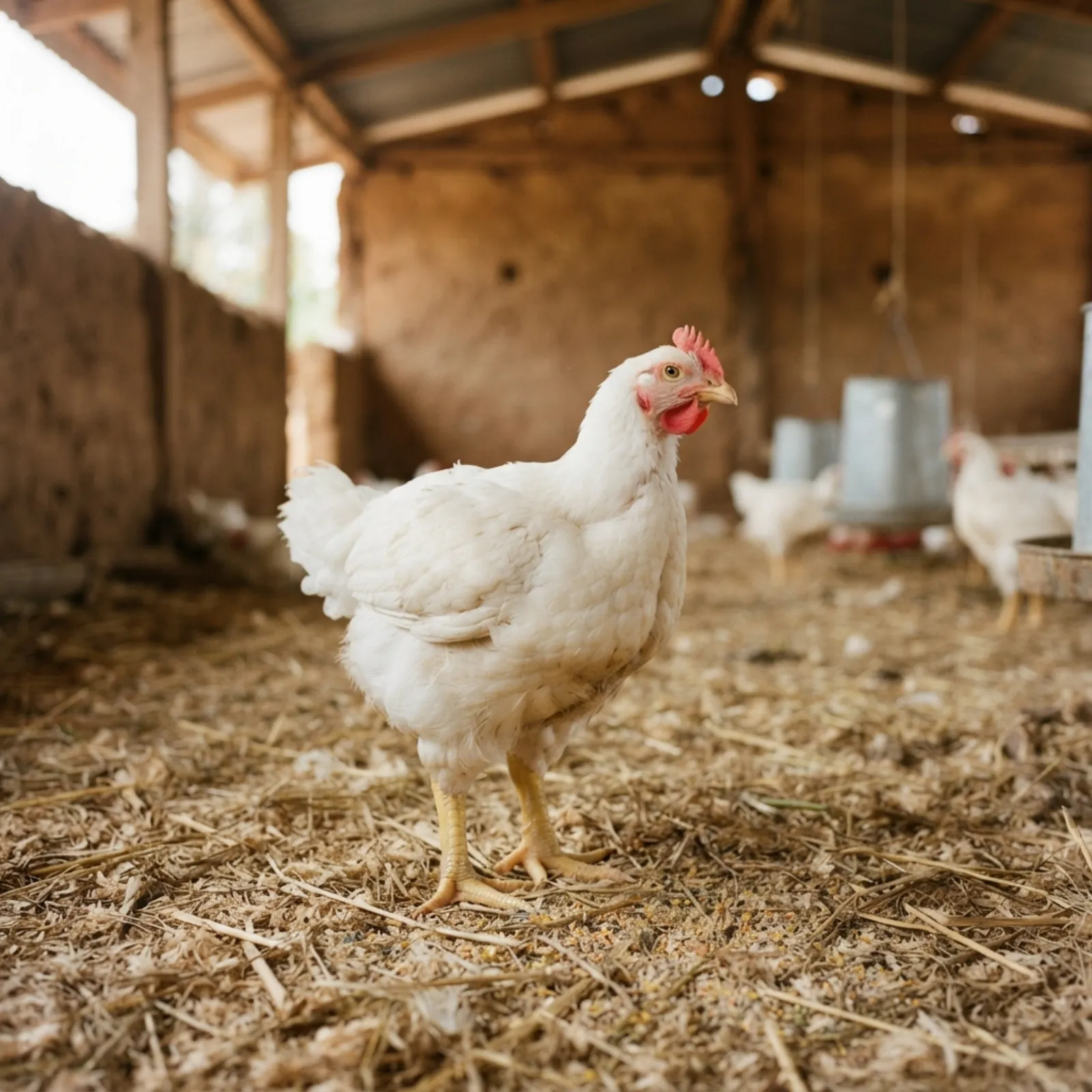
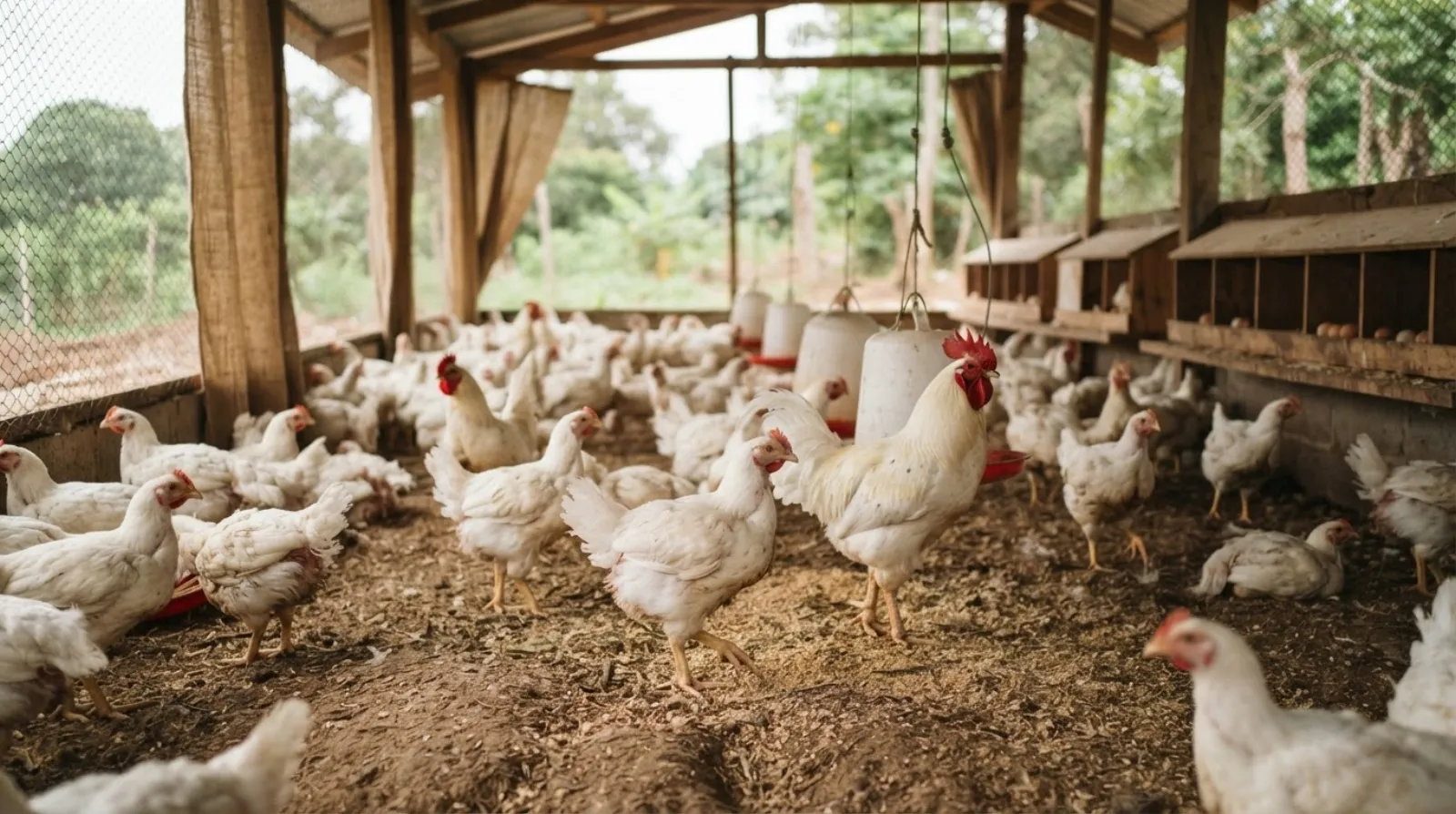
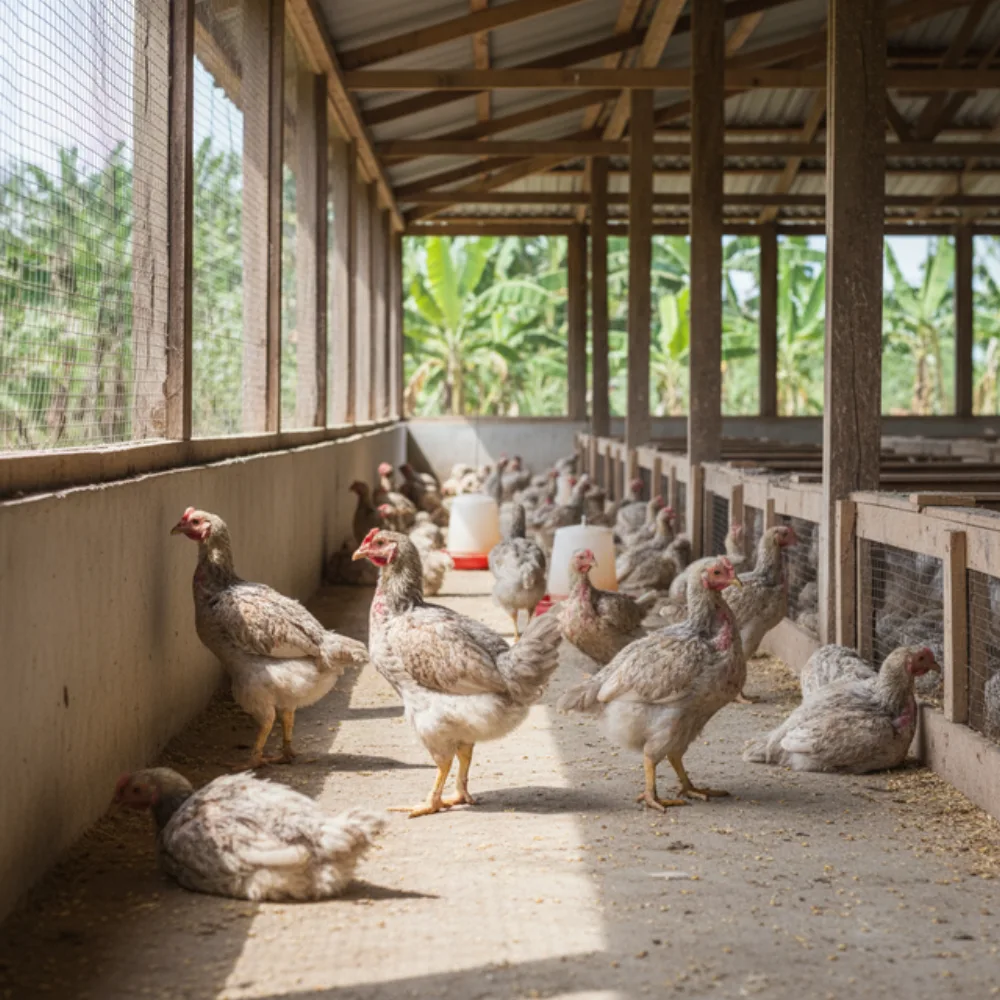
A flock of white commercial broilers at six weeks feeding in a clean open-sided house in Ghana
Cobb and Ross, the same job
Bred for one job: turning feed into breast meat fast.
Table 2: The two commercial broilers and the dual-purpose alternative, read for the entrant not the textbook
BirdTypical DOC priceWhat it means for the entrant
Cobb 500about 3,278 gabout 1.56about GH¢20 a chickCheapest chick, widely hatched locally; the default for a first cycle
Ross 308about 2,998 gabout 1.53about GH¢23 a chickSlightly leaner feed use, but imported chicks carry a foreign-exchange premium
Sasso / Kuroiler (dual-purpose)about 2 kg in 18 weeksmuch higherabout GH¢11 to 13A different business: slow, hardy, sold as 'local' meat at a premium, not a broiler

Sources: Cobb-Vantress (2022); Aviagen (2022); PoultInn hatchery listing (2026); Osei-Amponsah et al. (2024).

The two commercial broilers and the dual-purpose bird
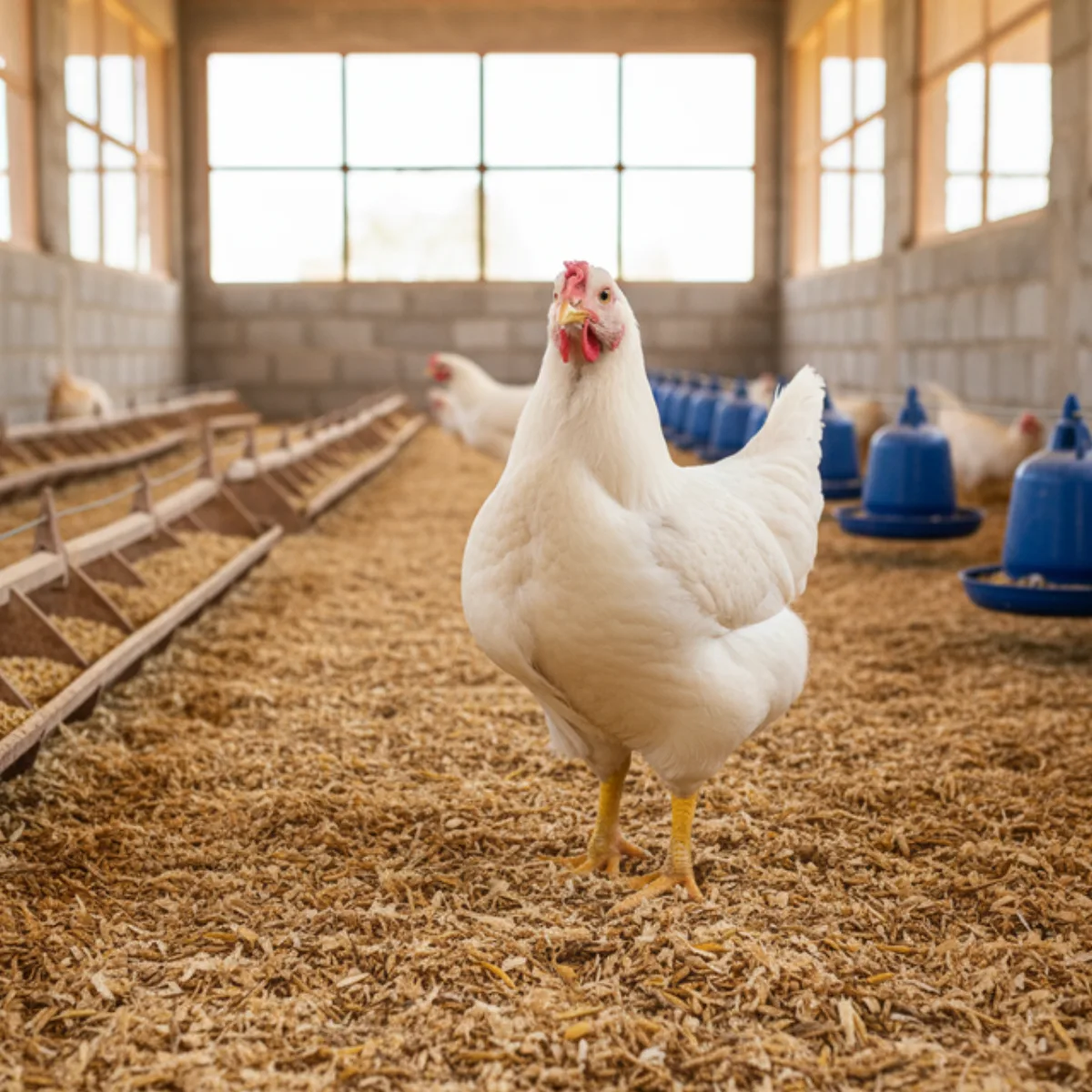
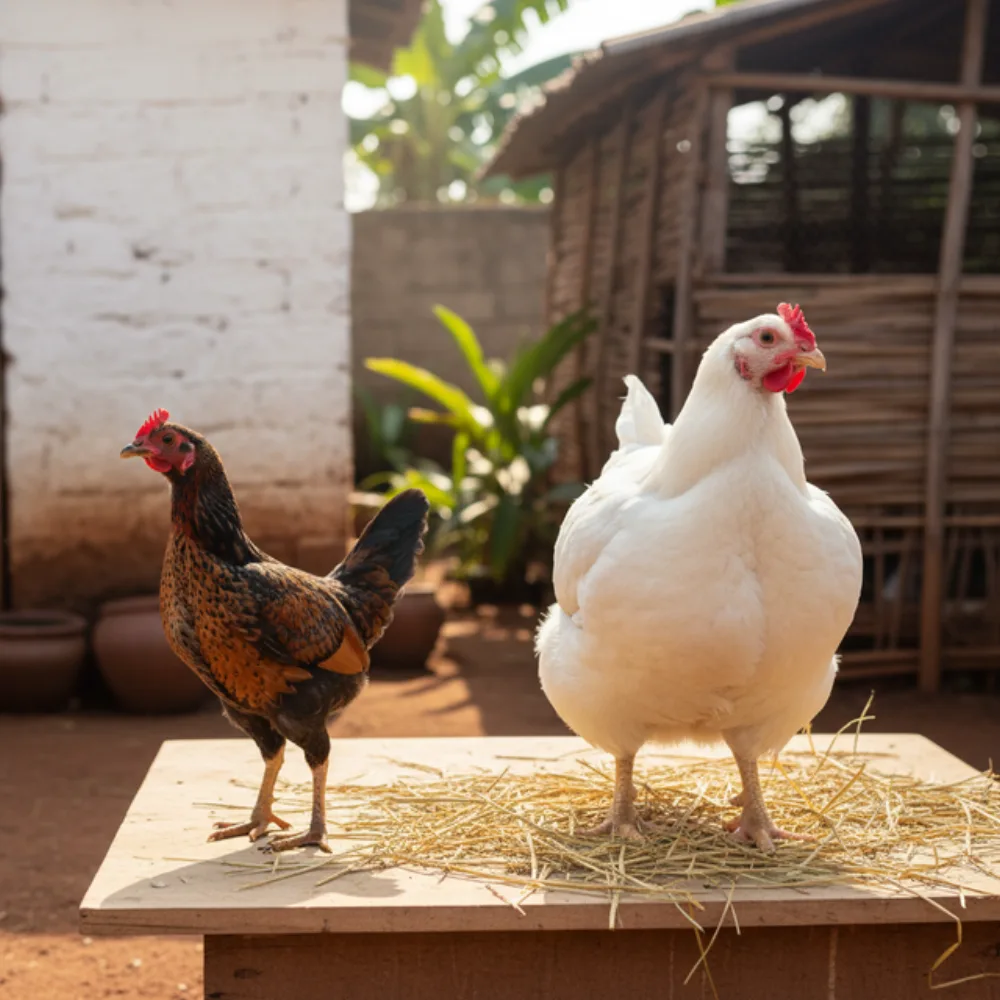
Cobb 500 broiler chicken
Cobb 500
Cobb 500: the local default; cheapest chick, fast breast-meat growth
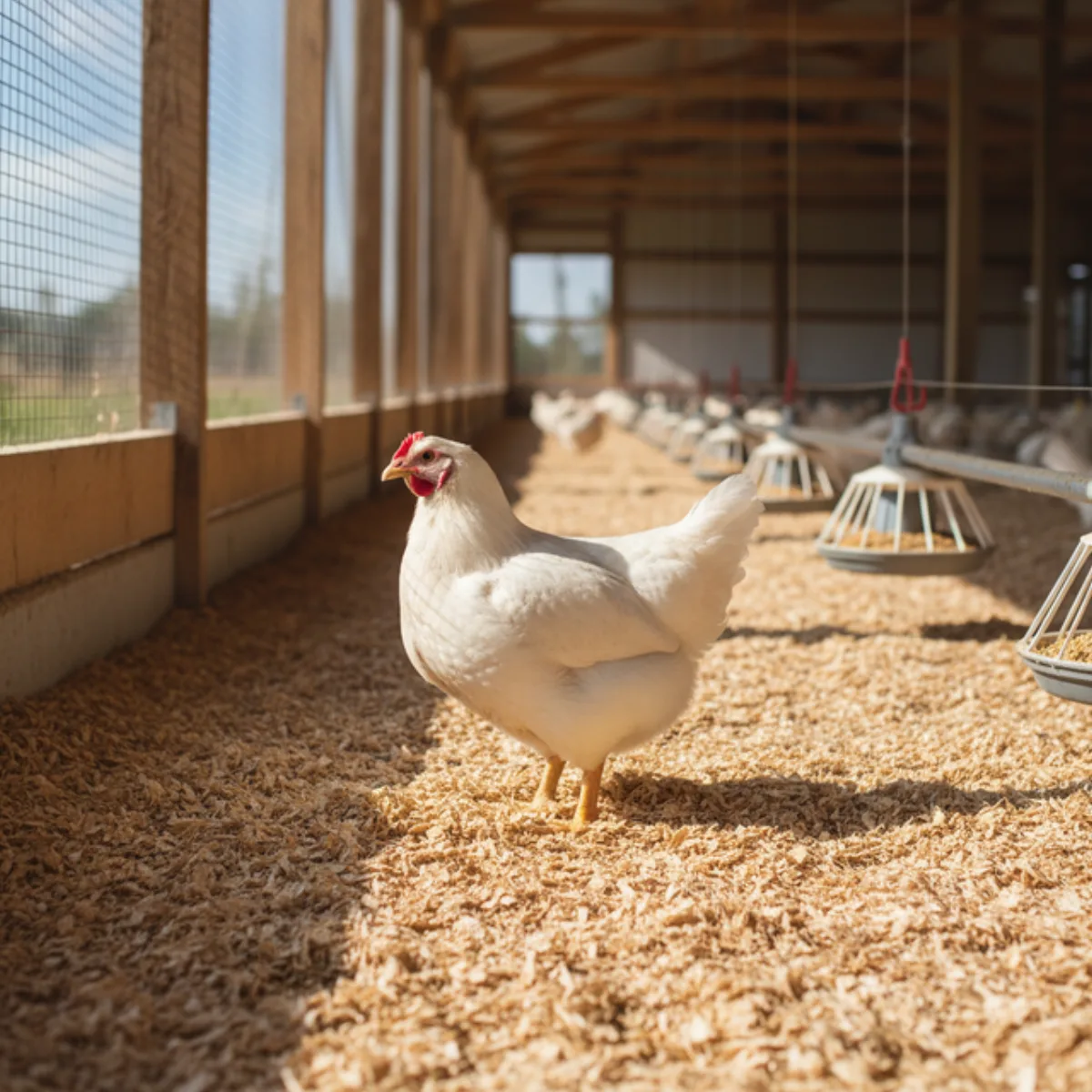
Ross 308 broiler chicken
Ross 308
Ross 308: leaner feed use; chick often imported at an FX premium
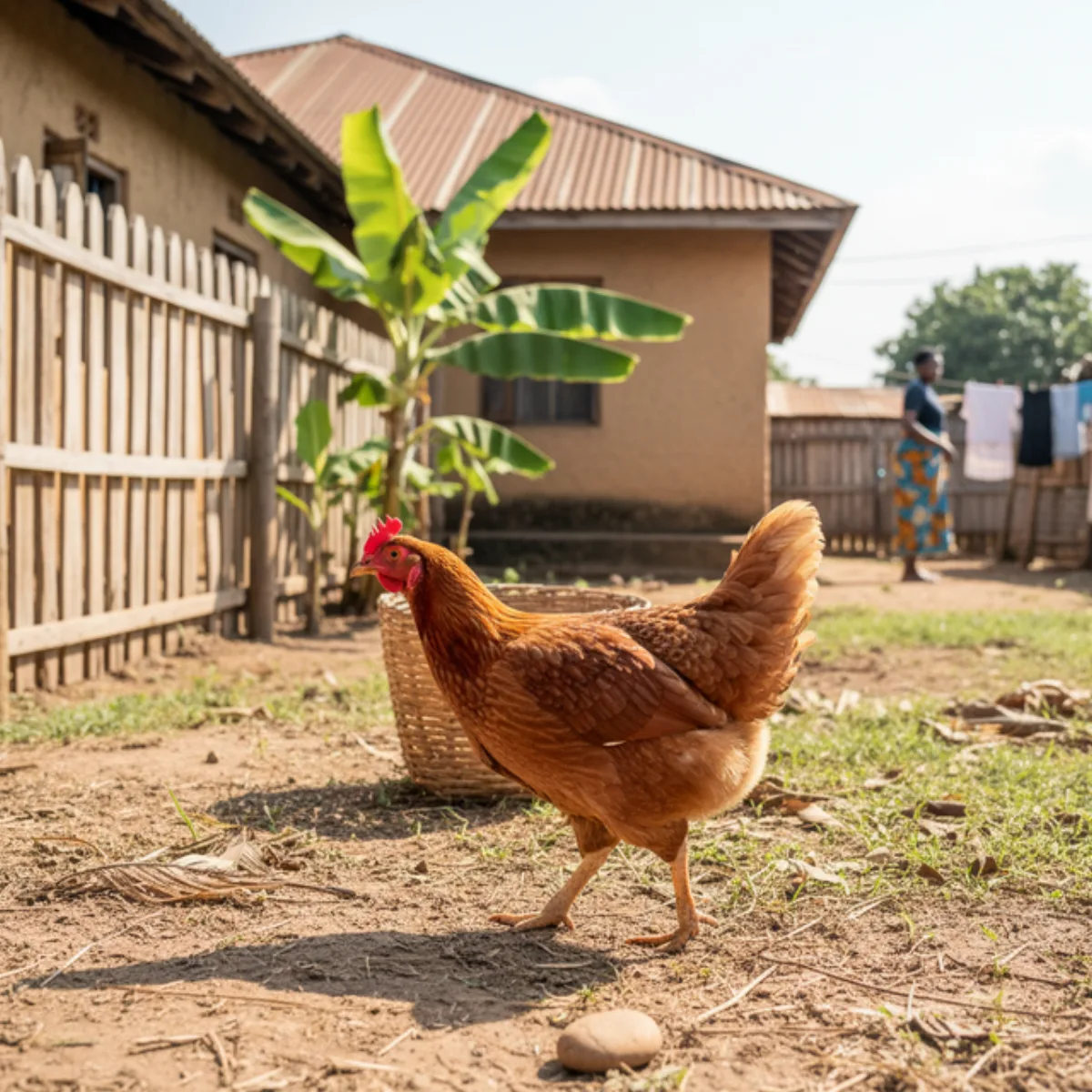
Sasso / Kuroiler broiler chicken
Sasso / Kuroiler
Sasso / Kuroiler: hardy, slow, sold as premium 'local' meat, not a broiler

Plate 1: The two commercial broilers and the dual-purpose bird. The first two are the same business; the third is a different one.

🐔 The gap between the breed sheet and the Ghana result 🐔

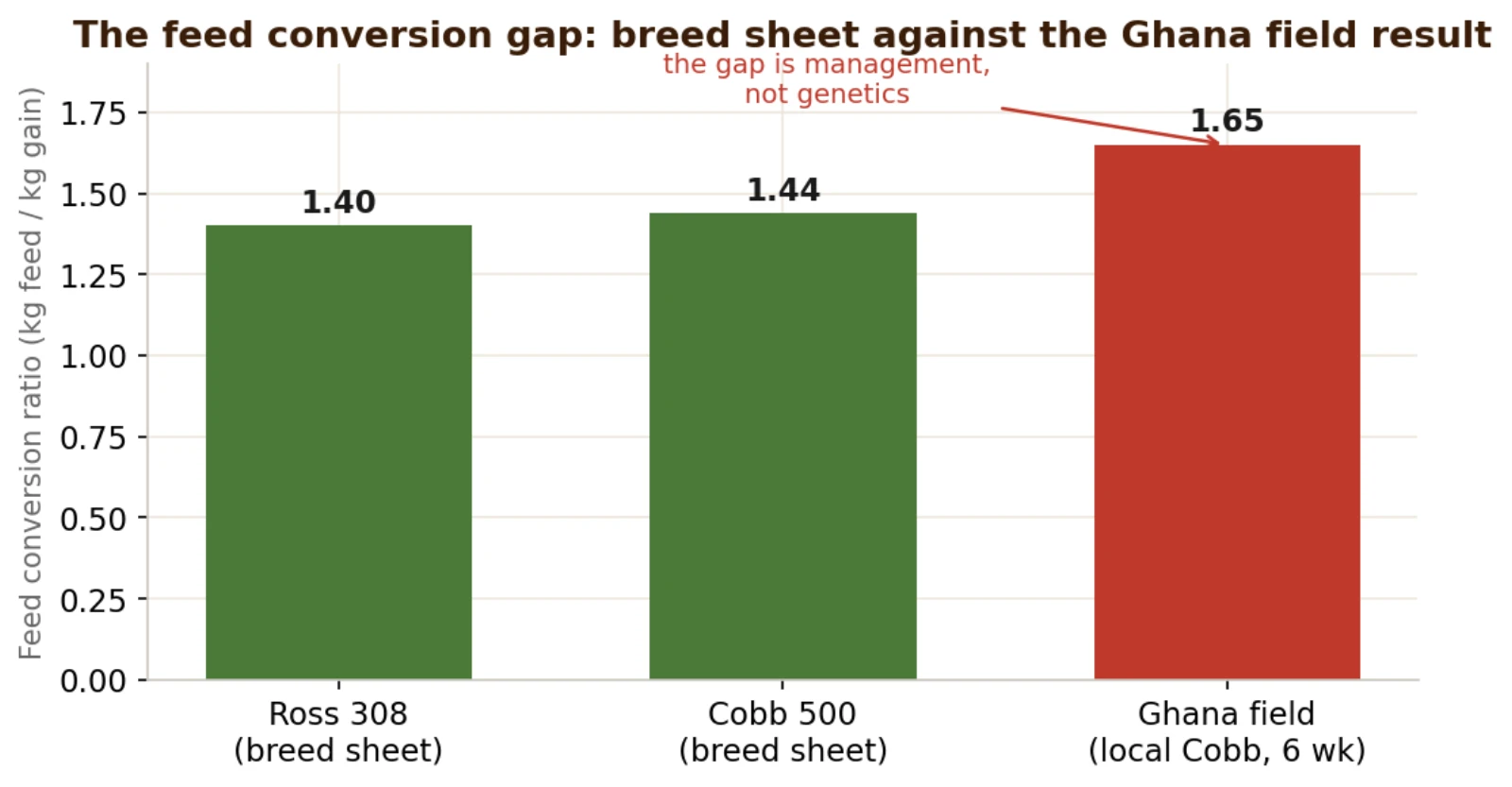
The feed conversion gap in Ghana, from the breed-sheet target to the field result, and what it costs
Figure 1 The feed conversion gap in Ghana, from the breed-sheet target to the field result, and what it costs
What this shows

The gap between the breed sheet and the Ghana field result is management, not genetics. Closing it is the cheapest profit lever on the farm.

A market-weight broiler being weighed on a hanging farm scale in Ghana
What six weeks decides

Here is the number that matters more than any breed comparison. On a Ghanaian farm, locally hatched Cobb 500 birds convert feed at about 1.63 to 1.65 at six weeks, against a breed target near 1.4 (Agbehadzi et al., 2019), and lose about 7 to 14 percent over a six-week cycle on Ghanaian commercial farms (Agbehadzi et al., 2019).

That gap, from about 1.4 to 1.65, is not a genetics problem that a better chick would solve. It is a management problem: heat, feed quality, water, brooding and disease. Because feed is the largest cost in the whole enterprise (see Pillar 5), a tenth of a point on FCR moves the profit of a cycle more than the choice of breed ever will.

~1.4
the breed-sheet feed conversion target
1.63 to 1.65
the Ghana field result at six weeks

What this means. The breed sheet is a ceiling reached in a climate-controlled house in Europe, not a promise for an open-sided house in Kumasi. Read plainly: do not pay a premium chasing the perfect breed. Spend the same money and attention closing the management gap, because that is where the feed bill, and the profit, actually move. The bird you buy matters far less than the six weeks you give it.

🐔 The day-old chick is the foreign-exchange heart of the model 🐔

Almost every broiler cycle in Ghana starts with imported genetics. About 95 percent of day-old chicks are imported (Onumah et al., 2023). The grandparent and parent birds that produce the chicks are shipped in, mostly from Europe, so the price of a day-old chick tracks the cedi against the dollar and euro long before it tracks anything a farmer does.

A chick costs about GH¢20 for Cobb 500 and about GH¢23 for imported Ross 308 (PoultInn hatchery listing, 2026). When the cedi slips, the chick bill rises the next week, and it does so at the same time as the feed bill, because the maize and soya are priced the same way. This is the quiet reason local birds struggle to undercut imports: the model imports its two biggest costs before it raises a single feather.

~95%
of chicks trace to imported genetics
GH¢20 to 23
a day-old chick, priced against the cedi
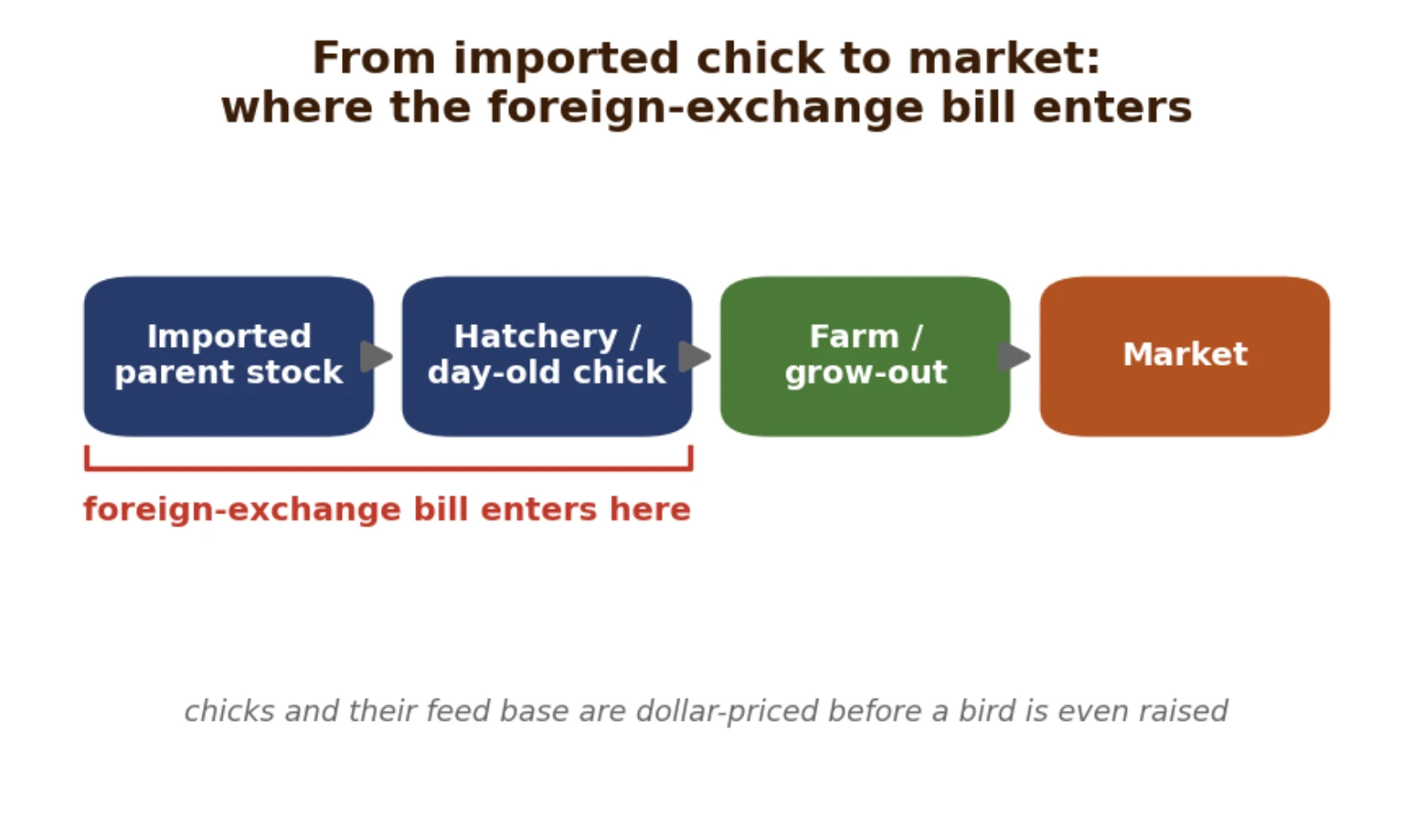
From imported parent stock to the day-old chick to placement, and where the foreign-exchange bill enters
Figure 2 From imported parent stock to the day-old chick to placement, and where the foreign-exchange bill enters
Imported broiler breeder parent-stock birds in a Ghanaian breeder farm that supplies fertile eggs
Where the chick begins

Market signal: the chick is the choke point. Because the chick is imported and dollar-priced, chick supply is the sector's tightest bottleneck and its clearest signal. When importers or hatcheries stumble, farmers cannot place birds, and the shortage shows up as empty houses two months before it shows up as expensive chicken. Anyone who can supply quality chicks reliably holds the scarcest position in the chain.

🐔 The supply gap is the business 🐔

Ghana does not hatch enough chicks to feed its own ambition. To reach the self-sufficiency the government is chasing, the country would need about 1.35 million day-old chicks a week, from more than 1.6 million fertile eggs (Octane Africa Markets, 2025).

Today it is served by only about 15 local hatcheries and 8 importers of commercial day-old chicks (Arthur, 2024), many running old, low-output incubators, and the country still imports nearly all of its parent stock. That shortfall, between the chicks Ghana wants placed and the chicks it can hatch, is a concrete, recurring, policy-backed business. It is also asset-lighter than most people assume: a small incubator operation can start on modest capital and turn a batch every three weeks.

The reason chicks are scarce and dollar-priced is structural: Ghana's hatchery system is built around layers, not broilers. In 2018 the country imported about 511,960 broiler day-old chicks against about 7,130,999 layer chicks (Arthur, 2024).

The gap has widened since. In 2024 broiler chick imports fell to about 138,820, down about 69.5 percent on the year, while layer chick imports rose to about 8,419,697, up about 15.7 percent (MoFA-SRID, 2024). The broiler chick pipeline is not just small, it is shrinking.

138,820
broiler chicks imported in 2024, down about 69.5%
8.4 m
layer chicks imported the same year, up 15.7%
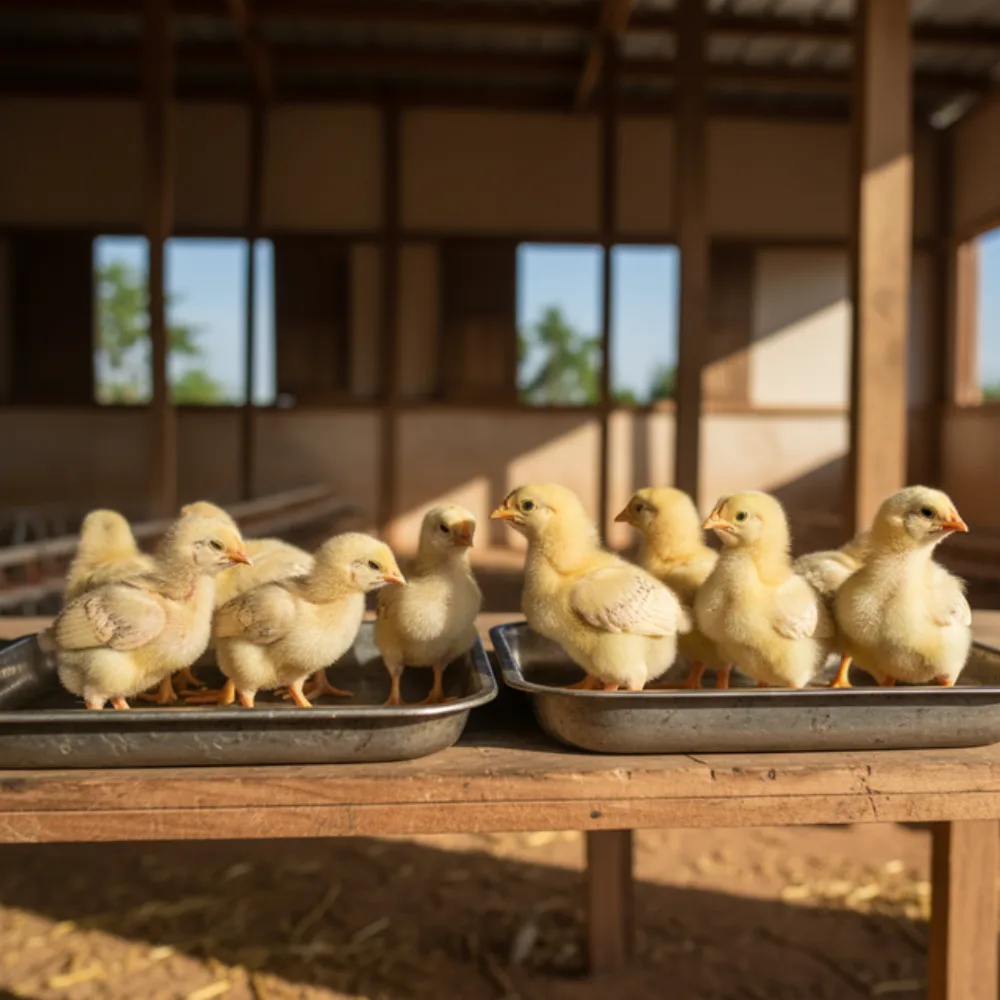
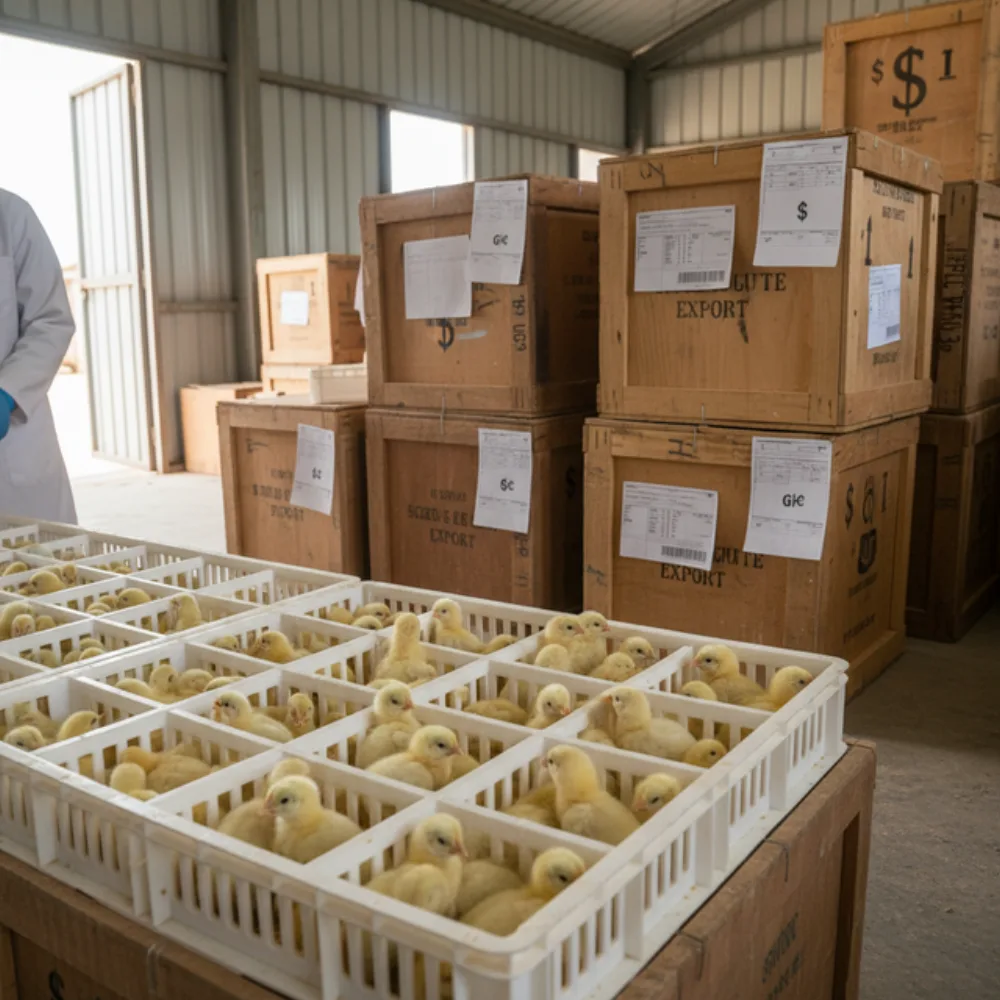
Two trays of day-old chicks side by side, one bright-eyed active and uniform, the other dull uneven and lethargic
Strong chicks against weak
The single image: what a good chick looks like against a bad one.
Weak, uneven day-old chicks that will lose the cycle before it starts
A weak chick is a lost cycle

What this means. The hatchery capacity exists, but it is pointed at eggs, so a broiler farmer competes for a thin and falling supply of the right chick. Read plainly: whoever builds dedicated broiler hatching capacity is not entering a crowded market, they are filling a gap the layer-focused system has left wide open, and doing it insulates the whole local chain from the foreign-exchange shock on imported chicks.

🐔 The hatchery opening, in numbers 🐔

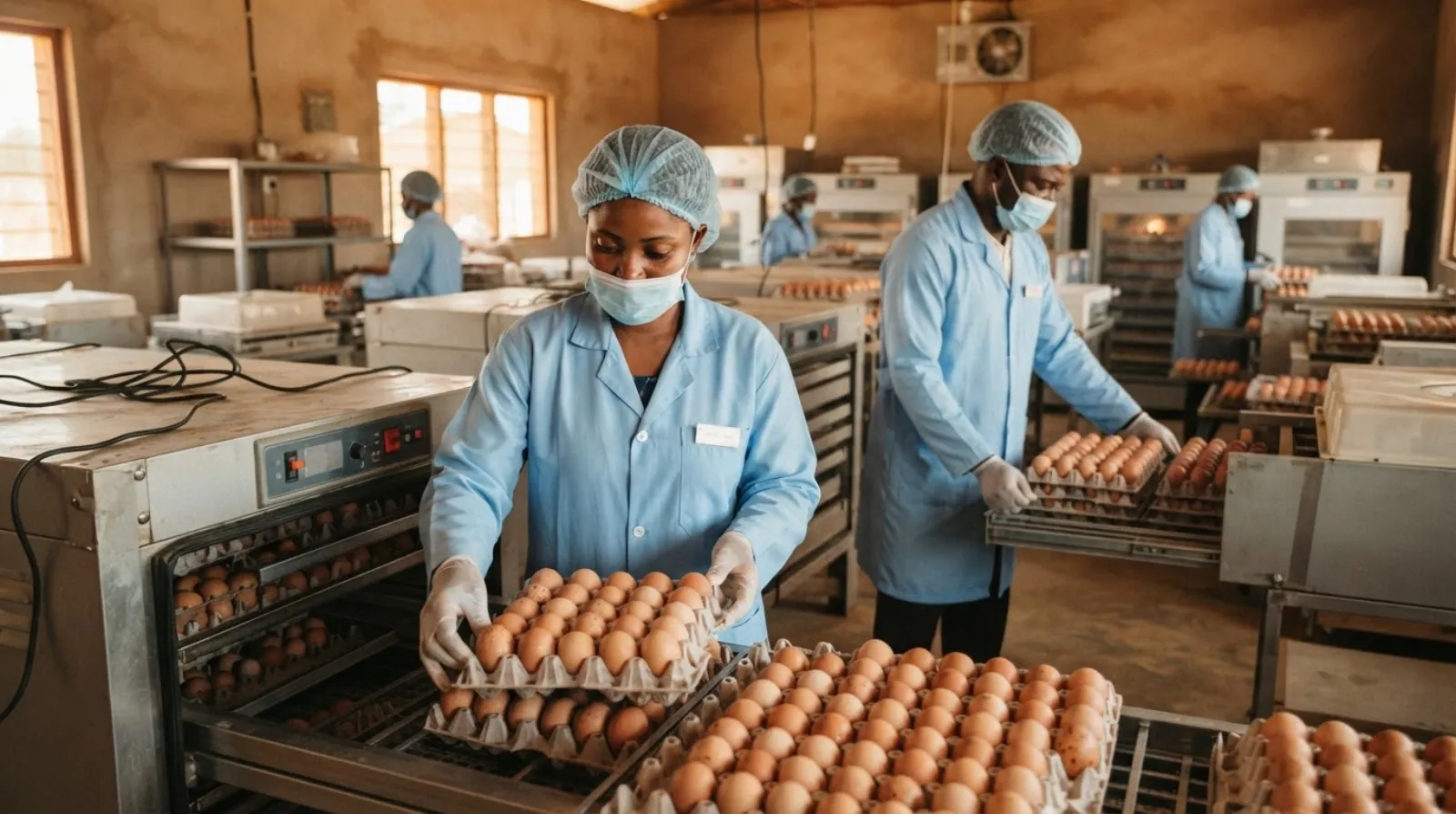
Because the chick is the choke point, it is worth putting numbers on the hatchery opening. A parent flock is productive, and a small machine turns a batch every three weeks. The figures below sketch the economics of a micro-hatchery for the entrant.

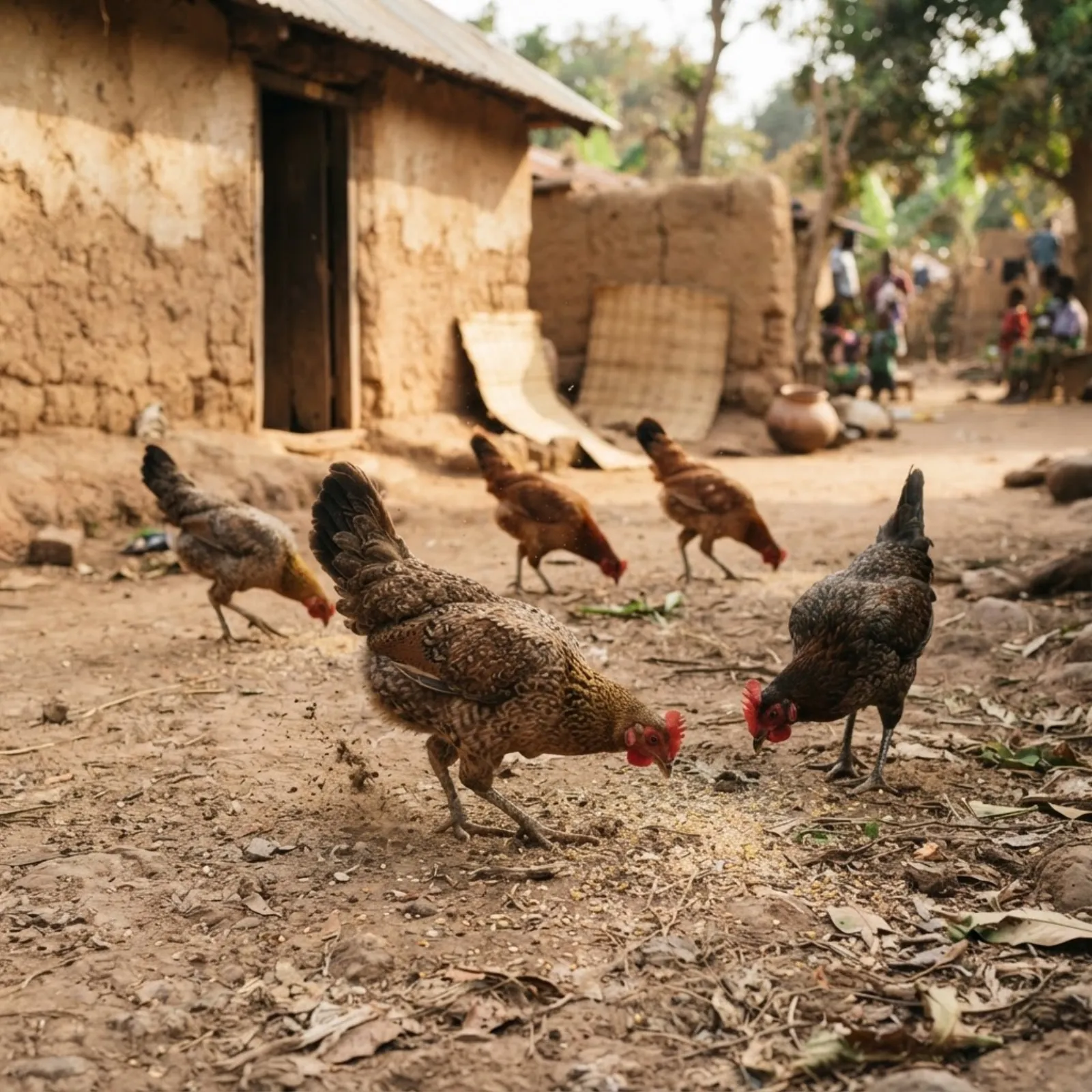
A smallholder tending hardy local dual-purpose chickens in a rural Ghanaian village compound
A batch every three weeks
Asset-light: a small machine turns a batch every three weeks.
A slow-growing dual-purpose bird placed as if it were a fast commercial broiler
The wrong bird for the job
~85%
hatchability of set eggs under good management
~4 months
break-even for an asset-light micro-hatchery
Table 3: Indicative economics of a small broiler hatchery
MeasureFigureWhat it means for the entrant
Hatchability of set eggsabout 85 percentMost set eggs become chicks under good management
Chicks per parent henabout 152 by 25 weeksOne parent hen supplies many grow-out chicks
Small-machine outputabout 30 to 32 chicks per 40-egg setA 75 to 80 percent hatch on a 21-day cycle
Fertile-egg costabout GH¢3 to 5 an eggThe main input cost of hatching
Start-up capitalabout GH¢9,000 to 20,000A micro-hatchery is genuinely asset-light
Profit a cycleabout GH¢500 to 700Modest per cycle, but repeated every three weeks
Break-evenabout four monthsA fast payback for a small operation

Sources: Aviagen parent-stock objectives (2021); Octane Africa Markets (2025).

🐔 The Opening: the chick supply gap 🐔
01

Local hatchery or contract-hatching operation. Every chick hatched in Ghana from local eggs is a chick insulated from the foreign-exchange shock that hits imported birds. This is the highest-leverage opening in the pillar, and the one policy money is actively trying to crowd in.

02

Chick brooding and 'started-pullet' style services. Taking day-olds through the fragile first two weeks and selling stronger two-week birds to smaller farmers who lose too many chicks at brooding.

03

Chick-quality verification and advisory. Helping farmers judge chick source, uniformity and vaccination status before they place, because a weak chick is a cycle lost before it starts.

🐔 The risks that sit inside the breed and chick decision 🐔

Poor-quality or unverified day-old chicks

VERY HIGH
What it is

A weak, unevenly sized or badly vaccinated chick loses the cycle before it starts. Because most chicks come through importers and a handful of hatcheries, a farmer often cannot see the source or the parent-flock health behind the tray they buy.

Evidence

Local-hatchery Cobb 500 birds already run to about 7 to 14 percent mortality over six weeks, and one Ghanaian hatchery study found weak Newcastle and Gumboro antibody response traced to poor vaccination (Agbehadzi et al., 2019).

Who it hits

Smallholders and first-time farmers who buy on price from whoever has chicks that week.

How to manage it

Buy from a hatchery that will state its parent-flock source and vaccination programme, and place a small test batch first. The mirror-image opening is a verified-chick or brooding service, because the trust gap is itself a market.

The imported-chick foreign-exchange trap

HIGH
What it is

The day-old chick is priced off imported genetics, so a weaker cedi raises the chick bill within days, at the same moment it raises the feed bill. A farmer who budgeted at last month's rate can be underwater before the birds are half grown.

Evidence

About 95 percent of chicks trace to imported stock (Onumah et al., 2023), and chick prices already sit at about GH¢20 to 23 (PoultInn, 2026) against a volatile cedi.

Who it hits

Every commercial broiler farmer, but hardest on thinly capitalised ones who cannot pre-buy or hedge.

How to manage it

Lock chick and feed prices for the cycle before placing, and favour locally hatched chicks where the quality is proven. The opening is local hatching itself, which shortens the foreign-exchange exposure of the whole model.

Buying the wrong bird for the job

MEDIUM
What it is

A dual-purpose bird such as a Sasso or Kuroiler is not a broiler. It grows slowly, eats more per kilogram, and only pays if it is sold into the premium 'local chicken' market. Placed as if it were a broiler, it loses money on feed and time.

Evidence

Improved dual-purpose birds reach about 2 kilograms in about 18 weeks (Osei-Amponsah et al., 2024), against about five to six weeks for a commercial broiler.

Who it hits

New entrants who confuse the hardy 'local' bird premium with the fast broiler model, and buy the wrong chick.

How to manage it

Match the bird to the buyer: commercial broiler for the fast frozen and fresh trade, dual-purpose only for a confirmed premium-local outlet. The opening is the premium-local niche itself, if the market is secured first.

🐔 Key takeaways 🐔
01

The chick, not the breed, is the decision. Cobb and Ross are close enough that management, not genetics, decides the outcome of a cycle.

02

The real number to fix is the feed conversion gap, from a 1.4 breed target to a 1.63 to 1.65 Ghana field result. Closing it is the cheapest profit lever on the farm.

03

The day-old chick is imported and dollar-priced, so the model carries foreign-exchange risk from the first day. Local hatching is the way to shorten that exposure.

04

Chick supply is the tightest bottleneck in the sector, and therefore the clearest business opening: local hatching, brooding services and chick-quality verification.

05

A dual-purpose bird is a different business from a broiler. Do not place one as if it were the other.

Written for each reader

🐔 Practitioner intelligence 🐔

Hover any card to pause and lift it.

For students

If you are thinking of entering broiler chicken with limited capital, do not start by building a big house and placing thousands of birds. Start asset-light, at the chick. Learn to brood: take day-old chicks through the fragile first two weeks and sell stronger two-week birds to farmers who lose too many at brooding. The trap first-timers fall into is buying the cheapest chick from whoever has stock that week; in broiler a weak chick is a lost cycle. What you gain is a working grasp of chick quality and hatchery relationships, and a cash-generating service before you ever carry a full grow-out.

For entrepreneurs

First move: secure a reliable, quality chick supply in writing before you spend on anything else, because chick supply, not housing, is the binding constraint. Before you place birds, lock the chick and feed price for the cycle so a cedi slide cannot sink your budget mid-grow. The trap that kills first-timers is treating the breed choice as the big decision while ignoring the management gap that actually sets FCR. If you can hatch locally, even at small scale, you hold the scarcest position in the chain and cut your foreign-exchange exposure at the same time.

For investors

Diligence asks: where do the chicks come from, at what price, and how exposed is that price to the cedi. A broiler venture that depends on imported day-old chicks is a foreign-exchange position wearing a farming costume, so underwrite the chick supply before the housing. The thesis worth backing is local hatching and parent-stock capacity, which policy is actively trying to crowd in and which shortens the whole sector's dollar exposure. Structure the cheque to release against a proven hatch rate and chick quality, not against birds placed, and treat any promised FCR near the breed sheet as unvalidated.

For ecosystem actors

The lever is local hatchery and parent-stock capacity: every chick hatched in Ghana is a chick taken off the foreign-exchange bill. Tie public support (such as the Nkoko Nkitinkiti chick distribution) to hatcheries that can prove parent-flock health and vaccination, and measure success as the share of national chick demand met locally, not as chicks handed out. The failure to avoid is subsidising imported chicks, which spends public money widening the very dependence the policy is meant to close.
Download full PDF
UpcomingThis document isn't available yet.