Ghana Agribusiness PlaybookBroiler Chicken
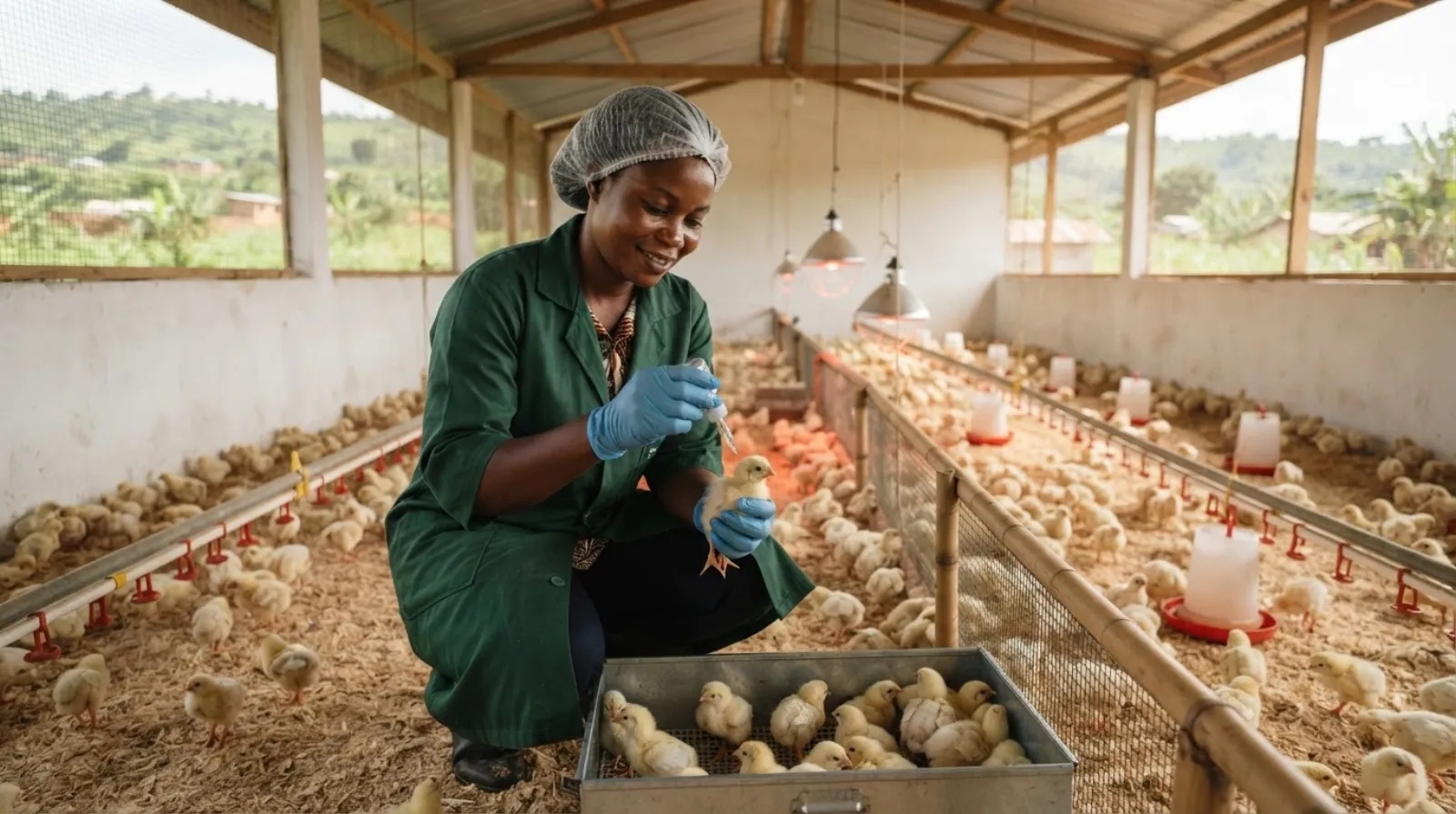
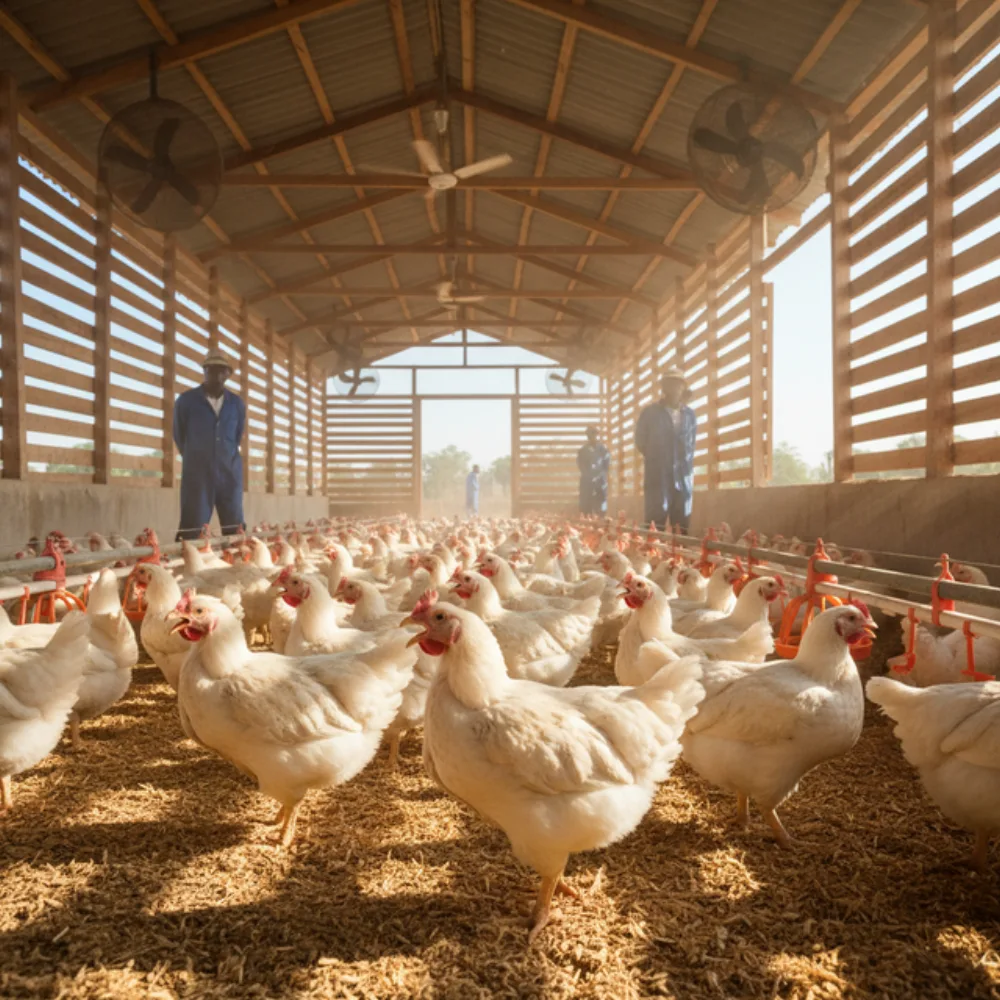
A poultry worker vaccinating broiler chicks inside a clean brooding house
Broiler Chicken · Pillar 03

Disease, Health and Risk Profile

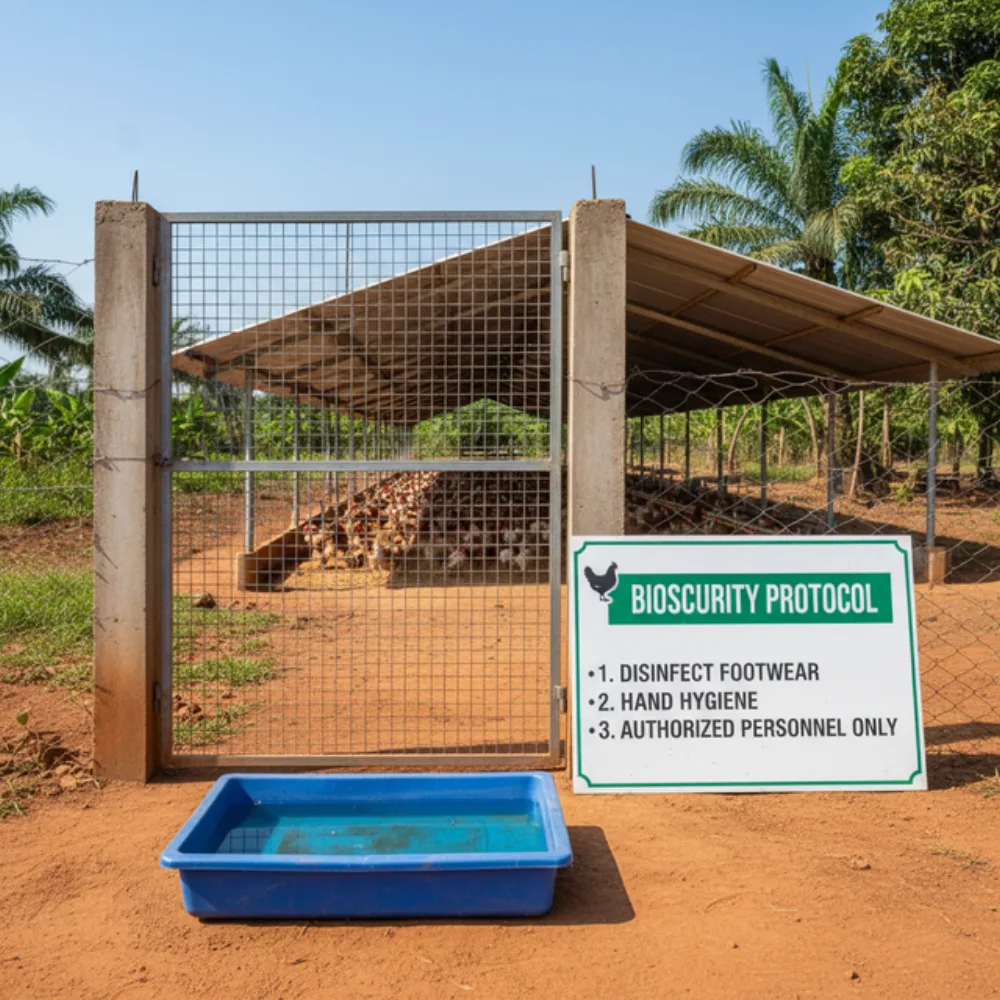
Newcastle and avian influenza can empty a house in days. Biosecurity is the cheapest insurance a farmer holds.
Disease, Health and Risk · Pillar 03

Disease is the single biggest destroyer of broiler margins in Ghana, and most of it is preventable. A flock lost to Newcastle or a farm shut by bird flu wipes out a cycle's profit and often the capital behind it. The good news is that the main killers are known, and the tools to stop them are cheap next to the loss. This pillar reads the disease picture as a business risk, not a veterinary lecture: what threatens birds and margins, what it costs, and where keeping birds alive becomes a service others will pay for.

Ghanaian broiler flocks lose about 7 to 14 percent over a six-week cycle on commercial farms (Agbehadzi et al., 2019), and most of that loss is disease and the management that lets it in, not bad luck. The threats are not exotic. They are a short list of well-understood diseases that arrive on the same routes every cycle, through the chick, the feed, the water, wild birds and human traffic.

Because the losses are preventable, the money spent on vaccination and biosecurity is not a cost. It is the cheapest insurance on the farm, and the clearest place where good management separates the farms that last from the ones that fold.

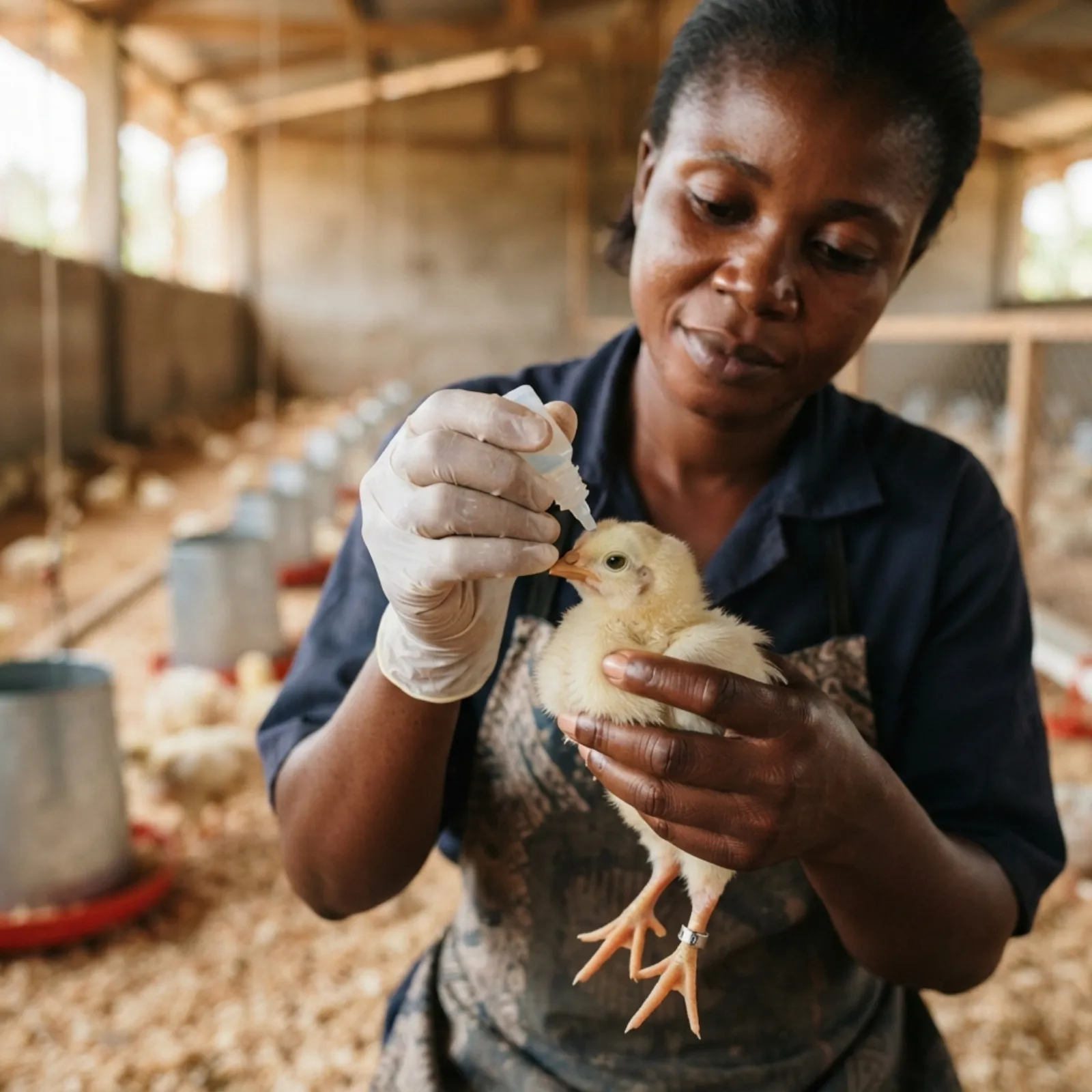
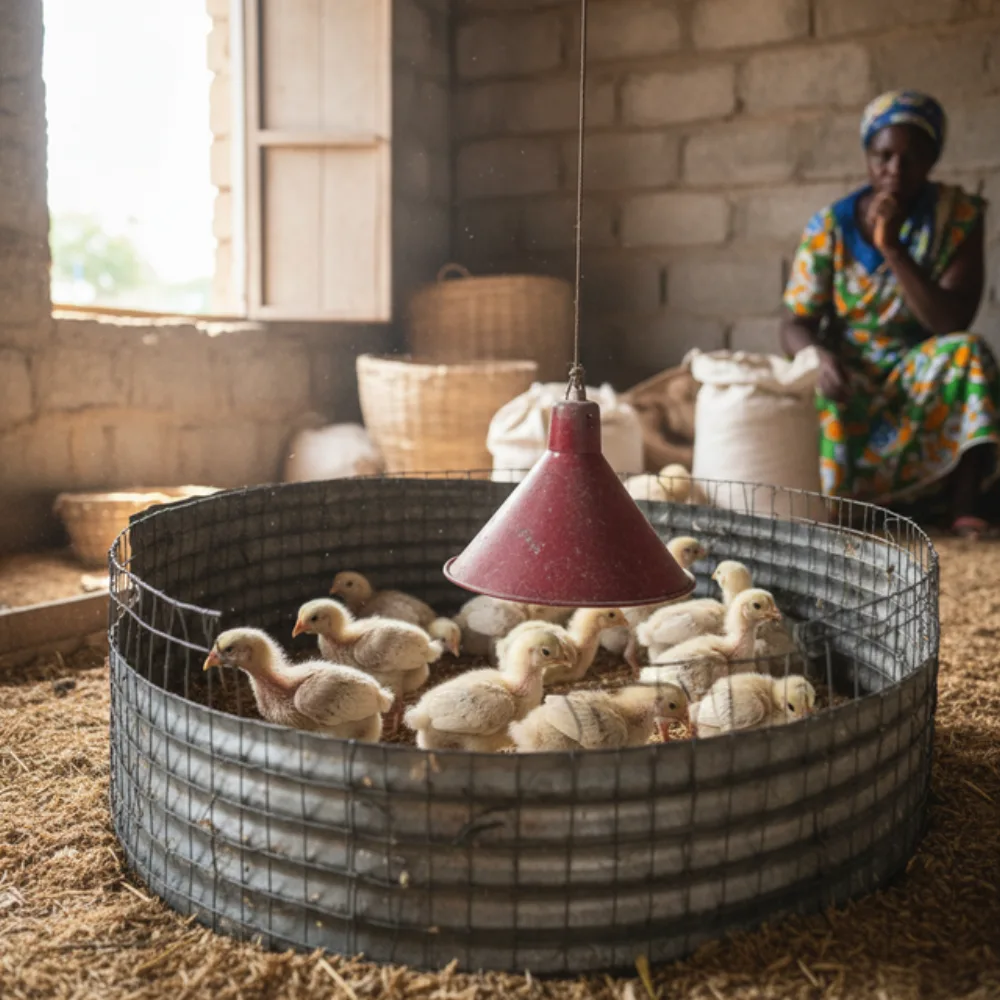
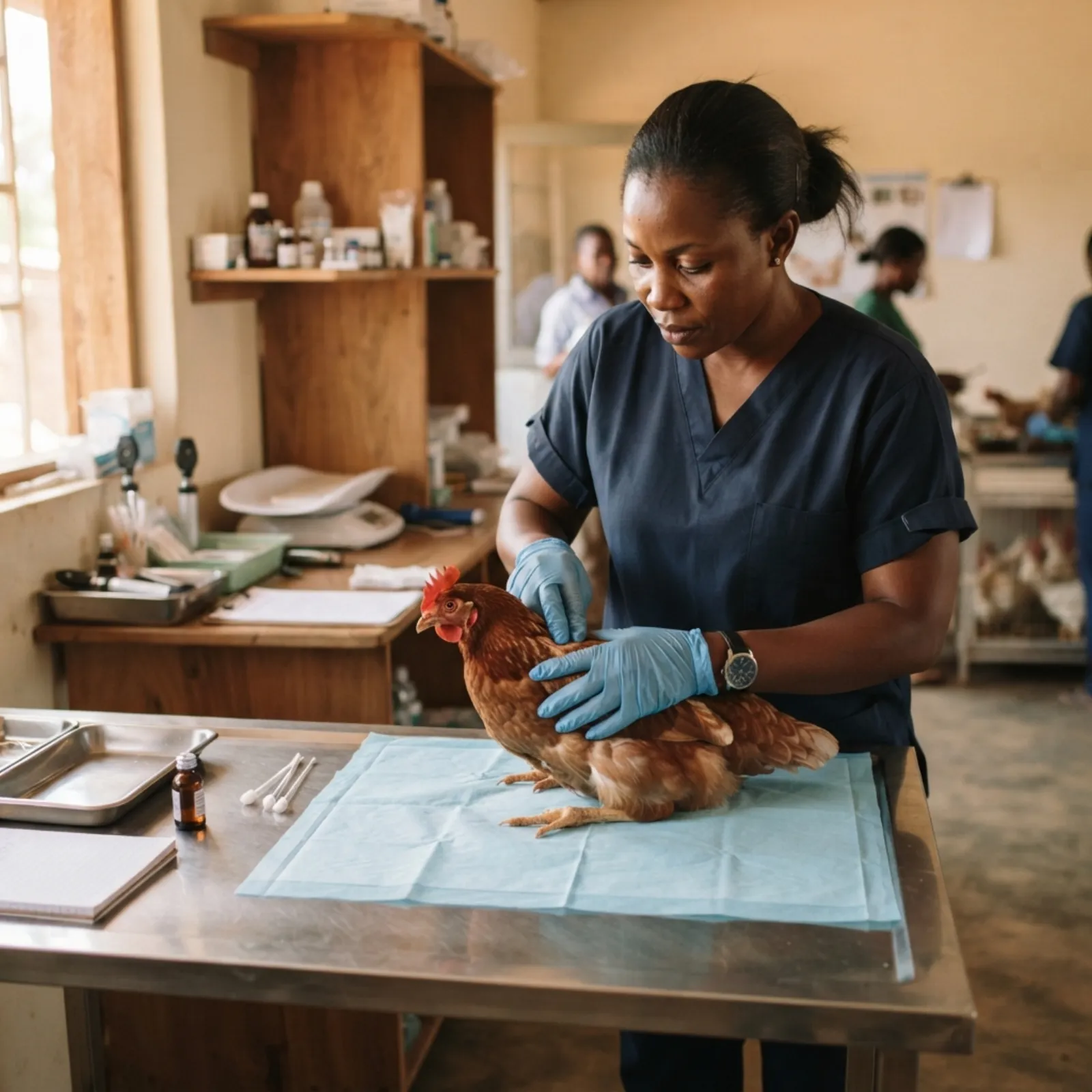
A veterinary technician vaccinating day-old broiler chicks by eye-drop in a Ghanaian brooder house
Prevention is the cheapest insurance
A flock lost to Newcastle wipes out a cycle's profit, and often the capital behind it.
7-14%
of a flock lost over a six-week cycle on commercial farms
70-100%
of an unvaccinated flock Newcastle can kill
55%
of small farmers fully follow the vaccination schedule
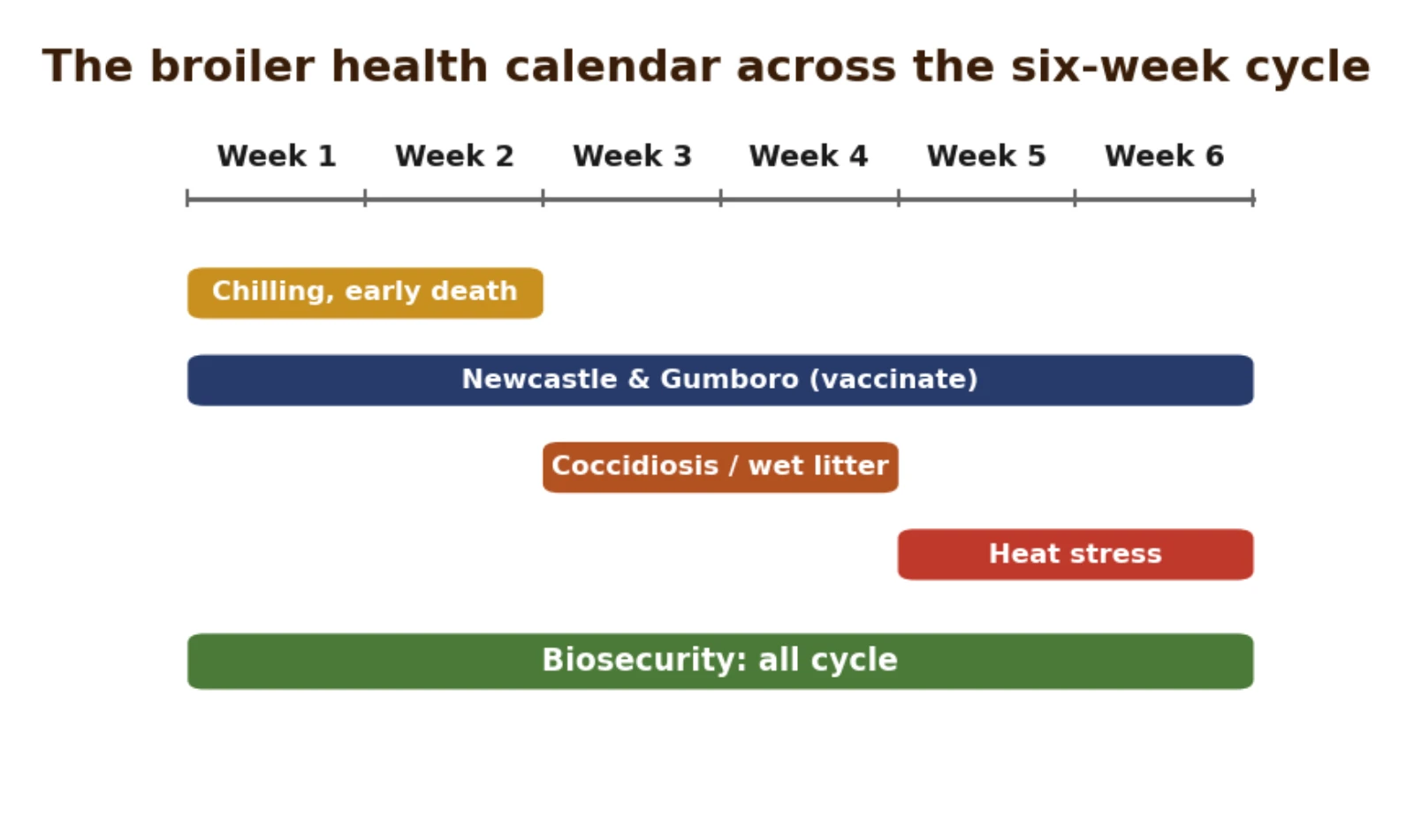
The broiler health calendar: what threatens the flock at each stage of the six-week cycle, and the vaccination and biosecurity response
Figure 6 The broiler health calendar: what threatens the flock at each stage of the six-week cycle, and the vaccination and biosecurity response
Reading the calendar

The health calendar maps the six-week broiler cycle against the threats that arrive at each stage, and the vaccination and biosecurity response that answers each one. Read across it and the pattern is clear: the dangerous windows are known in advance, so the defence can be scheduled rather than improvised.

6 weeks
the cycle in which every dangerous window is known in advance
17%
of small farmers follow none of the vaccination schedule

🐔 The main threats, read as a balance sheet 🐔

Read the table as a balance sheet, not a syllabus. Almost every major loss on it is preventable for a few cedis a bird, yet Ghanaian compliance is patchy: only about 55 percent of small-scale farmers fully follow the vaccination schedule, and about 17 percent follow none of it (Okata and Al-Hassan, 2023).

Table 7: The main broiler disease threats in Ghana, read as business losses and the actions that prevent them
ThreatWhat it costsPreventable?The action that pays
Newcastle disease70 to 100% of an unvaccinated flockYes, by vaccinationFollow the vaccination schedule without gaps
Gumboro (IBD)Immune damage, then death from other bugsYes, by vaccinationTime Gumboro doses to the chick's maternal antibody
Avian influenza (HPAI H5N1)Whole-farm cull, movement ban, no sure compensationOnly by biosecurityKeep wild birds and visitors out; report fast
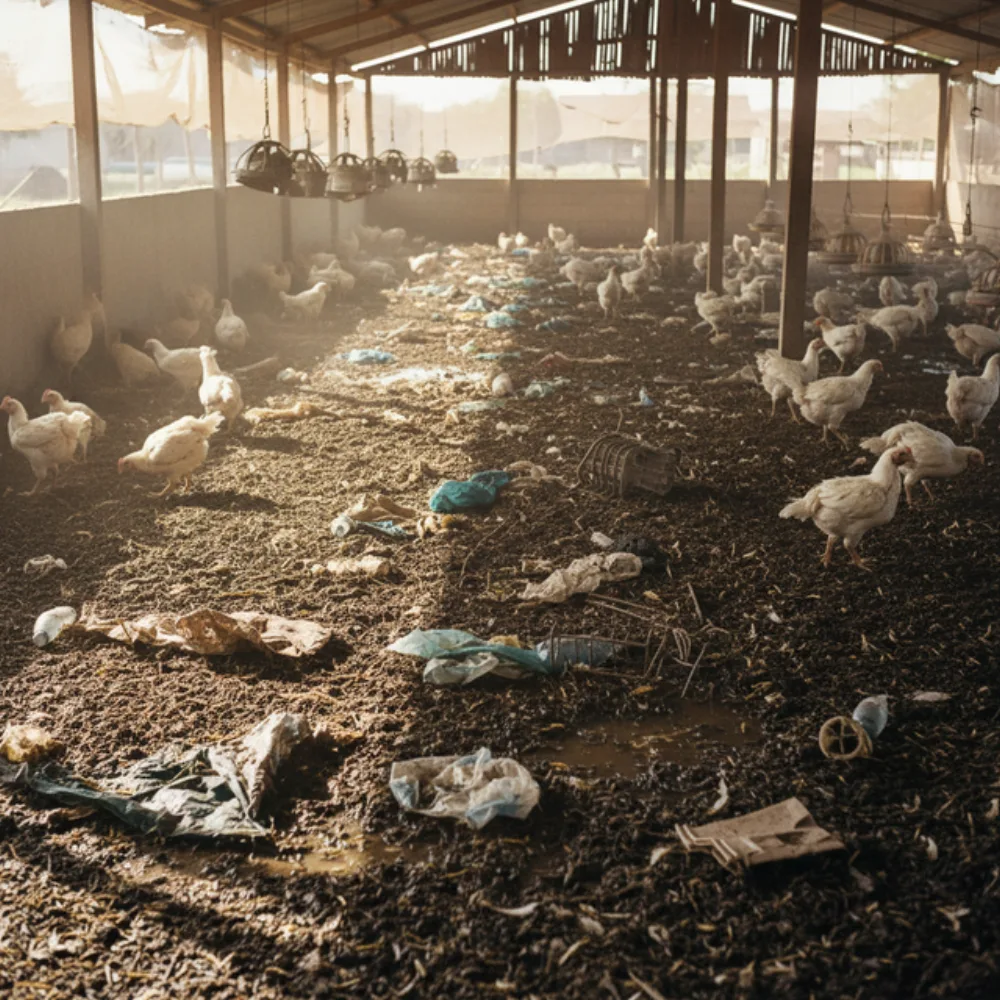
Coccidiosis and wet litterSlow growth, gut damage, higher FCRYes, by litter and coccidiostatKeep litter dry; manage the drinker line
Chronic respiratory diseasePoor growth, condemnation at slaughterLargely, by air and densityVentilate; do not overcrowd (see Pillar 4)

Sources: Okata and Al-Hassan (2023); Ouma et al. (2023); Lamidi and Osunade (2023).

🔍 What this means

That gap between what farmers know and what they do is the disease story in one line. Read plainly: the loss is not bad luck, it is unfollowed prevention. That is also why the clearest openings in this pillar are services, vaccination, biosecurity, diagnostics and advisory, not just protecting your own flock.

Coccidiosis and wet litter damaging the gut and slowing growth in a broiler house
Everyday drain Coccidiosis and wet litter
Broilers panting under heat stress in a poorly ventilated tropical house
Everyday drain Heat stress and poor air
An overcrowded broiler house with birds packed above safe stocking density
Everyday drain Overcrowding and density

🐔 Newcastle and Gumboro: the vaccine-preventable killers 🐔

Newcastle disease is the one that empties houses. It can kill 70 to 100 percent of an unvaccinated flock (Ouma et al., 2023), spreads fast, and has no cure once it strikes. The only defence is vaccination before it arrives.

Gumboro, or infectious bursal disease, is quieter and just as costly. It attacks the young bird's immune system, so survivors grow poorly and fall to everything else. Both are stopped by a vaccination schedule that Ghana already publishes through the Veterinary Services Directorate. The problem is not that the schedule is unknown. It is that it is unevenly followed.

Newcastle disease, a fast untreatable virus that can empty an unvaccinated broiler house
The one that empties houses
Newcastle spreads fast and has no cure, so any gap in vaccination is an open door.
Gumboro disease attacking the immune system of a young broiler chick
The quiet immune killer
Gumboro attacks the young bird's immune system, so survivors grow poorly and fall to everything else.
70-100%
of an unvaccinated flock Newcastle can kill
No cure
once Newcastle strikes; the only defence is vaccination first

🐔 The published schedule, unevenly followed 🐔

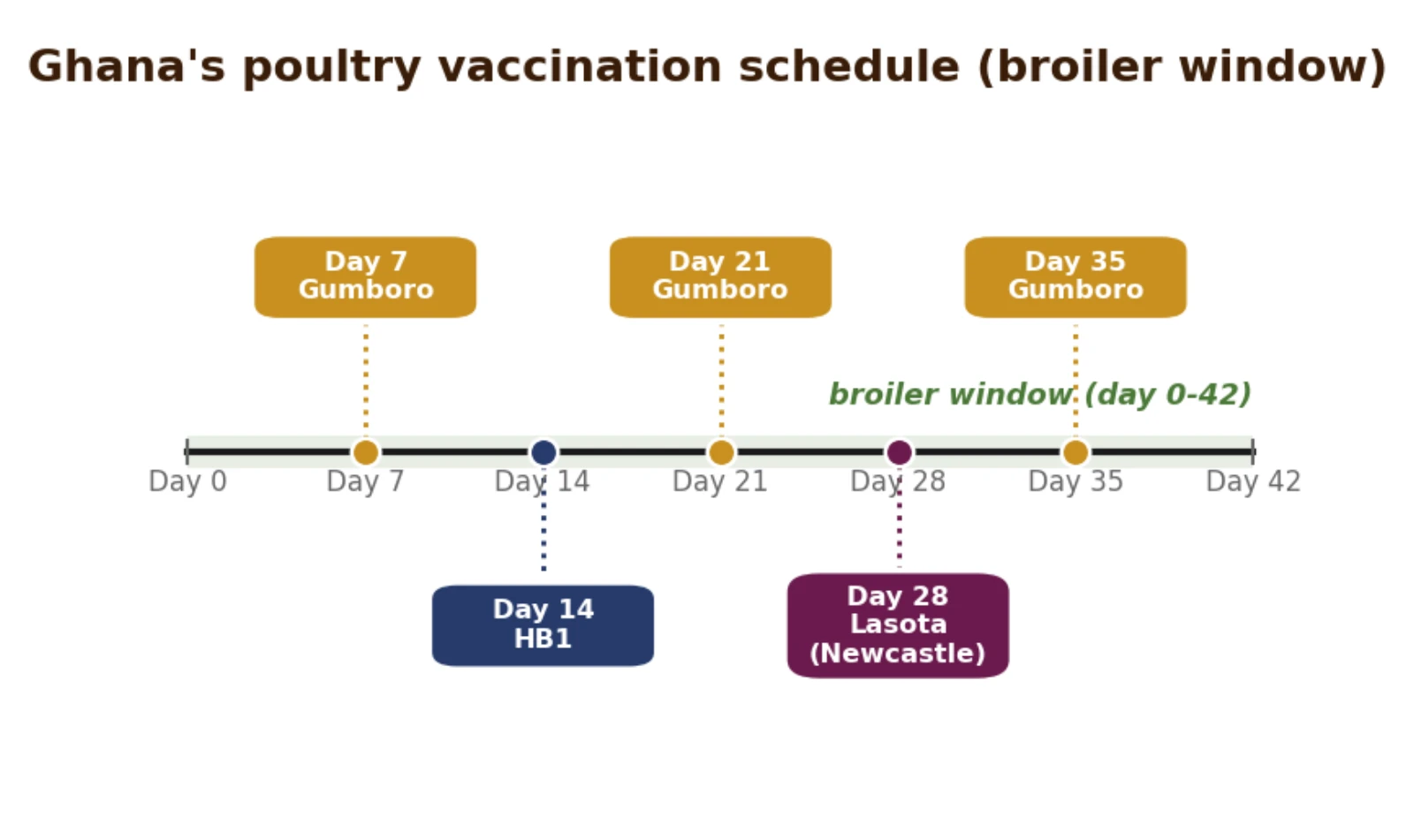
Ghana's published poultry vaccination schedule, from day-old to point of lay, with the broiler window marked
Figure 7 Ghana's published poultry vaccination schedule, from day-old to point of lay, with the broiler window marked
What this shows

Ghana's published schedule runs from day-old to point of lay, with the broiler window marked. The doses that matter most for broilers, Newcastle and Gumboro above all, fall inside the first weeks, which is exactly when a missed or mistimed dose does the most damage.

1 in 6
small farmers vaccinate not at all, keeping disease circulating
~55%
fully follow the schedule; the rest leave the door open
📡 Market signal: the compliance gap is the opening

The compliance gap is the market signal. When only about half of farmers fully vaccinate, and about one in six do not vaccinate at all, disease keeps circulating and reinfecting even the farms that do everything right. Read plainly: a reliable vaccination and advisory service does not just protect one flock, it lowers the disease pressure on a whole area. That shared benefit is exactly why it is a business worth building and a service worth public support.

🐔 Bird flu: the notifiable, uninsurable risk 🐔

Highly pathogenic avian influenza is a different kind of threat, because the loss is not just the birds. When H5N1 is confirmed, the response is culling, movement bans and quarantine, and compensation to farmers is slow and uncertain.

It is present in Ghana and evolving. Recent active surveillance found about 2.2 percent of surveyed samples, and 54.2 percent of dead birds, tested positive for H5N1 clade 2.3.4.4b, concentrated in Greater Accra, Central and Upper East (Nyarko et al., 2026). A related but distinct bird-flu subtype has already reached a person: Ghana confirmed its first human H9N2 case, a two-year-old in the Upper East Region (Asante et al., 2025), a separate virus that co-circulates with H5N1. A major commercial outbreak shows the scale: the 2015 H5N1 outbreak hit about 102,760 birds across 35 farms, most of them culled, with 89 percent in Greater Accra (Tasiame et al., 2020).

This has to be read with a cool head. Globally, the public-health risk is assessed low, and low to moderate for people occupationally exposed (FAO, WHO and WOAH joint assessment, 2025). So the message is not panic. It is that bird flu is a low everyday risk to the public but a high, uninsurable risk to the farm, and the only real defence is biosecurity: keeping wild birds, visitors and untested stock away from the flock, and reporting sickness fast rather than selling into the market.

54.2%
of dead birds surveyed tested positive for H5N1 clade 2.3.4.4b
102,760
birds hit across 35 farms in the 2015 outbreak, most culled
Highly pathogenic avian influenza, the notifiable H5N1 threat that triggers a whole-farm cull
Kept out, not cured
A confirmed case triggers culling and movement bans, with slow, uncertain compensation.
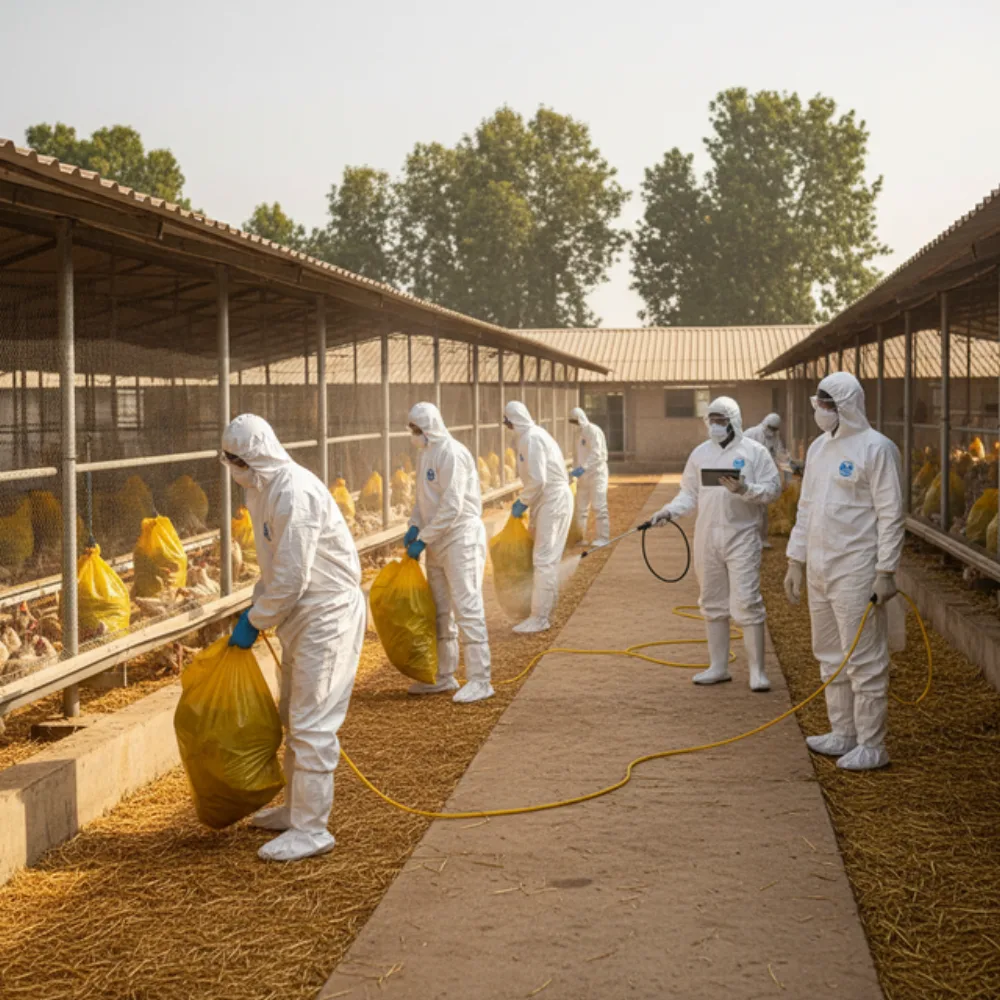
Officials in protective suits carrying out a poultry cull after a confirmed H5N1 outbreak in Greater Accra
The loss is not just the birds
It can end a business overnight, even when the farmer did everything else right.
⚠️ Why bird flu is the risk that ends businesses

Because avian influenza triggers culling with no sure compensation, it is the one risk that can end a business overnight even when the farmer did everything else right. It cannot be insured away or treated. It can only be kept out. That makes biosecurity the highest-return spend on the farm, and a farm's biosecurity record its most valuable, least visible asset.

🐔 The quiet threats: drug resistance, residue and the biosecurity gap 🐔

Two slower problems decide whether a Ghanaian broiler business can ever move upmarket. The first is drug misuse. About 70 percent of Accra poultry farmers medicate their birds without a vet, and only about 35 percent know what antimicrobial resistance is (Hackman et al., 2025). That over-use breeds antimicrobial resistance, and it leaves drug residues in the meat, which is exactly what a supermarket, an exporter or a school contract will screen for and reject.

The second is the gap between knowing and doing. About 82 percent of residents had good avian-influenza knowledge but only about 26 percent good practice (Dumevi et al., 2026), and farmers who understand biosecurity still struggle to keep it up when money is tight (Buckel et al., 2024). These are not just health issues. They are the barrier between the commodity market and the premium one.

🔍 What this means

Drug residue and weak biosecurity quietly lock a farm out of the very markets that pay best. The fresh, branded, institutional and export channels of Pillar 2 all demand a bird that can pass a residue test and a farm that can show a health record. Read plainly: cleaning up drug use and biosecurity is not only about keeping birds alive, it is the entry ticket to the premium market, and therefore a commercial decision as much as a veterinary one.

~70%
of Accra poultry farmers medicate their birds without a vet
26%
good practice against 82% good knowledge on avian influenza
Unsupervised antibiotic use in poultry breeding antimicrobial resistance and leaving drug residues in the meat
The barrier to the premium market
Drug residue is what a supermarket, exporter or school contract will screen for and reject.
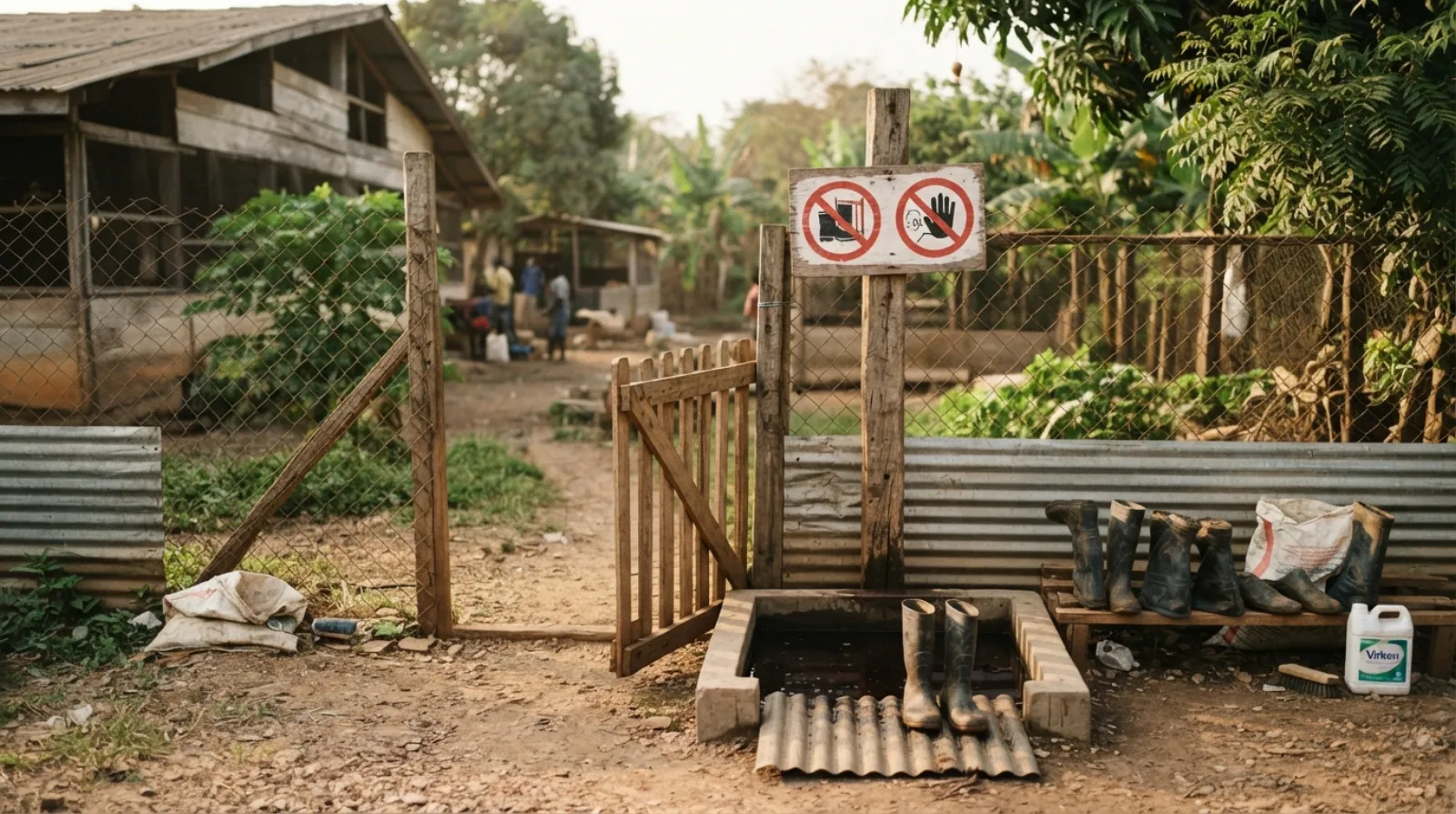
A broiler farm gate with a neglected footbath, showing the gap between biosecurity intention and action
Knowing is not doing
Farmers who understand biosecurity still struggle to keep it up when money is tight.

🐔 The economics of prevention 🐔

The pillar's whole case is that prevention is cheap next to the loss, so it is worth doing the sum. As the figures earlier in this pillar show, a single Newcastle break can take most of an unvaccinated flock, and even a well-run farm loses several birds in every hundred to routine disease. Against a bird worth well over a hundred cedis dressed (see Pillar 5), the loss from one bad disease break dwarfs a full vaccination and biosecurity programme, which costs a few cedis a bird.

🔍 What this means

Put crudely, the maths only points one way. A vaccination and biosecurity programme is a small, certain cost set against a large, probable loss, so on any reasonable estimate it pays for itself many times over in a single avoided outbreak. Read plainly: prevention is not an expense to be minimised, it is the highest-return spend on a broiler farm, and the reason so many farms still under-spend on it is exactly why an affordable vaccination and biosecurity service is a business.

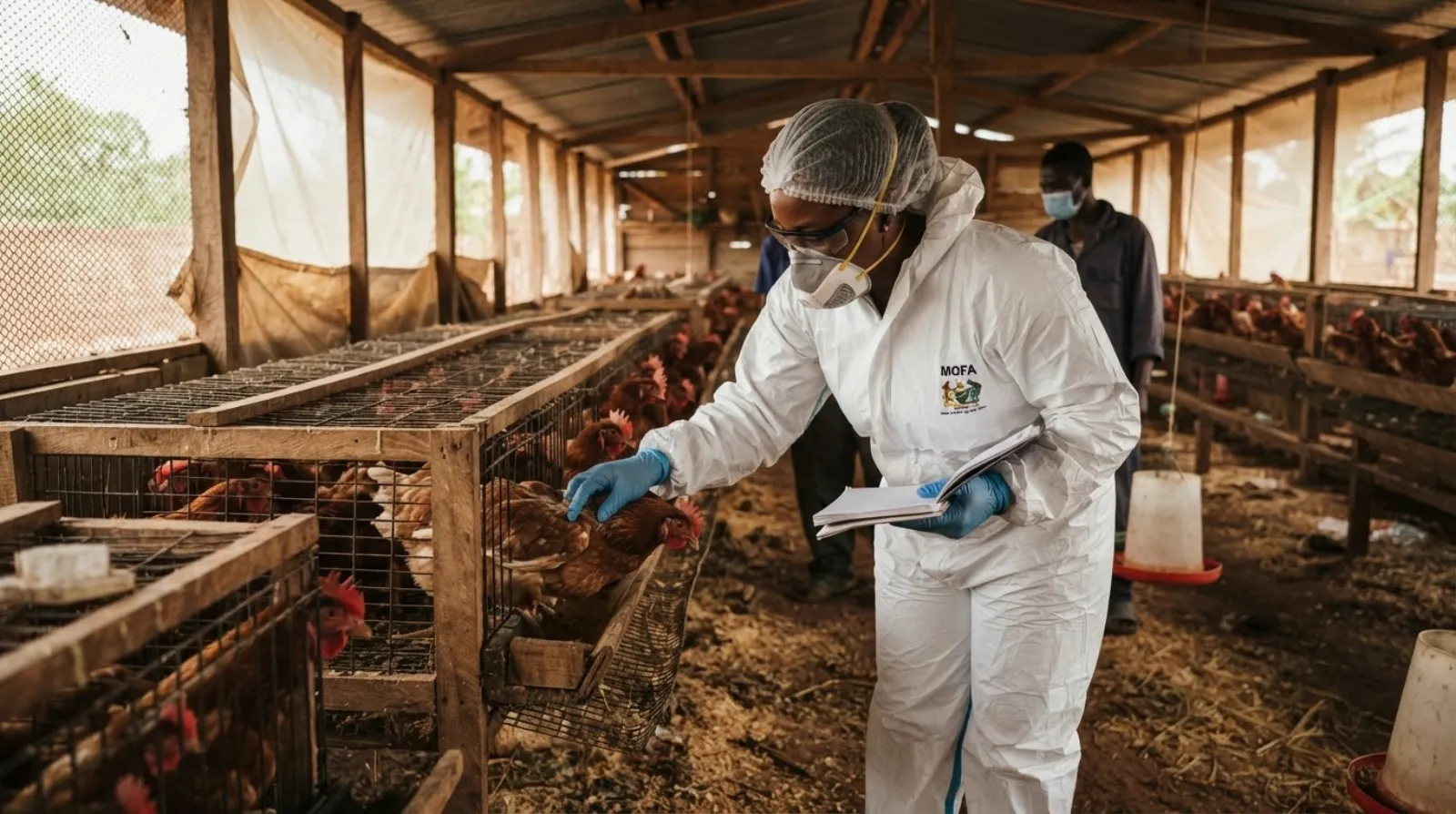
A vet performing a post-mortem on a broiler carcass to diagnose the cause of flock loss on a Ghanaian farm
Prevention is the highest-return spend
A small, certain cost set against a large, probable loss pays for itself many times over.

🐔 The threat next door: why one farm's biosecurity is not enough 🐔

Disease does not respect the farm fence. Ghana sits beside the region's largest avian-influenza outbreak: in the early-2025 wave Nigeria recorded about 45 confirmed events to Ghana's one (FAO, 2026), and the virus circulating includes a genotype newly introduced from Europe, so the threat is both regional and evolving. Worse, when an outbreak does hit it is often reported late: in the 2015 outbreak the gap from event to report averaged about 8 days and stretched to 30 (Tasiame et al., 2020), giving the virus a long head start.

45 to 1
Nigeria's confirmed events to Ghana's in the early-2025 wave
8 to 30 days
the gap from outbreak to report in 2015, a long head start
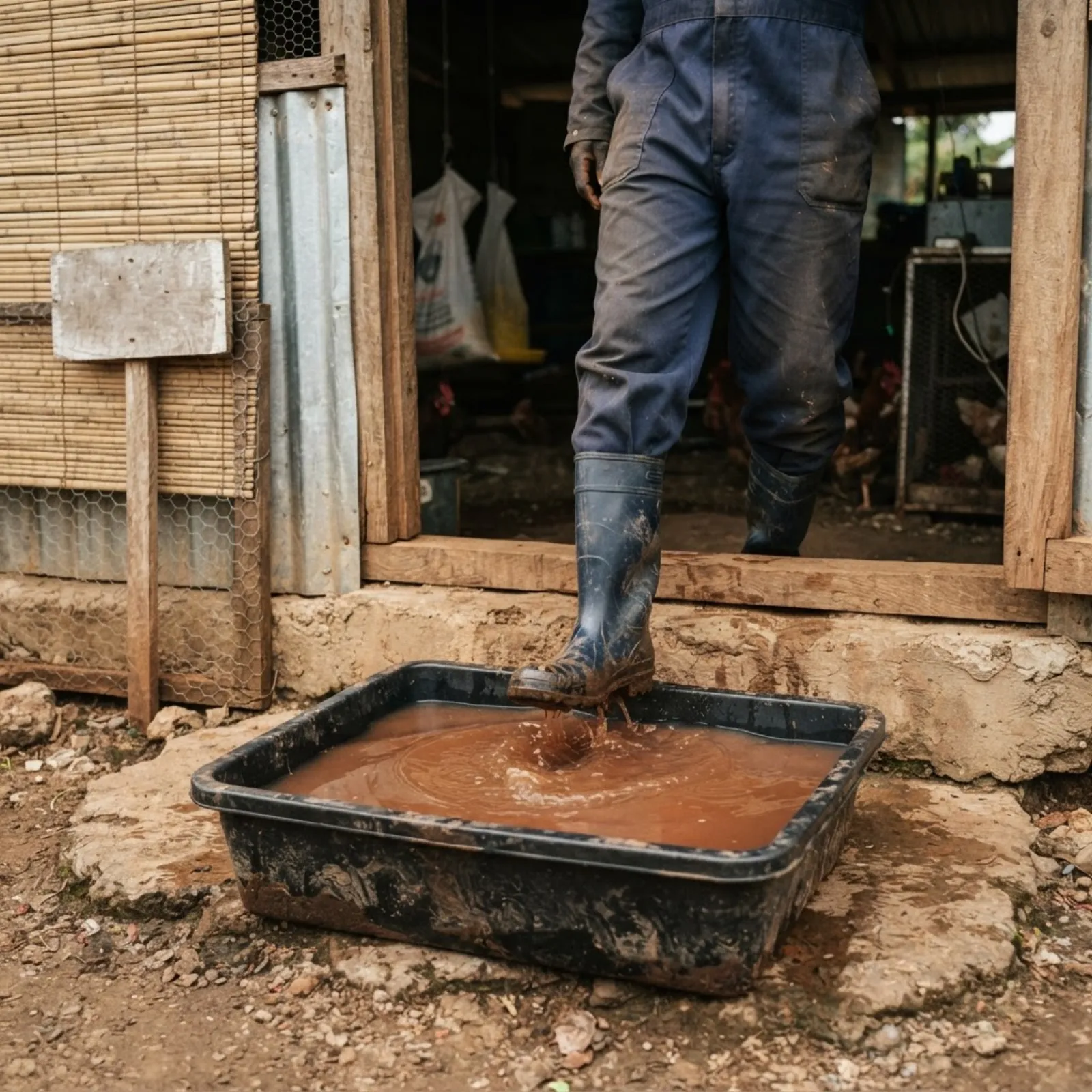
A worker stepping through a disinfectant footbath at the entrance to a Ghanaian broiler house
More than a footbath at one gate
Disease does not respect the farm fence, so protection is area-wide, not private.
A biosecurity officer inspecting a fenced broiler farm perimeter against wild-bird and visitor access in Ghana
Fast, honest reporting
One farm's care is undone by a neighbour who hides an outbreak.
📡 Market signal: biosecurity is an area-level good

This reframes biosecurity from a private cost into a shared, area-level good. One farm's careful biosecurity is undone by a neighbour who hides an outbreak, so the real protection is fast, honest reporting and area-wide surveillance, not just a footbath at one gate. Read plainly: the sector needs surveillance, diagnostics and a reporting culture as much as it needs vaccines, and building those is a role for public money and a private diagnostics business alike.

🐔 The risks that sit inside disease and health 🐔

Filter the register by severity to narrow it to the threats that matter most on your farm.

Filter by severity

Highly pathogenic avian influenza

VERY HIGH
What it is

A confirmed H5N1 case triggers culling, movement bans and quarantine, with slow and uncertain compensation. It cannot be treated or insured, only kept out, and it can end a business overnight.

Evidence

Active surveillance found about 2.2 percent of samples, and 54.2 percent of dead birds, positive for H5N1 clade 2.3.4.4b, with Ghana's first human H9N2 case confirmed in 2024 (Nyarko et al., 2026; Asante et al., 2025).

Who it hits

Every poultry farm, but catastrophically for larger flocks with the most to lose in a single cull.

How to manage it, and the opening

Invest in biosecurity first: control wild-bird and visitor access, quarantine new stock, and report sickness immediately. The opening is biosecurity auditing and farm-certification services, which the whole sector needs.

Newcastle disease

VERY HIGH
What it is

A fast, untreatable virus that can wipe out an unvaccinated flock in days. It circulates constantly in Ghana, so any gap in vaccination is an open door.

Evidence

Newcastle can kill 70 to 100 percent of an unvaccinated flock (Ouma et al., 2023), yet only about 55 percent of small farmers fully follow the vaccination schedule (Okata and Al-Hassan, 2023).

Who it hits

Smallholders and any farm that skips or mistimes vaccination, and their neighbours, through reinfection.

How to manage it, and the opening

Vaccinate on schedule without gaps and keep a cold chain for the vaccine. The opening is a reliable vaccination and cold-chain-backed vet service, since one farm's compliance protects the whole area.

Gumboro (infectious bursal disease)

HIGH
What it is

A virus that destroys the young bird's immune system, so even survivors grow poorly and die from other infections. Its damage is easy to miss until the whole flock underperforms.

Evidence

Gumboro is a leading vaccine-target disease in Ghana's published schedule, and its damage turns on getting the dose timed to the chick's fading maternal antibody (Okata and Al-Hassan, 2023).

Who it hits

Farms that mistime the Gumboro dose against the chick's fading maternal antibody, a common and costly error.

How to manage it, and the opening

Time Gumboro vaccination to the chick's maternal-antibody window, guided by a vet. The opening is advisory and diagnostic support that gets the timing right.

Coccidiosis and wet litter

MEDIUM-HIGH
What it is

A gut parasite that thrives in damp litter, damaging the intestine, slowing growth and pushing up the feed conversion ratio long before it kills. It is a silent tax on every cycle run on poor litter.

Evidence

Wet litter and high stocking raise ammonia and drive the respiratory losses recorded in humid tropical broiler houses (Lamidi and Osunade, 2023); the same damp conditions are where coccidiosis takes hold.

Who it hits

Farms with leaking drinkers, poor drainage or overcrowding, especially in the wet season.

How to manage it, and the opening

Keep litter dry, manage the drinker line, and use a coccidiostat programme. The opening is litter management and equipment supply that keeps houses dry.

4 more cards hidden
🐔 The Opening: where keeping birds alive becomes a business 🐔
01

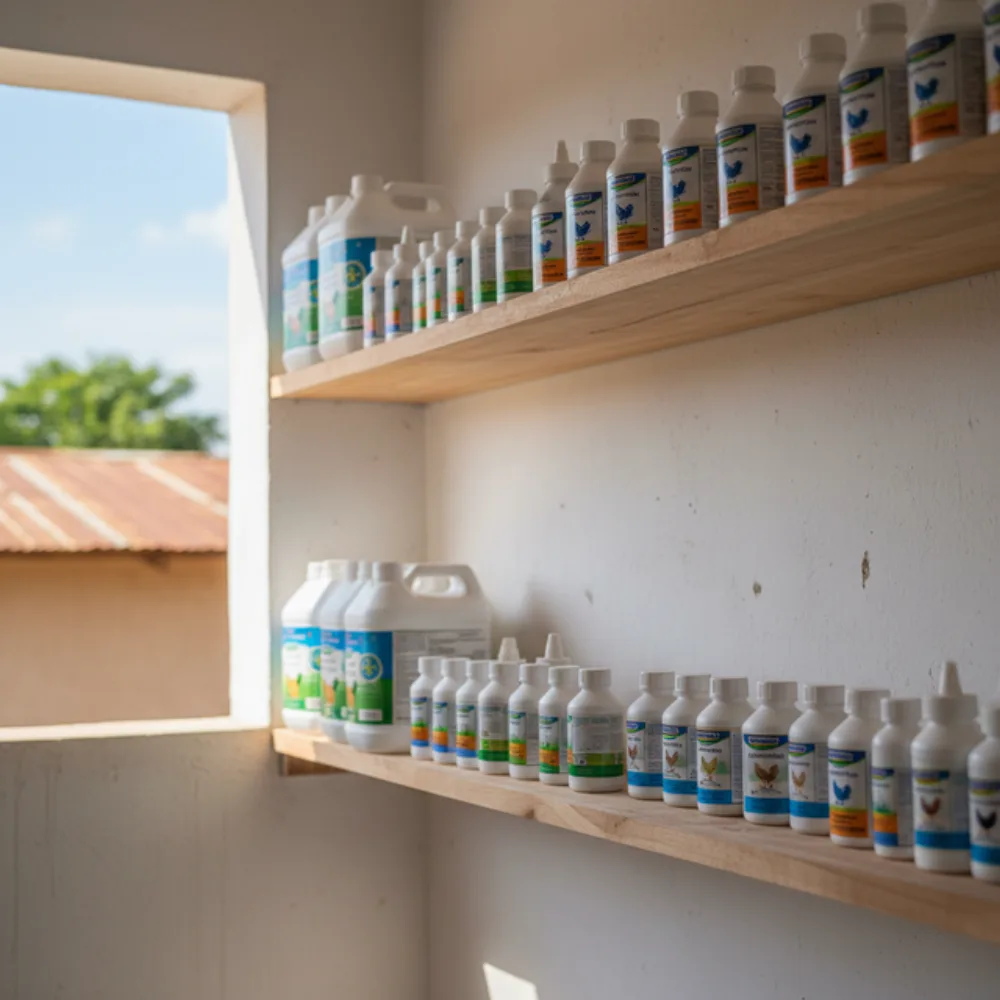
A reliable vaccination and cold-chain service. Unbroken vaccine cold chain is scarce and disease is the loss farmers most want to stop. Sign farms up on a scheduled-visit basis, since one farm's compliance protects the whole area.

02

Biosecurity auditing and farm-certification services. Avian influenza can only be kept out, so a farm's biosecurity record is its most valuable, least visible asset. Auditing and certifying it is a service the whole sector needs.

03

Advisory and diagnostic support that gets vaccine timing right. Gumboro's damage turns on timing the dose to the chick's fading maternal antibody. Advisory and diagnostics that get that window right pay for themselves in birds saved.

04

Litter management and equipment supply that keeps houses dry. Coccidiosis and respiratory loss thrive on wet litter and poor air. Dry litter, drinker-line management and ventilation kit turn a silent tax into a fixed, manageable cost.

05

A vet-supervised, residue-clean supply programme. Recorded, vet-guided medication with observed withdrawal periods produces a bird that passes a residue test, which is the entry ticket to premium, institutional and export buyers.

06

Area-wide surveillance, diagnostics and low-cost biosecurity kits. One farm's biosecurity is undone by a neighbour who hides an outbreak, so fast reporting and surveillance protect everyone. Affordable kits and training pitched at the smallholder budget close the intention-action gap.

🐔 Key takeaways 🐔
01

Disease is the biggest preventable loss in broiler farming, and the tools to stop it are cheap next to the loss. Vaccination and biosecurity are insurance, not overhead.

02

Newcastle can destroy an unvaccinated flock, yet only about half of small farmers fully vaccinate. That compliance gap is both the core risk and the clearest service opening.

03

Bird flu is a low everyday public risk but a high, uninsurable business risk. It can only be kept out, which makes biosecurity the highest-return spend on the farm.

04

Drug misuse and residue are not just health issues. They are the barrier between the commodity market and the premium, institutional and export markets that pay best.

05

Across every threat, the gap is between knowing and doing. That gap is why vaccination, biosecurity, diagnostics and advisory are real businesses, not just good practice.

Written for each reader

🐔 Practitioner intelligence 🐔

Hover any card to pause and lift it.

For students

If you want a way into poultry that needs little capital, learn animal health. A trained vaccinator or biosecurity advisor sells a service farmers badly need and cannot do reliably themselves. Start by shadowing a vet or the Veterinary Services Directorate and learning the vaccination schedule cold. The trap is thinking you must own birds to work in poultry; the disease-control gap is a career and a business on its own. What you gain is a skill in constant demand and a route into every farm in your area.

For entrepreneurs

First move: build a reliable vaccination and cold-chain service before anything glamorous, because unbroken vaccine cold chain is scarce and disease is the loss farmers most want to stop. Secure a vaccine supply and a working fridge or cold box, then sign up farms on a scheduled-visit basis. The trap that kills first-timers is self-medicating birds to hide poor management, which breeds resistance and locks you out of premium buyers. A residue-clean, vet-recorded health programme is what opens the doors that pay.

For investors

Diligence asks: what is this farm's biosecurity record, its vaccination compliance, and its drug-use and residue discipline. A broiler operation without these is one outbreak away from zero, so underwrite the health system before the shed. The thesis worth backing is animal-health infrastructure: cold-chain vaccine distribution, diagnostics and residue-clean certification that the whole sector lacks and the premium market requires. Treat any farm that cannot show a health record as uninvestable until it can.

For ecosystem actors

The lever is animal-health infrastructure: publicly backed cold-chain vaccine distribution, affordable diagnostics, and a biosecurity-certification scheme tied to market access. Measure success as the share of flocks fully vaccinated and the fall in reported outbreaks, not as workshops held. The failure to avoid is spending on outbreak response alone while the prevention system stays weak, which guarantees the next outbreak and wastes the compensation budget.

Download full PDF
UpcomingThis document isn't available yet.