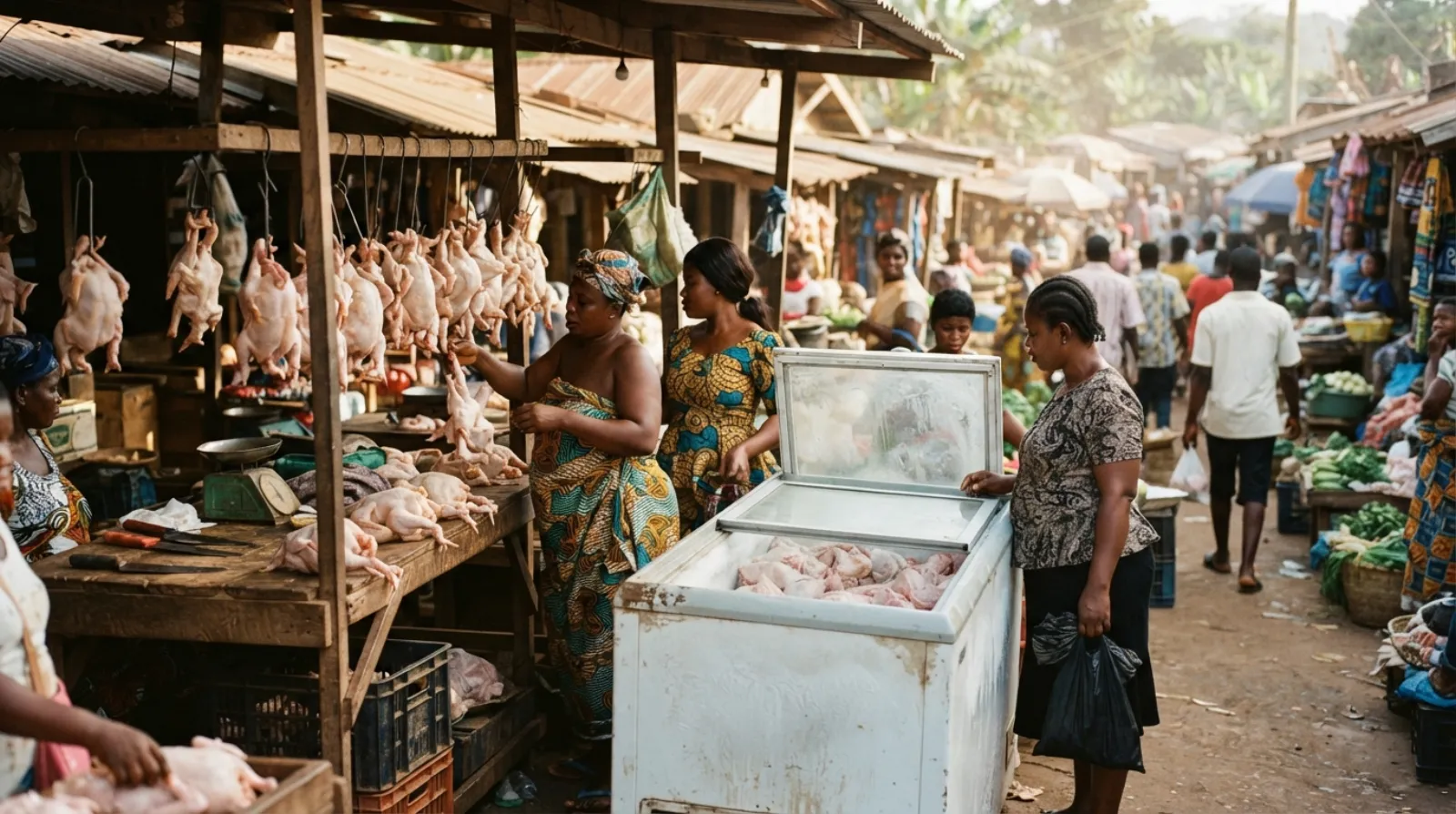
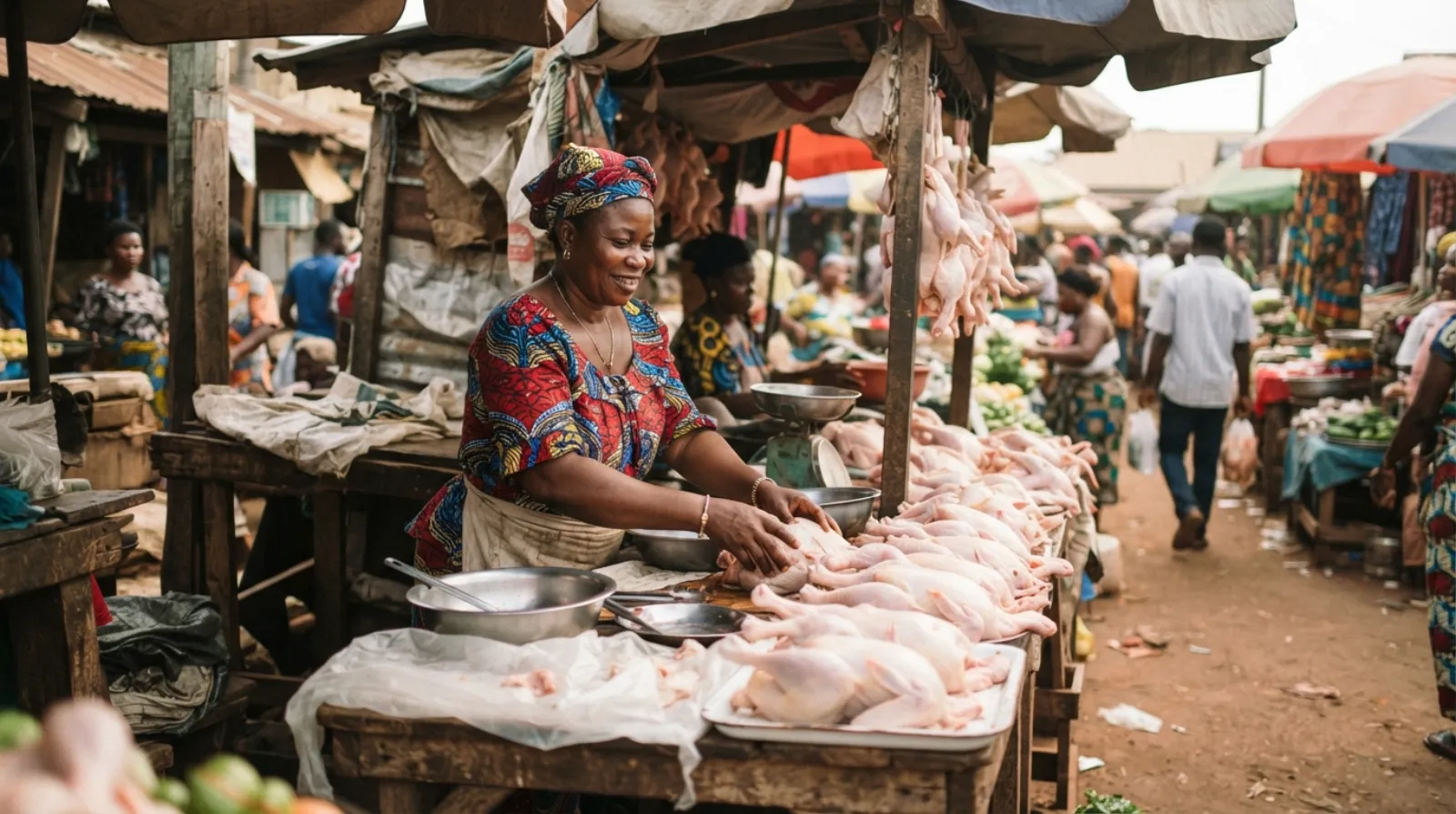
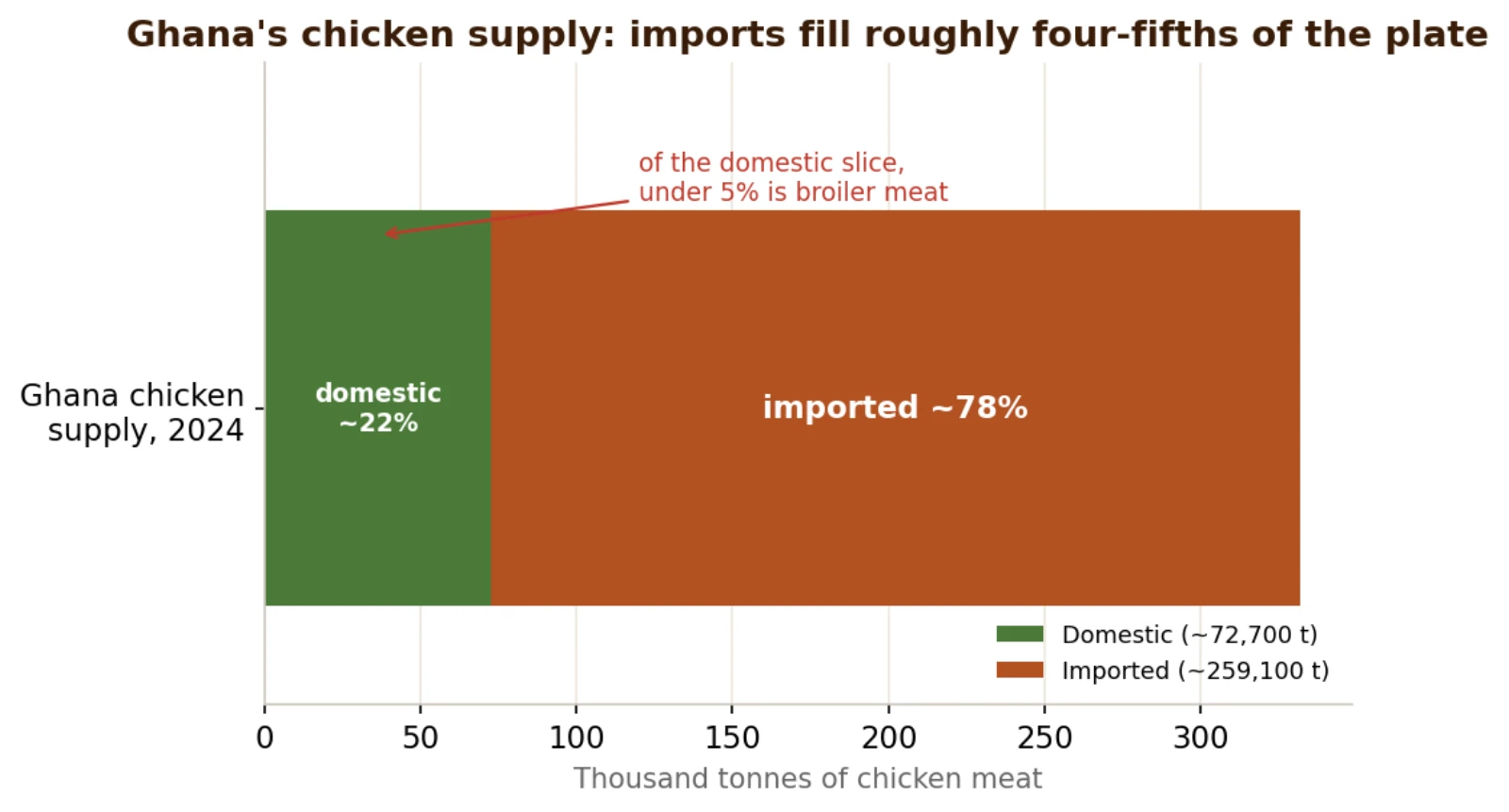
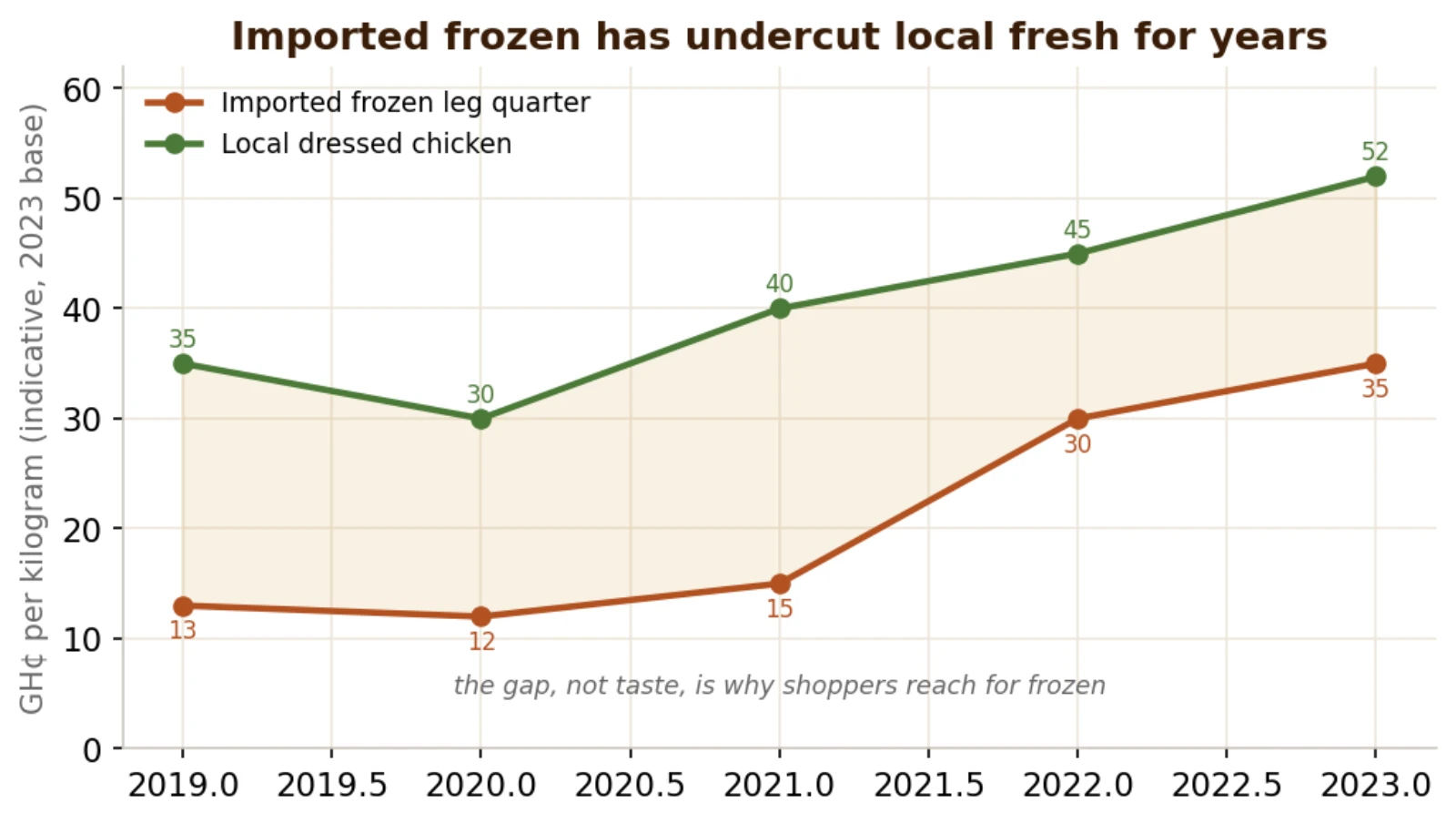
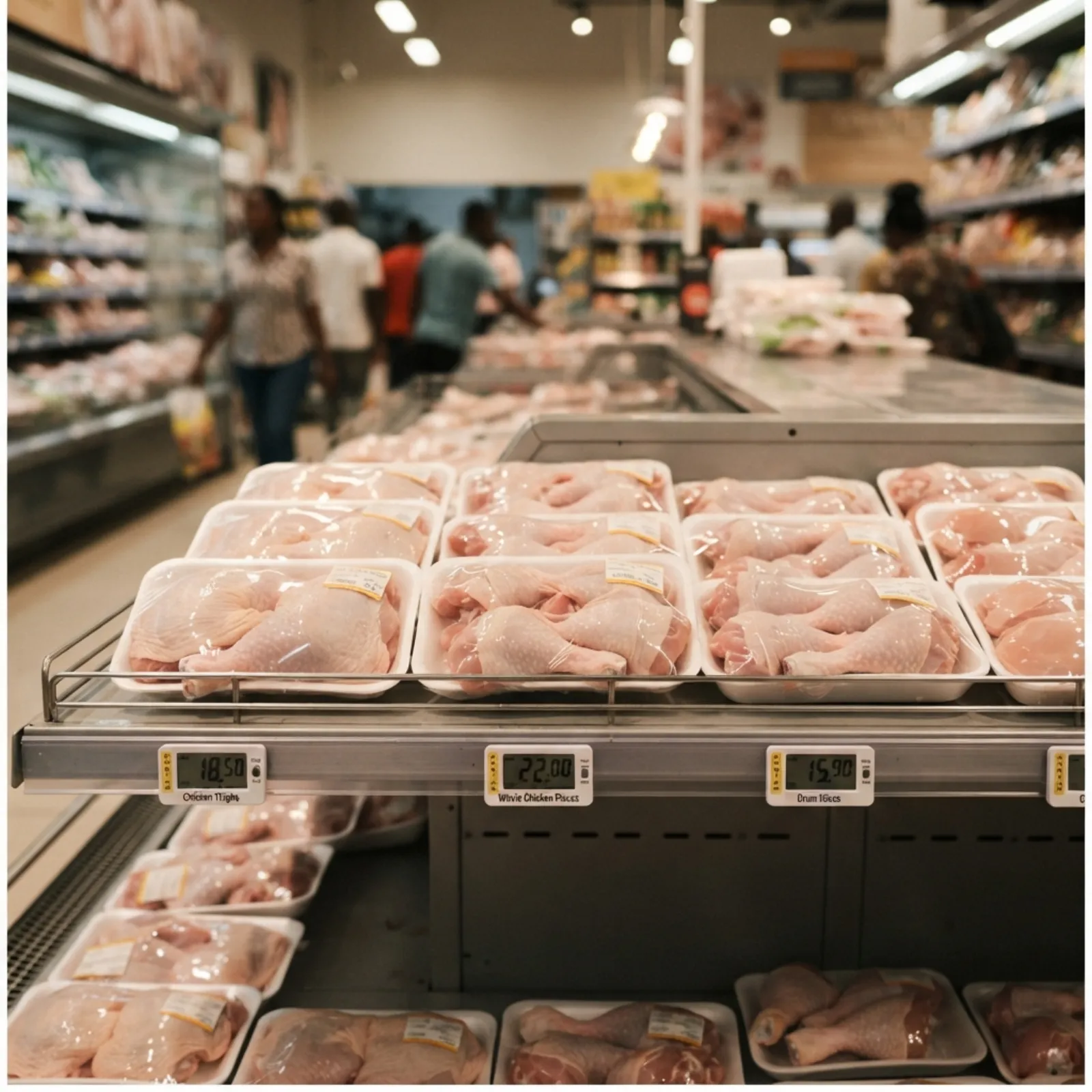
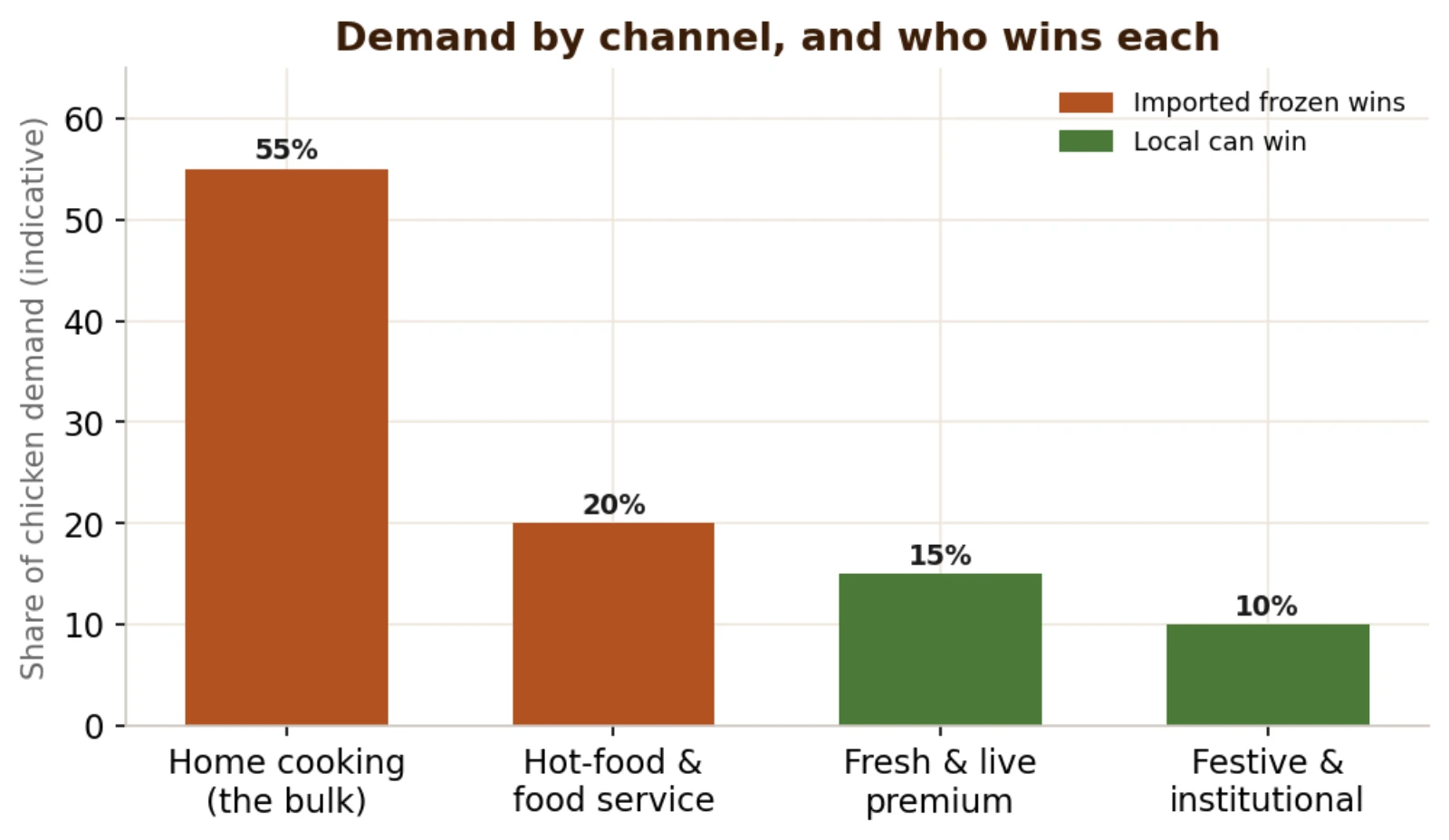
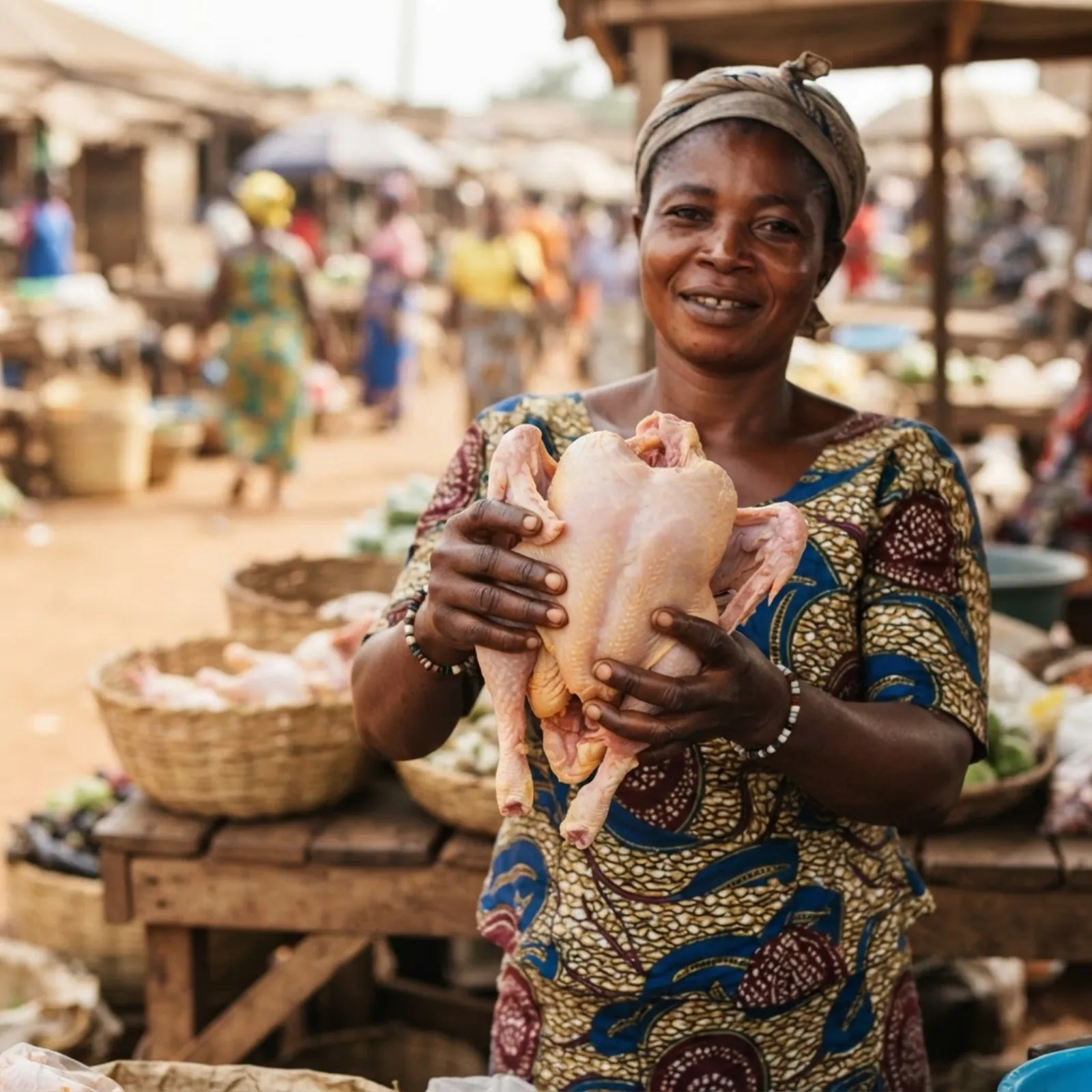
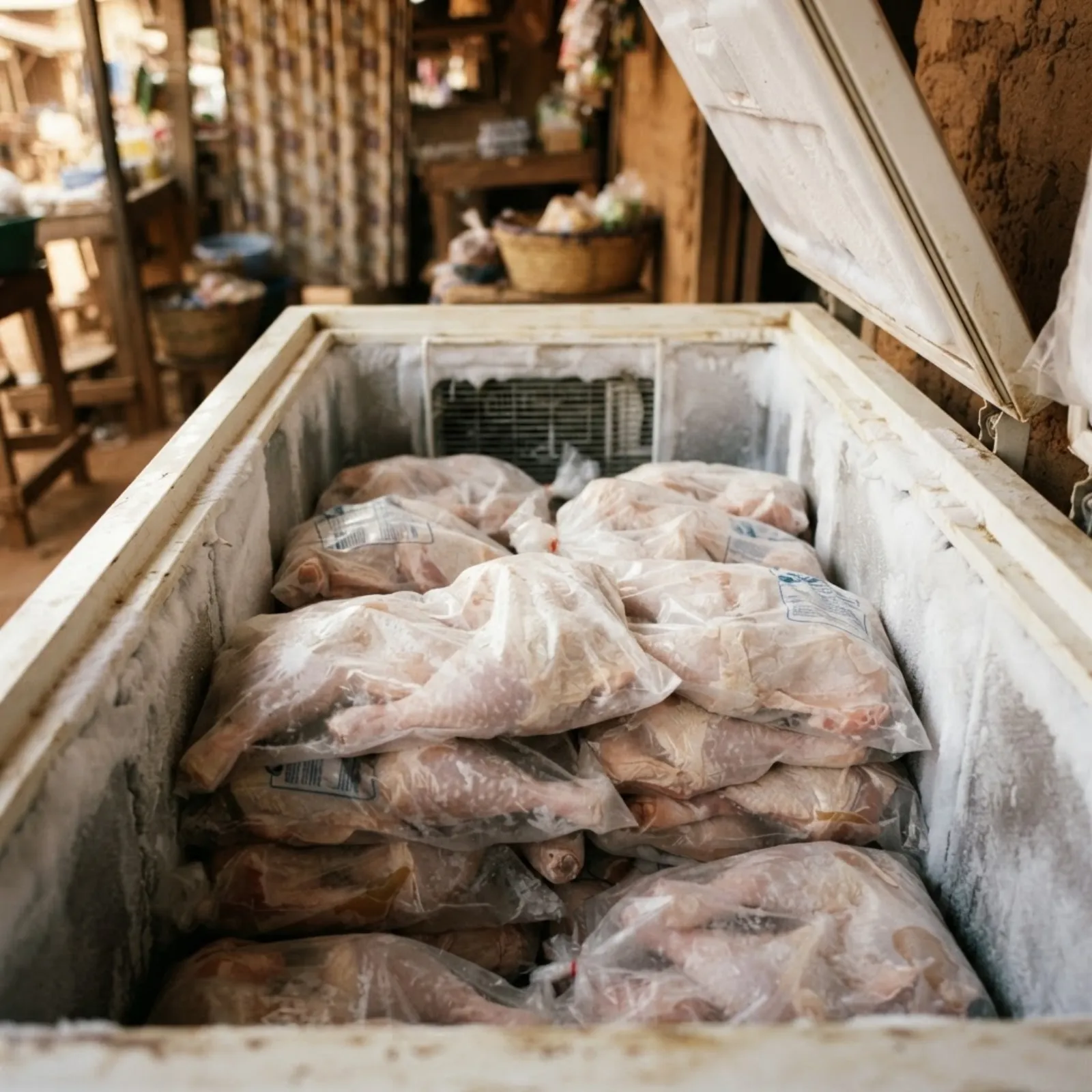
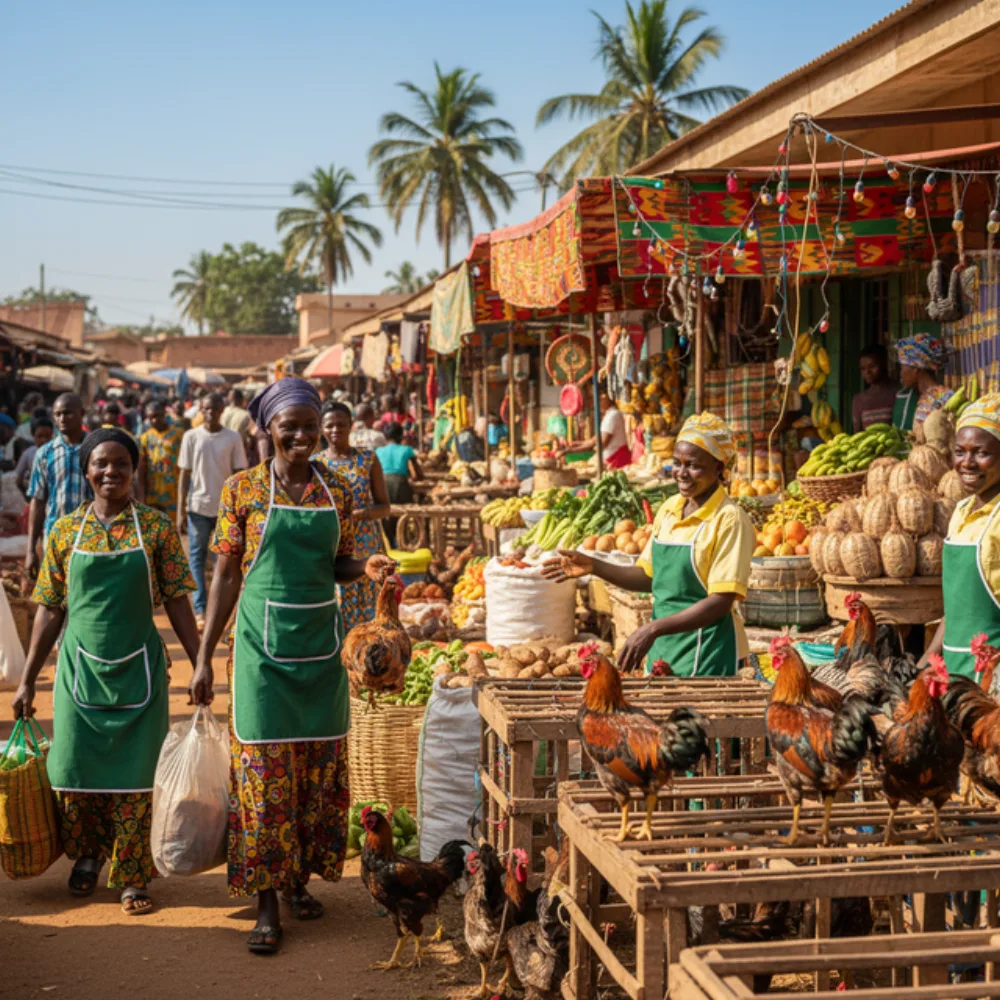
If you are entering with little capital, do not dream of competing with frozen imports. Look at the fresh and live trade near a town, where a freshly killed bird sells at a premium and no importer can follow. Start by aggregating and selling other farmers' birds into that fresh market to learn the buyers before you raise your own. The trap is assuming demand equals a sale; the demand is real but it is price-split, and the frozen aisle is not yours to win. What you gain is a route to market and a buyer list, the scarcest assets for a new producer.
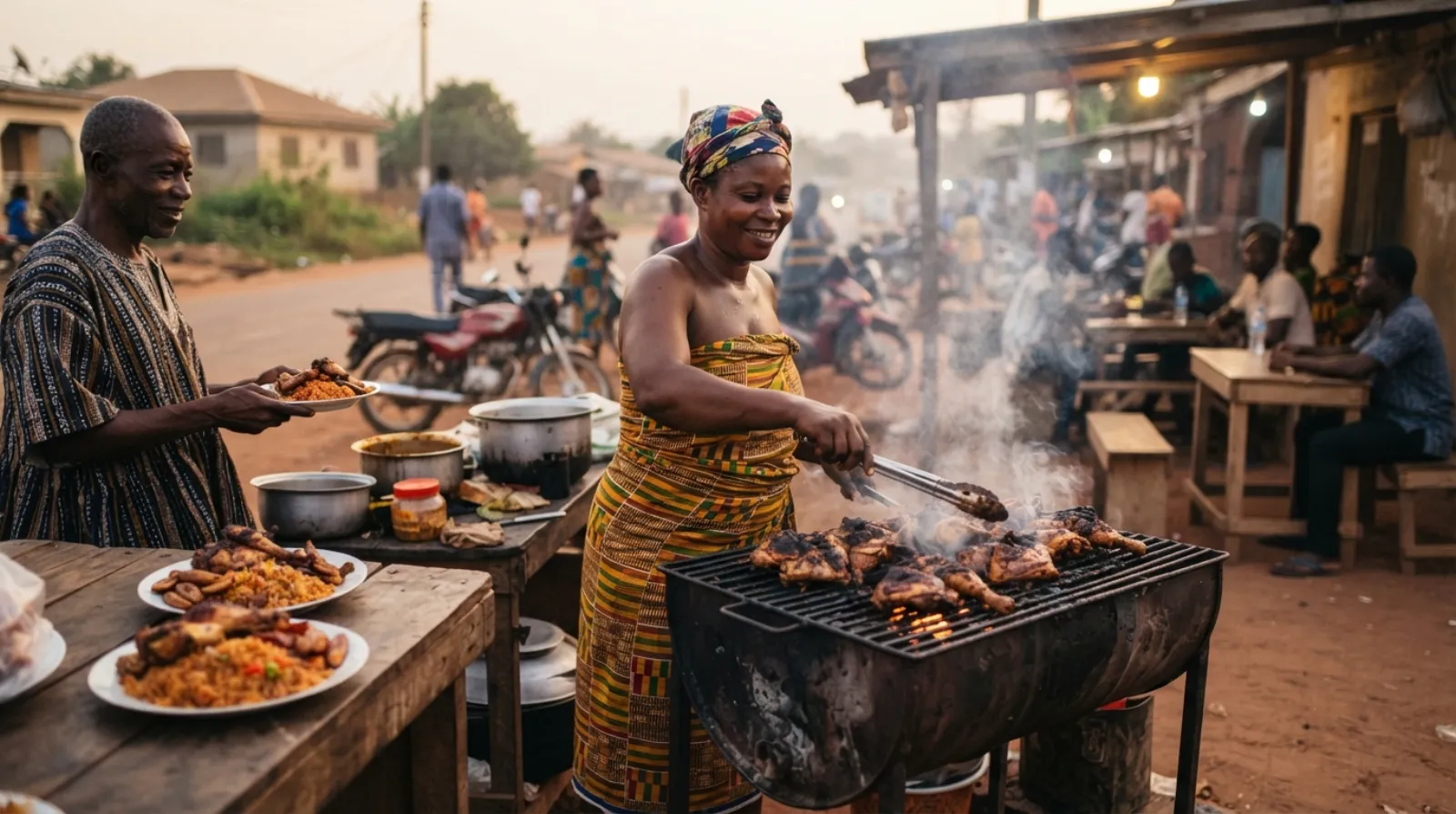
The channels a local farmer can win are not marginal. Ghana's food-service sector alone is worth about US$3.2 billion a year, its retail market is on course for about US$33.2 billion, and about 83 percent of that retail runs through small, informal grocers rather than supermarkets (USDA FAS, 2025c).
The national flock is large, about 90.8 million birds (MoFA-SRID, 2024). Read plainly: the fresh, food-service and institutional lanes the import cannot easily reach are big markets in their own right, not a niche, and they are served today mostly by informal traders a well-organised local supplier could displace.


