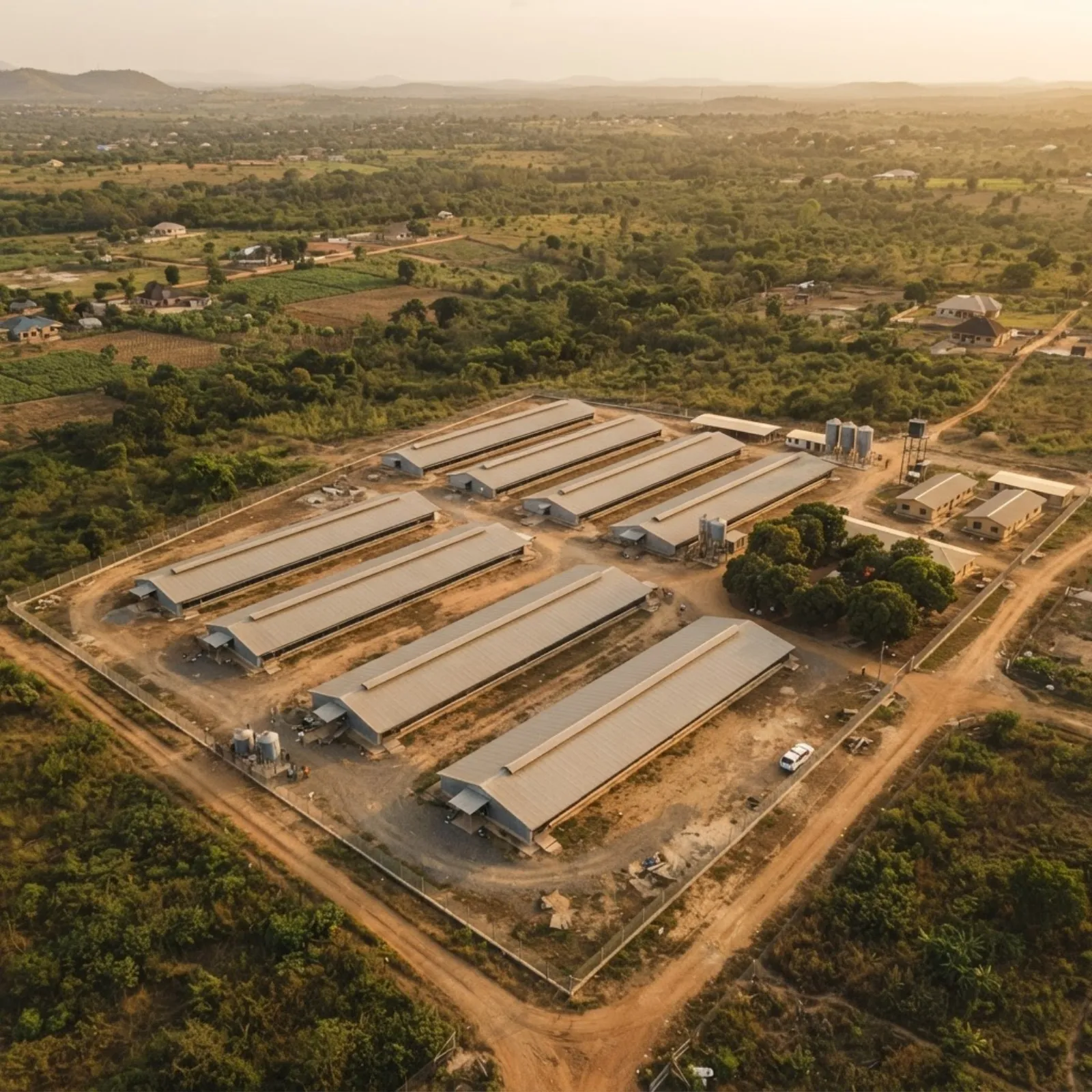
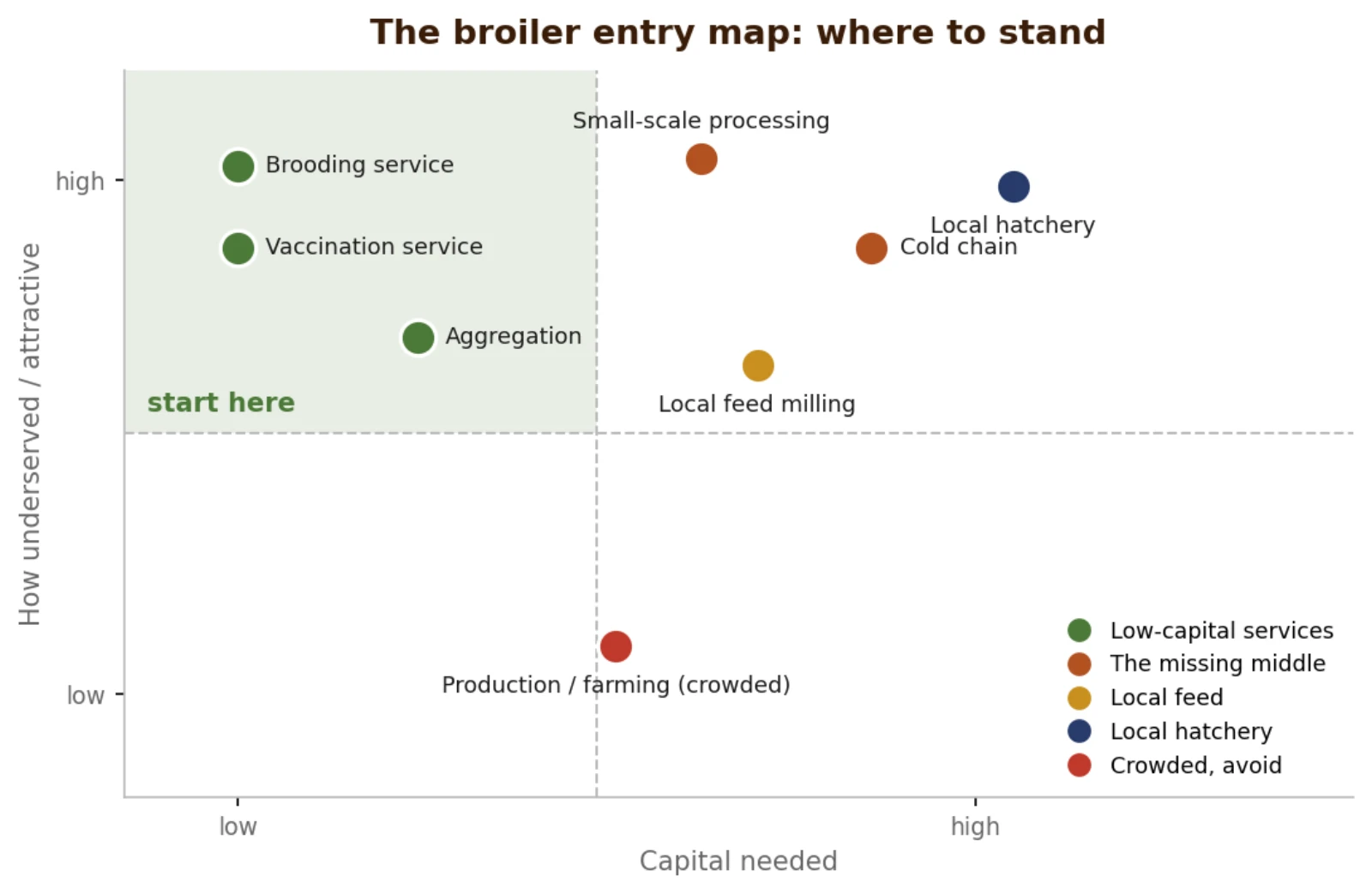
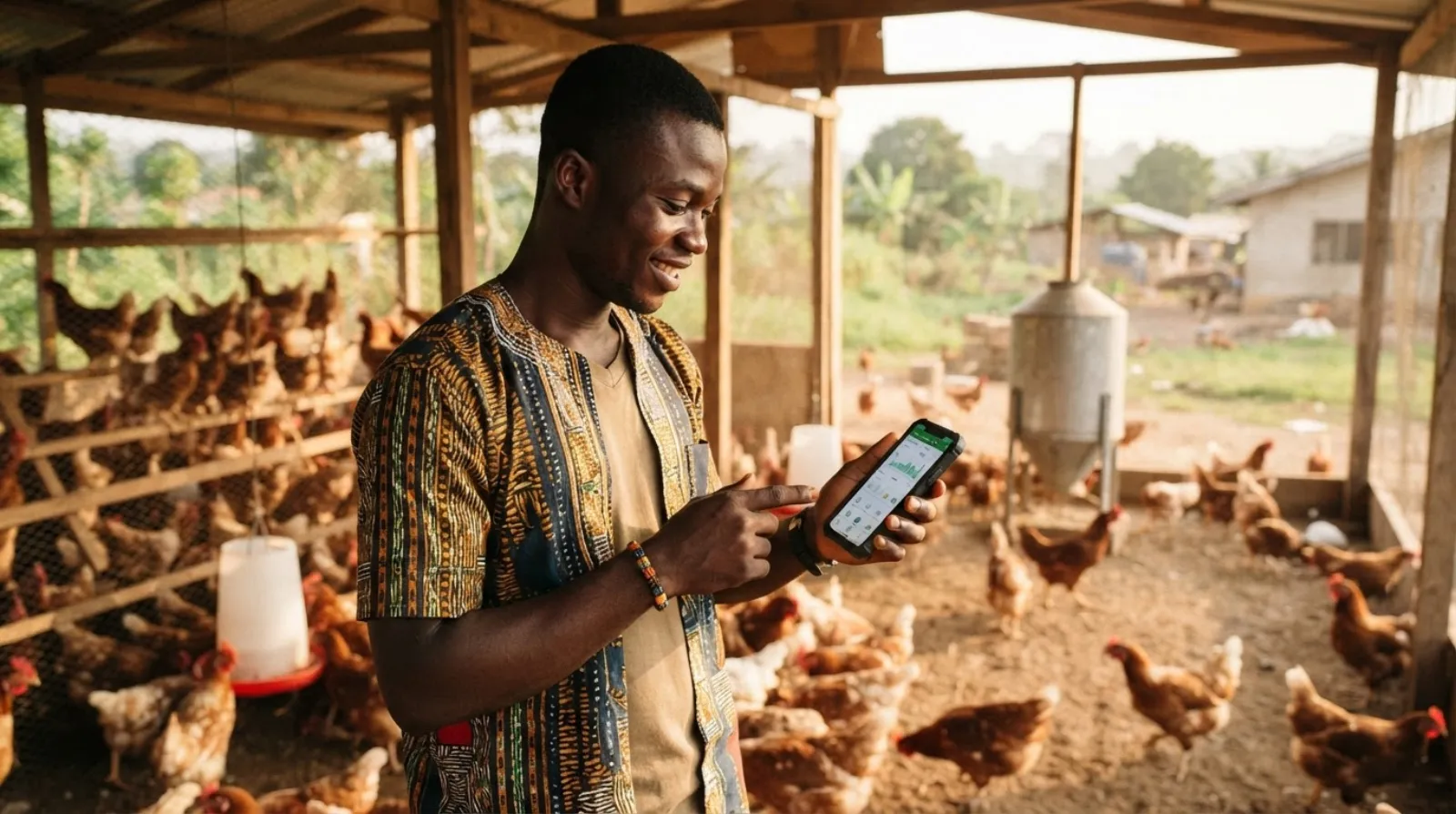
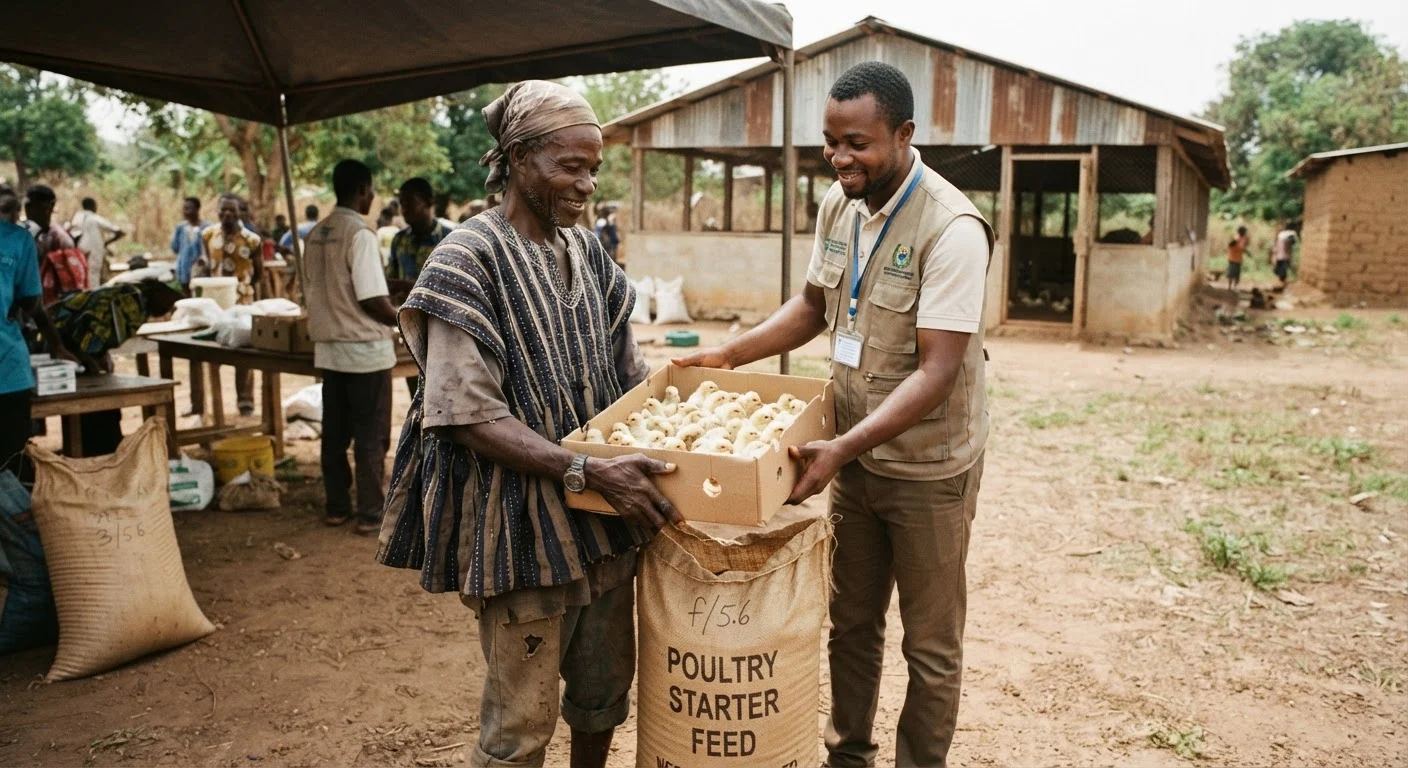
| Contract brooding for programme chicks | Low to medium | About 2 million programme chicks were brooded and distributed by mid-2026, and 4 million more were being bought11 | Offer the District Agriculture Department a clean, heated house for a four-week brooding round | Late payment and late feed from the programme |
| Paid vaccination and flock-health rounds | Low | Only 17.64 million of 39.93 million targeted poultry vaccinations had been given by August 20255 | Train with the district veterinary office and sign up programme households in two or three communities | Free government vaccine limits the fee |
| Feed mixing from cheap local maize | Medium | Local maize fell by about half in the year to March 2026, while complete feed fell only about 6 percent in 202641213 | Mix for three to five farms with a branded concentrate, and compare feed conversion on one flock | Maize quality, aflatoxin and a price rebound |
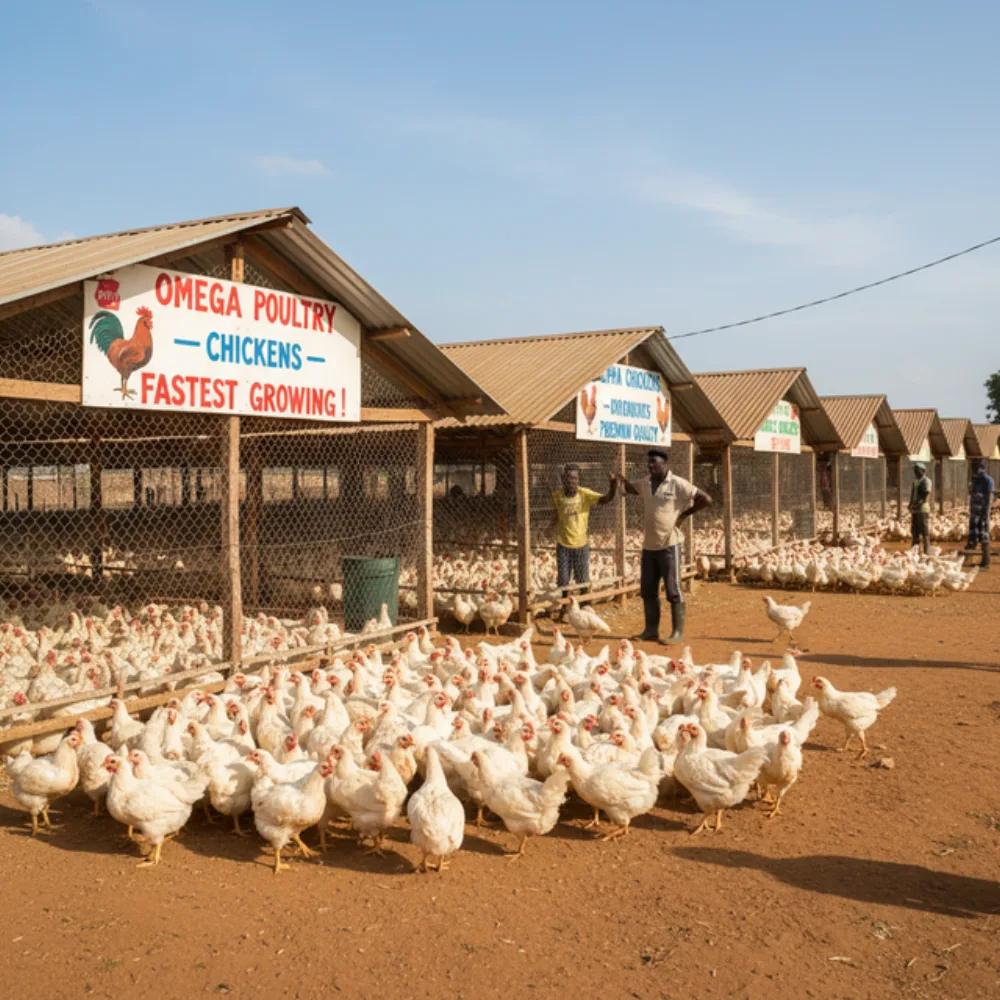
| Live-bird aggregation for processors | Low to medium | Aglow Farms' plant can handle 100,000 birds a week, and programme households need buyers for grown birds149 | Get a written specification and price per kilogram from one processor, then stagger placements across 10 to 20 farms | Side-selling in festive weeks and late payment |
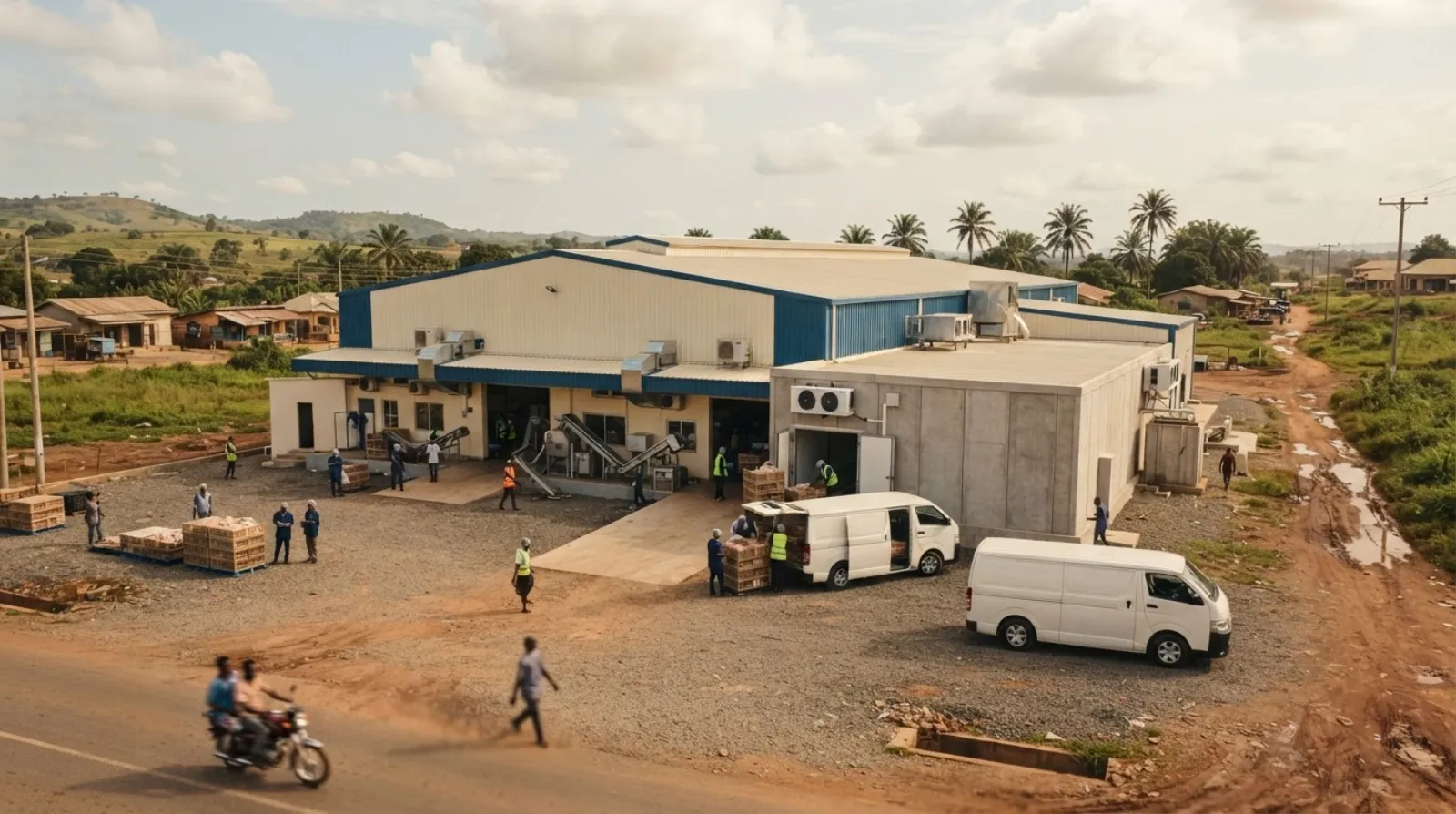
| Cold rooms for local frozen chicken | Medium to high | The Kpone cold store opened in February 2026, and assemblies must put 25 percent of their Common Fund share into 24-Hour Economy markets65 | Ask the District Assembly about cold space in its model market, and sign a processor supply deal first | Power cost and outages, and the imported frozen price |
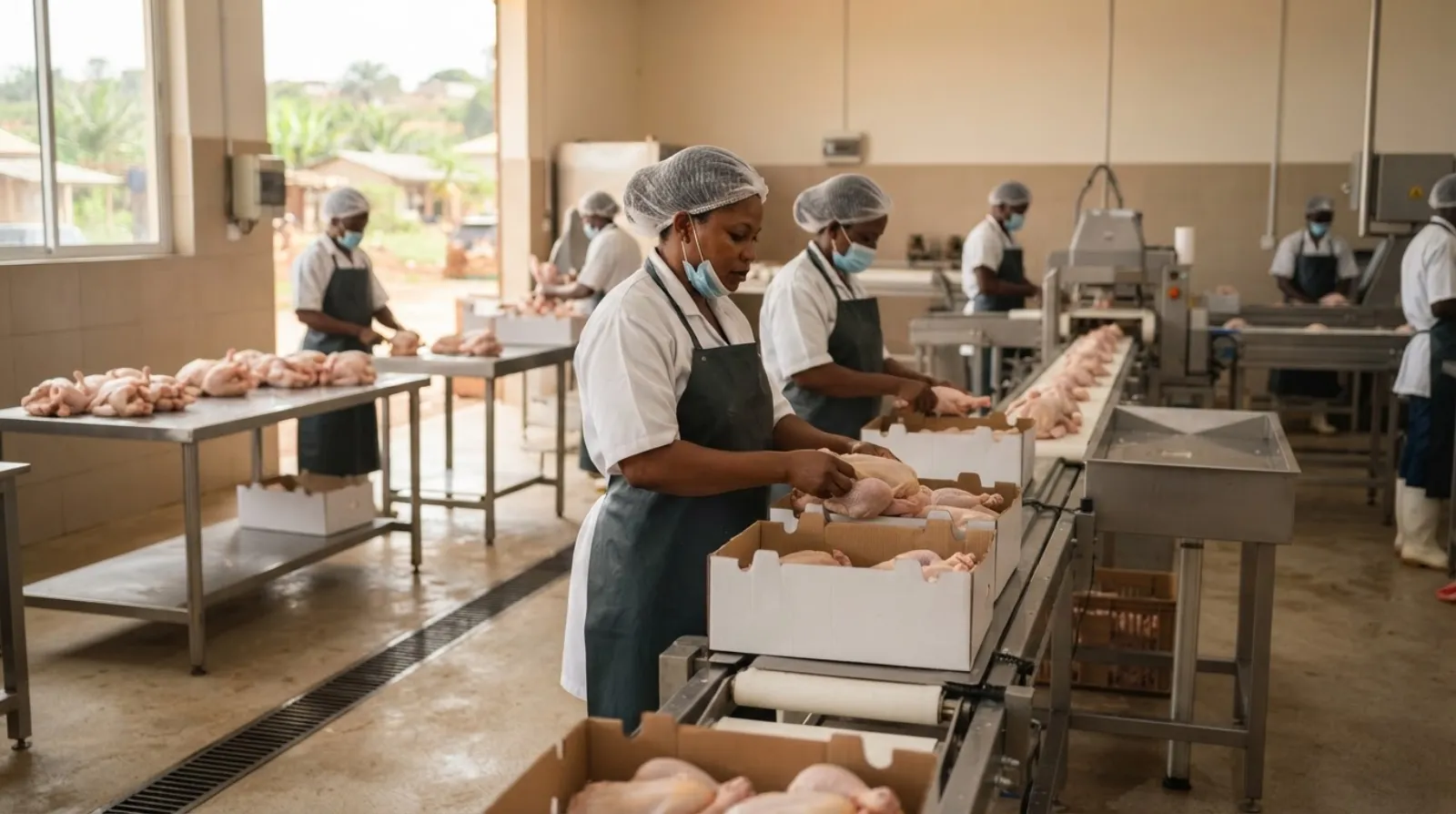
| Hygienic dressing for schools, caterers and chop bars | Medium | GH¢4.2 billion was set aside for senior high school feeding in 2026, with a menu review adding chicken and eggs15 | Agree cut, weight and delivery terms with two or three school bursars or caterers before building | Slow payment by schools and caterers |
| Festive-season pre-sold flocks | Low | Cheap maize lowers the cost of a December flock4 | Take deposits from churches, employers and associations, then place chicks about six weeks ahead | Every farmer targets the same week |
| Litter and manure for vegetable farms | Low | 96 percent of urban and 80 percent of peri-urban vegetable farmers surveyed in Accra use poultry manure16 | Clear litter from broiler farms after each cycle, compost it and sell it by the bag | Carrying disease between poultry farms |
| Bankable outgrower packages | Medium | Three banks committed about GH¢1.1 billion in September 2026,7 and GIRSAL guarantees up to 70 percent of qualifying loans17 | Package 10 to 30 farms with records, a buyer letter and a guarantee request | Credit drawn with no confirmed buyer |