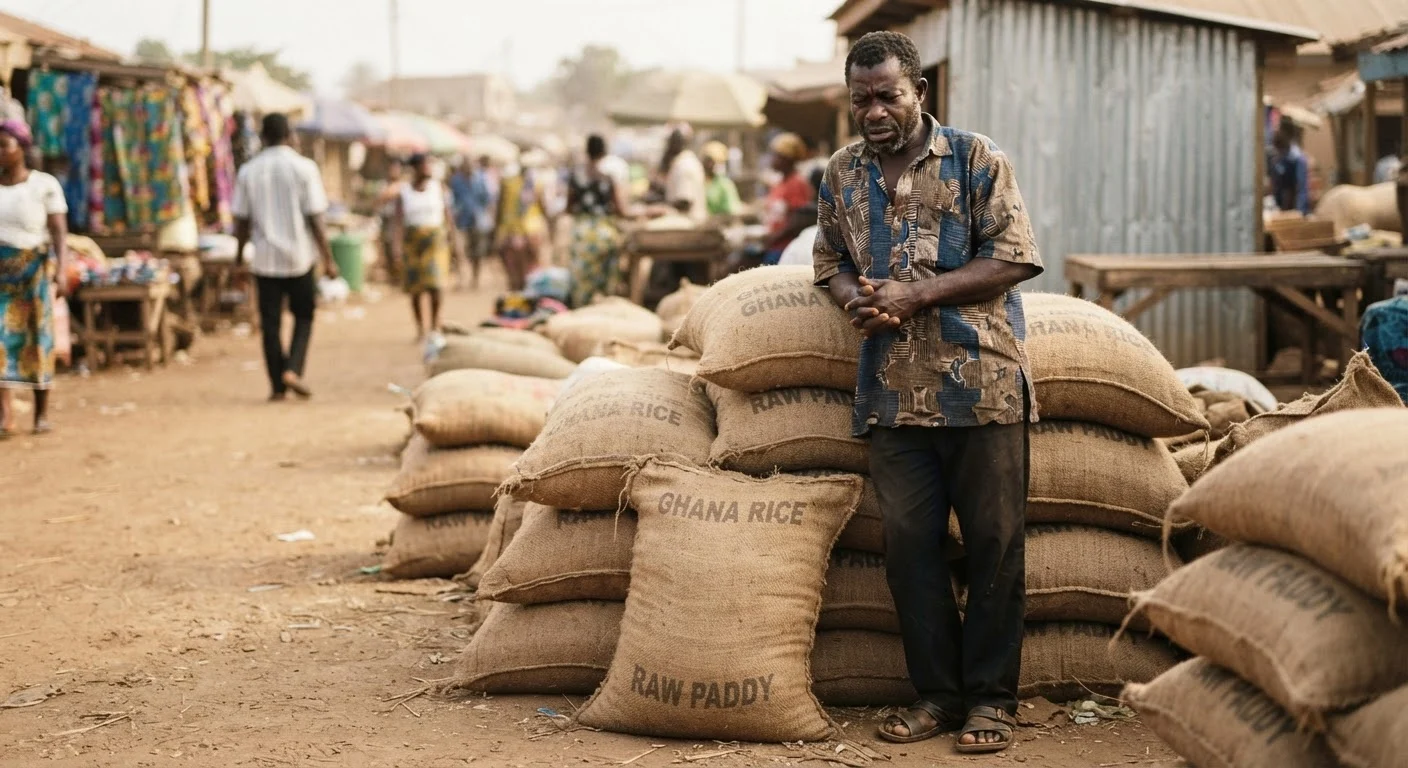
If you are entering rice, learn to read a cost and returns sheet, because it tells you the truth the marketing does not: growing paddy is thin and risky, and the money is in milling, parboiling and branding. Learn to build a simple budget for a mill or a parboiling unit, and you can work in agribusiness finance, in a processor's operations, or run a small parboiling enterprise yourself. The gap to fill: few people in the chain can actually model where the margin is, so they chase volume and get caught in gluts. The trap to avoid is trusting the dated cedi figures in any report, including this one, as current; always re-price with today's numbers before you act.
This pillar puts numbers to the whole argument of the playbook. It asks what it costs to grow, mill and brand rice in Ghana, and where along that path the money is actually made. The short answer, and the reason this playbook keeps pointing downstream, is that growing paddy earns a thin and risky margin, while milling, parboiling and branding earn a wide one. A farmer who only grows and sells raw paddy is doing the hardest, riskiest work for the smallest reward; the value is captured by whoever turns that paddy into clean, branded rice. Understanding that split is the difference between a rice business that makes money and one that joins the 2026 glut of unsold paddy.

🌾 Growing paddy: irrigation pays, rain-fed barely does 🌾

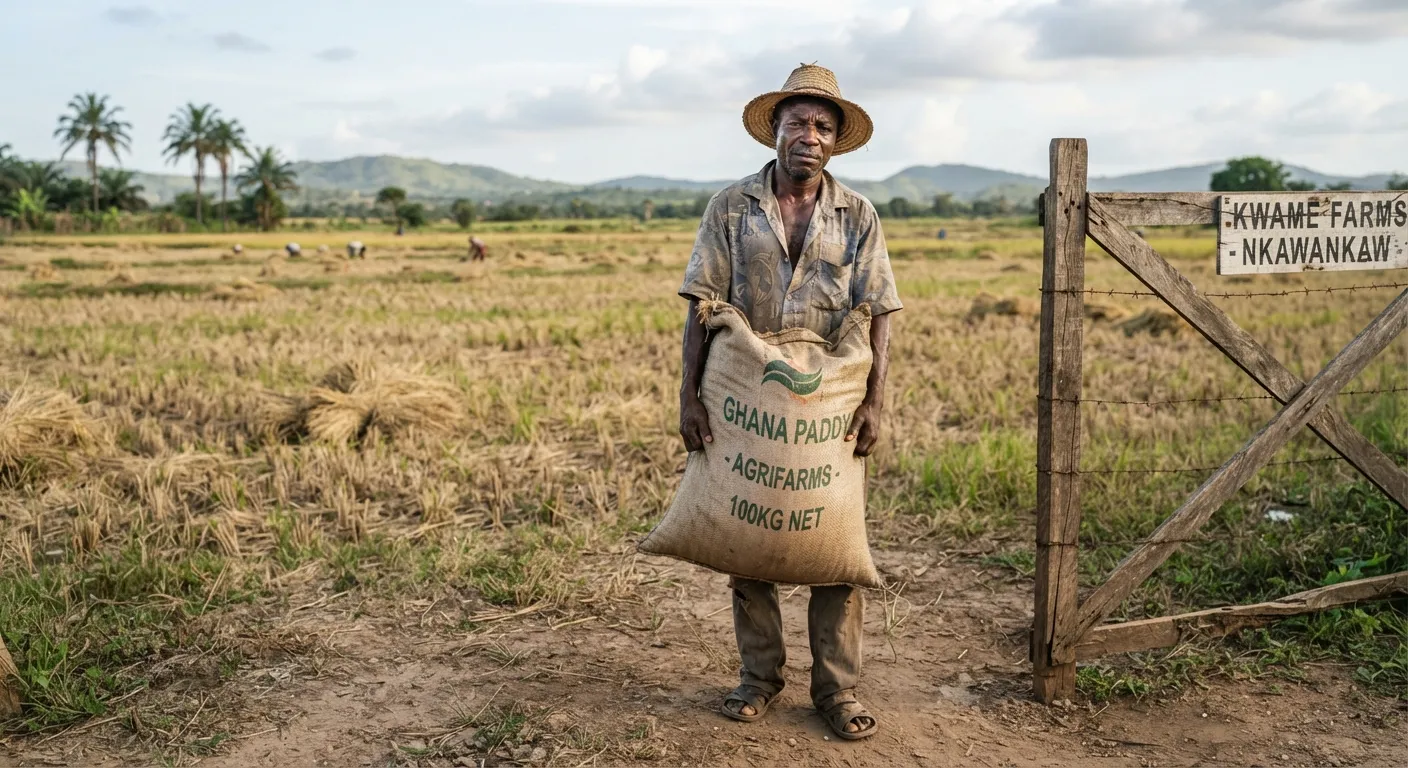
Per hectare, the irrigated farmer keeps a real profit while the rain-fed farmer barely breaks even. The figures are dated 2021 and illustrative, but the ratio is the point: the money in growing rice is in water control, and without it farming paddy is a thin and risky business.
The first lesson is that the ecology decides whether farming rice makes money at all. The best Ghanaian study of the two, covering hundreds of farmers, found that irrigated rice returned a profit of about GH¢2,442 a hectare, more than four times the roughly GH¢576 a hectare from rain-fed rice, and that for every cedi spent the irrigated farmer got about GH¢2.53 back against just GH¢1.37 for the rain-fed one (Agricultural Finance Review, 2021).
In other words, irrigated rice is a solid business and rain-fed rice, at average yields, barely clears its costs and tips into a loss in a bad year. This is the same message as the yield and planting pillars, now in cedis: water control is what turns rice from a subsistence gamble into a profitable enterprise.
🌾 Illustrative cost and returns for growing rice, by ecology
| Item (per hectare, one crop) | Irrigated | Rain-fed lowland |
|---|---|---|
| Total production cost | about GH¢2,858 | about GH¢2,282 |
| Average paddy yield | about 5.5 tonnes | about 2.8 tonnes |
| Revenue | about GH¢5,300 | about GH¢2,858 |
| Gross margin (profit) | about GH¢2,442 | about GH¢576 |
| Return per cedi spent (cost-benefit ratio) | about GH¢2.53 | about GH¢1.37 |
| Land development, one-off (separate) | about GH¢25,000 to 50,000 | about GH¢25,000 to 50,000 |
ILLUSTRATIVE and dated (2021 cedis for the annual figures). Both costs and paddy prices are far higher in 2026. Land development is a one-off capital cost, not an annual cost.
Sources: Agricultural Finance Review (2021); ICOUR productivity study (2021); Ministry of Food and Agriculture and CARD (2025) for land development.
The second lesson is how fragile even that margin is, which the 2026 glut proved in the cruellest way. The farm-gate profit above assumes the farmer can sell paddy at a fair price. When the market collapsed and distressed paddy changed hands at as little as GH¢150 to GH¢300 for a 100 kilogram bag, well below the government's GH¢5 a kilogram floor, thousands of farmers could not even recover their costs (Chamber of Agribusiness, 2026). The break-even point for a rice farmer is not a fixed number; it moves with the price a buyer will actually pay. This is why every serious rice enterprise in this playbook is built around a secured buyer and, better still, around owning the milling and branding that set the price, rather than around growing paddy and hoping.

🌾 Milling and branding: where the margin actually lives 🌾
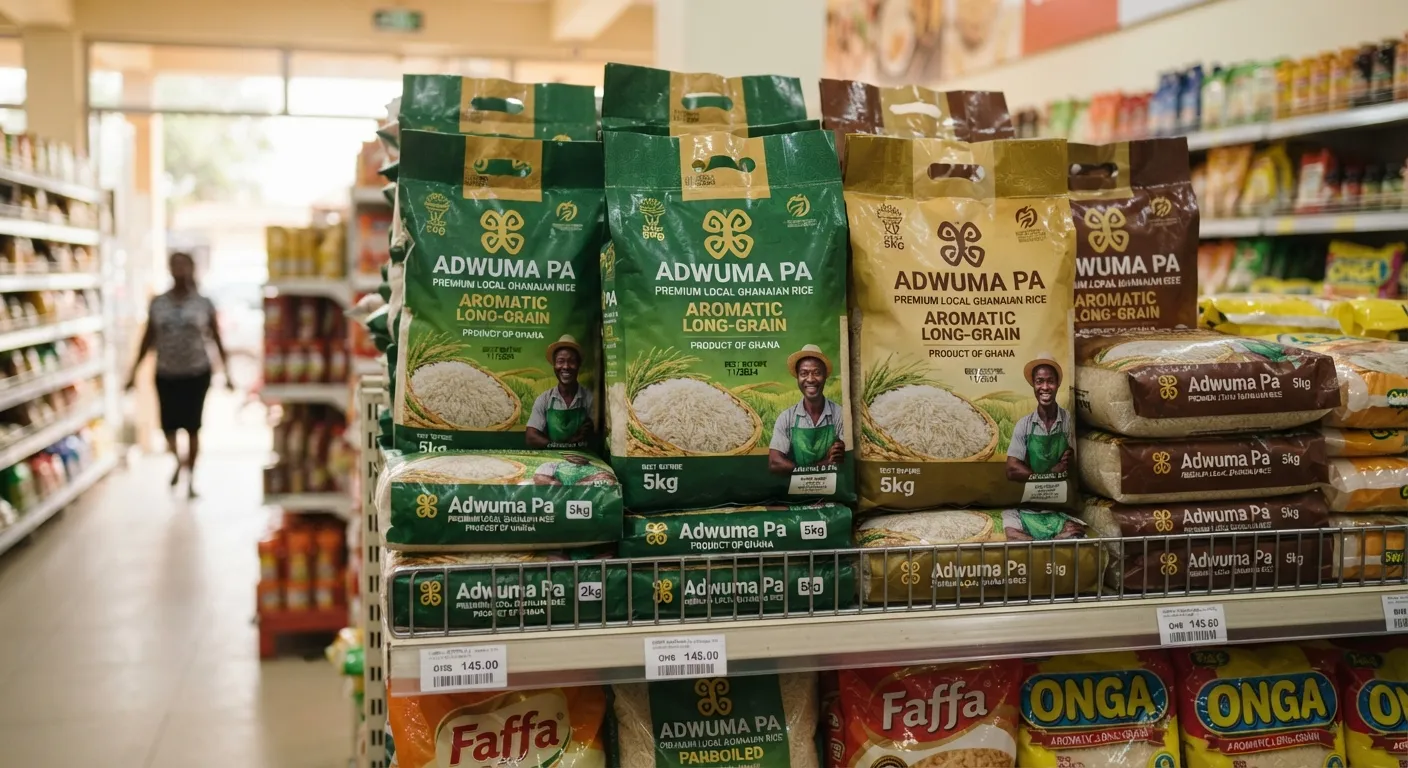
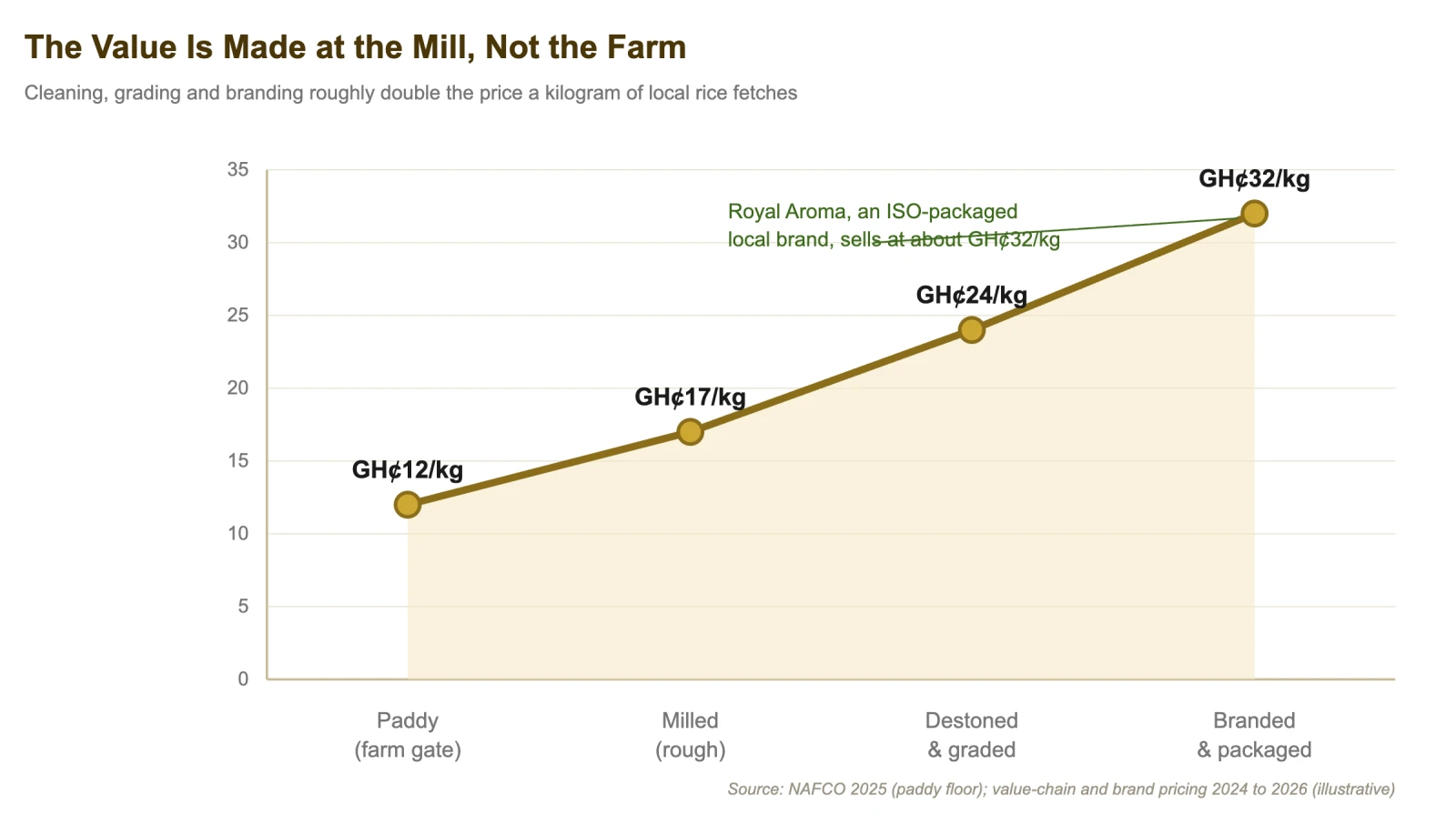
Now follow the same kilogram of rice past the farm gate, and the picture changes completely. Paddy leaves the farm at around the GH¢12.50 a kilogram guaranteed floor. Milling it into clean white rice, then destoning, grading and branding it, lifts its value at every step, and a well-milled, well-branded local rice can reach the shelf at around GH¢32 a kilogram, as the premium local brand Royal Aroma already does (value-chain and brand pricing, 2024 to 2026). The value roughly doubles between raw paddy and branded rice, and that added value is captured by the miller and the brand, not the farmer. This is the single most important number in the crop for anyone deciding where to put their money.


Each step of cleaning, grading and branding adds value to the same kilogram of rice, and the price roughly doubles between raw paddy and a branded pack. Whoever owns those steps captures that value, which is why milling and branding, not growing, is the profitable end of the business.

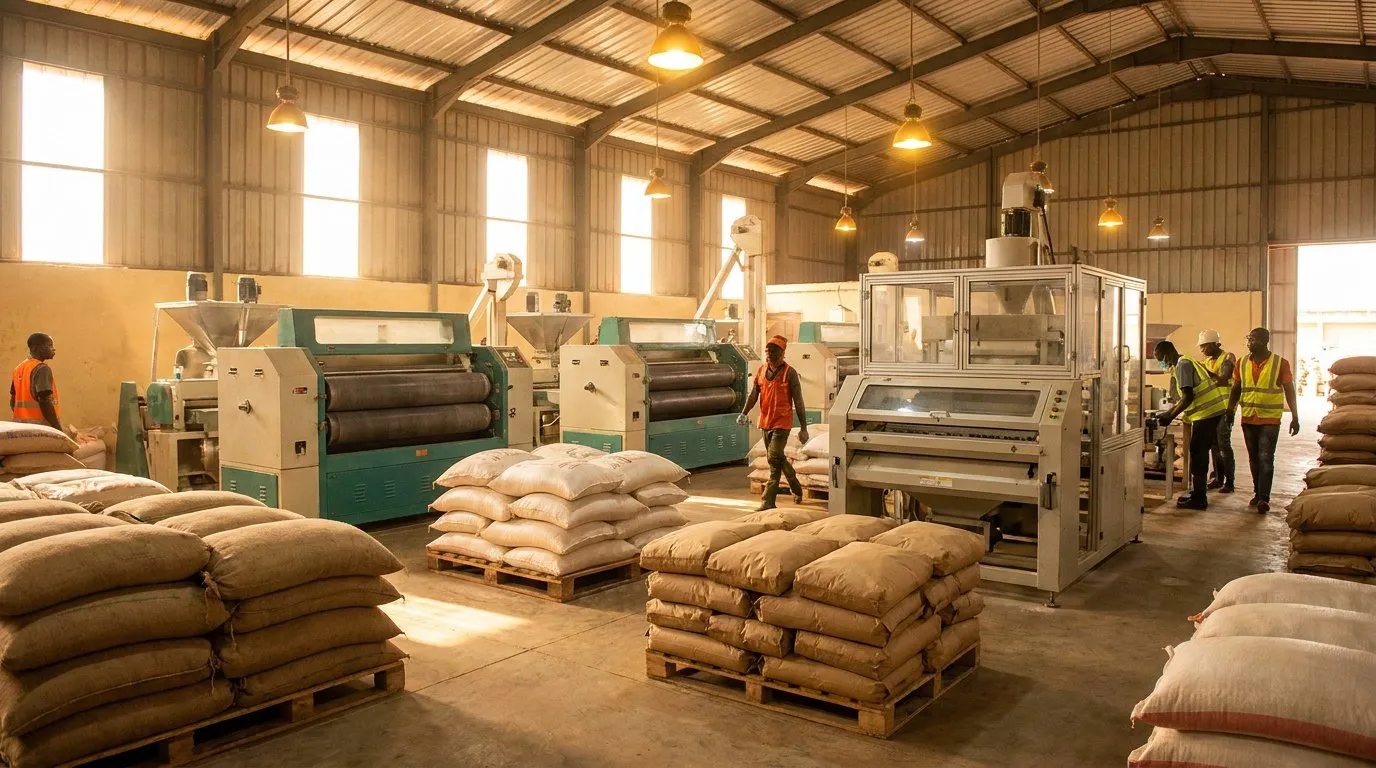
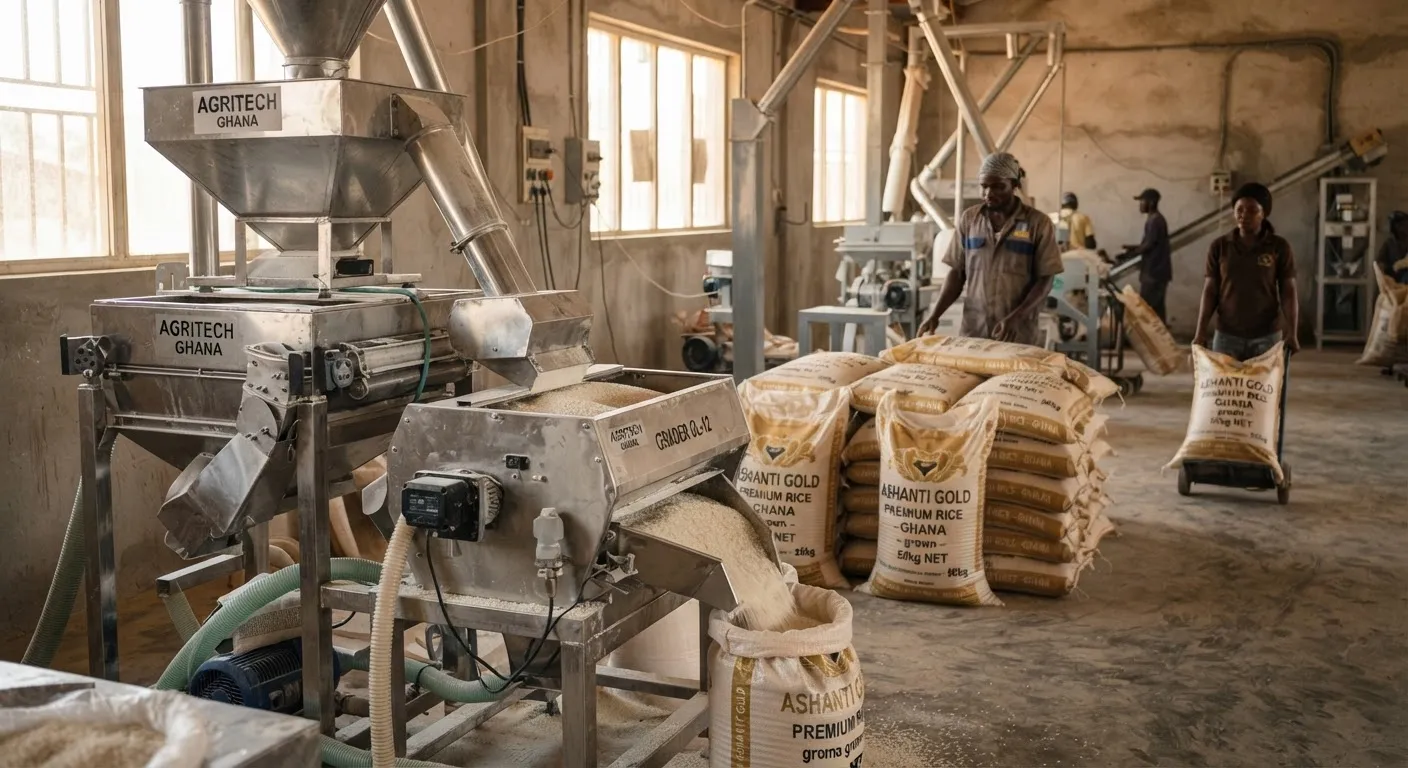
Two things decide whether a mill captures that value or wastes it. The first is recovery, how much milled rice comes out of a tonne of paddy: a small, old Engelberg mill recovers only about 55 percent, while a rubber-roller mill recovers about 65 percent, so a better machine yields roughly a fifth more sellable rice from the same paddy (National Rice Development Strategy II, 2020). The second is head-rice, the share of whole rather than broken grains: a modern mill produces about 67 percent whole grains against about 47 percent from a poor local machine, and whole grains are what fetch the premium (Appiah et al., 2011). A mill that recovers more and breaks less earns more from every tonne, twice over. That is why the milling upgrade is the highest-return investment in the chain, and why it is developed further in the value-chain pillar.
What does a mill cost. A recent Ghanaian processing facility combining parboiling, milling and packaging at about 1.5 to 2.8 tonnes an hour was built for around US$1.1 million, roughly GH¢12 million at today's exchange rate (AfDB / One District One Factory, 2021). That is a serious but not impossible sum, and it sits squarely in the range the finance rails below are built to support. The much-discussed 30,000-tonne state rice mill for the North East is still only planned, not built, so the near-term opportunity is in mid-sized private and cooperative mills, not in waiting for the state (Ministry of Food & Agriculture, 2025).
🌾 Parboiling: a low-cost way to add value, done mostly by women

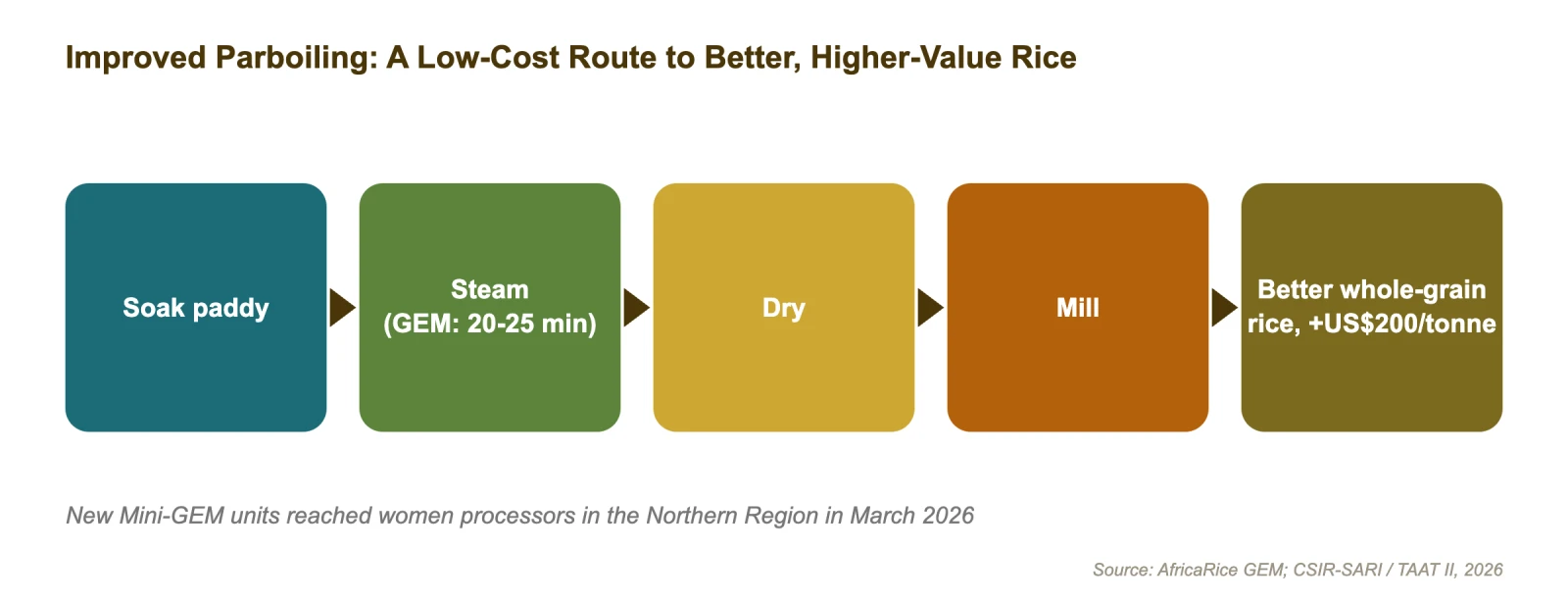
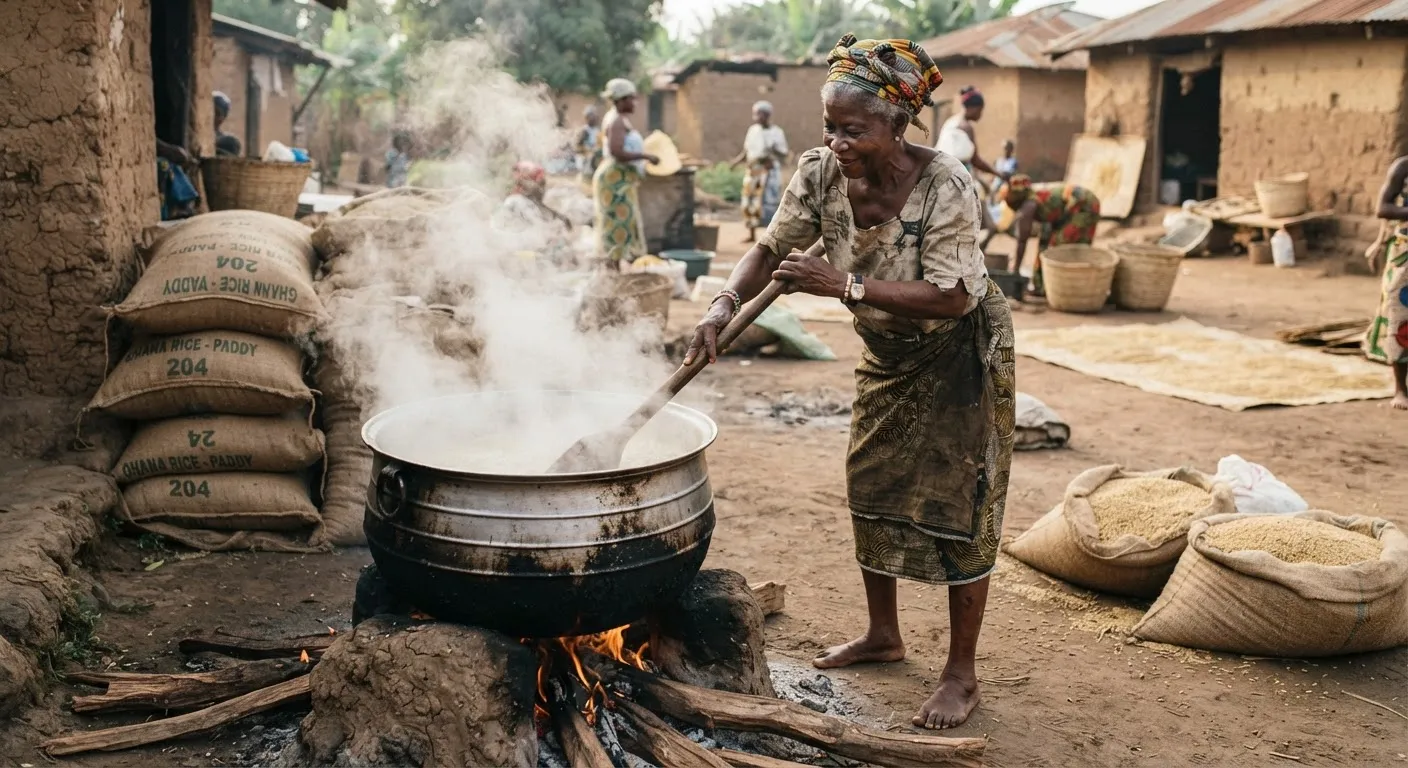
Parboiling is a low-capital way to raise the quality and value of local rice, and it is largely a women's business. Improved equipment lifts the margin by about US$200 a tonne while cutting the drudgery, which makes parboiling one of the most accessible entry points in the whole crop.

There is a cheaper route to better, higher-value rice that does not need a million-dollar mill, and it is one women largely own. Parboiling, partly boiling the paddy before milling, hardens the grain so that less breaks in milling and more nutrients are kept, which raises both the recovery and the grade. Improved parboiling equipment, the GEM system promoted by AfricaRice, lets a woman processor earn about US$200 more for every tonne she parboils, while cutting the firewood, the smoke and the time involved (AfricaRice, 2023 to 2026). New GEM units reached women processors in the Northern Region in early 2026, so the technology is arriving, not theoretical (Ghana News Agency, 2026).
🌾 The finance to build these businesses exists 🌾
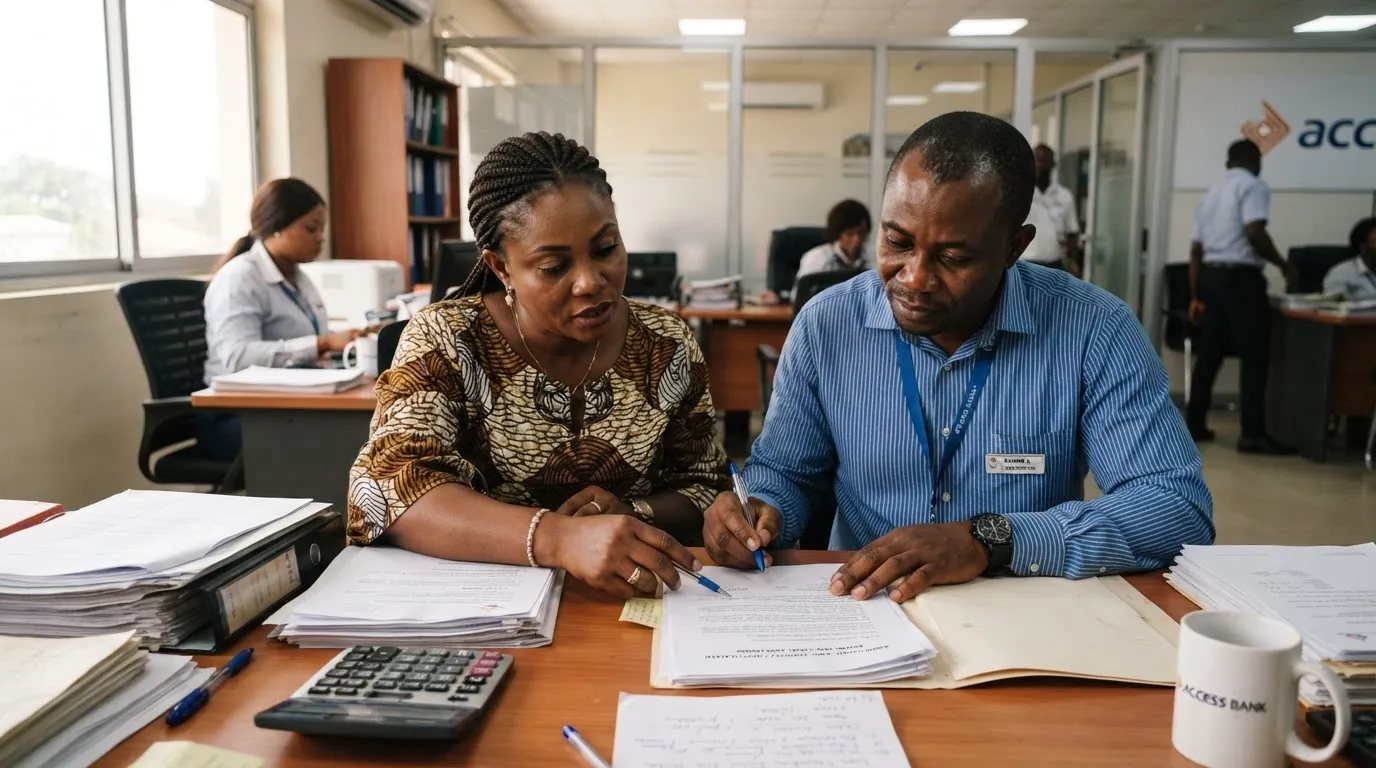
Unusually for a Ghanaian crop, the money to build a mill or a parboiling enterprise is being made available, which changes what is possible. Borrowing is still expensive, the Bank of Ghana's policy rate was 14 percent in mid-2026 and commercial lending ran near 20 percent, but two things soften that (Bank of Ghana, 2026; National Banking College, 2026). First, the national agricultural guarantee scheme, GIRSAL, will cover up to 70 percent of a loan's principal for a rice business, which makes banks far more willing to lend (GIRSAL, 2026). Second, the Development Bank Ghana, with GIRSAL, has committed about GH¢500 million over five years specifically for rice, poultry, maize and soya (Development Bank Ghana, 2025). On top of that, a rice mill or parboiling plant is an agro-processing business, which qualifies for a concessionary 5 percent income-tax rate during its tax holiday, and a low rate afterwards, especially if it is sited in the north where most paddy grows (Ghana Investment Promotion Centre, 2025). The finance is not the barrier it usually is; the barrier is a bankable plan built around milling and a buyer.

Own a step downstream, not just the farm. The margin roughly doubles between paddy and branded rice, and that value goes to the miller and brand. A mid-sized rubber-roller mill with destoning and grading, or a branded packing line, captures the return that growing paddy alone never will.
Parboiling is the accessible entry. It adds about US$200 a tonne for a fraction of a mill's cost, it is largely a women's business, and improved equipment is arriving. A parboiling and small-milling enterprise is one of the lowest-capital, highest-return openings in the crop.
Raise recovery and cut breakage. A better machine yields about a fifth more sellable rice and far more whole grain from the same paddy, so upgrading an existing poor mill can pay for itself from the extra output alone.
Use the finance rails. GIRSAL's guarantee, the Development Bank Ghana facility and the agro-processing tax break are built for exactly these businesses. A bankable milling or parboiling plan sited in the north can access capital that pure farming cannot.
🌾 The risks that sit inside the numbers 🌾
Relying on the farm-gate margin
HIGHGrowing and selling raw paddy earns a thin margin that vanishes when the price falls. In the 2026 glut, distressed paddy sold below the cost of growing it, wiping out farmers who had no mill or buyer to fall back on.
Rain-fed rice returns only about GH¢576 a hectare at average yields, and glut-year paddy sold as low as GH¢150 to GH¢300 a 100 kilogram bag (Agricultural Finance Review, 2021; Chamber of Agribusiness, 2026).
Farmers and investors whose plan ends at selling paddy.
Build the plan around a secured buyer or, better, around owning the milling and branding that set the price. Treat pure paddy production as the raw-material stage, not the profit stage.
Using dated or illustrative cost figures as if they were current
MEDIUM-HIGHThe cedi figures in this pillar are dated and illustrative. Costs and prices in 2026 are far higher, so any decision made on the 2021 numbers without re-pricing will be wrong, in either direction.
Ghana's best farm-level cost studies are from 2021, before several years of high inflation and exchange-rate movement (Agricultural Finance Review, 2021).
Anyone building a budget or a loan application from this playbook without field data.
Re-price every cost and price line with primary 2026 field data using the companion Cost and Returns Model before committing. Treat the red figures here as structure, not as a current budget.
Growing paddy is the hardest, riskiest work for the smallest reward; the margin roughly doubles between raw paddy and branded rice, and that value is captured downstream at the mill and the brand.
Water control decides whether farming rice pays: irrigated rice returns about four times the margin of rain-fed rice, which barely clears its costs in an average year.
A mill's return depends on recovery and head-rice: a rubber-roller mill yields about a fifth more rice and far more whole grain than an old Engelberg one, so upgrading a poor mill pays for itself.
Parboiling adds about US$200 a tonne for a fraction of a mill's cost, is largely a women's business, and improved equipment is now arriving in the north.
The finance exists, GIRSAL's 70 percent guarantee, the Development Bank Ghana facility and the agro-processing tax break, so the barrier is a bankable milling-and-buyer plan, not capital. All cedi figures here are illustrative and must be field-validated.