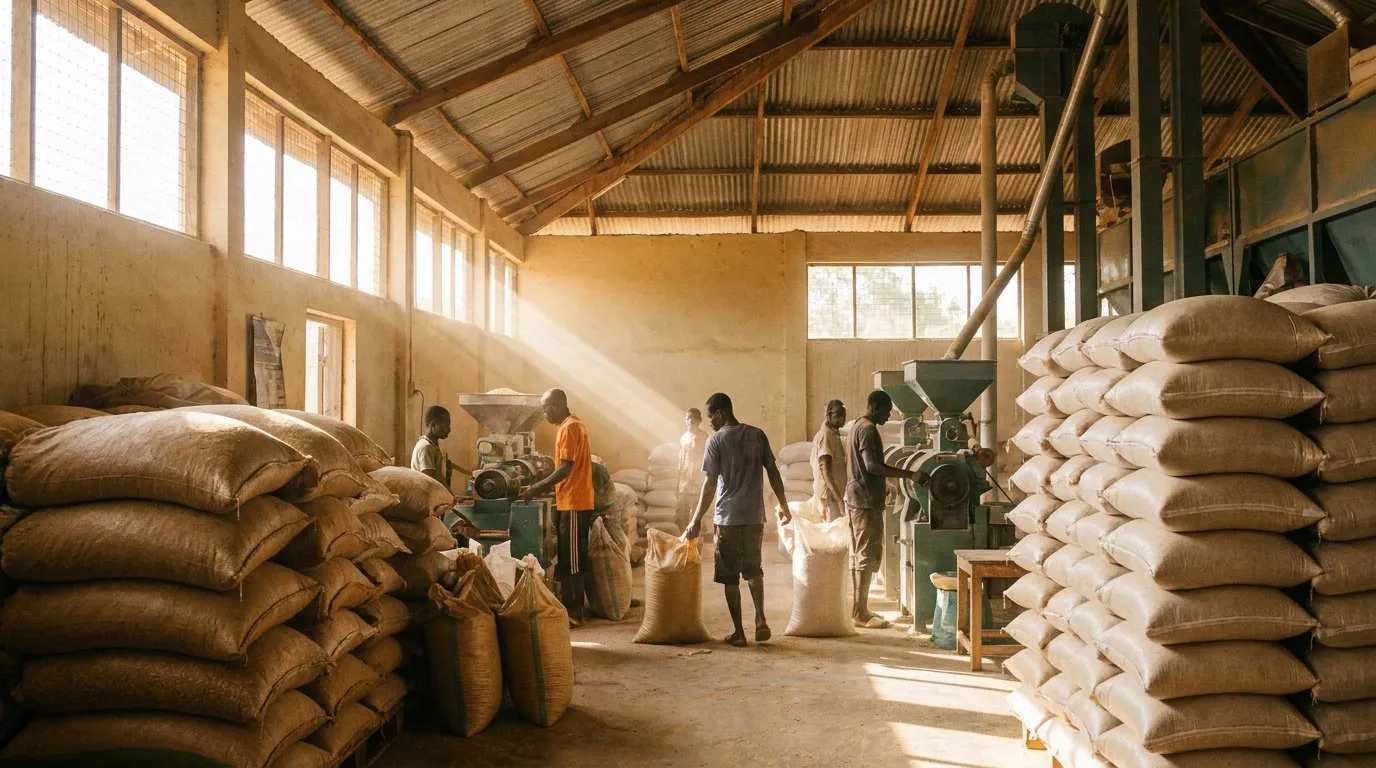
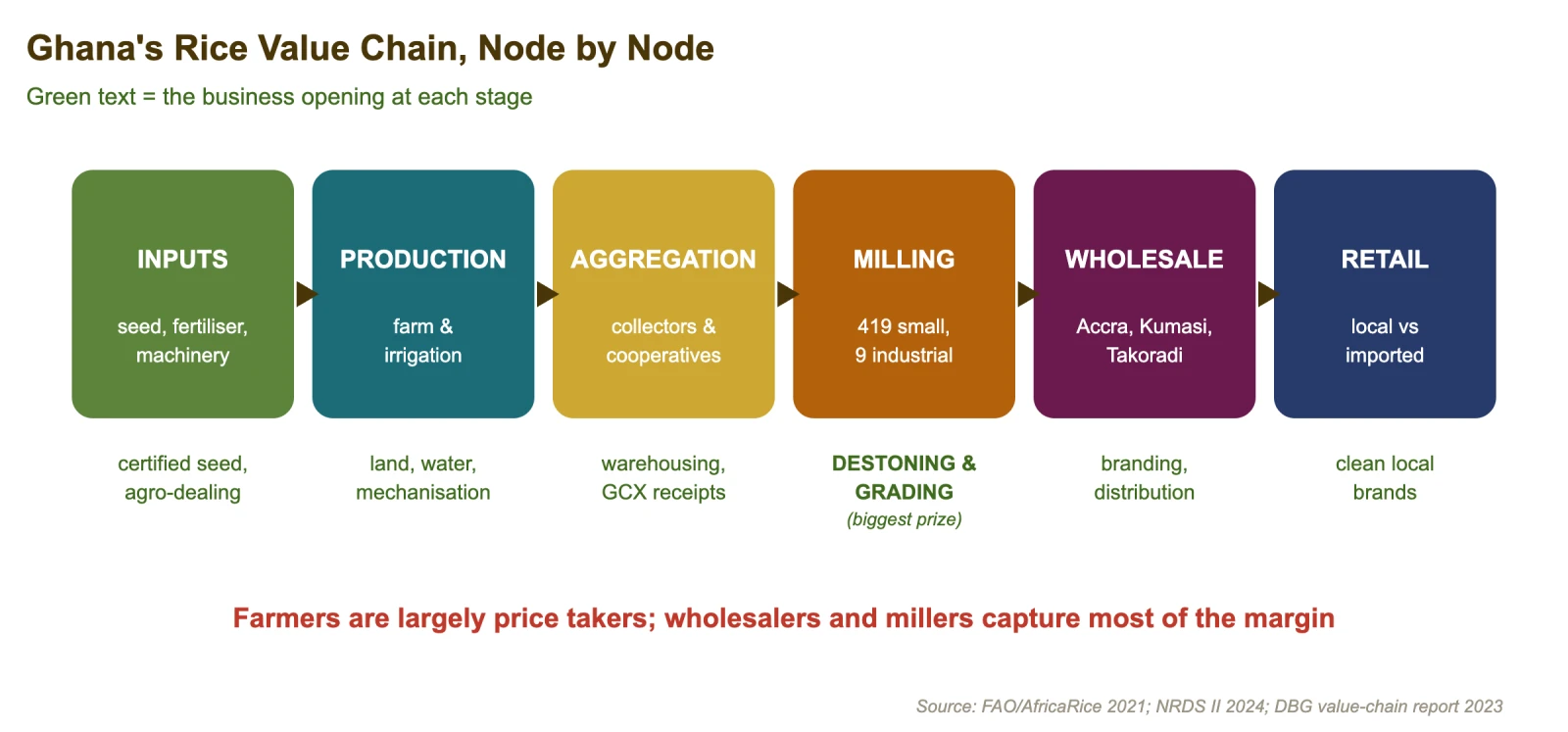
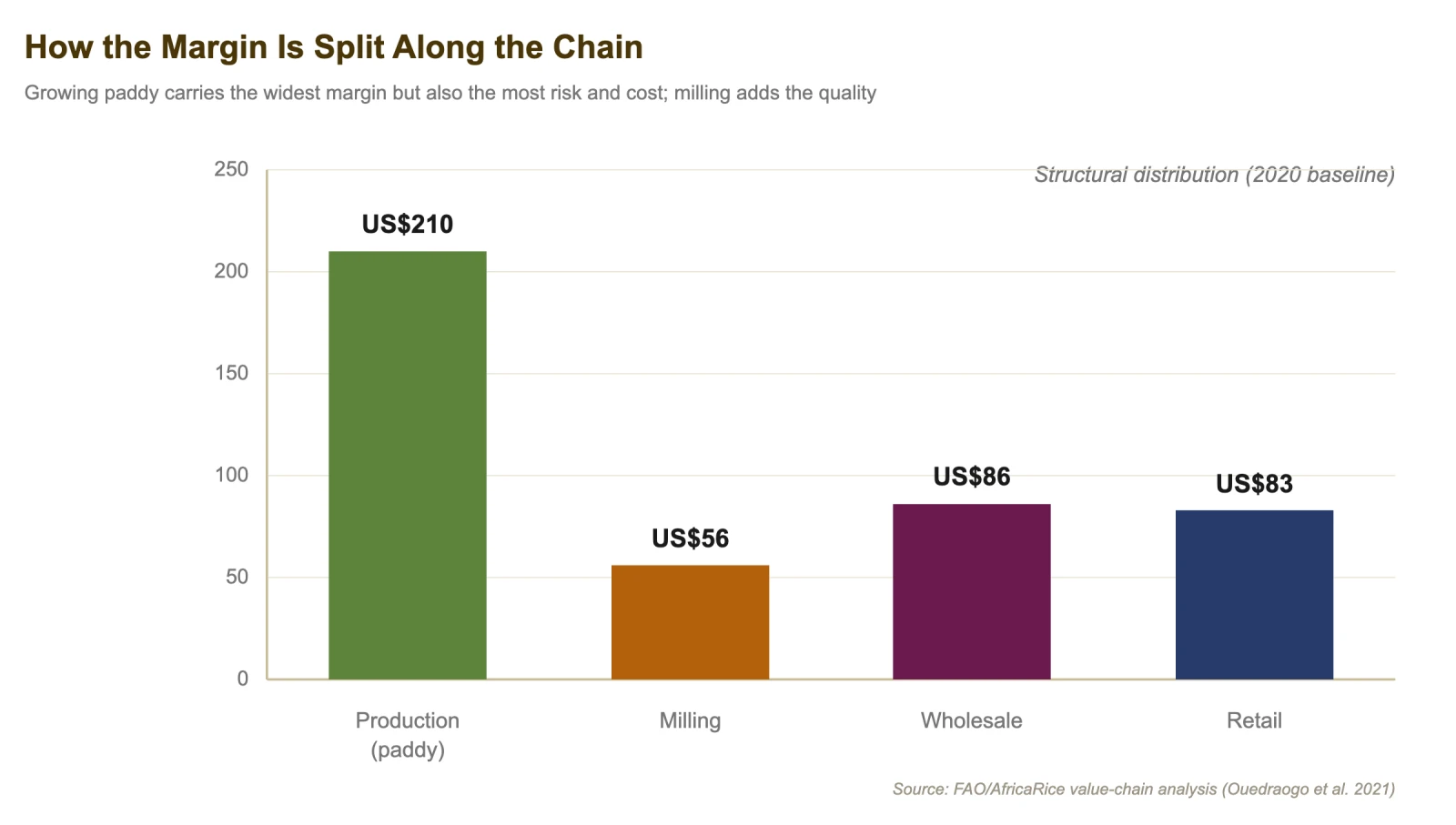
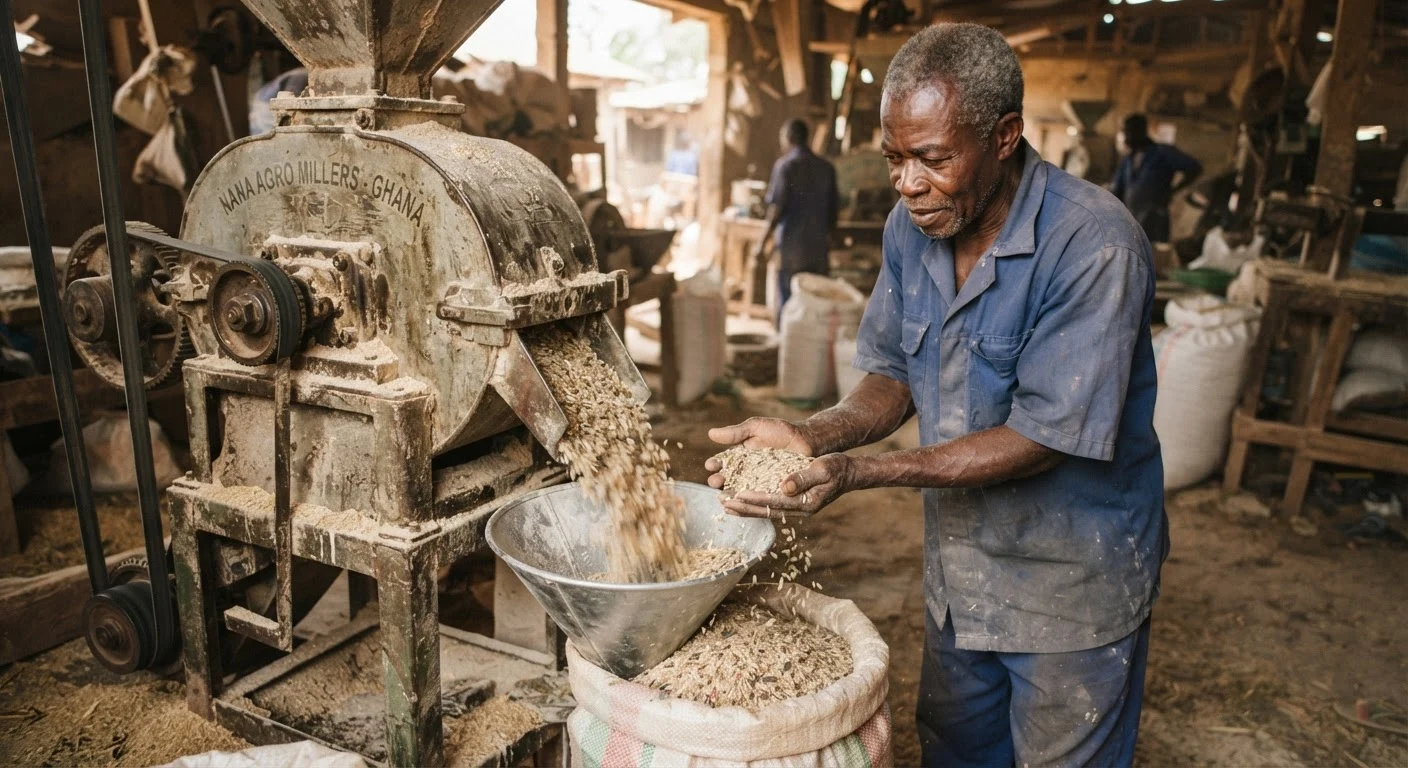
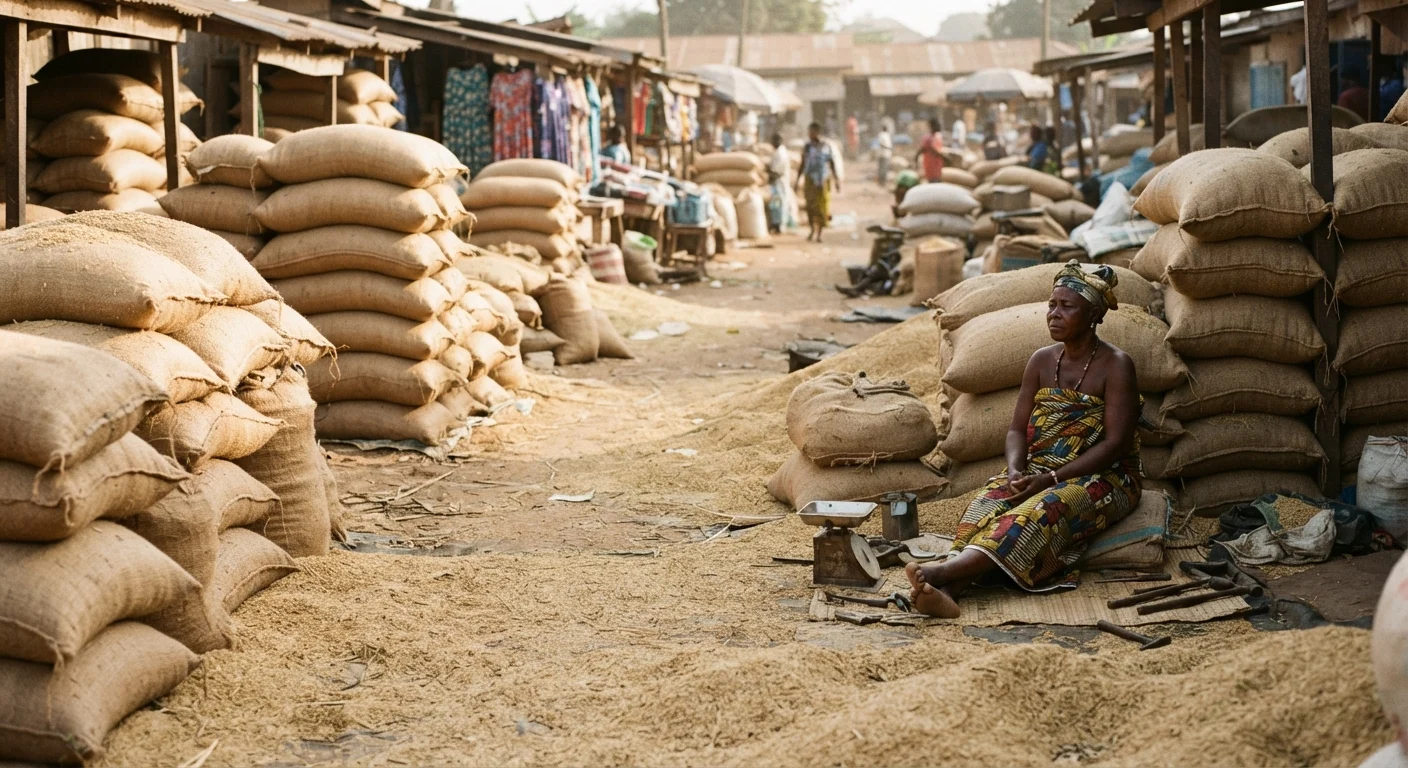
If you are entering rice, the value chain is your map of where the money is, and much of it sits after the farm gate. Learn each stage and, above all, learn milling and grading, because that is the largest, most under-served opening. You can work in a processor's operations or quality team, run fair aggregation with warehouse receipts, or build a small branded-rice business. The gap to fill: the milling and grading step is where local rice is lost, and few people can do it well. That skill is scarce and valuable. The trap to avoid is entering at the farm gate, the most crowded, lowest-margin, highest-risk point in the whole chain.
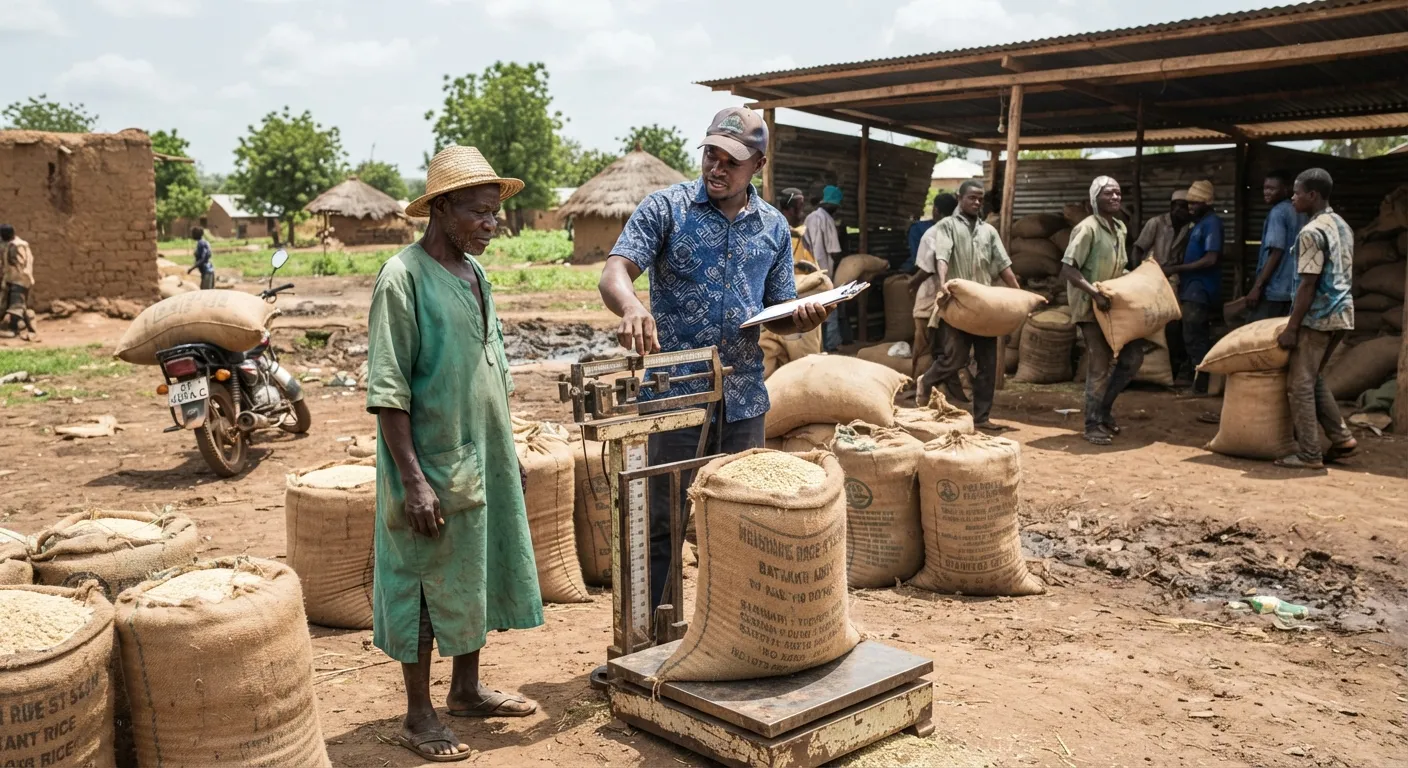
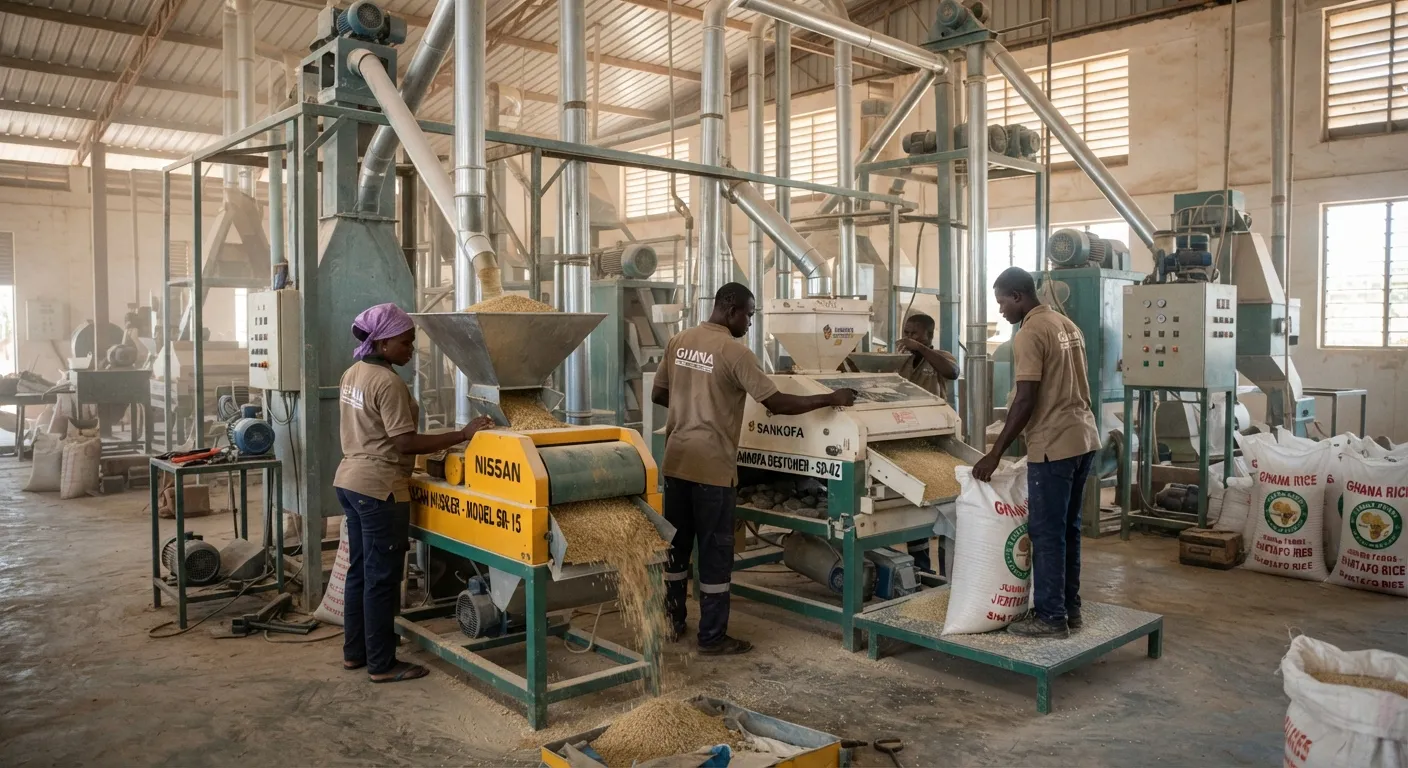
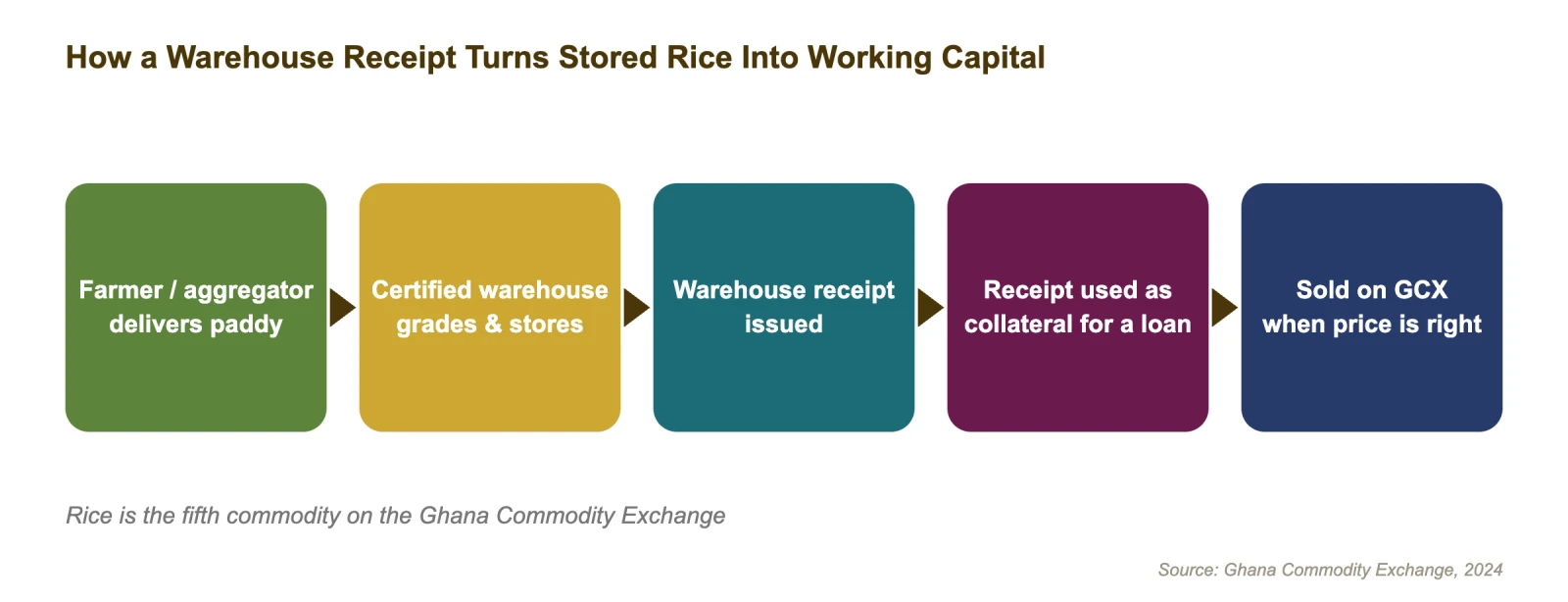
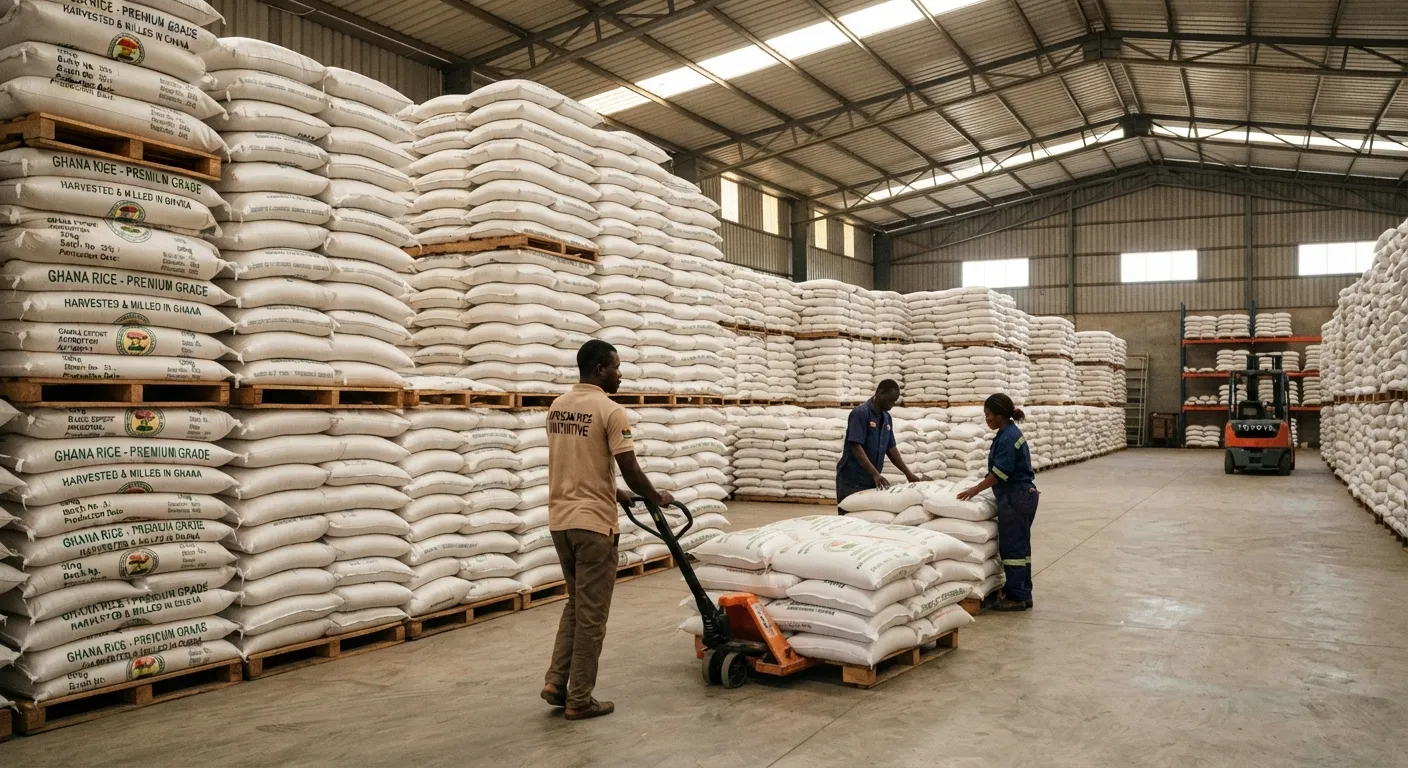
First move: pick the node where value leaks and own it. The strongest play is a rubber-roller mill with destoning and grading, anchored to an outgrower block for supply and a brand for the market, integrating three stages at once. If capital is tight, start with fair, receipt-financed aggregation or with branding and packaging of well-milled rice. The trap: buying loose paddy on the open market and competing with wholesalers on their terms. The tailwind is the warehouse-receipt system, the decentralising rice body and development-bank finance, all built to support exactly this kind of integrated, downstream business.
Diligence asks: the thesis is that value in rice is captured downstream, at milling, aggregation and branding, and that integration secures it. Ask which nodes the business owns, the milling recovery and grading capability, the outgrower or supply security, the brand and its price, and how seasonality is managed. Structure the money around an integrated mill-and-brand with secured supply, using the GIRSAL guarantee and the warehouse-receipt system to manage risk, released against quality, supply and sales milestones. The risk: do not back an open-market paddy trader or a farm-only play; both are exposed to the wholesaler power and the glut. Back the businesses that control quality and supply.
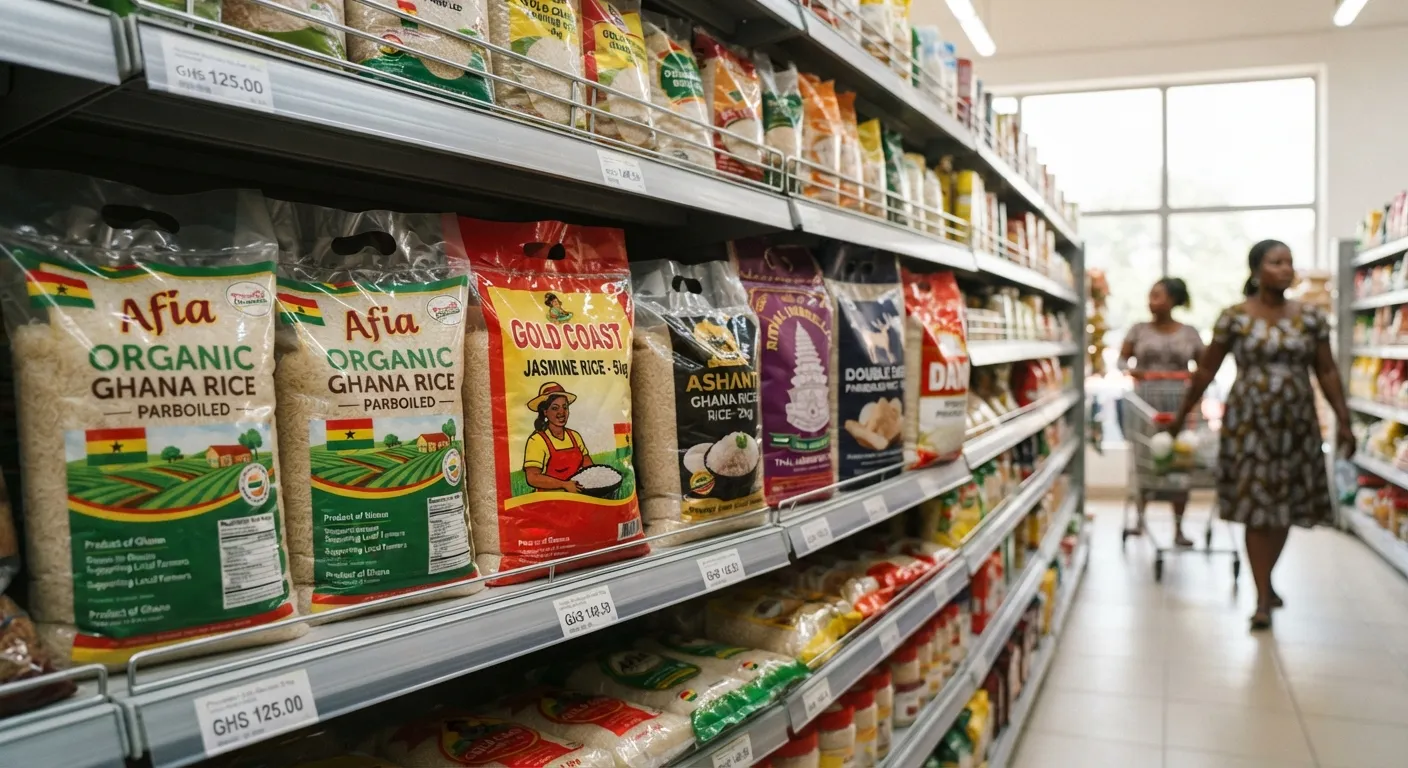
The lever is fixing milling and aggregation, the two nodes where local rice loses quality and farmers lose price. Building the warehouse-receipt system, financing certified aggregators and modern mills, and organising farmers through the rice body will do more than any production subsidy. Fund and measure the share of paddy milled to the Ghana Standards Authority grade, the volume moving through warehouse receipts, and the number of farmers in fair outgrower schemes. The measurable outcome is local rice rising in grade and brand and taking shelf share from imports, and farmers earning a fair, steady price. The failure to avoid is financing more paddy while leaving the milling, grading and aggregation that could sell it unbuilt.
If you are entering rice, the value chain is your map of where the money is, and much of it sits after the farm gate. Learn each stage and, above all, learn milling and grading, because that is the largest, most under-served opening. You can work in a processor's operations or quality team, run fair aggregation with warehouse receipts, or build a small branded-rice business. The gap to fill: the milling and grading step is where local rice is lost, and few people can do it well. That skill is scarce and valuable. The trap to avoid is entering at the farm gate, the most crowded, lowest-margin, highest-risk point in the whole chain.
First move: pick the node where value leaks and own it. The strongest play is a rubber-roller mill with destoning and grading, anchored to an outgrower block for supply and a brand for the market, integrating three stages at once. If capital is tight, start with fair, receipt-financed aggregation or with branding and packaging of well-milled rice. The trap: buying loose paddy on the open market and competing with wholesalers on their terms. The tailwind is the warehouse-receipt system, the decentralising rice body and development-bank finance, all built to support exactly this kind of integrated, downstream business.
Diligence asks: the thesis is that value in rice is captured downstream, at milling, aggregation and branding, and that integration secures it. Ask which nodes the business owns, the milling recovery and grading capability, the outgrower or supply security, the brand and its price, and how seasonality is managed. Structure the money around an integrated mill-and-brand with secured supply, using the GIRSAL guarantee and the warehouse-receipt system to manage risk, released against quality, supply and sales milestones. The risk: do not back an open-market paddy trader or a farm-only play; both are exposed to the wholesaler power and the glut. Back the businesses that control quality and supply.
The lever is fixing milling and aggregation, the two nodes where local rice loses quality and farmers lose price. Building the warehouse-receipt system, financing certified aggregators and modern mills, and organising farmers through the rice body will do more than any production subsidy. Fund and measure the share of paddy milled to the Ghana Standards Authority grade, the volume moving through warehouse receipts, and the number of farmers in fair outgrower schemes. The measurable outcome is local rice rising in grade and brand and taking shelf share from imports, and farmers earning a fair, steady price. The failure to avoid is financing more paddy while leaving the milling, grading and aggregation that could sell it unbuilt.